
Home Library and Reading Nook Ideas: How to Build a Corner You’ll Actually Use

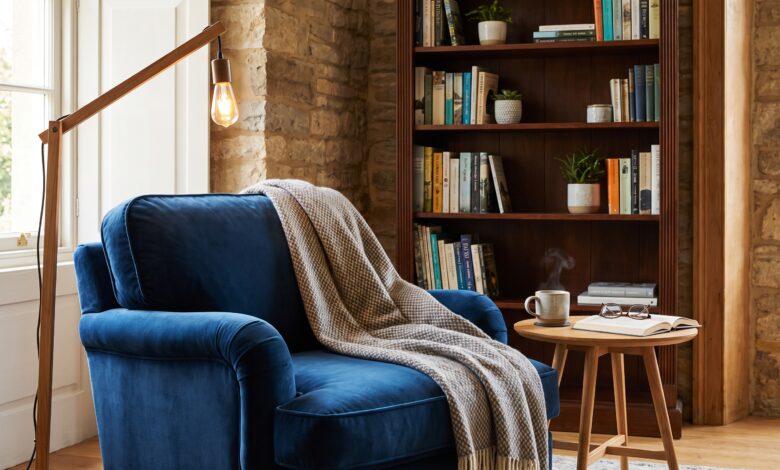
A home library or reading nook doesn’t need a dedicated room to feel like a genuine retreat. A single well-chosen corner, styled with the right chair, light, and book storage, can become the spot in the house people actually gravitate toward. Here’s how to build one that gets used, not just admired. This guide covers home library and reading nook ideas step by step, with practical tips and product picks.
As an Amazon Associate I earn from qualifying purchases. Some links in this post are affiliate links, at no extra cost to you.
1. Choose a Chair Built for Sitting a While
Comfort matters more here than in almost any other seating choice in the home, since a reading nook only works if someone actually wants to sit in it for an hour. A deep armchair, a wingback with good back support, or an oversized upholstered chair all outperform a stylish but stiff accent chair when it comes to actual reading time. Test the seat depth and back height before committing — a chair that looks perfect in a photo but forces bad posture will get abandoned within a week.
2. Add a Dedicated Reading Light
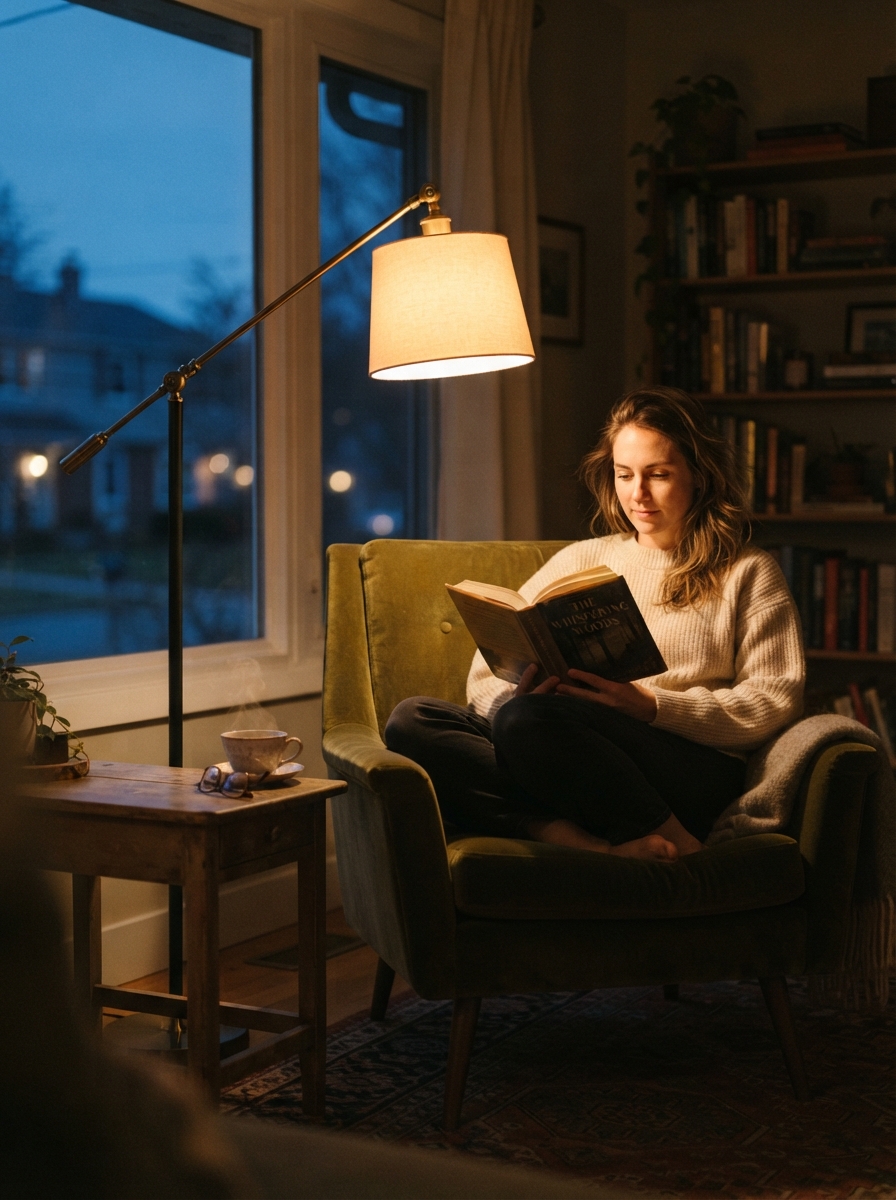
Overhead lighting alone rarely provides enough focused light for reading, so a floor lamp or a clip-on task light positioned just behind and above shoulder height makes the biggest functional difference in the whole setup. Warm-toned bulbs (2700–3000K) feel more relaxing for reading than the cooler tones used in a home office. A dimmer switch, even on a simple lamp, lets the light adjust from daytime brightness to evening coziness without needing a second fixture.
3. Build in Book Storage Within Reach
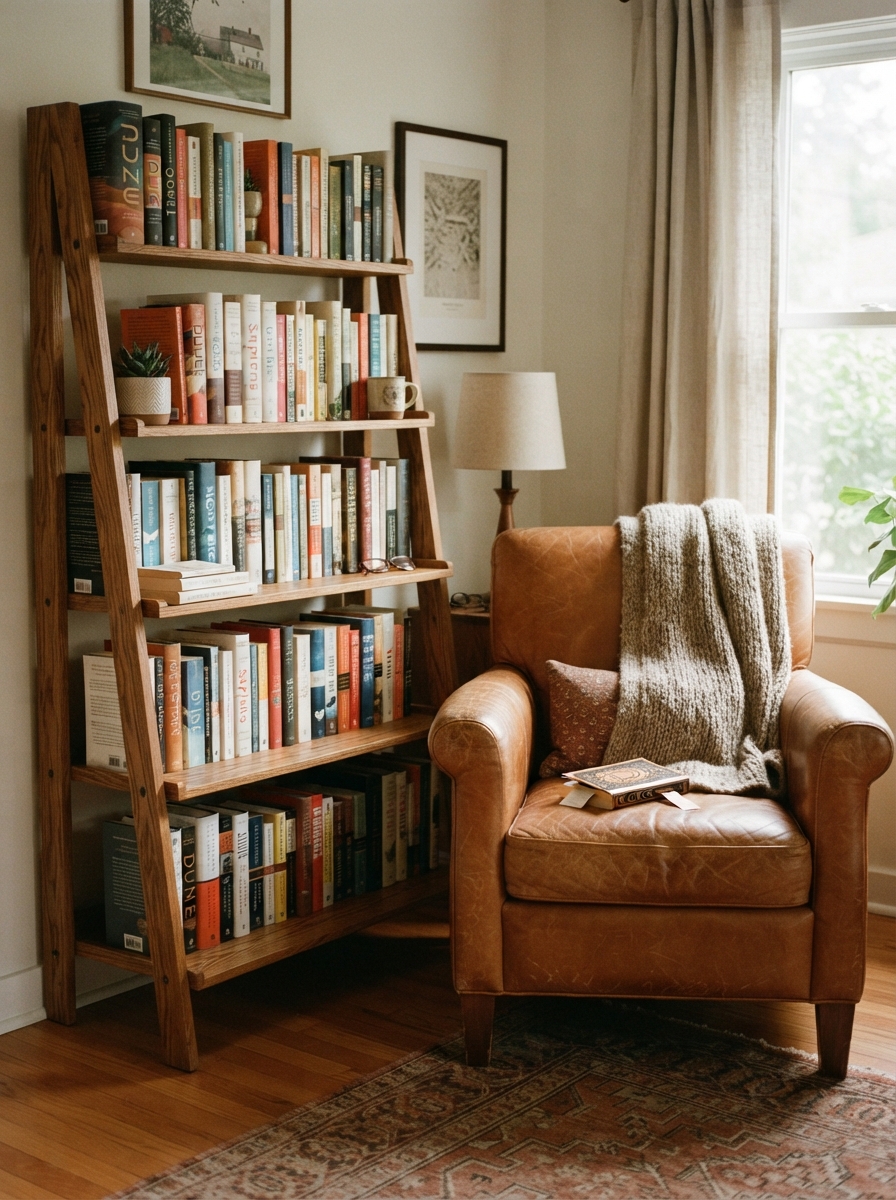
A small bookshelf, a ladder shelf, or even a stack of crates beside the chair keeps current reads accessible without cluttering a side table. Organizing books by color or size creates a more visually cohesive backdrop, while organizing by genre or author keeps the collection more genuinely functional — choose whichever matters more for how the space will actually be used.
4. Layer In a Side Table for Essentials
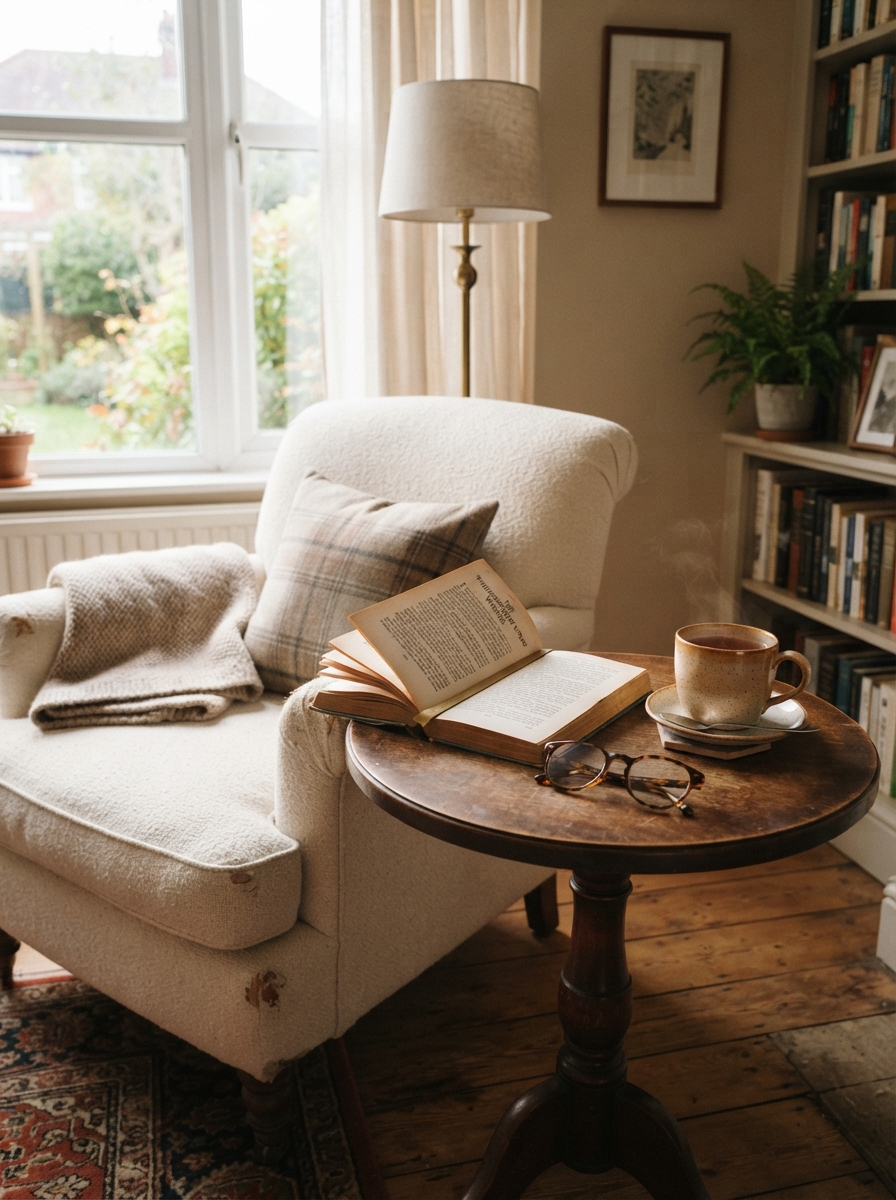
A small table within arm’s reach of the chair holds a drink, glasses, and whatever’s currently being read, preventing the floor from becoming the default surface. A round pedestal table takes up less visual space than a boxy square one in a tight nook, and a table with a small drawer or shelf underneath adds storage for reading glasses or a bookmark collection.
5. Add a Throw Blanket and Extra Pillow
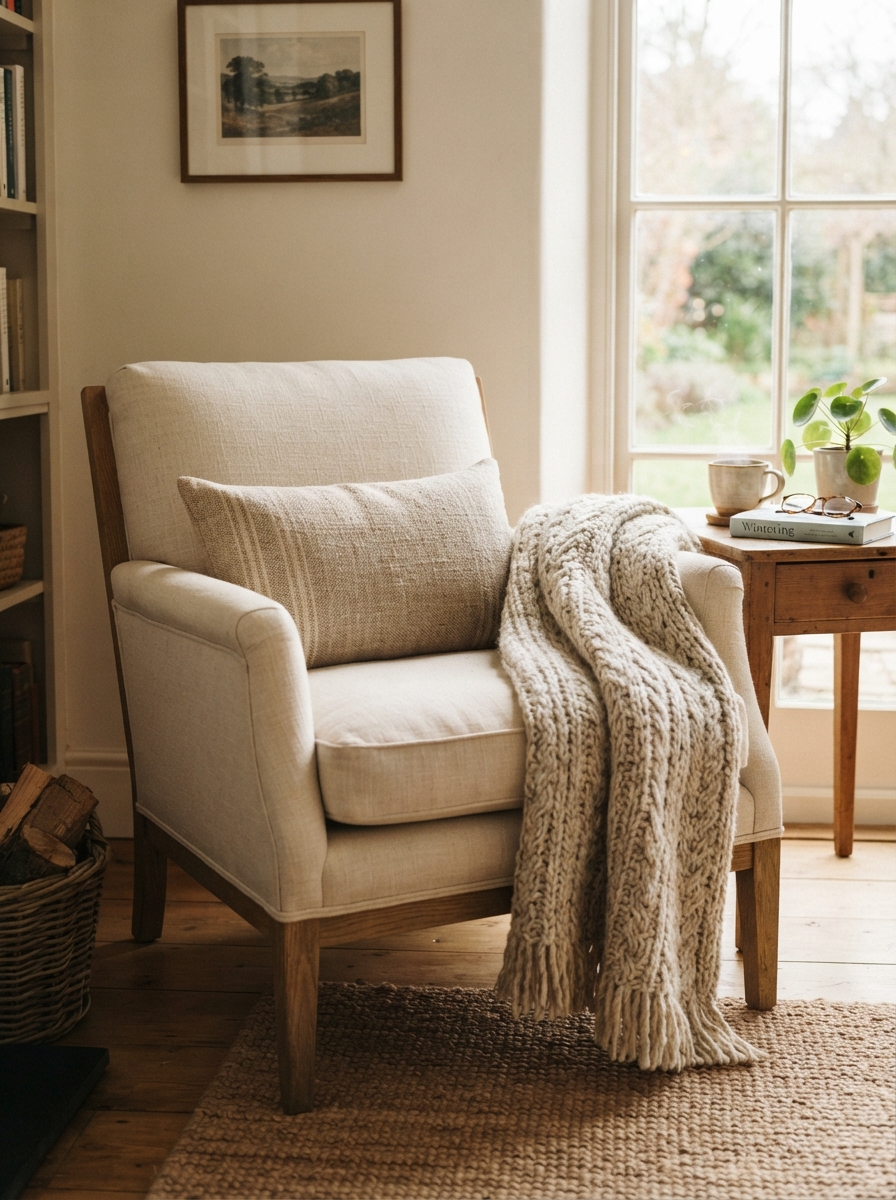
A folded throw draped over the arm of the chair and a supportive lumbar pillow both add comfort and instantly signal that the corner is meant for lingering rather than just passing through. Choose a throw in a texture that contrasts with the chair’s upholstery — a chunky knit against a smooth linen chair, for instance — to add visual depth as well as warmth.
6. Use a Rug to Define the Space
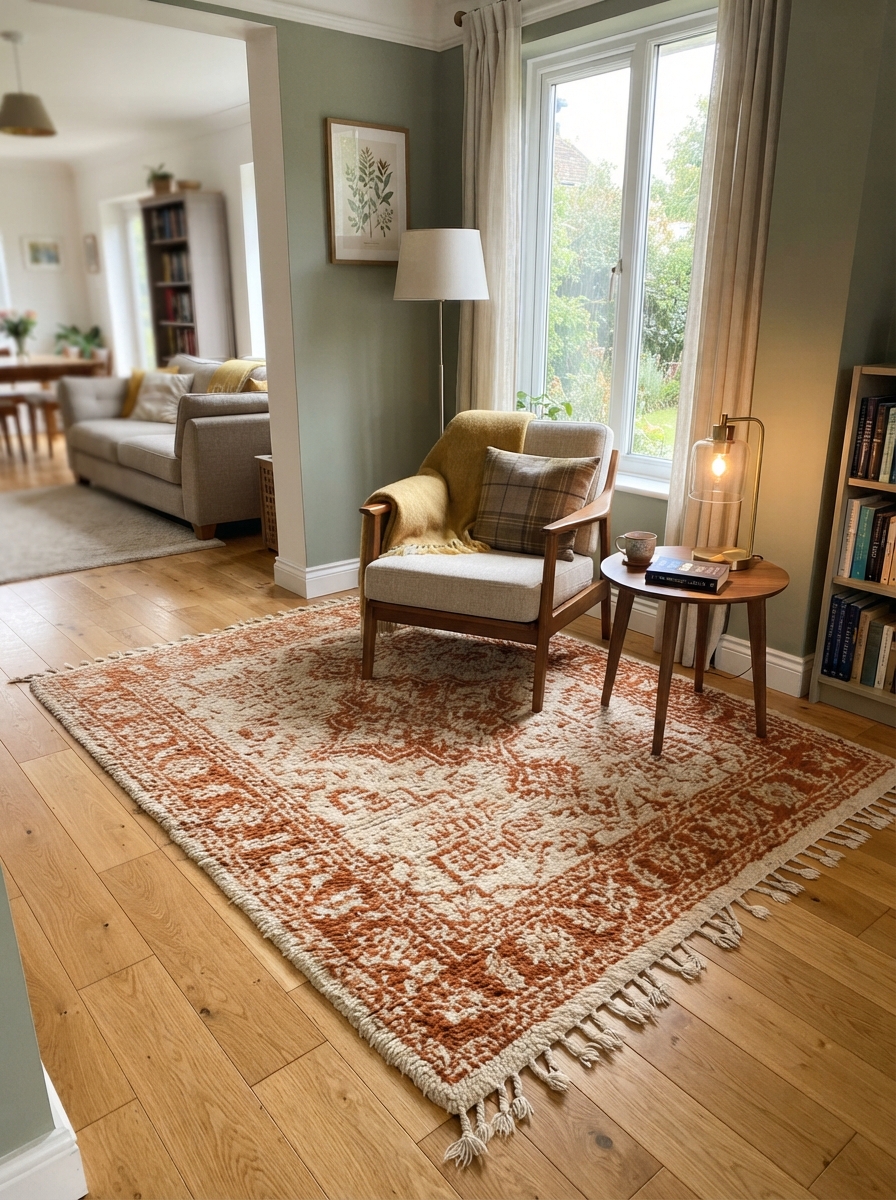
A rug placed under the chair and side table visually separates the reading nook from the rest of an open room, even without any walls or furniture doing the dividing. A rug in a warm, textured material — wool or a soft jute blend — grounds the space and adds another layer of coziness underfoot.
7. Bring in a Plant for Life and Softness
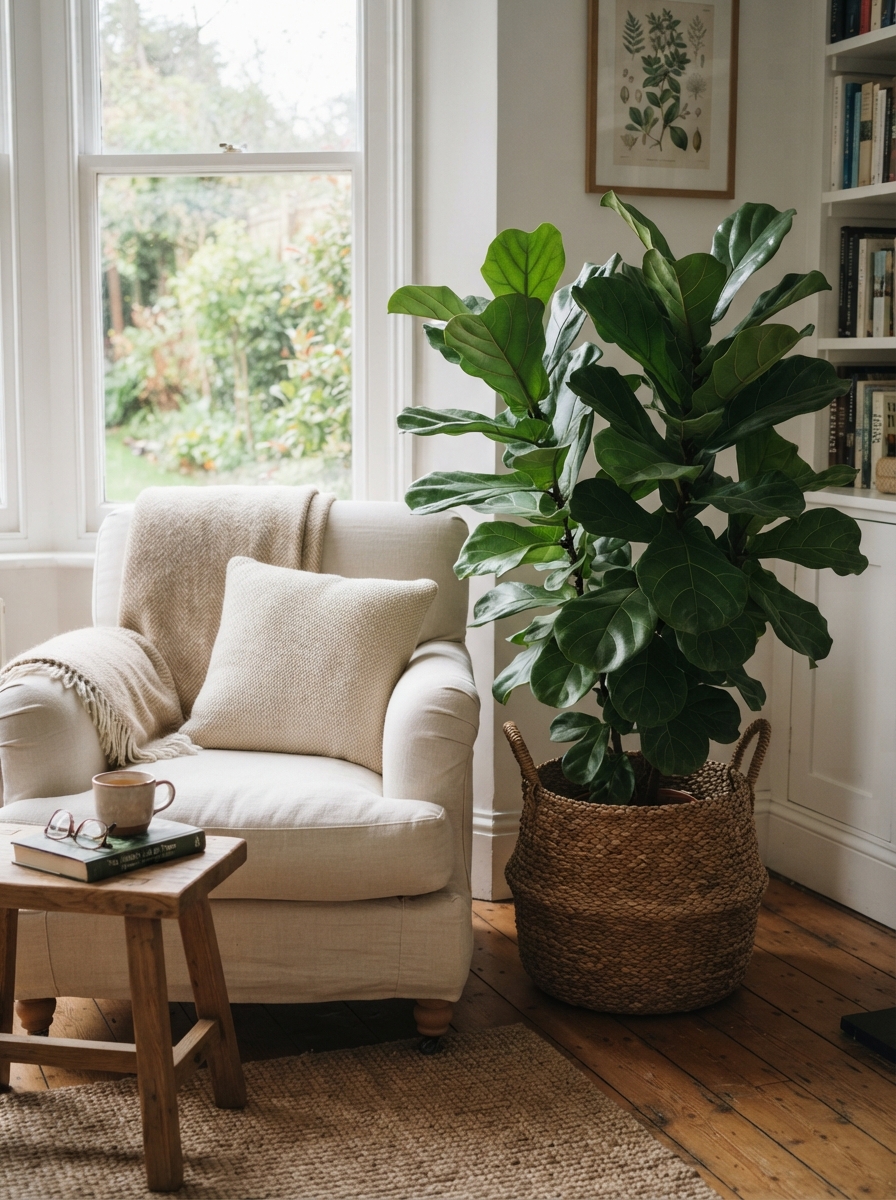
A single floor plant beside the chair, or a smaller potted plant on the side table, softens what can otherwise be a fairly angular collection of furniture and shelving. A plant that tolerates lower light works especially well here, since reading nooks are often positioned away from a room’s brightest window to avoid glare on the page.
Reading Nook Ideas by Space
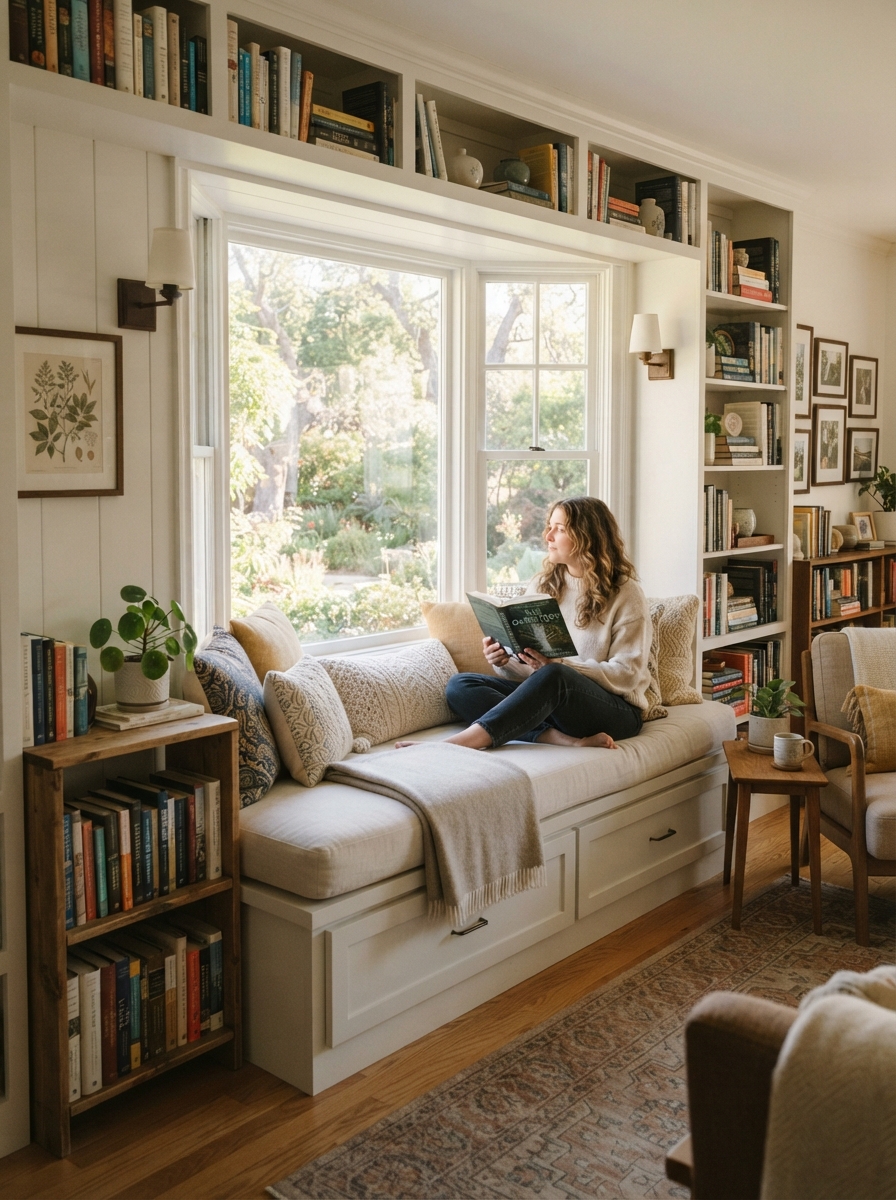
Window Seat
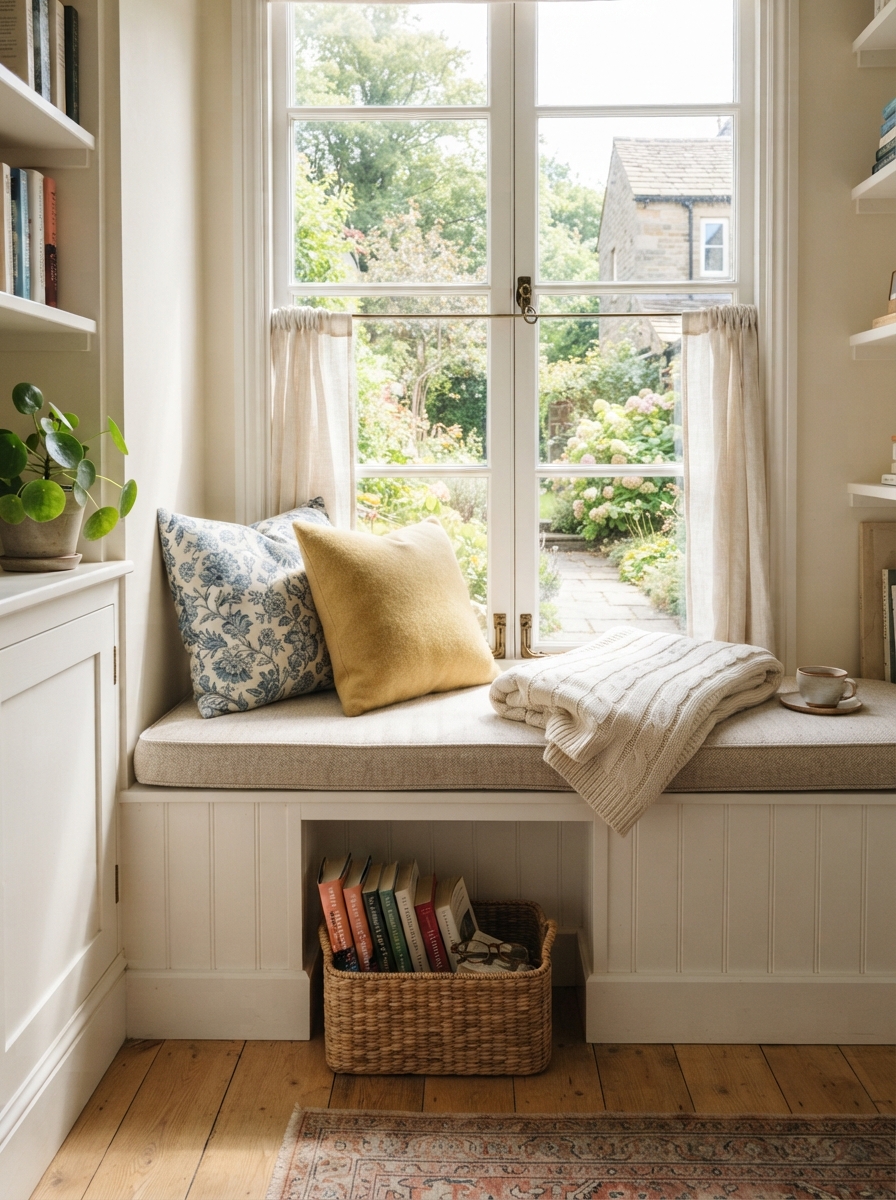
A built-in or converted window seat pairs natural daylight with a view, making it one of the most popular reading nook formats. Add a cushion sized to the seat’s exact dimensions and two or three throw pillows, and keep a small basket or built-in drawer underneath for book storage.
Corner of a Living Room
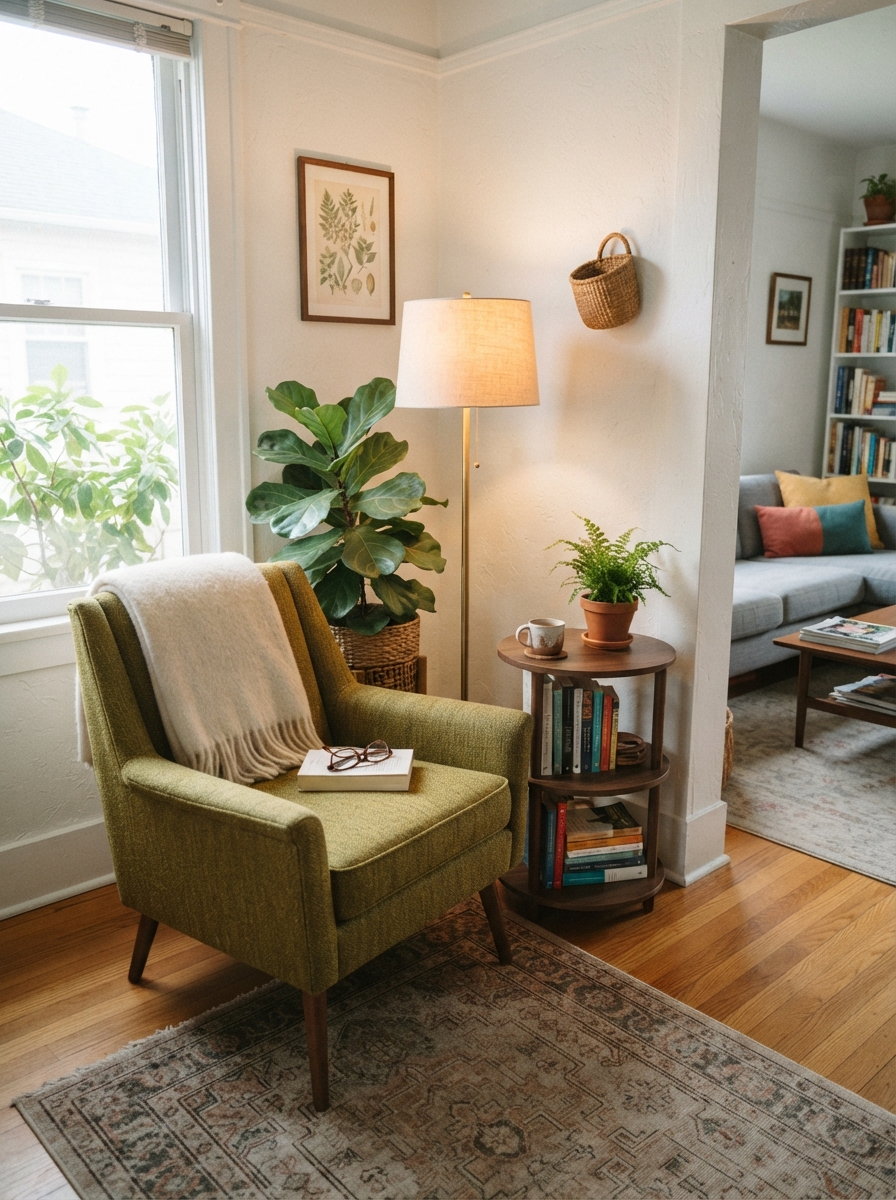
An underused living room corner, styled with a single chair, a floor lamp, and a small shelf, creates a reading nook without needing a separate room. Angling the chair slightly away from the main seating area helps it read as its own distinct zone rather than an extra chair in the main furniture grouping.
Converted Closet or Alcove
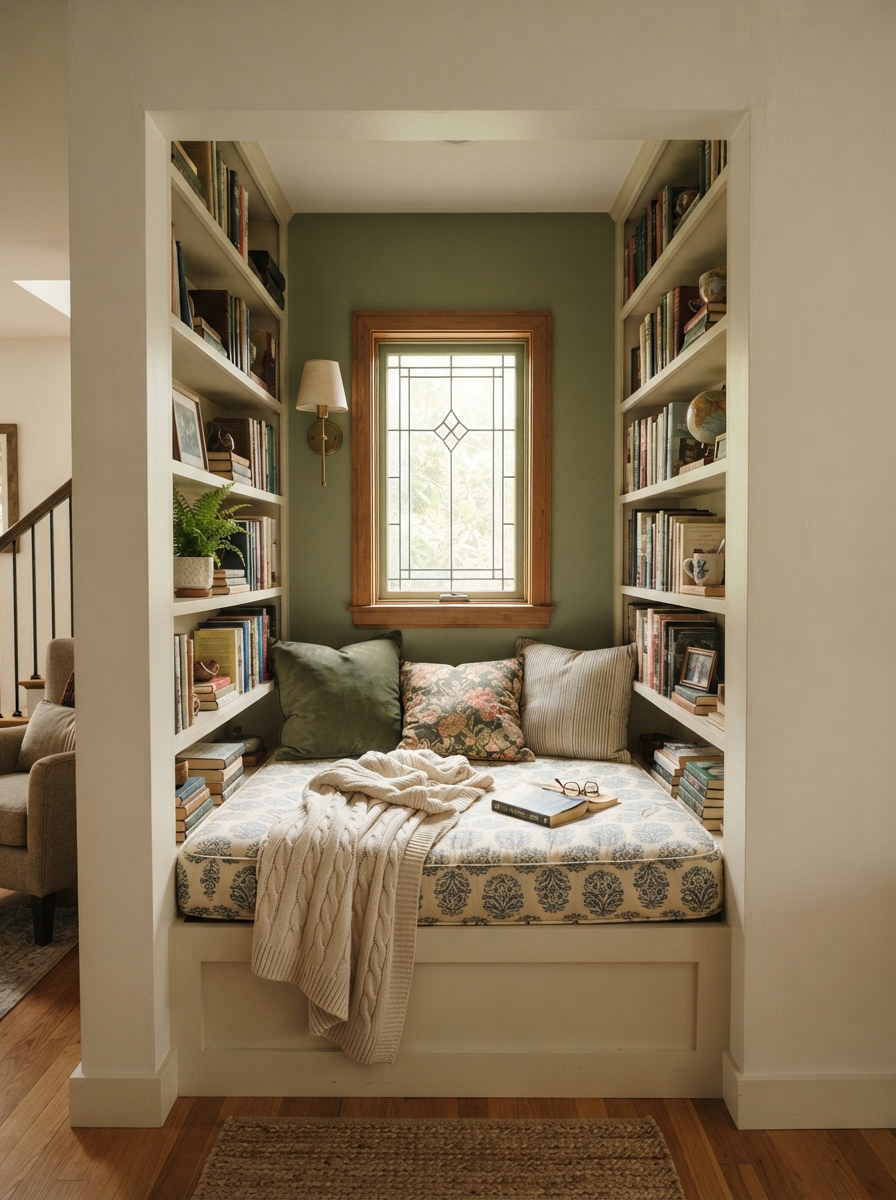
A small closet with the doors removed, or a narrow architectural alcove, can become a surprisingly cozy built-in reading nook with a cushioned bench seat and shelving built into the side walls. This format works especially well in older homes with awkward, hard-to-furnish nooks.
Loft or Landing
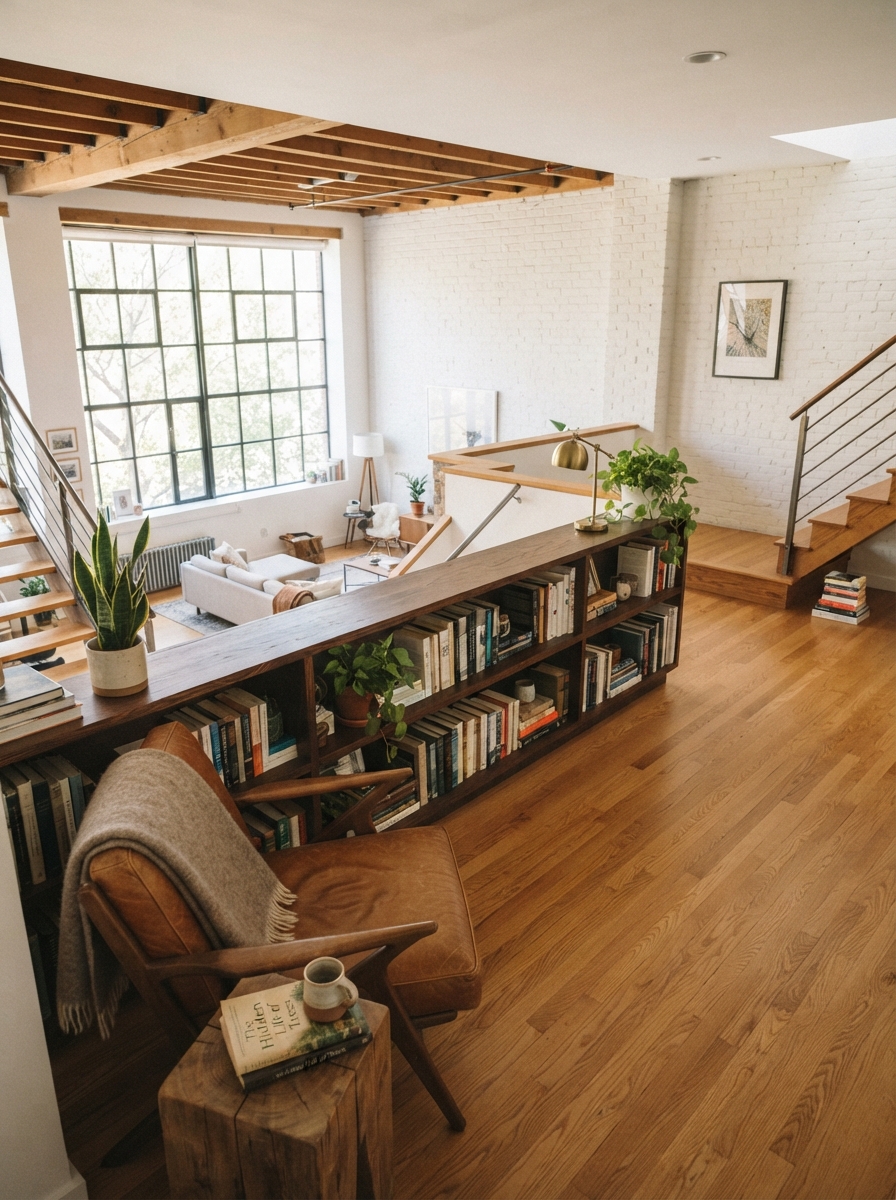
An open loft space or a wide stair landing often has enough square footage for a small reading chair and shelf without disrupting the home’s traffic flow. A low bookshelf that doubles as a railing-adjacent safety barrier can solve both a storage and a safety need at once in this location.
Building a Home Library Beyond a Single Nook
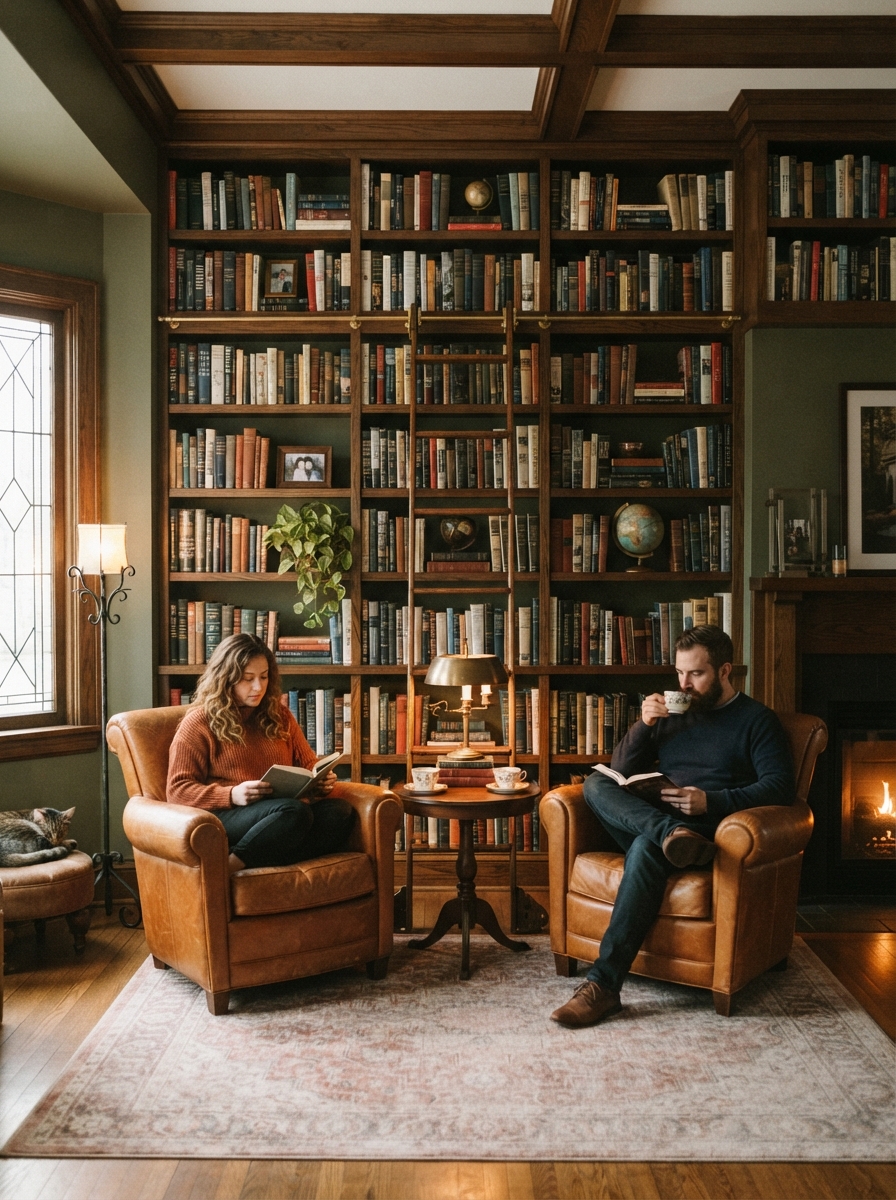
For those with more space to dedicate, a fuller home library extends the reading nook concept across an entire wall or room. Floor-to-ceiling shelving makes the most of vertical space and turns the book collection itself into the room’s primary decor. A rolling ladder adds genuine function for reaching upper shelves and a distinct visual character that few other storage solutions can match. Grouping seating — a chair and a small loveseat, or two chairs facing each other — supports a library that can hold more than one reader at a time, which a single-chair nook can’t accommodate.
Organizing a Book Collection for Both Function and Display
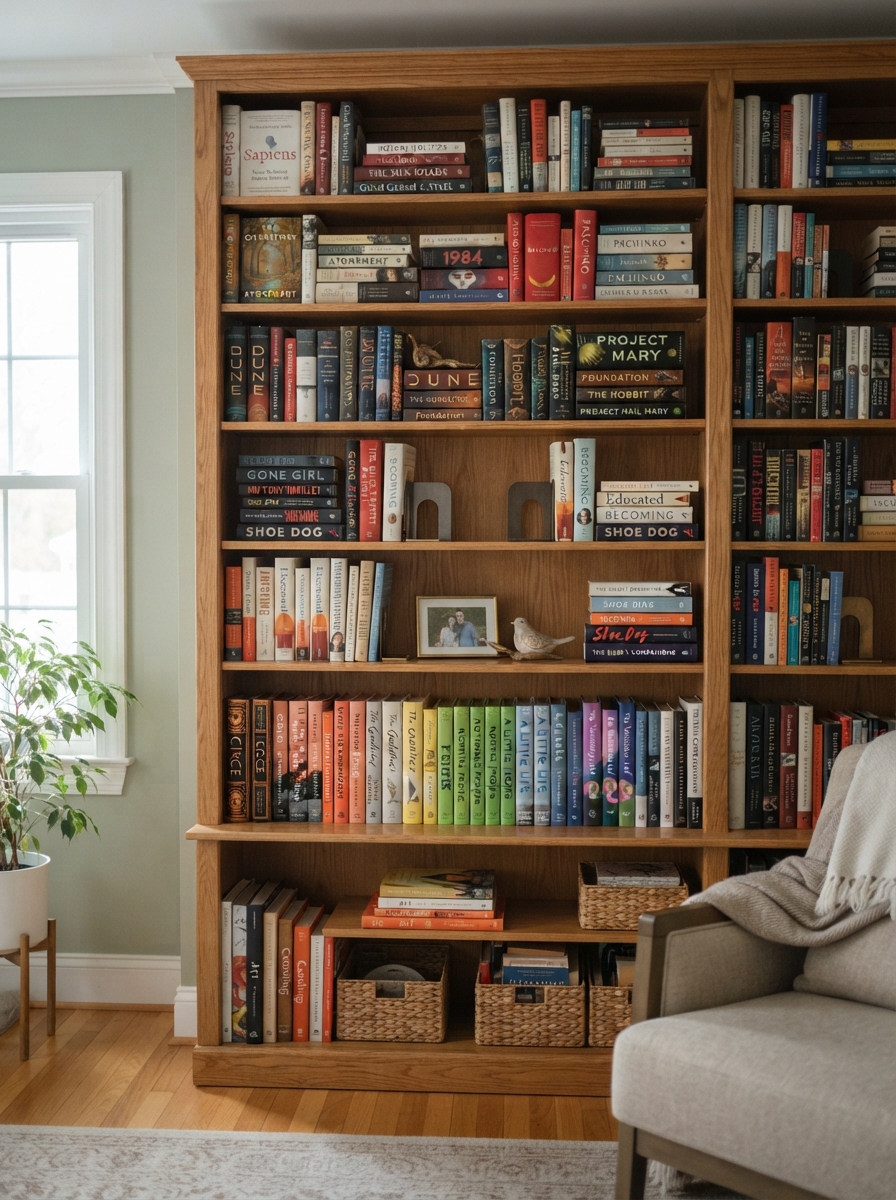
How a book collection is organized affects both how easily books get used and how the shelving looks as a whole. Grouping by color creates a striking, magazine-worthy visual effect but makes finding a specific title by author or subject considerably harder. Organizing by genre or subject keeps the collection genuinely functional for a household that reads across categories. A hybrid approach — organizing the majority of the collection by genre, but pulling out a small color-coordinated shelf of favorites or coffee-table books for visual impact — often satisfies both goals better than committing fully to either system.
Choosing the Right Chair Style for Your Space
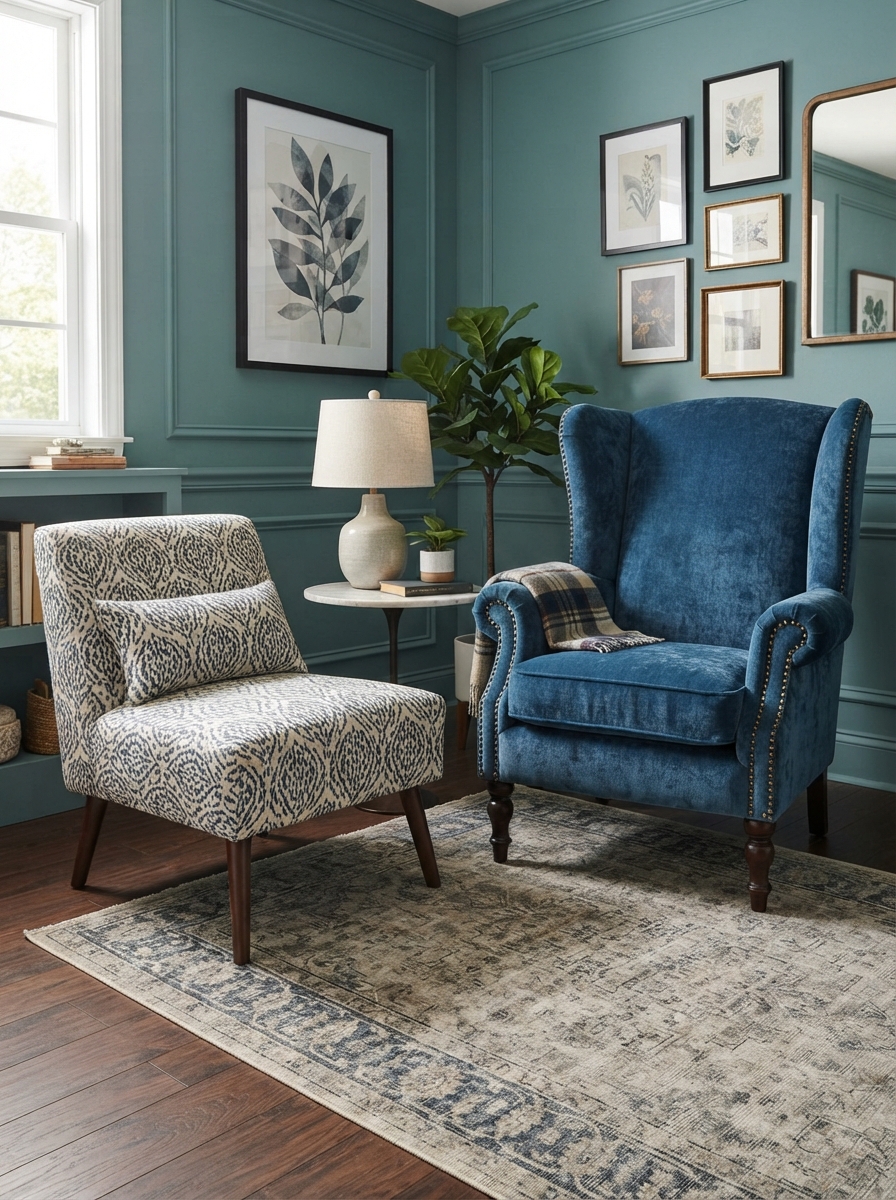
Beyond comfort, a reading chair’s style should also fit the room around it. A wingback chair suits a traditional or transitional room and offers built-in head support for long reading sessions. A slipper chair or a low-profile armchair works better in a smaller nook, since its reduced visual bulk keeps a tight corner from feeling cramped. A swivel chair adds functional flexibility in a shared or multi-use room, letting the seat turn to face a conversation or a television without needing to relocate the whole setup. Leather ages well and suits a study-like reading room, while a slipcovered or performance-fabric chair holds up better in a busier household with kids or pets nearby. See also: how to style a window nook for reading and relaxing.
Reading Nooks for Kids
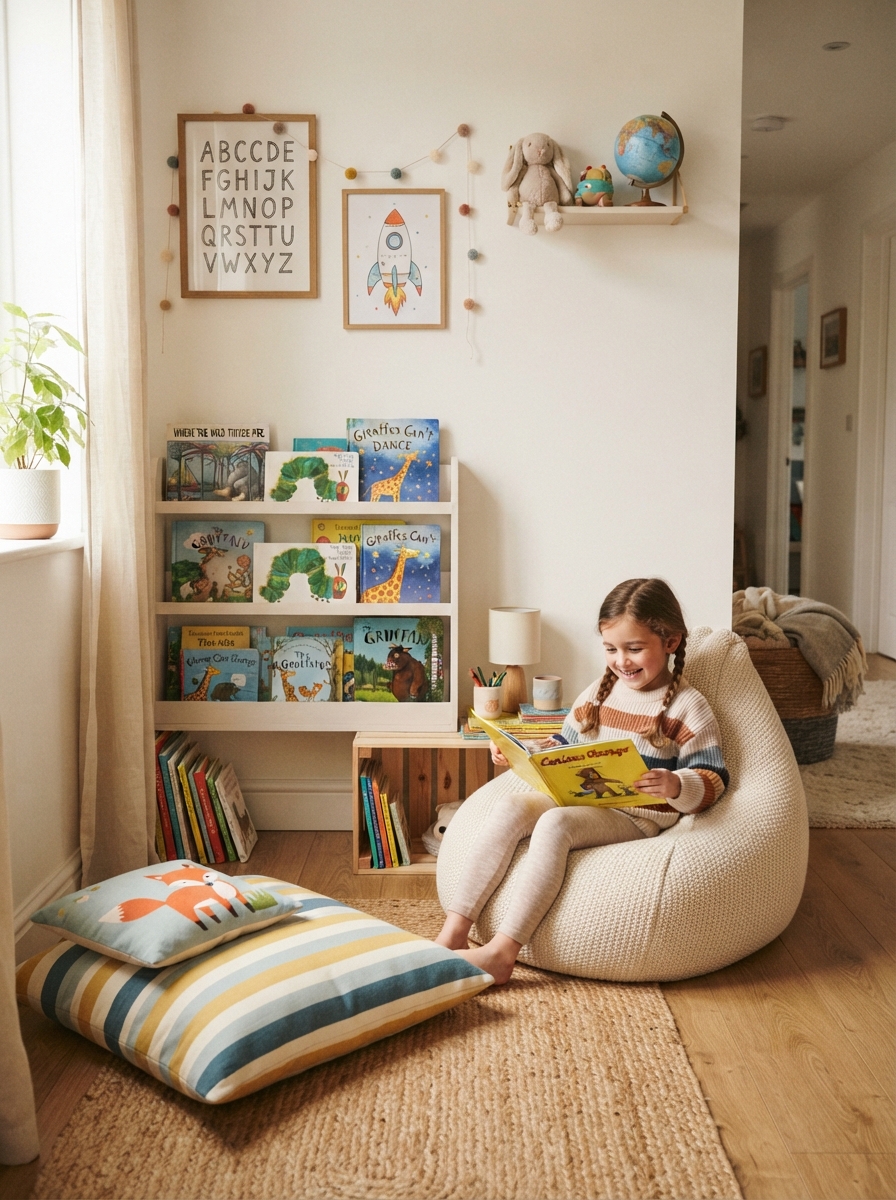
A reading nook scaled down for a child works with many of the same principles as an adult version, adjusted for size and durability. A low bean bag or a floor cushion often works better than a full chair for young children, since it accommodates the sprawled, ever-changing positions kids read in. A shelf at a child’s eye level, rather than adult reach height, makes book selection genuinely independent. Durable, washable fabrics matter more here than in an adult nook, and a soft rug underneath adds a safe landing spot for a young reader who ends up on the floor as often as in the seat.
Lighting Considerations Beyond the Reading Lamp
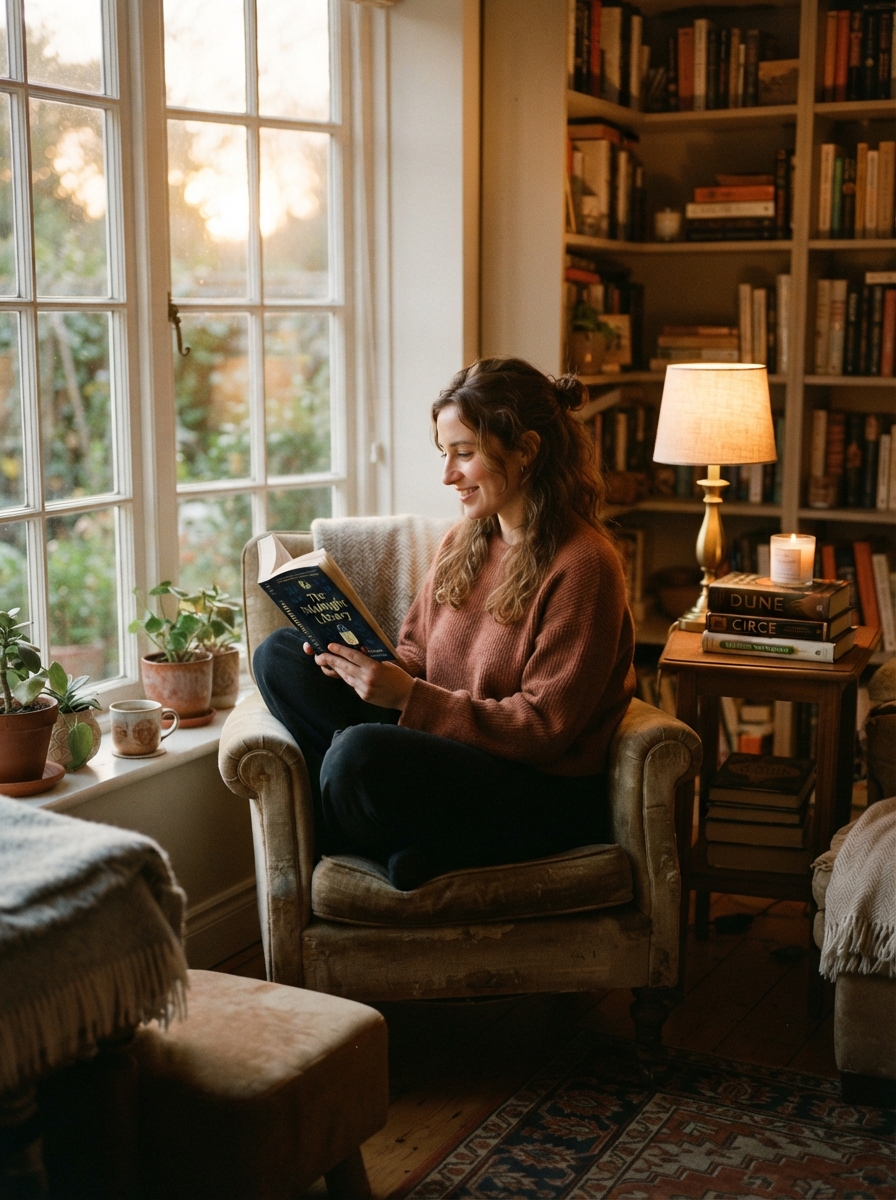
While a dedicated task light is the single most important lighting decision, the broader lighting in the surrounding room also affects how inviting a reading nook feels. Natural daylight during the day reduces the need for artificial light and is generally the most comfortable option for extended reading, so positioning a nook near — but not directly facing — a window balances light quality against glare. In the evening, layering the task lamp with a lower ambient light source elsewhere in the room, rather than relying on a single bright overhead fixture, keeps the whole space feeling calm rather than clinically lit.
Budget-Friendly Reading Nook Ideas
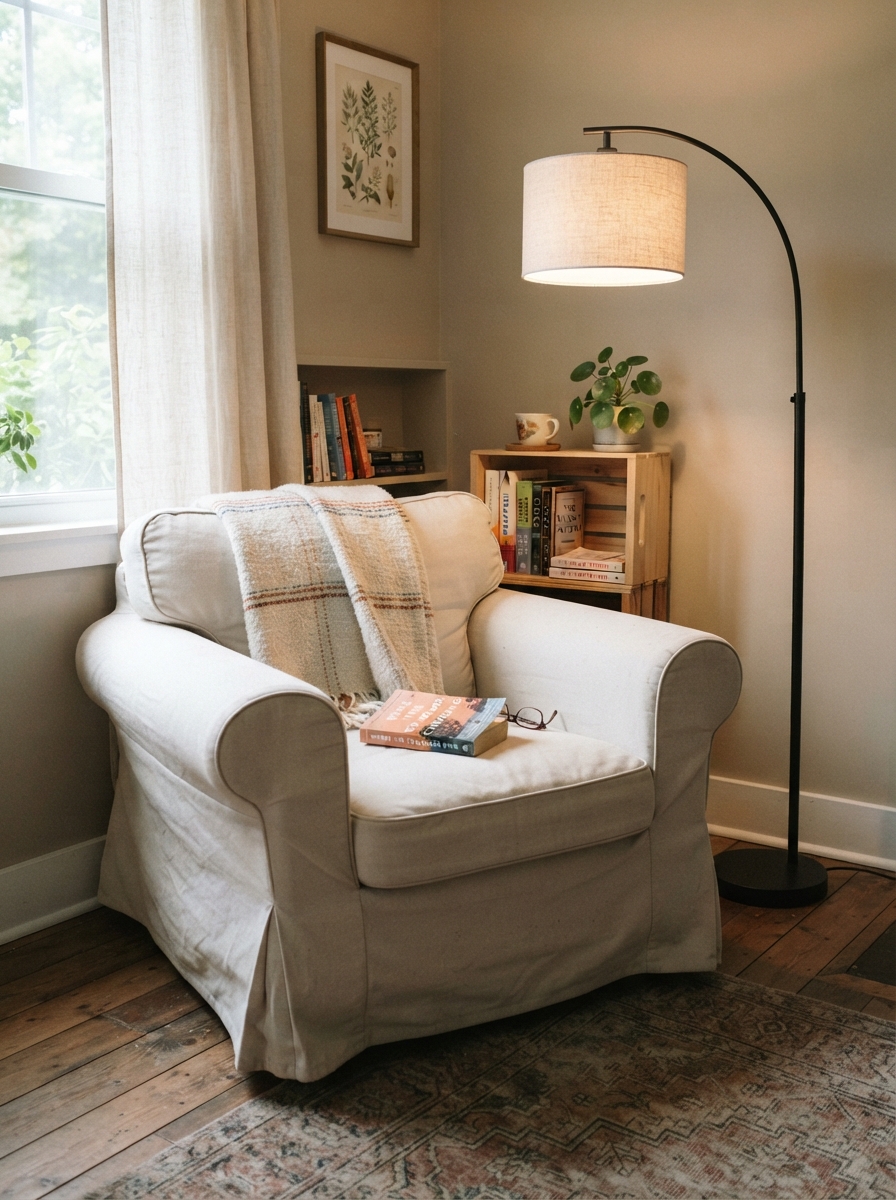
A cozy reading corner doesn’t require an expensive chair or built-in shelving. A secondhand armchair reupholstered or covered with a simple slipcover costs a fraction of buying new, and a floor lamp from a budget retailer performs just as well functionally as a designer version. A stack of wood crates, painted or left natural, makes an inexpensive and genuinely charming alternative to a built bookshelf. And a single thrifted throw pillow or blanket in a complementary color often does more to make a corner feel finished than any single expensive purchase would.
Reading Nooks for Rentals and Small Apartments
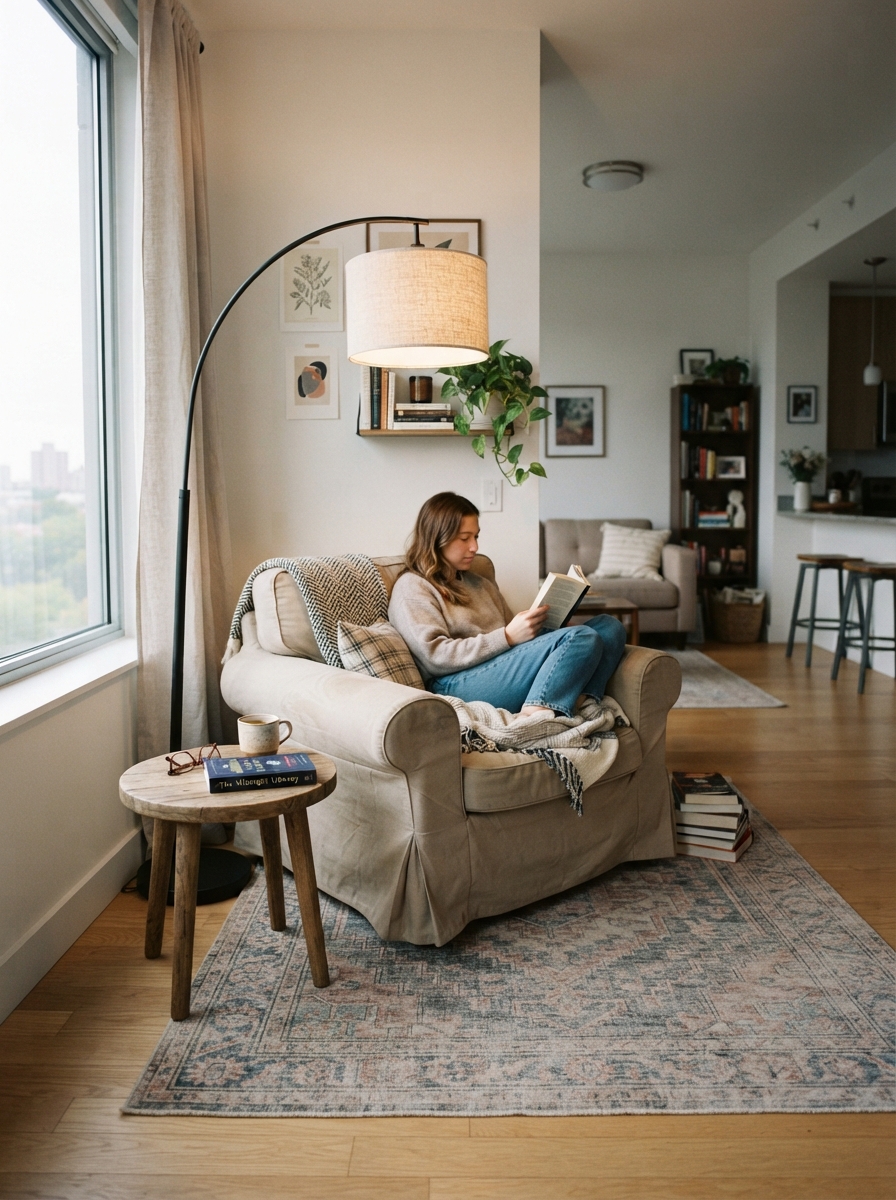
Renters and small-space dwellers can build a fully committed reading nook without any permanent changes to the space. A freestanding lamp instead of a hardwired sconce, a slipcovered secondhand chair rather than a built-in window seat, and a floor rug rather than a fixed installation all deliver the same cozy effect while remaining entirely portable for the next move. In a studio or a shared living room, positioning the nook at a slight angle to the room’s main furniture grouping, even by a few degrees, helps it read as its own distinct zone rather than an extension of the main seating area, which matters more in small spaces where every corner tends to blur into the next.
Reading nook shopping list
- Reading accent chair — built for sitting a while
- Reading floor lamp — directional, over the shoulder
- Ladder bookshelf — narrow footprint, holds plenty
- Throw blanket — the difference between nice and cozy
- Small side table — somewhere to put the cup
- Plug in dimmer switch — warm light without rewiring
Prices and availability change. Links open on Amazon.
Common Reading Nook Mistakes to Avoid
A few habits undercut an otherwise well-planned reading nook. Prioritizing a stylish chair over a genuinely comfortable one is the most common mistake, since a nook that looks good in photos but doesn’t get used has failed at its actual job. Relying solely on overhead lighting, rather than adding a dedicated task lamp, leaves the space poorly lit for actual reading. Overcrowding a small nook with too much furniture — an extra side table, a second chair that’s rarely used — can make a compact corner feel cramped rather than cozy. And skipping a rug or defined boundary in an open room leaves the nook feeling like an afterthought rather than an intentional space.
Final Thought
A reading nook earns its place in the home through comfort first and styling second — the best-looking chair in the world won’t get used if it’s not genuinely pleasant to sit in for an hour. Get the seating, lighting, and book access right, and the space will pull people toward it on its own, without ever needing to be the biggest or most elaborate corner in the house.
Frequently Asked Questions
What makes a reading nook comfortable?
A genuinely supportive chair, a dedicated reading light positioned above shoulder height, and easy access to current books all matter more to comfort than any single decorative choice.
How much space do I need for a reading nook?
A single chair, a small side table, and a floor lamp can fit in as little as a 4-by-4-foot corner, making a reading nook one of the easiest cozy additions to fit into almost any room.
What’s the best lighting for a reading nook?
A warm-toned (2700–3000K) floor lamp or task light positioned just above and behind shoulder height provides the most comfortable, glare-free light for extended reading sessions.
Should I organize my books by color or by genre?
It depends on your priority — color creates a more striking visual display, while genre or subject organization keeps a collection more genuinely functional for finding a specific book quickly.
Can I create a reading nook without a dedicated room?
Yes — an underused living room corner, a window seat, or even a converted closet alcove can all become a cozy, fully functional reading nook without needing a separate room.
What’s the difference between a reading nook and a home library?
A reading nook is typically a single chair and small storage setup in a corner, while a home library extends the same idea across a full wall or room with more extensive shelving and seating for multiple readers.



5 Comments