

A small living room doesn’t have to feel cramped, cluttered, or like a compromise. With the right design choices — the ones interior designers use every day — even the tiniest living space can feel open, airy, and genuinely beautiful. The secret isn’t having more space. It’s using what you have with more intention. Related reading: bedroom. If you want to go further, bathroom covers it in detail.
As an Amazon Associate I earn from qualifying purchases. Some links in this post are affiliate links, at no extra cost to you.
Here are 10 proven small living room ideas that make any space feel dramatically bigger, without tearing down walls or breaking the bank.
✨ Quick Wins in This Guide
- The color choices that make walls visually recede
- Furniture placement tricks that free up visual floor space
- Lighting techniques that add the illusion of height
- Storage solutions that double as decor
1. Choose a Light, Warm Color Palette
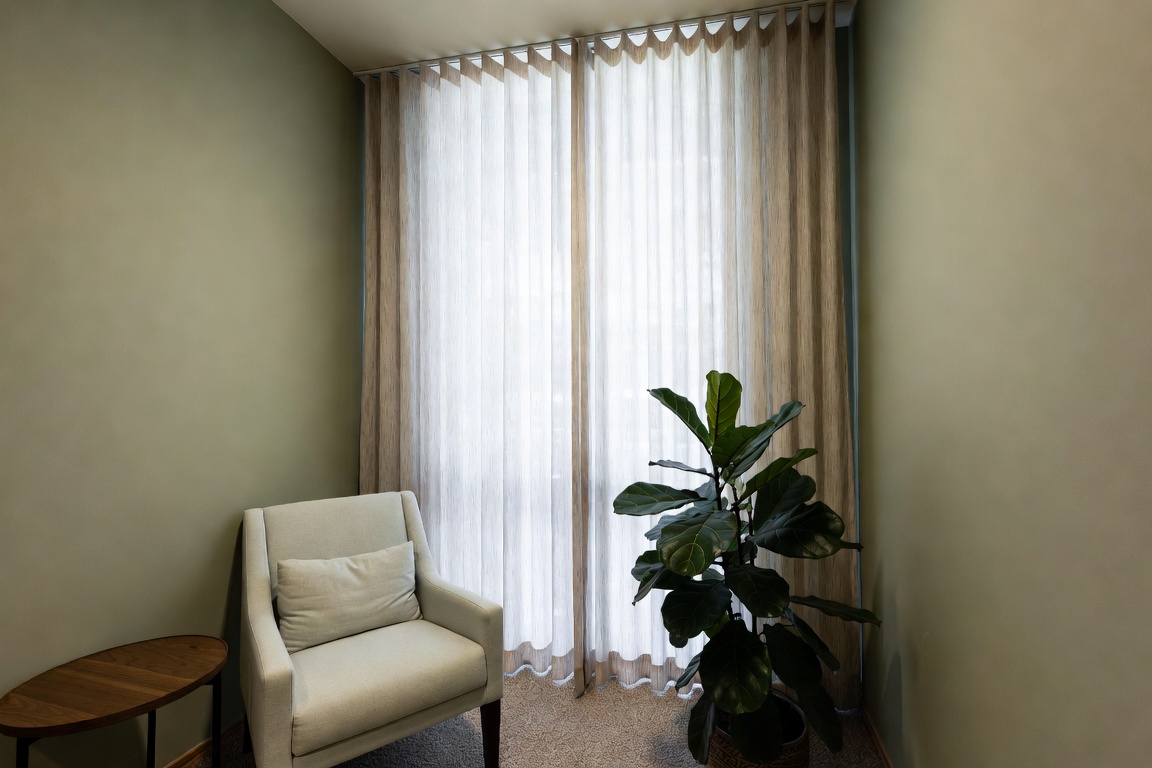
Dark or saturated wall colors absorb light and make a small room’s boundaries feel closer. A palette of warm whites, soft creams, and light greige on walls, ceiling, and large furniture pieces keeps the eye moving freely through the space instead of stopping at a color break. Reserve bolder colors for small accents — a single throw pillow, one piece of art, or a vase — so the room still feels layered and personal rather than sterile. If you want the styling side rather than the space-saving side, our aesthetic living room ideas guide covers that in depth.
2. Choose Furniture With Visible Legs
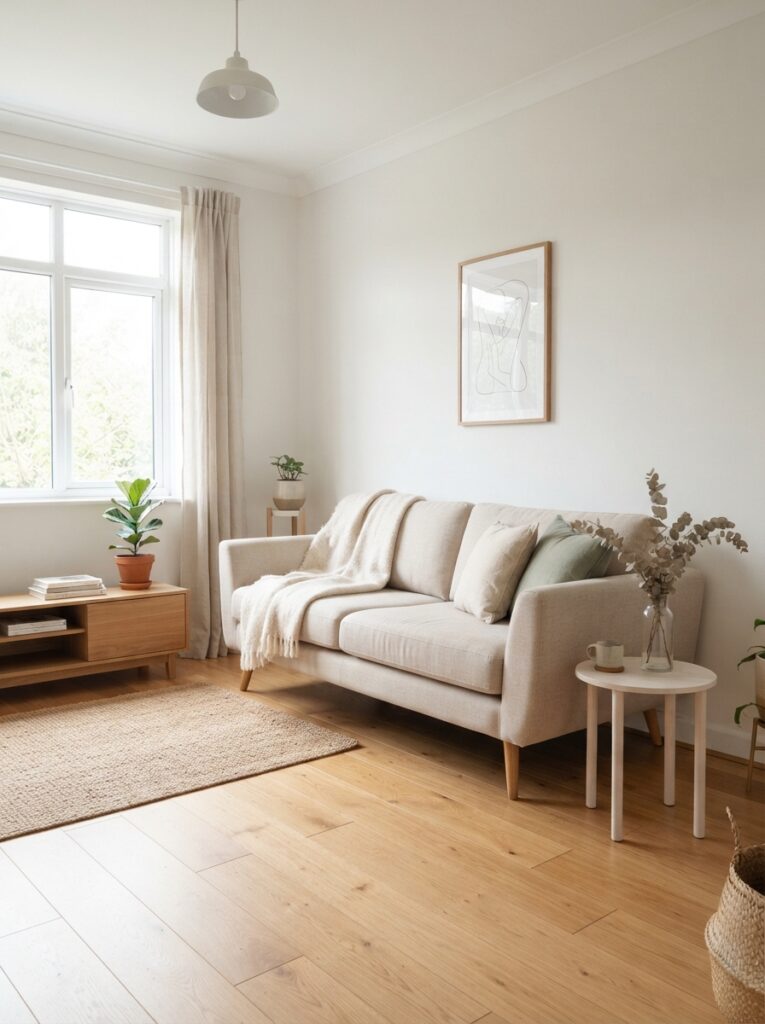
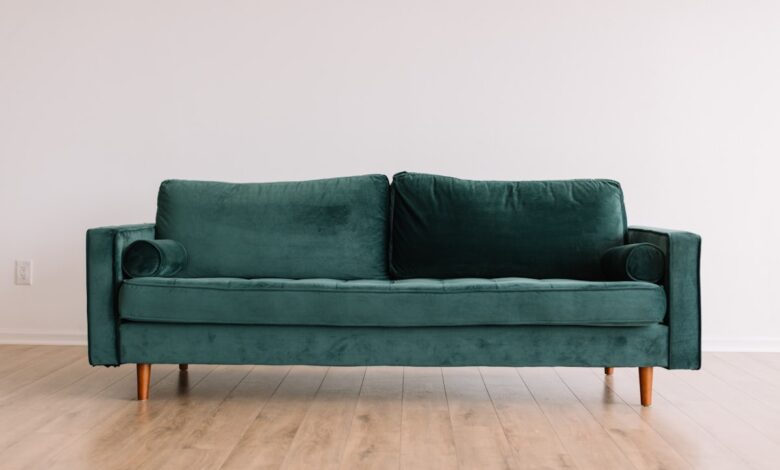
Solid-base furniture — sofas, chairs, and storage units that sit flat on the floor — make a room feel heavy and enclosed. Furniture on legs reveals the floor beneath, creating visual breathing room that makes the space feel larger.
When choosing a sofa for a small living room, opt for one that sits on four visible legs (at least 6″ off the ground). Same for accent chairs and side tables. The visible floor line creates a visual flow that’s almost impossible to achieve with floor-level pieces.
3. Hang a Large Mirror to Bounce Light and Add Depth
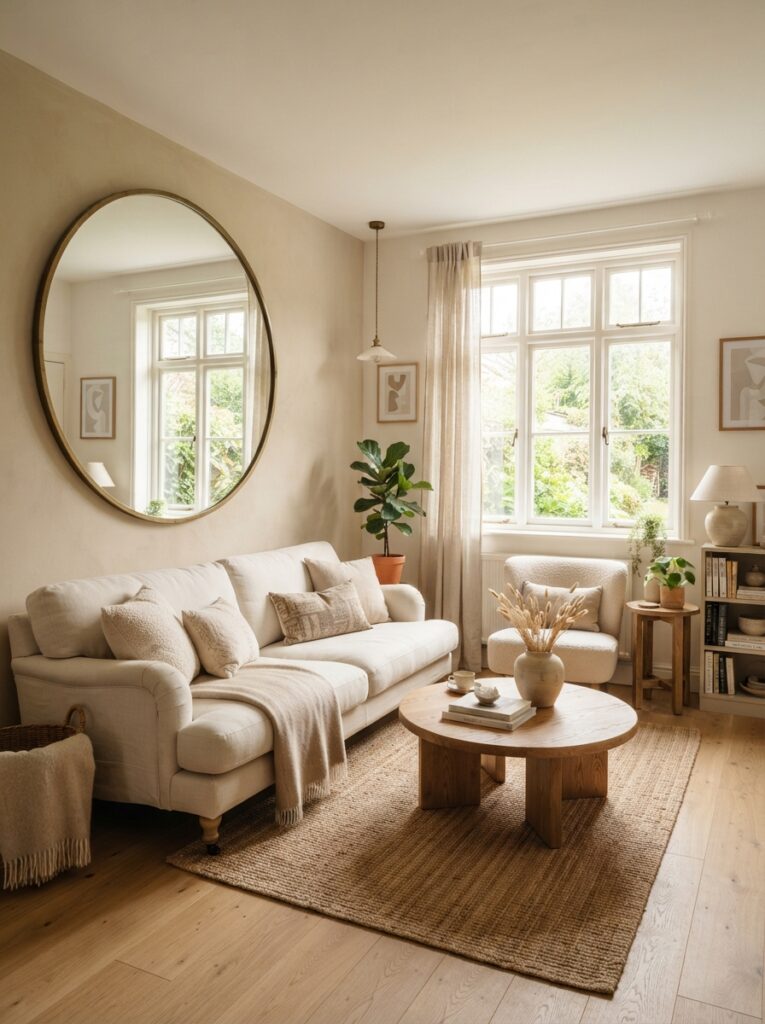
A large mirror is the single highest-impact change you can make in a small living room. Positioned opposite a window, it reflects natural light back into the room and creates the illusion of a second window — instantly doubling the sense of openness. Choose the largest mirror your wall can reasonably hold; an oversized arched or round mirror leaned against the wall or hung low reads as intentional and expensive, even from a thrift-store find repainted in brass or black.
4. Mount Your TV on the Wall
A TV on a TV stand occupies floor space and draws the eye down. Mounting it on the wall frees up significant floor area, raises the visual center of the room, and makes the wall feel purposeful rather than cluttered. Run the cables through the wall with an in-wall cable management kit ($25 on Amazon) for a truly clean look.
While you’re at it — remove the TV stand completely and use that freed floor space for a small console table, a gallery arrangement, or simply nothing. Empty floor space reads as square footage. For more on this, see our 15 small bedroom storage ideas that maximize space guide.
5. Use Multi-Functional Furniture
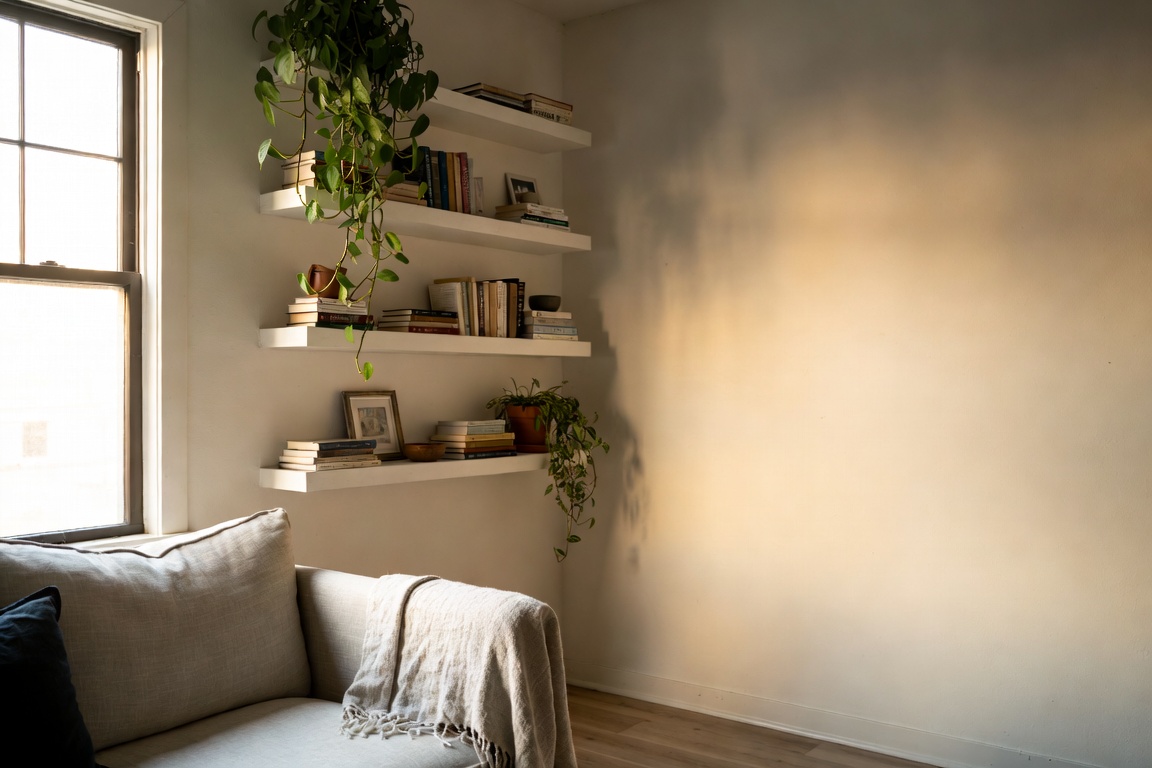
Every piece of furniture in a small living room should work harder than one thing. This isn’t a compromise — it’s smart design.
- Storage ottoman: Acts as a coffee table, extra seating, and hidden storage. If the dining table shares that same room, our small dining room ideas cover the clearances and layouts that keep both zones usable. One of the best small living room investments.
- Sofa with built-in storage: Some designs include storage under the seat cushions — perfect for blankets, pillows, and remote controls.
- Nesting tables: Three tables that stack into one when not in use. Create surface space when needed, disappear when you don’t.
- Folding floor lamp: Provides task lighting without a permanent footprint.
6. Go Vertical with Storage and Decor
In a small room, the walls are your biggest underused resource. Floor-to-ceiling shelving draws the eye upward and makes ceilings feel taller while adding enormous storage capacity without touching the floor plan. Wall space is the most wasted surface in a small room — our 15 easy DIY wall decor ideas put it to work cheaply. If you want to go further, shelf decor ideas: how to style any shelf like a pro covers it in detail.
A tall, narrow bookcase mounted to the wall (IKEA BILLY is the classic) adds storage, display space, and vertical line that the eye follows upward. Style it with a mix of books, plants, baskets, and objects for a curated look that also functions as art.
7. Use One Statement Rug to Define the Space
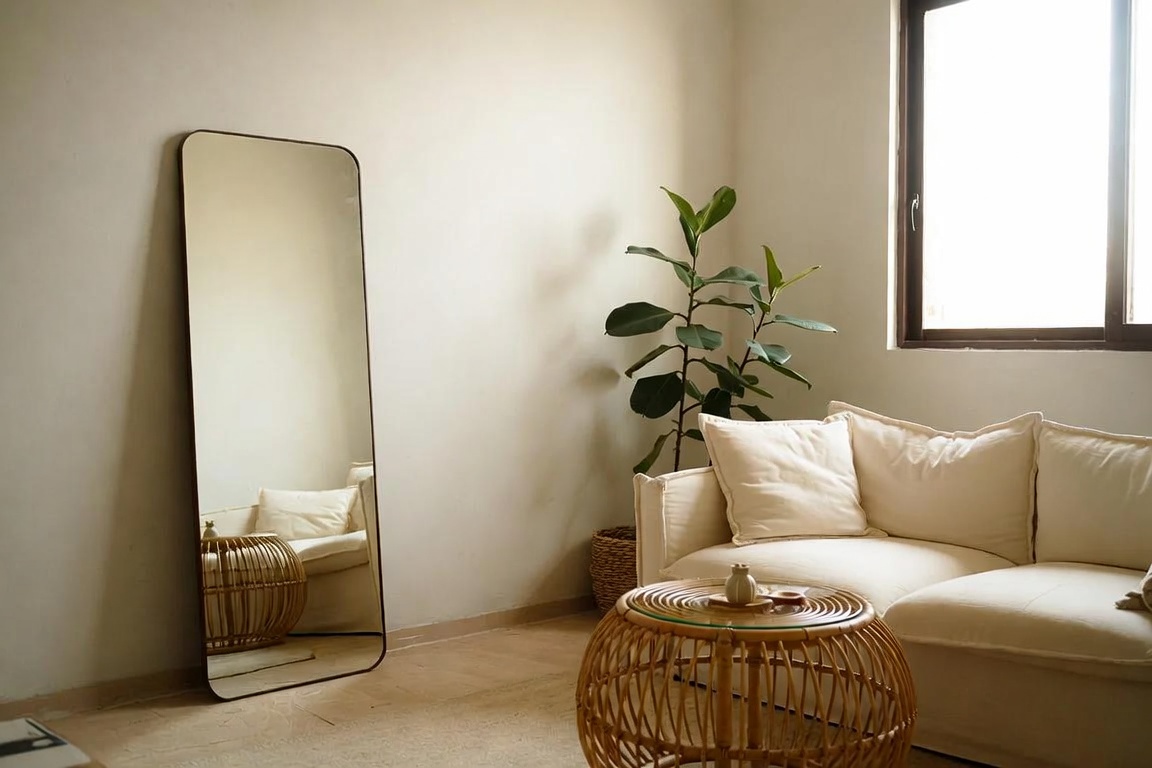
The most common small living room rug mistake: buying one that’s too small. A small rug in a small room makes the room look smaller, not bigger. A rug should be large enough that the front legs of your sofa and chairs sit on it.
This creates a unified “zone” that visually contains the seating area and makes it look intentional. Standard sizes: 8×10 for most living rooms, 9×12 for larger arrangements. Choose a low-pile rug in a light neutral, subtle pattern, or a warm solid — busy patterns and dark colors shrink the visual field.
8. Keep Your Window Treatments Simple and High
Hang your curtain rod as close to the ceiling as possible — not just above the window frame. This draws the eye up and makes the ceiling appear higher. Use curtains that puddle slightly on the floor to emphasize the vertical line. There is more on getting this right in our curtain and window treatment guide.
Choose light, airy fabrics in a color close to the wall tone: sheer linen, voile, or light cotton. Heavy drapes in a contrasting color chop the wall into sections, making it feel shorter and the room feel smaller.
9. Edit Ruthlessly — Less Is More Here
Every extra object in a small living room adds to the visual weight of the space. The goal is a curated selection of meaningful items — not empty minimalism, but intentional curation. Most living room clutter is really a storage problem; our closet organization ideas deal with the overflow.
Remove anything that isn’t functional, beautiful, or both. Limit your coffee table to 3 objects max: a small tray with two items (candle, small plant) plus one statement piece. Keep surfaces clear. One gallery wall is better than art scattered across three walls.
10. Use Lighting to Add Depth and Height
Overhead lighting only creates a flat, one-dimensional space. Layered lighting — floor lamps, table lamps, accent lights — adds depth and warmth that makes a room feel larger and more dimensional.
- One tall floor lamp: Adds vertical height and creates a focal point
- Warm bulbs everywhere (2700K-3000K): Makes the space feel cozy, not cramped
- Uplighting in corners: A small spotlight or LED strip aimed at the corner ceiling creates soft ambient light that makes the ceiling feel higher
11. Float Furniture Instead of Pushing It Against Walls
It seems counterintuitive, but pushing every piece of furniture against the walls actually makes a small living room feel smaller, not bigger. It leaves a large dead zone of empty floor in the middle of the room with no clear purpose, and it forces conversation across an awkwardly wide gap. Pulling your sofa a few inches away from the wall, even just six to twelve inches, creates a sense of depth and lets the room breathe. If the layout allows it, floating the sofa entirely to divide the space (in a studio or open-plan room) can make the living area feel like its own defined zone rather than an edge of a larger room.
12. Use Curved and Rounded Furniture Shapes
Sharp, rectangular furniture with hard corners creates visual stopping points that make a small room feel more chopped up and boxy. Curved silhouettes — a round coffee table, a curved-arm sofa, an oval mirror — let the eye move around the room more fluidly, without hard edges breaking up sightlines. This doesn’t mean every piece needs to be round, but incorporating one or two curved elements into an otherwise angular room softens the overall geometry and makes the space feel more open.
13. Repeat One Material or Finish Throughout
A small room with too many different wood tones, metal finishes, and textures competing for attention feels busier and smaller than it actually is. Choosing one dominant wood tone (light oak, for example) and one metal finish (brushed brass or matte black) and repeating them across your furniture, lighting, and hardware creates a sense of visual calm that makes the whole room read as more spacious. This doesn’t mean everything needs to match exactly, just that the same one or two finishes should show up enough times that the eye recognizes a pattern rather than noise.
Small Living Room Layout Ideas
The right layout depends heavily on the room’s shape and where the windows and doors fall, but a few starting points work in most small living rooms. For a narrow rectangular room, running the sofa along the longest wall and floating a chair or two opposite it, rather than trying to create a boxy four-sided seating arrangement, keeps a clear walking path open. For a nearly square small room, an L-shaped seating arrangement using a loveseat and one or two chairs makes better use of the corners than a single large sofa facing a TV straight on. In open-concept spaces where the living room blends into a dining or kitchen area, a rug is often the single most effective way to visually define where the living room “ends” without adding any physical divider. See also: small laundry room decor ideas that look as good as they work.
Small Living Room shopping list
- Wall mirror — the oldest trick that still works
- Nesting side tables — tuck away when not needed
- Storage ottoman — seating, storage, footrest
- Slim floor lamp — light without floor space
- Wall mounted shelves — vertical over horizontal
- Light coloured area rug — opens the floor visually
Prices and availability change. Links open on Amazon.
Common Small Living Room Mistakes to Avoid
A handful of habits undercut small living rooms more than any single design choice helps them. Buying furniture at full scale, rather than measuring first, is the most common and hardest to fix after the fact — a full-depth sofa built for a large family room overwhelms a small space no matter how well it’s styled around. Overcrowding walls with too many small pieces of art, rather than fewer larger ones, makes walls feel busy and the room feel more chaotic. And skipping curtains entirely, thinking bare windows make a room feel more open, usually backfires — well-chosen, correctly hung curtains almost always make a small room feel more finished and, paradoxically, more spacious than no window treatment at all. If you want to go further, small Home office ideas for any room (2026) covers it in detail.
Small Living Room Ideas on a Budget
Not every one of these changes requires a large investment. A large mirror, a properly sized rug, and hanging curtains higher and wider than the window frame are three of the highest-impact changes on this list, and all three can be done affordably with ready-made pieces from a budget retailer. Repainting the walls a warm white or light greige is one of the cheapest possible transformations relative to its impact, especially if the room currently has a dark or dated color. Save bigger purchases like a properly scaled sofa for when you can invest in one you’ll be happy with long-term, and use smaller, low-cost changes to make the current space feel better in the meantime.
FAQ: Small Living Room Design
What colors make a small living room look bigger?
Warm whites, soft creams, and light greige (gray-beige) make rooms feel larger. The key is to use the same light tone on walls and ceiling to remove the visual boundary between them. Avoid dark colors and stark white, which either shrink the space or feel clinical.
What size rug for a small living room?
Bigger than you think. In most small living rooms, an 8×10 rug is the minimum. The front legs of your sofa and chairs should sit on the rug — this visually unifies the seating area and makes the room feel intentional and larger.
Should I use a sectional sofa in a small living room?
A small sectional (under 100″) can work in a small living room if it’s on legs and doesn’t block natural pathways. Choose an L-shape that fits along two walls. Avoid large sectionals that crowd the center of the room.
How do I make a small living room feel cozy but not cramped?
Cozy comes from texture, not from filling space. Layer soft textiles: a throw blanket on the sofa, a plush rug, velvet or linen cushions. Use warm lighting. Add a few plants. The trick is warmth through material, not volume of objects.
Start With One Change
You don’t need to implement all 10 ideas at once. The highest-impact single change for most small living rooms is hanging a large mirror opposite a window. Do that this weekend and feel the difference before touching anything else.
Explore more design inspiration in our interior design tips section, or check out our living room decor ideas for more ways to style your space.
📌 Save for Later
Pin this to your Small Living Room board on Pinterest for when you’re ready to transform your space.





7 Comments