

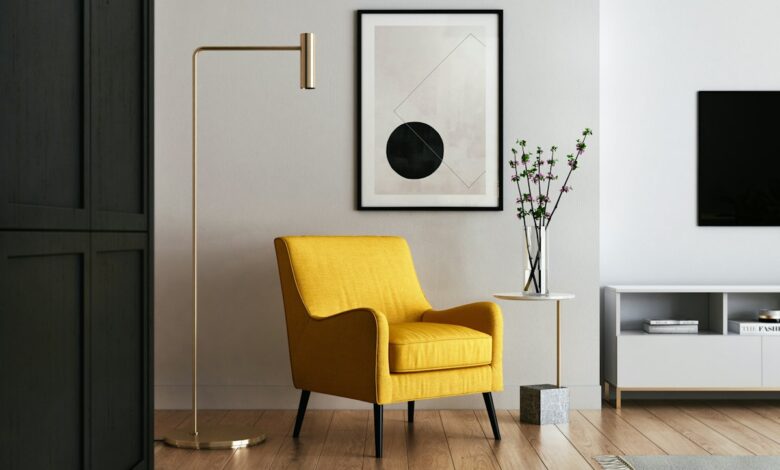
These interior design rules for beginners cut through the intimidation of starting out, when there are so many choices, so many opinions, and seemingly infinite ways to get it wrong. Here’s the thing: professional designers rely on a handful of core principles that make every space work. Learn these 7 rules and you’ll have a framework that guides every room, every decision, every time.
As an Amazon Associate I earn from qualifying purchases. Some links in this post are affiliate links, at no extra cost to you.
✨ What You’ll Learn
- The 60-30-10 color rule that professional designers swear by
- How to scale furniture correctly for any room size
- The odd-number rule that makes every grouping look curated
- Why flow and function matter before aesthetics
Rule 1: Give the Room One Clear Focal Point

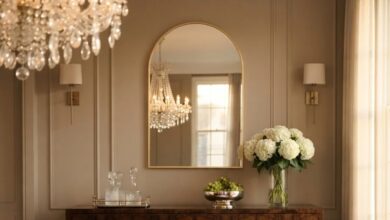
Every well-designed room has one clear focal point — the thing your eye goes to first when you enter. In a living room, it might be the fireplace, a large piece of art, or an accent wall. In a bedroom, it’s almost always the headboard wall. In a dining room, the table and lighting fixture together.
The rule: identify the natural focal point of the room (usually the architectural element or the first thing you see when entering) and design around it. Arrange furniture to face or frame it. Keep the surrounding areas calmer so the focal point has room to breathe and command attention.
If your room has no natural focal point (common in boxy rental apartments), create one: a large piece of art, a dramatic floor lamp, a wallpapered accent wall, or even a large plant in a statement pot.
Rule 2: Apply the 60-30-10 Color Rule
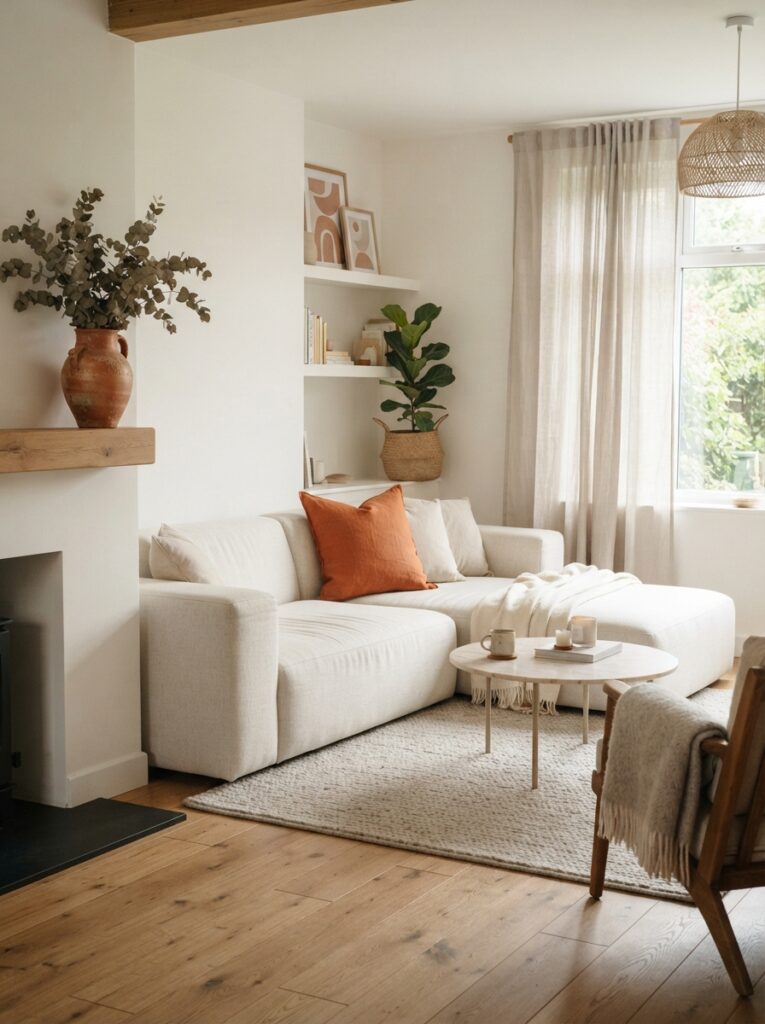
Every cohesive room follows a simple ratio: 60% dominant color (usually walls and large furniture), 30% secondary color (upholstery, curtains, an area rug), and 10% accent color (pillows, art, small accessories). This ratio prevents the two most common beginner mistakes — a room that’s all one color and feels flat, or a room with too many competing colors that feels chaotic. You can see the rule applied across six different palettes in our 35 aesthetic bedroom ideas.
To apply it: choose a neutral (white, greige, warm beige) for your 60%, a slightly deeper tone in the same family for your 30%, and one genuine pop of color — rust, sage, navy, mustard — for your 10%. That accent color should show up in at least two or three places around the room (a pillow, a piece of art, a vase) so it reads as intentional rather than accidental.
Rule 3: Scale Furniture to the Room
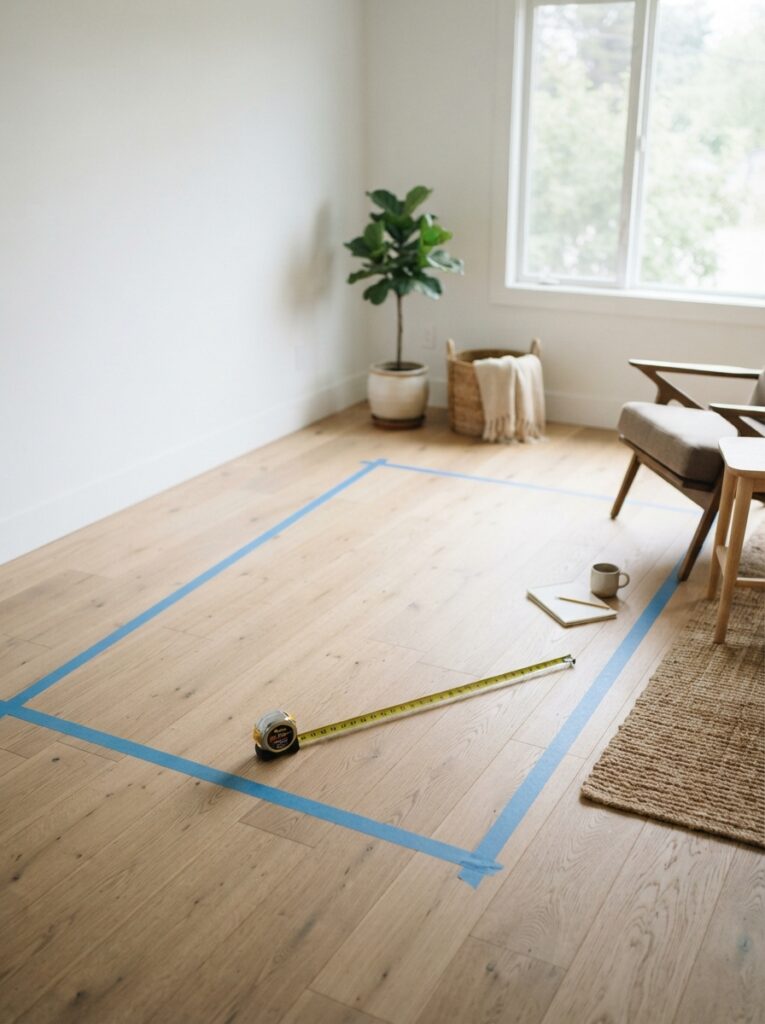
Furniture that’s the wrong size for a room is one of the fastest ways to make a well-decorated space feel off, even when every individual piece is beautiful on its own. A general rule: your sofa should take up no more than two-thirds of the length of the wall it sits against, and there should be at least 30 inches of walking space around major pieces so the room doesn’t feel like an obstacle course. More on that in wall art arrangement tips every homeowner should know.
Before buying anything, measure your room and tape off the exact dimensions of a piece on the floor with painter’s tape. It sounds excessive, but it’s the only reliable way to know whether a sofa, dining table, or bed frame will actually fit the way you picture it — not just physically fit, but leave the room feeling balanced rather than crowded or sparse.
Rule 4: Use Odd Numbers for Groupings
This sounds like a small thing, but it has an outsized effect on how “curated” a space looks. When grouping objects together — on a shelf, on a coffee table, on a nightstand — groups of odd numbers (1, 3, or 5) look more natural and visually interesting than even numbers.
Two objects look like a pair. Three objects create a visual triangle that the eye can move between naturally. Five objects allow for height variation that creates rhythm. Even numbers feel static; odd numbers feel dynamic.
In practice: Style your bookshelf with groups of 3 objects between books. Arrange your coffee table with a tray containing 3 items. Put 3 plants of varying heights in a corner. This single rule makes any grouping look intentionally designed.
Rule 5: Layer Your Lighting

Relying on one overhead light source is the fastest way to make a beautifully designed room feel flat and uninspiring. Professional designers always layer three types of lighting: Layered lighting is the single change most beginners underestimate — our cozy bedroom on a budget guide shows it working in one room.
- Ambient: General illumination — your overhead fixture, recessed lights, or flush mount. Sets the base light level.
- Task: Directed light for specific activities — a desk lamp, a reading lamp, under-cabinet kitchen lighting. Functional but also adds pools of warm light.
- Accent: Decorative light — a floor lamp, LED strips behind a TV or shelving, candles, string lights, a neon sign. Creates mood and dimension.
The magic happens when you switch off the overhead and rely only on task and accent lighting in the evening. The room transforms from a lit space into an atmospheric one.
Rule 6: Mix Old and New, Expensive and Affordable
One of the hallmarks of professionally designed spaces is the intentional mixing of high and low — a vintage thrifted chair beside a brand-new sofa, an inexpensive IKEA bookcase styled with carefully chosen books and objects, a $15 Amazon mirror beside a $200 vintage sideboard.
This mixing creates authenticity that all-new or all-matching rooms lack. It suggests the space was built over time by someone with a genuine eye, not assembled from a catalog. It also makes good financial sense — invest in pieces that will be seen and touched daily (sofa, bed, rug) and save on backgrounds and accessories.
Rule 7: Design for How You Actually Live, Not How You Think You Should

The most beautifully styled room that doesn’t work for how you actually live is a failed design. If you have kids or pets, you need durable, washable fabrics — not velvet. If you work from home, your living room needs to function as a workspace too. If you love having people over, traffic flow matters more than symmetry.
Ask yourself these questions before every major design decision:
- How do I actually use this room every day?
- What frustrates me most about this space right now?
- What do I need to do here easily and comfortably?
Great design solves real problems beautifully. Always function first, then aesthetics on top.
Rule 8: Size Your Rug to the Furniture, Not the Floor
A rug that’s too small is one of the most common beginner mistakes, and it’s an easy one to fix once you know the rule. In a living room, all four legs of the sofa and chairs should ideally sit on the rug, or at minimum the front legs should rest on it so the seating area reads as one connected grouping rather than furniture floating disconnected from a small island of rug in the middle of the room. In a dining room, the rug should be large enough that all four chair legs stay on it even when pulled out from the table, which usually means at least 24 to 30 inches of rug extending past the edge of the table on every side. Rug sizing matters most in tight rooms; our small living room ideas cover the exact dimensions.
A rug that’s undersized relative to the furniture makes an entire room look smaller and less finished, even if every other element is styled correctly. When in doubt, size up rather than down — a slightly oversized rug almost always reads better than one that leaves furniture legs stranded on bare floor.
Rule 9: Hang Art at Eye Level, Not Ceiling Level
Art hung too high is one of the most common — and most fixable — mistakes in beginner spaces. The standard gallery rule is to hang art so the center of the piece sits at 57 to 60 inches from the floor, which approximates average eye level. This applies whether the art is going above a sofa, in a hallway, or above a console table. If you are building a gallery wall, our 15 easy DIY wall decor ideas walk through the layout.
Above furniture, there’s a second rule to layer on top of eye level: leave 6 to 8 inches of space between the top of the furniture and the bottom of the frame. This keeps the art visually connected to the piece below it rather than floating awkwardly closer to the ceiling. For a gallery wall of multiple pieces, treat the whole grouping as one large rectangle and center that rectangle at eye level, rather than centering each piece individually.
Rule 10: Repeat at Least One Element Three Times
Cohesive rooms almost always repeat a color, material, or shape at least three times around the space. If your accent color is terracotta, it might show up in a throw pillow, a piece of art, and a vase. If your material of choice is a warm wood tone, it might repeat in a coffee table, a picture frame, and a set of shelf brackets. This repetition is what makes a room feel like it was designed as a whole rather than assembled piece by piece with no relationship between the parts.
The easiest way to apply this rule as a beginner is to pick one accent color and one material finish before you buy anything else, then intentionally look for ways to work each into at least three different objects in the room. It sounds almost too simple, but it’s one of the most reliable tricks professional designers use to make a space feel pulled-together rather than accidental.
Rule 11: Leave Negative Space Alone
Beginners often equate a well-decorated room with a fully decorated room, filling every shelf, every wall, and every surface with objects and art. But negative space — the intentionally empty areas between and around objects — is what allows the pieces you do choose to stand out and breathe. A shelf with every inch filled reads as cluttered no matter how nice the individual items are; the same shelf with a third of its surface left empty reads as curated.
A useful guideline: aim to fill roughly 70 to 80% of a surface or wall, leaving the remainder as breathing room. This applies to bookshelves, gallery walls, console tables, and even entire rooms. If a space feels busy or overwhelming despite good individual pieces, the fix is often removing something rather than adding something.
Applying These Rules on a Beginner Budget
None of these seven core rules require an unlimited budget to execute. The 60-30-10 color rule works with paint you already own and pillows from a budget retailer just as well as with designer fabric. Furniture scaling only costs the price of painter’s tape and a tape measure. The odd-number rule for styling costs nothing beyond rearranging what you already have on a shelf. Even lighting layers can start small — a single inexpensive floor lamp and a strand of warm-toned LED strips will get you most of the way to a professionally layered look before you invest in anything more expensive. Our affordable interior design principles go further on doing this cheaply.
The rules that do involve spending — a properly sized rug, a piece of art hung correctly, a mix of vintage and new furniture — are also the ones where a single well-chosen purchase does the most visual work. Prioritize the rug and the art placement first if your budget is limited; both have an outsized effect on how finished a room looks relative to their cost.
Interior Design shopping list
- Measuring tape — half of design is measuring
- Area rug — the rule people get wrong most
- Floor lamp — three light sources per room
- Wall mirror — placement beats size
- Paint sample pots — test before you commit
- Picture hanging kit — hang at eye level
Prices and availability change. Links open on Amazon.
FAQ: Interior Design for Beginners
Where should a beginner start with interior design?
Start with the 60-30-10 color rule. Identify your dominant color, secondary color, and one accent color. Apply it to one room. This single framework will give every design decision a reference point and prevent the “nothing goes together” feeling that frustrates most beginners.
What are the most common interior design mistakes?
Furniture that’s too small for the space, rugs that are too small, art hung too high (eye level means the center of the piece at 57-60 inches from the floor), all-matching furniture sets, and only one light source. Fix these five things in any room and it will immediately look more professional.
Do I need to hire an interior designer?
Not for most projects. For full home renovations or complex architectural changes, a professional adds significant value. For decorating and styling individual rooms, the seven rules in this guide give you a professional framework you can apply yourself. Start with one room, apply the rules, and build confidence from there.
📌 Keep This Handy
Save to your Interior Design board on Pinterest — these 7 rules work for every room you’ll ever design.

3 Comments