

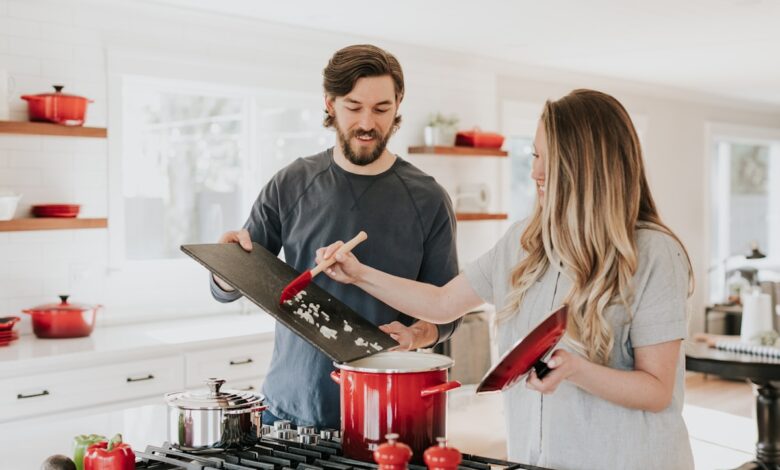
Your kitchen countertops are prime real estate — they’re the most-seen surface in one of the most-used rooms in your home. Yet most kitchens leave them either completely bare (clinical, unfinished) or completely cluttered (chaotic, overwhelming). Interior designers know exactly how to thread that needle.
Here’s how to style your kitchen countertops like a professional — making them look curated, functional, and genuinely beautiful every day.
✨ The Designer Formula
- The “keep-hide-display” method for every countertop item
- How to create intentional vignettes that look styled, not random
- The materials that always elevate a kitchen aesthetic
- Which appliances to show vs. store away
Start with the “Keep, Hide, Display” Method
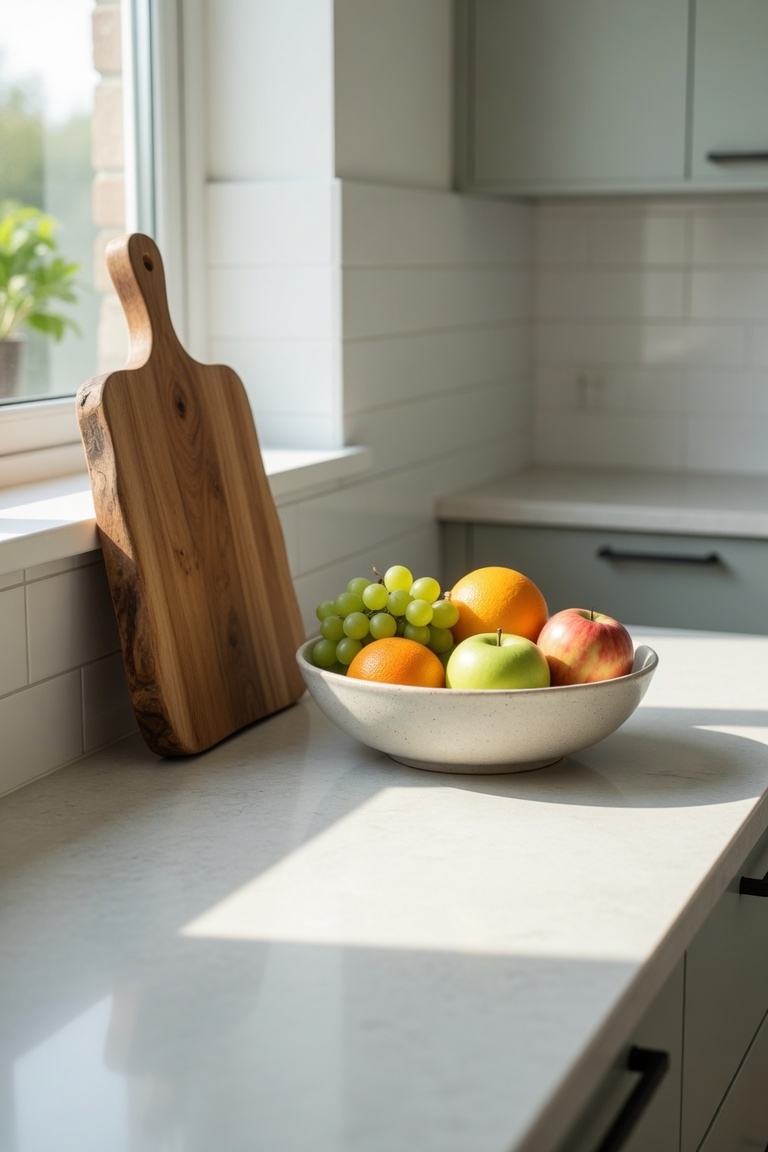
A vignette is a small, intentional grouping of objects that tells a visual story. On a kitchen counter, a vignette might be:
- A wooden cutting board (large, leaned against the wall) + a small potted herb in a terracotta pot + a stone salt cellar
- A ceramic canister set + a single cookbook open to a beautiful page + a linen dish towel folded neatly nearby
- A fruit bowl with 3–5 seasonal fruits + a small olive oil bottle with a nice label + fresh herbs in a small jar of water
The key: odd numbers of objects (3 or 5), varying heights, and a mix of materials (ceramic, wood, metal, fabric, or plant). Every counter section should feel like it was arranged, not dropped.
Use a Tray to Contain and Elevate
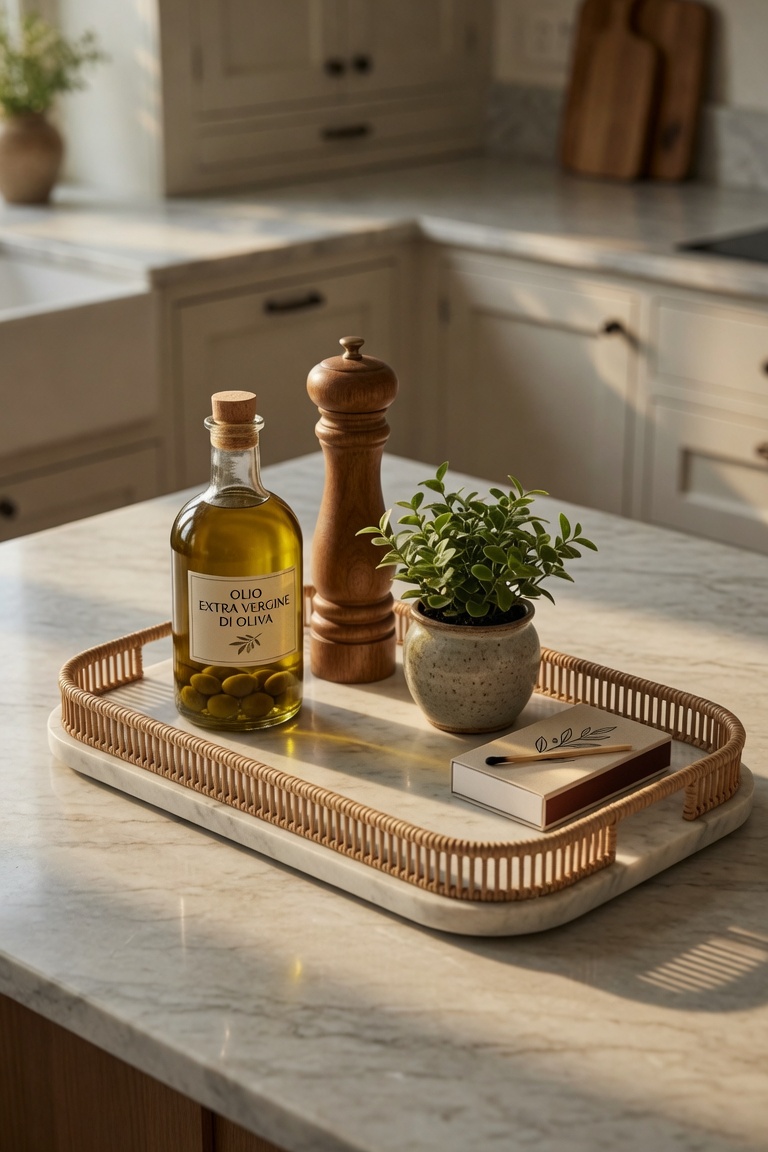
A simple wooden, marble, or woven tray placed on the counter does something almost magical — it turns a random collection of items into a curated display. A tray creates a visual boundary that says “these items belong together” and immediately makes them look more intentional.
Use a tray to:
- Corral your coffee station (machine, mugs, a small plant, sugar bowl)
- Group your cooking oils and a small herb plant by the stove
- Create a “morning essentials” zone near the kettle
Material recommendations: a large wooden serving board (doubles as functional), a marble slab tray, a woven seagrass tray, or simple white ceramic.
Add Height Variation
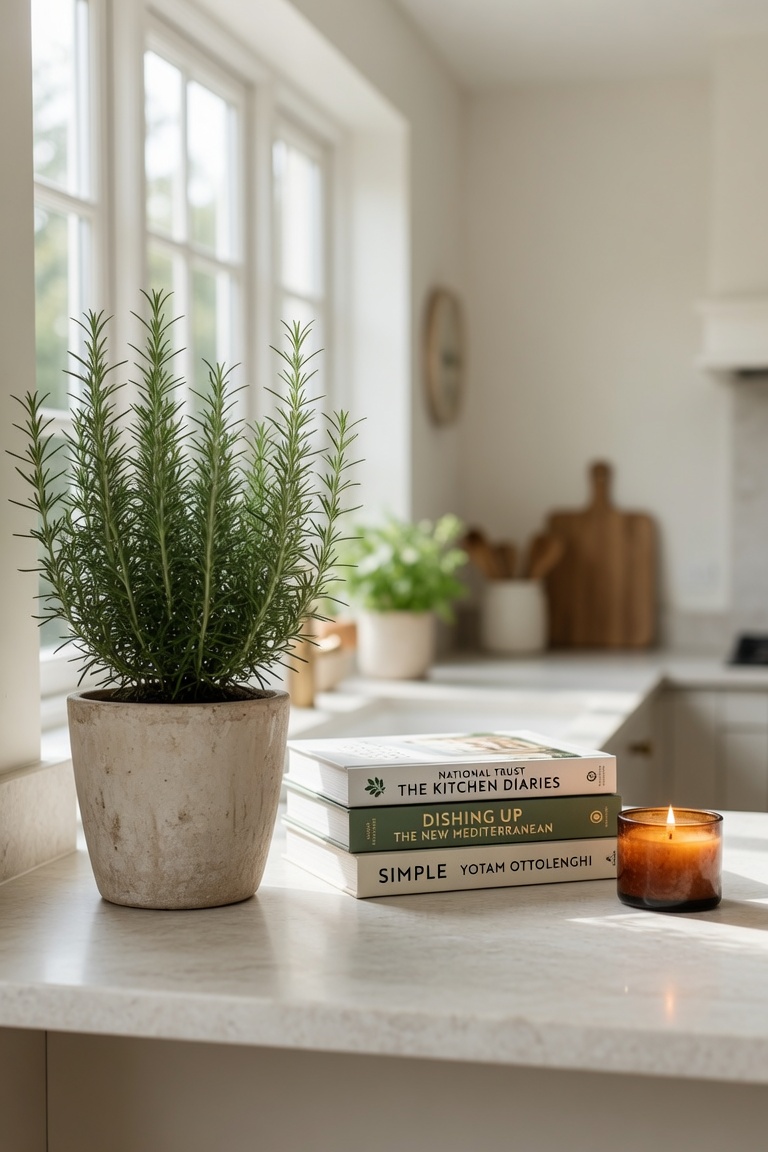
A flat countertop arrangement (everything the same height) looks monotonous. Interior designers always create vertical variation by mixing items of different heights.
The formula: one tall element, one medium, one low. For example:
- Tall: A potted trailing plant, a tall cookbook spine-out, a large olive oil bottle
- Medium: A canister, a small appliance, a mortar and pestle
- Low: A wooden board flat on the surface, a small bowl of fruit, a folded cloth
This height variation creates visual rhythm that makes the eye move across the counter pleasantly.
Choose Materials That Elevate
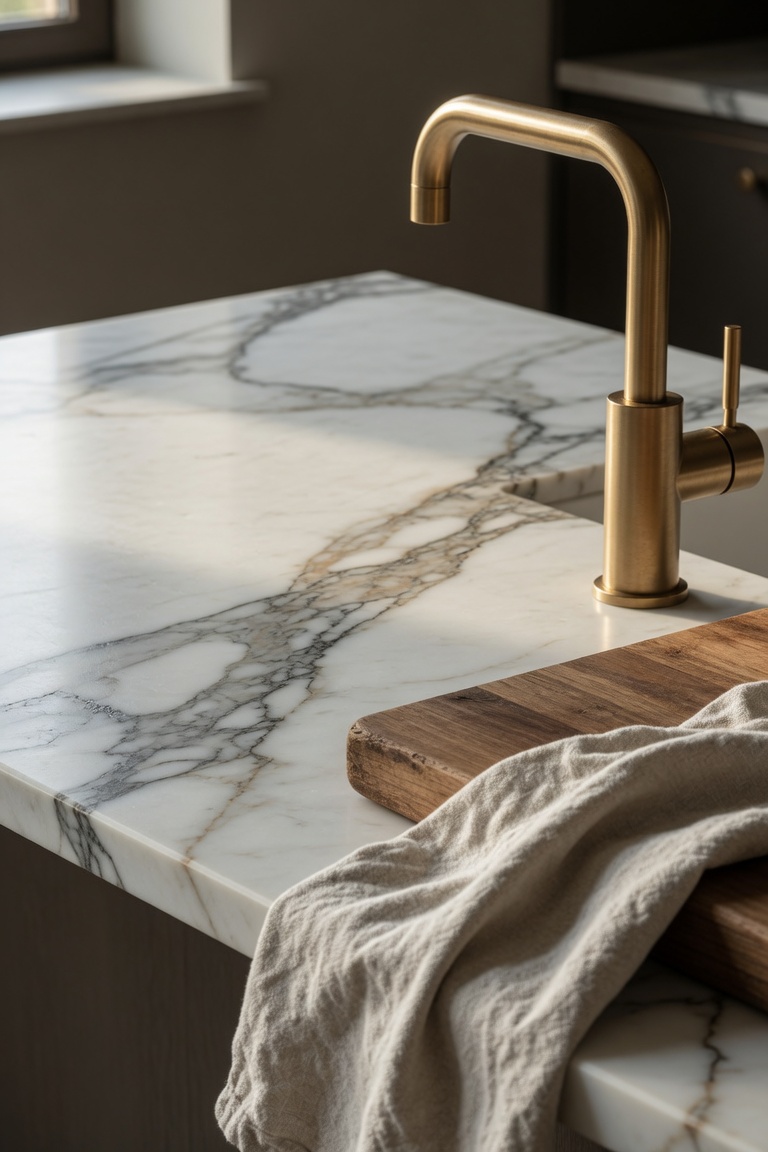
The materials on your countertops say as much as the objects themselves. Swap plastic and cheap-looking items for natural materials wherever possible:
- Wood: Cutting boards, utensil holders, trays, serving boards. Warm, natural, always appropriate in a kitchen.
- Ceramic: Canisters, bowls, herb pots, soap dispensers. Available in beautiful matte tones that photograph magnificently.
- Stone: A marble tray, a soapstone salt bowl, a granite mortar and pestle. Adds visual weight and luxury at the counter level.
- Linen: A folded dish towel draped over an oven handle or tucked beside the sink adds softness that ceramic and stone alone can’t provide.
Bring in One Plant (or Fresh Herbs)
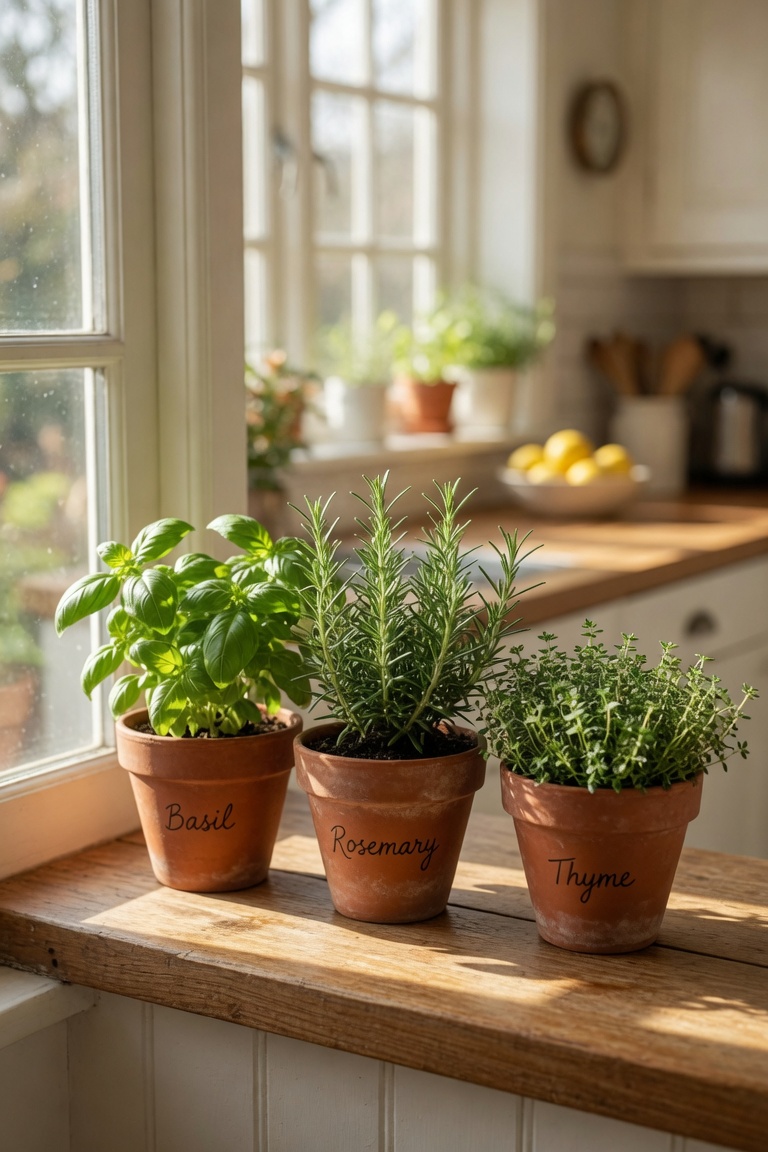
A single plant on the kitchen counter adds life that no object can replicate. The best options for kitchens:
- Fresh herbs in a pot: Basil, rosemary, or thyme in a small terracotta pot is both beautiful and functional. It gets used and smells incredible.
- Pothos in a small ceramic pot: Indestructible, tolerates the humidity and temperature variations of a kitchen, looks beautiful trailing off a shelf or sitting on the counter.
- Aloe vera: Practical (soothing burns happens in kitchens) and sculptural. Thrives on neglect.
Display One Beautiful Cookbook
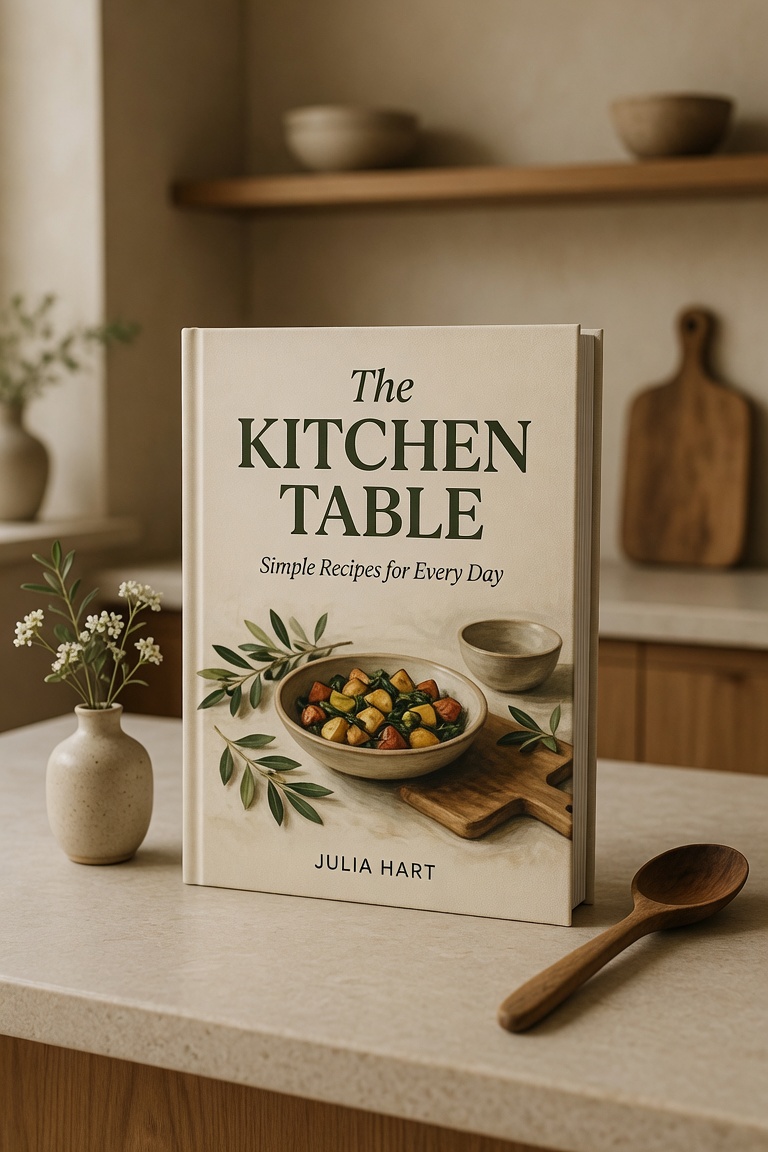
A beautiful cookbook propped open or standing upright on the counter (cover or spine facing out) is one of the most impactful pieces of kitchen “decor” that also happens to be functional. Choose one with a cover that complements your kitchen aesthetic — there are cookbooks with art-quality photography that work as coffee table books and cooking references simultaneously.
Stand it in a simple book stand, lean it against the backsplash, or display it on a small cookbook holder. It adds color, a sense of life being lived, and a focal point to the counter area.
FAQ: Kitchen Countertop Styling
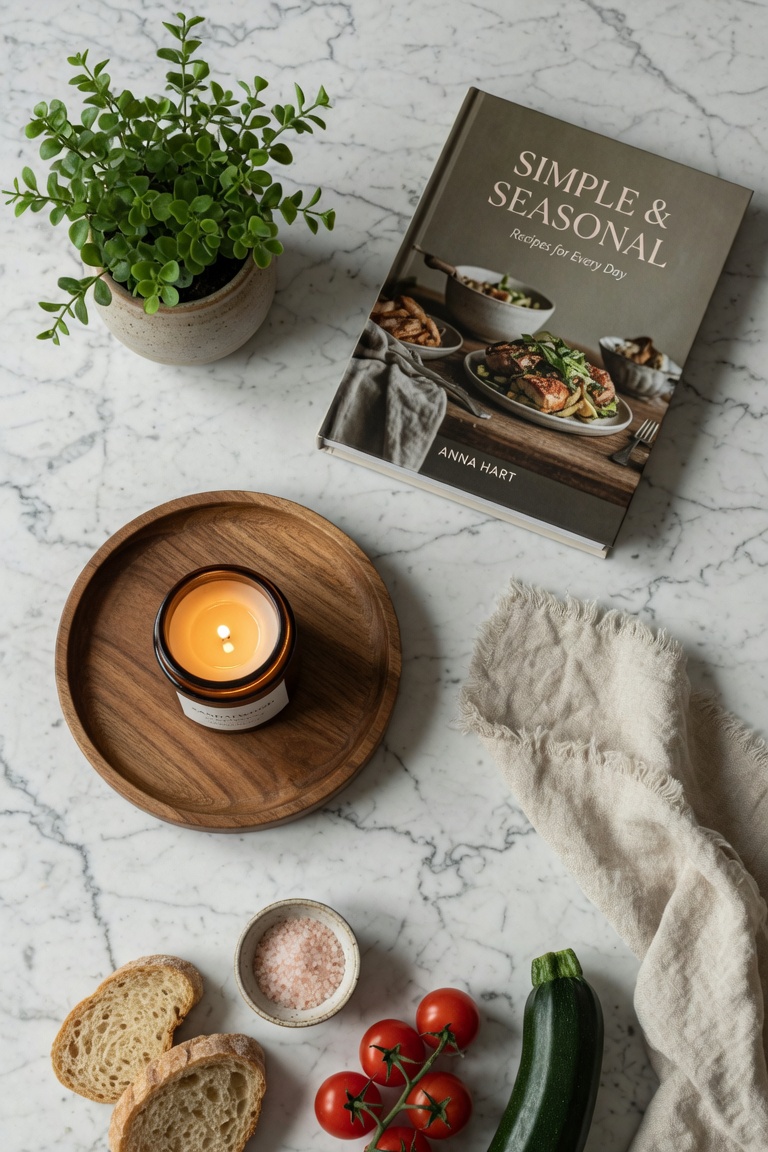
What should always be on a kitchen counter?
Only what you use every single day and what contributes to the aesthetic. At minimum: your most-used appliance (coffee maker or kettle), one plant or herbs, and one beautiful functional object (a wooden cutting board, a nice knife block, a ceramic canister set). Everything else should earn its counter space or be stored away.
How do I make my countertops look more expensive?
Replace plastic items with natural materials (wood, ceramic, stone). Add one plant. Use a tray to group items. Lean one large cookbook against the backsplash. Clear everything that doesn’t belong. These five changes cost very little but instantly elevate the perceived quality of the space.
How many items should be on a kitchen counter?
The professional rule: leave at least 60% of your counter surface completely clear. The remaining 40% should have intentional items in grouped vignettes. If your counter is 10 feet long, that means 4 feet of styled display and 6 feet of working clear space.
📌 Save These Tips
Pin to your Kitchen Decor board on Pinterest for your next kitchen styling session.
