

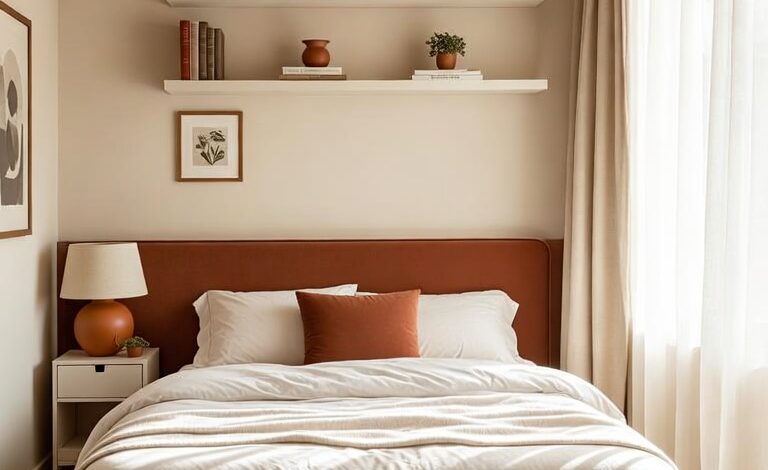
Why Small Bedroom Storage Is So Hard to Get Right
A small bedroom has exactly two jobs: let you sleep well, and hold everything you own. The second job is the one that usually loses. Clothes pile on chairs, shoes migrate under the bed in loose bags, and the one dresser you own is somehow never enough. These small bedroom storage ideas are built specifically for rooms where you can’t just buy a bigger closet or knock down a wall — every inch has to earn its keep.
The good news is that small bedrooms are actually easier to organize well than large ones, once you stop fighting the size and start designing around it. A tiny room forces discipline: you can’t hide clutter in a spare corner because there isn’t one. That constraint, uncomfortable as it sounds, is what makes a small bedroom look intentional instead of chaotic when it’s done right.
It also helps to reframe what “storage” even means in a small room. It isn’t just bins and shelves — it’s every decision about which furniture you keep, how it’s arranged, and whether each piece is doing one job or two. A room half the size of your friend’s guest room can still feel calm and put-together if nothing in it is fighting for space it doesn’t have.
This guide walks through fifteen storage ideas organized by where they live in the room — walls, the bed itself, the closet, furniture, and the overlooked corners — plus a budget breakdown, styling tips so storage doesn’t look like storage, the mistakes that quietly sabotage small bedrooms even after a full declutter, and answers to the questions people ask most often about tiny-bedroom organizing.
Start With a Plan, Not a Shopping Cart
Before buying a single bin or shelf, measure your room and sketch a rough floor plan. It sounds like homework, but the single biggest storage mistake in small bedrooms is buying furniture that’s a few inches too deep, blocking a door swing or a walking path that makes the whole room feel smaller than it is.
Walk through the room and note three things: where your natural light comes from (don’t block windows with tall furniture), where the door swings (storage can’t live in that arc), and which wall gets the least foot traffic (that’s your best spot for anything bulky). Once you know these three things, every storage decision below gets easier.
It’s also worth sketching your plan to scale on paper or in a free room-planning app before you buy anything. Small bedrooms have almost no margin for error — a dresser that’s six inches too wide can turn a walkable room into an obstacle course. Ten minutes of planning saves a return trip and a lot of frustration later.
Vertical Storage Solutions That Free Up Floor Space
When floor space is the scarce resource, the wall becomes your best friend. Going vertical is the single highest-impact change you can make in a small bedroom, because it adds storage without shrinking your walking space at all.
1. Floating Shelves Above the Bed or Dresser
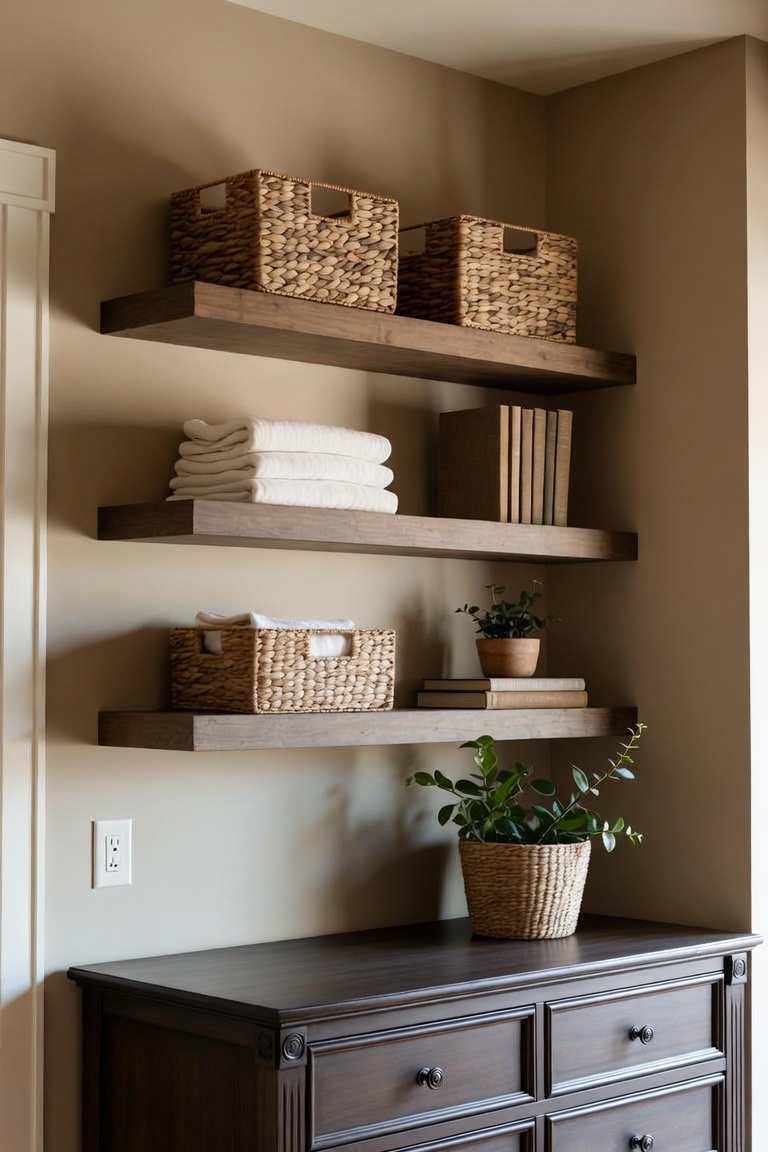
A run of floating shelves above the headboard or over a dresser adds display and storage space that would otherwise sit empty. Use them for books, folded sweaters in baskets, or a rotating display of decor — just keep the styling loose rather than packed edge-to-edge, or the shelves start to read as clutter themselves.
Stagger two or three shelves at slightly different heights rather than lining them up in a perfectly even row. It reads as more intentional and gives you flexibility for taller items like vases or stacked books on one shelf and flatter storage baskets on another.
2. Wall-Mounted Cabinets and Cubbies
Unlike open shelves, a wall-mounted cabinet with doors hides visual clutter completely while still using otherwise-dead wall space. These work especially well on the wall opposite the bed, where a shallow 8–10 inch deep cabinet won’t intrude on the room but can hold an entire second wardrobe’s worth of folded clothing or linens.
Look for cabinets with adjustable interior shelves so you can reconfigure the inside as your storage needs change — a fixed single shelf wastes vertical space just as much as an empty wall does.
3. A Tall, Narrow Bookcase in an Unused Corner
Most small bedrooms have at least one corner that’s dead space — too awkward for a chair, too small for a dresser. A tall, narrow bookcase (12–16 inches deep) fits into that gap and turns it into serious storage. Because it draws the eye upward, a tall narrow piece also makes the ceiling feel higher, which is a nice side effect in a room that’s tight on square footage.
Use the bottom shelves for heavier, less-frequently-used items and the top shelves for lighter display pieces or things you rarely need to reach, since a step stool in a small bedroom defeats the point of saving floor space.
4. A Ladder Shelf Against the Wall
For rooms where even a narrow bookcase feels too bulky, a ladder-style leaning shelf takes up almost no floor footprint while still offering four or five tiers of storage. They’re also easy to move if you rearrange later, since nothing is mounted to the wall.
Because ladder shelves lean at an angle, they naturally taper toward the top — use the deeper bottom shelf for bins and the shallow top shelf for small, lightweight decor rather than anything heavy.
Want the shortcut?
The same principle applies to surfaces — see bathroom counter styling for what to keep out and what to hide.
Storage solves the clutter half of the problem; for the styling half, see our 35 aesthetic bedroom ideas for every style. For more on this, see our bedroom guide.
As an Amazon Associate I earn from qualifying purchases. Some links in this post are affiliate links, at no extra cost to you.
Browse current options and prices.
Make Your Bed Frame Work Harder
The bed is the single largest object in almost every bedroom, which means it’s also your single largest storage opportunity if you choose the right frame.
5. Under-Bed Storage Bins and Drawers
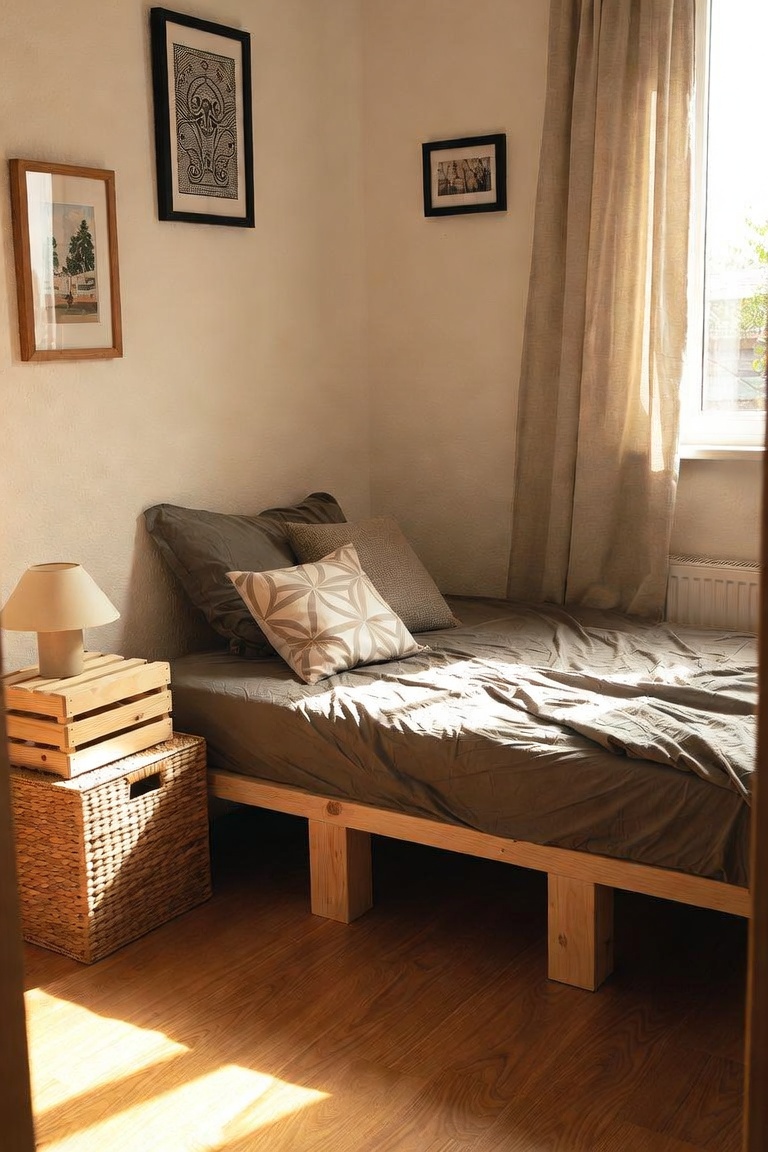
The space under a standard bed frame is almost always wasted. Low-profile bins on casters, sized to slide in and out easily, can hold off-season clothing, extra bedding, or shoes without ever being visible day to day. Choose bins in a matching set rather than whatever you have on hand — it makes the space feel organized even though no one but you will usually see under there.
Measure your actual clearance before ordering bins online; even an inch of difference between a listed height and your bed’s real clearance is the difference between bins that glide out smoothly and ones that scrape and stick every time.
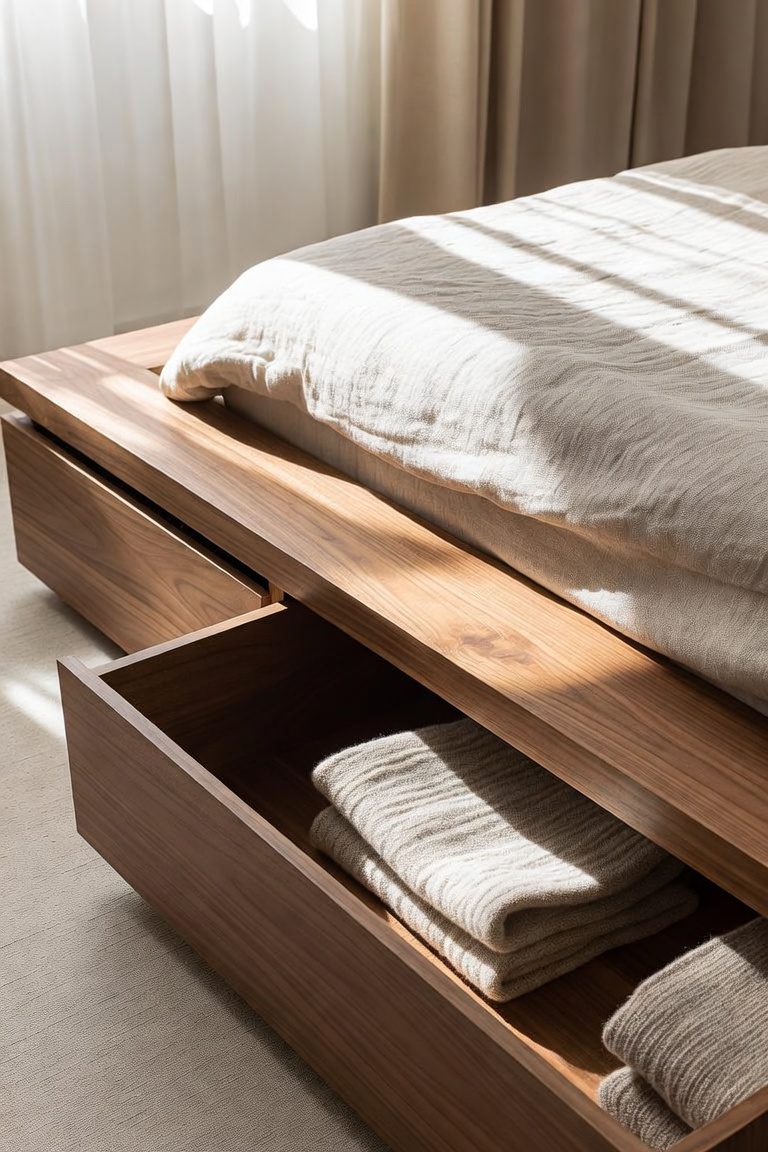
6. Storage Bed Frames With Built-In Drawers
If you’re due for a new bed frame anyway, a platform frame with built-in drawers eliminates the guesswork of finding bins that fit your exact clearance. These frames typically include two to four large drawers, which can replace an entire dresser in rooms too small to fit one comfortably.
This is usually the single best storage upgrade for a small bedroom if you’re furnishing from scratch, since it turns wasted under-bed square footage into the equivalent of a full dresser for no extra floor footprint.
7. Bed Risers for Extra Under-Bed Height
Already have a bed frame you like? Simple bed risers lift the frame two to six inches, instantly creating room for taller bins or a rolling underbed drawer that wouldn’t have fit before. This is the cheapest fix on this entire list and takes less than ten minutes to install.
Choose risers with a locking groove or non-slip base, especially with a bed frame on hardwood or tile, so the frame doesn’t shift out of place over time.
8. A Daybed or Storage Bench Instead of a Traditional Frame
In truly tiny rooms, swapping a traditional bed frame for a daybed with built-in drawers underneath, or pairing a low platform bed with a storage bench at the foot, adds a dedicated storage zone that a standard frame doesn’t offer.
A daybed also visually reads as a sofa during the day, which is a useful trick in a bedroom that occasionally needs to double as a sitting area for guests.
Smarter Closet and Wardrobe Organization
A small closet isn’t actually small — it’s usually just poorly organized. Before assuming you need more closet space, try reorganizing the one you have.
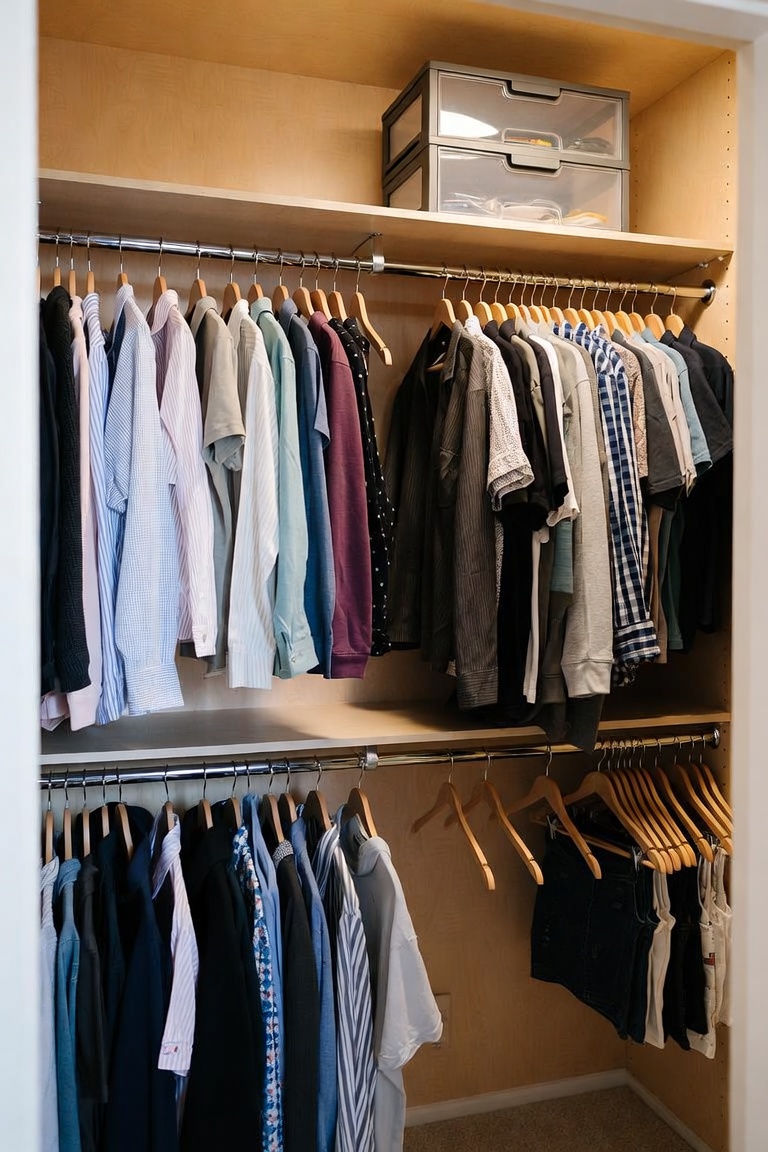
9. Double-Hang Closet Rods
Most closets are built with a single rod at a height meant for long dresses and coats, wasting all the empty air below shorter items like shirts and folded pants. Adding a second rod underneath roughly doubles your hanging capacity in the exact same footprint.
This works best in the section of the closet holding shirts, folded pants, and skirts; keep dresses, coats, and other long items on a single rod section elsewhere so the second rod never gets blocked.
10. Slim, Matching Hangers
Switching every hanger to a slim, non-slip style (velvet-flocked hangers are the classic choice) reclaims a surprising amount of rod space compared to bulky plastic or wire hangers, and makes even a packed closet look tidy rather than crammed.
Buy hangers in a single neutral color rather than a rainbow multipack. The visual consistency alone makes a closet look considerably more put-together, even before anything else changes.
11. Over-the-Door Organizers
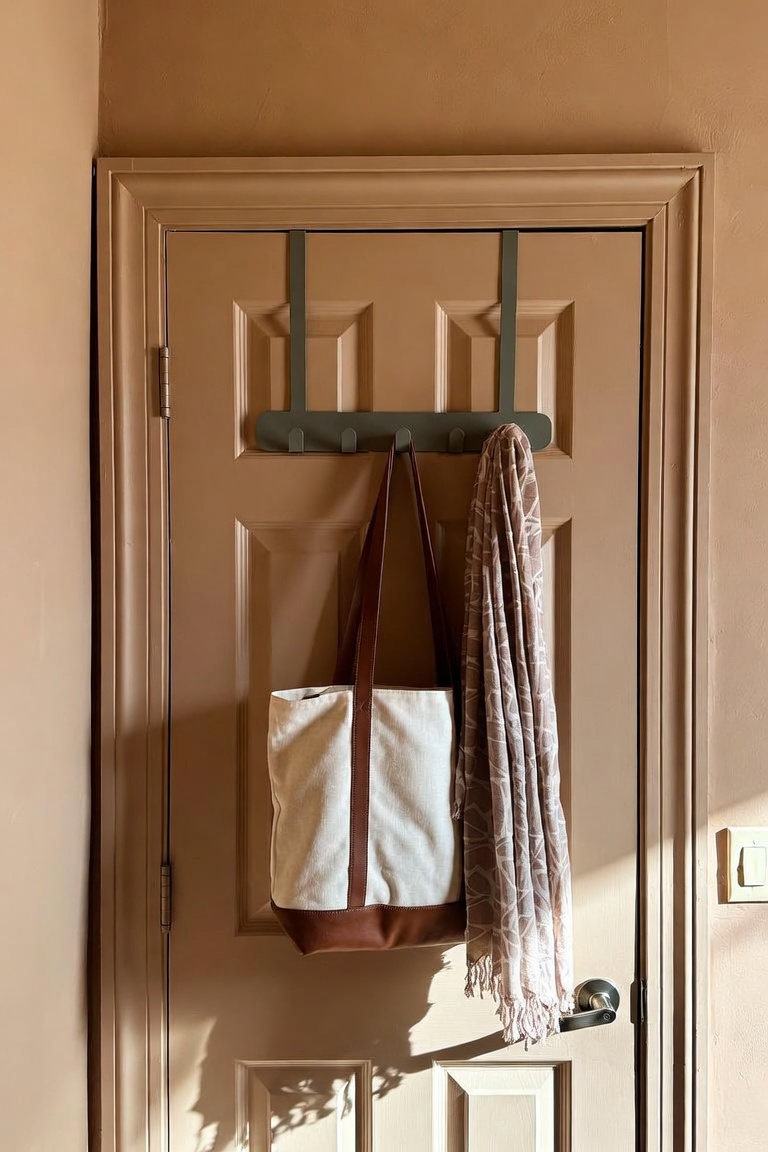
The back of a closet door is almost always empty. A hanging shoe organizer, a set of hooks, or a slim over-door rack adds storage for shoes, bags, scarves, or jewelry without taking up a single inch of usable closet floor or shelf space.
Over-the-door pocket organizers also work well for smaller, harder-to-store items like belts and hair accessories that tend to end up loose in a drawer otherwise.
12. Stackable Bins on the Closet Shelf
The shelf above a closet rod is usually just one deep pile of whatever got thrown up there. Clear, stackable bins turn that same shelf into organized, labeled storage you can actually find things in, and stacking means you’re using the shelf’s full height, not just its surface.
Put items you need less often, like out-of-season accessories, in the back or bottom bins, and keep the front and top bins for things you reach for weekly.
Multi-Functional Furniture Picks
Every piece of furniture in a small bedroom should ideally do more than one job. This is where a lot of the visual clutter quietly disappears.
13. Storage Ottomans and Benches
A storage ottoman at the foot of the bed gives you a place to sit while putting on shoes and a hidden compartment for extra blankets or off-season clothing — two jobs from one footprint.
Choose one with a lift-off or hinged lid rather than a lid you have to remove and set aside; in a small room, there’s rarely a convenient spot to put a lid down while you dig through the contents.
14. Nightstands With Drawers, Not Open Shelves
An open-shelf nightstand looks fine in a photo and messy in real life within a week. A nightstand with one or two drawers keeps chargers, glasses, and bedtime clutter out of sight, which matters even more in a small room where every surface is visible from the doorway.
If your existing nightstand only has open shelving, a small fabric bin on the shelf accomplishes almost the same thing as a built-in drawer for a fraction of the cost of replacing the furniture.
15. A Desk or Vanity That Doubles as a Dresser
If your small bedroom also needs to function as a home office corner, choose a desk with drawers deep enough to hold folded clothing, not just office supplies. One piece of furniture covering two functions is often the difference between a room that fits everything and one that doesn’t.
A vanity with a drop-down or fold-away mirror works the same way, doubling as extra drawer storage while only using its full footprint when you’re actually getting ready.
Hidden and Overlooked Storage Spots
Once the obvious spots are handled, a few genuinely overlooked areas can absorb the last of the clutter that never has a home.
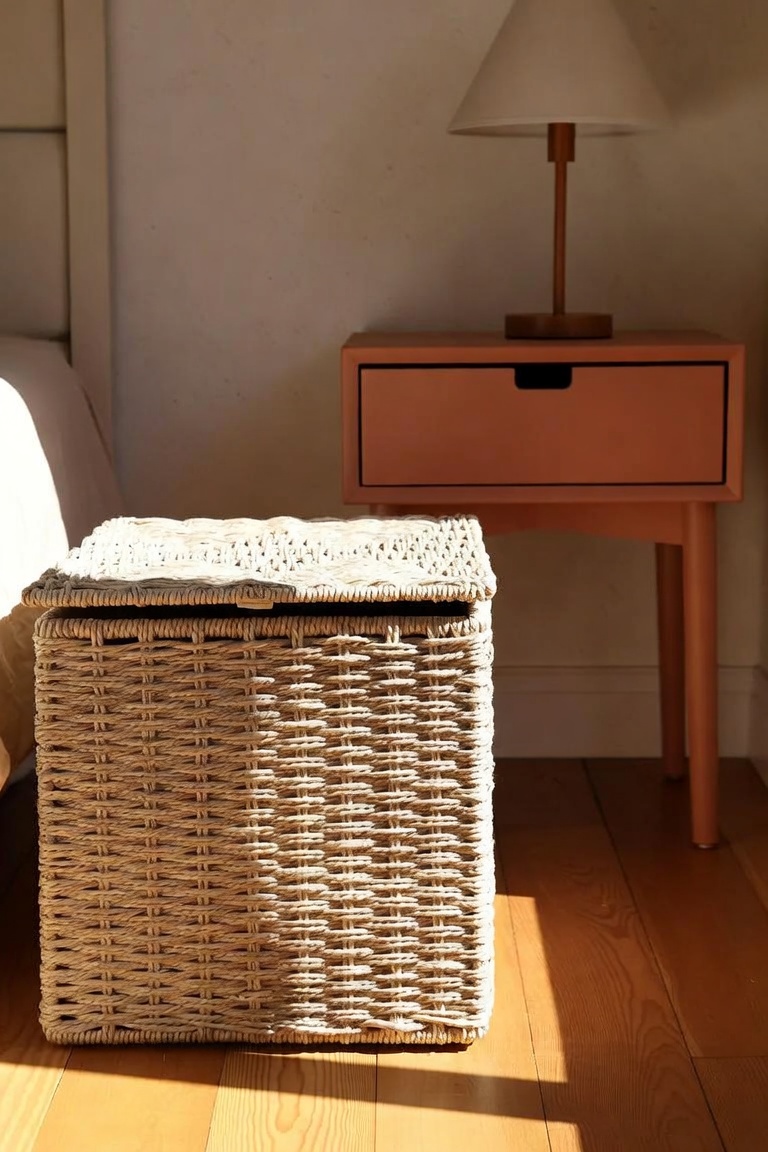
The back of the bedroom door, the dead space beside a dresser, the gap above a doorframe, and the underside of a wall shelf are all spots most people never think to use. A slim hook rack behind the door, a narrow rolling cart wedged beside the dresser, a decorative basket on top of the doorframe molding, and small wire baskets clipped beneath an existing shelf can each absorb a category of clutter — bags, off-season shoes, extra linens, or small accessories — without adding a single new piece of visible furniture to the room.
Even the inside of a window seat, if your room has one, or the gap between a wardrobe and the wall (usually two to four inches, enough for a slim rolling cart) can be pressed into service. The rule of thumb is simple: if you can slide a hand into a gap and it’s currently empty, it can probably hold something. For more small-space storage inspiration, Apartment Therapy has a great roundup of clever, renter-friendly solutions worth browsing for more ideas.
How to Style Storage So It Doesn’t Look Like Storage
The difference between a small bedroom that looks organized and one that looks like a storage unit usually comes down to styling, not the storage itself. A few habits make every idea on this list look considerably better in person.
Keep colors and materials consistent across visible storage — matching baskets, the same hanger style, one finish of bin lid — rather than mixing whatever you happen to already own. Leave a little visual breathing room on open shelves instead of filling every inch; a shelf that’s 80% full reads as styled, while one that’s 100% full reads as overflow. And treat anything on display, like a floating shelf or an open cubby, as a small design vignette: one taller item, one shorter item, and a small plant or piece of decor, rather than a flat row of identical objects.
Finally, rotate what’s on display seasonally if you can. Swapping a few books or decor pieces on an open shelf every few months keeps the room feeling fresh and gives you a natural moment to edit out anything that’s crept back in.
Small Bedroom Storage by Budget
Under $50
Bed risers, a set of slim matching hangers, an over-the-door hook rack, and a couple of under-bed bins from a discount store cover the highest-impact, lowest-cost wins on this list. This tier alone can meaningfully change how the room functions, and it’s the right place to start even if you plan to spend more later.
$50–$200
At this range, add a set of floating shelves, a stackable bin system for the closet shelf, and a proper storage ottoman. This is usually enough to eliminate visible clutter entirely in a room under 120 square feet, and it’s where most of the “styling” upgrades from the section above start to matter.
$200+
This budget covers a storage bed frame or daybed, a wall-mounted cabinet, and a tall narrow bookcase — effectively adding the storage capacity of an entire extra closet without any construction. At this tier, it’s worth prioritizing the bed frame swap first, since it has the single largest impact on the room of anything on this list.
Small Bedroom shopping list
- Under bed storage boxes — the most wasted space in the room
- Bed risers — buys you 15cm of storage
- Over door organizer — no floor footprint
- Slimline hangers — fits a third more in the same rail
- Vacuum storage bags — for off season bedding
- Floating nightstand — frees the floor visually
Prices and availability change. Links open on Amazon.
Mistakes to Avoid When Storing in a Small Bedroom
- Buying storage before decluttering. More bins just give clutter more places to hide. Edit first, organize second — a smaller pile of things you actually use will always fit better than a larger pile crammed into more containers.
- Choosing furniture that’s too deep. A dresser or nightstand that’s a few inches deeper than needed can make a walking path feel impossibly tight. Measure clearance before you buy, not after, and account for drawers fully extended, not just the closed footprint.
- Ignoring the door swing. Storage that blocks a door from opening fully gets worked around forever — and usually ends up back in a pile on the floor within a month, right where you were trying to avoid clutter in the first place.
- Skipping labels. An unlabeled bin under the bed becomes a mystery box within a season. Labels are what keep a system working long after the initial organizing burst of motivation fades, especially for anyone else in the household who shares the space.
- Matching nothing. Mismatched bins and hangers make even a well-organized space look chaotic. Matching sets read as tidy even when they’re holding the exact same amount of stuff as mismatched ones — consistency does more visual work than most people expect.
- Overcorrecting with too many small containers. A dozen tiny baskets and organizers can end up harder to navigate than a few larger, clearly labeled ones. Fewer, bigger categories are usually easier to maintain than a highly granular system that takes effort to keep up.
Frequently Asked Questions
What’s the single best storage upgrade for a small bedroom?
If you can only do one thing, add under-bed storage. It’s the largest single chunk of unused space in most bedrooms, and low-profile rolling bins or a storage bed frame can absorb an entire season’s worth of clothing or linens without taking up any visible room.
How do I store clothes in a bedroom with no closet?
A freestanding wardrobe or armoire is the closest substitute, ideally one with a mix of hanging space and drawers. Pair it with an over-the-door organizer and under-bed bins to cover what the wardrobe alone can’t hold.
Should I get rid of my dresser to save space?
Only if you’re replacing its function elsewhere — a storage bed frame, a wall-mounted cabinet, or closet drawers. Removing a dresser without replacing its storage capacity just relocates the clutter rather than solving it.
How often should I re-organize a small bedroom?
Plan on a quick five-minute reset weekly and a fuller seasonal edit two to four times a year, especially around clothing swaps. Small bedrooms show disorganization faster than large ones simply because there’s less room for things to drift before they’re in the way.
Final Thought
A small bedroom doesn’t need less stuff than a big one — it just needs every piece of furniture and every wall to do more work. Start with the highest-impact, lowest-cost changes (bed risers, matching hangers, an over-door organizer), then build up to furniture swaps as your budget allows. Done well, a small bedroom with smart storage can feel calmer and more spacious than a much larger room that’s simply full of things without a system.





16 Comments