

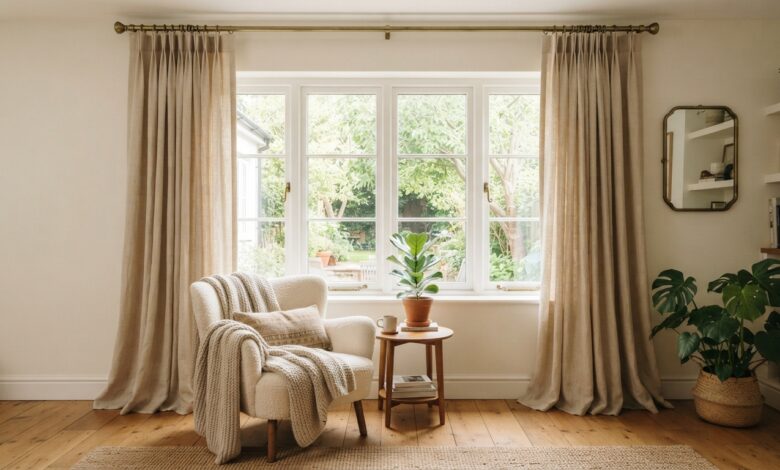
Curtains and window treatments are one of the highest-impact, most overlooked upgrades in any home. The right treatment frames a view, controls light, and can make a window look twice its actual size — while the wrong one shrinks a room and dates it instantly. Windows are also one of the first things the eye goes to in any room, so getting the treatment right does more visual work per dollar than almost any other decor decision. Here’s how to choose and hang window treatments that actually elevate a space.
1. Hang Curtains High and Wide
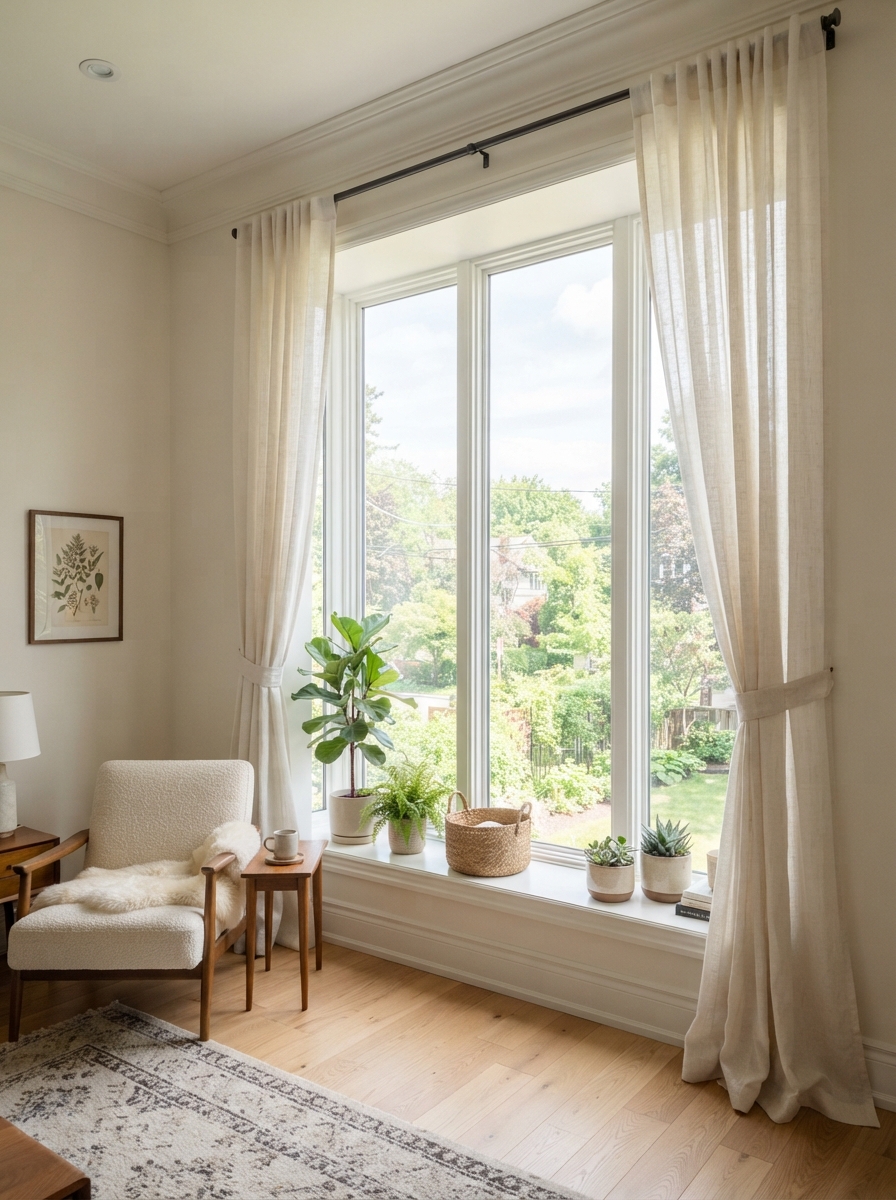
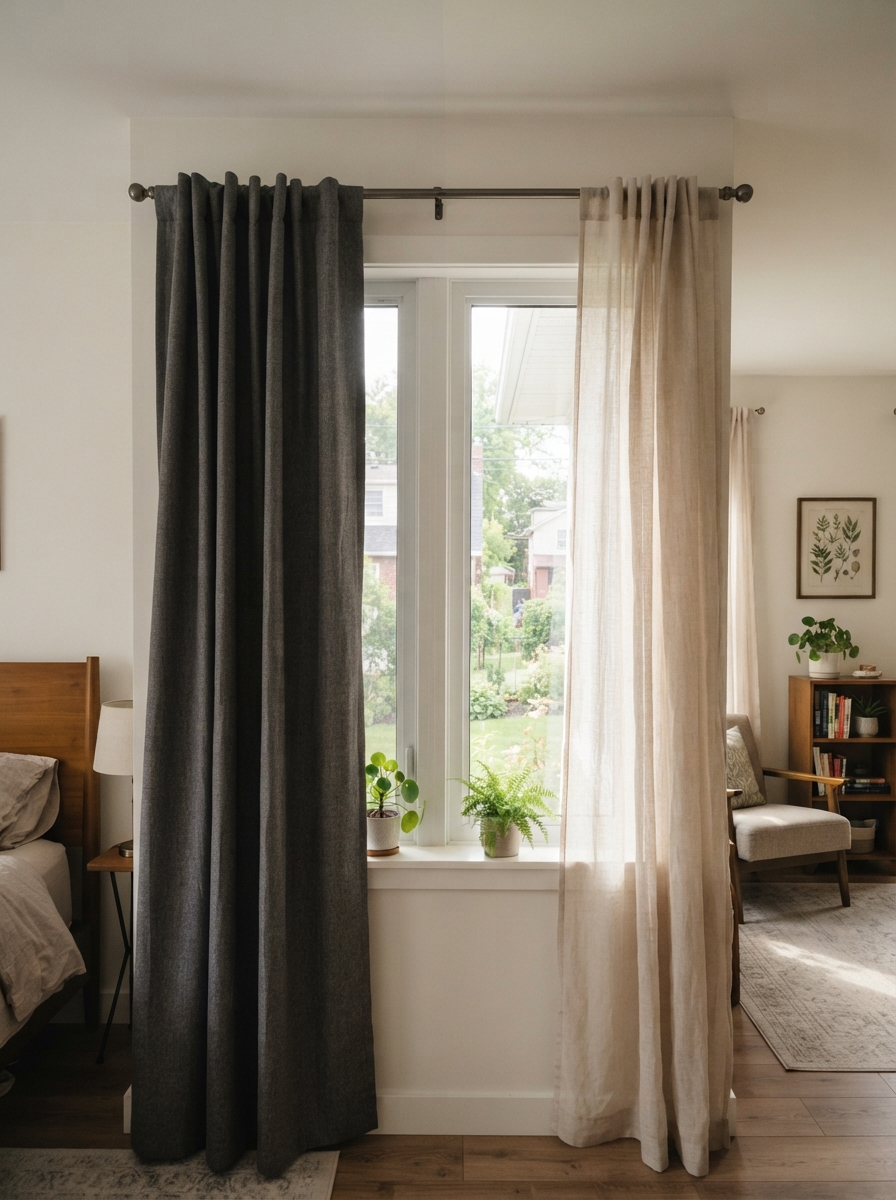
Mount the rod as close to the ceiling as possible and extend it several inches beyond the window frame on each side. This makes the window — and the whole wall — look taller and wider than it is. A good rule of thumb is mounting the rod four to six inches above the window frame and extending it four to six inches past each side, so the curtains clear the glass entirely when open and let in maximum light.
2. Choose the Right Fabric Weight
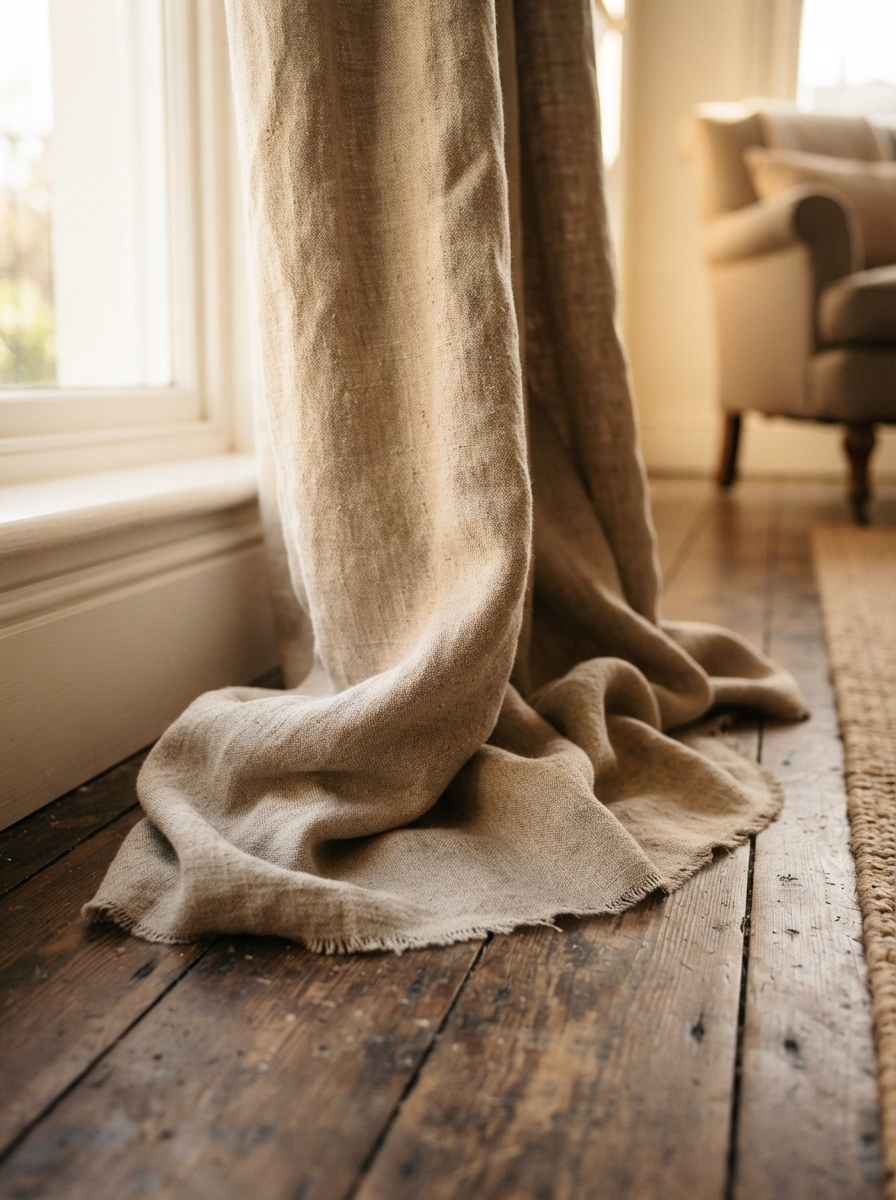
Lightweight linen or sheer fabrics suit rooms where you want filtered light and airiness; heavier velvet or blackout curtains suit bedrooms or media rooms where light control and coziness matter more. If you’re unsure, linen is the safest middle ground — it reads as textured and substantial without the heaviness of velvet, and it works in nearly any style of room.
3. Let Curtains Puddle Slightly or Hit the Floor
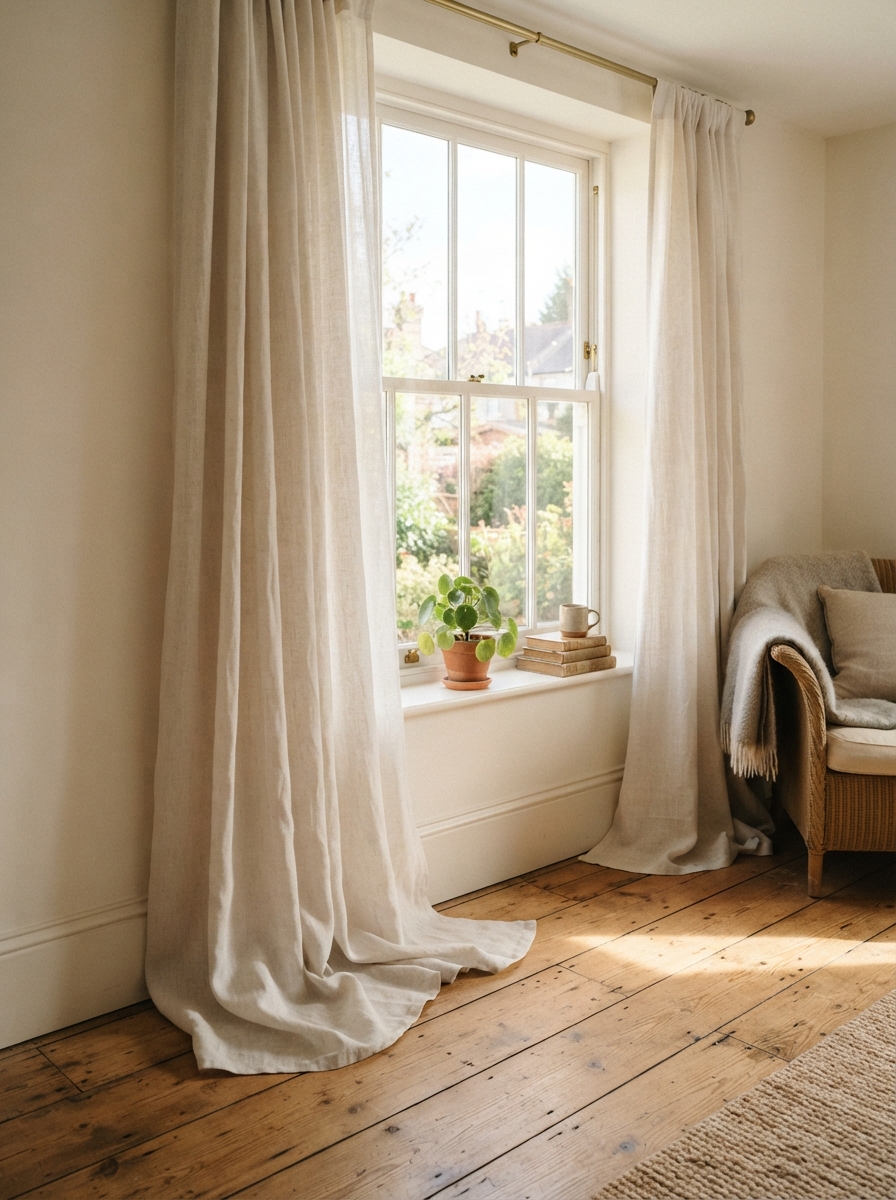
Curtains that stop a few inches above the floor look unfinished. Aim for a slight break at the floor, or a soft puddle for a more romantic, formal look. Measure twice before ordering or hemming — curtains that are even an inch too short read as a mistake, while curtains that are slightly too long can always be adjusted with a puddle.
Want the shortcut?
As an Amazon Associate I earn from qualifying purchases. Some links in this post are affiliate links, at no extra cost to you. You will find more ideas in shelf decor ideas: how to style any shelf like a pro.
Browse current options and prices.
4. Layer Sheers With Blackout Panels
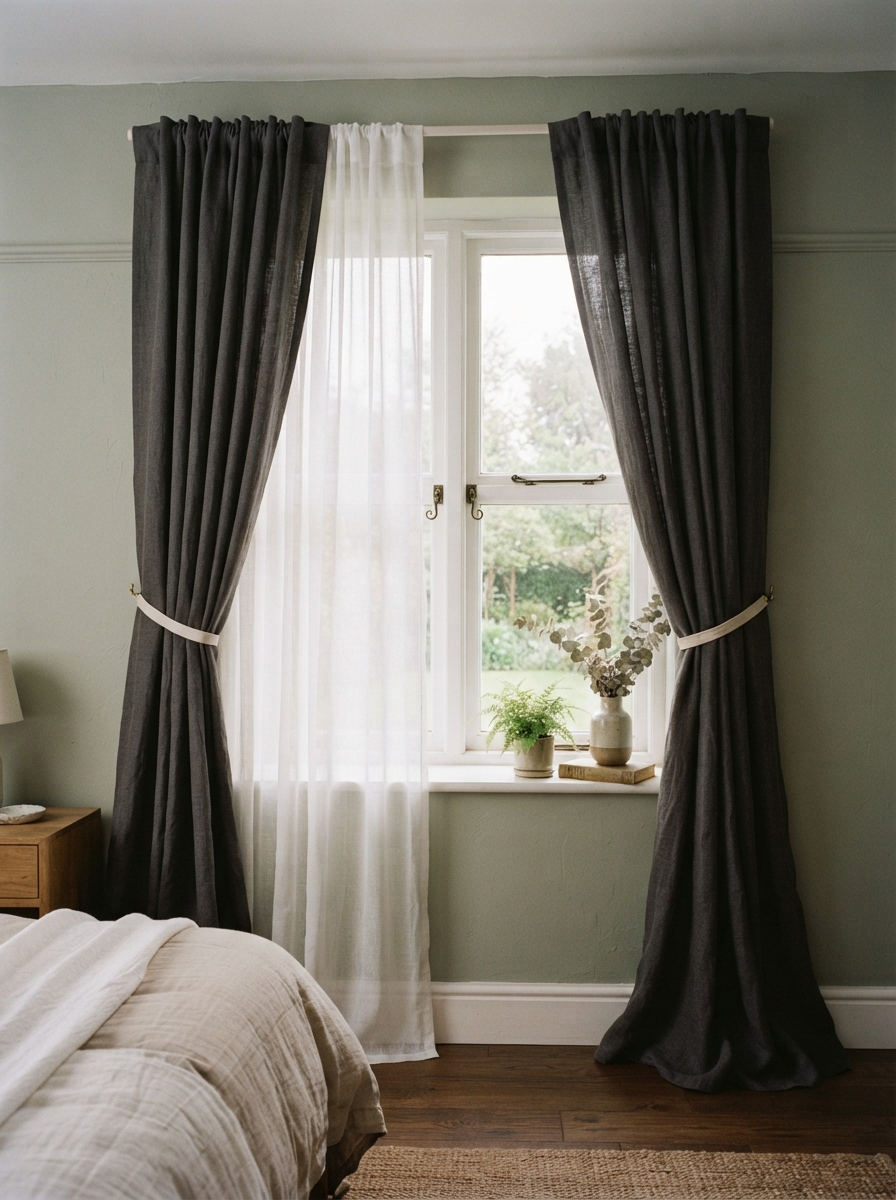
Combining a sheer layer with a heavier blackout panel behind it gives you flexibility — privacy and softness during the day, full light control at night. A double rod, or a single track designed for layered curtains, keeps both panels moving independently so you’re not fighting with tangled fabric every time you adjust one layer.
5. Match Hardware to Your Fixtures
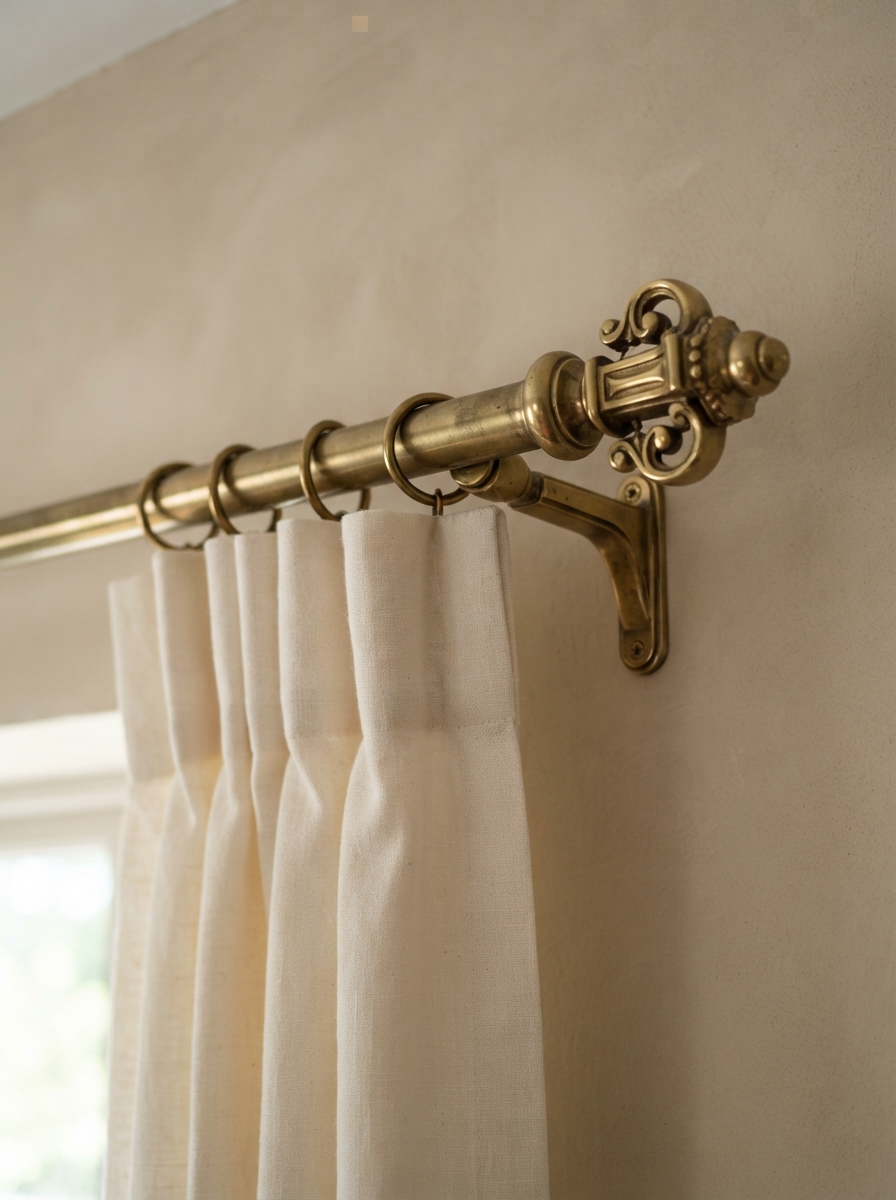
Curtain rods and rings in the same finish as your door hardware or lighting create a cohesive, considered look rather than a mismatched afterthought. Brass, matte black, and brushed nickel are the three finishes that show up most often in lighting and hardware, so matching your rod to whichever one is already dominant in the room ties everything together instantly.
6. Consider Roman Shades for a Cleaner Look
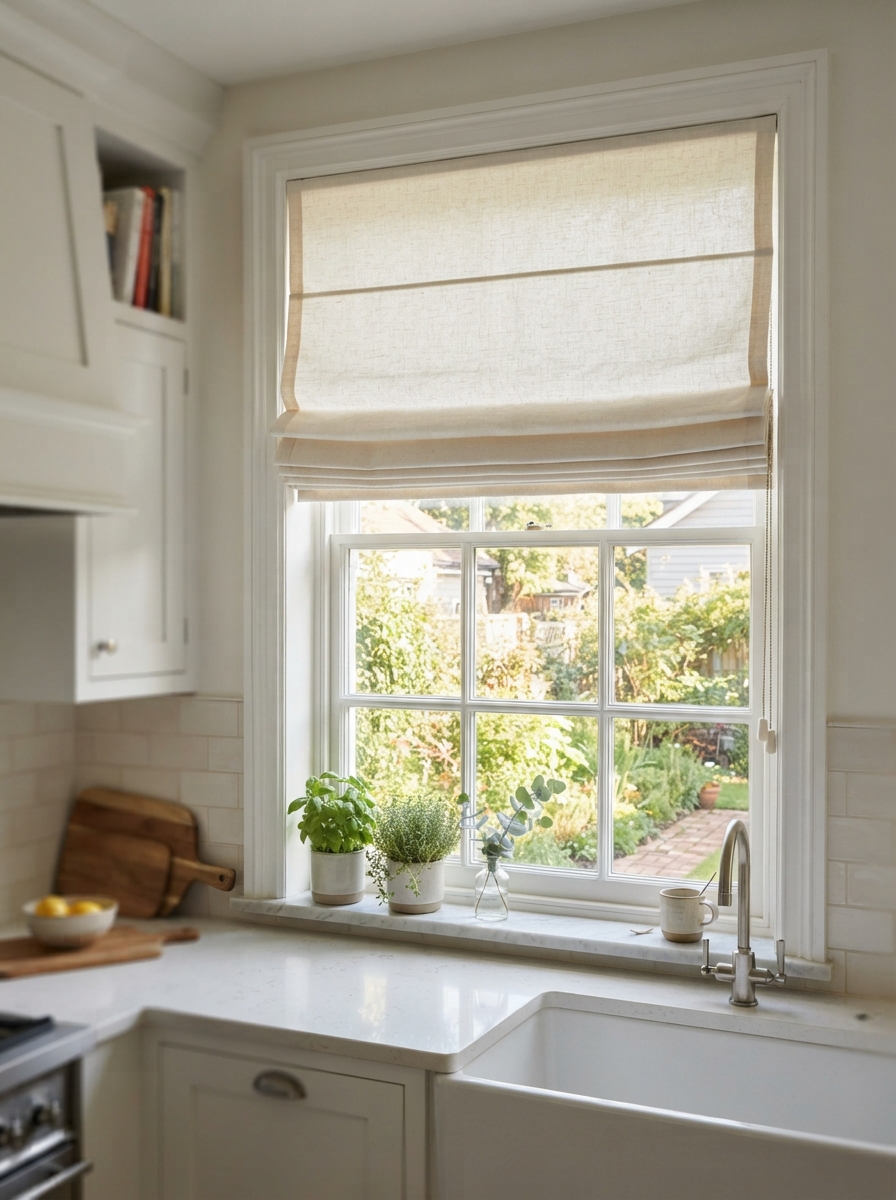
In kitchens and bathrooms, where fabric curtains can feel impractical, a roman shade in a durable fabric gives you the softness of textile without the bulk. Cordless or top-down-bottom-up versions are worth the extra cost in kitchens especially, since they keep cords away from little hands and away from a hot stove.
7. Don’t Skip Window Treatments in “Good” Light Rooms
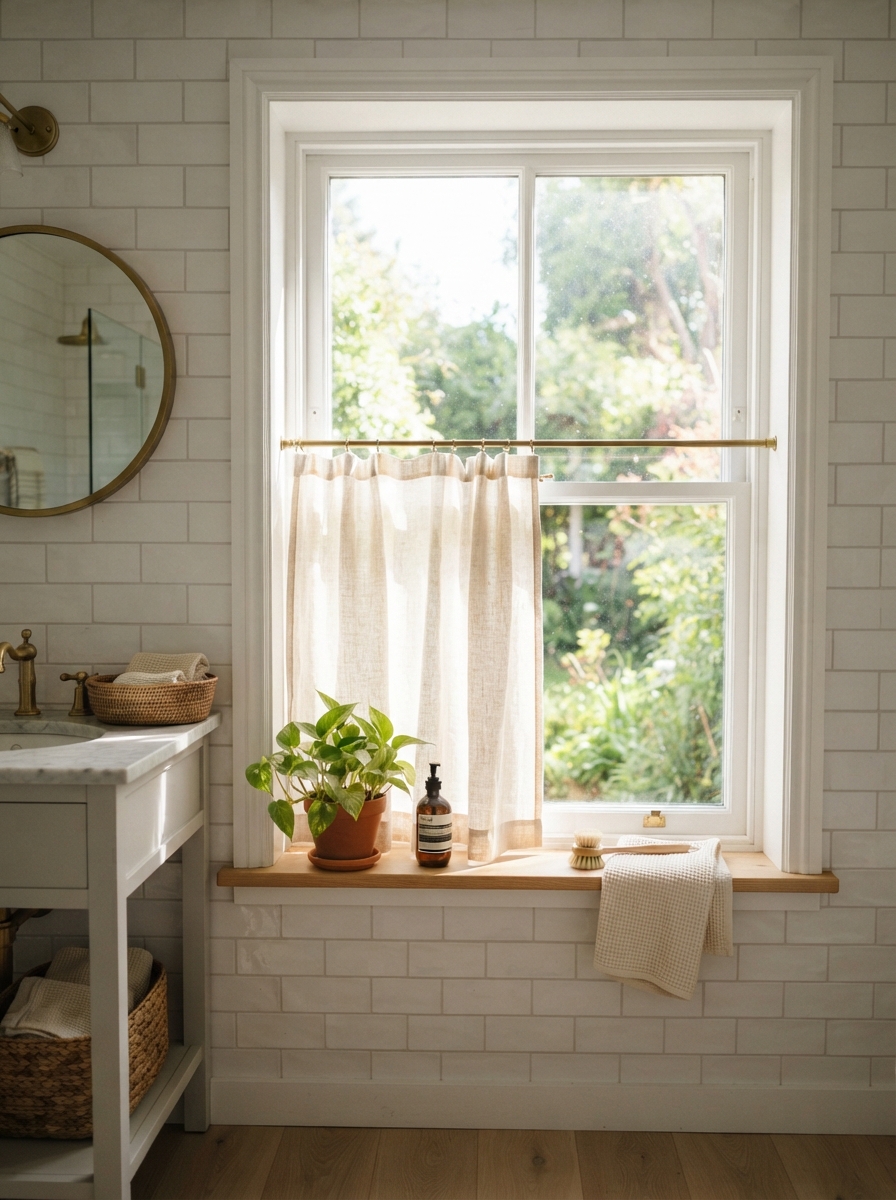
Even a room with great natural light benefits from a treatment for privacy and evening softness — a simple sheer panel is enough to avoid a stark, uncovered look after dark. Bare windows also read as unfinished in photos, even in a room that otherwise looks complete, since the eye expects some kind of frame around a window opening.
Curtains by Room
Living Room
Floor-length linen curtains hung high and wide instantly elevate a living room. If you want more drama, add a contrasting trim or a bold solid color against a neutral wall.
Bedroom
Blackout curtains layered behind a sheer panel give you full light control for sleep while keeping the daytime look soft. Weighted hems help them hang cleanly.
Kitchen
A simple roman shade or a short cafe curtain on a lower rod avoids interference with cabinets and the sink while still softening the window.
Bathroom
A moisture-resistant fabric or a faux-linen blend holds up best against humidity, and a simple cafe curtain on a tension rod is often all a bathroom window needs for privacy without feeling heavy.
Budget Window Treatment Hacks
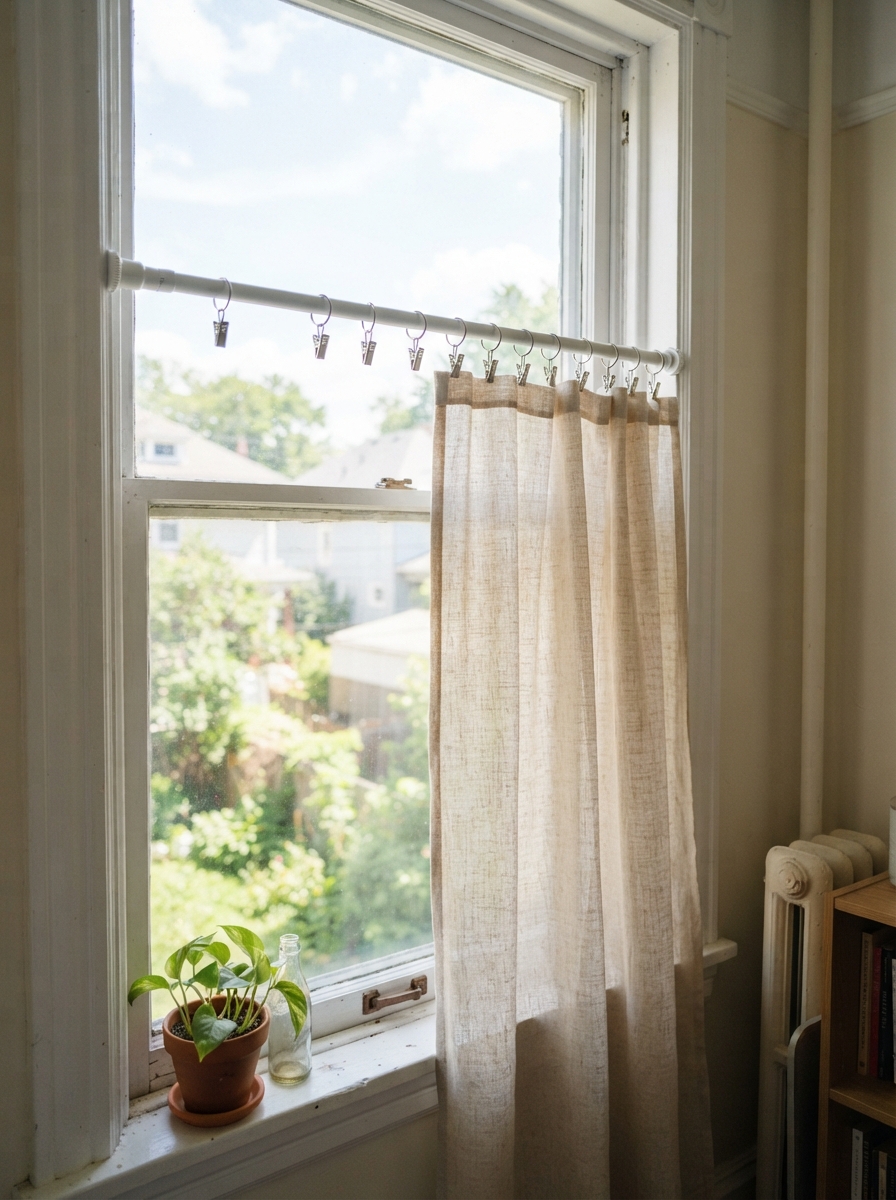
You don’t need custom drapery to get a designer look. Ready-made linen panels from a large retailer, hemmed to the right length, cost a fraction of custom work and look nearly identical once hung correctly. A tension rod works for temporary rentals where drilling isn’t allowed. And if a curtain is too short, adding a few inches of matching fabric or a contrast band at the bottom is a nearly invisible fix that saves you from buying a longer, pricier panel.
Window Treatment Ideas by Design Style
The same high-and-wide principle adapts across almost any aesthetic. A modern or minimalist room suits simple, unlined linen panels in a solid neutral, hung on a slim black or brushed metal rod with no extra trim. A traditional room suits pleated drapery panels with a decorative rod and finial, often paired with tiebacks for a more formal, structured look. A boho space works well with a mix of textures — a woven bamboo shade layered under a linen or macrame-trimmed panel — hung a little more loosely than a modern space would call for. Whatever the aesthetic, the underlying rule stays the same: mount high, extend wide, and choose a weight of fabric that matches the room’s actual function.
Curtains shopping list
- Blackout curtains — for bedrooms and nurseries
- Curtain rod set — go wider than the window
- Sheer curtain panels — layer under heavier drapes
- Roman shades — tidy for kitchens and baths
- Curtain tie backs — the cheap finishing detail
- Tension rods — renter friendly, no drilling
Prices and availability change. Links open on Amazon.
Window Treatment Mistakes to Avoid
A few habits undercut otherwise good window treatments. Hanging a rod directly on the window frame, rather than several inches above and beyond it, is the single most common mistake and the one that shrinks a room the most. Curtains that are too short — stopping well above the floor — read as a sizing error even when everything else in the room is well styled. And skipping a treatment entirely in an otherwise finished room leaves the space feeling unfinished no matter how good the furniture and decor are.
Choosing Curtain Colors and Patterns
A solid neutral in linen, cotton, or velvet is the safest and most versatile choice, since it complements nearly any wall color and furniture palette without competing for attention. Curtains one or two shades darker or lighter than the wall color create gentle contrast that reads as intentional rather than accidental. For a bolder look, a curtain in a saturated color or a subtle pattern can function almost like an accent wall, especially in a room with otherwise neutral walls and furniture. Busy, high-contrast patterns tend to work best in smaller doses — a single window rather than a whole wall of windows — since too much pattern in curtain form can overwhelm a room the way an accent wall in the wrong place might.
Curtains vs. Blinds vs. Shutters
Each window treatment category solves a slightly different problem, and many rooms benefit from combining them rather than choosing just one. Blinds and shades offer the most precise light control and privacy, adjusting incrementally rather than being fully open or closed, which makes them a practical base layer in bedrooms and bathrooms. Curtains add the softness, texture, and warmth that blinds alone can’t provide, and are far easier to update seasonally or when redecorating than a hard window covering. Plantation shutters offer a clean, architectural look and excellent durability, but are a bigger investment and a more permanent choice than fabric curtains. Layering a hard treatment like blinds or shutters underneath soft curtains gives you the practical light control of one and the visual warmth of the other in the same window.
Valances and Cornices: Do You Need One?
A valance or cornice — a decorative fabric or boxed treatment across the top of a window — can hide curtain hardware and add a finished, tailored look, but it isn’t necessary in every room. In more traditional or formal spaces, a valance adds a layer of polish that pairs well with pleated drapery and matching tiebacks. In modern or minimalist rooms, skipping the valance entirely and letting the curtain rod itself be a visible design element (a slim black rod, for instance) tends to look cleaner and more current. If you do add a valance, keep it proportional — a valance that’s too deep relative to the window height will visually shorten the window rather than framing it.
How to Measure for Curtains Correctly
Getting curtain measurements right is the difference between a designer look and an obviously ill-fitting one. Measure the width of the window and add at least eight to twelve inches on each side for the rod extension discussed earlier, so panels can fully clear the glass when open. For length, measure from where the rod will actually be mounted (not the top of the window frame) down to your desired end point — the floor, a slight puddle, or a break. Always measure at the exact spot the curtains will hang, since floors are not always perfectly level and a measurement taken at one point in a window can be slightly off at another.
Caring for and Cleaning Curtains
Curtains collect more dust and allergens than most people expect, simply from hanging in one place and catching airflow near a window. A regular vacuum with a soft brush attachment, done every few weeks, keeps dust from building up between full washes. Check the care label before washing any curtain panel — many linens and blends are machine washable on a gentle cycle, but heavier fabrics like velvet or anything with special linings usually require dry cleaning to avoid shrinking or losing shape. Rehanging curtains immediately after washing, while they’re still slightly damp, lets gravity help smooth out wrinkles without needing to iron a large panel of fabric.
Seasonal Curtain Swaps
Just like bedding or throw pillows, curtains can be swapped seasonally to keep a room feeling current without a full redecoration. Lighter linen or sheer panels suit spring and summer, letting in maximum light and airflow when you want a room to feel breezy. Heavier velvet or lined curtains swapped in for fall and winter add both visual coziness and a genuine layer of insulation against cold windows, which can meaningfully reduce drafts in older homes. Because curtain rods stay in place year-round, swapping just the panels themselves is a relatively fast and affordable seasonal update compared to changing furniture or paint.
Curtains for Awkward or Unusual Windows
Not every window is a standard rectangle centered on a wall, and a few common problem shapes have reliable solutions. For windows set close to a corner, mount the rod so the curtain can still extend fully to one side even if it means an asymmetric extension on the other. For very wide picture or patio windows, a single wide panel on each side is usually cleaner than several smaller panels bunched together, since fewer, larger folds of fabric read as more intentional. Arched or oddly shaped windows are often best left uncovered or fitted with a simple interior shade cut to match the shape, while a standard rod and curtain is hung on the straight wall section just below to handle light and privacy for the room as a whole.
Final Thought
The secret to great window treatments is almost always hanging them higher and wider than feels natural — that one adjustment does more for a room than the fabric choice itself. Layer for function, match your hardware, and let the windows do more visual work than they currently are. For more guidance on choosing the right treatment, visit The Spruce.
Frequently Asked Questions
How high should curtain rods be mounted?
Mount the rod four to six inches above the window frame, and ideally closer to the ceiling if you have the wall space. This makes the window and the whole wall look taller.
Should curtains touch the floor?
Yes — curtains that stop noticeably above the floor read as unfinished or too short. Aim for a slight break at the floor or a soft puddle for a more formal look.
What’s the cheapest way to get a designer curtain look?
Ready-made linen panels from a large retailer, hemmed to the correct length and hung high and wide, look nearly identical to custom drapery at a fraction of the cost.
What curtains work best for renters?
A tension rod requires no drilling and works well for lightweight to medium-weight panels, making it the easiest renter-friendly option for adding curtains without altering the wall.





4 Comments