

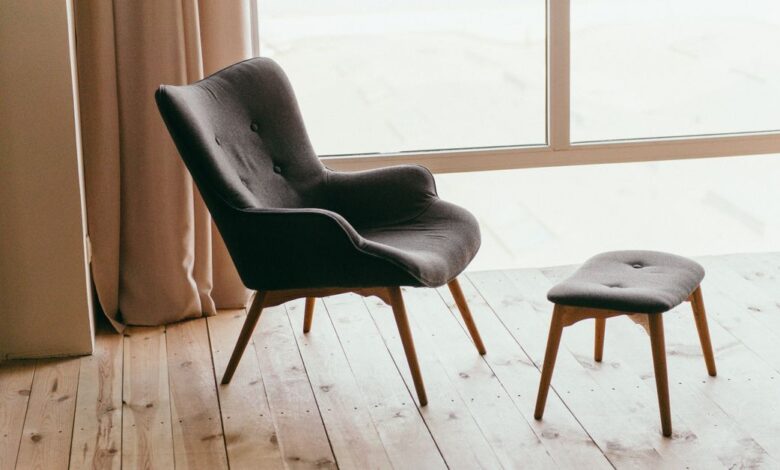
Why an Accent Wall Works
The most effective accent wall ideas create an instant focal point that makes a room feel finished, intentional, and dramatically more interesting. An accent wall — a single wall treated differently from the others in a room — is one of the most powerful decorating tools available. Done right, it creates a focal point that draws the eye, adds depth and dimension to a space, and gives a room a finished, intentional quality that plain walls rarely achieve. You will find more ideas in 15 easy DIY wall decor ideas to transform any room.
As an Amazon Associate I earn from qualifying purchases. Some links in this post are affiliate links, at no extra cost to you.
The best accent wall ideas create a focal point that makes any room feel finished and dramatically more interesting — whether you are working with paint, wallpaper, wood, or tile.
The key word is “done right.” A badly executed accent wall can look like an afterthought or, worse, make a room feel smaller and more chaotic than it did before. This guide covers the best accent wall ideas across every style, budget, and skill level, plus the rules that make the difference between a successful accent wall and a regrettable one. Related reading: shelf decor ideas: how to style any shelf like a pro.
Accent Wall Ideas: Which Wall Should You Choose?
The most successful accent walls work with the room’s existing architecture rather than against it. A few reliable choices:
- The wall you see first when you enter the room. This creates immediate visual impact and anchors the space.
- The wall behind the bed in a bedroom. The headboard wall is a natural focal point, and an accent treatment here creates a sense of depth and drama without overwhelming the room.
- The wall behind the sofa or TV. In a living room, these are the natural anchors of the space.
- A chimney breast or structural feature. Highlighting an existing architectural feature rather than creating a faux focal point on a plain wall almost always produces better results.
Avoid choosing accent walls at random or making the smallest wall in a room the feature wall — this tends to feel unresolved.
Accent Wall Ideas: Paint
Paint is the fastest, most affordable, and most reversible accent wall option. A bold, saturated color on a single wall can completely transform a room — and if you don’t like it, you can repaint it in a weekend.
Best Accent Wall Paint Colors
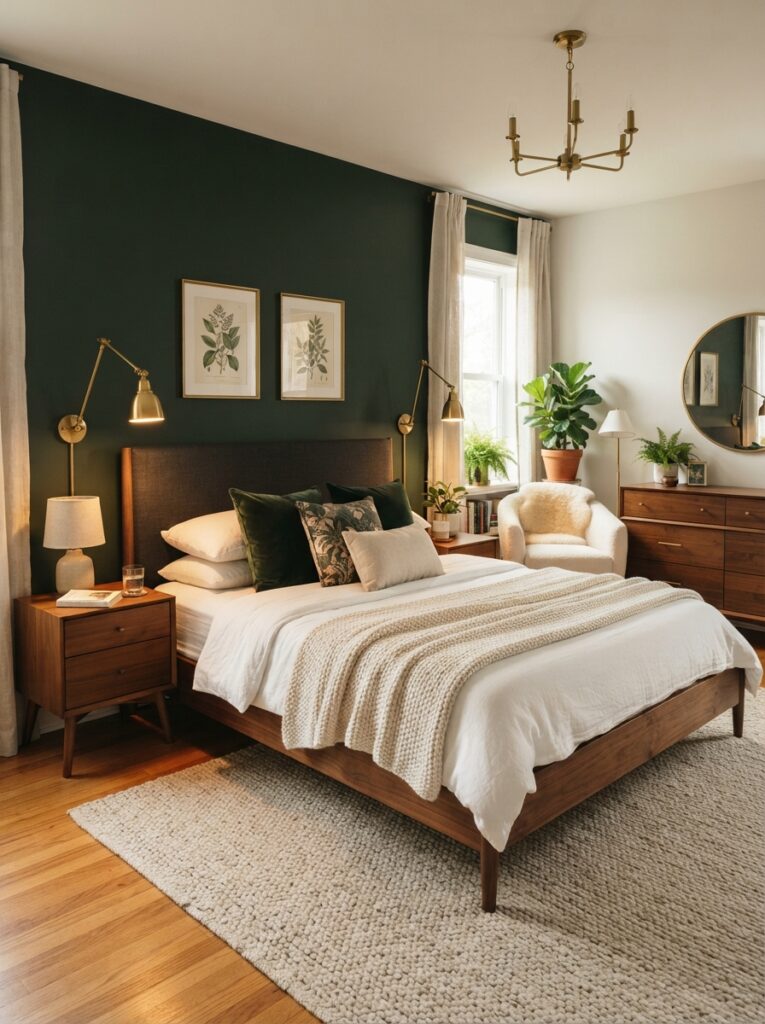
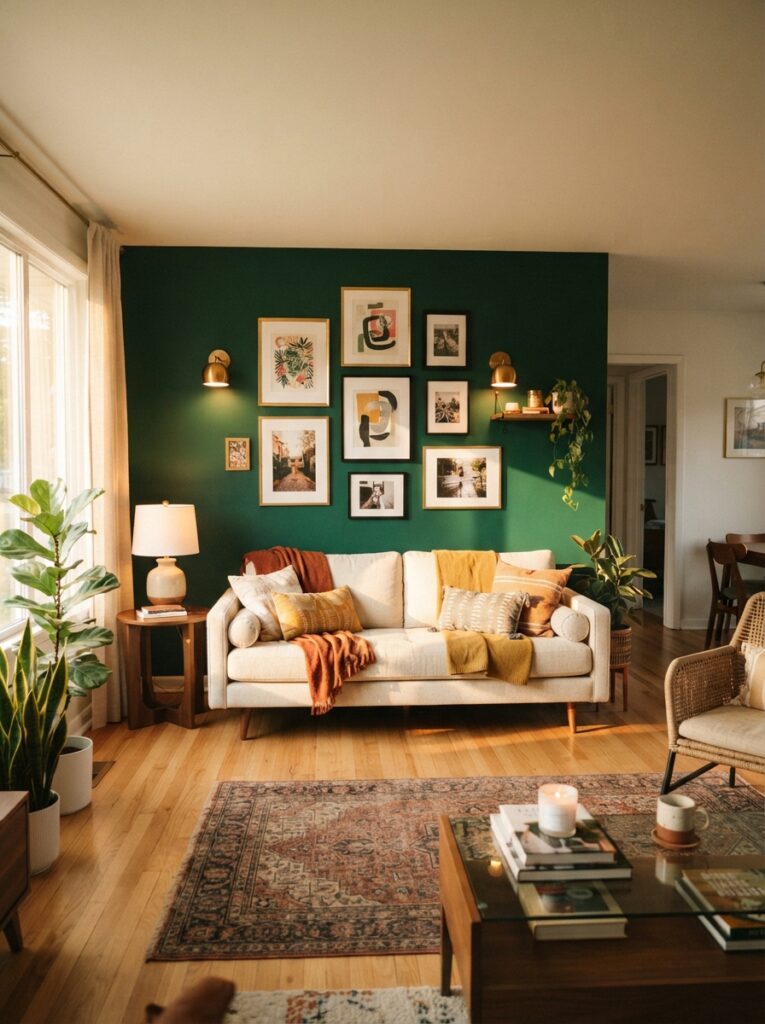
Some of the most effective accent wall colors in 2026: deep forest green (moody, rich, pairs beautifully with wood and brass), navy blue (classic, sophisticated, works in almost any room), terracotta or clay (warm, earthy, instantly makes a space feel grounded), charcoal or deep gray (dramatic without being as intense as black), oxblood red (bold, unexpected, surprisingly versatile), and matte black (the most dramatic choice, stunning in the right context — especially a bathroom or powder room).
The important principle: your accent wall color should relate to the rest of the room’s palette. It should be a deeper, more saturated version of a color already present in the space, or a complementary tone that creates intentional contrast — not a completely random color that has no relationship to anything else in the room.
Accent Wall Ideas: Wallpaper
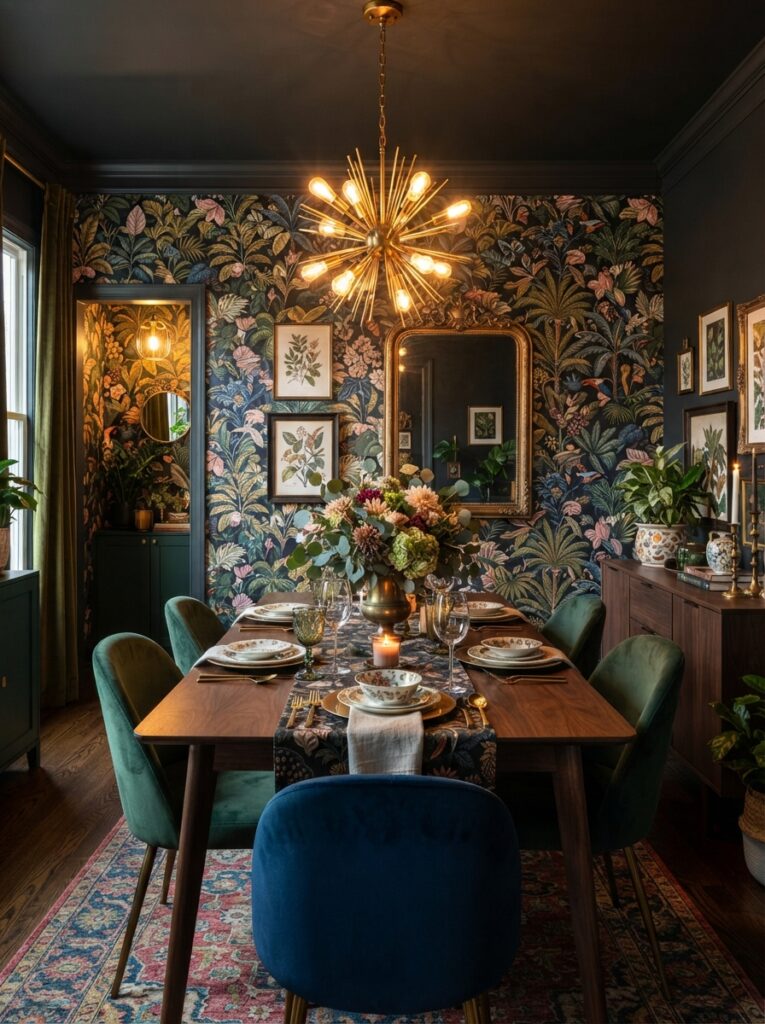
A wallpapered accent wall is one of the most impactful decorating moves you can make. A single wall of bold, beautiful wallpaper provides a level of visual richness and personality that paint simply can’t match.
Current favorites: large-scale botanical prints (lush, maximalist, deeply satisfying), geometric patterns in two or three colors, grasscloth or linen-textured wallpaper for subtle texture without pattern, marble-effect wallpaper for a luxurious look at a fraction of the cost of real marble, and vintage-inspired patterns (classic toile, Art Deco fans, William Morris-style florals) for a sense of history and character.
For renters or those who aren’t ready to commit: peel-and-stick (removable) wallpaper has become genuinely good. Modern peel-and-stick options are available in beautiful patterns, go up in hours, and come down without damaging walls.
Accent Wall Ideas: Wood and Texture
Shiplap
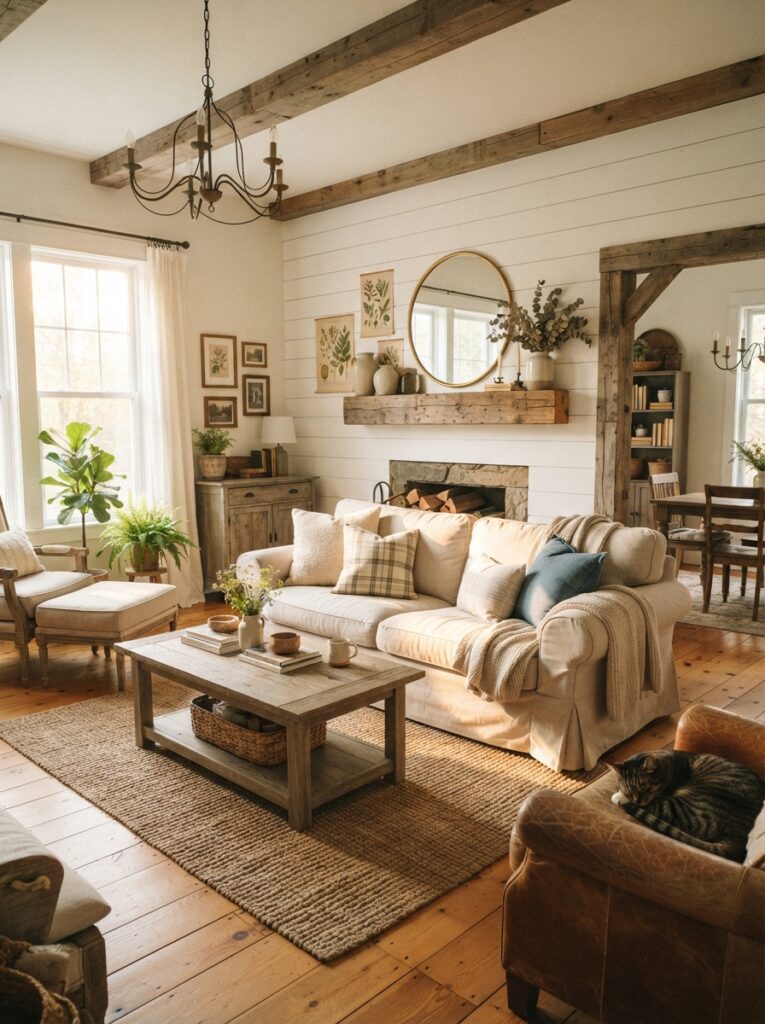
Horizontal shiplap boards on a single wall are a signature of farmhouse and modern cottage style. Paint them white for a classic look, leave them natural for warmth, or go bold with a dark painted shiplap for a dramatic, contemporary twist.
Reclaimed Wood Planks
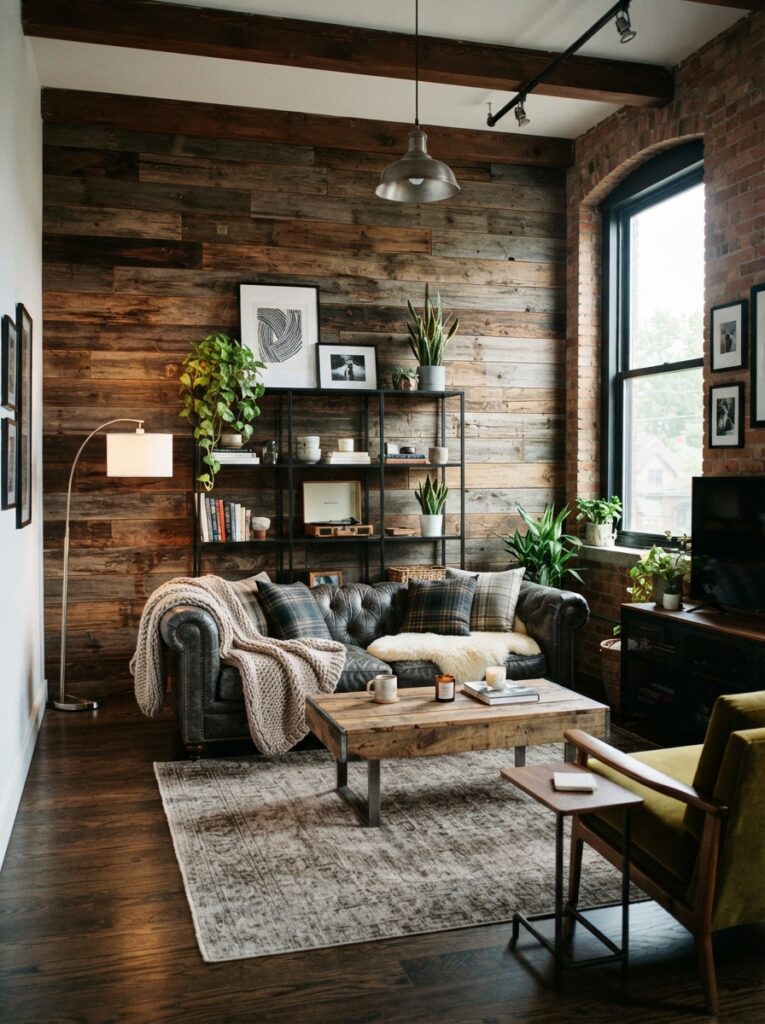
A wall clad in reclaimed wood planks creates an accent wall with genuine depth, warmth, and character. The variation in color and texture across the individual boards gives the wall an organic richness that no manufactured material can replicate.
Board and Batten
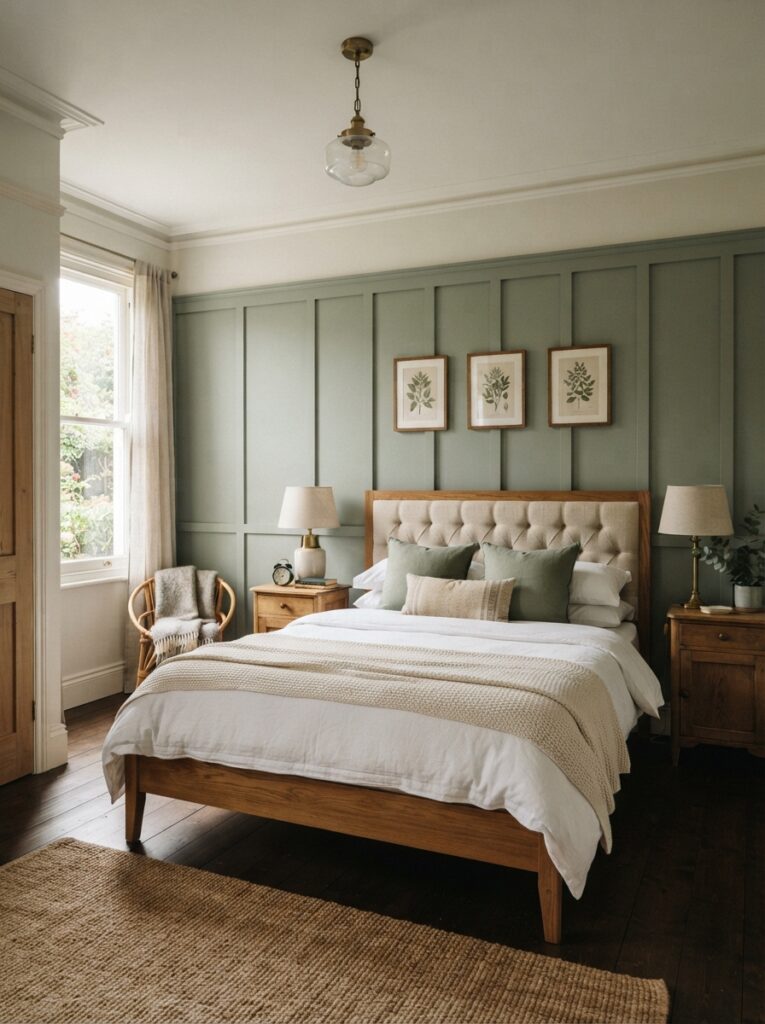
Board and batten — a pattern of vertical boards with flat banding — is a classic architectural detail that adds dimension and traditional character. Painted in white or a muted neutral, it works beautifully in bedrooms, hallways, and dining rooms.
Brick Veneer
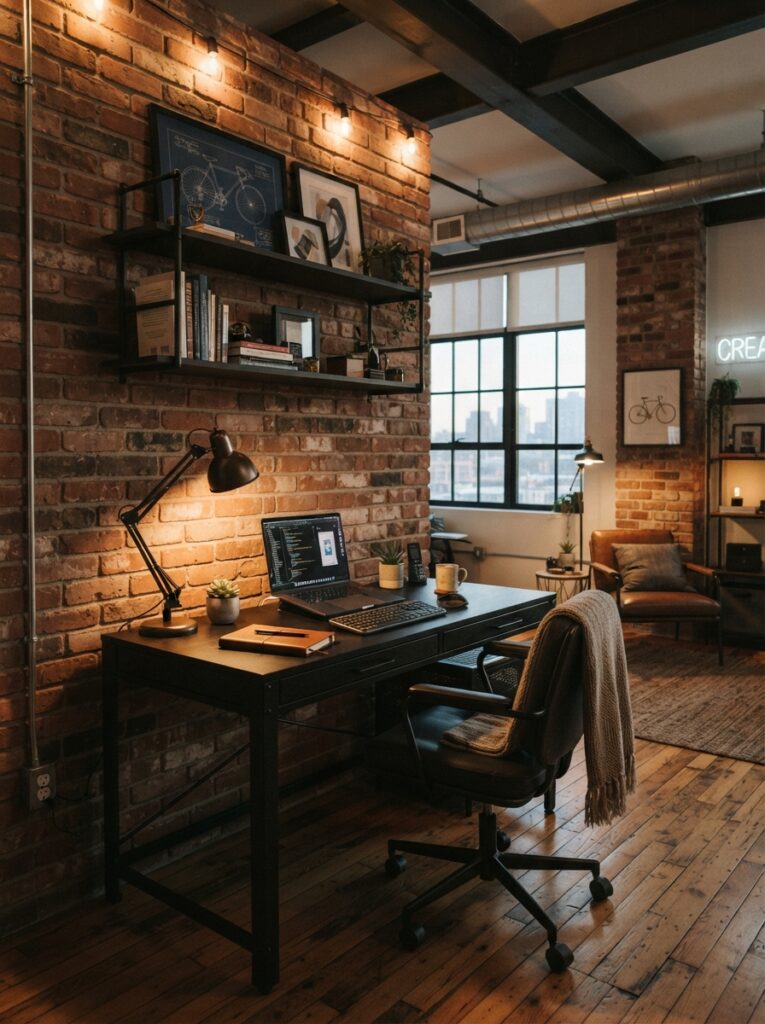
Brick veneer panels add an industrial, loft-like quality to any space. Much lighter and easier to install than real brick, veneer panels attach directly to drywall and create a convincing, textured brick effect that works especially well in living rooms and home offices.
Accent Wall Ideas: Tile
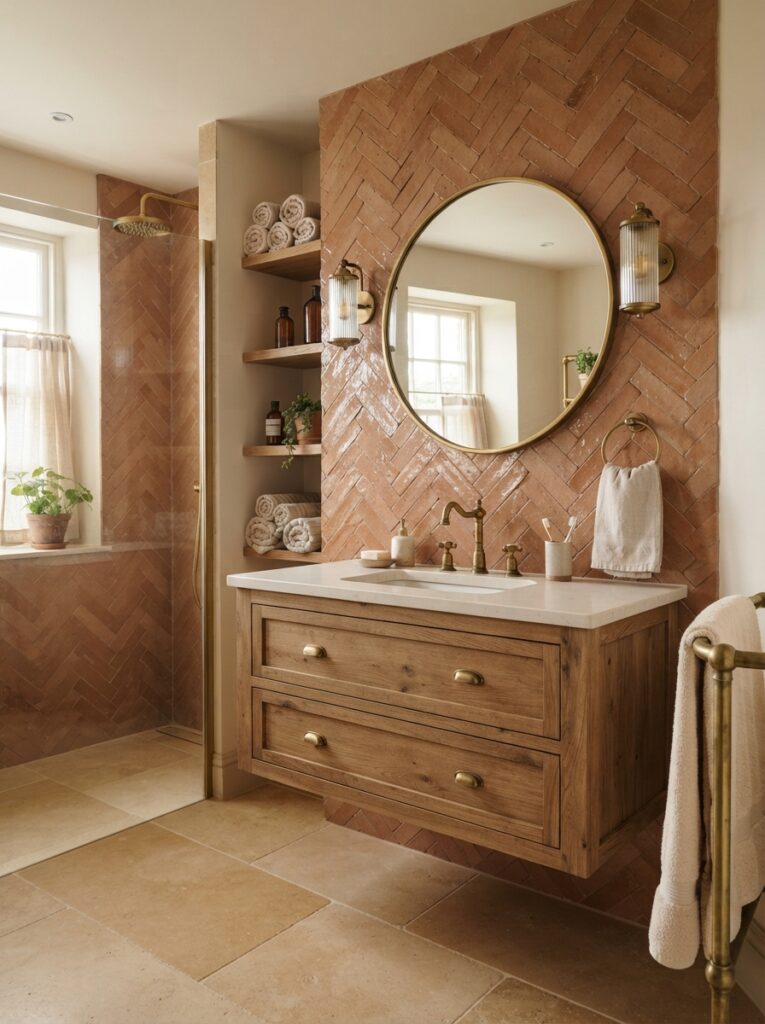
In bathrooms and kitchens, tile accent walls create a completely different effect than paint or wallpaper — more permanent, more luxurious, and more dramatically textural. A full wall of subway tile in a bathroom, a herringbone tile feature wall behind a vanity, or Zellige tile (the irregular, slightly imperfect Moroccan tile that has become enormously popular) on a kitchen backsplash all create stunning focal points.
Accent Wall Ideas: Art and Gallery Arrangements
Sometimes the best “accent wall” isn’t a surface treatment at all — it’s a gallery arrangement that turns a wall into a curated art display. A floor-to-ceiling arrangement of framed prints, a mural (painted or wallpapered), or an oversized single canvas can create all the impact of a painted or textured accent wall with more flexibility and personal expression. For more inspiration, visit Architectural Digest.
Accent Wall shopping list
- Peel and stick wallpaper — renter friendly accent wall
- Wall paneling kit — the slat wall look
- Paint roller set — a good roller changes the finish
- Painters tape — the difference between crisp and messy
- Wall sconces — light the wall you just made
- Large wall art — one big piece beats five small
Prices and availability change. Links open on Amazon.
Accent Wall Mistakes to Avoid
- Painting the wrong wall. Choose the architectural anchor of the room, not a random wall.
- Using the wrong sheen. Accent walls in living areas look best in matte or eggshell finish. High gloss can be dramatic but is unforgiving of imperfections.
- Going too dark in a small room. A very dark accent wall can make a small room feel cave-like. If you love dark colors in a small space, consider a deep color on all four walls instead, which creates drama without the imbalance of one very dark wall.
- No connection to the rest of the room. Your accent wall should feel like it belongs in the same room as everything else. If the color or material has no visual relationship to the rest of the space, the result looks unplanned rather than intentional.
Accent Wall Ideas: Lighting
Lighting can make or break an accent wall, especially one in a darker or more saturated color. A wall washed in flat, even overhead light loses much of its depth and texture, while a wall lit from an angle — a picture light mounted above a piece of art, a pair of wall sconces flanking a headboard, or a slim LED strip run behind a floating shelf — reveals shadow and dimension that flat lighting flattens out. For textured accent walls like shiplap, brick veneer, or reclaimed wood, angled light is especially important since it’s the raking light that makes the texture read at all.
Warm-toned bulbs (around 2700K to 3000K) generally suit accent walls better than cool white light, particularly for darker colors like navy, forest green, or charcoal, which can look flat and slightly cold under bright white LEDs. A dimmer switch is a worthwhile investment for any room with a statement accent wall, since it lets you shift the wall from a bright, energetic focal point during the day to a moodier, more dramatic backdrop in the evening.
Accent Walls in Small Rooms and Apartments
A common misconception is that accent walls only work in large rooms, but a well-chosen accent wall can actually make a small room feel more intentional rather than more cramped. The key is choosing the right wall and the right treatment: in a small bedroom, the wall behind the headboard is almost always the better choice than a side wall, since it doesn’t visually shrink the usable floor space. In a small living room, the wall opposite the entry (the one you see first) tends to work better than the wall behind the seating, since it creates depth rather than closing the room in.
Renters and anyone in a small apartment also have more low-commitment options than ever. Peel-and-stick wallpaper, removable decals, and even a large piece of art leaned against the wall can create an accent-wall effect without touching the actual paint or walls, which matters both for lease terms and for anyone who likes to change their mind. A single bold color on a small wall, paired with lighter walls everywhere else in the room, reads as a deliberate design choice rather than a compromise.
Accent Wall Ideas for Kids’ Rooms and Nurseries
Kids’ rooms and nurseries are one of the best places to experiment with a bolder accent wall, since these spaces can handle more color and pattern than an adult bedroom or living room without feeling overdone. A soft, muted color (sage, blush, dusty blue) works well for a nursery that needs to grow with the child, while a playful wallpaper — stars, clouds, a simple botanical print — adds personality without requiring a full room redesign later.
Because kids’ tastes change quickly, it’s worth choosing an accent wall treatment that’s easy to update: paint over a solid color in an afternoon, or use removable wallpaper that peels away cleanly when a toddler’s room needs to become a big kid’s room a few years later. Saving the more permanent, harder-to-change treatments (like tile or a built-in wood feature) for common areas of the home is generally the safer long-term choice.
Accent Wall Ideas for Home Offices and Entryways
A home office benefits from an accent wall behind the desk, visible on video calls, that reflects a bit of personality without becoming distracting during the workday — a deep, calming color like navy or forest green tends to read better on camera than a busy pattern. A gallery wall of framed prints or diplomas can serve the same purpose while adding a sense of accomplishment and professionalism to the background.
Entryways are an often-overlooked opportunity for an accent wall, since this is the first impression a home makes on guests. A bold wallpaper, a bank of hooks and a bench against a painted accent wall, or a small gallery arrangement all make an entryway feel considered rather than like an afterthought hallway. Because entryways are typically small and see less overall exposure to fading sunlight than a living room, this is often a good place to try a bolder color or pattern than you might commit to elsewhere in the home.
Budgeting for an Accent Wall
Cost varies enormously depending on the treatment. A painted accent wall is by far the most affordable option, typically costing the price of a single gallon or two of quality paint. Peel-and-stick wallpaper sits in the middle, generally costing more per square foot than paint but requiring no professional installation. Traditional pasted wallpaper, tile, and wood treatments like shiplap or reclaimed planks sit at the higher end, both in material cost and, frequently, in labor if you aren’t installing it yourself.
For anyone working with a tight budget, painting one wall is almost always the better first move over a partial wallpaper or tile job, since it delivers a large percentage of the visual impact at a small fraction of the cost — and it can always be layered with a less expensive gallery wall or textile element later for more depth.
Where to Shop for Accent Wall Materials
Big box hardware stores carry an enormous range of paint colors and are usually the most convenient source for a straightforward painted accent wall, including sample sizes that are worth testing on the actual wall before committing to a full gallon. For wallpaper, retailers specializing in peel-and-stick options tend to offer better quality and more contemporary patterns than what’s available at general hardware stores. Reclaimed wood and shiplap can often be sourced more affordably through local salvage yards or lumber mills than pre-packaged big-box versions, with the added benefit of more authentic texture and character.
For tile and more permanent installations, it’s worth visiting a tile showroom in person rather than ordering sight-unseen, since color and texture can look meaningfully different online than in natural light against your actual wall.
Final Thoughts
An accent wall is one of the quickest, most impactful ways to transform a room. Choose the right wall (the natural focal point), pick a treatment that connects to your overall palette and style, and commit to it confidently. Whether you go with a bold paint color, a dramatic wallpaper, or a rich wood texture, a well-executed accent wall elevates a room from ordinary to genuinely memorable.




6 Comments