

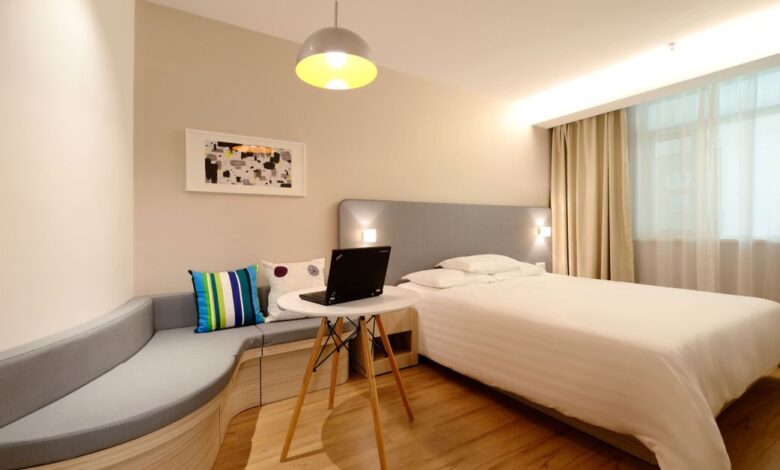
Why Minimalism Works So Well in the Bedroom
These minimalist bedroom ideas will show you how to strip your space down and build it back up into a calm, clutter-free sanctuary. Your bedroom should be a sanctuary — a place your brain recognizes as a signal to slow down, decompress, and rest. Minimalism achieves this by removing visual noise. Every object your eyes land on in a minimalist bedroom is there intentionally, and the absence of clutter lets your nervous system relax in a way that a busy, over-decorated room simply can’t allow.
Minimalism is one of six aesthetics worth knowing before you commit; our full guide to aesthetic bedroom ideas compares them side by side.
As an Amazon Associate I earn from qualifying purchases. Some links in this post are affiliate links, at no extra cost to you.
These minimalist bedroom ideas will show you how to create a calm, clutter-free sanctuary that looks and feels dramatically better — by removing things rather than adding them.
These minimalist bedroom ideas will show you how to create a calm, clutter-free sanctuary that looks and feels dramatically better than a room filled with twice as much stuff.
Minimalist bedroom design isn’t about deprivation or cold austerity. Done well, it’s about warmth, quality, and intentionality. A beautifully made bed with luxurious linen, a single plant, warm lighting, and carefully chosen nightstand objects — that’s minimalism at its best. Here’s how to get there.
Minimalist Bedroom Ideas: Start With a Radical Edit
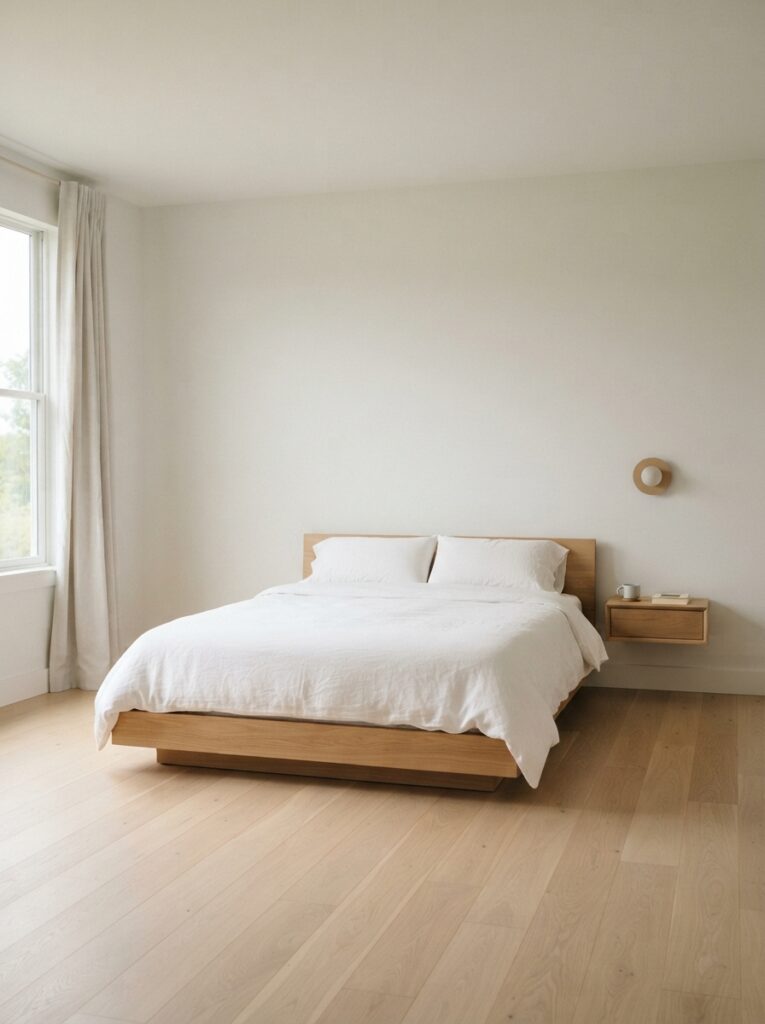
Before you buy a single new thing, remove everything that doesn’t need to be in the bedroom. Clothes on chairs, stacked books you’ll get to someday, decorative objects you’ve stopped seeing, electronics that belong elsewhere — all of it goes. A minimalist bedroom is only possible if the starting point is genuinely clear. For more on this, see our bedroom guide.
This isn’t just an aesthetic choice. Research consistently shows that visual clutter in the bedroom is associated with worse sleep quality and higher stress levels. The clear, calm space you’re creating isn’t just prettier — it’s actively better for your health.
The Bed Is Everything
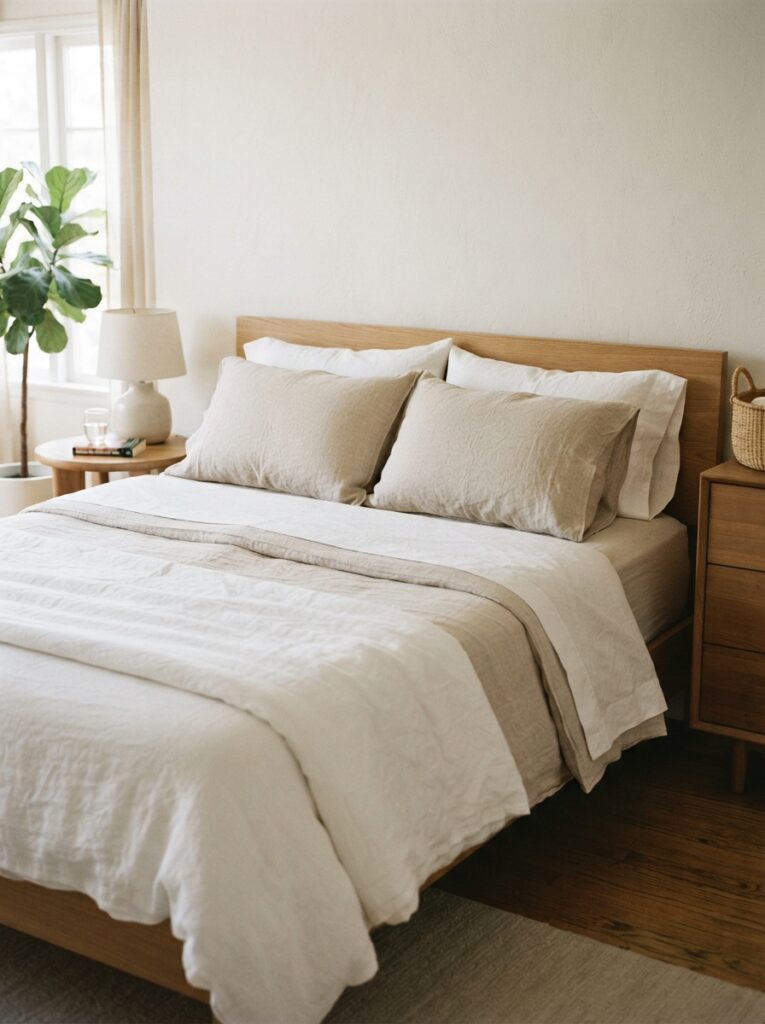
In a minimalist bedroom, the bed isn’t just furniture — it’s the entire visual statement of the room. Everything else supports it. This means your bedding needs to be genuinely beautiful and well-considered.
For a classic minimalist look: crisp white linen or cotton, layered simply — fitted sheet, flat sheet, a light duvet or coverlet, two to four pillows maximum. No decorative throw pillows that you have to remove before getting into bed. The bed should look inviting, not like a stage set.
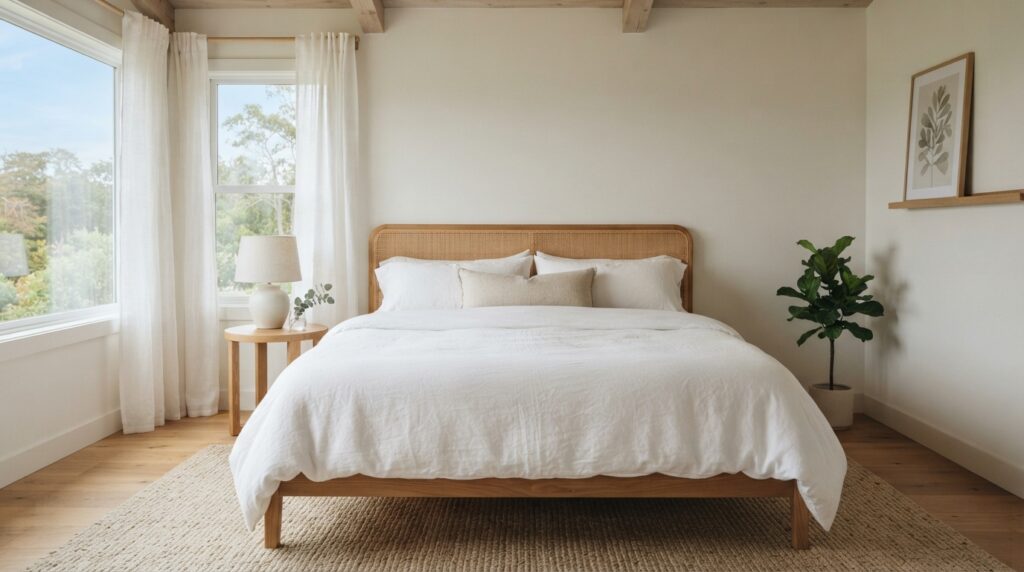
If white feels too stark, reach for warm neutrals: warm grey, oatmeal, soft sage, or warm cream. These colors are calming, photographically beautiful, and coordinate with almost any wood tone or metal finish you might have.
Choose a Minimal Color Palette
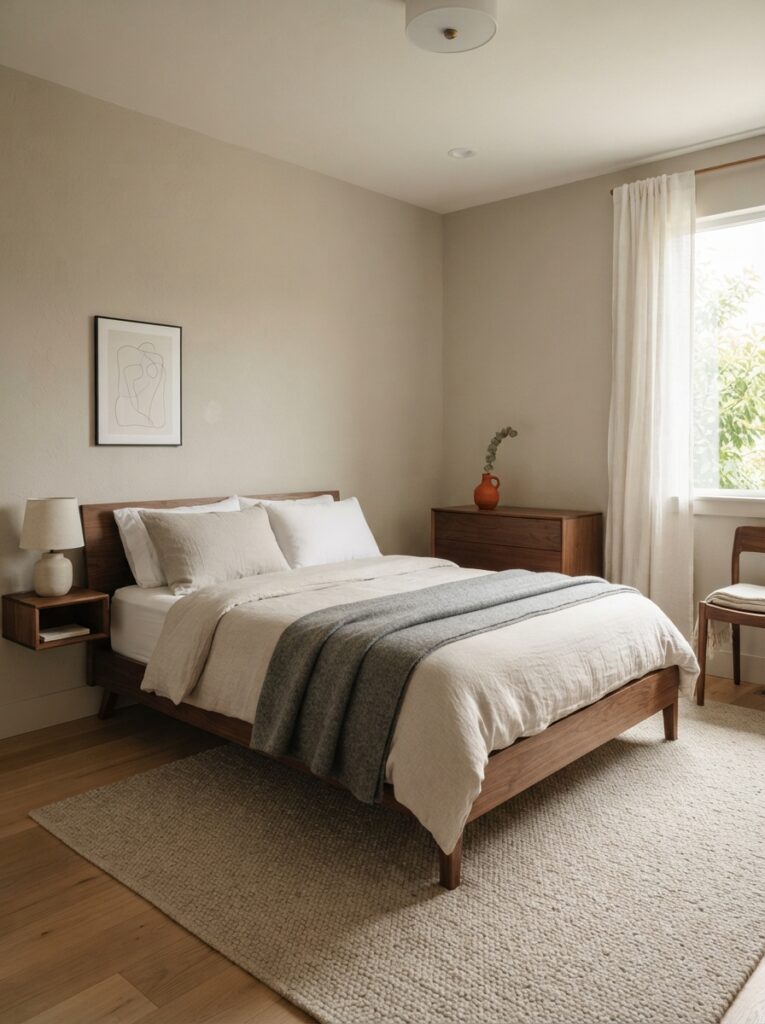
Minimalist bedrooms typically work within a constrained palette of two to three colors at most. The most common and most effective approach: a neutral base (white, cream, warm grey, or beige for walls and bedding) plus one accent material (warm wood, black metal, or natural wicker) plus one optional pop (a subtle sage, dusty blue, or terracotta in a single plant pot or throw).
Wall color is important in minimalist bedrooms. White works but can feel cold if your lighting is poor. Soft greige (grey-beige), warm white, or a very muted green or blue are all more livable and add subtle warmth without adding visual complexity.
Furniture: Less Is Literally More
In a minimalist bedroom, every piece of furniture needs to justify its presence. The essentials: a bed, a nightstand or two, and storage (either a wardrobe or a dresser). That’s it. Additional seating (a small chair or bench at the foot of the bed) is optional — only include it if you genuinely use it.
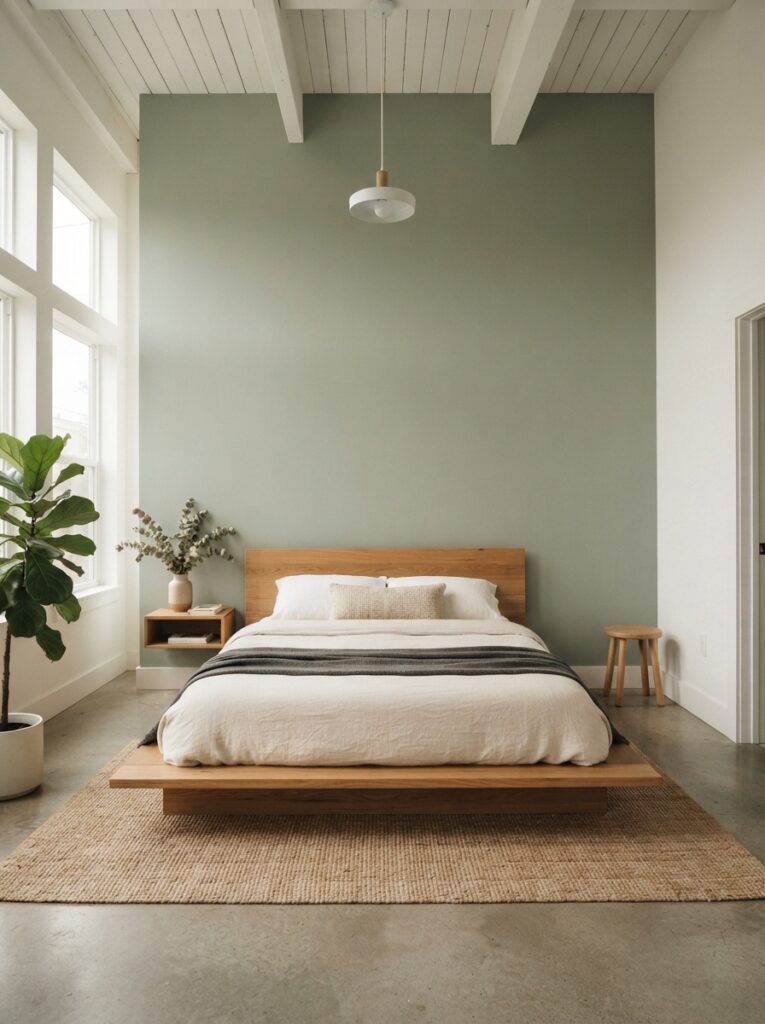
Choose furniture with clean lines and minimal ornamentation. Low-profile bed frames work particularly well in minimalist bedrooms — they make ceilings feel higher and rooms feel more spacious. Look for bedframes in warm natural wood, matte black metal, or upholstered linen for a soft, neutral feel.
Keep your nightstand surfaces minimal: a lamp, a book, a small plant, and a glass of water. If your nightstand is covered in stuff, it needs either an edit or a nightstand with more storage (drawers are your friend).
Storage: The Hidden Foundation of Minimalism
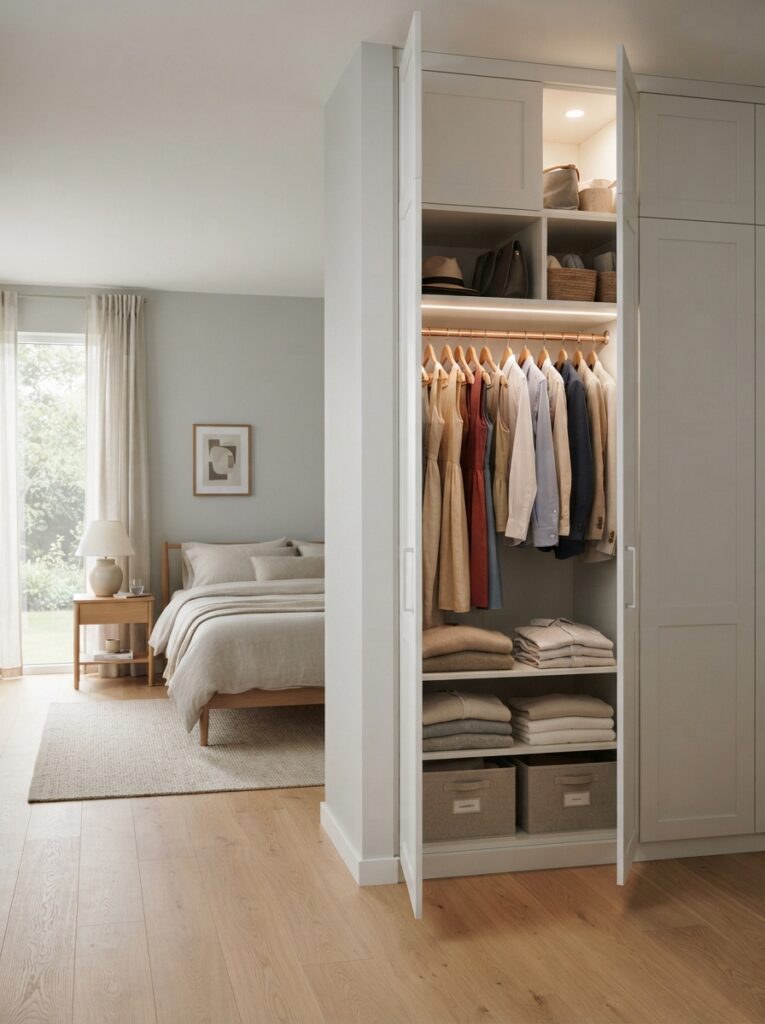
A minimalist bedroom isn’t truly minimal if everything is just hidden in a closet with the door closed. Genuine minimalism means owning less. But smart storage makes the visible surfaces easier to keep clear. Paring down your clothes helps as well: here is what a minimalist wardrobe is and how to build one.
Invest in a wardrobe or closet system with enough capacity to actually hold everything you own. Under-bed storage for out-of-season clothing or extra bedding keeps it accessible but invisible. Drawer organizers inside dressers let you maintain clear surfaces by giving everything a designated, invisible home.
Minimalist Bedroom Lighting
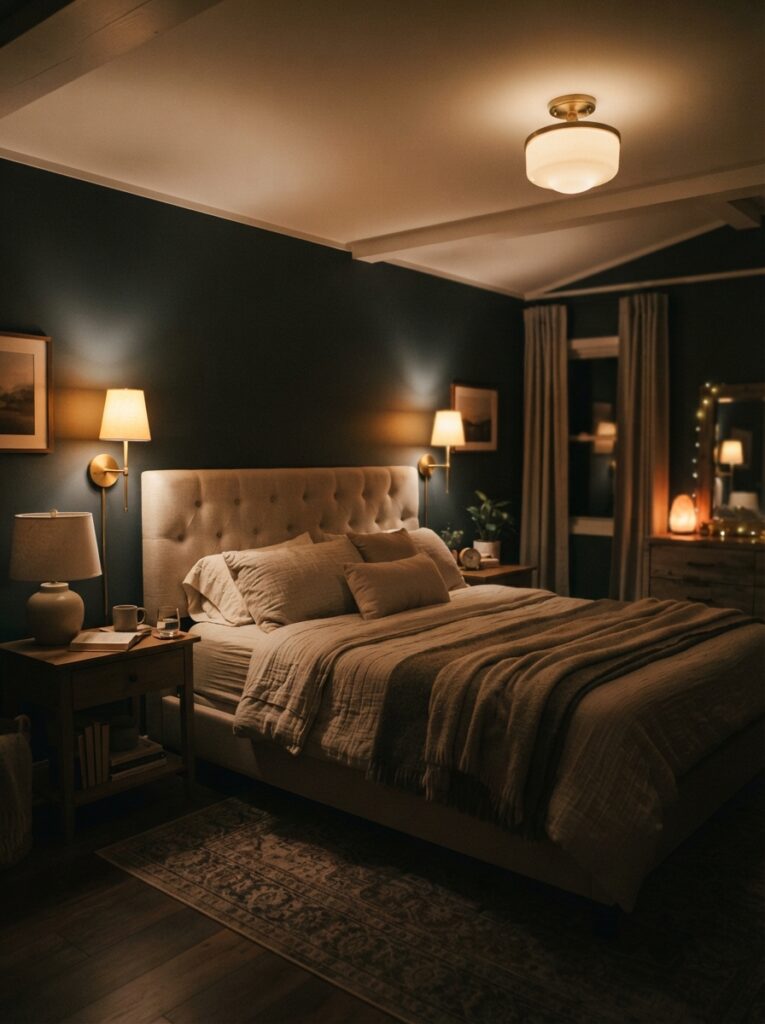
Lighting is one of the most important elements in any bedroom, and in a minimalist space where there’s less visual complexity to distract, lighting quality becomes even more noticeable.
Avoid harsh overhead lighting as your main source of bedroom illumination. Instead, layer: a ceiling fixture on a dimmer for general light, warm-toned bedside lamps for reading and winding down, and possibly a floor lamp in a corner if the room needs more light. All bulbs should be warm-toned (2700-3000K).
Wall sconces mounted on either side of the bed are a beautiful, space-saving alternative to table lamps — they free up nightstand surface area while adding an elegant, hotel-quality feel.
Decor: The Intentional Few
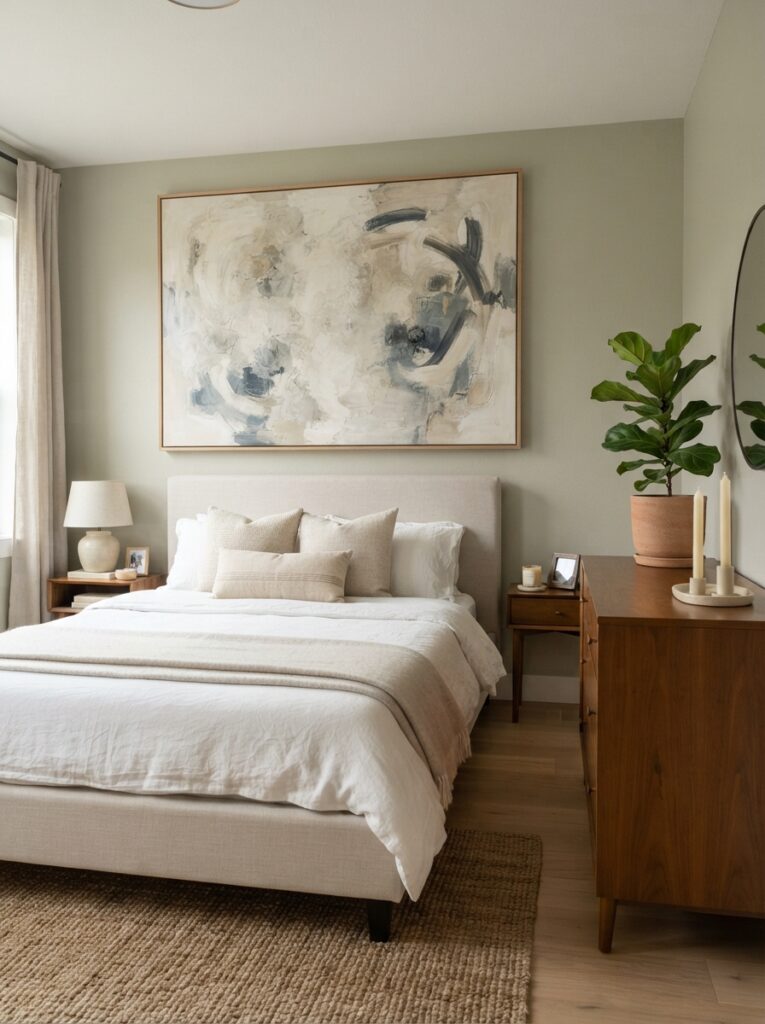
Minimalist doesn’t mean no decor. It means every decorative object is intentional and earns its place. A few principles:
- One large piece of art rather than many small ones. A single oversized print or canvas above the bed makes more impact than a gallery wall of smaller pieces and is more consistent with the minimalist aesthetic.
- One or two plants maximum. A single fiddle-leaf fig, a monstera, or a snake plant in a simple pot adds life without clutter. Two is usually the maximum before it starts to feel busy.
- Candles as dual-purpose decor. A few beautiful candles on the dresser or nightstand serve as both decor and ambiance. Simple shapes, neutral colors, and quality fragrance.
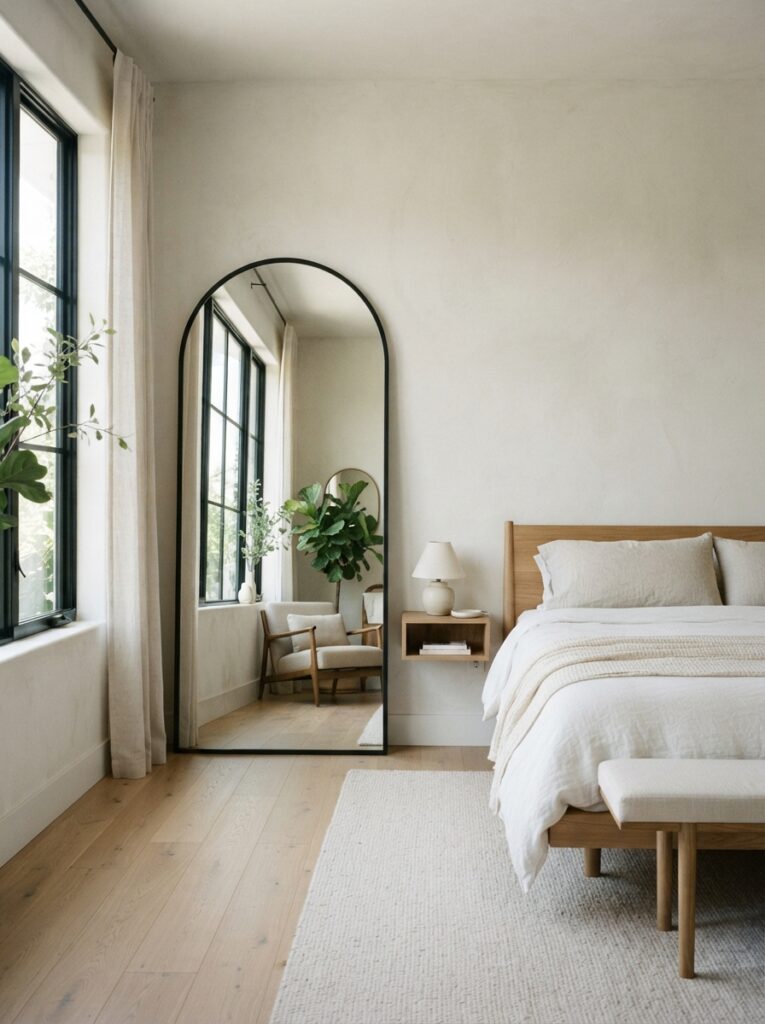
- Mirrors for light and space. One large mirror — floor-length or wall-mounted — creates the illusion of more space and bounces light. In a minimalist room, a mirror also functions as art.
Minimalist Bedroom on a Budget
You don’t need to spend a lot to achieve a minimalist bedroom. Often, the budget is zero — because the first step is removing things rather than buying them. Beyond that: invest in quality bedding (you’ll feel the difference every single night), pick up a simple white or cream duvet cover, and add a single plant in a clean pot. Edit everything else down to what’s truly essential. The result often costs less than what you had before. For more inspiration, visit Architectural Digest.
Minimalist Bedroom Ideas for Small Spaces
A small bedroom actually benefits more from minimalism than a large one, since every extra object takes up a proportionally larger share of the available visual space. Choosing a bed one size smaller than you might default to, or a platform bed without a bulky headboard, frees up floor space immediately. A wall-mounted or floating nightstand, rather than a freestanding one, keeps the floor visually clear and makes a small room feel more open.
Light, reflective surfaces do a lot of work in a small minimalist bedroom: pale walls, a large mirror opposite the window, and glass or light wood furniture all bounce available light around the room rather than absorbing it. Skipping a rug entirely, or choosing one in a tone close to the floor color, can also make a small room’s boundaries feel less defined and the space feel larger than it is.
Choosing Textiles and Rugs
Even in a minimalist bedroom, texture matters enormously, since a room with no pattern or color still needs some sensory richness to avoid feeling sterile. A rug in a natural fiber like wool or jute adds warmth and softness underfoot without introducing a busy pattern. A textured throw blanket in a nubby knit or waffle weave, folded at the foot of the bed, adds visual interest through material rather than color or print.
Linen bedding in particular is worth the investment in a minimalist bedroom, since its natural wrinkles and texture read as intentional and lived-in rather than sloppy, in a way that a perfectly smooth synthetic fabric never quite achieves.
Closets and Wardrobe Systems for True Minimalism
The visible calm of a minimalist bedroom is only sustainable if what’s behind the closet door is equally organized, since a chaotic closet inevitably spills back out into the room within a few weeks. A well-planned closet system with dedicated zones for hanging clothes, folded items, and shoes makes it far easier to put things away immediately rather than leaving them on a chair “for now.”
Capsule wardrobes — a deliberately limited, well-coordinated collection of clothing — pair naturally with minimalist bedroom design, since owning fewer items means less pressure on storage space and less visual clutter even when the closet door is open. Clear or uniform matching hangers and labeled bins add another small layer of calm that’s easy to overlook but genuinely changes how the space feels day to day.
Minimalist Bedrooms for Couples and Shared Spaces
Sharing a minimalist bedroom requires a bit more negotiation than a solo space, since two people’s belongings and habits both need to fit within the same restrained footprint. Matching nightstands on either side of the bed, each with identical storage capacity, keep the layout visually balanced and avoid one side looking more cluttered than the other. Splitting closet and drawer space evenly, and agreeing on a single shared color palette rather than each person decorating “their side,” keeps the room feeling like one cohesive space rather than two competing ones.
For couples with genuinely different amounts of belongings, a walk-in closet or dedicated dressing area just outside the bedroom can absorb the overflow that would otherwise compromise the room’s minimalism.
Seasonal Minimalism: Keeping the Look Year-Round
A minimalist bedroom doesn’t need to look identical in every season, but changes should stay within the same restrained approach rather than adding clutter. In cooler months, swap a lightweight duvet for a heavier one and add a single extra throw for warmth. In warmer months, switch to lighter linen or cotton percale sheets and remove the extra throw rather than piling it on top of lighter bedding.
The same one-in-one-out principle that keeps a minimalist bedroom clear year-round applies to seasonal decor too: if you bring in a seasonal candle scent or a small seasonal accent, retire the previous season’s version rather than letting both accumulate on the dresser.
Minimalist Bedroom shopping list
- Neutral bedding set — one colour, good fabric
- Floating nightstand — keeps the floor clear
- Simple table lamp — one shape, no ornament
- Under bed storage — hides what breaks the calm
- Blackout curtains — clean lines, full drop
- Wool throw blanket — warmth without pattern
Prices and availability change. Links open on Amazon.
Common Minimalist Bedroom Mistakes to Avoid
A few habits undermine an otherwise successful minimalist bedroom. Buying furniture just because it’s plain — minimalism is about intentional restraint, not simply choosing the blandest option available, and a plain but poorly made piece can look cheap rather than calm. Skipping decor entirely in an attempt to be more minimalist than necessary often results in a room that feels cold and unfinished rather than serene; a single plant, piece of art, or textured throw makes a significant difference.
Overcorrecting into stark white-on-white-on-white without any warmth or texture is another common trap, since it can read as clinical rather than calming. Finally, treating minimalism as a one-time purge rather than an ongoing habit means clutter inevitably creeps back in within a few months without a regular, brief re-edit.
Where to Shop for Minimalist Bedroom Pieces
Retailers specializing in natural materials and simple silhouettes tend to carry the cleanest minimalist bedding and furniture, though their price points can run higher than mainstream options. Mainstream home retailers increasingly carry pared-back, Scandinavian-influenced lines that achieve a similar look at a lower cost, particularly for bedding basics and simple wood furniture. Secondhand and vintage furniture, refinished or left as-is, often has cleaner, simpler lines than much of what’s mass-produced today, and buying secondhand keeps a minimalist approach consistent with reducing overall consumption.
Final Thoughts
A minimalist bedroom is one of the most restorative spaces you can create. The key is not to mistake minimalism for emptiness — a warm, minimal bedroom has texture, quality materials, and personal meaning built into every element. Start with a radical edit, invest in beautiful bedding, keep surfaces nearly clear, and let the space breathe. Your sleep, and your mornings, will be better for it.




6 Comments