
Dining Room Decor Ideas to Create a Space You Actually Want to Eat In

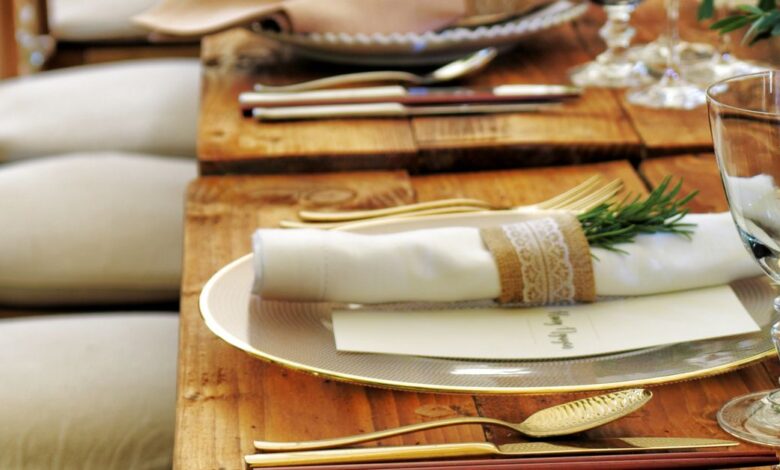
The Dining Room Deserves More Attention
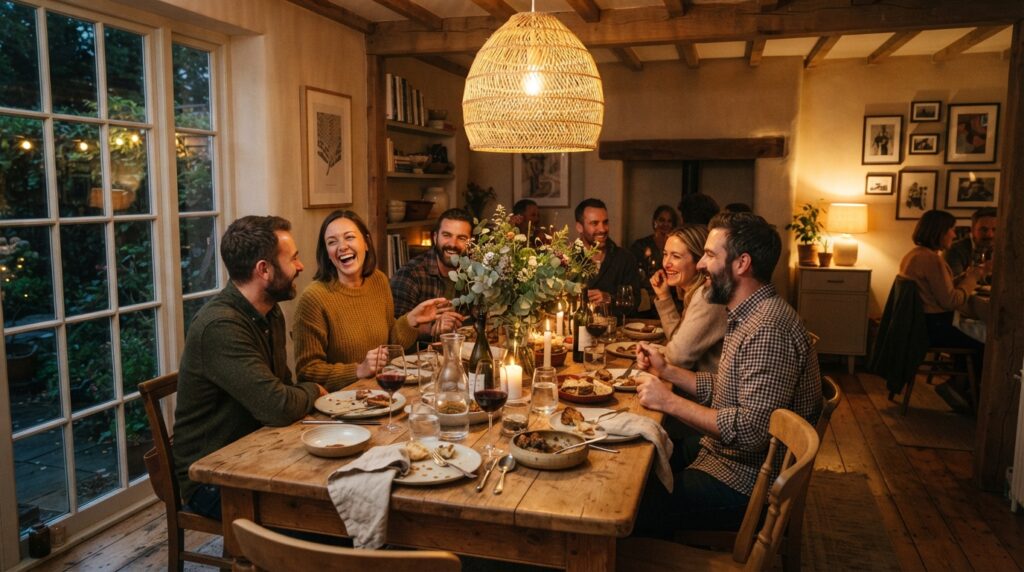
These dining room decor ideas will help you create a warm, inviting space where meals feel special and conversations linger. The dining room is where meals happen, yes — but it’s also where conversations stretch long after the plates are cleared, where celebrations take place, where families catch up on their days. It deserves a space that feels as good as the food you serve in it.
As an Amazon Associate I earn from qualifying purchases. Some links in this post are affiliate links, at no extra cost to you.
The right dining room decor ideas can transform an overlooked space into the most inviting room in your home — starting with a few strategic choices.
The right dining room decor ideas can transform an overlooked space into the most inviting room in your home — starting with a few strategic choices in lighting, furniture, and styling.
Yet dining rooms are often afterthoughts — a table, some chairs, overhead lighting that’s too bright, and walls that haven’t been touched since the house was painted. This guide changes that. Here are the best dining room decor ideas to create a space that feels warm, stylish, and genuinely inviting.
Dining Room Decor Ideas: Start With the Right Table
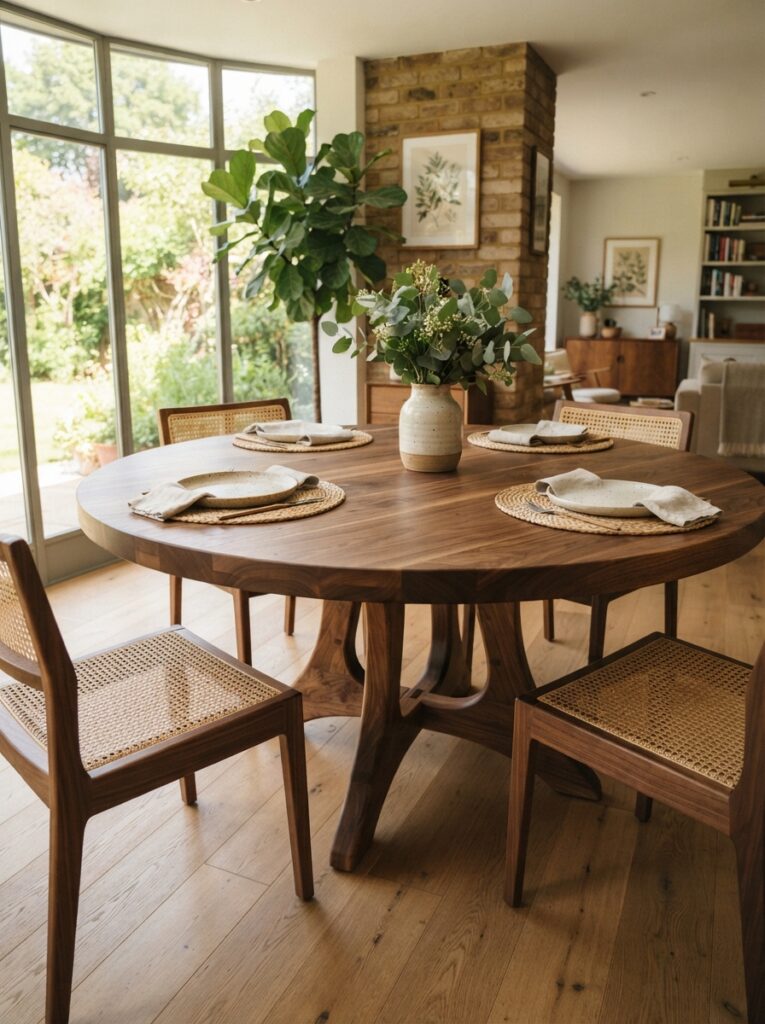
The dining table is the anchor of the entire room, so it’s worth getting right. A few things to consider:
- Size: You need at least 36 inches between the table edge and the nearest wall or furniture for comfortable movement. For seating, allow 24 inches of table width per person.
- Shape: Rectangular tables seat the most people and work well in most rooms. Round tables create a more intimate, conversation-friendly atmosphere and work better in square-shaped rooms. Oval tables split the difference.
- Material: Wood is the most versatile and timeless. A solid wood table with visible grain adds warmth and character. Marble tops are elegant but require maintenance. Glass tops visually open up a small space but show fingerprints constantly.
The Lighting Rule That Changes Everything
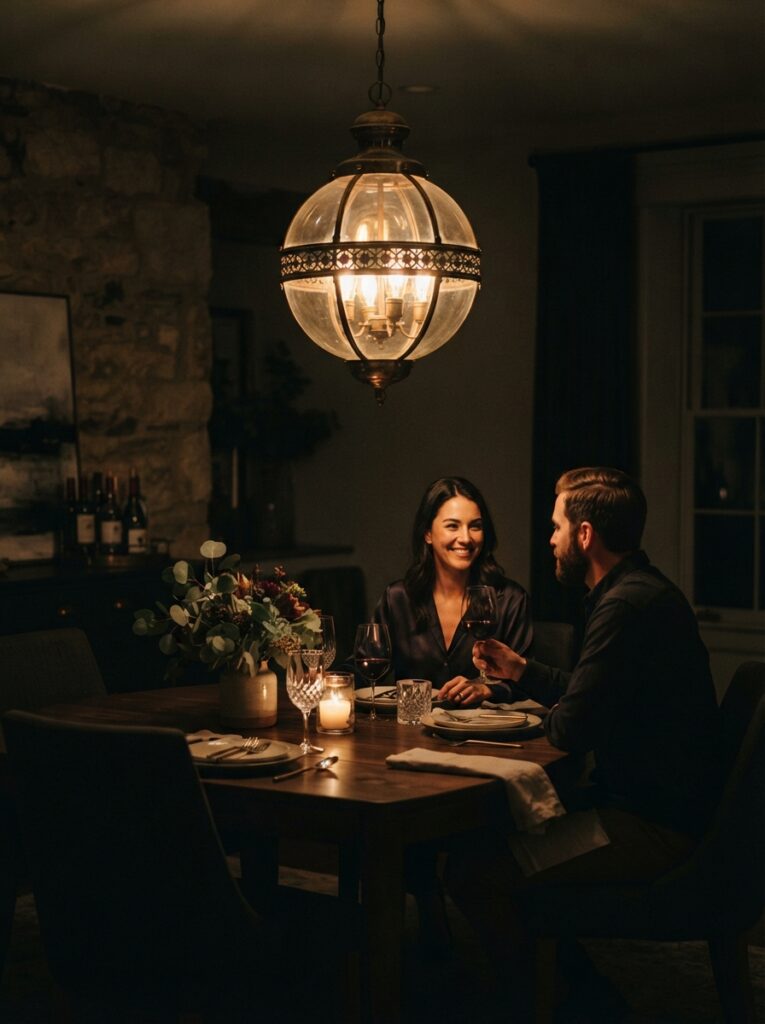
Nothing transforms a dining room faster than great lighting — and nothing kills the mood faster than bad lighting. The most common dining room lighting mistake is having a ceiling fixture that’s too small, too high, or too bright.
The gold standard is a statement pendant or chandelier hung 30-36 inches above the tabletop. The fixture should be roughly 12 inches narrower than the table on each side. It should cast warm, downward light over the table, creating an intimate pool of illumination rather than flooding the whole room.
Install a dimmer switch if you don’t already have one. The ability to lower the lights during dinner is worth more than any piece of decor you could buy. Once the room is set, keep it in use with these easy weeknight dinner ideas the whole family will love.
Dining Room Decor Ideas: The Details
Statement Lighting
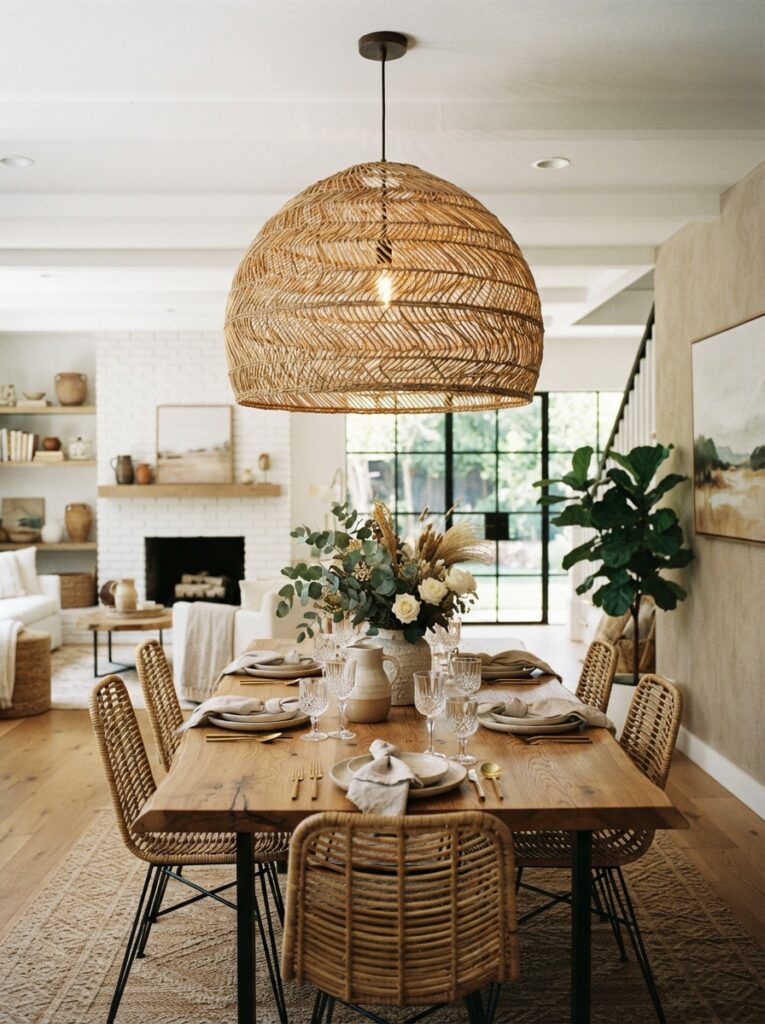
Your pendant or chandelier is the jewelry of your dining room — it should make a statement. Woven rattan pendants add a warm, boho feel. A sculptural black iron chandelier adds drama. A cluster of globe pendants at varying heights feels modern and playful. Don’t play it safe here — bold lighting choices almost always look better in a dining room than safe ones.
A Rug Under the Table
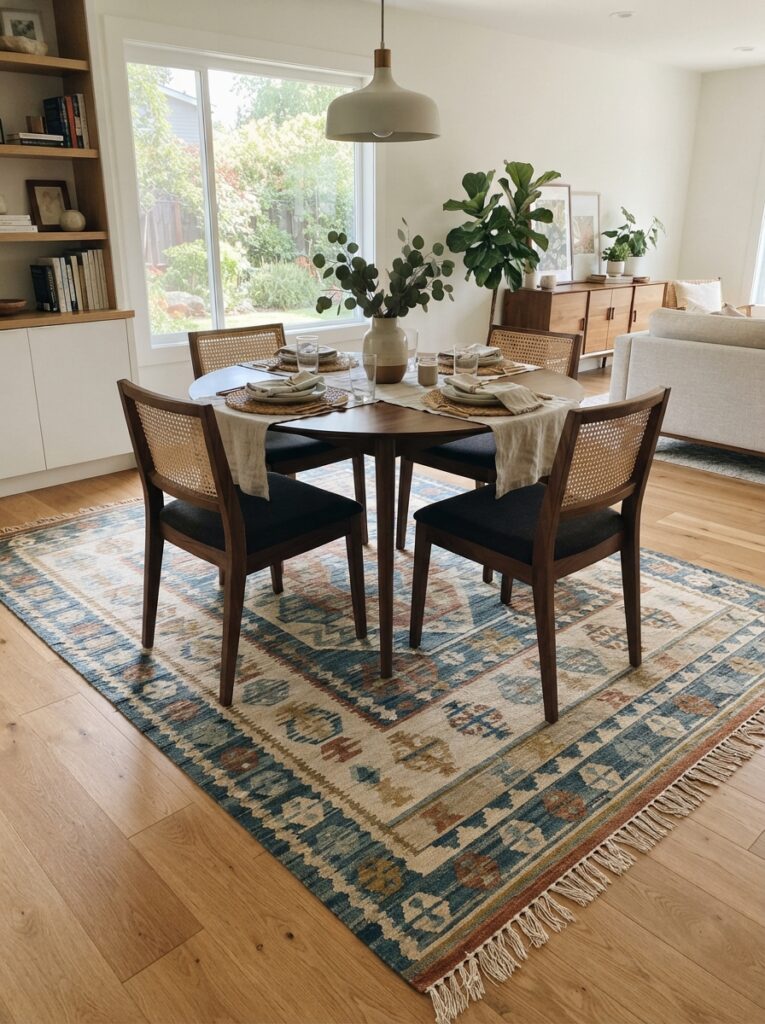
A dining room rug defines the space, adds warmth underfoot, and reduces noise — especially important in open-plan homes where sound travels. Size is critical: the rug needs to be large enough that all chair legs stay on the rug even when chairs are pulled out. For an 8-person table, you’ll typically need at least an 8×10 rug, and bigger is usually better.
Choose an easy-to-clean material — flatweave, indoor-outdoor, or low-pile rugs are all good choices. Avoid high-pile or shag rugs that will trap food and make chairs hard to push in.
Buffet or Sideboard
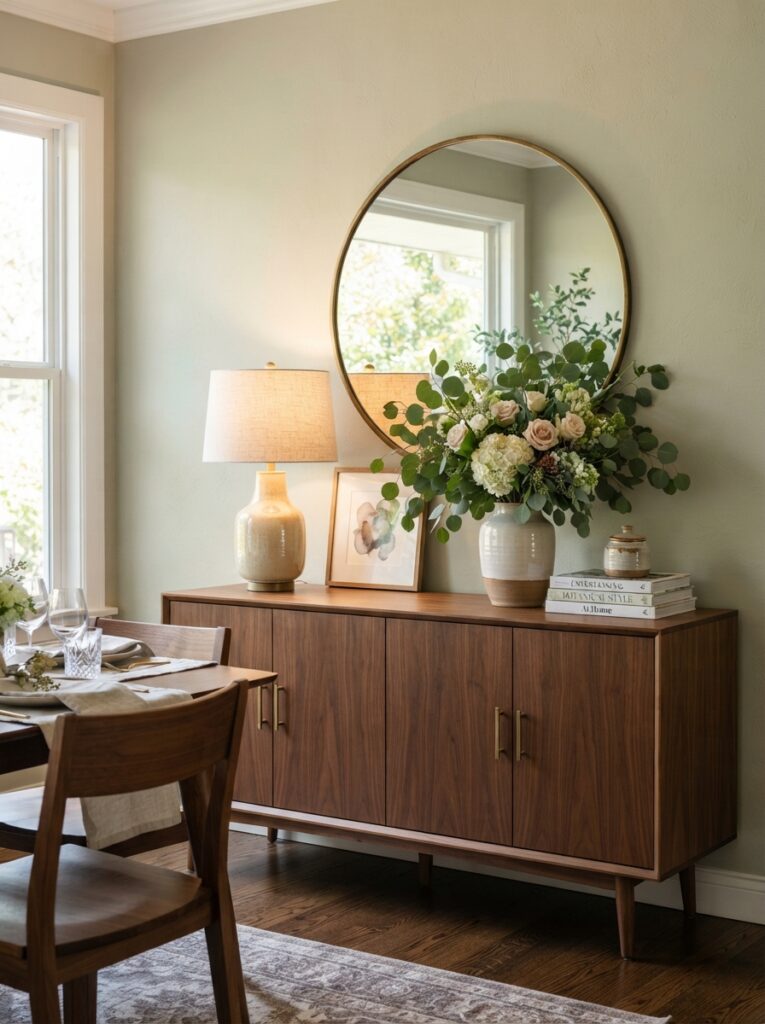
A buffet or sideboard along one wall adds crucial storage (for table linens, serving pieces, and candles) while giving you a valuable styling surface. Top it with a mirror to bounce light around the room, add a lamp for ambient lighting, and style it with a vase of flowers or greenery, some candles, and a decorative object or two.
Art and Wall Decor
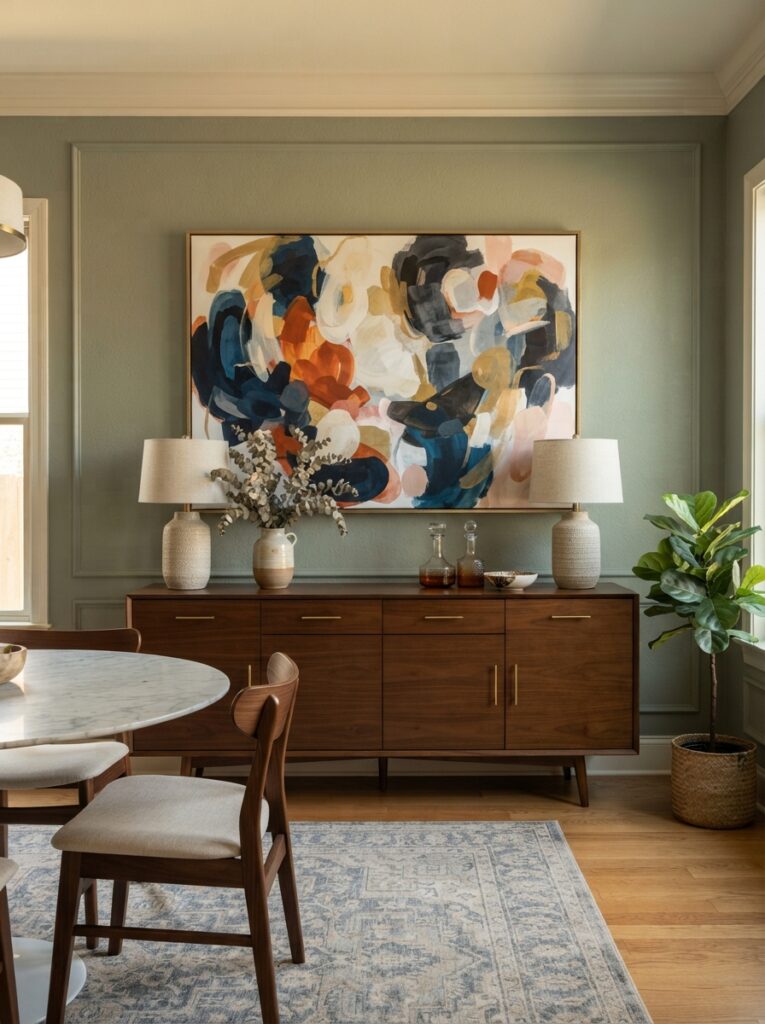
Dining rooms are wonderful places for bold, statement art. The wall above a buffet or sideboard is prime real estate for a large canvas or a gallery-style arrangement. Art in dining rooms benefits from being more dramatic than what you might choose elsewhere — a large abstract, a graphic print, or an oversized botanical illustration all work beautifully.
Candles and Centerpieces
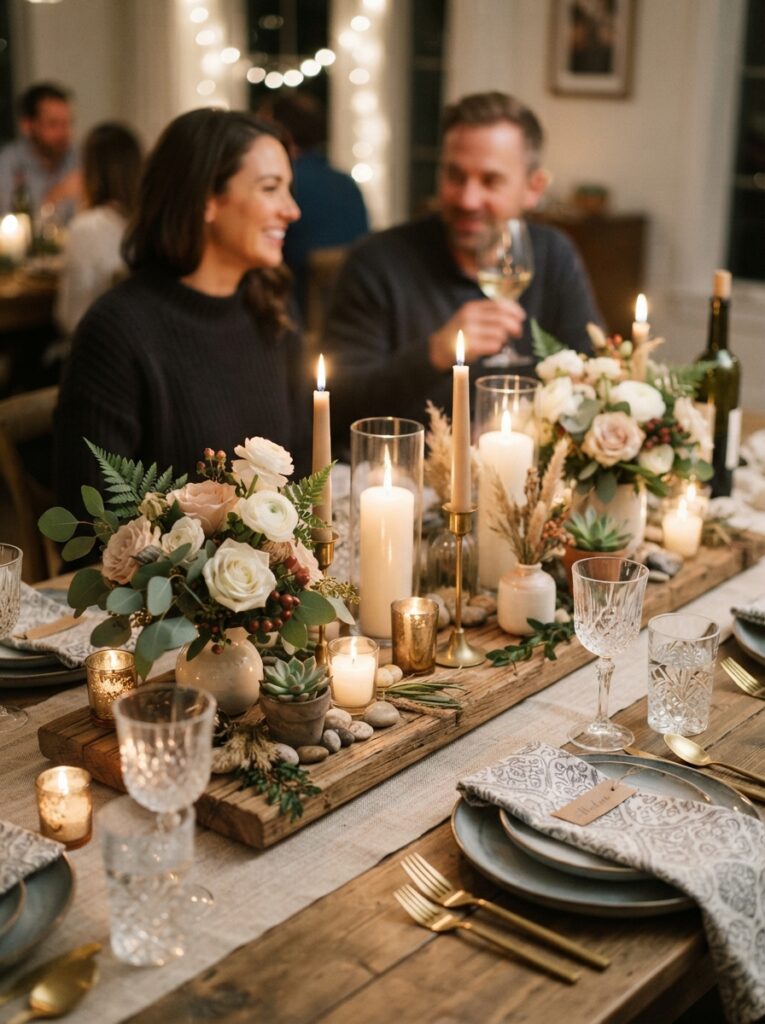
The dining table itself is one of the most-styled surfaces in the home. A simple centerpiece — a low floral arrangement that doesn’t block sightlines, a cluster of candles in varying heights, or a long wooden tray with small plants and candles arranged along it — makes everyday meals feel special.
Keep centerpieces low enough that diners can see each other across the table. Anything taller than 12 inches becomes a sight-line obstacle.
Dining Room Color Ideas
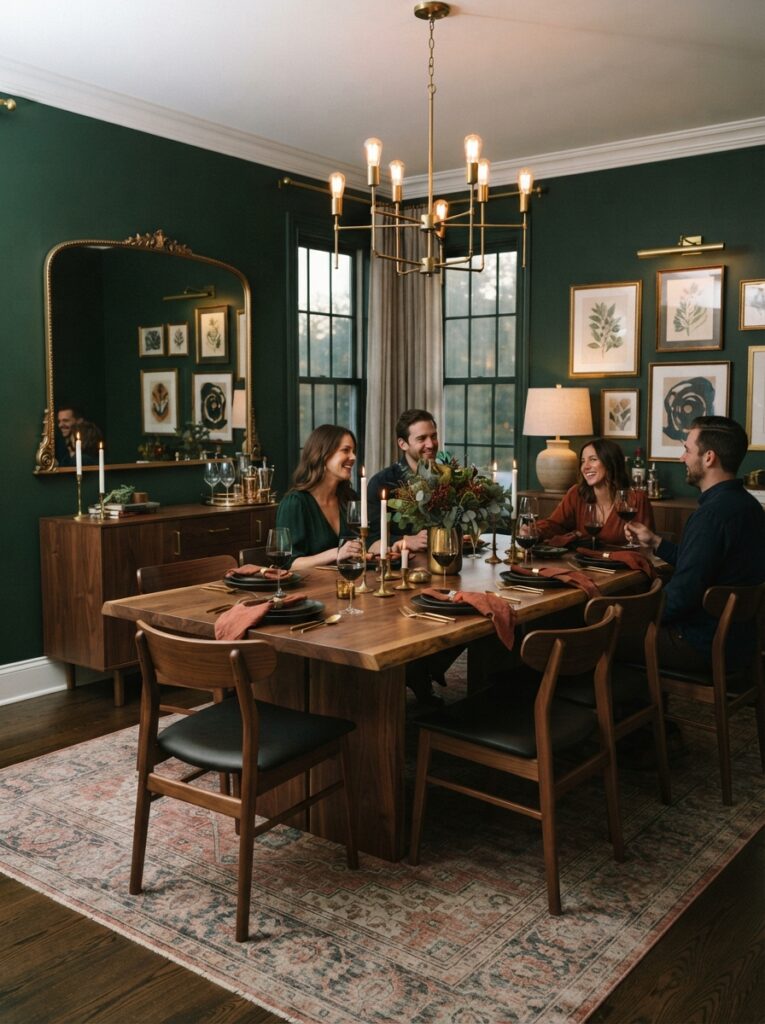
Dining rooms are one of the best places to be bolder with color than you might be elsewhere in your home. Since you spend focused, intentional time here rather than living in it all day, a moody, saturated color can feel exciting rather than overwhelming. For more on this, see our living room guide.
Consider: deep forest green, navy blue, terracotta, rich burgundy, or even a dark charcoal. Pair a bold wall color with natural wood furniture and warm metallic accents (brass, bronze, gold) for a look that’s dramatic but still warm and inviting. If bold walls feel like too much, try painting just one wall — ideally the one behind a buffet or at the end of the table — as an accent. For more inspiration, visit HGTV.
Dining Room Decor Ideas on a Budget
- Change your light fixture. Swapping out a boring ceiling flush-mount for a statement pendant is one of the most impactful dining room upgrades you can make, and pendants are available at every price point.
- Paint an accent wall. A single wall in a deep, dramatic color costs less than $50 in paint and materials and completely changes the room’s feel.
- Style a centerpiece. Branches from your garden in a tall vase, a bowl of fruit, candles grouped together — compelling table centerpieces often cost nothing.
- Add a rug. Even a basic jute rug under the table adds warmth and definition that the room was previously missing.
Choosing Dining Chairs That Work With Your Table
Chairs are where comfort and style have to meet, since guests may sit through a long meal in them. Upholstered chairs (in a durable performance fabric or leather) at the head of the table add a touch of formality and extra comfort, while simpler wood or woven chairs around the sides keep the overall look from feeling too heavy. Mixing chair styles — say, upholstered captain’s chairs at each end with simpler chairs along the sides — is a popular and visually interesting approach that avoids the matched-set look.
Make sure chair seat height leaves at least 10 to 12 inches of clearance under the table apron for knees, and if chairs have arms, confirm they can still slide fully under the table when not in use. Bench seating on one side of the table is a space-efficient and visually interesting alternative to a full run of chairs, especially in smaller dining rooms.
Setting the Table Beyond Special Occasions
A well-set table doesn’t need to be reserved for holidays. Keeping a simple set of cloth napkins, a few sets of everyday dinnerware in a versatile neutral tone, and a couple of table runners on hand means an everyday dinner can look considered without much extra effort. Layering a woven placemat under a ceramic plate, adding a cloth napkin in a coordinating tone, and setting out water glasses ahead of time takes only a few extra minutes but changes the entire feel of a meal.
For entertaining, mixing in a few unexpected elements — mismatched vintage glassware, a runner instead of a full tablecloth, place cards for a more formal dinner — adds personality that a fully matched, catalog-perfect table setting often lacks.
Seasonal Dining Room Updates
Because a dining table is one of the easiest surfaces in the home to restyle, it’s an ideal spot to reflect the seasons without committing to a full redecoration. In fall, a runner in a warm rust or ochre tone paired with a centerpiece of small gourds or dried wheat brings in the season instantly. Winter calls for greenery, a few white or silver candles, and citrus in a low bowl. Spring centerpieces built around fresh-cut tulips or ranunculus in a simple vase feel light and celebratory, while summer favors a lighter linen runner and a bowl of stone fruit or fresh lemons.
These seasonal swaps take only a few minutes and use inexpensive, often perishable materials, meaning the dining room can feel refreshed several times a year without any real investment in new decor.
Small Dining Room Solutions
A compact dining space doesn’t have to feel like a compromise. A round or oval table maximizes seating without hard corners that eat into circulation space, and a drop-leaf or extendable table lets the room flex between everyday use and occasional larger gatherings. Mirrors placed opposite windows or light fixtures make a small dining room feel considerably larger by bouncing light and visually doubling the sense of depth.
Built-in or wall-mounted bench seating along one side of the table saves the floor space that chairs on all sides would require, and a small bar cart or slim console can substitute for a full-sized buffet when square footage is tight. Keeping the color palette light and consistent between the dining area and any adjacent room also helps a small, open-plan dining space feel more expansive.
Dining Rooms in Open-Concept Homes
When the dining area is part of a larger open floor plan rather than a fully enclosed room, it needs a few deliberate design cues to read as its own distinct zone. A statement pendant light hung directly over the table is the single most effective way to visually anchor a dining area within an open space, since it draws the eye and signals “this is where the table lives” even without walls. A rug under the table further reinforces the boundary, especially when the flooring is continuous with the surrounding living or kitchen area. For more on this, see our kitchen & dining guide.
Coordinating (not necessarily matching) the dining area’s color palette and materials with the adjacent living space keeps the whole open floor plan feeling cohesive, while still allowing the dining zone to have its own identity through lighting, rug, and furniture choices.
Dining Room shopping list
- Dining table runner — anchors the centre
- Dining pendant light — hung lower than you think
- Dinnerware set — one good set beats three
- Dining chair cushions — comfort keeps people seated
- Candle holders — the evening upgrade
- Sideboard storage baskets — hides the linens
Prices and availability change. Links open on Amazon.
Common Dining Room Decor Mistakes
A few recurring mistakes keep otherwise nice dining rooms from reaching their full potential. Hanging the pendant or chandelier too high is extremely common and instantly makes a room feel disconnected — the fixture should feel like it belongs to the table, not the ceiling. Choosing a rug too small for the table is another frequent issue; chair legs constantly catching the rug’s edge is both visually awkward and a genuine tripping hazard.
Leaving the walls completely bare is a missed opportunity in a room that’s ideal for bold art and statement pieces, and skipping a dimmer switch means the room is stuck with one lighting mood regardless of the occasion. Finally, over-matching every element — the same wood tone on the table, chairs, and buffet, with nothing to break it up — can make a dining room feel like a furniture showroom rather than a personal space.
Maintaining a Dining Room You Actually Use
A beautifully decorated dining room only pays off if it actually gets used regularly rather than reserved for holidays. Make it easy to use daily by keeping table settings simple enough for a quick weeknight setup, storing extra leaves and linens within easy reach in the buffet, and resisting the temptation to over-decorate the tabletop so there’s always room for actual plates and glasses. A dining room that’s genuinely lived in, with the occasional water ring or crumb, will always feel warmer than one kept in pristine, untouched condition.
Final Thoughts
Your dining room should feel like an invitation — to sit down, stay a while, and enjoy good food and better company. Start with lighting (a dimmer switch is the single best investment), add a statement centerpiece, and work outward from there. A beautiful dining room doesn’t require an expensive renovation. It requires attention, intention, and a willingness to treat the space as seriously as the meals you share in it.




2 Comments