

Why Shelf Styling Matters
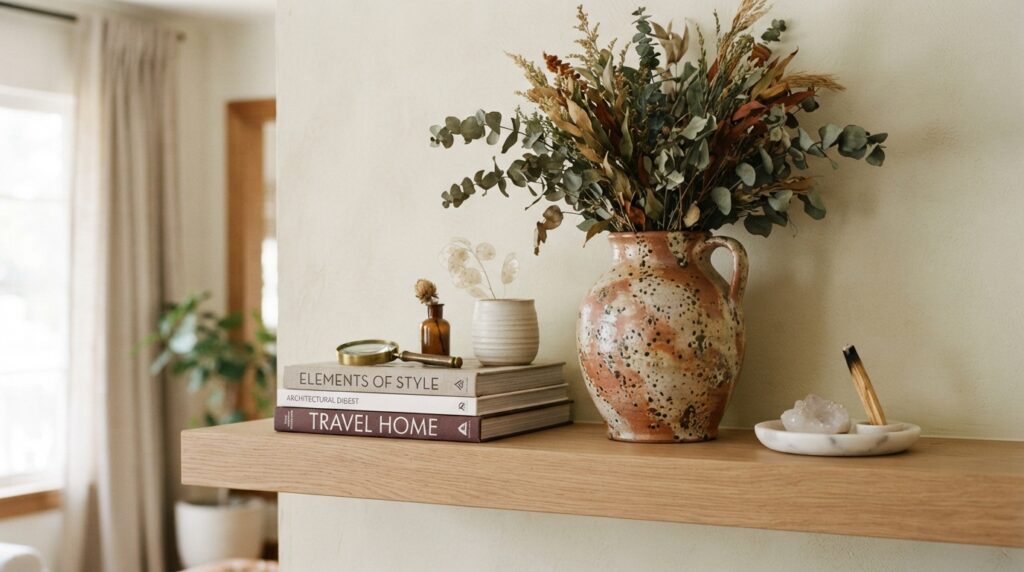
These shelf decor ideas will help you style any shelf like a professional interior designer — using pieces you probably already own. Shelves are one of the most underrated decorating opportunities in any home. Done right, a well-styled shelf is a piece of art in itself — a curated collection of objects that reflects your personality, adds warmth to a room, and makes guests stop and look. Done wrong, it’s just a storage surface covered in stuff.
As an Amazon Associate I earn from qualifying purchases. Some links in this post are affiliate links, at no extra cost to you.
Great shelf decor ideas follow a few simple design principles anyone can learn — and the result is a curated, beautiful display that reflects your personality and elevates any room.
Great shelf decor ideas follow a few simple design principles that anyone can learn — and the result is a curated, beautiful display that reflects your personality.
The good news: shelf styling follows a few simple principles that anyone can learn. Whether you’re working with floating shelves, built-in bookcases, an IKEA unit, or a single wooden shelf in a small apartment, these shelf decor ideas will help you create something genuinely beautiful.
The Golden Rules of Shelf Decor Ideas
Rule 1: Edit Ruthlessly
The most common shelf styling mistake is putting too much on the shelf. Before you add anything, clear everything off. Start fresh. Then add back only the pieces that earn their place — that are beautiful, meaningful, or both. Empty space on a shelf is not wasted space; it’s breathing room that makes everything else look more intentional.
Rule 2: Vary Height, Texture, and Scale
Visual interest comes from contrast. On any given shelf, aim to have objects of at least three different heights (tall, medium, short), at least two different textures (smooth ceramic next to rough wood, for example), and a mix of scales (a large statement vase next to small stacked books next to a tiny plant). This variation is what makes a shelf look styled rather than cluttered.
Rule 3: Use the Triangle Method
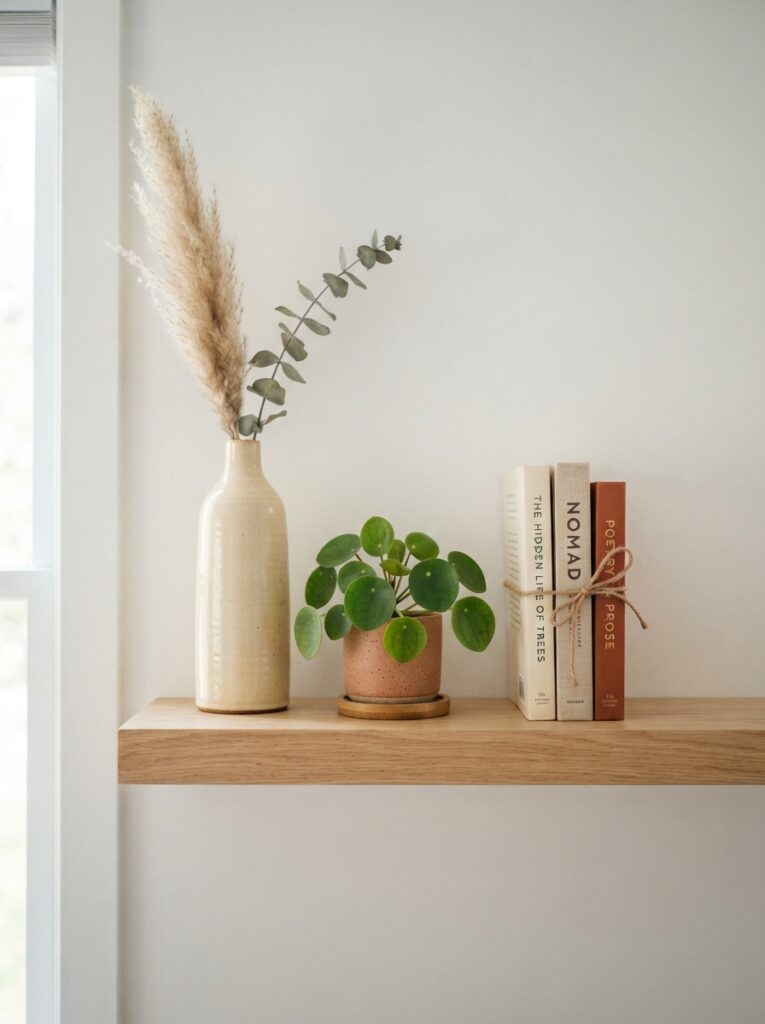
Designers often arrange shelf objects in triangles — groupings of three items where the tallest item is at the top of an imaginary triangle and two shorter items flank it at the base. This creates visual balance without rigidity. You can have multiple overlapping triangles across a longer shelf.
Rule 4: Mix Functional and Decorative
The most livable shelves aren’t purely decorative — they mix beautiful objects with things you actually use. Books are the classic anchor of shelf styling for a reason: they’re inherently functional, they come in every color, and they add immediate visual richness. Mix books with decorative objects, plants, and personal items for a shelf that feels lived-in rather than staged.
Shelf Decor Building Blocks
Books
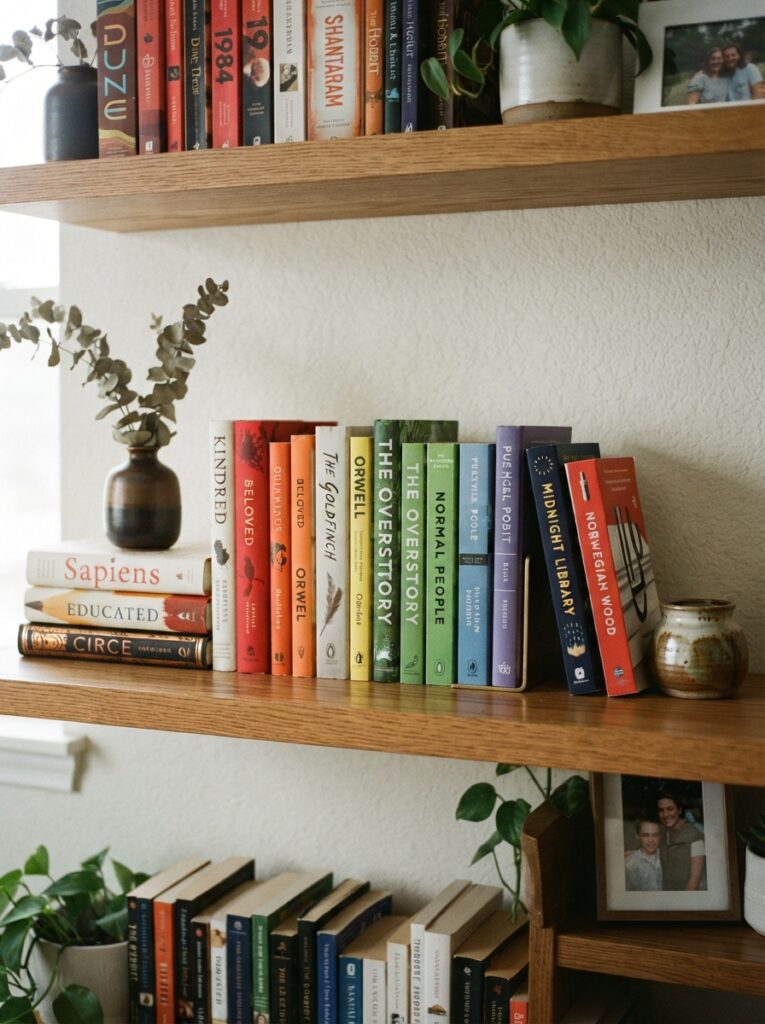
Books are the foundation of great shelf styling. A few tips: arrange some by color for a graphic, curated look; stack others horizontally to create risers for smaller objects; and lean a few loosely to break the regimented vertical look. Turn books backwards (spines facing in) for a neutral, textural backdrop if the colorful spines feel too busy.
Plants
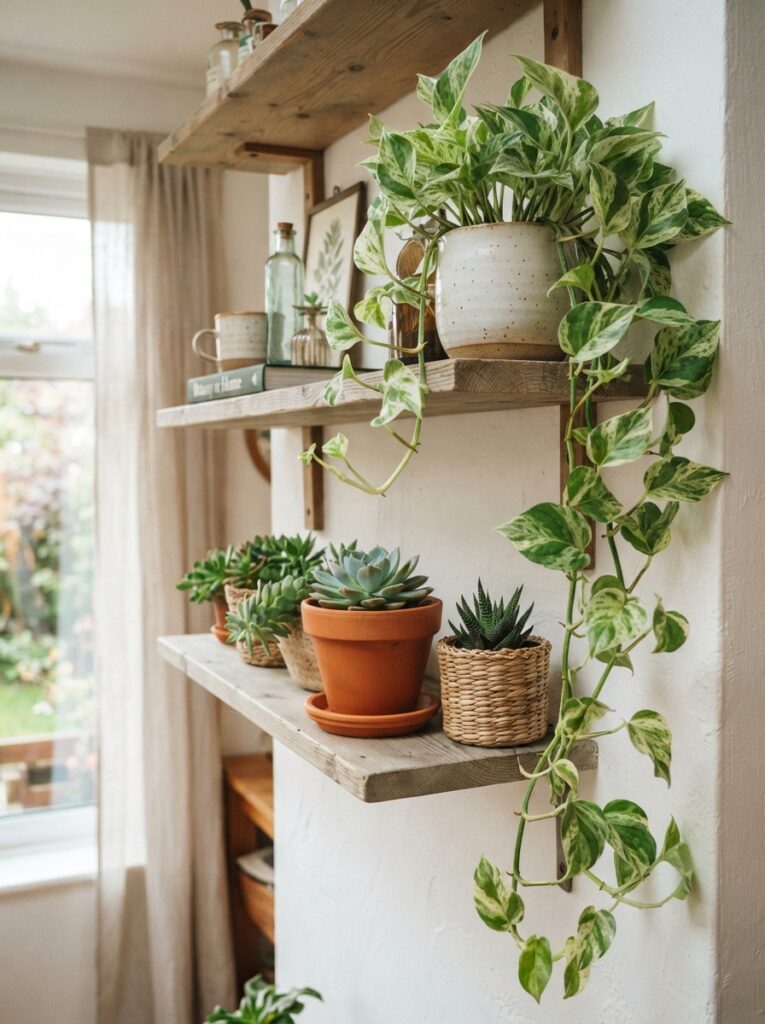
Plants bring life to shelves in a way nothing else can. Trailing plants like pothos, string of pearls, or ivy are particularly effective on higher shelves where they can cascade downward. Small succulents or cacti work well for lower shelves. A mix of plant types and pot materials (ceramic, terra cotta, woven) adds richness and texture.
Vases and Vessels
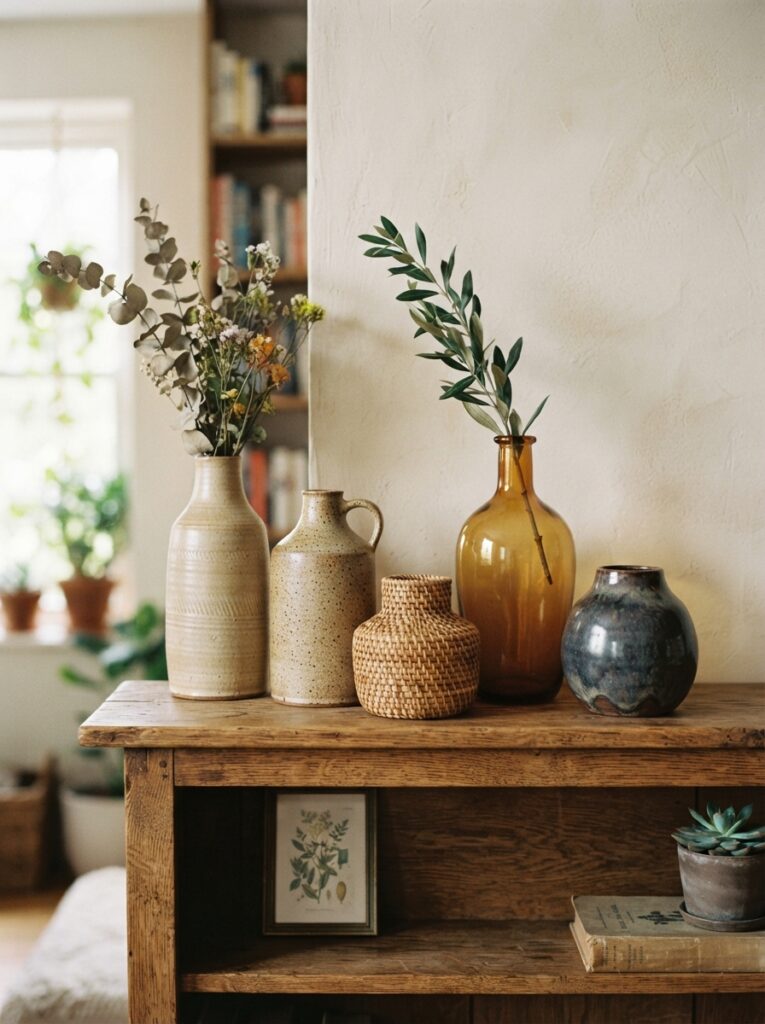
Vases, jugs, bowls, and decorative pots are the workhorses of shelf styling. They come in every shape, color, and material, and they read as decorative even when they’re empty. Look for interesting forms — a tall, narrow neck, an unexpected asymmetrical shape, or a beautiful glaze — rather than generic shapes. Group odd numbers of vases together (three or five) for the most pleasing arrangements.
Artwork and Framed Pieces
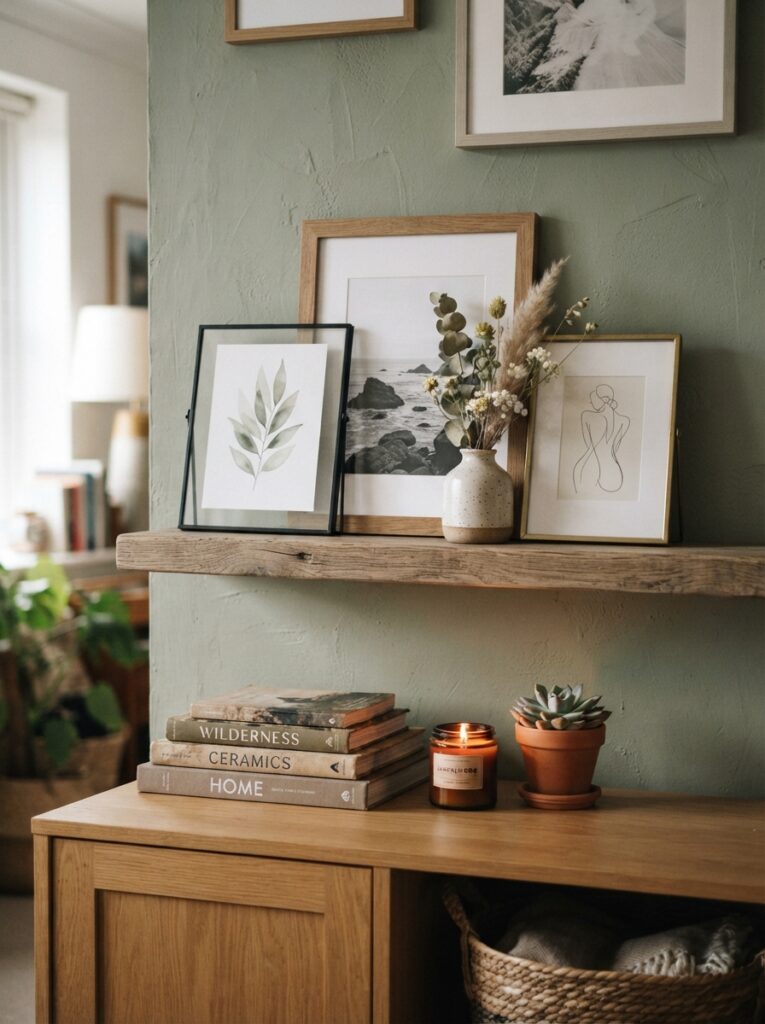
Leaning a small framed print or photo against the back of a shelf adds a layered, gallery feel without putting holes in the wall behind it. Mix different sizes, lean some pieces slightly in front of others, and let the art overlap with the objects around it for a curated, collected look. See also: gallery wall ideas: how to arrange art like a pro.
Candles
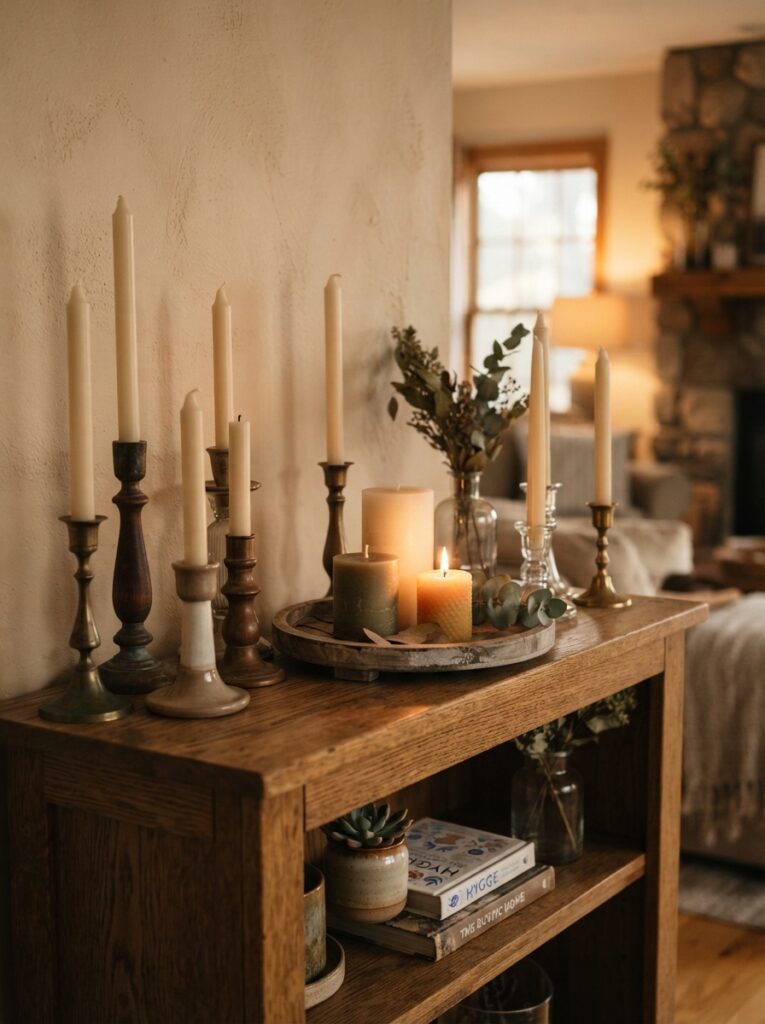
Candles add warmth, height variation, and a cozy atmosphere to any shelf. Use candlesticks in varying heights, group pillar candles together on a small wooden tray, or tuck a small votive or two between books. Even unlit, candles signal that a space is meant to be enjoyed.
Personal Objects
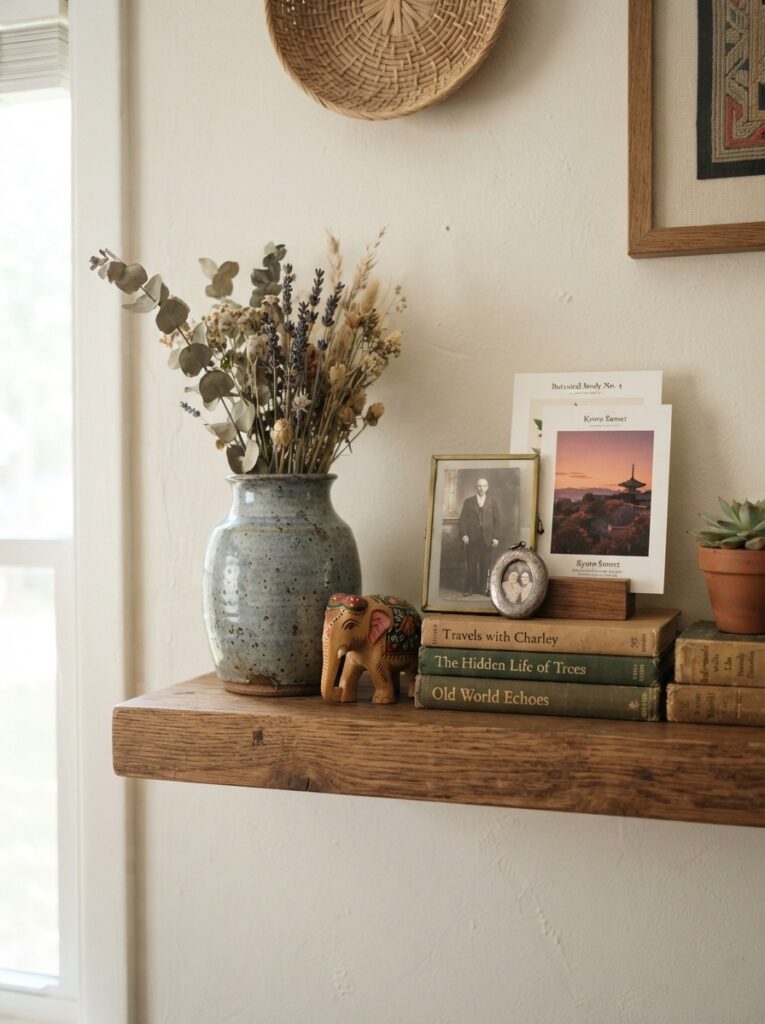
The objects that make a shelf truly yours are the personal ones — a souvenir from a meaningful trip, a piece of pottery you made, an heirloom passed down through the family. These pieces shouldn’t be hidden away. They’re the soul of your shelf. Build your decor around them.
Shelf Decor Ideas by Style
Minimalist Shelf
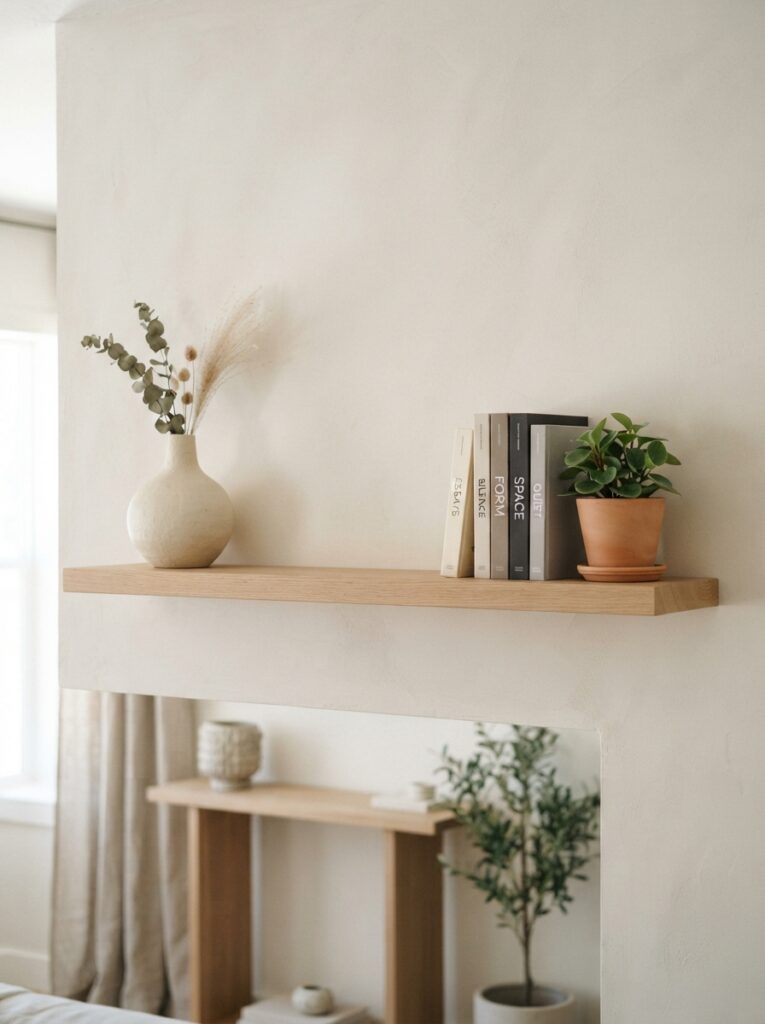
Less is genuinely more here. One statement vase, a stack of 3-5 books, one small plant, and perhaps a single sculptural object. Lots of empty space. Everything in a neutral palette — white, cream, natural wood, black. The constraint makes each object more powerful.
Boho Shelf
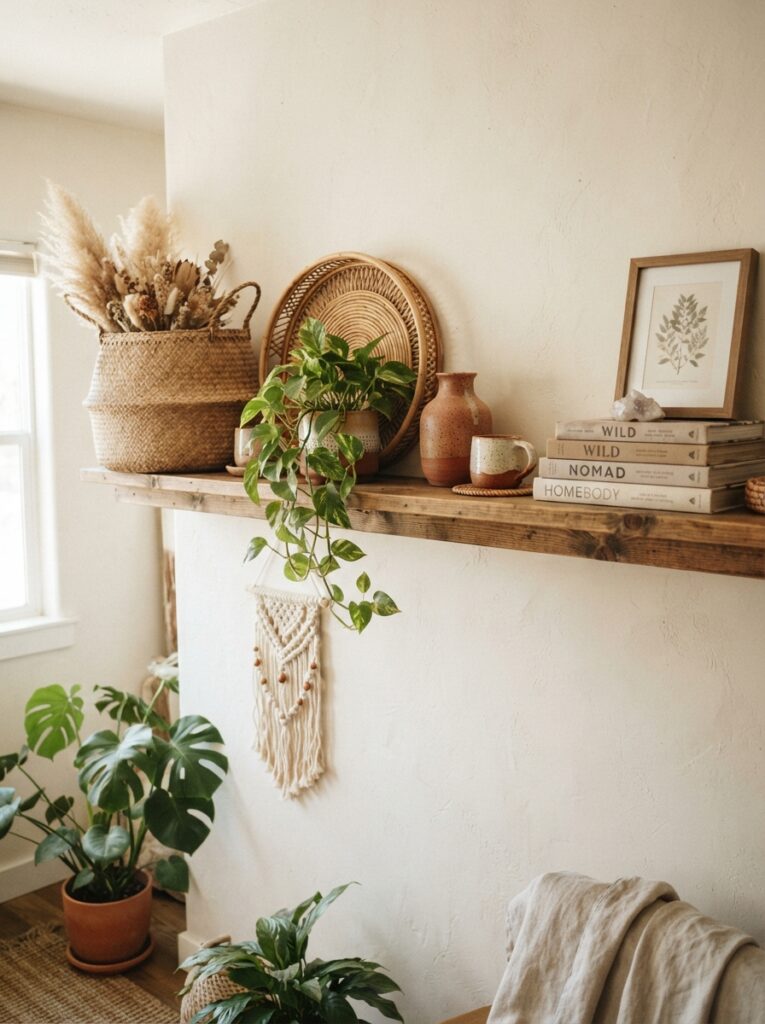
Layer textures freely: a woven basket, a rattan tray, a macramé mini-hanging, trailing plants, a mix of earthy ceramics. Books with bohemian and travel themes. Crystals, feathers, and found objects alongside more traditional decor pieces. Warm and personal, with a beautifully undone quality.
Modern Shelf
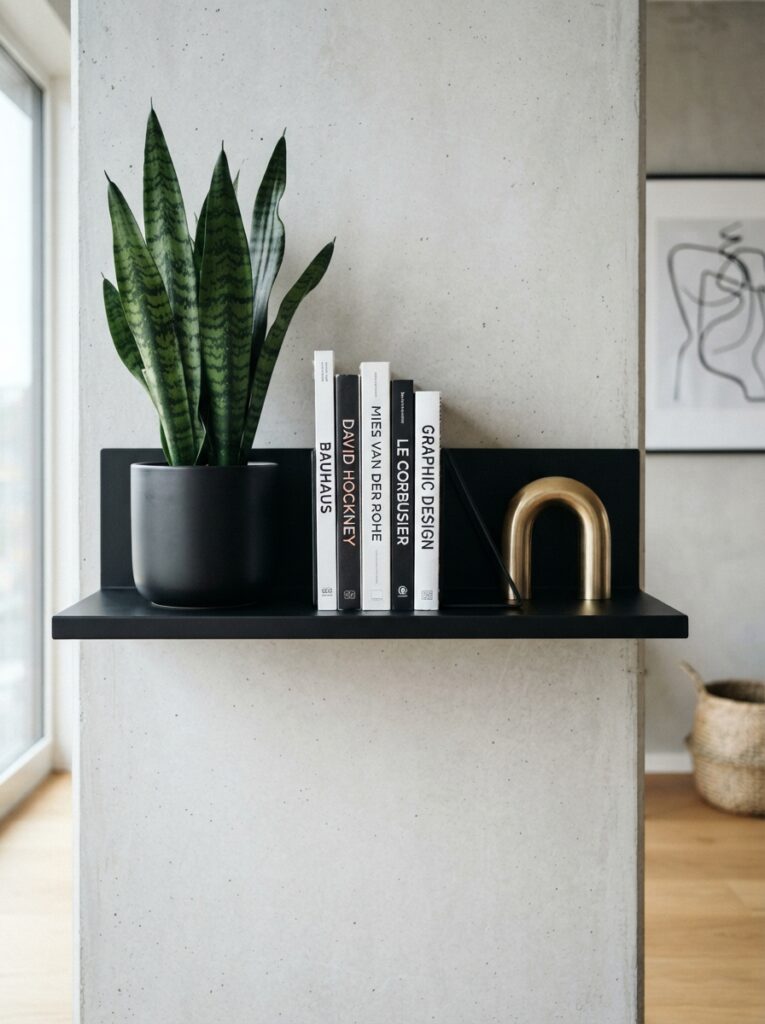
Clean lines, geometric forms, and a limited, cohesive color palette. Black and white with one or two metallic accents. Architectural plant forms (snake plant, cactus, air plants). Art books and design references. The look is confident and graphic.
Cottage or Traditional Shelf
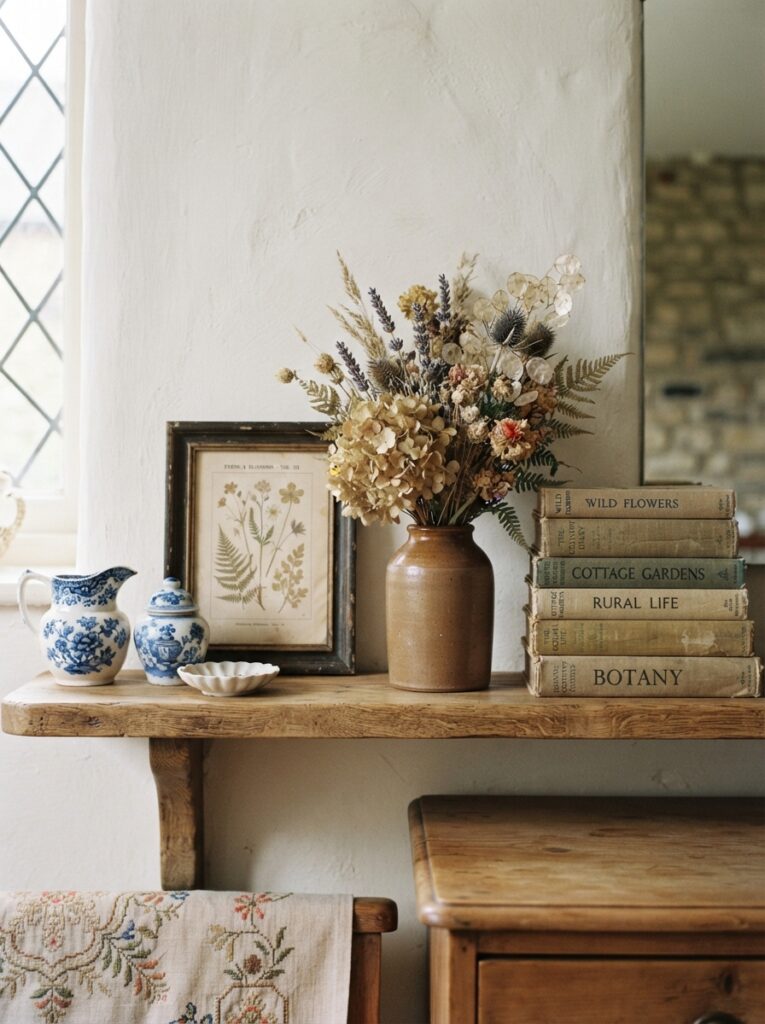
Blue and white ceramics, small framed botanical prints, a small vase of dried flowers, stacked vintage books with decorative spines showing, a small antique or flea market find. Warm, collected, and deeply personal. For more inspiration, visit Real Simple.
Styling a Full Bookcase, Not Just a Single Shelf
A multi-shelf bookcase needs a different approach than a single floating shelf, since the eye moves across the whole unit rather than one plane. Vary the density from shelf to shelf — one shelf packed tightly with books, the next left mostly open with a single vase and a small stack — so the overall unit has visual rhythm rather than uniform clutter on every level. Repeating a color or material at staggered heights (a black object on the top shelf, another on the third shelf down) helps tie a tall unit together and gives the eye a path to follow.
Heavier, larger items generally read best on lower shelves both visually and practically, while lighter, smaller objects and trailing plants suit the top. Leave at least one shelf, ideally at eye level, relatively open so the whole bookcase doesn’t feel like it’s fighting for attention from top to bottom.
Kitchen Open Shelving
Open shelving in a kitchen carries the added requirement of being genuinely functional, not just decorative. Stack everyday dishware in matching or coordinating colors so the stacks themselves become part of the styling, and reserve a portion of the shelf for a few purely decorative pieces — a small plant, a wooden board, a ceramic pitcher — so the shelf doesn’t read as pure storage. Grouping glassware by height and keeping labels turned inward on canisters keeps the overall look clean.
Because kitchen shelves collect grease and dust faster than shelves elsewhere in the home, favor pieces that are easy to wipe down or run through the dishwasher regularly, and avoid porous materials like unsealed wood or raw wicker directly above the stove. For more on this, see our how to style kitchen countertops like a designer guide.
Bathroom Shelf Styling
Bathroom shelves have to hold up to humidity, so material choices matter more here than almost anywhere else in the home. Rolled towels (stacked or standing upright in a woven basket) do double duty as both function and texture. Glass apothecary jars filled with cotton balls or bath salts add a spa-like visual layer while staying genuinely useful, and a single trailing plant that tolerates humidity well, like a pothos, thrives in a bathroom’s steamy environment better than most other plants.
Keep metal finishes on bathroom shelf accessories consistent with your existing fixtures (faucet, mirror frame, hardware) so the shelf styling feels connected to the room rather than like an afterthought.
Styling Shelves Around a TV
Built-in shelving that flanks a television or fireplace presents a specific challenge: the goal is to draw attention without competing with the screen itself. Keep the shelves immediately beside the TV somewhat quieter and more restrained, saving your boldest colors and largest statement pieces for the shelves farthest from the screen. Cables and any visible electronics should be tucked behind larger objects or run through cord organizers so they don’t undercut an otherwise carefully styled unit.
A symmetrical approach (matching or similar arrangements on either side of the TV) tends to read as more calming and considered in this specific context, since the television itself already introduces a strong central focal point that asymmetry can compete with rather than complement.
Seasonal Shelf Refreshes
Shelves are one of the easiest surfaces in a home to refresh seasonally, since swapping just two or three small objects can shift the whole feel. In fall, add a few dried pampas grass stems in a bud vase or a small stack of pumpkins in a neutral tone. Winter calls for a sprig of greenery, a few white pillar candles, or a small collection of pinecones. Spring benefits from a small vase of fresh flowers or pastel ceramics brought to the front, while summer favors lighter, brighter accents like a bowl of citrus or a woven straw object.
Because these swaps involve only a few items rather than restyling the whole shelf, they take just a few minutes but keep a space feeling current and cared-for throughout the year.
Shelf Lighting for Extra Impact
Lighting can elevate shelf styling considerably, especially for shelves that don’t receive much natural light. Battery-operated puck lights or a slim LED strip tucked under the lip of each shelf cast a soft glow downward onto the shelf below, highlighting textures and objects in a way ambient room lighting often misses. A small plug-in picture light mounted above a shelf can achieve a similar gallery-like effect for shelves near an outlet.
Warm-toned bulbs (2700K, matching the rest of your room’s lighting) are essential here — cool white LED strips will make a carefully curated shelf look clinical rather than warm and inviting.
Shelf Decor shopping list
- Decorative books — height and colour blocks
- Small sculptural objects — the odd numbers rule
- Picture frames — lean, do not hang
- Small plant pots — one trailing plant per shelf
- Woven baskets — hides what you must store
- Bookends — stops the domino effect
Prices and availability change. Links open on Amazon.
Common Shelf Styling Mistakes
- All objects the same height. Variation in height is what creates visual rhythm. If everything is the same size, the shelf reads as a flat, undifferentiated mass.
- No anchor piece. Every shelf needs at least one item that’s clearly the largest or most prominent. Everything else supports the anchor.
- Too much of the same material. Variety in materials (glass, ceramic, wood, metal, fabric) creates the layered richness that makes a shelf interesting.
- Ignoring the shelf color. If your shelf is a warm wood tone, it affects how every object on it reads. Paint shelves white or a neutral to give yourself the most versatile backdrop.
Sourcing Shelf Decor Without Overspending
Great shelf styling rarely requires an expensive shopping trip. Thrift stores and estate sales are excellent sources for the vases, ceramics, and small objects with real character that new retail pieces often lack, and a single flea market find can become the anchor piece an entire shelf is built around. Repurposing items you already own — a bowl from your kitchen cabinet, a candle from another room, a small plant divided from a larger one — costs nothing and often looks more personal than anything purchased specifically for the shelf.
Final Thoughts
The best shelf styling feels personal, layered, and a little bit effortless — even though it took some thought to get there. Start by clearing everything off, then build back in deliberately: anchor pieces first, then supporting objects, then small finishing touches. Step back often. Edit when in doubt. The goal is a shelf that looks like it was styled by someone who lives beautifully, not someone who’s trying too hard. See also: coffee table styling ideas: style yours like a pro.




23 Comments