

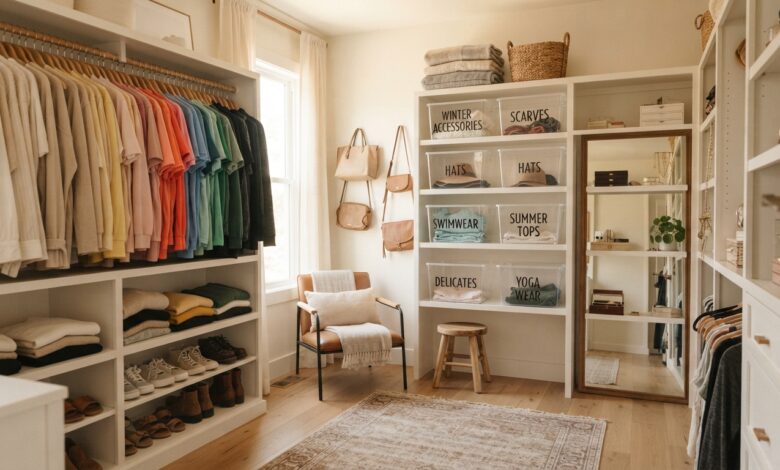
An organized closet is one of those upgrades that improves your daily life more than almost any other decor project — and it doesn’t require a full renovation to look genuinely good. You open it every single morning, so the payoff from getting it right compounds daily in a way that a lot of one-time decorating projects don’t. With the right system and a few styling touches, your closet can function like a boutique store and stay that way. Here’s how.
1. Edit Before You Organize
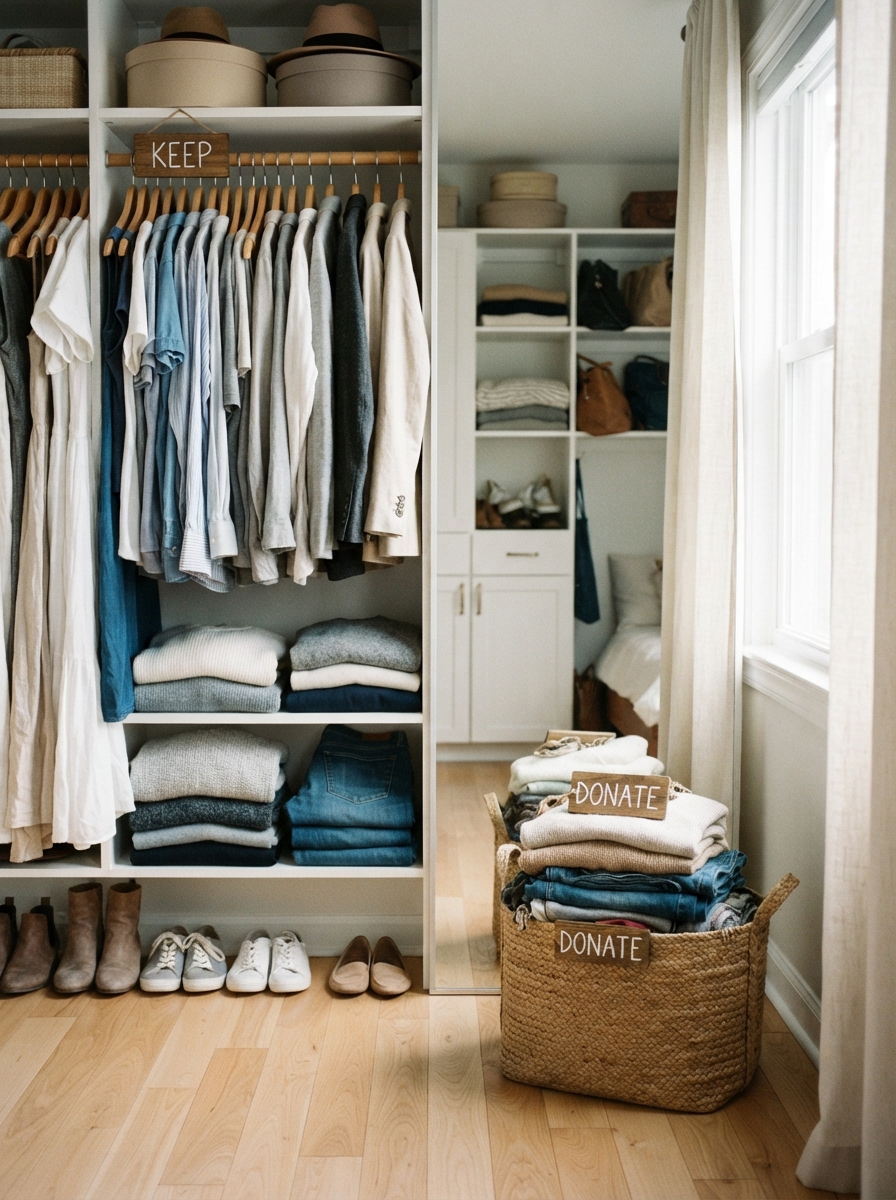
No storage system fixes a closet that’s stuffed with things you don’t wear. Pull everything out, sort into keep, donate, and toss, and only organize what’s left. This step is the one people skip because it’s the least satisfying, but every bin, hanger, or shelving system you buy afterward performs better with less volume to contain. Be honest about anything you haven’t worn in over a year — it’s very unlikely to suddenly come back into rotation.
2. Use Matching Hangers
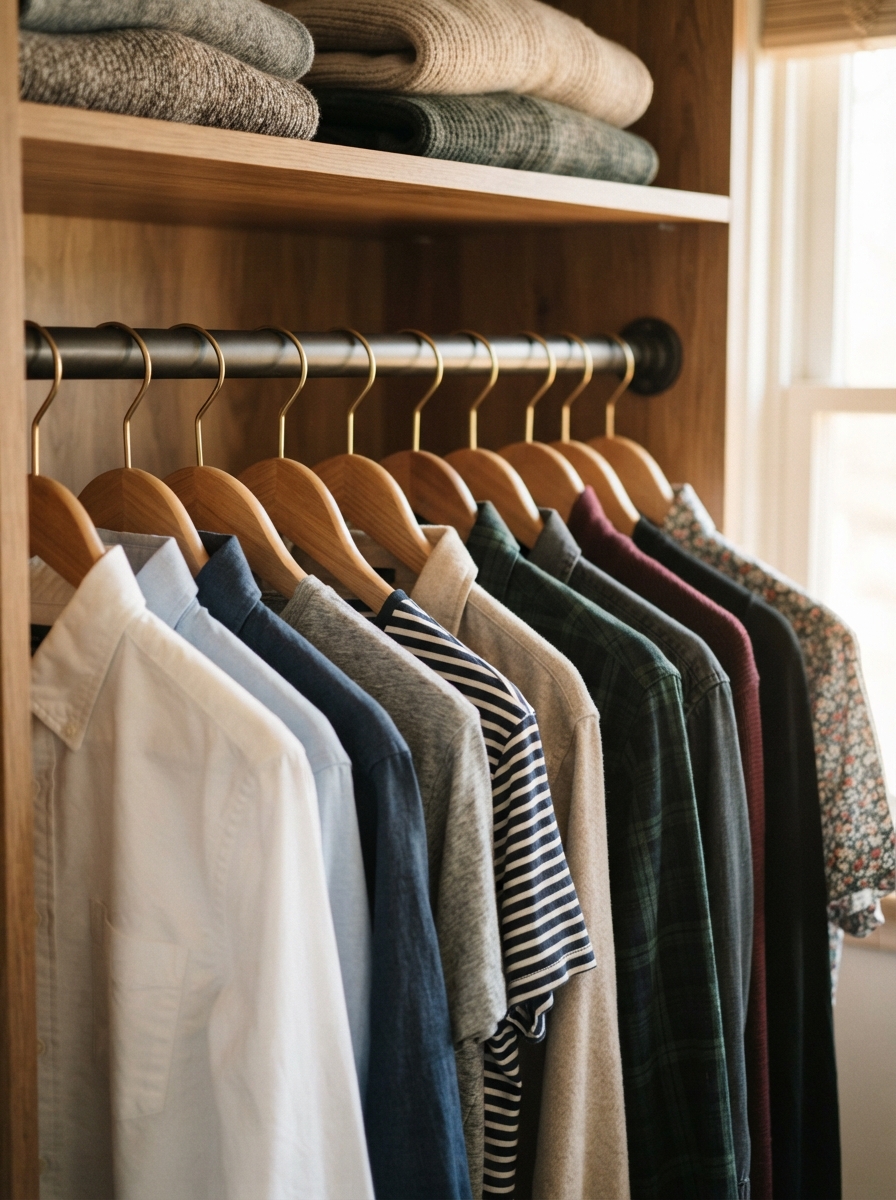
Switching every hanger to the same style and color is one of the fastest, cheapest ways to make a closet look professionally organized. Slim velvet hangers also save significant space over bulky plastic ones — swapping a full closet can reclaim several extra inches of rod space, which often means room for the pieces you were about to store elsewhere.
3. Group by Category and Color
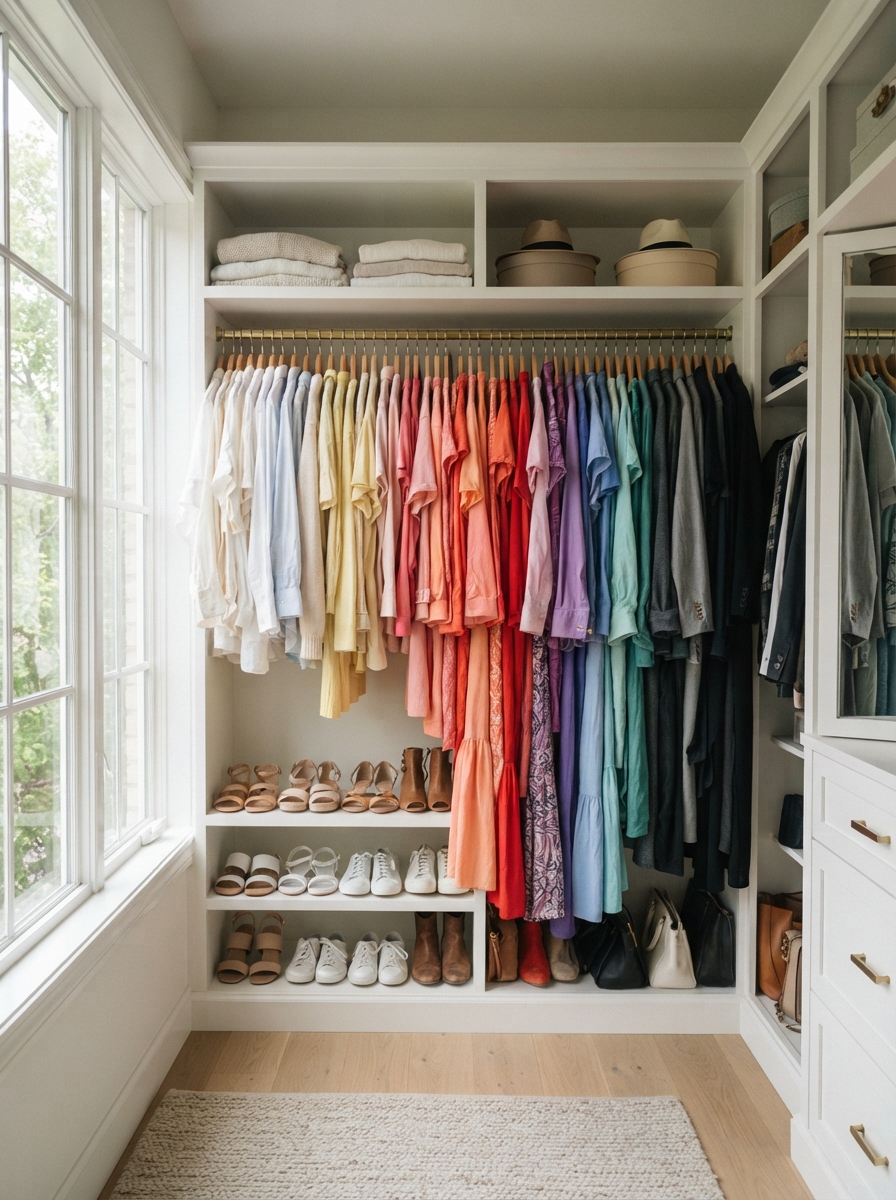
Arrange clothing by type — tops, bottoms, dresses — and then by color within each category. This makes getting dressed faster and makes the closet look intentional rather than chaotic. A light-to-dark gradient within each category is the easiest system to maintain, since it’s obvious at a glance where a new item belongs when you put laundry away.
Want the shortcut?
As an Amazon Associate I earn from qualifying purchases. Some links in this post are affiliate links, at no extra cost to you. For more on this, see our coffee station organization with open shelving and baskets guide.
Browse current options and prices.
4. Add Clear Bins for Small Items
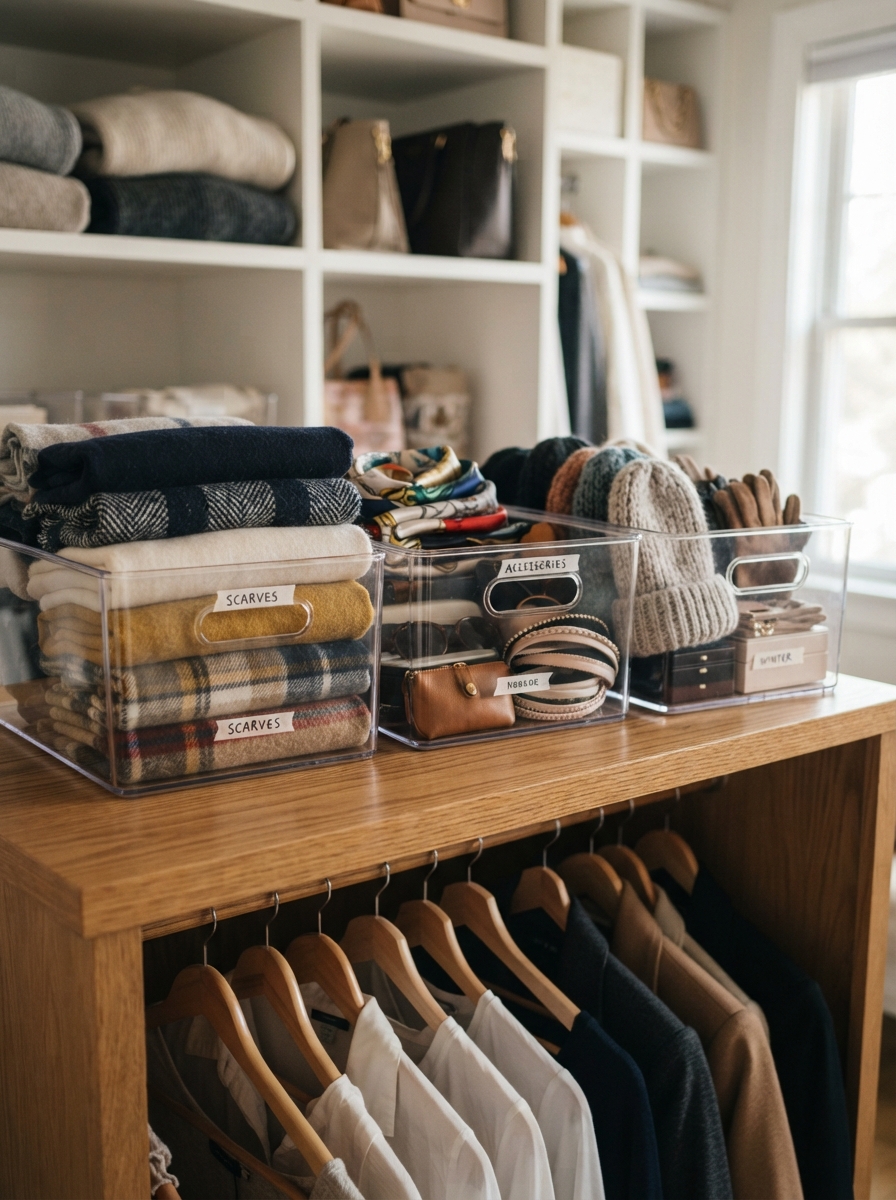
Accessories, belts, and folded items stay visible and tidy in clear or labeled bins rather than getting lost in a drawer. Clear bins specifically solve the out-of-sight, out-of-mind problem — opaque storage tends to get forgotten and re-bought, while visible storage actually gets used.
5. Maximize Vertical Space
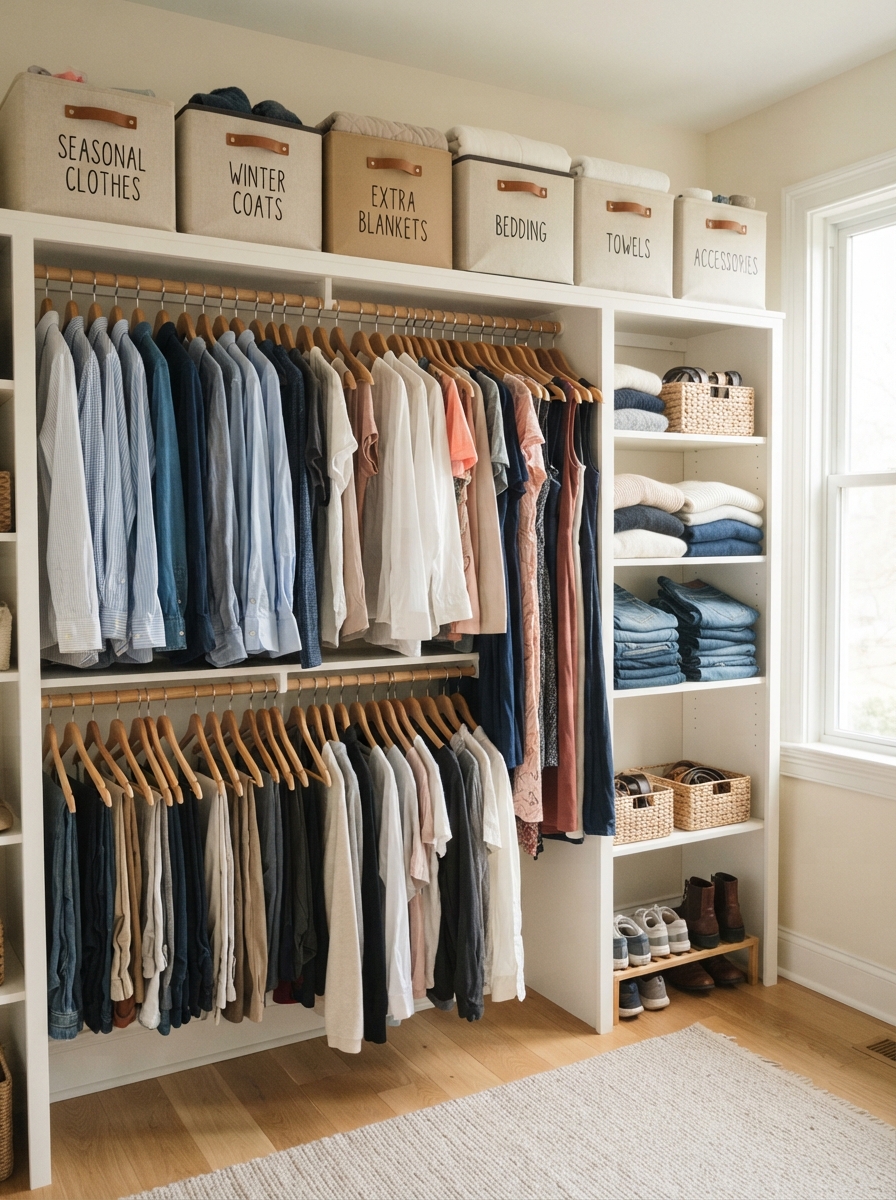
Stackable shelving or a second hanging rod beneath the first doubles your storage in the same footprint, especially useful for shorter items like shirts and folded pants. Look up, too — the space above the existing shelf is usually tall enough for a second row of labeled boxes holding out-of-season items.
6. Light It Properly
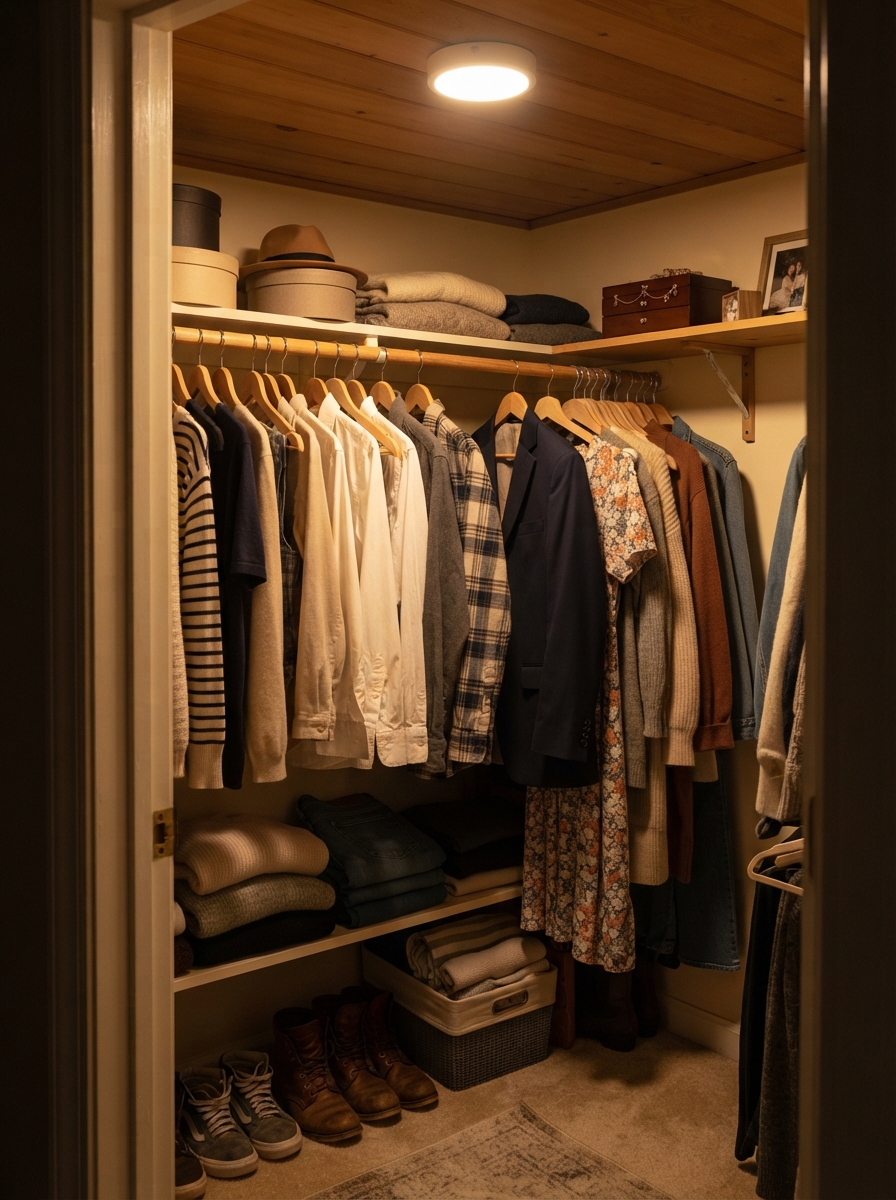
A battery-operated puck light or a plug-in strip light makes a closet actually usable and photographs beautifully — dark closets are hard to keep organized because you can’t see what’s in the back. Motion-sensor lights are worth the small extra cost since they turn on automatically the moment you open the door, no switch required.
7. Reserve a Spot for Everything
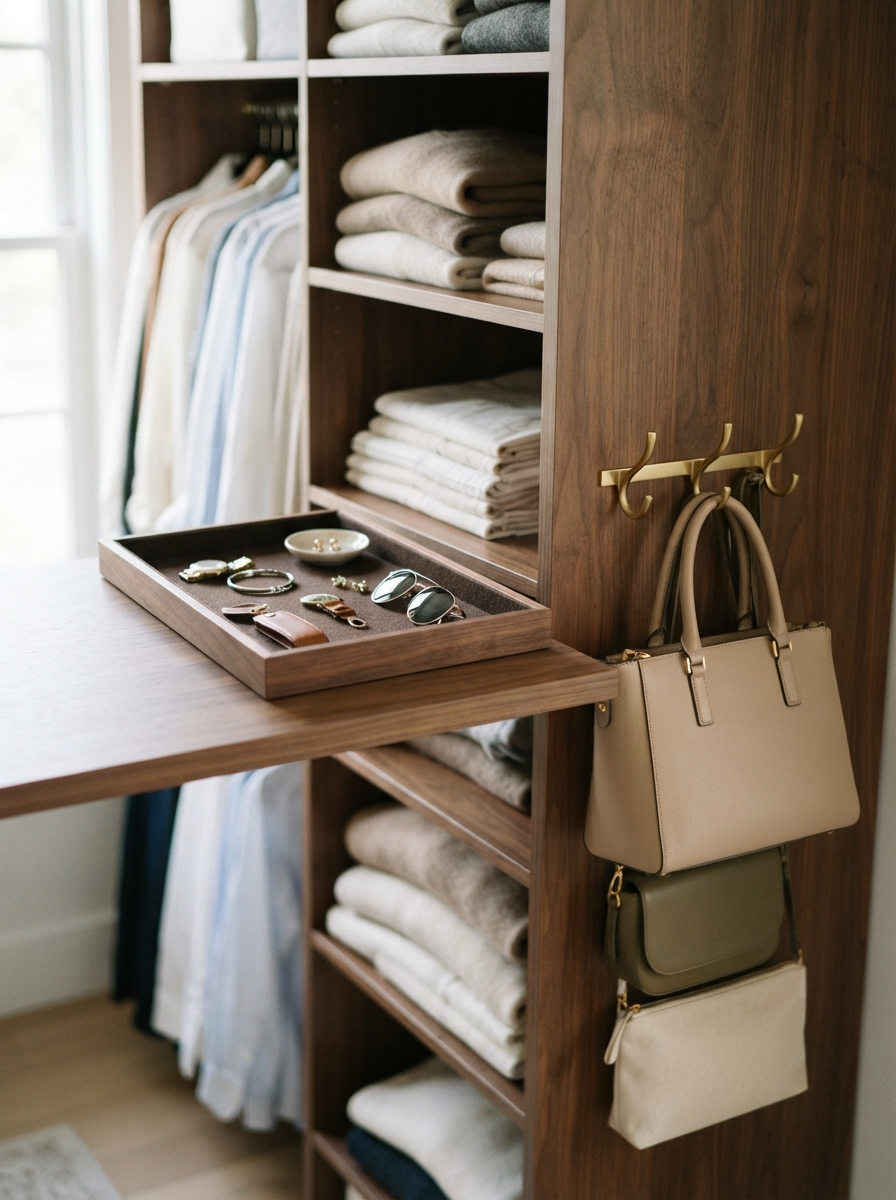
Once organized, give every category a designated zone so things go back where they belong. This is what keeps a closet looking good weeks later, not just on organizing day. A system only works if putting something away is as easy as taking it out — if a zone requires moving three other things to access it, it will stop getting used within a month.
Closet Organization by Closet Type
Reach-In Closets
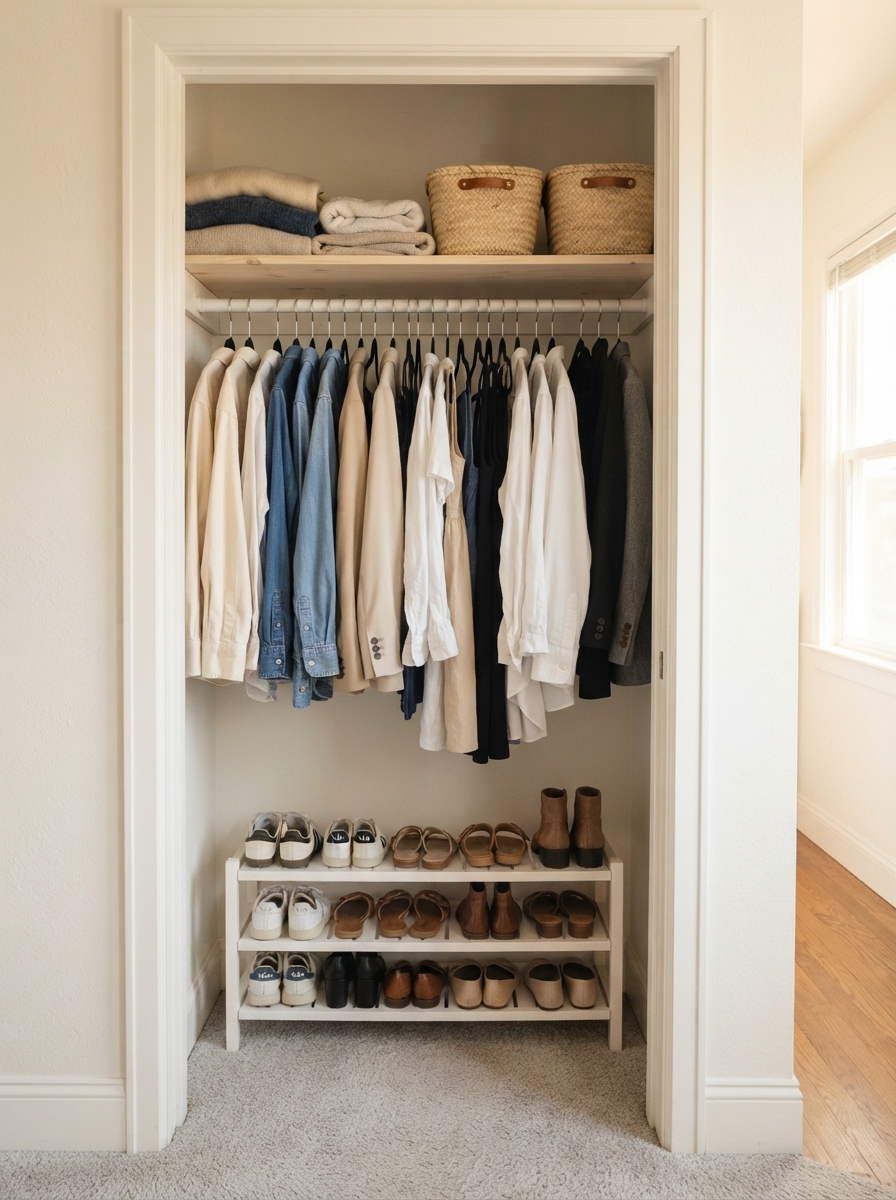
Add a second rod below the first for shorter items, and use the shelf above for bins rather than loose stacks, which tend to topple. A slim shoe rack on the floor makes use of otherwise wasted vertical space in a narrow closet. Fewer, better pieces make any closet easier to keep organized; here is how to build a capsule wardrobe on a budget.
Walk-In Closets
Dedicate different walls to different categories — hanging on one side, folded storage and shoes on another — and consider an island or bench if space allows for seating while dressing. Walk-in closets benefit most from a dedicated “outfit staging” zone, a small open surface where you can lay out an outfit the night before.
Wardrobes and Armoires
In homes without built-in closets, a freestanding wardrobe benefits most from drawer dividers and hanging organizers, since the space is more limited than a true closet. A hanging shoe organizer on the inside of the wardrobe door is often the single highest-value addition, since it uses space that would otherwise sit empty.
Maintaining Your System Long-Term
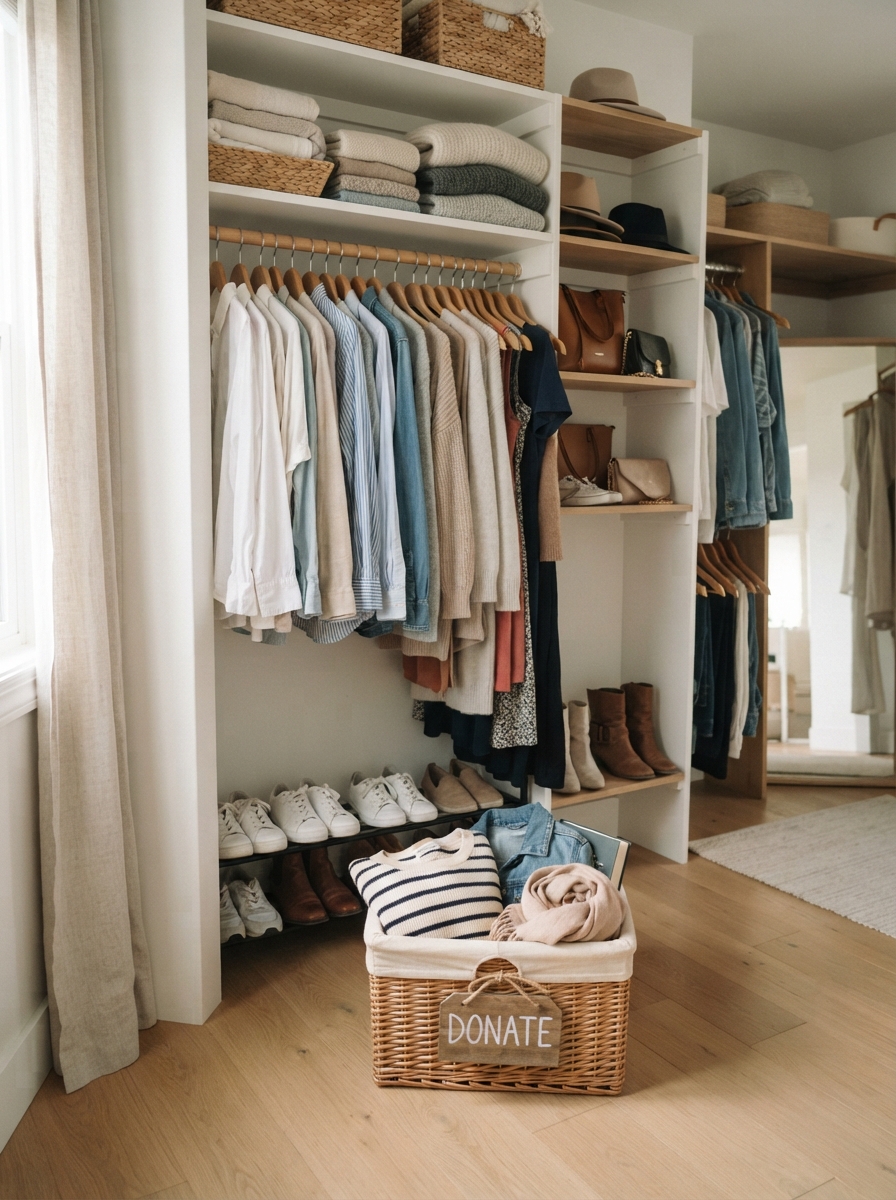
The real test of a closet system isn’t how it looks on day one — it’s whether it still looks that way in three months. Do a five-minute reset each week, returning anything that’s drifted from its zone. Do a full seasonal edit twice a year, swapping out-of-season clothing to secondary storage so the main closet never gets overcrowded again. And resist buying more bins before you’ve actually filled the ones you have; extra containers usually just enable more clutter rather than solving it.
Closet Organization by Budget
A fully organized closet doesn’t require a full custom system. At the low end, matching hangers and a set of clear bins from a discount store cover the biggest visual wins for under fifty dollars. At the mid-range, adding a slim shoe rack, an over-the-door organizer, and a battery-powered light rounds out function without a renovation. If you’re ready to invest, a modular shelving or drawer system installed inside the existing footprint gives you the most storage without moving walls, and it’s the closest you can get to a custom closet company’s result at a fraction of the price.
Closet shopping list
- Slimline velvet hangers — instant uniform look
- Closet shelf dividers — stops stacks toppling
- Clear storage boxes — see what you own
- Closet rod double hanger — doubles hanging space
- Drawer organizers — for the small things
- Closet LED light — battery, no wiring
Prices and availability change. Links open on Amazon.
Closet Organization Mistakes to Avoid
A few habits undo good closet organization fast. Buying storage products before editing your clothing just gives clutter a nicer container to hide in — always edit first. Mixing hanger types (wire, plastic, wood, velvet all in one closet) reads as visually chaotic even when everything else is tidy, so standardize on one style. And packing a closet to full capacity leaves no room to put clean laundry away, which is usually what causes a freshly organized closet to fall apart within a few weeks.
Closet Organization for Kids’ Rooms
Kids’ closets have to work around a fundamental problem adult closets don’t: the person using them isn’t always the one who put things away, and their sizes and interests change every year. Low hanging rods that a child can actually reach, combined with clearly labeled bins using pictures rather than just words for kids who aren’t reading fluently yet, make it realistic for a child to participate in keeping the space tidy rather than relying entirely on a parent. Rotating out clothes that no longer fit at the start of each season, rather than letting a closet slowly fill with things a child has outgrown, keeps the space from becoming unusable within a year.
Sustainable Closet Organization
A closet edit is also one of the easiest places to build more sustainable habits into a home. Donating gently used clothing to a local shelter or thrift store keeps usable items out of landfills, and many fabric recyclers will now accept worn-out textiles that are too damaged to donate. Choosing storage bins and hangers made from recycled materials, or simply reusing sturdy boxes and containers you already own instead of buying new organizing products, reduces the footprint of the organizing project itself. A “one in, one out” habit for clothing purchases going forward is often what keeps a freshly edited closet from slowly refilling with excess over the following year.
Closet Islands, Benches, and Seating
For larger walk-in closets, a central island with drawers underneath adds both storage and a surface for folding or laying out accessories, functioning much like a kitchen island does for a kitchen. Even in closets too small for a full island, a small bench or a single upholstered stool gives you somewhere to sit while putting on shoes, which sounds minor but genuinely changes how a closet gets used day to day. A bench with storage underneath, such as a cushioned lid over a shoe cubby, adds function without taking up additional floor space beyond what the seating itself requires.
Smart Storage Solutions Worth the Investment
A few upgrades go beyond basic bins and hangers but pay for themselves in daily convenience. Pull-out valet rods let you hang tomorrow’s outfit at eye level without taking up permanent rod space. Rotating tie and belt racks make small accessories instantly visible instead of tangled in a drawer. Slide-out shoe shelves angled slightly downward let you see an entire shoe collection at a glance rather than digging through a flat shelf. None of these require a full closet renovation, and most can be added to an existing closet system as standalone upgrades over time as budget allows.
Common Closet Layout Mistakes
Beyond the organizing habits already covered, a few layout choices quietly undermine an otherwise well-organized closet. Hanging rods set too close to a shelf above them crush anything hung there and make it hard to see what’s on the rod at a glance — leave at least a few inches of clearance. Placing the least-used items at eye level and the most-used items on a high shelf you need a step stool to reach is a common and easily fixed inefficiency; the prime, easy-to-reach real estate should always go to what you use daily. Finally, closets with no full-length mirror force you to leave the room just to check an outfit, which small as it sounds, is one of the most requested additions once people have lived without one.
Closet Organization for Shared Closets
Splitting a single closet between two people or two family members works best when the division is decided upfront rather than negotiated item by item. Assigning each person a specific side of the rod, a specific shelf, and a specific set of bins prevents the slow creep where one person’s belongings gradually take over the shared space. Using a different hanger color for each person is a simple, low-effort way to keep laundry sorting and put-away fast, since anyone helping with laundry can tell at a glance whose items go where without checking sizes or styles. For couples or roommates with very different amounts of clothing, agreeing to split the space by actual need rather than strictly by half tends to keep the arrangement fair and prevents one side from overflowing while the other sits half empty.
A shared closet also benefits from a shared donation habit: setting a recurring date, such as the start of each season, for both people to do a quick edit together keeps neither side from quietly overflowing into the other over time.
A Final Word on Closet Lighting
It is worth revisiting lighting one more time, since it is the single upgrade most likely to be skipped and most likely to be regretted later. A closet that looks organized in daylight can become genuinely hard to use after dark without a dedicated light source, and fumbling for a phone flashlight while getting dressed defeats the purpose of an otherwise well-planned system.
Final Thought
A great closet comes down to editing first, then giving everything a designated place — matching hangers and good lighting do the rest of the visual work. Start with a full edit, add one or two organizing tools, and maintain it with a quick weekly reset. For more organizing strategies, visit Real Simple.
Frequently Asked Questions
What’s the first step in organizing a closet?
Always edit before you organize. Pull everything out, sort into keep, donate, and toss piles, and only bring back what you actually wear. Storage systems work far better with less volume to contain.
Are matching hangers really worth it?
Yes — beyond the visual upgrade, slim matching hangers (especially velvet ones) take up significantly less rod space than bulky plastic hangers, often freeing up several extra inches for more clothing.
How often should I redo my closet organization?
A full seasonal edit twice a year, plus a five-minute weekly reset to return anything that’s drifted from its zone, is usually enough to keep a system working long-term.
What’s the cheapest way to organize a small closet?
Matching hangers and a few clear bins from a discount or dollar store cover most of the visual and functional improvement for well under fifty dollars, no renovation required.





2 Comments