

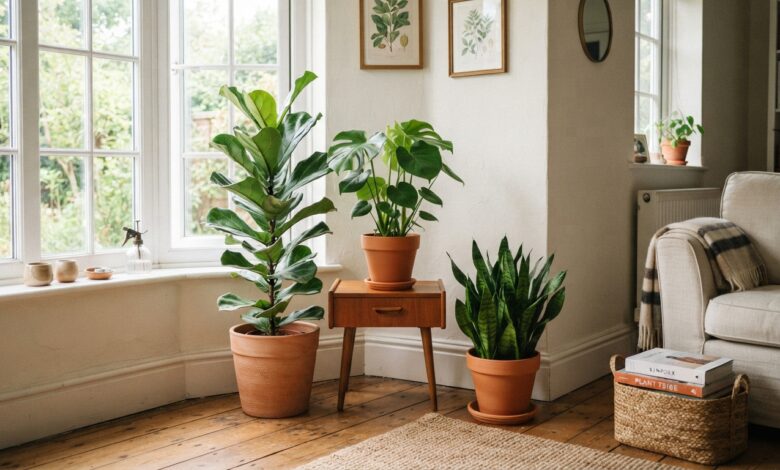
Houseplants are one of the fastest, cheapest ways to make any room feel more alive — but the difference between a room that looks styled and one that looks like a plant just got dropped somewhere convenient usually comes down to a handful of simple rules. Plants soften hard edges, fill awkward gaps, and add a layer of texture and color that furniture alone can’t provide. They also happen to be one of the only decor elements that keep changing and growing along with your space, so getting the styling right pays off for years, not just the day you bring a plant home. Beyond the visual benefits, several studies have linked indoor plants to improved air quality and lower reported stress levels, so the payoff isn’t purely aesthetic. Here’s how to style houseplants like a professional stylist would, whether you have one plant or twenty.
1. Group in Odd Numbers
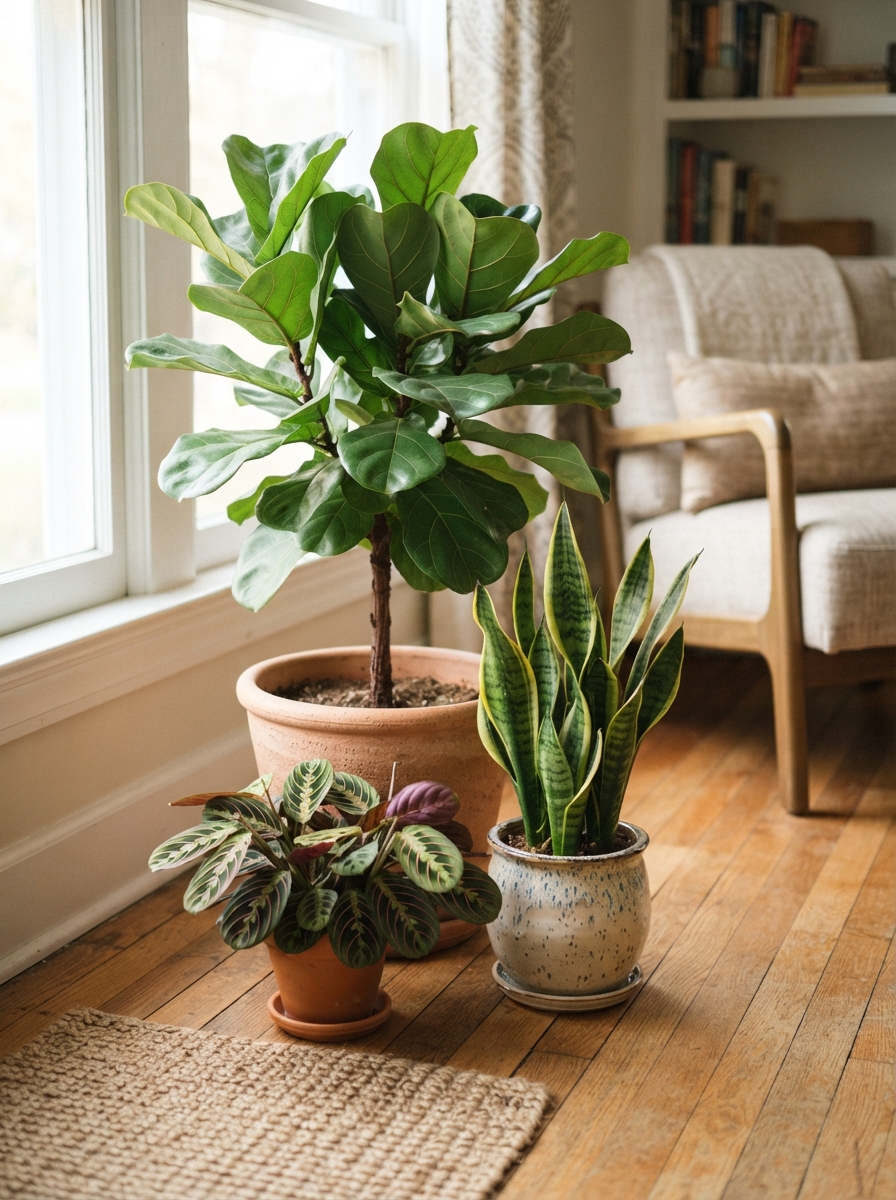
Groups of three, five, or seven plants read as more natural and intentional than even numbers, which tend to look rigid and overly matched. This is a basic principle borrowed from floral design and photography composition, and it works because odd-numbered groupings avoid the perfectly symmetrical pairing that our eyes read as artificial. Start with three if you’re new to grouping — it’s the easiest number to arrange well without a lot of trial and error, and it’s simple to expand to five once you’re comfortable with the basic layout.
2. Vary Your Heights
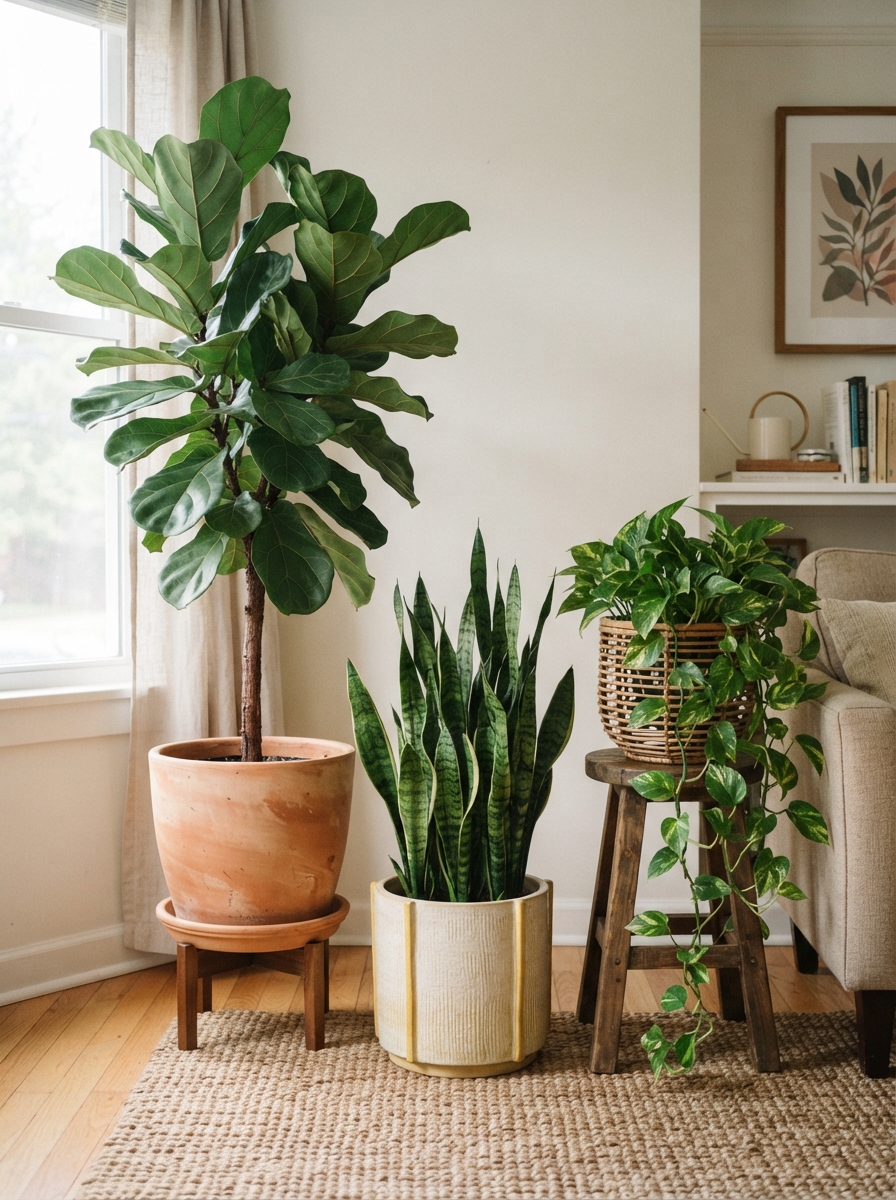
A grouping with one tall plant, one medium plant, and one trailing or low plant creates visual rhythm the same way a well-composed shelf or bookcase does. Use plant stands or pedestals to create height variation artificially if your actual plants are all roughly the same size — a small pothos on a tall stand instantly reads as a “tall” plant in the grouping even though the plant itself is compact. A simple wood or wire plant stand costs very little and is often the easiest way to fix a grouping that feels visually flat.
3. Choose Pots That Match Your Palette
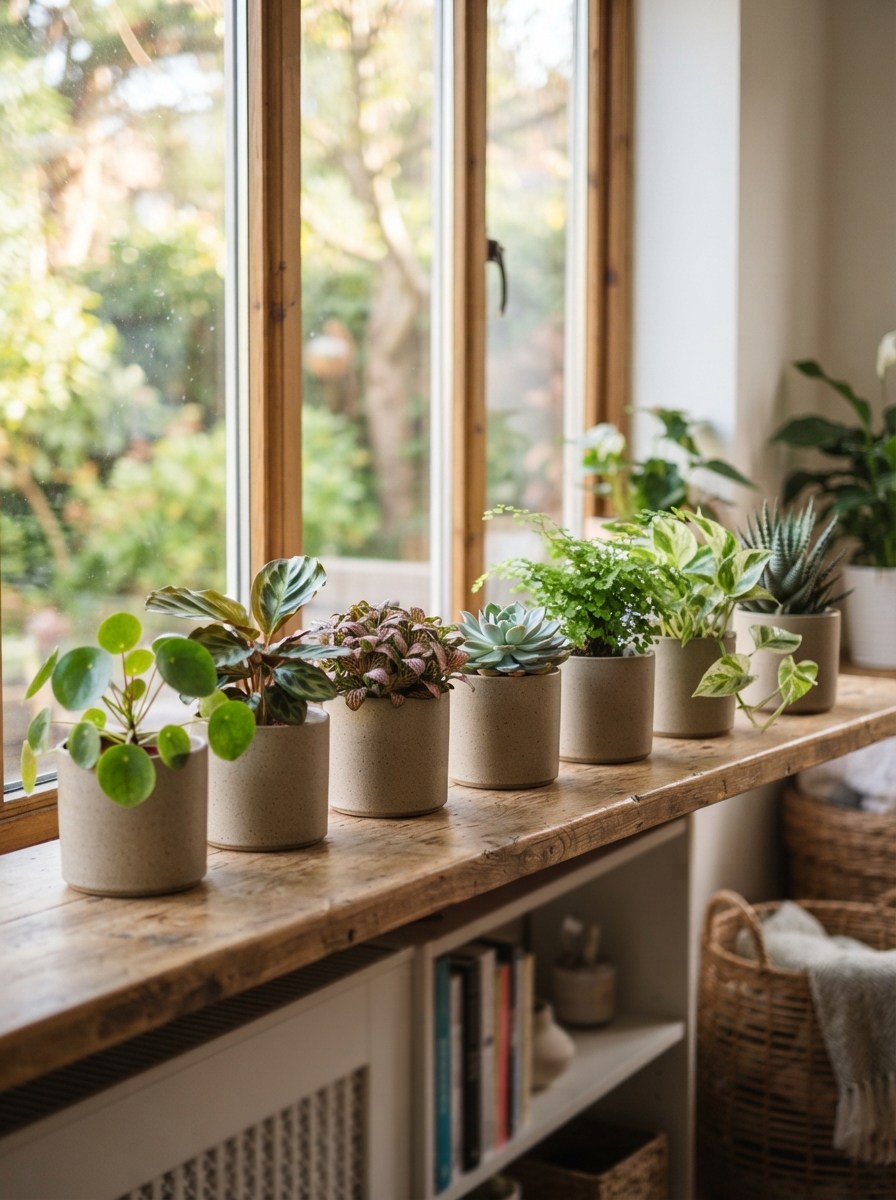
Mismatched plastic nursery pots are the single biggest giveaway of an unstyled plant collection. Repotting into a cohesive set of pots — even inexpensive terracotta or ceramic ones in a consistent color family — instantly upgrades the whole look without spending anything on the plants themselves. You don’t need every pot to match exactly; repeating one or two materials or colors across the room is usually enough to read as intentional. Terracotta is the most forgiving material to mix and match, since its natural color variation means slightly different pots still look cohesive together.
Want the shortcut?
As an Amazon Associate I earn from qualifying purchases. Some links in this post are affiliate links, at no extra cost to you. If you want to go further, 35 aesthetic bedroom ideas for every style & budget covers it in detail.
Browse current options and prices.
4. Use Plants to Fill Awkward Corners
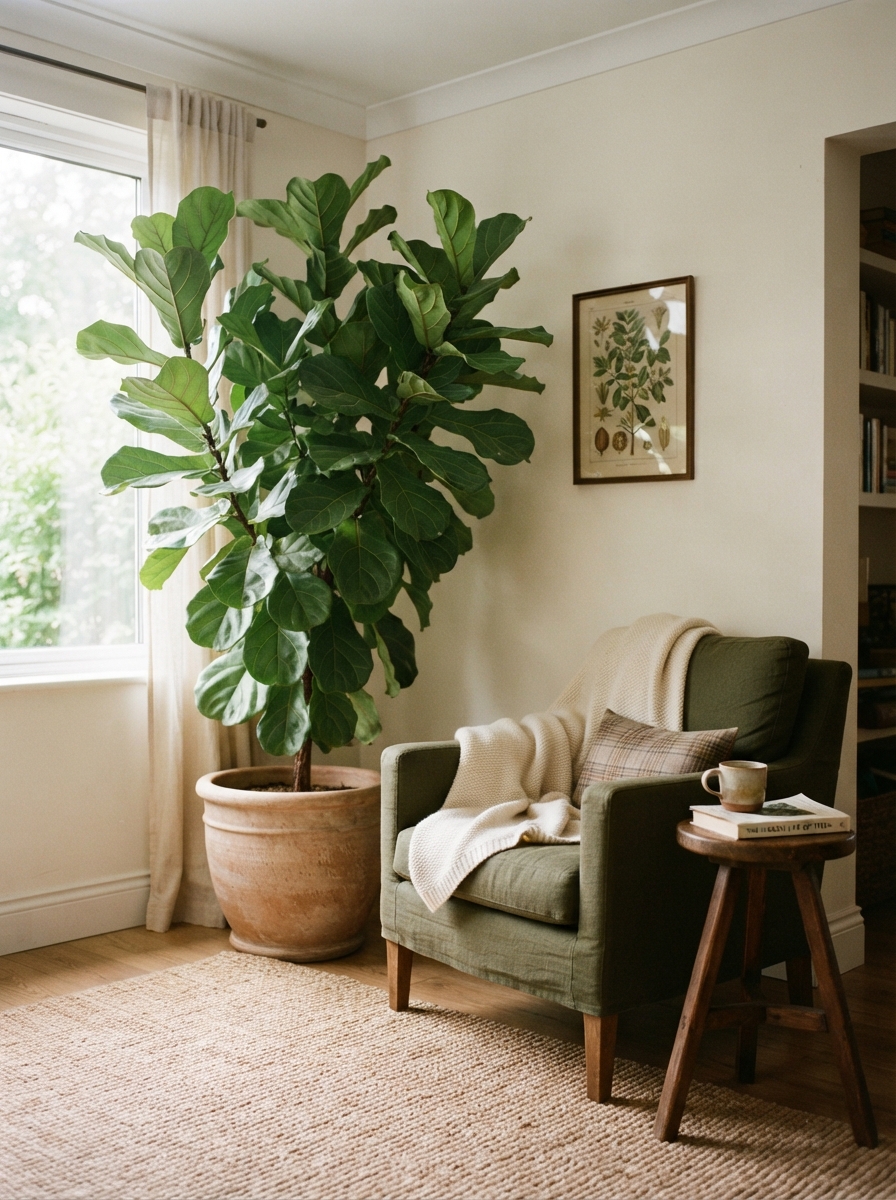
Every room has at least one awkward corner that’s too small for furniture but too noticeable to ignore. A tall, full plant like a fiddle-leaf fig, rubber plant, or areca palm solves this better than almost any other decor object, since it adds height and life without requiring the corner to serve any other function. This is often the single easiest styling win in a room that otherwise feels unfinished, and it works in corners too narrow for even a small side table or bookshelf.
5. Let Trailing Plants Do the Work on Shelves
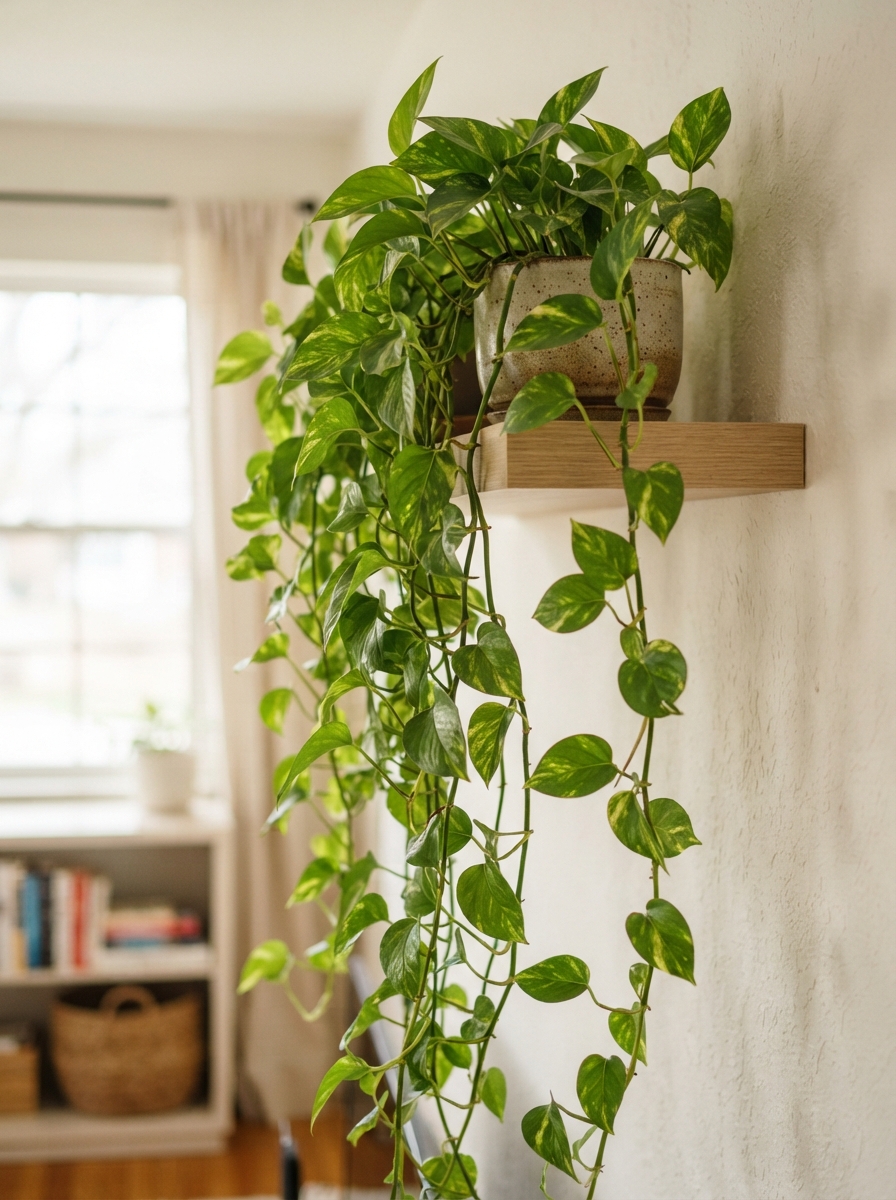
A trailing pothos, philodendron, or string of pearls cascading off the edge of a shelf or bookcase softens hard architectural lines and adds movement that a stationary object can’t. Let the vines grow long rather than trimming them back constantly — the longer, looser the trail, the more effortless and intentional it looks, even though it requires almost no maintenance beyond occasional watering. A trailing plant on top of a kitchen cabinet or armoire is also one of the only ways to make unused high storage feel intentional rather than wasted.
6. Repeat One Plant Type for Cohesion
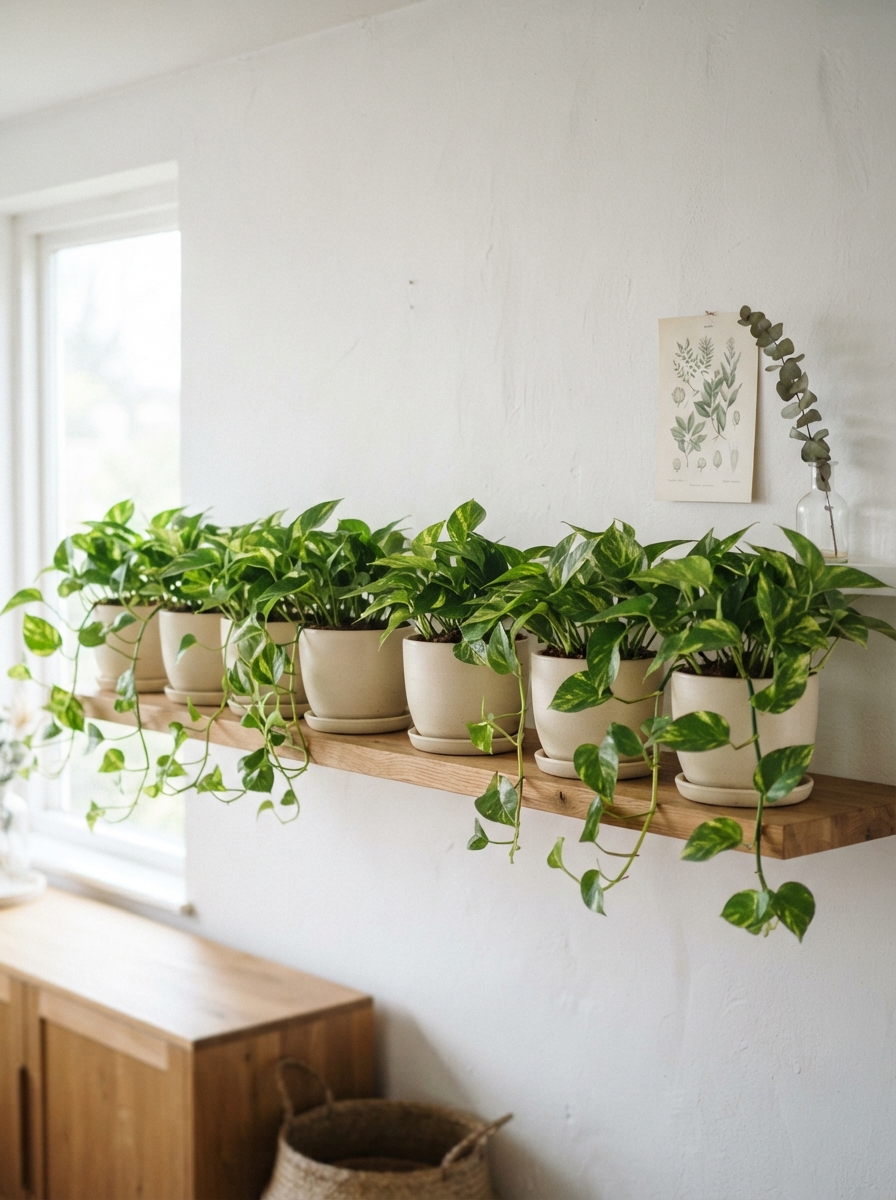
If you’re building a plant collection from scratch, repeating the same easy-care variety across several pots is a simple way to create a cohesive look without needing much plant knowledge. A shelf lined with three or four matching pothos plants in matching pots reads as considerably more intentional than the same shelf filled with four completely different, unrelated plant species. Once you’re comfortable caring for one variety, it’s also much easier to keep multiples of it alive than to manage the different light and water needs of several unrelated species at once.
7. Don’t Overcrowd a Single Surface
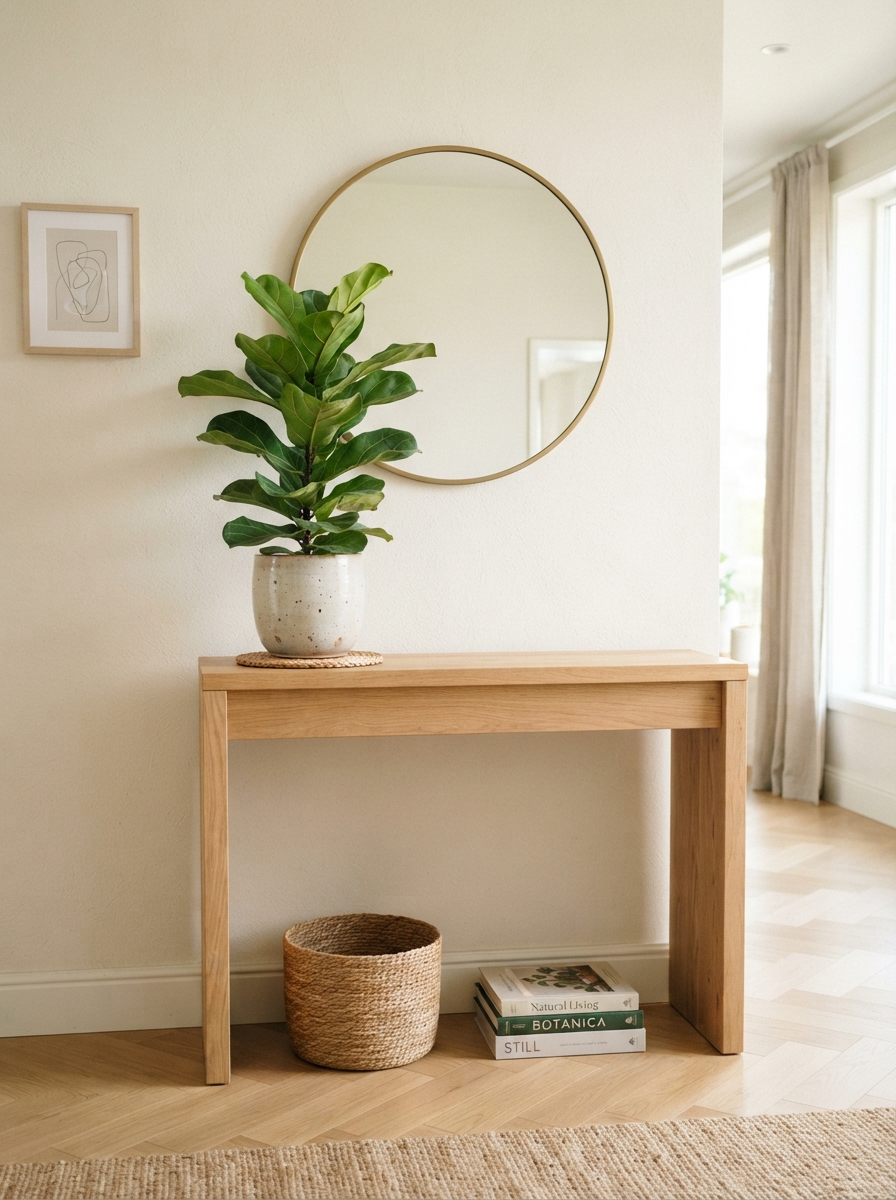
One well-chosen plant with breathing room around it often looks more considered than five crammed onto the same shelf or table. This is the plant version of the same principle that applies to coffee table or shelf styling: negative space is part of the design, not empty space that needs to be filled. If a surface is starting to feel crowded, that’s usually the signal to move a plant elsewhere rather than squeeze in more.
Houseplant Styling by Design Aesthetic
The way you group and pot your plants should shift slightly depending on the overall style of the room. A modern or minimalist space calls for one or two large architectural plants — a fiddle-leaf fig or a sculptural snake plant — in a simple matte pot, with a lot of open space around them rather than a dense collection. A boho space leans into abundance: layered plants of different heights and varieties, woven macrame hangers, and a mix of terracotta and ceramic pots in warm, earthy tones. A traditional or classic room suits a more restrained approach, often just one or two well-placed statement plants in a polished brass or ceramic urn rather than an eclectic mix. Scandinavian-style rooms favor simple, light-colored pots and one or two hardy green plants that don’t compete with the room’s otherwise pared-back palette. Coastal-style rooms lean into airy, textural plants like ferns and palms paired with woven or whitewashed pots that echo the room’s natural, breezy materials.
Best Plants for Style Without the Stress
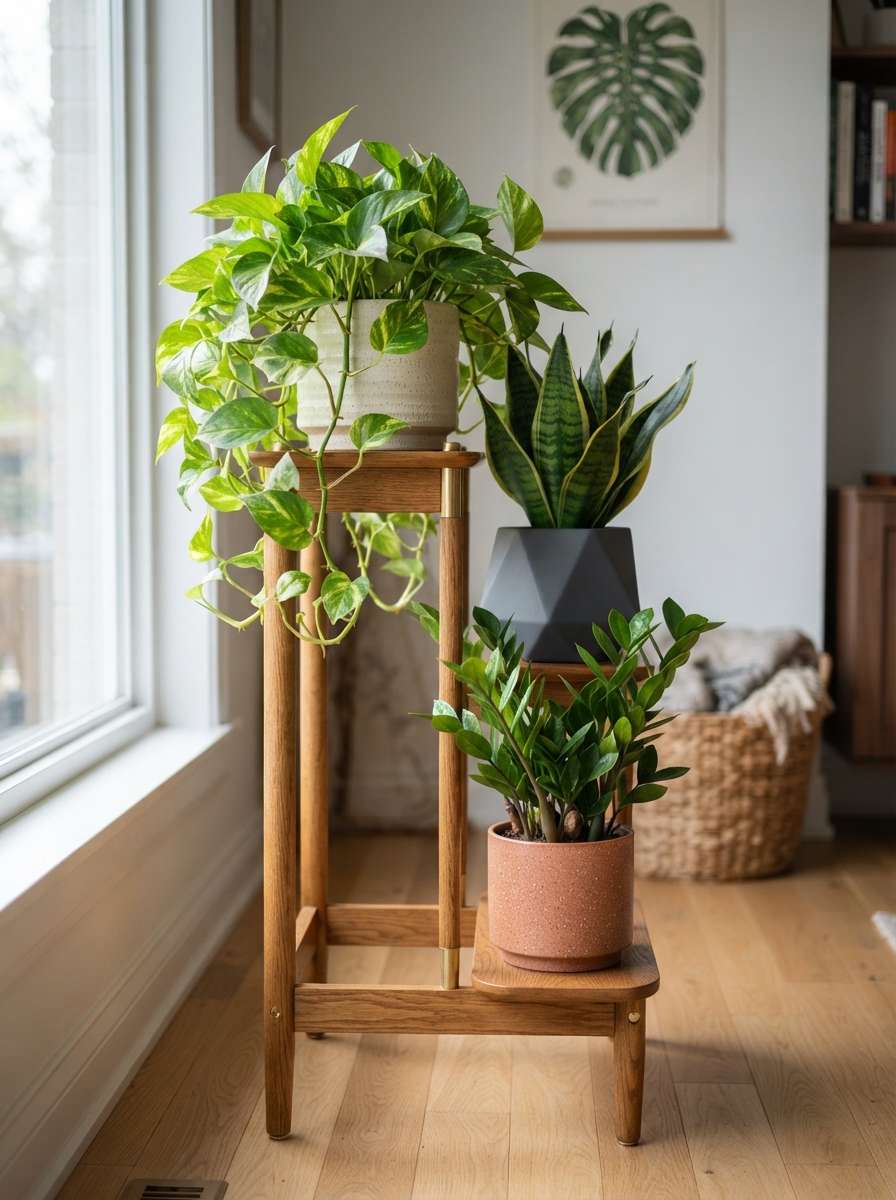
You don’t need a green thumb to pull off great plant styling. Pothos, snake plants, and ZZ plants are nearly impossible to kill, tolerate low light, and still look lush and intentional. Pothos in particular is the single most versatile styling plant, since it works equally well trailing off a shelf, climbing a moss pole, or sitting compactly in a small pot on a desk. If you want the look of a plant without any maintenance at all, a well-made faux fiddle-leaf fig or olive tree is genuinely hard to distinguish from the real thing at a normal viewing distance, and it’s a reasonable choice for rooms with poor natural light or for anyone who travels often enough that regular watering isn’t realistic. Succulents and cacti are a good middle ground for sunny windowsills, needing water only every week or two.
Houseplant shopping list
- Indoor plant pots — match the pots, vary the plants
- Plant stand — adds height to a grouping
- Watering can — one you can leave on show
- Grow light bulb — for dark corners
- Macrame plant hanger — vertical greenery
- Moisture meter — stops the overwatering problem
Prices and availability change. Links open on Amazon.
Common Houseplant Styling Mistakes
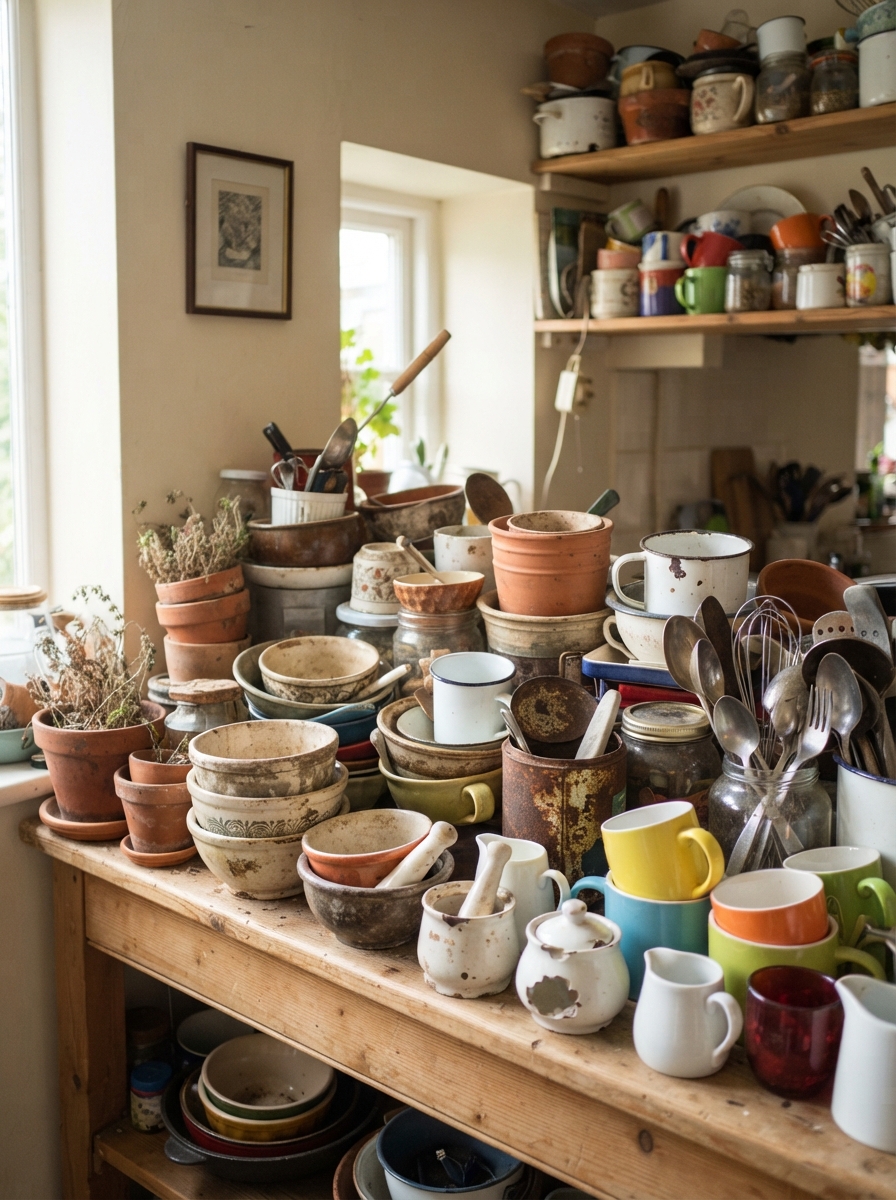
The most common mistake is leaving plants in their original plastic nursery pots indefinitely — a five-dollar decorative pot or cover solves this instantly. Mismatched pot styles and materials scattered around a single room without any repeated element is the second most common issue, and it’s an easy fix once you notice it. And placing a plant somewhere purely for the sake of having greenery, without considering whether that spot gets enough light for the specific plant, means it will decline visually within a few months regardless of how well it was styled on day one. A struggling, yellowing plant undercuts even the best-chosen pot and placement, so matching the plant to the actual light conditions matters more than any styling decision. Overwatering is another common issue that shows up visually before it becomes obvious in care terms — drooping, yellowing leaves are usually a sign of too much water rather than too little.
Houseplant Styling by Room
Living rooms benefit most from one large statement plant in a corner plus a smaller grouping on a shelf or side table. Bedrooms do well with lower-maintenance, lower-light varieties like snake plants and pothos, since bedrooms often get less direct sun and plants there need to survive without much daily attention. Kitchens are a great spot for a small herb garden on a sunny windowsill, which is both decorative and genuinely useful. Bathrooms with any natural light are ideal for humidity-loving plants like ferns and pothos, since the moisture from showers mimics their natural growing conditions. Home offices benefit from a single desk plant, like a small succulent or pothos, positioned where it’s visible on video calls without crowding your actual workspace. Entryways and hallways, which often get little natural light, are better suited to a hardy ZZ plant or a well-made faux option than anything that needs consistent sun.
Houseplant Styling on a Budget
Great plant styling doesn’t require an expensive plant collection. Pothos cuttings propagate easily in water and can fill out an entire shelf from a single starter plant within a few months, at essentially no cost. Thrifted or dollar-store terracotta pots, spray painted or left natural, create a cohesive look for a fraction of the price of designer planters. And swapping a plain plastic nursery pot for a basic woven basket or a cheap ceramic cachepot is one of the highest-impact, lowest-cost upgrades available in any room of the house. Trading cuttings with friends or neighbors is also a genuinely effective, completely free way to build a varied plant collection over time.
Seasonal Houseplant Styling and Care
Plants have a seasonal rhythm just like the rest of your decor. In spring and summer, most houseplants enter an active growth phase and can handle more frequent watering, repotting, and even a spot outdoors on a shaded porch to soak up humidity and indirect light. This is also the easiest time to propagate cuttings and expand a collection, since new growth roots faster in warmer months. In fall and winter, growth slows dramatically, so cut back on watering and resist the urge to repot until spring. Dust tends to build up on leaves during the months when windows stay closed, so a quick wipe-down every few weeks keeps foliage looking glossy and healthy rather than dull, which matters as much for styling as it does for the plant’s actual health.
Final Thought
Great houseplant styling comes down to variation in height, a repeated element to tie everything together, and enough restraint to leave some negative space around each grouping. Start with one or two easy, low-maintenance plants in matching pots, and expand from there once you see how much life they add to a room. For more plant care and styling guidance, visit The Spruce.
Frequently Asked Questions
How many plants should I group together?
Groups of three, five, or seven read as more natural and intentional than even numbers. Start with three plants of varying height if you’re new to grouping.
What’s the easiest houseplant for styling beginners?
Pothos is the most versatile and forgiving option — it tolerates low light, trails beautifully off shelves, and is very difficult to kill even with inconsistent watering.
Do I need to repot plants for them to look styled?
Yes, at least out of the original plastic nursery pot. Even an inexpensive matching terracotta or ceramic pot makes a dramatic visual difference over leaving plants in nursery packaging.
Can fake plants look as good as real ones?
High-quality faux plants, especially larger varieties like fiddle-leaf figs and olive trees, are genuinely convincing at normal viewing distance and are a practical option for low-light rooms.
How do I know if a plant is getting too much or too little light?
Leggy growth with large gaps between leaves usually signals too little light, while scorched or bleached patches on leaves usually mean too much direct sun. Most common houseplants prefer bright, indirect light rather than a harsh south-facing window.
Should plant pots have drainage holes?
Yes, whenever possible. A pot with drainage paired with a decorative cachepot or saucer underneath prevents root rot while still giving you the styled look of a solid, matching container.


3 Comments