

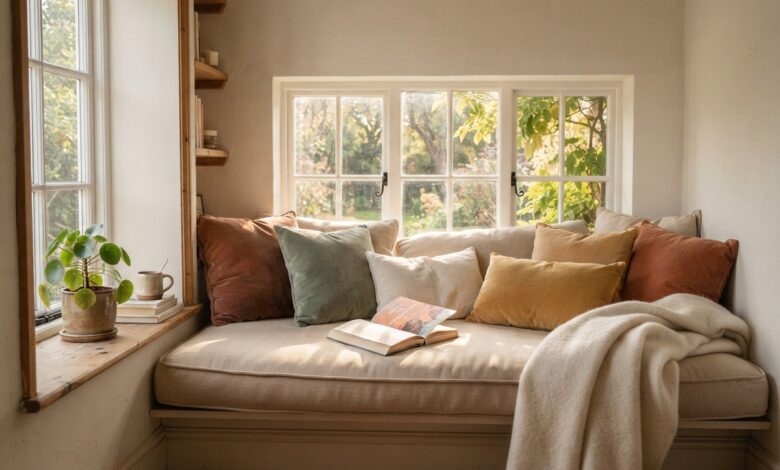
Every home has a corner that’s just sitting there — an awkward nook by a window, the end of a hallway, a spot under the stairs. With the right chair, lighting, and a few styling touches, that forgotten space can become the most-used seat in the house. Here’s how to build a reading nook you’ll actually want to curl up in.
1. Start With the Right Seat
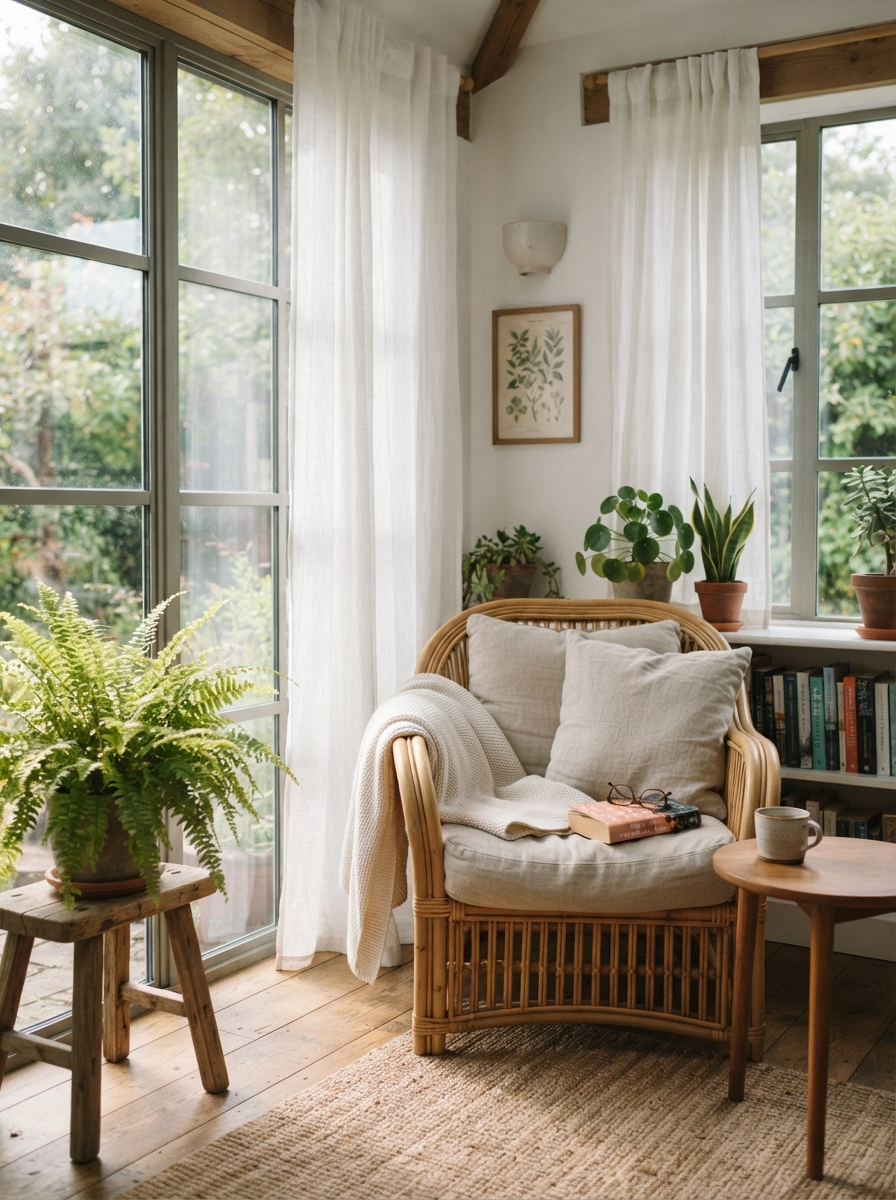
Comfort comes first. A deep armchair, a window seat with cushions, or even a papasan chair all work — the key is choosing something you’ll sink into for an hour, not a stiff dining chair repurposed for the job. Sit in the chair for several minutes before committing to it for the nook, since a chair that feels fine for five minutes in a showroom can feel completely wrong after twenty minutes with a book.
2. Layer in Soft Textiles
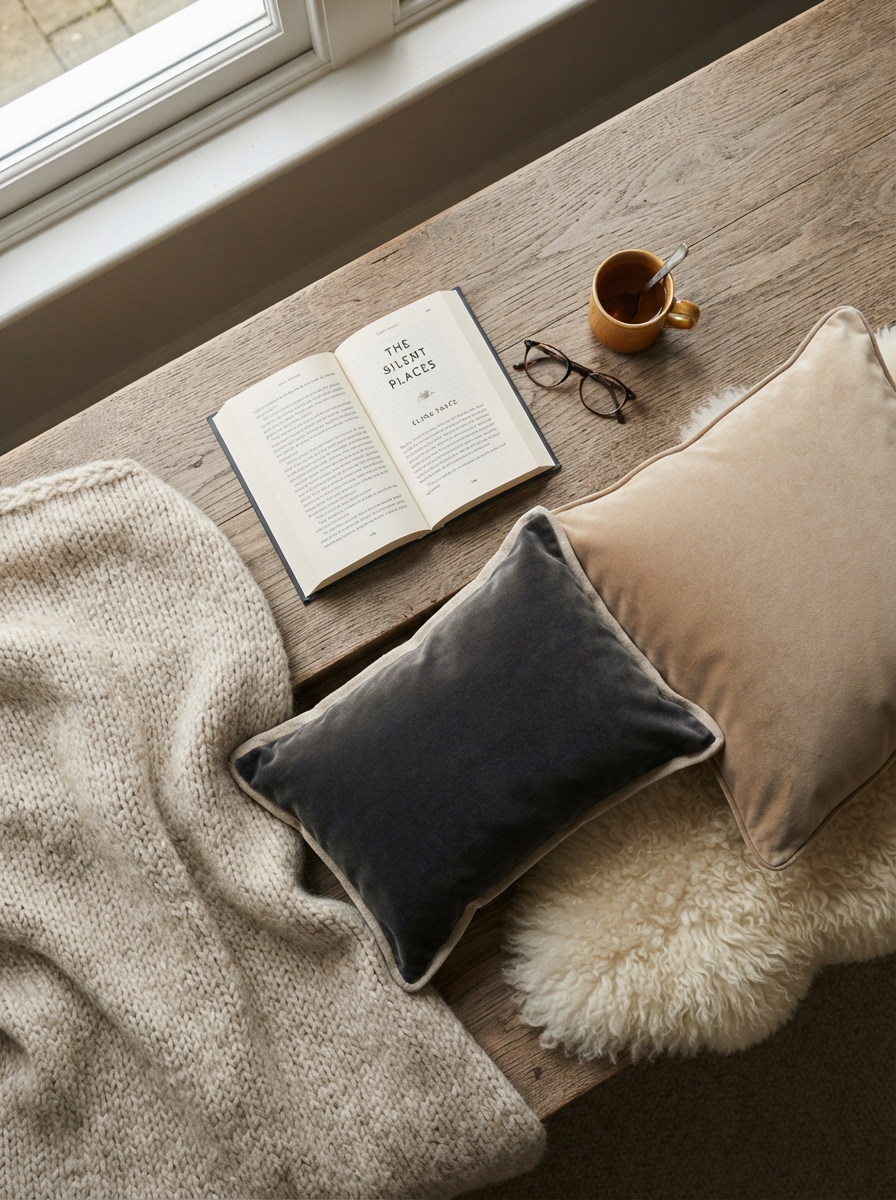
A chunky throw blanket and two or three pillows in mixed textures make the nook feel inviting from across the room. Wool, boucle, and linen blends add warmth without looking overdone. Aim for at least one heavier texture (wool or boucle) and one smoother one (linen or velvet) so the layering reads as intentional rather than accidental.
3. Get the Lighting Right
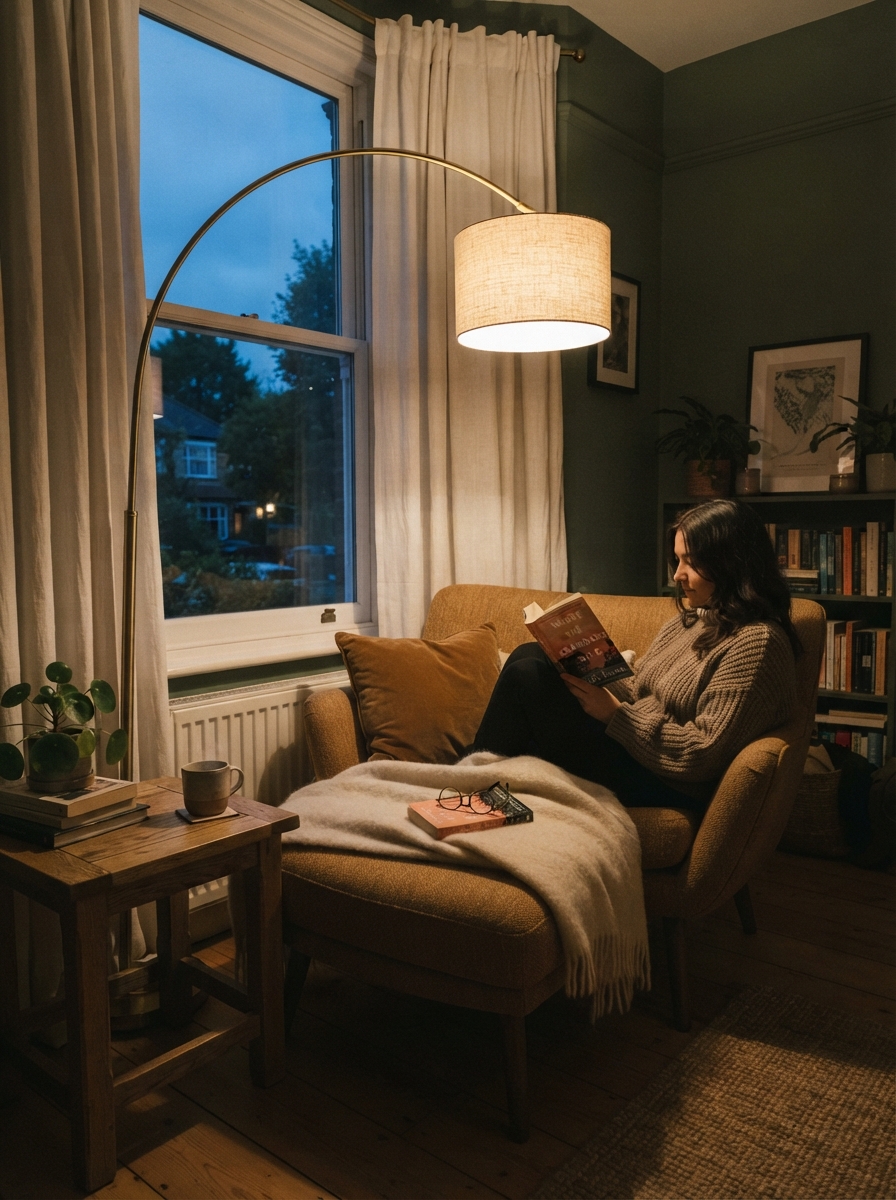
Natural light is ideal during the day, but you need a dedicated reading lamp for evenings. A floor lamp with an adjustable arm or a sconce mounted at shoulder height beats relying on an overhead fixture that casts shadows on the page. Aim for a warm bulb (2700–3000K) rather than a cool white one — cool light works for tasks but reads as clinical for a relaxation spot.
Want the shortcut?
If you want to go beyond a chair and a lamp, our home library and reading nook ideas cover the full build. See also: coffee corner decor ideas to style a cozy, curated nook.
As an Amazon Associate I earn from qualifying purchases. Some links in this post are affiliate links, at no extra cost to you. You will find more ideas in how to style a window nook for reading and relaxing.
Browse current options and prices.
4. Add a Side Table
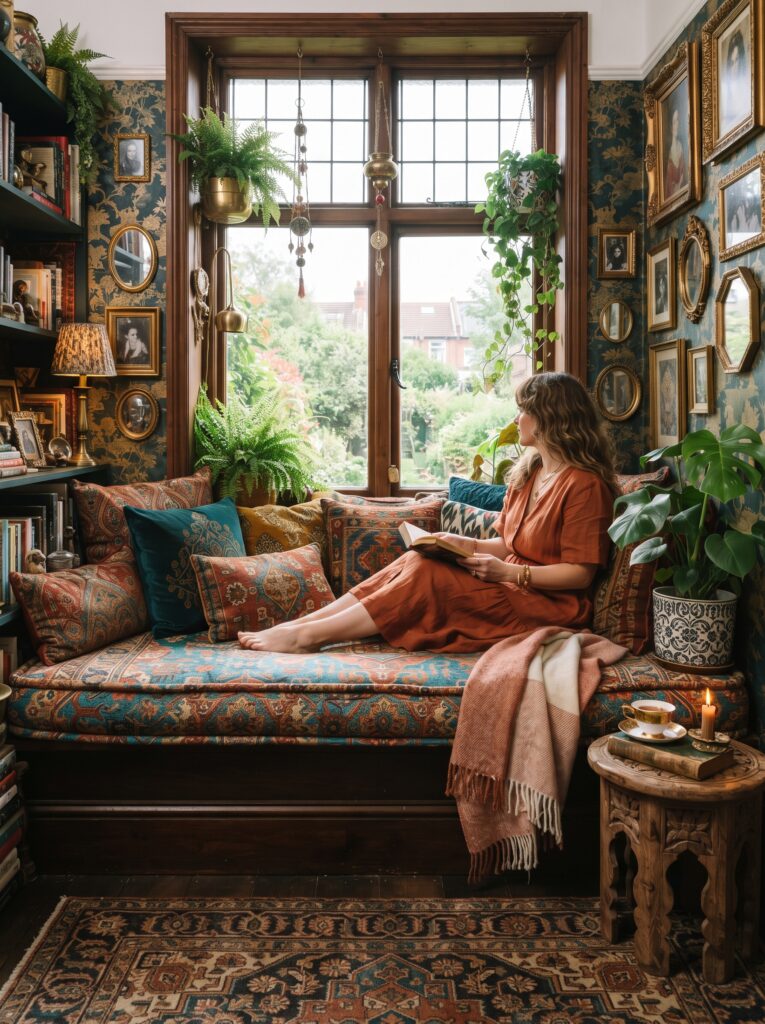
You need somewhere to put a mug, glasses, and the book you’re not currently reading. Even a small stool or a wall-mounted ledge solves this without crowding the space.
5. Bring in a Rug
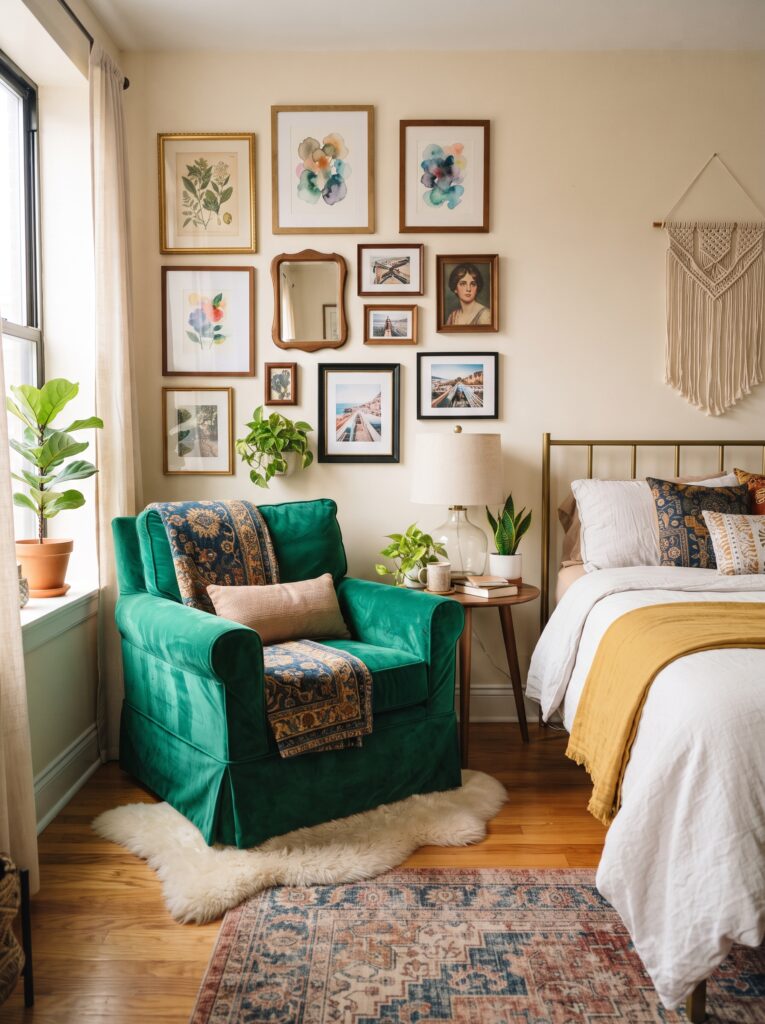
A small area rug anchors the nook and signals “this is its own space,” even if it’s just a corner of a larger room. It also feels much better underfoot than bare floor when you’re curled up with cold feet.
6. Keep Books Within Reach
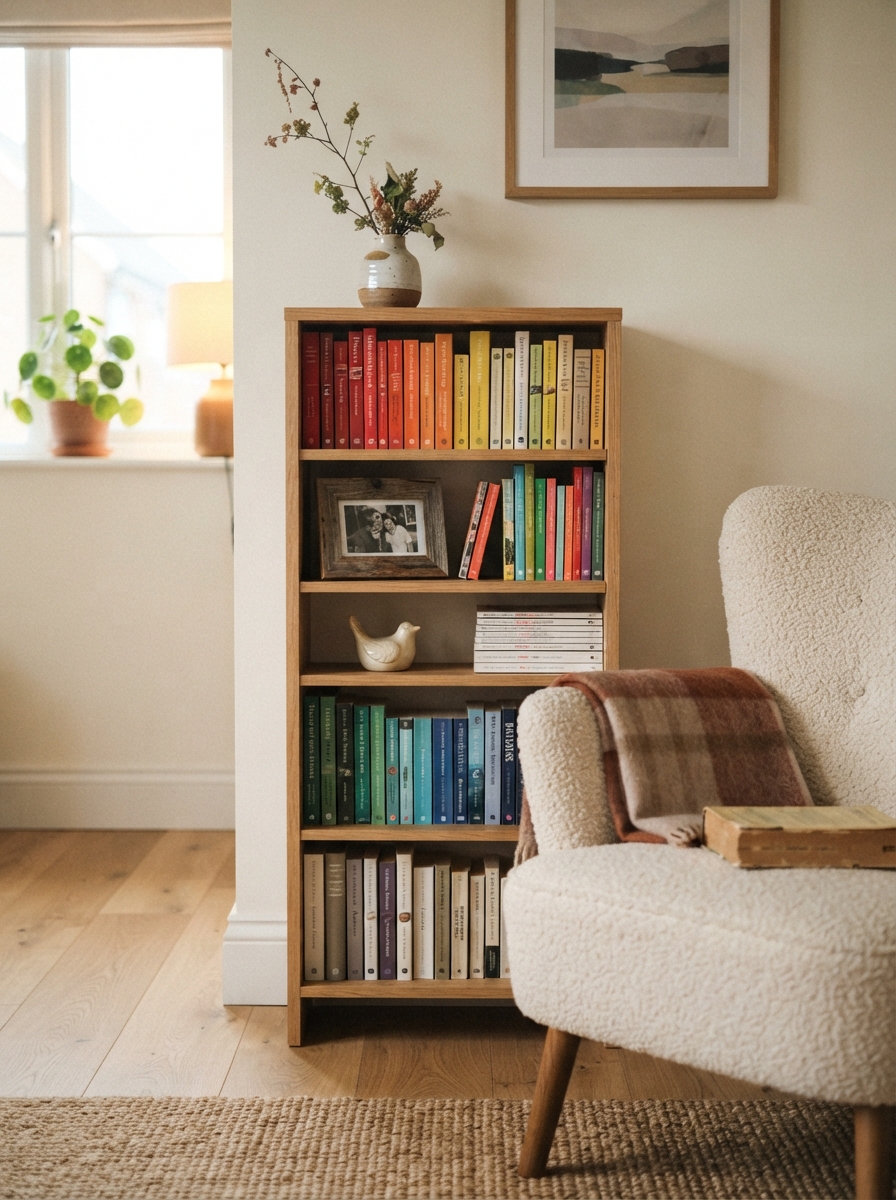
A small wall shelf, a ladder bookcase, or even a stack of books used as a side table doubles as storage and decor. Rotate in your current reads so the nook always feels lived-in. Resist the urge to display every book you own here — a curated stack of five to ten current or favorite titles looks more intentional than an overflowing shelf.
7. Add One Personal Touch
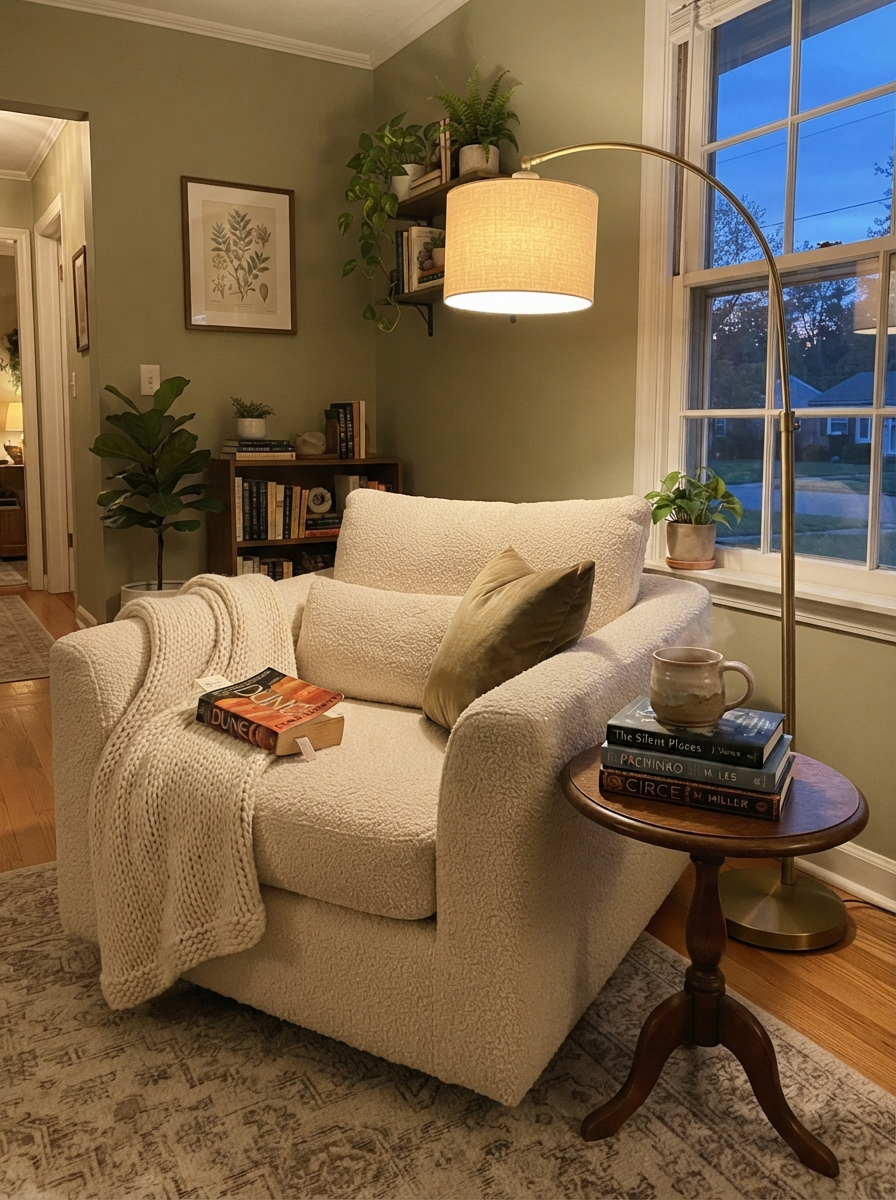
A plant, a piece of art, or a candle on the side table makes the spot feel like yours rather than a furniture showroom display. This is the detail that turns a nook into a retreat.
Where to Find a Reading Nook in a Small Home
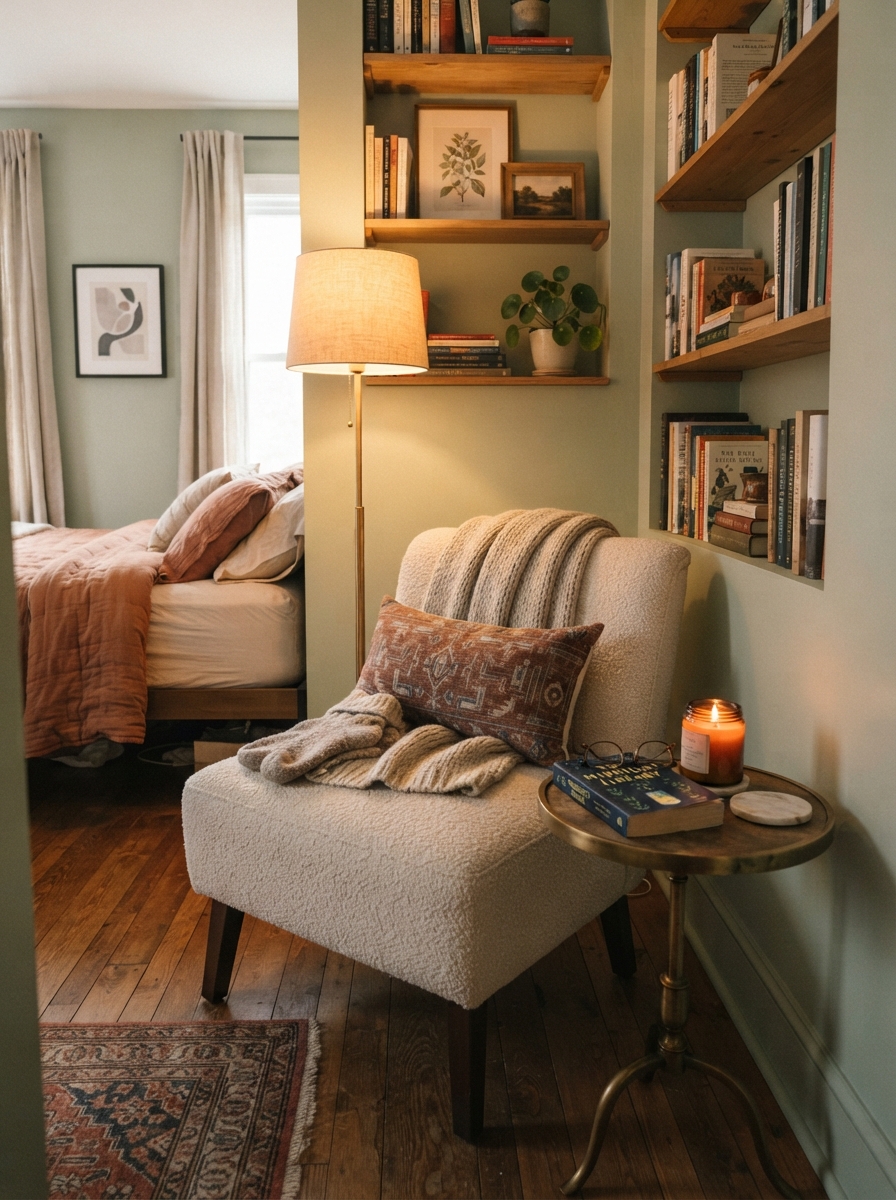
You don’t need a spare room to have a reading nook — you need about 25 square feet and a source of natural light. A few spots worth scouting: the end of a hallway that currently holds nothing, the space beside a bookshelf, a wide windowsill deep enough for cushions, or even a closet with the door removed and shelving added (a genuine “cloffice” for readers). If your home office has an unused corner, a small chair tucked beside the desk gives you a spot to read that’s separate from your work zone, which matters more than it sounds for actually using it.
Reading Nook Ideas by Room
Bedroom
A slipper chair or bench at the foot of the bed, paired with a floor lamp, turns unused floor space into a reading spot without needing extra square footage.
Living Room
A single accent chair angled slightly away from the main seating area, with its own side table and lamp, reads as a distinct nook even within an open floor plan.
Sunroom or Enclosed Porch
These rooms are often reading nooks waiting to happen — a rattan or wicker chair with linen cushions and sheer curtains makes the most of the natural light these spaces already have.
Hallway or Landing
A narrow bench or single chair tucked into a stair landing or wide hallway, with a small wall-mounted light, turns dead space into a spot worth pausing in.
Building a Reading Nook: A Weekend Project Plan
If you’d rather tackle this as a single focused project than piece it together over weeks, here’s a realistic weekend timeline. On day one, choose and clear your corner completely, then measure it so you know exactly what size chair and rug will actually fit — this single step prevents the most common reading nook mistake, which is buying a chair that’s technically too large for the space. Order or source your chair and rug that afternoon if you don’t already own suitable pieces. On day two, once the chair arrives (or using what you already have), add the lighting first, since this is what determines whether the nook gets used in the evening at all. Layer in textiles next, then add the side table and personal touches last. Doing the lighting before the decorative layer means you can actually test the space by sitting and reading in it before finalizing the styling, which often reveals small adjustments — a lamp that needs repositioning, a cushion that’s too firm — you wouldn’t catch otherwise.
Reading Nook Ideas by Budget
Under $150
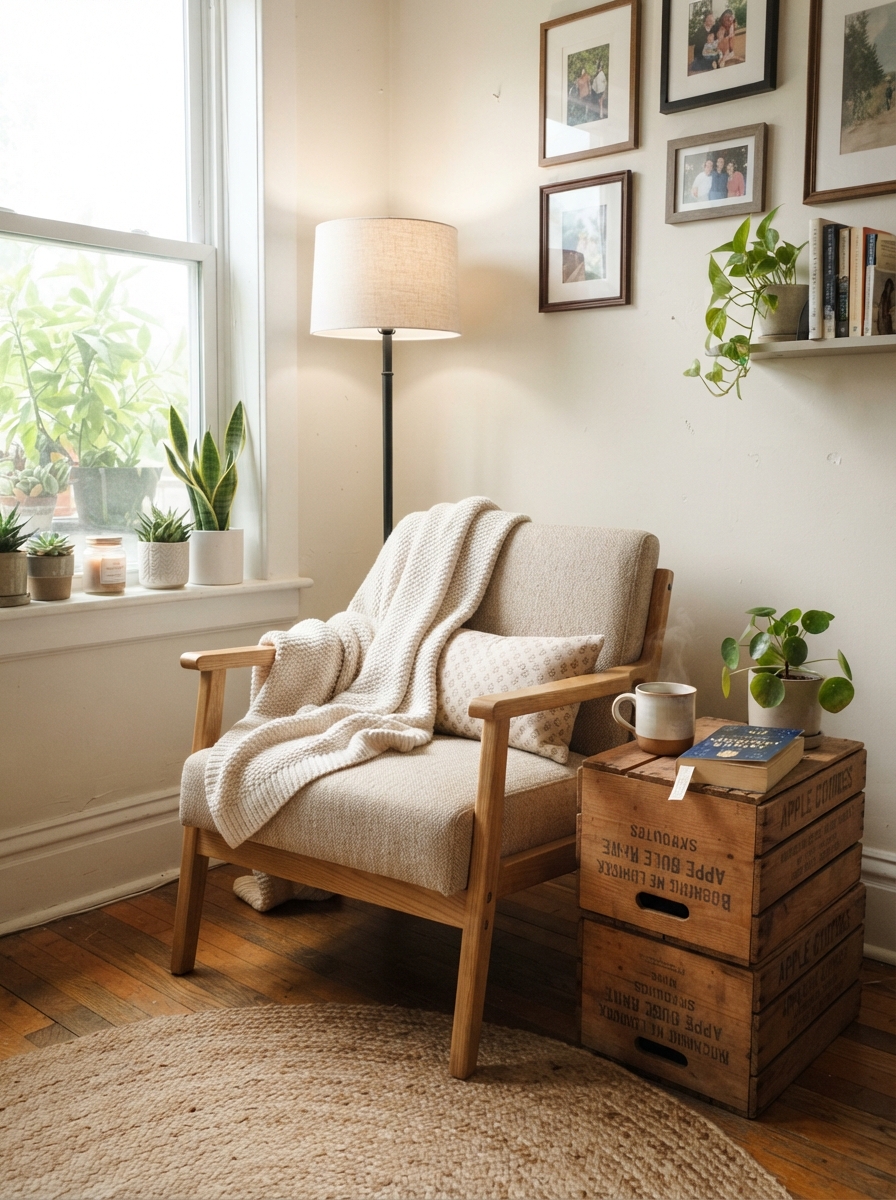
A floor cushion or a secondhand armchair, a throw blanket, and a clip-on reading light cover the essentials. This tier proves a reading nook is about arrangement, not spend.
$150–$400
Add a proper accent chair, a small area rug, and a dedicated floor lamp. This is the range where the nook starts to feel like a designed part of the room rather than a repurposed corner.
$400+
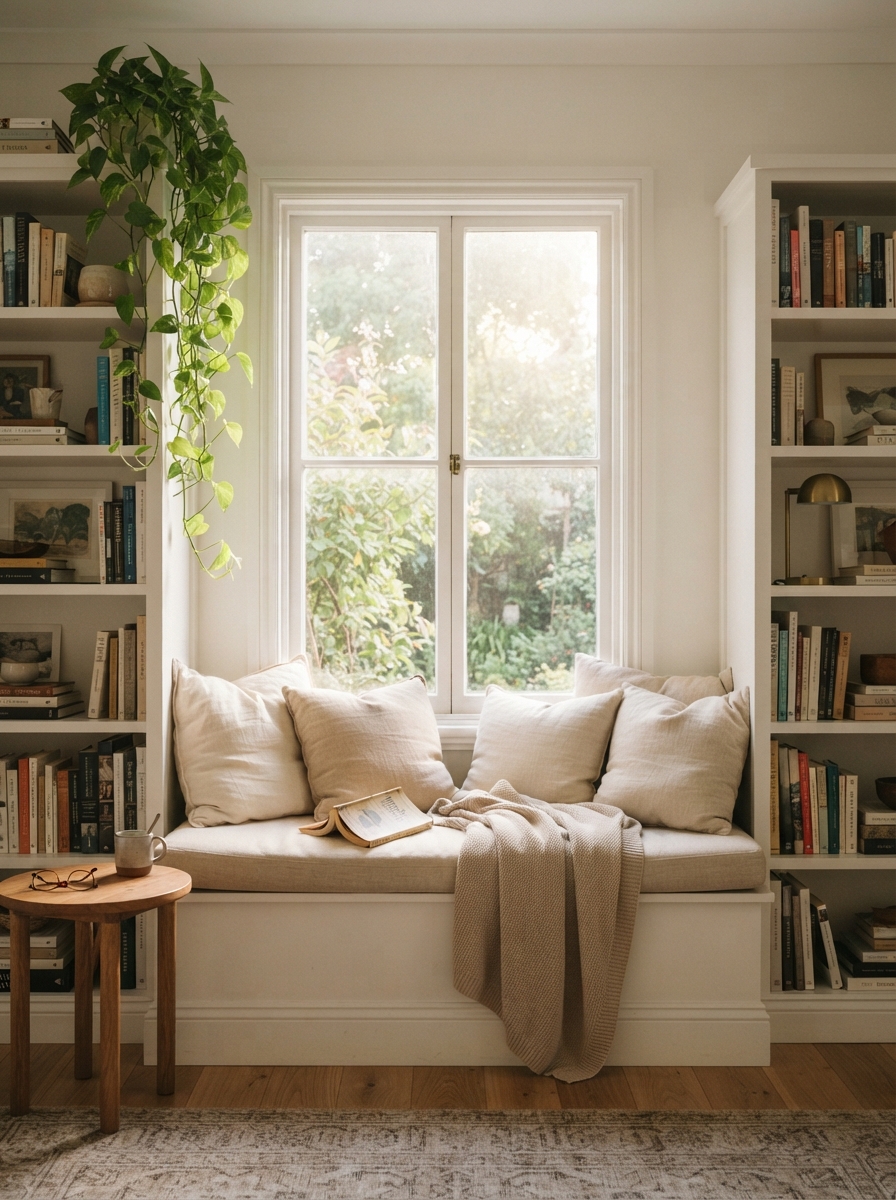
A built-in window seat with cushions, a wall-mounted bookshelf, and layered lighting (a sconce plus a table lamp) create a nook that could anchor a home magazine spread.
Reading Nook Styling by Design Aesthetic
A Scandinavian reading nook keeps the palette neutral — light wood, linen, and a single wool throw — with one dark accent, like a black floor lamp, for contrast. A boho nook layers in rattan, macrame, and a mix of patterned cushions for a more eclectic, collected feel. A traditional reading nook favors a tufted wingback chair, a brass floor lamp, and a leather-bound book stack for a study-like atmosphere. A cottagecore or coastal-grandma nook leans into florals, vintage textiles, and a chippy-painted side table for a soft, lived-in charm. Whichever direction you choose, the core formula — comfortable seat, warm light, soft textiles — stays the same underneath the styling.
Reading Nook shopping list
- Reading accent chair — built for sitting a while
- Reading floor lamp — directional, over the shoulder
- Ladder bookshelf — narrow footprint
- Throw blanket — the difference between nice and cozy
- Small side table — somewhere for the cup
- Book ends — keeps the stack upright
Prices and availability change. Links open on Amazon.
Common Reading Nook Mistakes to Avoid
- Choosing style over comfort. A beautiful chair you can’t sit in for more than ten minutes defeats the purpose of the whole nook.
- Relying on overhead light alone. Overhead fixtures cast shadows directly onto the page; a dedicated lamp at shoulder height is non-negotiable for evening reading.
- Skipping the side table. Without somewhere to set a drink or glasses, you’ll find yourself using the nook less than you planned.
- Overcrowding the space with books. A curated stack of current reads looks intentional; an overflowing shelf reads as clutter.
- Buying furniture before measuring. A chair or rug that’s slightly too large for the corner makes the whole nook feel cramped instead of cozy.
Creating a Reading Nook for Kids
A children’s reading nook follows the same core formula but scales everything down. A bean bag chair, a floor cushion, or a small toddler-sized armchair works better than an adult-sized piece a child will feel swallowed by. Keep books at their eye level in a low basket or a shallow ledge shelf rather than a tall bookcase, so they can choose their own titles without help. A battery-powered fairy light string or a small clip lamp gives them dedicated light for reading without the risk of a plugged-in lamp with a long cord nearby. Because kids’ interests change quickly, keep the personal touches easy to swap — a rotating display of their own artwork works better here than a piece of framed art meant to stay put for years.
Reading Nook Curtains and Privacy
A reading nook set into an open room benefits from a way to visually close it off when you want to fully disappear into a book. A simple curtain rod mounted across the opening of an alcove or nook, with a lightweight linen curtain, lets you pull the curtain closed for a more enclosed, cocoon-like feel and open it back up the rest of the time. For a nook near a window, sheer curtains diffuse harsh midday light without blocking it entirely, keeping glare off the page while still letting the space feel bright. In a shared or high-traffic area, even a partial curtain or a tall plant used as a soft visual divider signals to the rest of the household that the nook is currently in use.
Seasonal Reading Nook Refresh
A reading nook is one of the easiest spots in the house to refresh seasonally, since the footprint is small and the swaps are inexpensive. In the cooler months, swap in a heavier wool or sherpa throw, add a second layered rug for extra warmth underfoot, and bring in a candle for evening ambiance. In warmer months, swap the heavy throw for a lighter cotton one, and if the nook sits near a window, sheer curtains and a small fan nearby keep it comfortable even without air conditioning running constantly. Because the core furniture stays the same year-round, these seasonal swaps take only a few minutes and keep the nook feeling current without any real cost.
Where to Shop for Reading Nook Pieces
Most of the pieces that make a reading nook work don’t require a specialty retailer. Secondhand shops and marketplace apps are excellent sources for an accent chair or armchair, since a slightly dated frame can be refreshed with a new cushion or a simple reupholstering project. Budget home retailers carry floor lamps, throws, and rugs in a wide enough range of styles to match almost any aesthetic on this list, from Scandinavian to boho to traditional. For the side table, a small vintage stool or an unfinished wood crate from a craft store, given a quick coat of paint, often looks more intentional than a mass-produced option at the same price point.
Final Thought
A reading nook doesn’t need square footage — it needs intention. Pick a corner, commit to a comfortable chair and good lighting, and layer in the textures and personal touches that make you want to sit down and stay a while. For more small-space styling ideas, visit Better Homes & Gardens.
Frequently Asked Questions
How much space do I need for a reading nook?
About 25 square feet is enough for a chair, a small side table, and a rug — far less than most people assume, which is why hallway ends and bedroom corners work so well.
What’s the best chair for a reading nook?
A deep, cushioned armchair or a window seat with generous cushions both work well. The key criterion is comfort over an extended sitting period, not appearance alone.
Do I need natural light for a reading nook?
It helps during the day but isn’t required — a warm, well-placed floor lamp or sconce can make a windowless corner just as usable for evening reading.
How do I make a small reading nook feel cozy rather than cramped?
Keep the textiles soft and layered, use warm lighting rather than bright overhead light, and resist adding more furniture than the space genuinely needs — one great chair beats a chair, ottoman, and side table crammed into too little room.
How long does it take to set up a reading nook?
A basic version can be assembled in an afternoon using furniture you already own; a fully furnished nook with new pieces is realistically a weekend project once you factor in shipping or shopping time.
Can a reading nook work in a shared or multi-purpose room?
Yes — angling the chair slightly away from the room’s main sightline, along with its own rug and lamp, is usually enough to make it read as a distinct zone even without a wall separating it.



3 Comments