

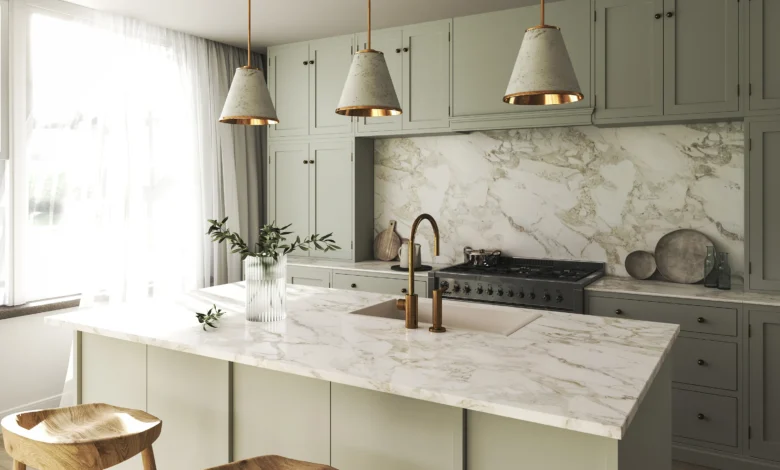
Here’s how to Style Kitchen Countertop like a professional — making them look curated, functional, and genuinely beautiful every day.
As an Amazon Associate I earn from qualifying purchases. Some links in this post are affiliate links, at no extra cost to you.
Your kitchen countertop are prime real estate — they’re the most-seen surface in one of the most-used rooms in your home. Yet most kitchens leave them either completely bare (clinical, unfinished) or completely cluttered (chaotic, overwhelming). Interior designers know exactly how to thread that needle.
✨ The Designer Formula
- The “keep-hide-display” method for every countertop item
- How to create intentional vignettes that look styled, not random
- The materials that always elevate a kitchen aesthetic
- Which appliances to show vs. store away
Start with the “Keep, Hide, Display” Method
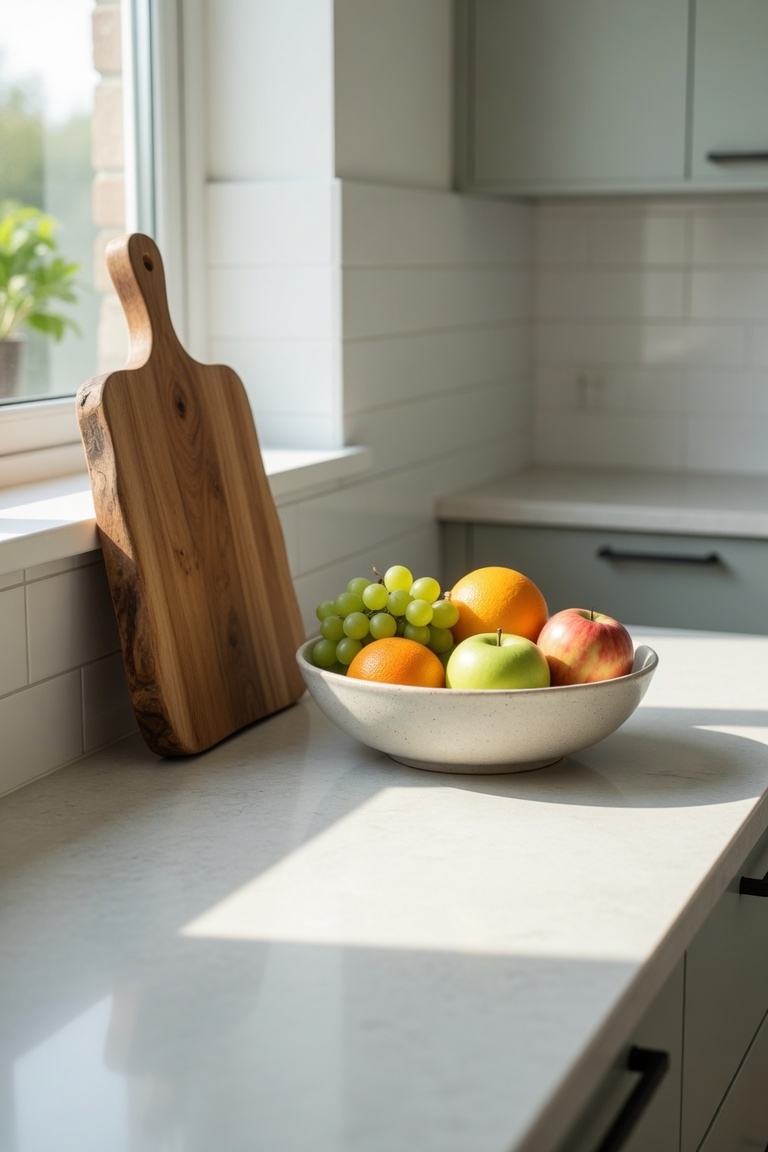
A vignette is a small, intentional grouping of objects that tells a visual story. On a kitchen counter, a vignette might be:
- A wooden cutting board (large, leaned against the wall) + a small potted herb in a terracotta pot + a stone salt cellar
- A ceramic canister set + a single cookbook open to a beautiful page + a linen dish towel folded neatly nearby
- A fruit bowl with 3–5 seasonal fruits + a small olive oil bottle with a nice label + fresh herbs in a small jar of water
The key: odd numbers of objects (3 or 5), varying heights, and a mix of materials (ceramic, wood, metal, fabric, or plant). Every counter section should feel like it was arranged, not dropped.
Use a Tray to Contain and Elevate
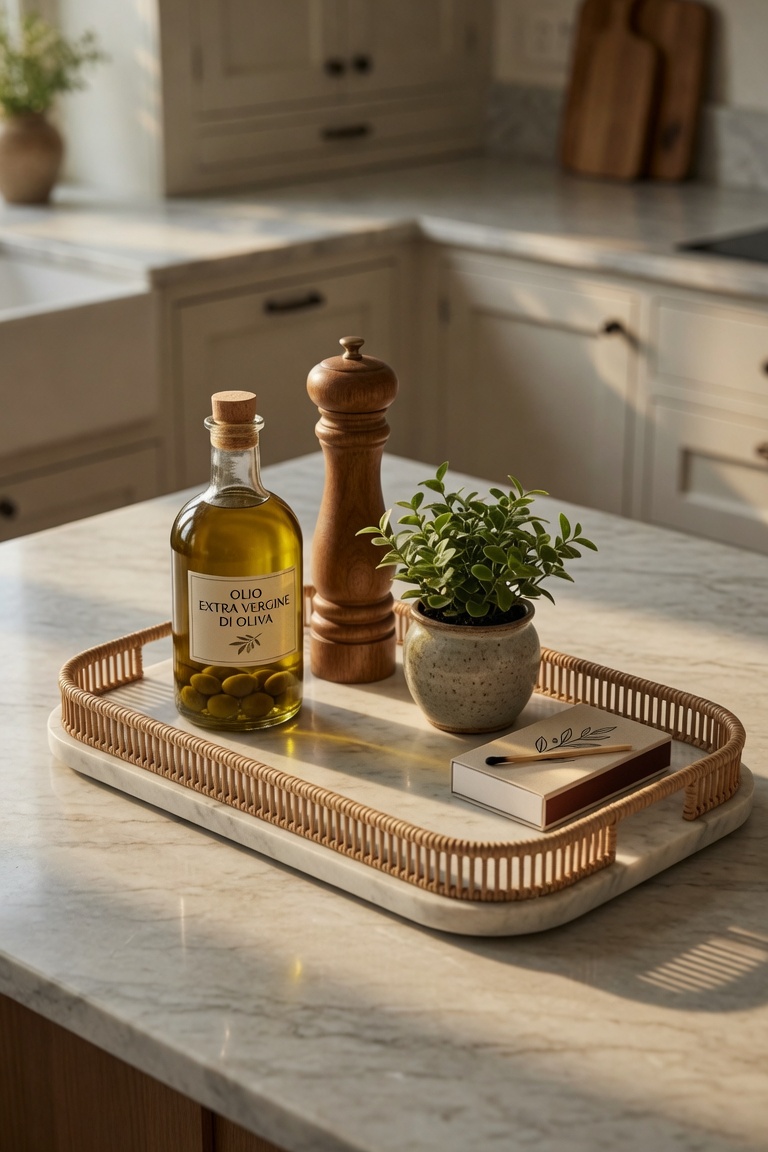
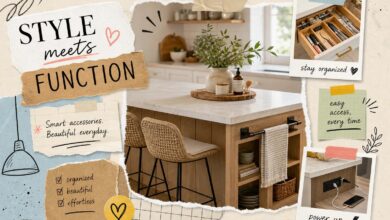
A simple wooden, marble, or woven tray placed on the counter does something almost magical — it turns a random collection of items into a curated display. A tray creates a visual boundary that says “these items belong together” and immediately makes them look more intentional.
Use a tray to:
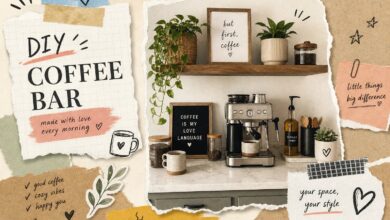
- Corral your coffee station (machine, mugs, a small plant, sugar bowl)
- Group your cooking oils and a small herb plant by the stove
- Create a “morning essentials” zone near the kettle
Material recommendations: a large wooden serving board (doubles as functional), a marble slab tray, a woven seagrass tray, or simple white ceramic.
Add Height Variation
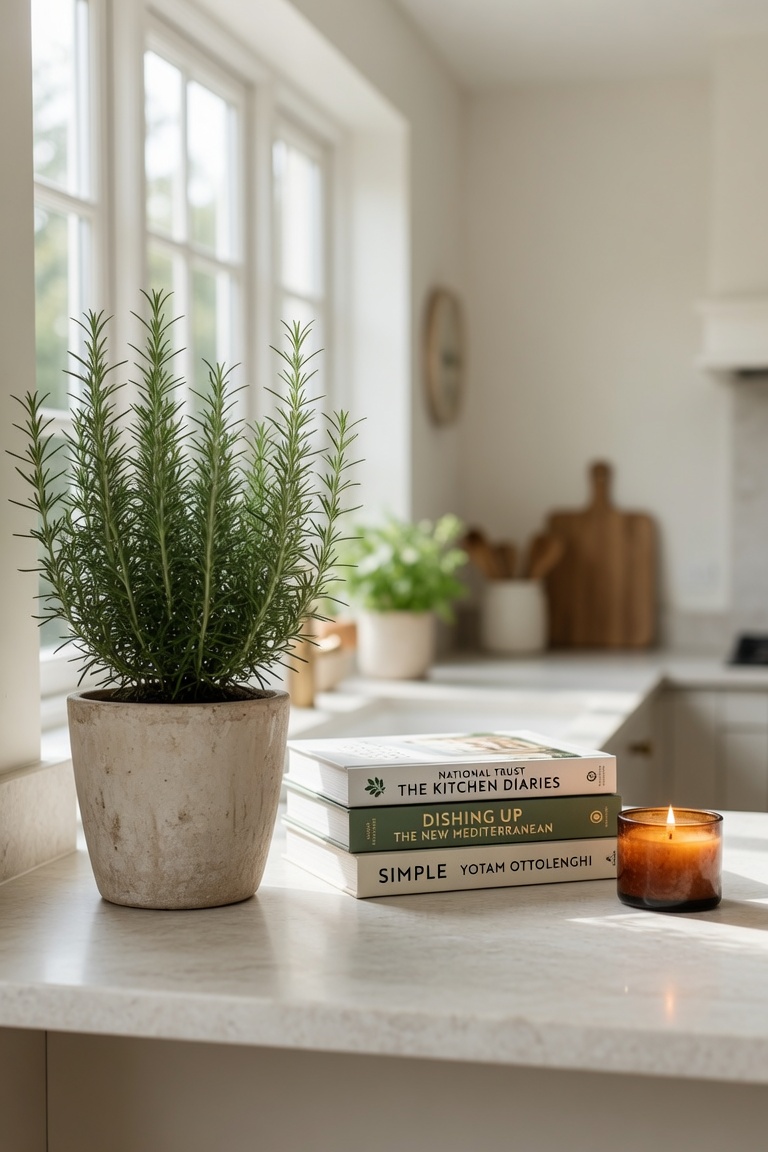
A flat Style Kitchen Countertop arrangement (everything the same height) looks monotonous. Interior designers always create vertical variation by mixing items of different heights.
The formula: one tall element, one medium, one low. For example:
- Tall: A potted trailing plant, a tall cookbook spine-out, a large olive oil bottle
- Medium: A canister, a small appliance, a mortar and pestle
- Low: A wooden board flat on the surface, a small bowl of fruit, a folded cloth
This height variation creates visual rhythm that makes the eye move across the counter pleasantly.
Choose Materials That Elevate
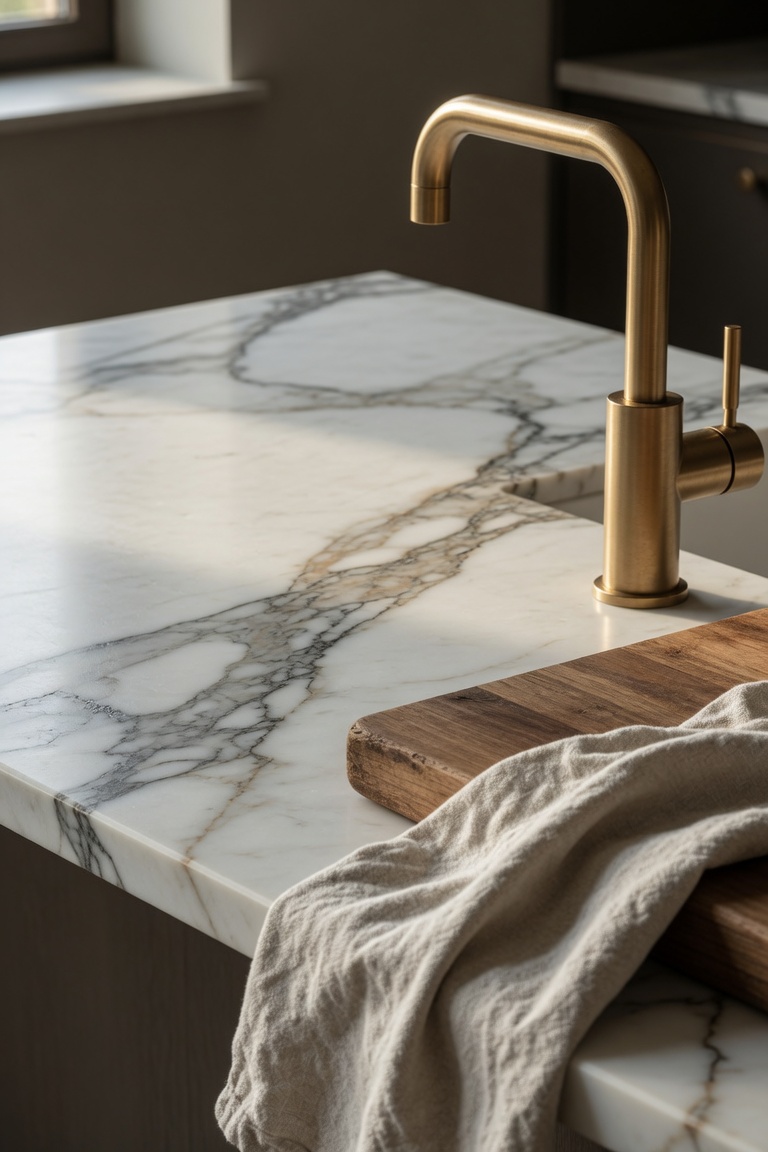
The materials on your Kitchen Countertop say as much as the objects themselves. Swap plastic and cheap-looking items for natural materials wherever possible:
- Wood: Cutting boards, utensil holders, trays, serving boards. Warm, natural, always appropriate in a kitchen.
- Ceramic: Canisters, bowls, herb pots, soap dispensers. Available in beautiful matte tones that photograph magnificently.
- Stone: A marble tray, a soapstone salt bowl, a granite mortar and pestle. Adds visual weight and luxury at the counter level.
- Linen: A folded dish towel draped over an oven handle or tucked beside the sink adds softness that ceramic and stone alone can’t provide.
Bring in One Plant (or Fresh Herbs)
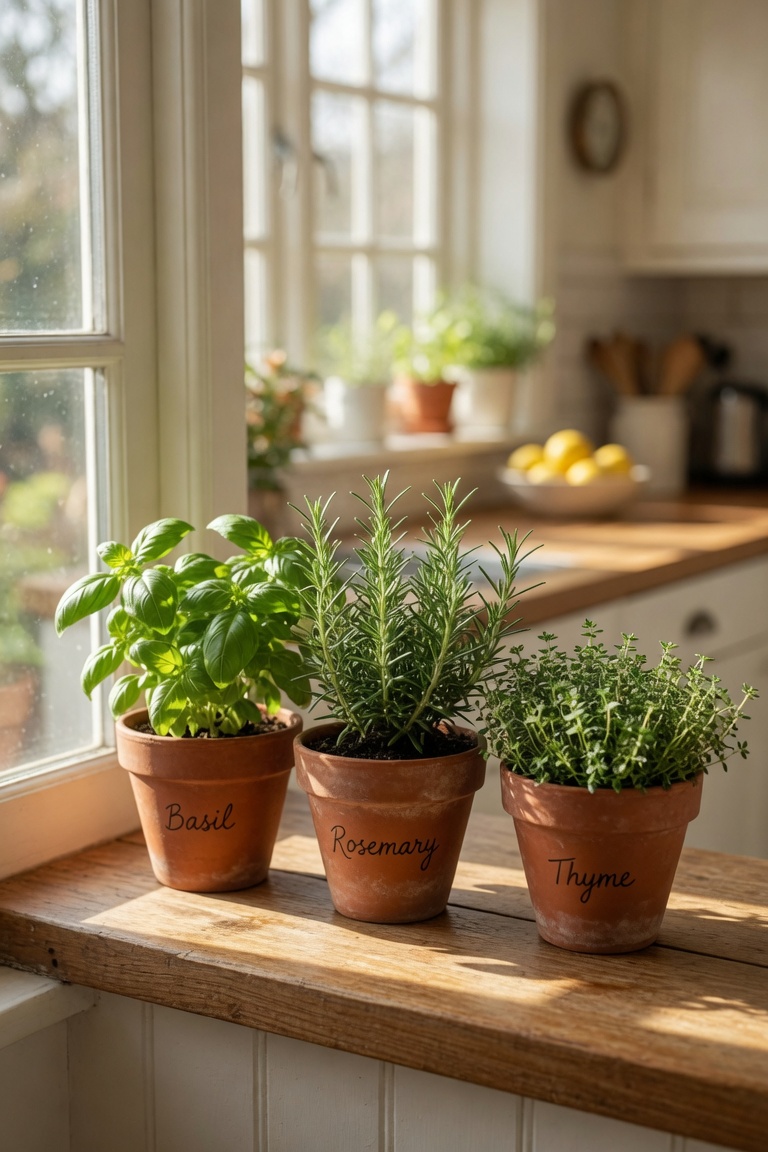
A single plant on the kitchen counter adds life that no object can replicate. The best options for kitchens:
- Fresh herbs in a pot: Basil, rosemary, or thyme in a small terracotta pot is both beautiful and functional. It gets used and smells incredible.
- Pothos in a small ceramic pot: Indestructible, tolerates the humidity and temperature variations of a kitchen, looks beautiful trailing off a shelf or sitting on the counter.
- Aloe vera: Practical (soothing burns happens in kitchens) and sculptural. Thrives on neglect.
Display One Beautiful Cookbook
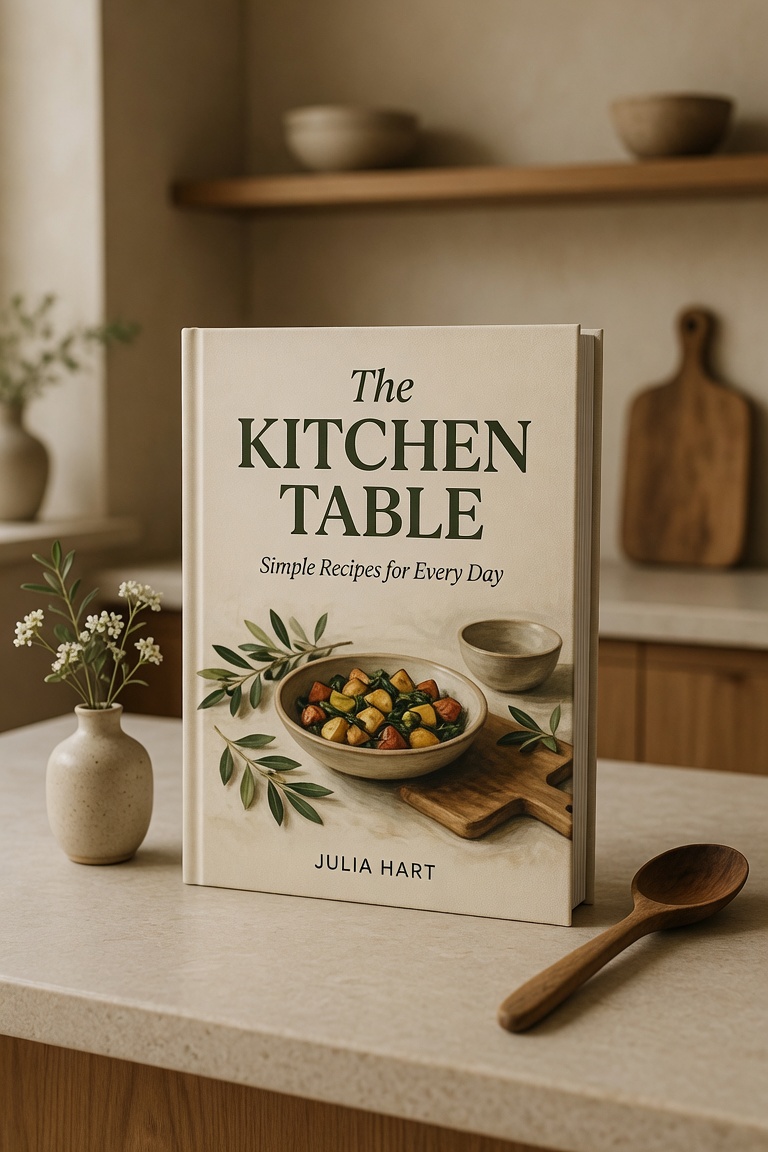
A beautiful cookbook propped open or standing upright on the counter (cover or spine facing out) is one of the most impactful pieces of kitchen “decor” that also happens to be functional. Choose one with a cover that complements your kitchen aesthetic — there are cookbooks with art-quality photography that work as coffee table books and cooking references simultaneously.
Stand it in a simple book stand, lean it against the backsplash, or display it on a small cookbook holder. It adds color, a sense of life being lived, and a focal point to the counter area.
Style Your Countertops to Match Your Kitchen’s Aesthetic
The keep-hide-display method works in every kitchen, but the specific objects you choose should shift depending on your kitchen’s overall style. A farmhouse kitchen calls for different countertop props than a sleek modern galley, and matching the two makes the whole room feel considered rather than assembled from whatever was on sale. Related reading: DIY countertop coffee bar ideas for a stylish kitchen. If you want to go further, kitchen coffee nook ideas: layout, storage, and style covers it in detail. See also: shelf decor ideas: how to style any shelf like a pro.
In a farmhouse kitchen, lean into worn wood, enamelware, and a few genuinely old pieces — a vintage crock for utensils, a chipped ceramic pitcher for fresh flowers, a wire egg basket doing double duty as fruit storage. In a modern minimalist kitchen, keep the palette tight (black, white, and one warm wood tone) and the object count low — one sculptural vase, one canister set, nothing that competes for attention. In a coastal kitchen, woven rattan trays, a bowl of lemons or limes, and linen in soft blues and whites read as effortless rather than styled. In a Japandi kitchen, a single ceramic vessel, a smooth wooden board, and generous negative space matter more than anything you actually put on the counter. For more on this, see our kitchen & dining guide. If your counters are short on space to begin with, these tiny kitchen storage solutions free up room before you style anything.
Whatever your style, the same underlying rule applies: fewer, better objects that clearly belong to a single aesthetic world will always outperform a counter crowded with unrelated pieces, no matter how nice each individual item is.
What Belongs in the “Hide” Category
The keep-hide-display method only works if you’re honest about the “hide” pile. These are the items that make a counter look cluttered even when each one is individually useful — they just don’t deserve prime visual real estate.
- Small appliances used less than twice a week. Blenders, stand mixers, waffle irons, and juicers belong in a cabinet or pantry, not on display, unless you use them daily.
- Mail, keys, and incoming paperwork. If your counter has become a landing zone for everything that enters the house, add a small drawer organizer or a wall-mounted mail sorter near the entry instead.
- Chargers and cables. A charging station tucked in a drawer or cabinet keeps cords from becoming the first thing anyone sees.
- Duplicate or rarely-used utensils. If you own three spatulas and use one, the other two belong in a drawer, not standing in a crowded utensil crock.
- Sponges and dish soap in ugly packaging. Decant dish soap into a simple ceramic or glass pump bottle, and keep a spare sponge in a small covered dish rather than a bright plastic caddy.
A useful test: if you haven’t touched an item in the last week and it isn’t part of an intentional display, it belongs behind a cabinet door.
Seasonal Countertop Refreshes
The best-styled kitchens change slightly throughout the year, which keeps the space feeling alive rather than static. You don’t need to overhaul anything — just swap two or three small elements each season.
In fall, swap fresh flowers for a small bowl of gourds, pears, or pomegranates, and bring in a bundle of dried wheat or a cinnamon-stick bundle tied with twine. In winter, a bowl of citrus (blood oranges, clementines) adds color against gray months, and a single evergreen sprig in a bud vase feels festive without being overtly holiday-themed. In spring, fresh-cut tulips or ranunculus in a simple vase and a bowl of lemons bring lightness back to the counter. In summer, stone fruit — peaches, plums, nectarines — doubles as decor and a snack, and a small vase of garden herbs or wildflowers keeps things breezy.
These small, low-cost swaps take five minutes and make a noticeable difference in how current and cared-for the kitchen feels.
Small Kitchen Countertop Styling
Limited counter space actually makes the keep-hide-display method more important, not less. In a small kitchen, every object needs to justify its footprint even more strictly than in a large one.
Focus on vertical solutions: a wall-mounted magnetic knife strip instead of a countertop block, a hanging planter for herbs instead of a potted one taking up surface space, and open shelving above the counter for the “display” category so the counter itself can stay almost entirely clear for actual food prep. Choose one small tray (10–12 inches) rather than a large one, and limit your vignette to two or three objects maximum rather than the five-item groupings that work on a longer counter. A single stem in a bud vase reads as intentional in a small kitchen in a way that a large floral arrangement never could — restraint is the small-kitchen designer’s best tool.
Kitchen Countertop shopping list
- Ceramic utensil crock — tidies the worst clutter
- Wood cutting board — leaned upright as decor
- Fruit bowl — the anchor object
- Canister set — decant what you use daily
- Under cabinet lighting — changes how the counter reads
- Small kitchen plant — herbs earn their space
Prices and availability change. Links open on Amazon.
Common Countertop Styling Mistakes to Avoid
Even well-intentioned kitchen styling can go wrong in a few predictable ways. Watch for these habits, since they’re the fastest way to undo an otherwise good vignette.
- Matching everything too perfectly. A counter where every object is the same brand-new white ceramic reads as sterile rather than styled. Mix in at least one worn, vintage, or imperfect piece for warmth.
- Overcrowding a single vignette. More than five objects in one grouping stops looking curated and starts looking like clutter, even if every piece is beautiful individually.
- Ignoring scale. A tiny bud vase on a huge island can look lost, while an oversized bowl on a small counter can overwhelm it. Match the size of your objects to the size of your surface.
- Forgetting function. Styling should never make your kitchen harder to actually cook in. If a vignette blocks your prep space or your reach to the stove, it needs to move.
- Skipping the edit. Styling isn’t just adding — it’s also removing. Step back after arranging and ask what you could take away and still have the vignette read clearly.
Where to Find Countertop Styling Pieces
You don’t need a design budget to source beautiful countertop objects. Thrift stores and estate sales are often the best source for ceramic bowls, wooden boards, and vintage canisters with genuine character — and they cost a fraction of new pieces. HomeGoods, TJ Maxx, and Marshalls regularly carry designer-adjacent ceramics and trays at accessible prices, so it’s worth a rotating check every few weeks rather than a single big shopping trip. For something more curated, small Etsy shops sell handmade ceramic vessels, wooden boards, and linen towels that add a one-of-a-kind touch you won’t find in big-box stores. And don’t overlook what you already own: a bowl from your everyday dish set, a cutting board you already use, or a plant you already have can often become part of a styled vignette with nothing more than a change in placement. Related reading: designer look for less in every room of your Home.
The goal is never to buy an entirely new set of “kitchen decor.” It’s to look at your existing kitchen tools with a stylist’s eye, group them thoughtfully, and fill in only the one or two gaps — a plant, a tray, a cookbook — that pull the whole counter together.
FAQ: Style Kitchen Countertop
What should always be on a kitchen counter?
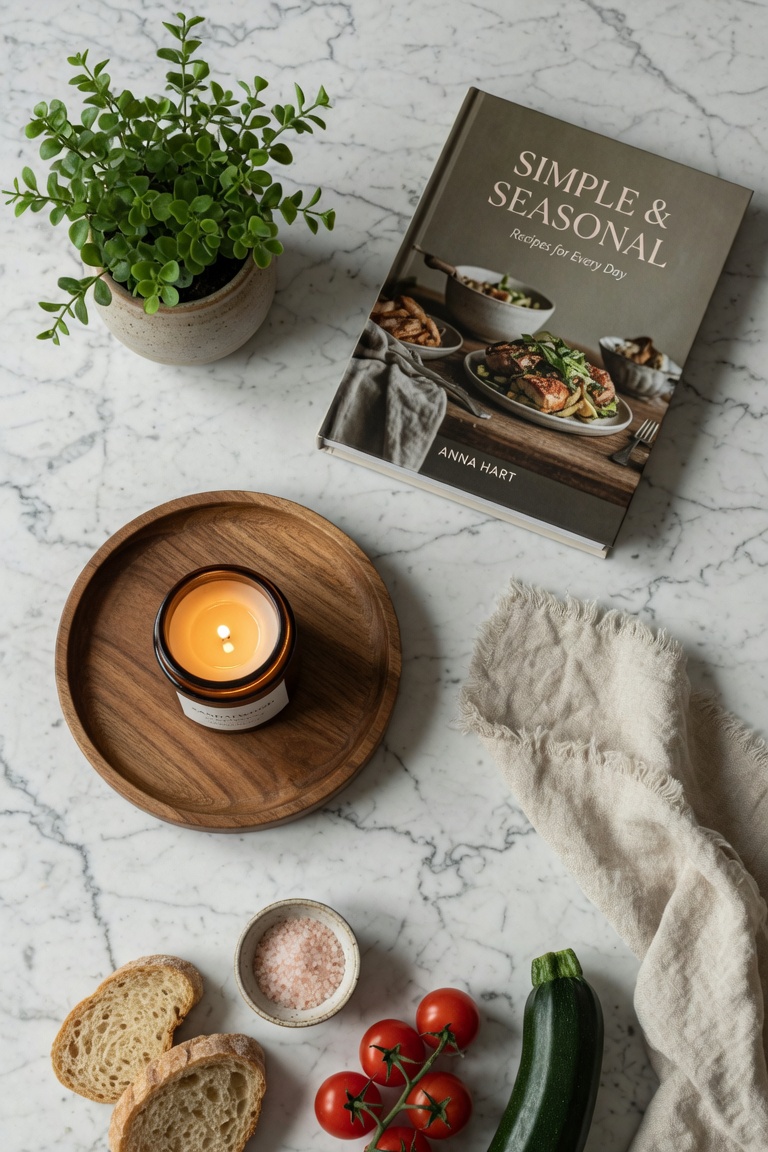
Only what you use every single day and what contributes to the aesthetic. At minimum: your most-used appliance (coffee maker or kettle), one plant or herbs, and one beautiful functional object (a wooden cutting board, a nice knife block, a ceramic canister set). Everything else should earn its counter space or be stored away.
How do I make my countertops look more expensive?
Replace plastic items with natural materials (wood, ceramic, stone). Add one plant. Use a tray to group items. Lean one large cookbook against the backsplash. Clear everything that doesn’t belong. These five changes cost very little but instantly elevate the perceived quality of the space.
How many items should be on a kitchen counter?
The professional rule: leave at least 60% of your counter surface completely clear. The remaining 40% should have intentional items in grouped vignettes. If your counter is 10 feet long, that means 4 feet of styled display and 6 feet of working clear space.
📌 Save These Tips
Pin to your Kitchen Decor board on Pinterest for your next kitchen styling session.


4 Comments