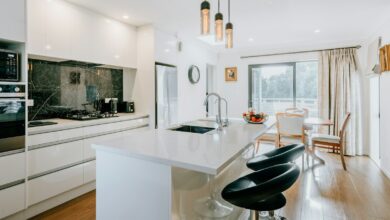

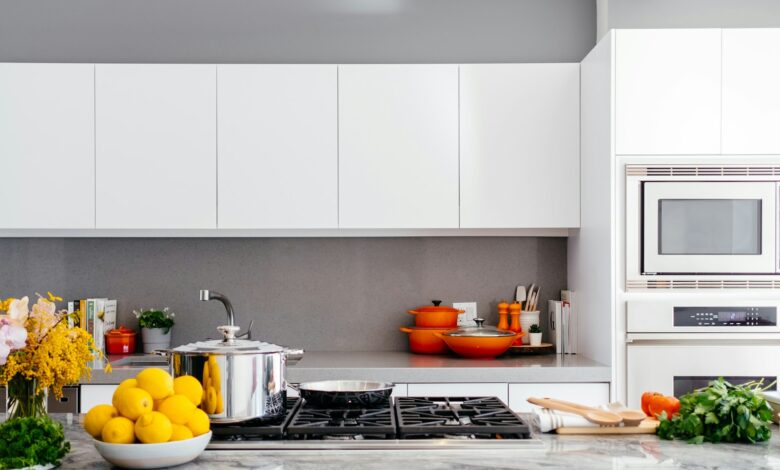
Picking a new countertop for your kitchen island sounds straightforward until you’re staring at 12 material samples, three contractor quotes with wildly different numbers, and a Pinterest board that offers zero help when it comes to real-world durability. The good news is that narrowing down your island countertop ideas gets a lot easier once you understand what each material actually costs, what it demands from you daily, and which styles it fits naturally. This article is part of the kitchen island styling series here at Aesthetic Nest Decor, where we work through every layer of island design so you can make confident decisions without second-guessing yourself. By the time you finish reading, you’ll have a material shortlist, a realistic budget range, and a clear next step, whether that’s a DIY weekend project or a call to a fabricator.
Want the shortcut?
As an Amazon Associate I earn from qualifying purchases. Some links in this post are affiliate links, at no extra cost to you.
Top picks: Miracle Sealants Sealer Applicator, Stone Drying Trays (Set of 2) and Amazon Basics Saddle-Seat Counter Stool.
Check price on Amazon →Island countertop ideas by material and cost
Know your budget tier before you fall in love with a slab. Countertop materials split cleanly into three groups, and understanding where each one lands saves you from committing to something that’s twice what you planned to spend.
The main material categories at a glance
The budget tier covers laminate and tile, running roughly $15, $40 per square foot installed for laminate and comparably low for tile. The mid-range tier includes butcher block ($35, $90/sq ft installed) and concrete overlays. The premium tier is where quartz ($50, $200/sq ft), granite ($45, $175/sq ft), and marble ($75, $250/sq ft) all live. A standard kitchen island is typically 15, 25 square feet of countertop surface, so a $30/sq ft difference between materials can mean a $450, $750 swing in your final bill before you’ve made a single other decision.
Why the island countertop deserves a different decision than your perimeter counters
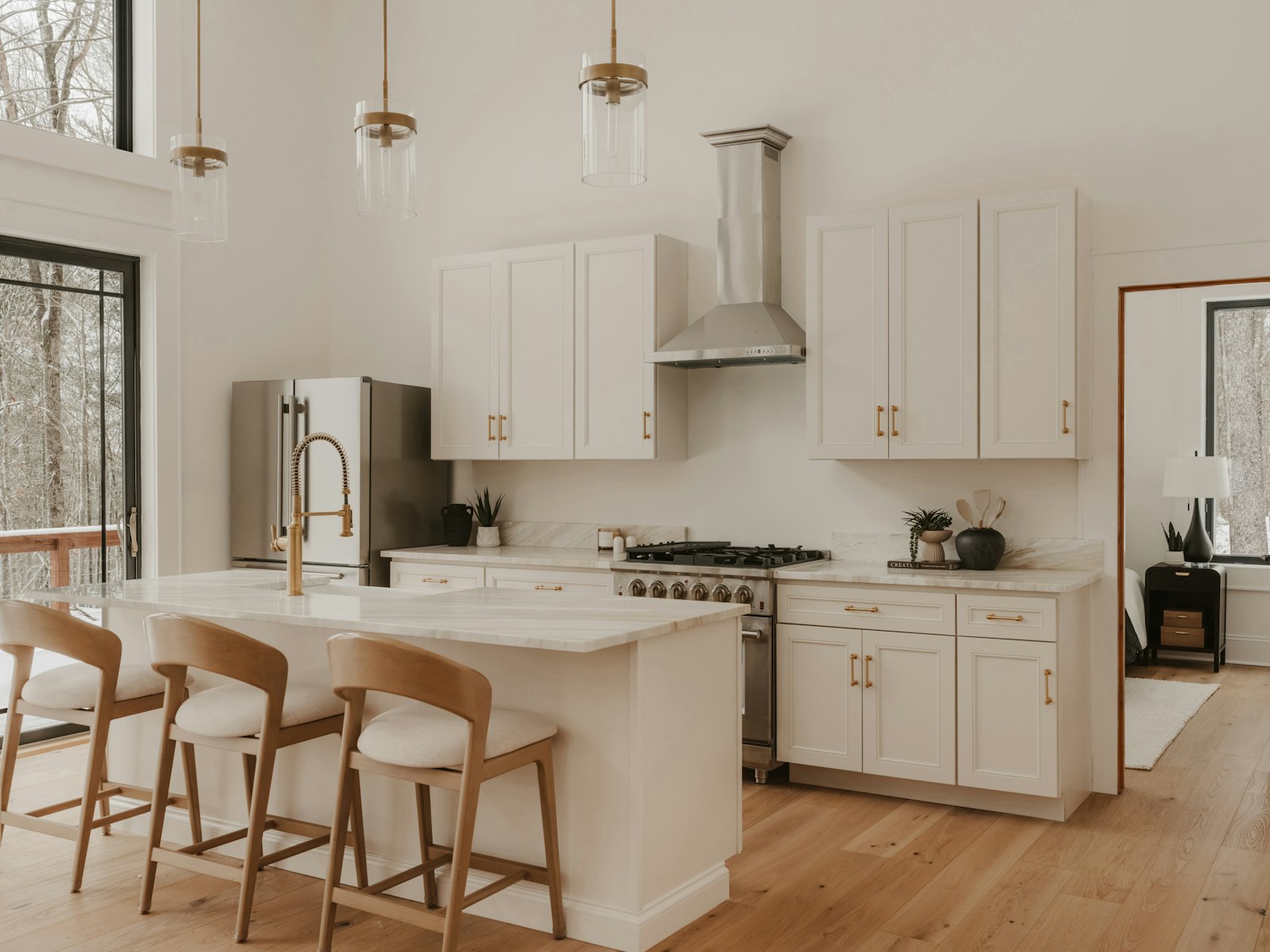
Your island sees traffic that your perimeter counters often don’t: food prep, casual seating, kids doing homework, a bar setup during parties, and sometimes a sink. A material that holds up fine on your wall counters can underperform fast on a surface used that hard. Start with your durability requirements and your lifestyle, then let aesthetics follow. A beautiful marble island that stains within six months because you didn’t account for daily cooking is nobody’s win.
Quartz island countertops: why they dominate and when they’re the right call
Quartz consistently tops popularity charts for kitchen islands, and the reason is practical, not just aesthetic. It’s the material that delivers a clean, consistent look without asking much of you in return.
What makes quartz so low-maintenance
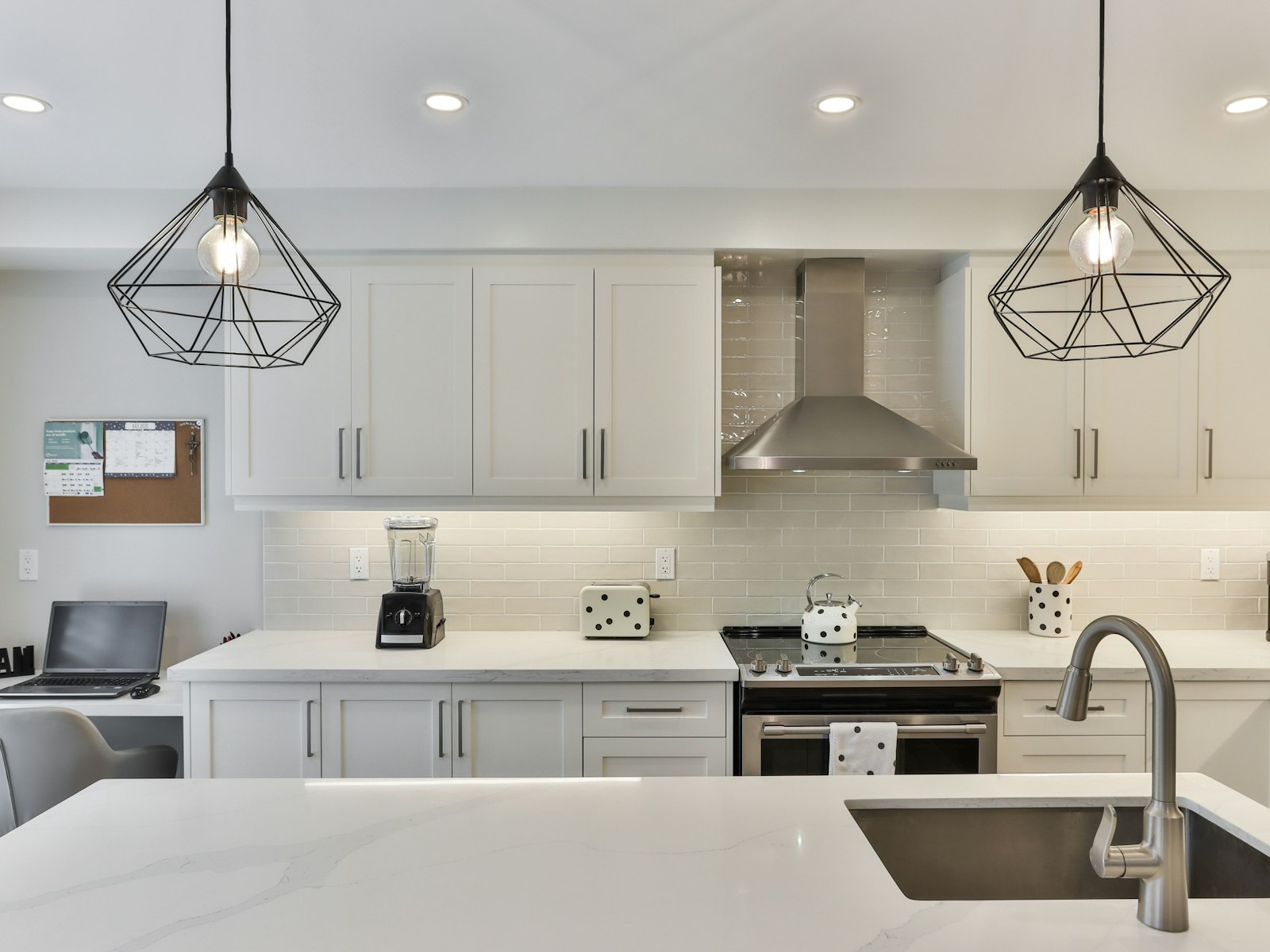
Quartz is non-porous, which means liquids sit on the surface rather than absorbing into it. Wipe up a spill and it’s gone, no sealing required, ever. Your cleaning routine is warm water and mild dish soap; skip abrasive pads, bleach, and harsh chemical sprays, which can dull the surface over time. The one real weak point is heat: the resin binders in quartz can discolor or crack from sudden, direct heat exposure, so use trivets consistently.
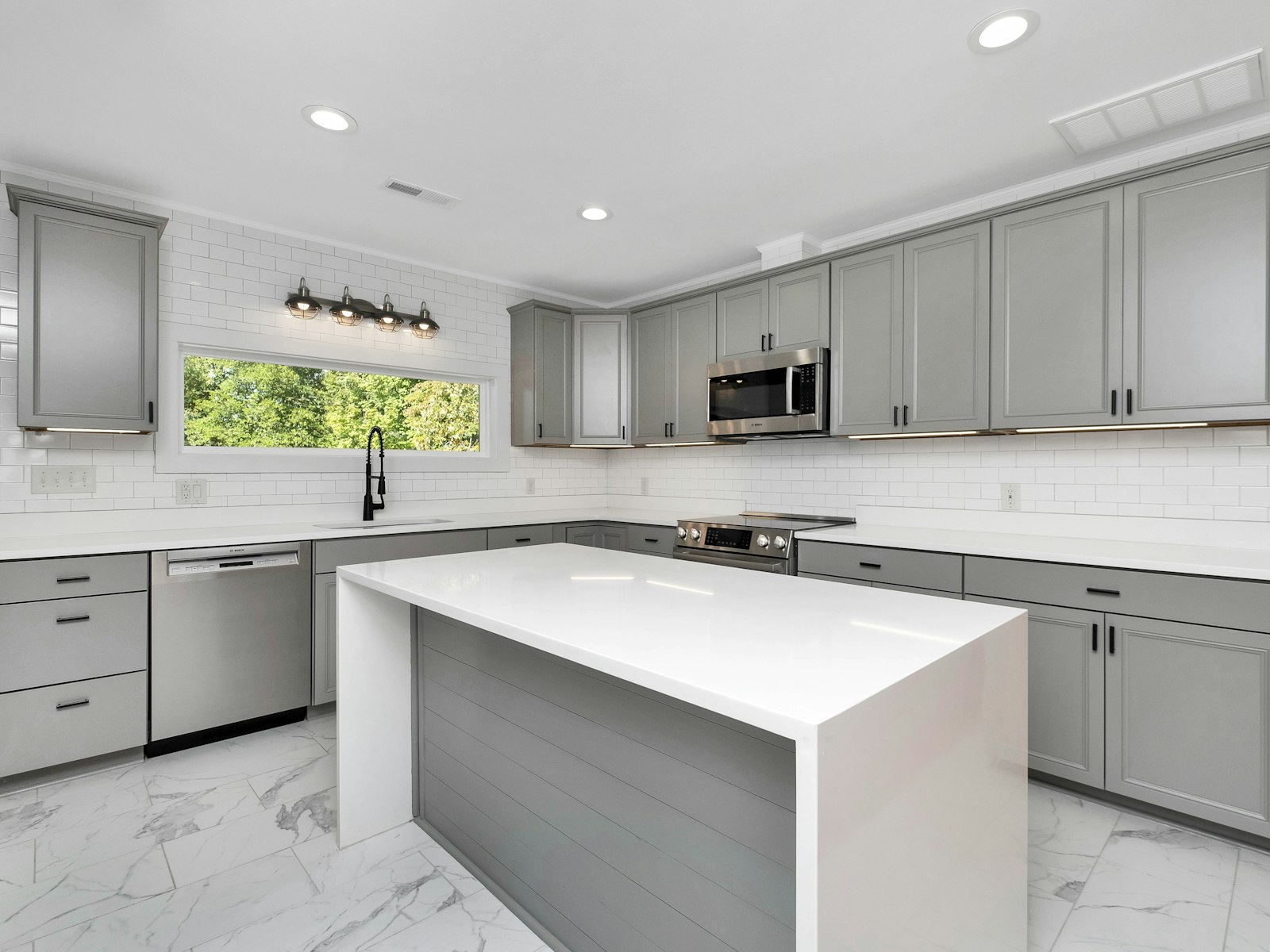
In 2026, the most popular quartz finishes for islands trend toward warm whites with soft gray or gold veining, creamy beiges, and greige tones, all of which mimic natural stone without demanding stone-level upkeep. For a darker statement island, charcoal and deep green quartz options are gaining traction as a bold accent choice.
Natural stone as the premium alternative
Granite runs $45, $175/sq ft installed and is more durable than marble, though it still needs periodic sealing to prevent liquid absorption. Marble is the most dramatic of the natural stones, with a price range of $75, $250/sq ft installed, but it’s also the most prone to etching and staining from acidic foods and liquids. Both require real commitment: sealing is not a one-time task; it’s an ongoing cost of ownership. Natural stone is the right call if aesthetics are your top priority and you’re prepared to maintain the surface consistently. For families with young kids or anyone who cooks heavily, quartz typically delivers a better day-to-day experience. We cover this in more detail in DIY Countertop Coffee Bar Ideas for a Stylish Kitchen.
Butcher block and wood island countertop ideas: warmer than any stone
No engineered surface fully replicates the warmth of a wood island top. If your kitchen leans farmhouse, transitional, or Scandinavian, wood island countertop ideas, butcher block in particular, belong on your shortlist.
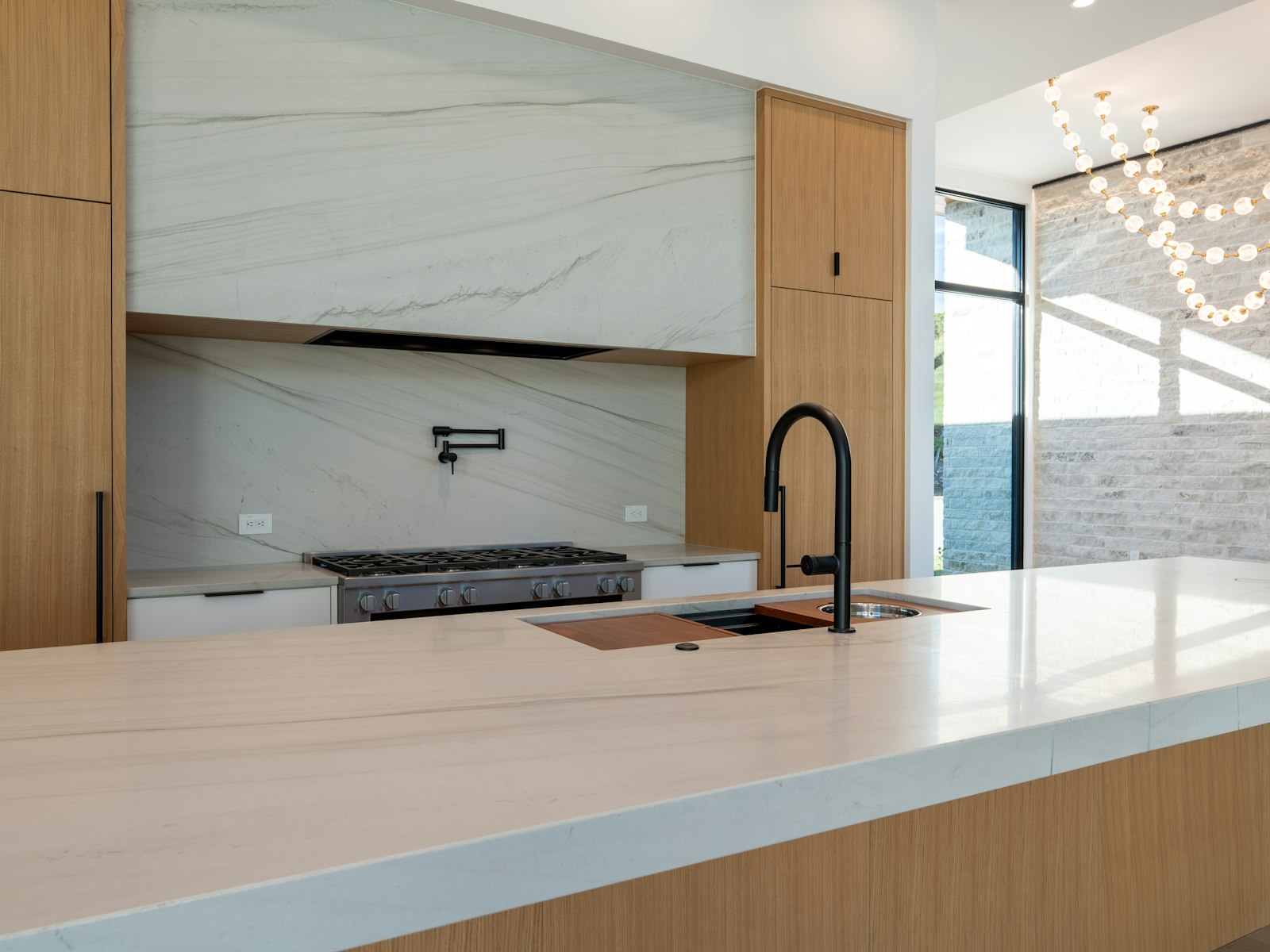
The real appeal of a butcher block island top
Butcher block runs $35, $90/sq ft installed, making it more accessible than quartz for a comparable visual impact. What separates it from every other material on this list is repairability: if your island surface gets scratched, dented, or stained after years of use, you can sand it down and refinish it. Stone and quartz don’t give you that option. Butcher block installation is also one of the most beginner-friendly projects on this list, with a straightforward rectangular island top often completed in a few hours by a confident DIYer. A reader favorite for this is the Weiman Quartz Cleaner and Polish.
Honest maintenance requirements and where wood struggles
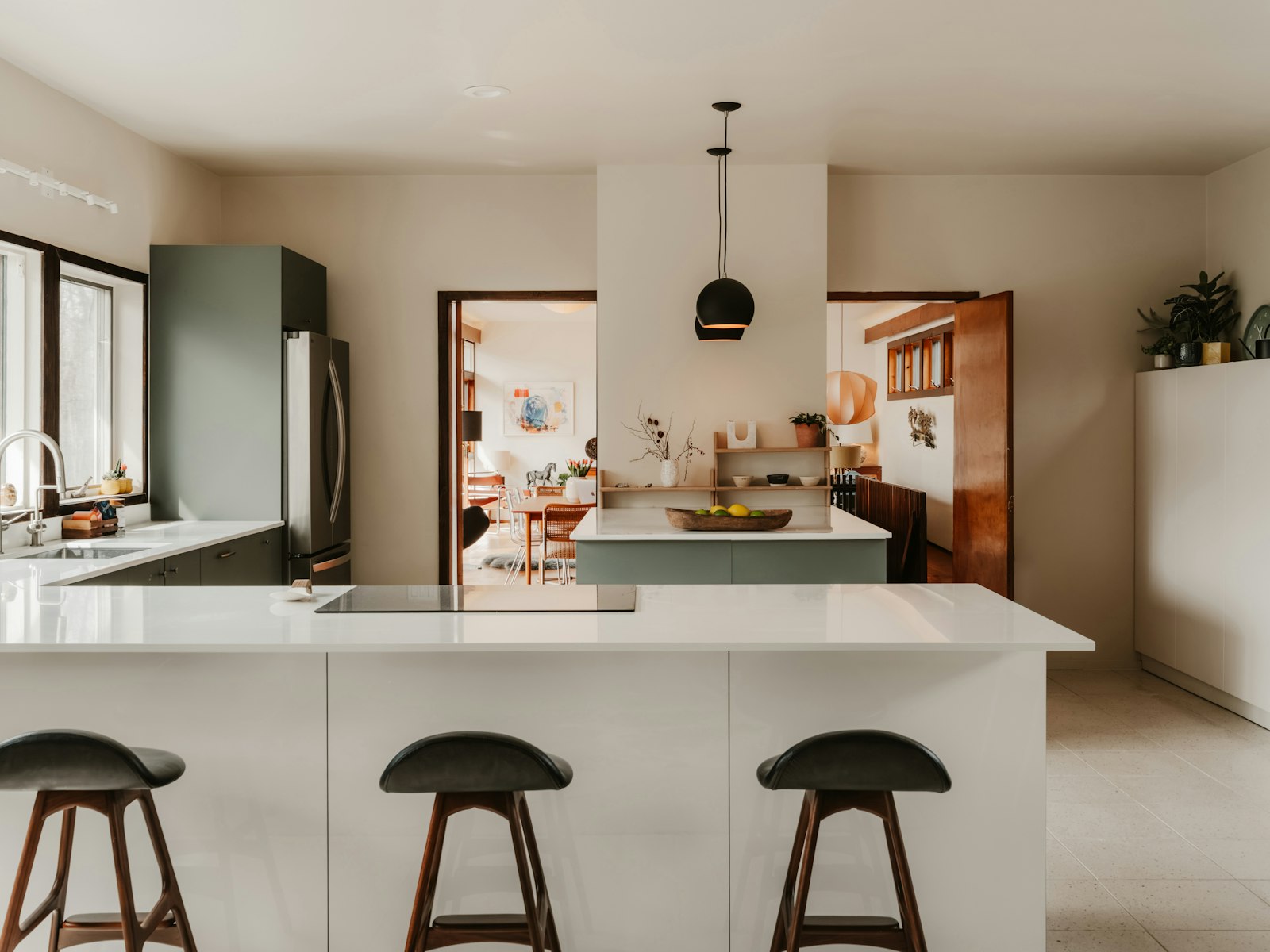
Wood is not a set-it-and-forget-it surface. It needs regular oiling or waxing to maintain the protective finish, and it’s vulnerable to standing water, warping near dishwashers, and deep staining if the finish is ever allowed to lapse. Avoid using butcher block as your primary surface in the wet zone of an island with an undermount sink. A practical workaround is to use butcher block on the prep and display side and a more water-resistant material on the sink side, a two-material island approach that is both functional and visually interesting. If you are shopping for this, the Miracle Sealants Sealer Applicator is a well-reviewed option.
Shop the look: Countertop care
 Miracle Sealants Sealer ApplicatorApplies stone sealer evenlyCheck price on Amazon →
 Weiman Quartz Cleaner and PolishSafe daily cleanerCheck price on Amazon →
 John Boos Mystery OilKeeps wood counters looking newCheck price on Amazon →
 Winco Large Cutting BoardProtects the surfaceCheck price on Amazon →
As an Amazon Associate we earn from qualifying purchases. Prices and ratings change, so check Amazon for today’s details.
DIY island countertop ideas and budget options that actually hold up
A tight budget doesn’t mean settling for a surface that looks cheap in a year. The budget-friendly tier has improved significantly, and a few of these options are genuinely good long-term choices.
Laminate: the lowest-cost option with a reputation upgrade
Laminate is the most affordable island countertop material available, coming in at $15, $40/sq ft installed. Modern laminate patterns convincingly mimic marble veining and wood grain. The days of laminate looking obviously fake are largely gone. It requires no sealing, cleans easily, and is widely available at big-box stores. The weak points are real, though: laminate is not heat-resistant, seams can show on larger surfaces, and the substrate can swell if water gets beneath the surface at the edges. Careful edge finishing during installation makes a significant difference in how long the surface lasts.
Concrete overlays and tile as creative DIY island countertop ideas
Concrete overlays are a compelling option for anyone after an industrial or modern look on a low material budget. Kits like Leggari Overlay or Ardex Feather Finish can go over an existing countertop surface, which saves the cost of full demolition and replacement. The trade-off is preparation time and skill: concrete overlays that crack or stain usually do so because the surface prep was rushed.
Tile is another low-cost, highly durable option with one key advantage, if a tile chips or cracks, you replace that tile, not the whole surface. Grout lines are the ongoing maintenance task with tile, and the uneven surface can make it less comfortable for active prep work. For true beginners, laminate and butcher block are the easiest installs. Waterfall edges, undermount sink cutouts, and anything involving heavy stone slabs are worth leaving to a professional fabricator.
Waterfall island countertops and seating edge details that matter
A waterfall countertop is the detail that makes an island look custom and intentional. It’s also one of the most misunderstood elements in terms of what it actually requires structurally and what it adds to the budget.
What a waterfall countertop actually requires to work
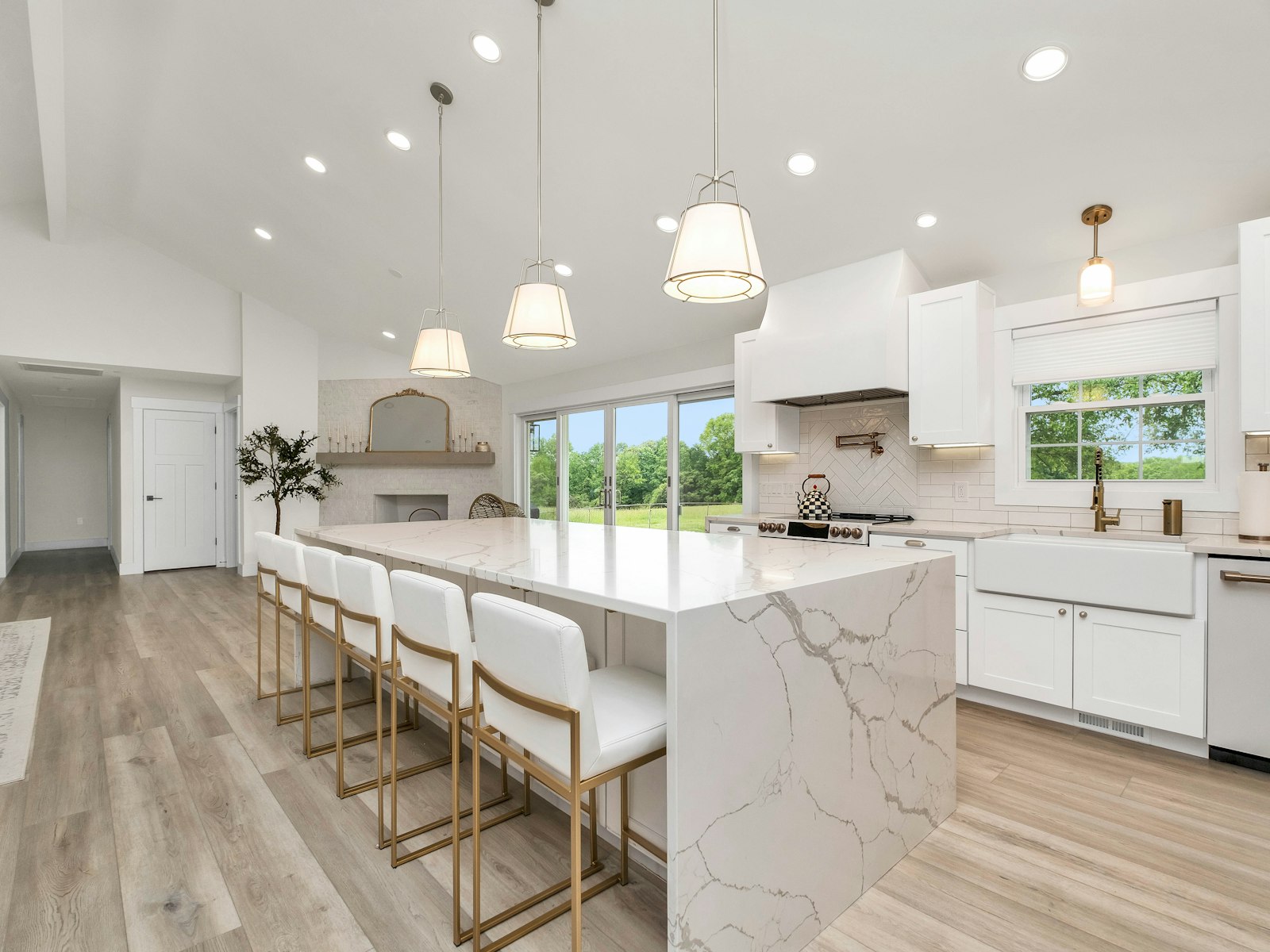
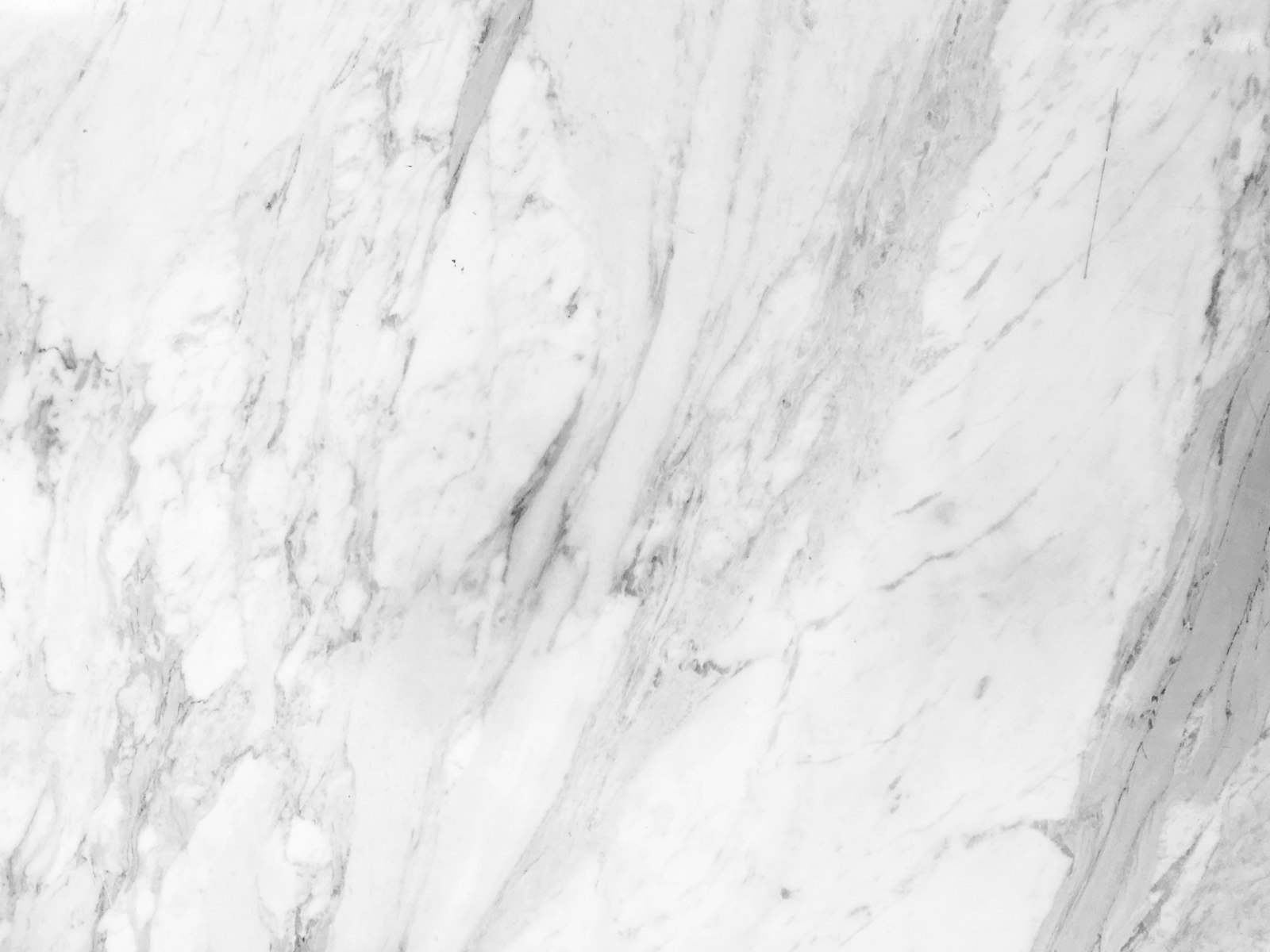
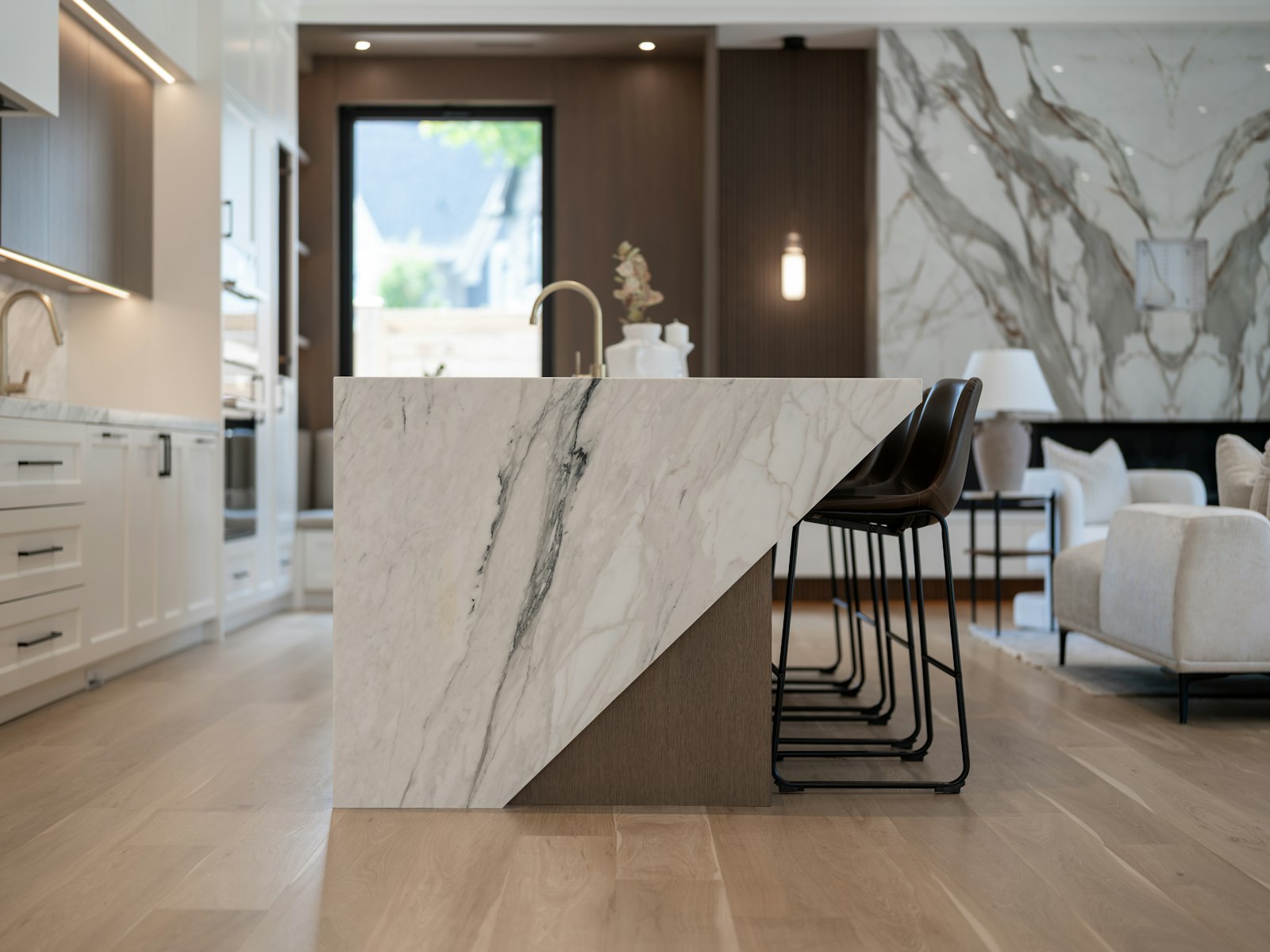
In a waterfall design, the countertop material runs continuously down one or both sides of the island to the floor. The visual effect is striking, but the structure behind it matters. The structure requires a solid plywood or steel backer, mechanical fasteners rather than adhesive alone, and adequate floor support. The mitered joint that creates the corner is precision fabrication, not something a structural shortcut can replace. Waterfall designs work best on islands at least 6 feet long; a double waterfall on a compact island can feel visually heavy and may overwhelm the space.
Budget accordingly: a single waterfall panel adds roughly $1,500, $4,000 to the cost of a standard island top, while a double waterfall can add $3,000, $7,000 or more depending on material and slab-matching complexity. In 2026, a full 8-foot quartz waterfall island typically runs $4,500, $9,000 installed total. That’s a significant investment, but for the right kitchen and the right island size, it’s one of the highest-impact single upgrades you can make. One option worth a look is the LE TAUCI Ceramic Utensil Holder.
Edge profiles and overhang depths for comfortable island seating
The seating side of your island deserves a different edge profile decision than the prep side. Full bullnose and half bullnose edges are the most forgiving against knees and forearms at counter height. An eased edge is clean, modern, and also comfortable. Avoid ornate profiles like ogee on the seating side, the projecting lower lip catches knees in an uncomfortable way that gets old quickly. For overhang depth, 12 inches is the functional minimum for island seating, and 15 inches is meaningfully more comfortable for everyday use. If your overhang extends beyond 10, 12 inches in unsupported stone, plan for brackets or corbels from the start and include that in your fabrication quote. To make this step easy, we like the Stone Drying Trays (Set of 2).
Shop the look: Countertop styling
 Stone Drying Trays (Set of 2)Keeps the counter tidyCheck price on Amazon →
 LE TAUCI Ceramic Utensil HolderKeeps tools in reachCheck price on Amazon →
 HBlife 2-Tier Fruit BowlA simple centerpieceCheck price on Amazon →
 AOZITA Glass Oil DispenserPretty and practicalCheck price on Amazon →
As an Amazon Associate we earn from qualifying purchases. Prices and ratings change, so check Amazon for today’s details.
How to choose island countertop ideas for your kitchen’s style
The material decision and the color decision are separate. Once you know what your surface will be, you still need to confirm it connects to the rest of your kitchen rather than fighting it. If you want to go further, read Kitchen coffee nook ideas: layout, storage, and style.
Color pairings that work for the most common kitchen styles
White or cream island cabinets are the most flexible base. Butcher block adds warmth, white quartz keeps things airy, and dark granite or soapstone creates a confident contrast.
Dark navy or black island cabinets pair best with lighter countertop surfaces. White quartz, marble-look quartz, light gray quartzite, or cream stone all create the crisp contrast that makes a dark island feel intentional rather than heavy.
Wood-tone or natural cabinet finishes call for restraint on top. Matte white quartz, concrete, or light stone work well, while butcher block on top of wood-tone cabinets risks a busy, unfocused look unless the tones are clearly differentiated.
In two-tone kitchens where the island cabinet color differs from the perimeter, use the countertop as a unifying element. A material that echoes your perimeter counter ties the whole room together without making the island feel disconnected. Related: Farmhouse Kitchen Decor Ideas for a Warm, Cozy Space.
Seeing the full island styling picture
The countertop is one layer of the island’s design, but what sits on it, how it’s lit, and how it connects to the rest of the kitchen all shape the final result equally. If you’ve landed on your material, the next step is styling the island itself, and that’s exactly what the kitchen island styling series on Aesthetic Nest Decor walks through, covering accessories, lighting, seating, and storage in detail.
Your next step starts with a tape measure
The clearest framework for any countertop decision is budget first, then lifestyle, then style. If cost is the primary constraint, laminate and butcher block are your strongest starting points. Quartz is the move when you want low maintenance with a premium look. Natural stone makes sense only when you’re genuinely prepared to commit to ongoing care. Waterfall and custom edge details are worth planning from the beginning, not tacking on as afterthoughts. A reader favorite for this is the WimiSom Industrial Pendant Light.
Before you contact a single fabricator or order a sample, measure your island surface area. Multiply length by width, note any cutouts for sinks or cooktops, and bring that number to every conversation. Real price clarity on island countertop ideas starts with a square footage number you’re confident in. Once you have that, quotes become comparable and the decision becomes straightforward. From there, the Aesthetic Nest Decor kitchen island series has everything you need to finish the design, one practical layer at a time. If you are shopping for this, the Amazon Basics Saddle-Seat Counter Stool is a well-reviewed option.
Shop the look: Island seating and light
 Amazon Basics Saddle-Seat Counter StoolSeating for the islandCheck price on Amazon →
 WimiSom Industrial Pendant LightLight over the counterCheck price on Amazon →
 Sweet Home Memory Foam Chair CushionSofter seatingCheck price on Amazon →
 MCGOR Under Cabinet LightTask lightingCheck price on Amazon →
As an Amazon Associate we earn from qualifying purchases. Prices and ratings change, so check Amazon for today’s details.
Shopping list
- Miracle Sealants Sealer Applicator — applies stone sealer evenly
- Weiman Quartz Cleaner and Polish — safe daily cleaner
- John Boos Mystery Oil — keeps wood counters looking new
- Winco Large Cutting Board — protects the surface
- Stone Drying Trays (Set of 2) — keeps the counter tidy
- LE TAUCI Ceramic Utensil Holder — keeps tools in reach
- HBlife 2-Tier Fruit Bowl — a simple centerpiece
- AOZITA Glass Oil Dispenser — pretty and practical
- Amazon Basics Saddle-Seat Counter Stool — seating for the island
- WimiSom Industrial Pendant Light — light over the counter
- Sweet Home Memory Foam Chair Cushion — softer seating
- MCGOR Under Cabinet Light — task lighting
Prices and availability change. Links open on Amazon.
Keep reading: Best Kitchen Island Accessories for Style and Function · DIY Countertop Coffee Bar Ideas for a Stylish Kitchen · Kitchen Island Styling Ideas: How to Decorate a Surface You Actually Use · Kitchen coffee nook ideas: layout, storage, and style · Farmhouse Kitchen Decor Ideas for a Warm, Cozy Space
Helpful resources: engineered quartz, how marble forms and why it etches, the kitchen work triangle.
Frequently asked questions about island countertop ideas
What is the average cost per square foot for a kitchen island countertop?
Costs vary widely by material. Laminate runs $15, $40/sq ft installed, butcher block $35, $90/sq ft, quartz $50, $200/sq ft, granite $45, $175/sq ft, and marble $75, $250/sq ft. Since most kitchen islands cover 15, 25 square feet, your total installed cost can range from a few hundred dollars for laminate to several thousand for premium stone.
Which island countertop material requires the least maintenance?
Quartz is the clear low-maintenance leader. It’s non-porous, never needs sealing, and cleans with warm water and mild soap. Laminate is similarly low-effort but less durable over time. Natural stone requires periodic sealing and more careful daily use.
What is the best island countertop for a family with young kids?
Quartz is typically the top choice for high-traffic family kitchens. It resists staining, doesn’t require sealing, and holds up to heavy daily use. Butcher block is a close second if you’re willing to maintain the finish, scratches can be sanded out, which is a real advantage with kids in the house.
Can I DIY my kitchen island countertop?
Yes, for the right materials. Butcher block and laminate are the most beginner-friendly installs. Concrete overlays are doable with patience and thorough surface prep. Tile is straightforward but requires grout maintenance. Heavy stone slabs, waterfall edges, and undermount sink cutouts are best left to a professional fabricator.
How do I pick island countertop ideas that match my kitchen style?
Start with your cabinet color. White or cream cabinets pair with almost anything. Dark cabinets call for lighter countertop surfaces to create contrast. Wood-tone cabinets work best with matte stone, concrete, or white quartz, not butcher block, unless the tones are clearly differentiated. In two-tone kitchens, use the countertop material to visually connect the island to the perimeter.
Save This for Later
Pin this image to your Pinterest board so it is ready when you need it.

Get one cozy decor idea every week
Seasonal styling ideas, budget finds and new guides. No spam, unsubscribe anytime.