
Kitchen Island Styling Ideas: How to Decorate a Surface You Actually Use

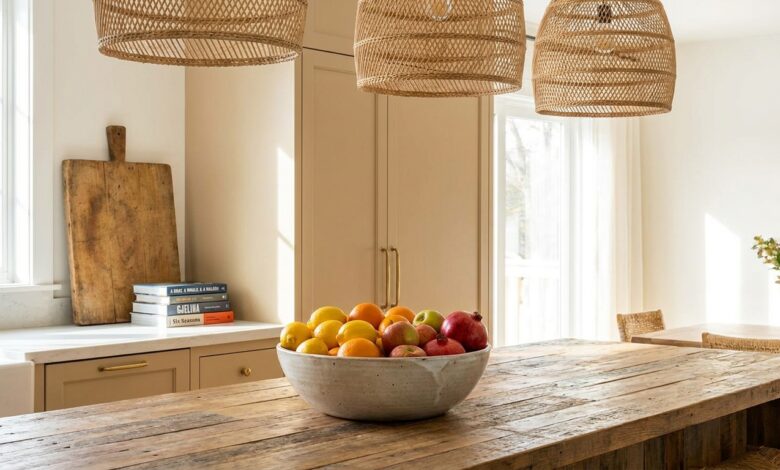
A kitchen island works harder than almost any other surface in the house — prep space, breakfast bar, storage, and the room’s natural gathering point all in one. Styling it well means balancing that daily function with the kind of considered decor that makes the whole kitchen feel finished. Here’s how to style a kitchen island that looks good and still gets used. This guide covers kitchen island styling ideas step by step, with practical tips and product picks.
As an Amazon Associate I earn from qualifying purchases. Some links in this post are affiliate links, at no extra cost to you.
1. Anchor It With a Bowl or Tray
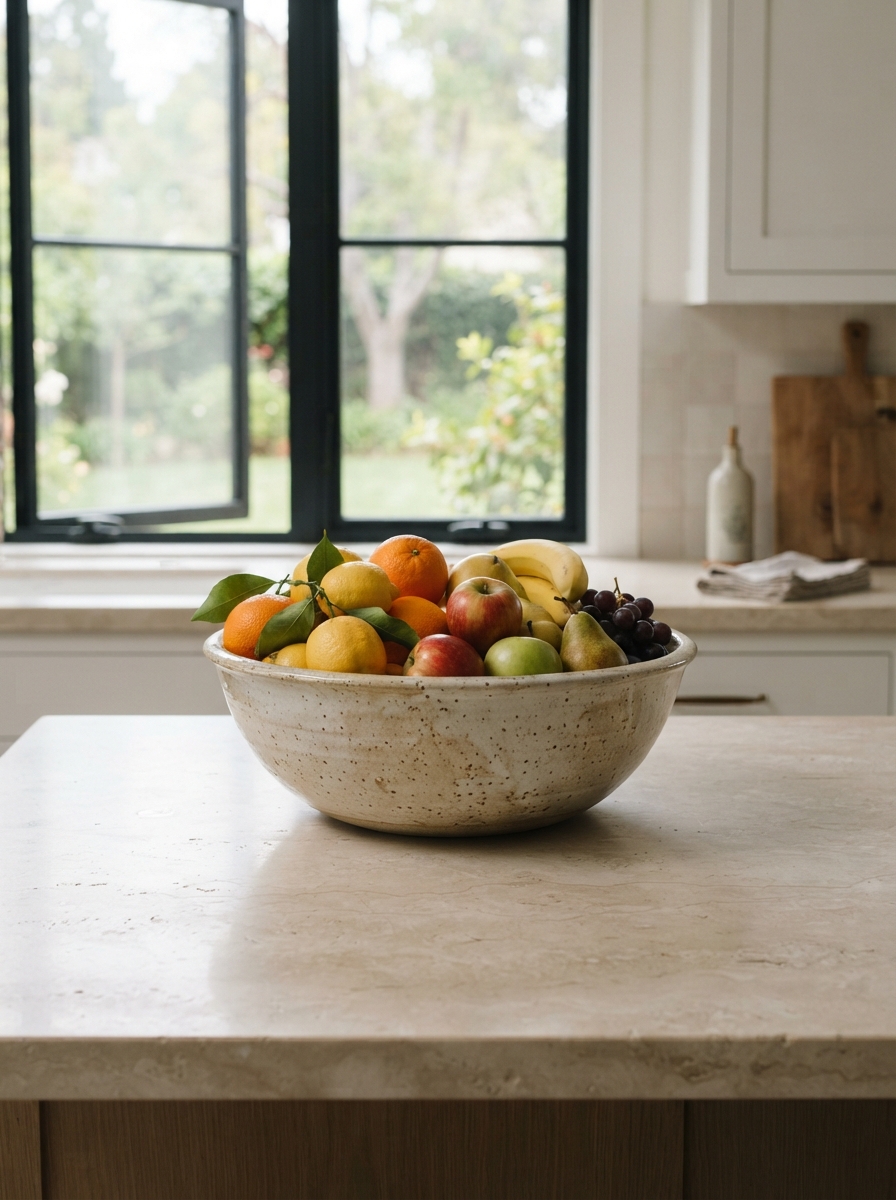
A large ceramic or wood bowl filled with fruit, or a low tray holding a few everyday objects, gives the island a permanent visual anchor without cluttering the surface. Choose one substantial piece rather than several small ones — a single oversized bowl reads as intentional, while a scatter of small objects reads as clutter waiting to be cleared away.
2. Layer in a Cutting Board as Decor
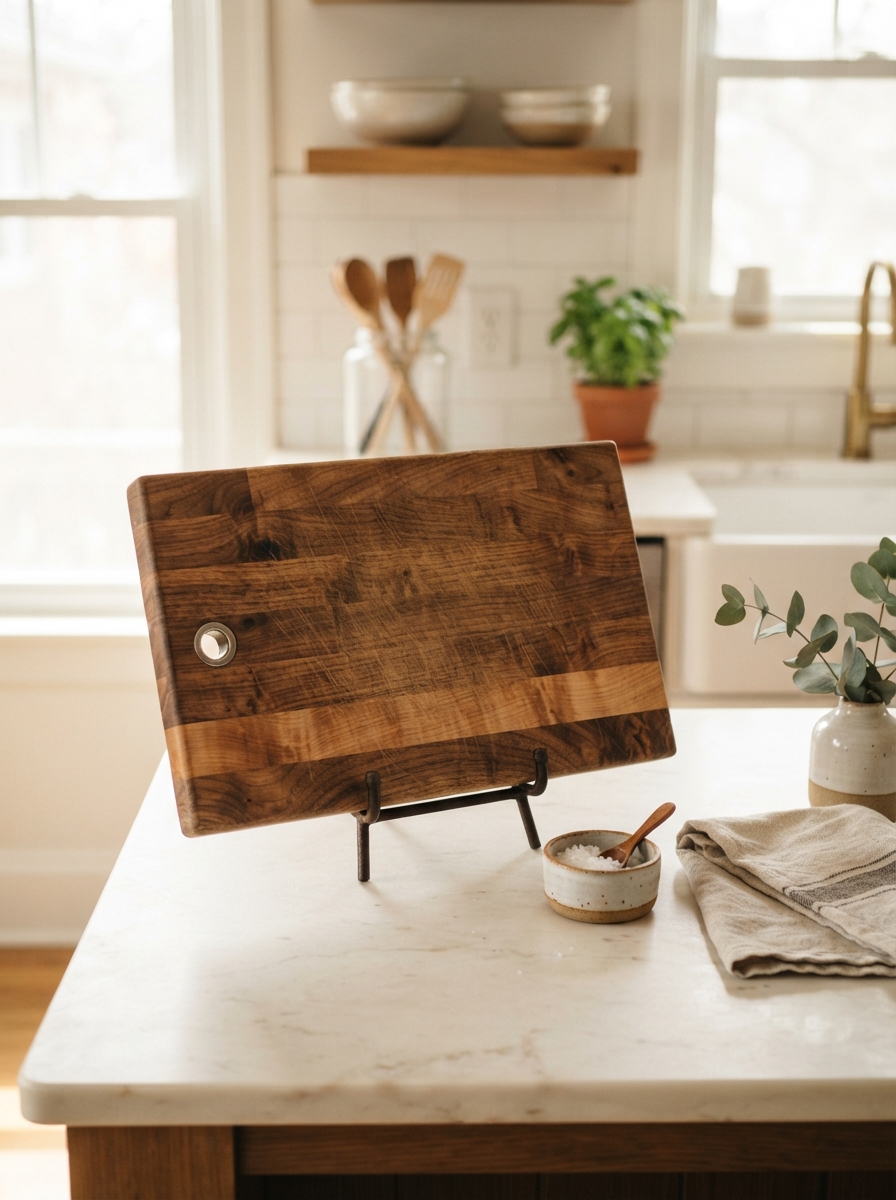
A beautiful wood cutting board, leaned upright against a small stand or laid flat with a few items styled on top, does double duty as both a functional tool and a textural decor piece. Choose one with visible grain and a substantial thickness — thin plastic boards don’t read as intentional decor the way a solid wood or marble board does.
3. Add a Stack of Cookbooks
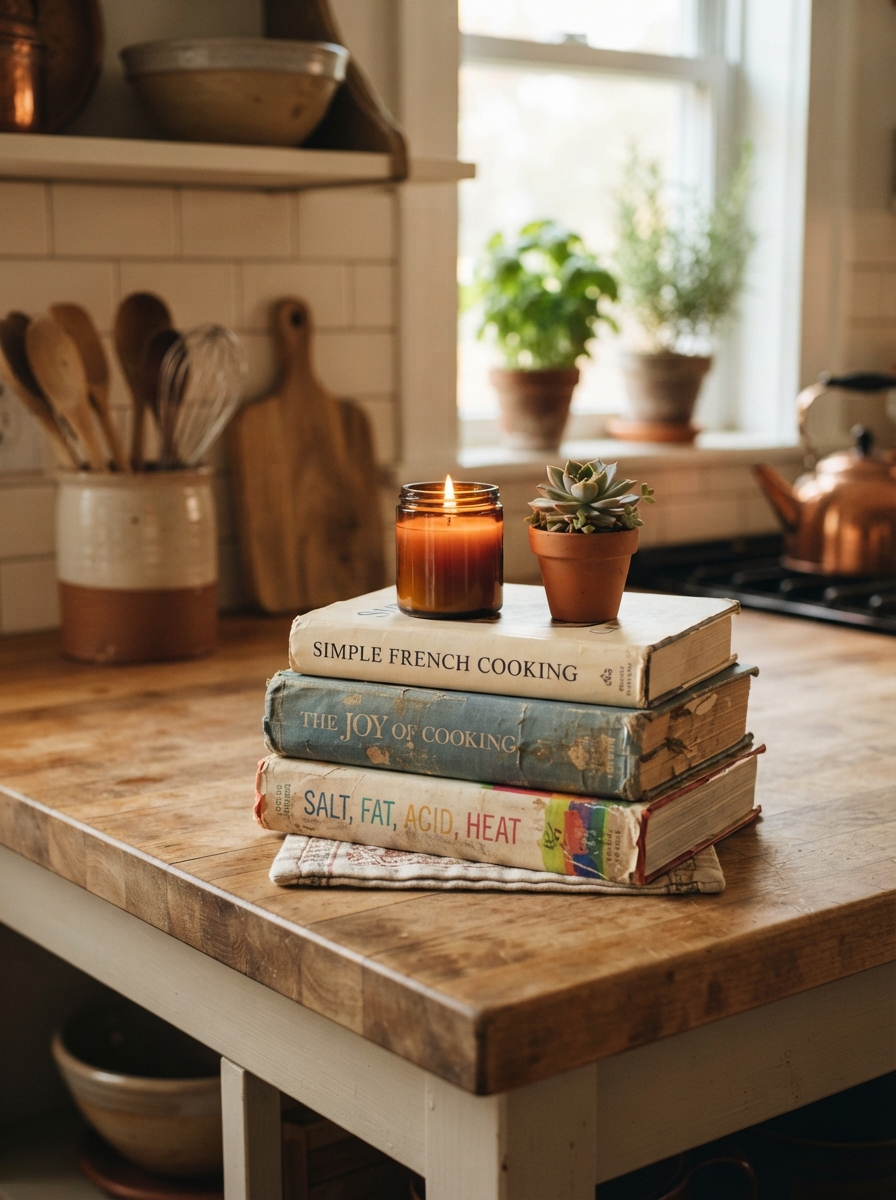
Two or three cookbooks stacked with a small object on top — a candle, a small plant, a ceramic coaster — bring in color and personal interest while staying genuinely useful for a kitchen island. Choose books you actually cook from rather than purely decorative ones, since a kitchen island benefits from styling that still functions if someone picks it up.
4. Bring in a Small Plant or Fresh Flowers
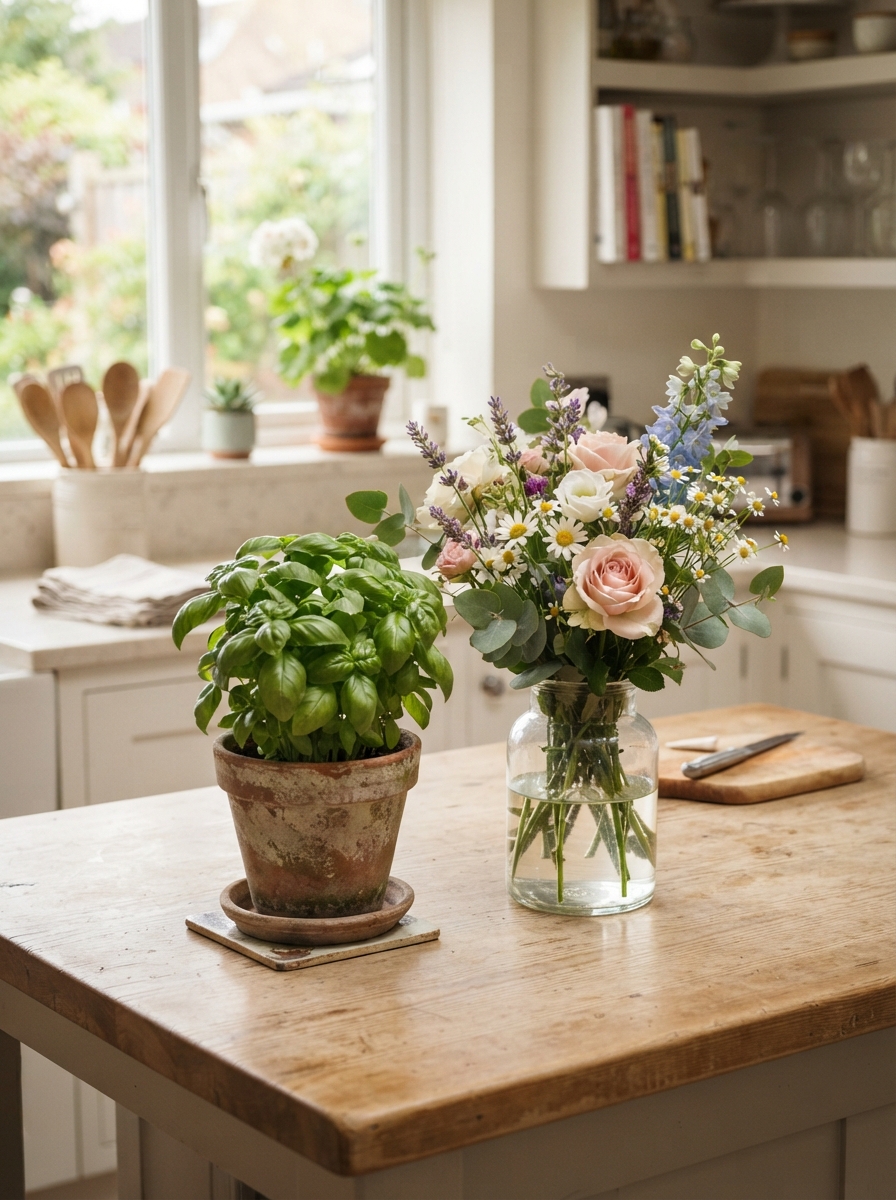
A small potted herb plant (basil, rosemary, or mint) or a simple vase of fresh flowers adds life and color to an island that’s otherwise dominated by countertop and cabinetry. Herbs carry the added benefit of being genuinely useful for cooking, which keeps the styling from feeling purely ornamental.
5. Use Barstools as a Styling Element
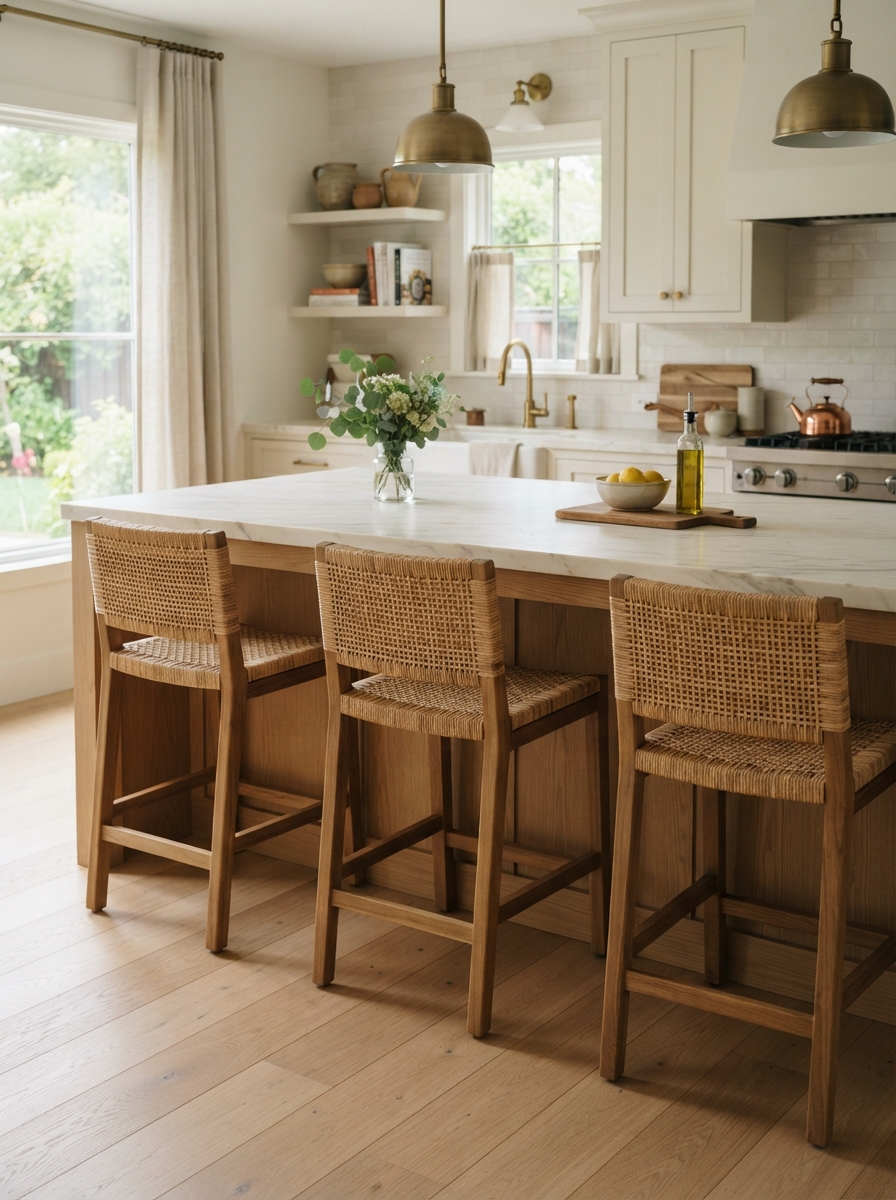
The stools tucked under an island are as much a part of its visual impact as anything placed on top of it. A woven, leather, or wood-framed stool adds warmth and texture that a purely white or metal kitchen often needs, and choosing stools in a slightly different material from the rest of the kitchen’s finishes keeps the space from feeling like a single matched set.
6. Keep Small Appliances Off the Surface
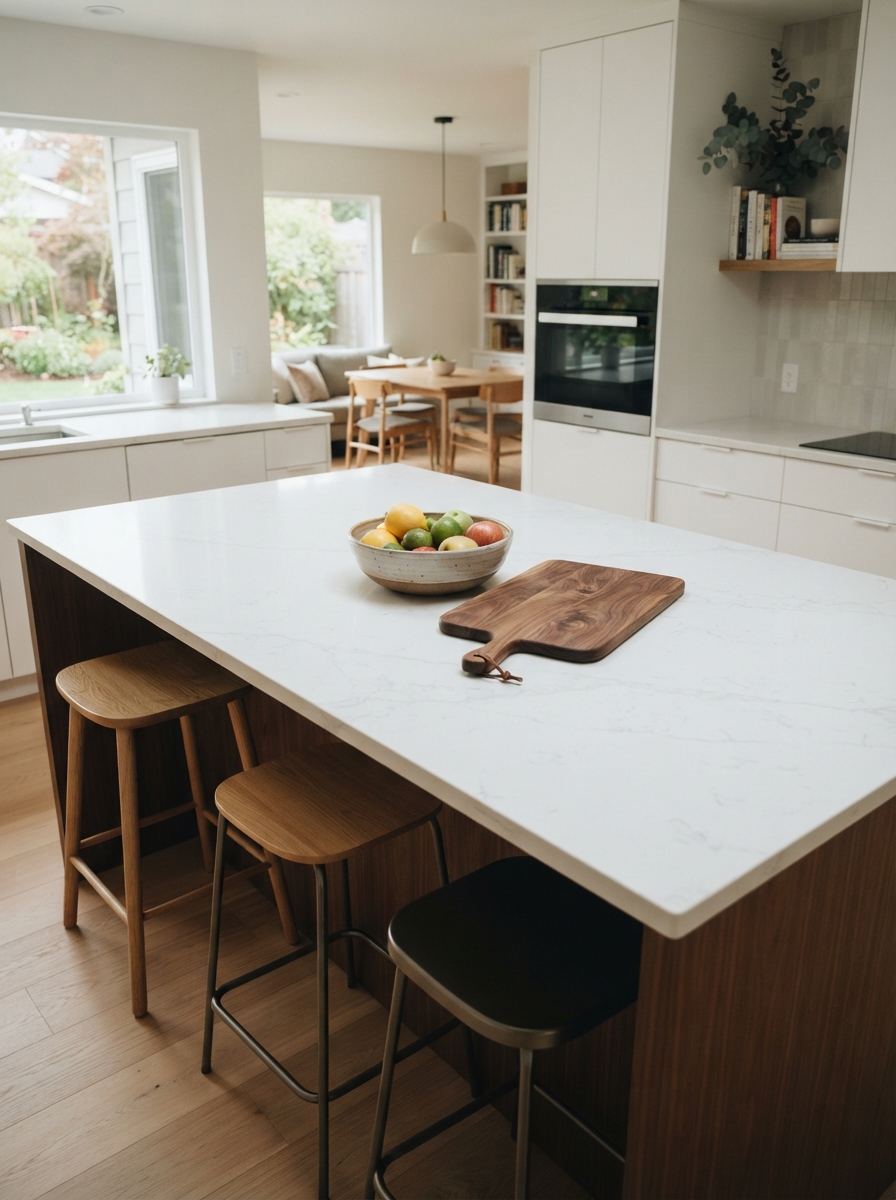
A kitchen island styled well almost always has fewer small appliances on it, not more. Toasters, coffee makers, and stand mixers belong in a dedicated appliance zone or garage cabinet, leaving the island’s surface for the rotating decor and prep space it’s actually meant for. If an appliance is used daily, choose one in a finish that matches the kitchen’s hardware so it reads as intentional rather than incidental.
7. Add Pendant Lighting Above
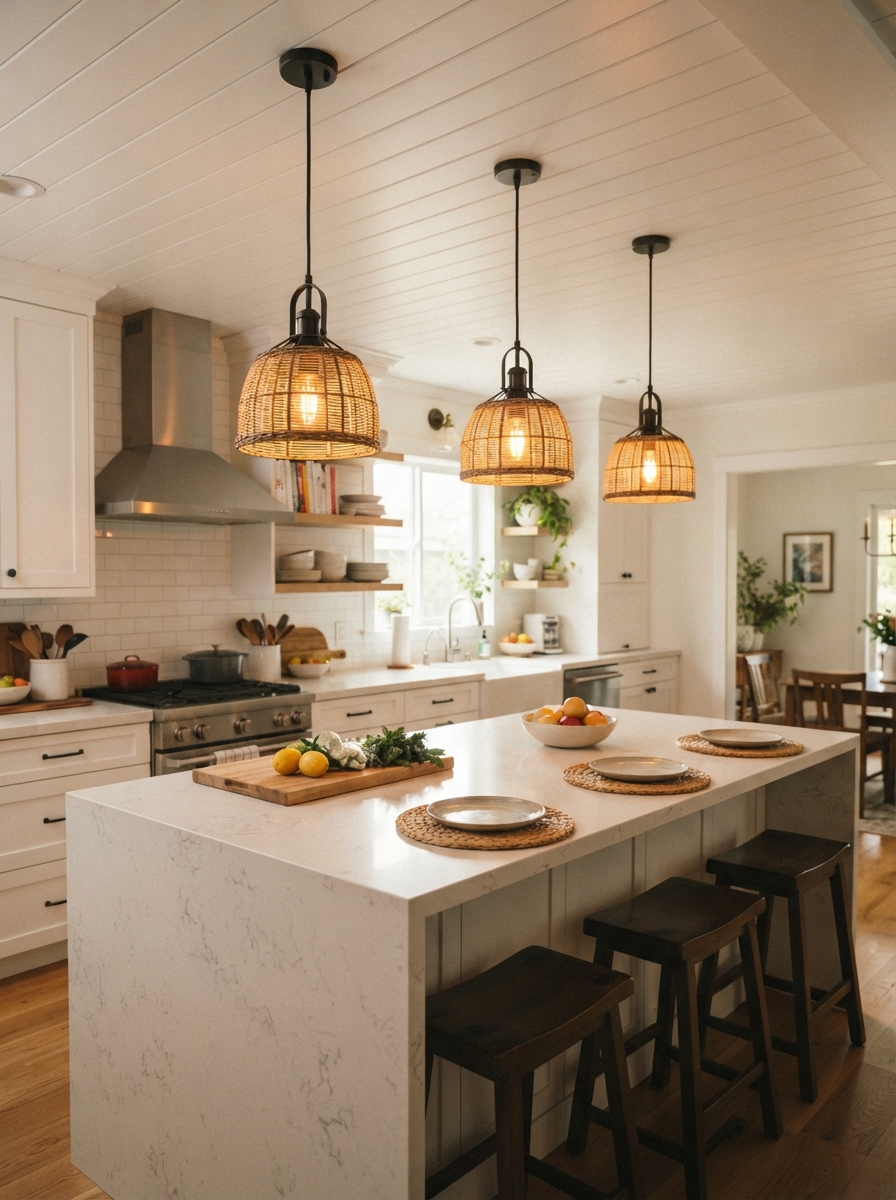
Pendant lights hung above an island do more to elevate the space than almost any surface styling choice, since they’re visible from every angle of the kitchen and often the first thing noticed when entering the room. Two or three pendants spaced evenly above the island’s length, hung so the bottom of the fixture sits roughly 30 to 36 inches above the counter, is the standard that reads as considered rather than accidental.
Kitchen Island Styling by Layout
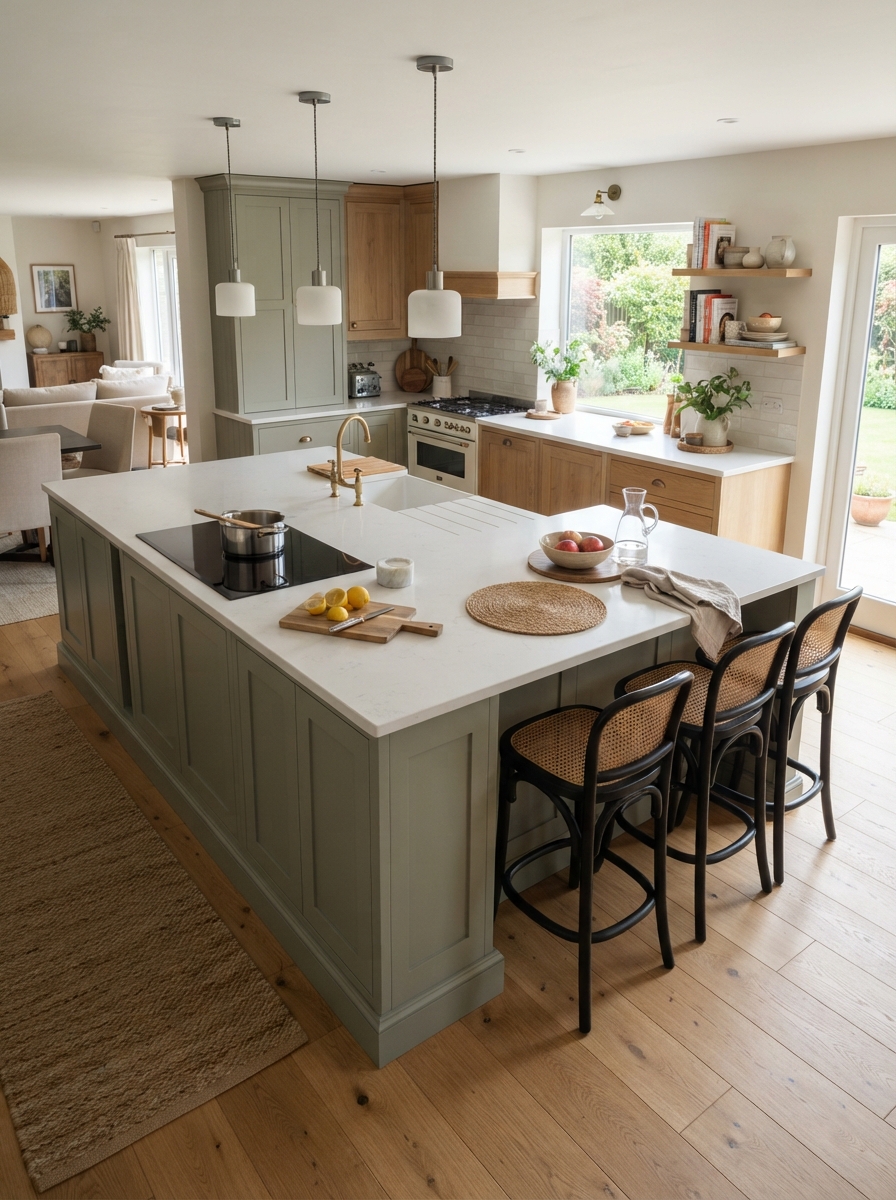
Island With Seating
An island with barstools needs styling kept toward the back edge or a narrow runner down the center, leaving the front section clear for plates and elbow room. A low centerpiece — a bowl or a short vase — keeps sightlines open across the counter for anyone seated.
Island Without Seating
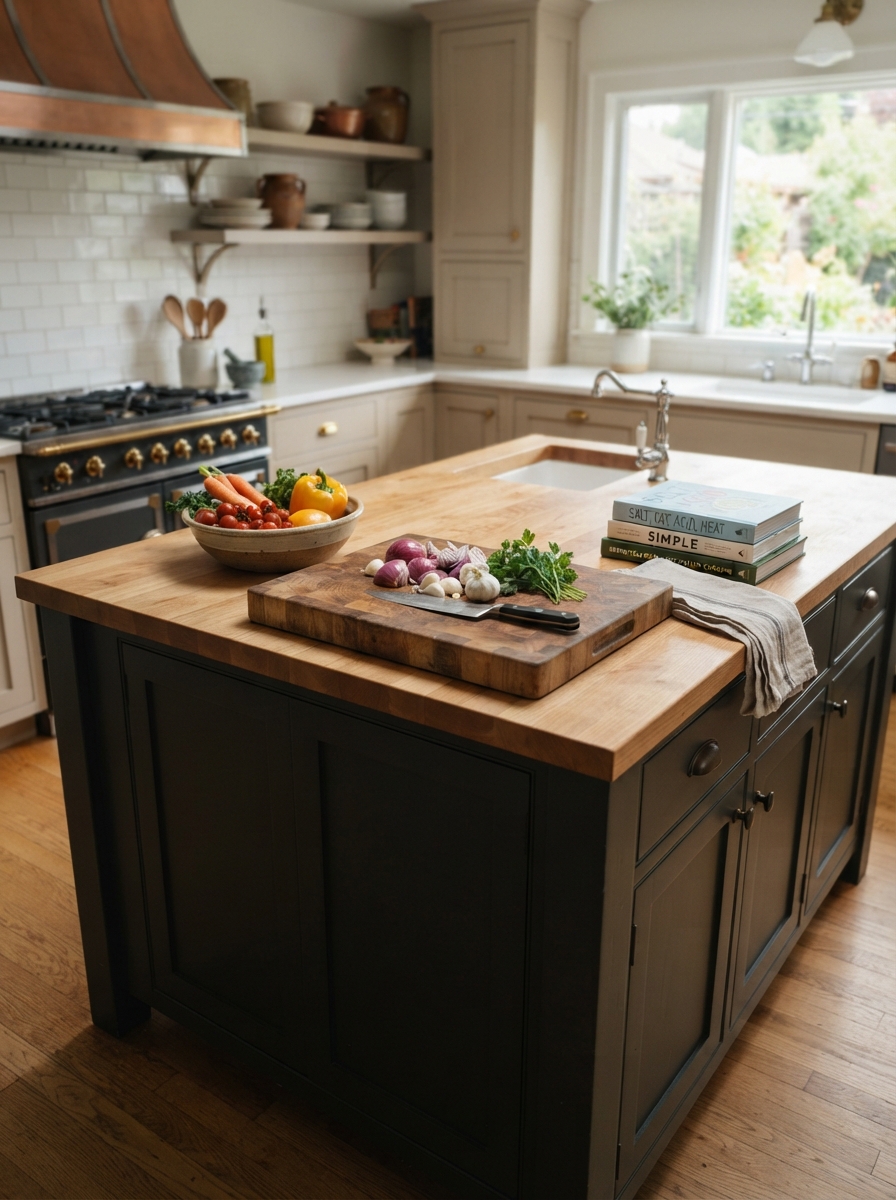
A prep-focused island without stools can carry slightly more styling weight, since the entire surface isn’t needed for dining. A cutting board, a bowl, and a small stack of cookbooks can all sit comfortably together without crowding the workspace.
Small Kitchen Island or Cart
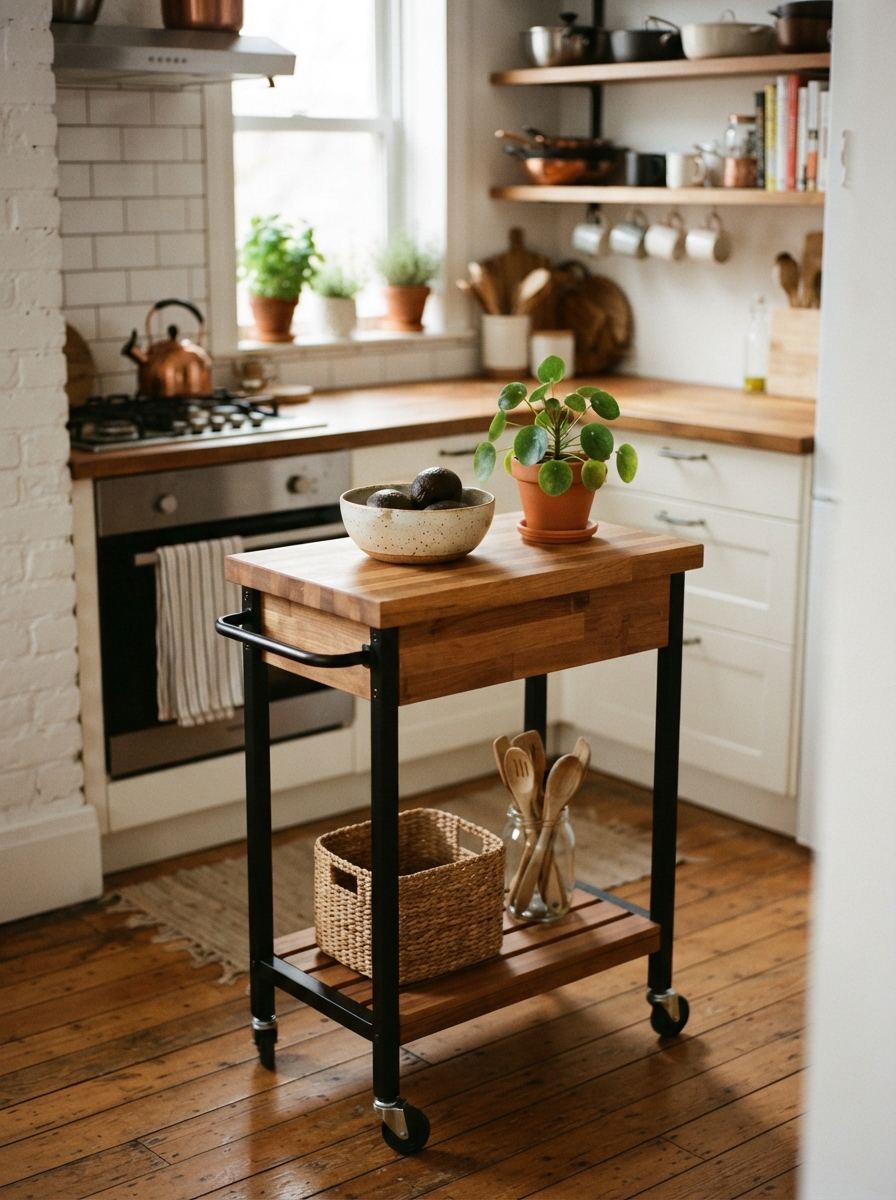
A narrow island or rolling cart benefits from restraint — one or two objects maximum, chosen for both function and visual weight, since anything more reads as cluttered on a smaller surface. A single plant or a small bowl often does more for a compact island than a fully layered vignette would.
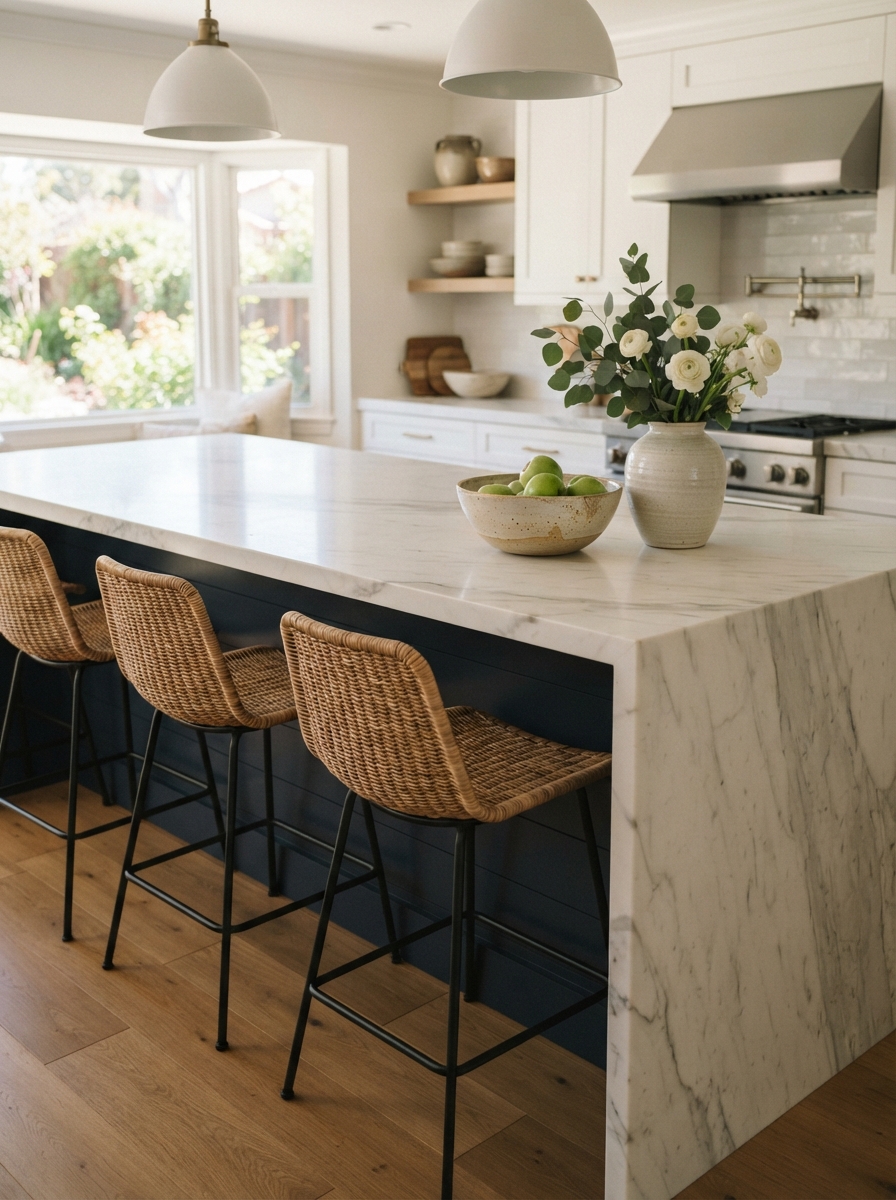
Large Island With Waterfall Edge
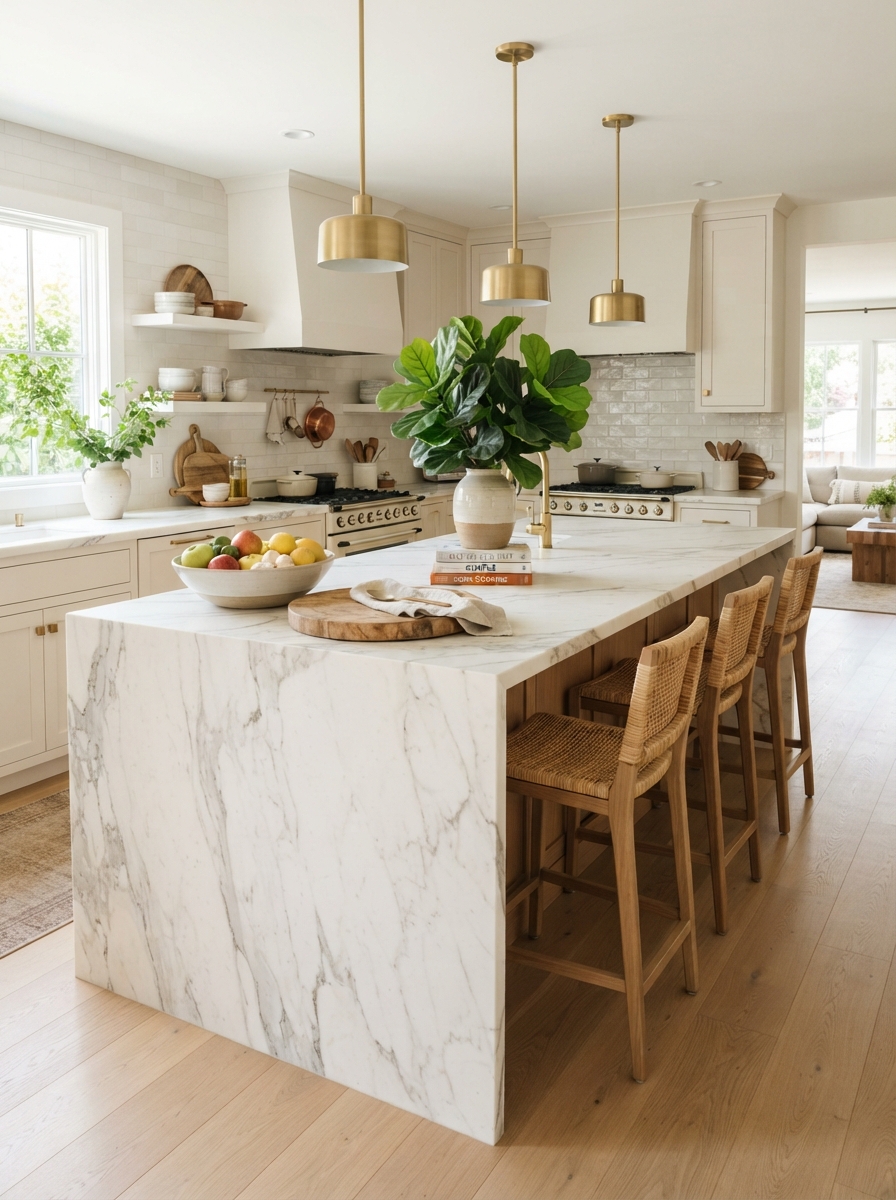
A substantial island with a waterfall countertop edge can support a full styled vignette — bowl, board, plant, and stacked books — since the surface area and the visual weight of the stone itself can handle more without feeling busy.
Choosing Materials That Fit Your Kitchen’s Style
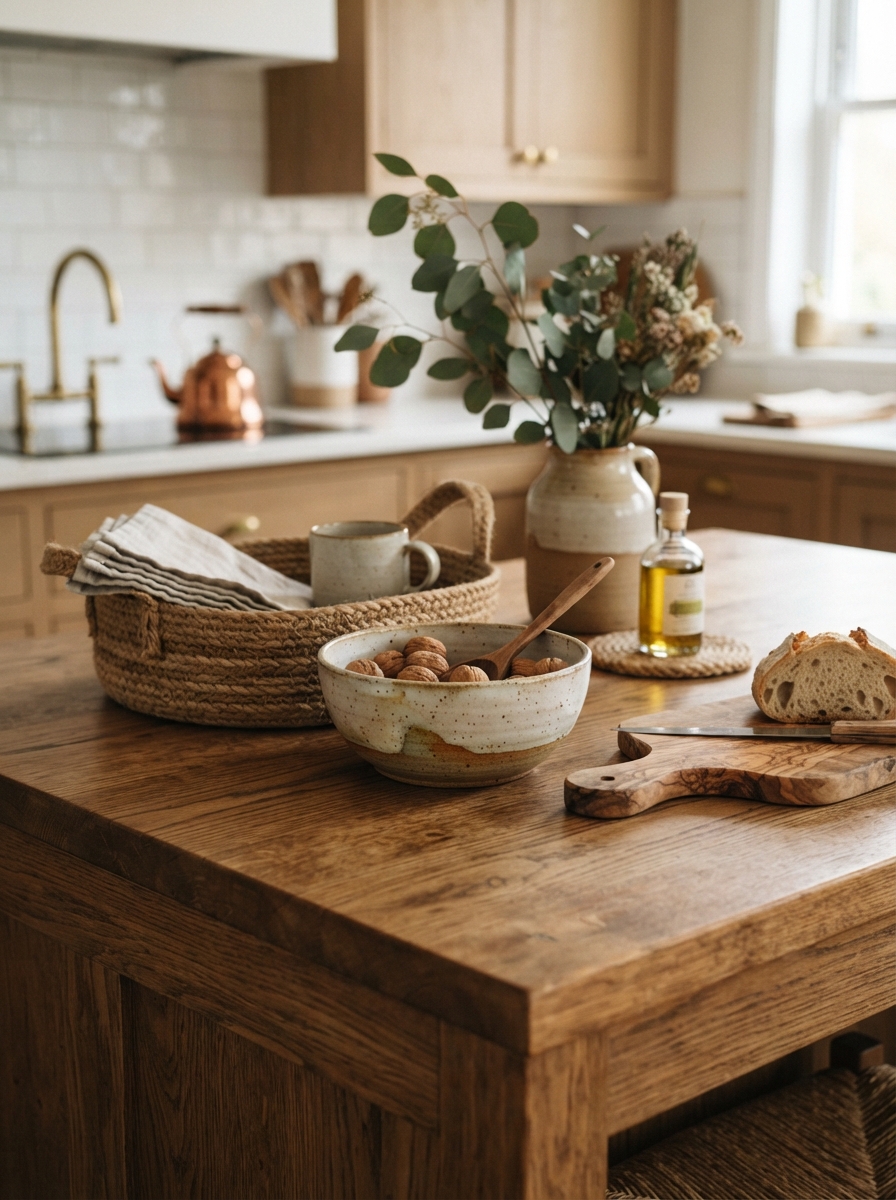
The materials you choose for island decor should echo the finishes already present in the kitchen rather than introducing an entirely new palette. A kitchen with warm wood cabinetry pairs naturally with a wood cutting board, a woven basket, and ceramic in warm neutral tones. A more modern, high-contrast kitchen with black or white cabinetry suits marble, matte ceramic, and glass more than rustic wood and rattan. Matching material language between the island’s decor and the room’s existing cabinetry, hardware, and flooring is what makes a styled island look like it belongs rather than like decor items borrowed from another room.
Storage Solutions Built Into Island Styling
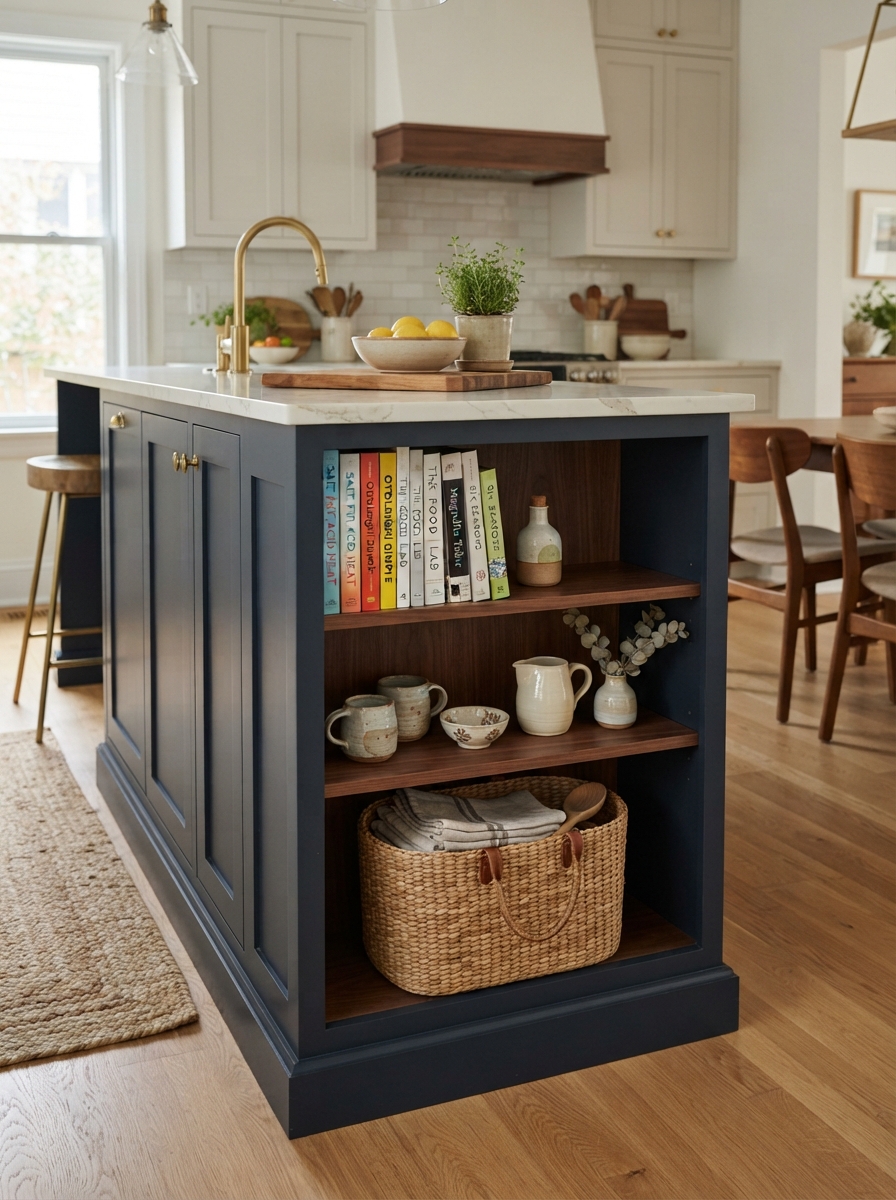
A well-styled island often hides genuine storage behind its decorative surface. Open shelving on one end of the island can display a curated set of cookbooks or ceramics while keeping them within reach for daily use. A narrow drawer insert for utensils keeps the counter clear of loose tools that would otherwise clutter the styled surface. Baskets on a lower open shelf handle linens or produce storage while adding the kind of texture that flat cabinet fronts can’t provide on their own. The goal is storage that supports the styled look above it rather than competing with it for attention.
Seasonal Kitchen Island Styling
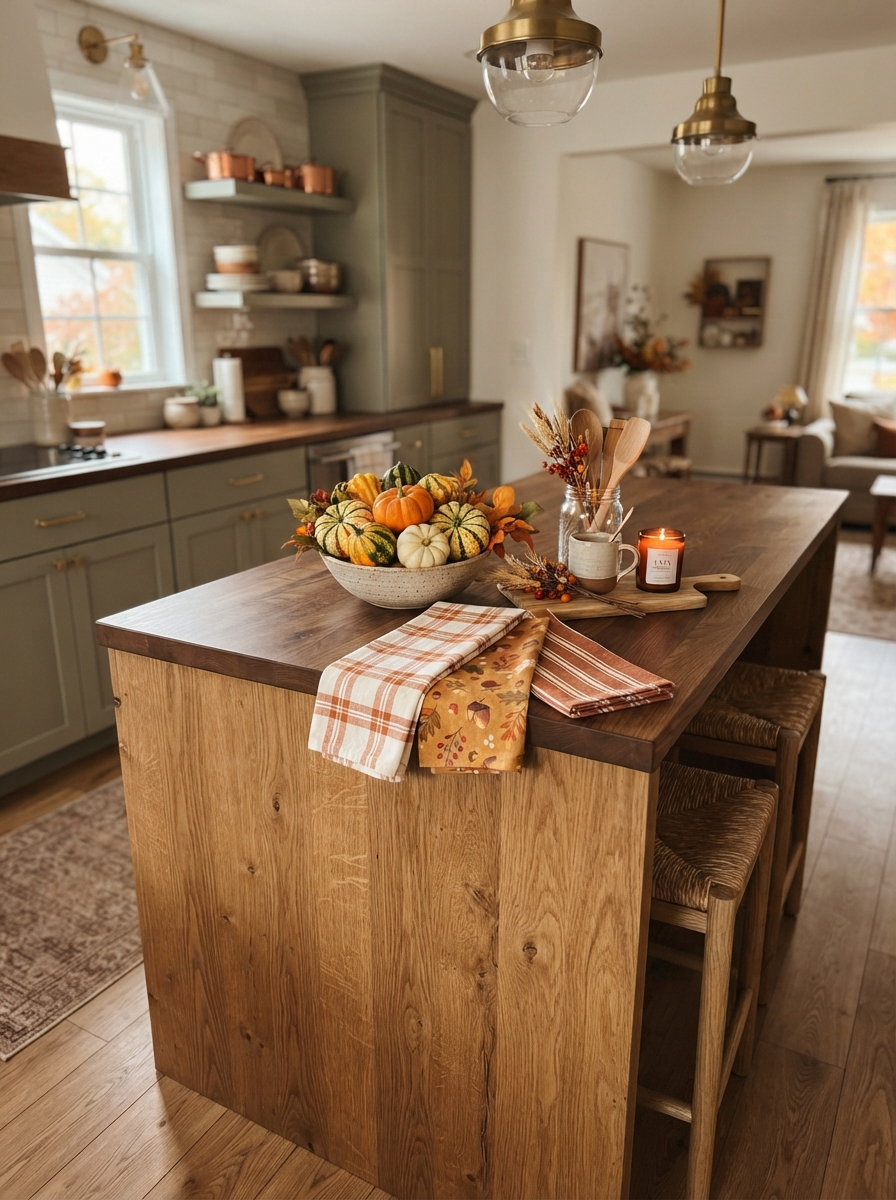
A kitchen island is one of the easiest surfaces in the home to refresh seasonally, since a full re-style only requires swapping a few small objects. In fall, a bowl of gourds or a small stack of pattern-printed dish towels brings in warmth without permanent commitment. Winter calls for a simple evergreen sprig in a vase or a single pillar candle. Spring and summer suit fresh flowers and lighter, brighter ceramics. Because the island sees daily use, keeping seasonal styling minimal — one or two swapped elements rather than a full overhaul — means the surface stays functional through the transition rather than becoming precious.
Kitchen Island Styling for Entertaining
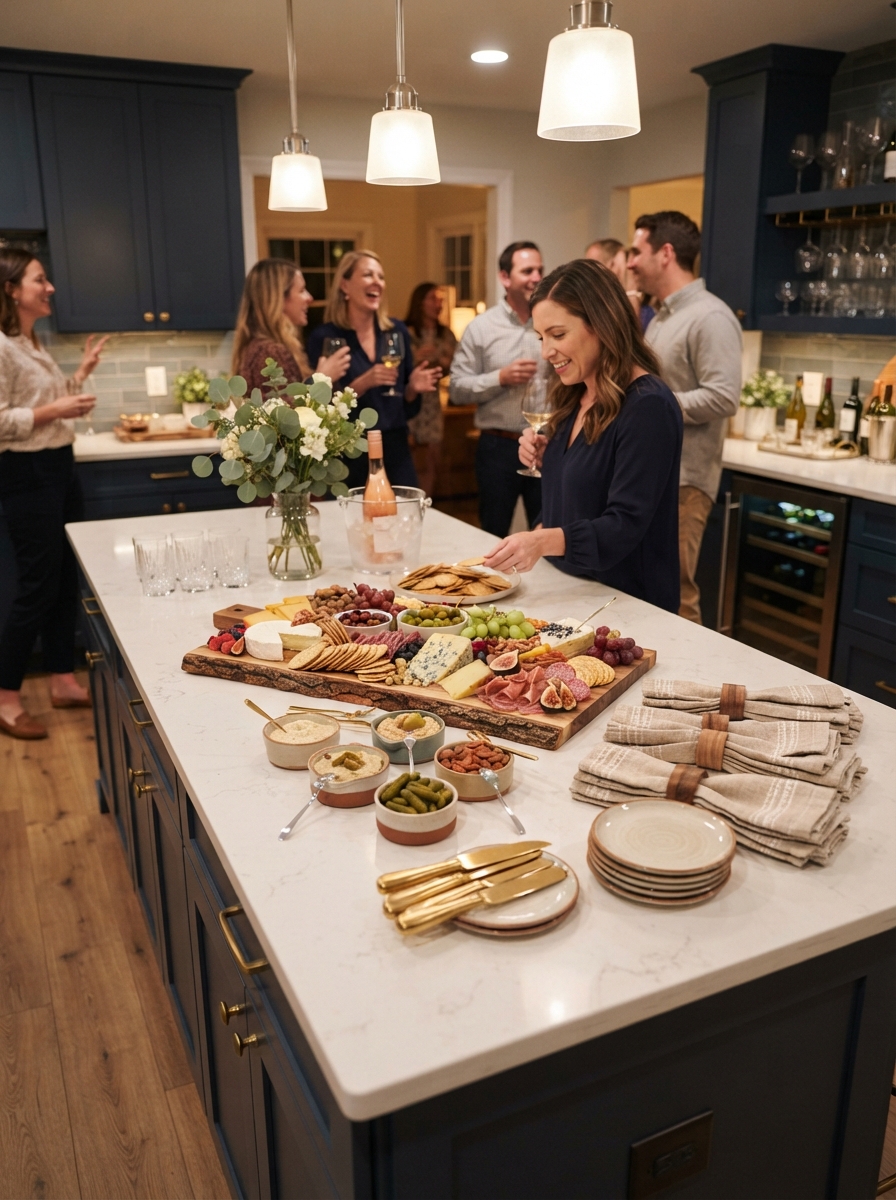
When hosting, a kitchen island typically shifts from styled prep surface to serving station, and the best islands are styled to transition easily between the two. Clearing the everyday bowl and cutting board to a nearby counter, then setting out a simple spread of snacks on a large board or a few small serving dishes, lets the island do double duty without needing a separate buffet setup. Keeping a few extra cloth napkins and a stack of small plates in a nearby drawer means the transition from everyday to entertaining mode takes minutes rather than a full reset.
Budget-Friendly Kitchen Island Styling
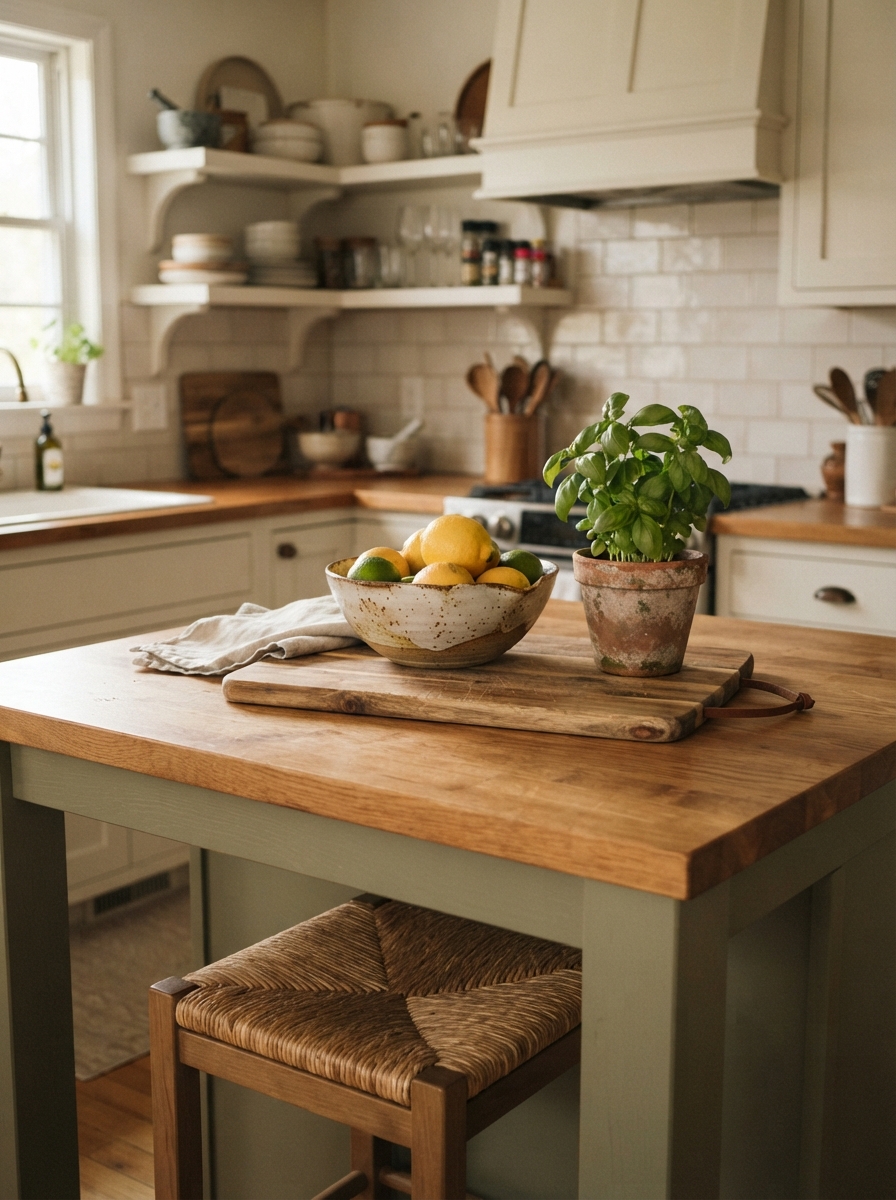
A well-styled island doesn’t require an expensive shopping trip. A wood cutting board from a kitchen supply store costs a fraction of a designer version and looks nearly identical once styled upright. A secondhand ceramic bowl from a thrift store often has more character than a new one from a big-box retailer. Fresh herbs in a simple terra cotta pot cost only a few dollars and bring genuine life to the surface. And rotating in items you already own from other rooms — a vase from a bedroom, a tray from a bathroom counter — costs nothing and keeps the island’s styling feeling fresh without any new purchases.
Coordinating Island Decor With Open-Concept Living
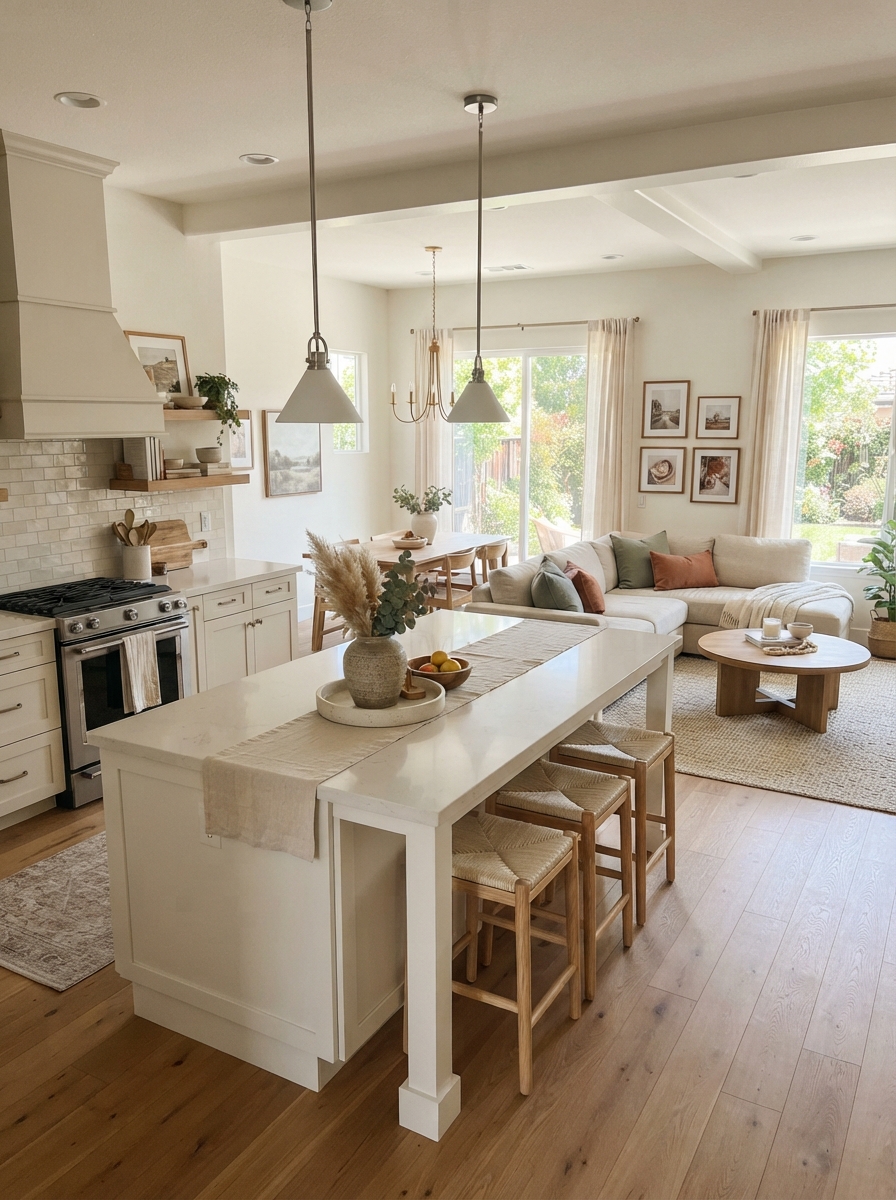
In an open-concept home, the kitchen island is often visible from the living room, dining area, and entry all at once, which means its styling gets evaluated as part of the whole shared space rather than in isolation. Pulling one or two colors from the living room’s palette into the island’s decor — a matching ceramic tone, a similar wood finish on a cutting board — ties the kitchen visually into the rest of the open floor plan instead of letting it read as a separate zone. Keeping the island’s styling at a similar visual weight to the coffee table or console nearby also helps the whole sightline feel consistent rather than having one surface over-styled and another left bare. For more on this, see our kitchen & dining guide.
Mixing Old and New on a Kitchen Island
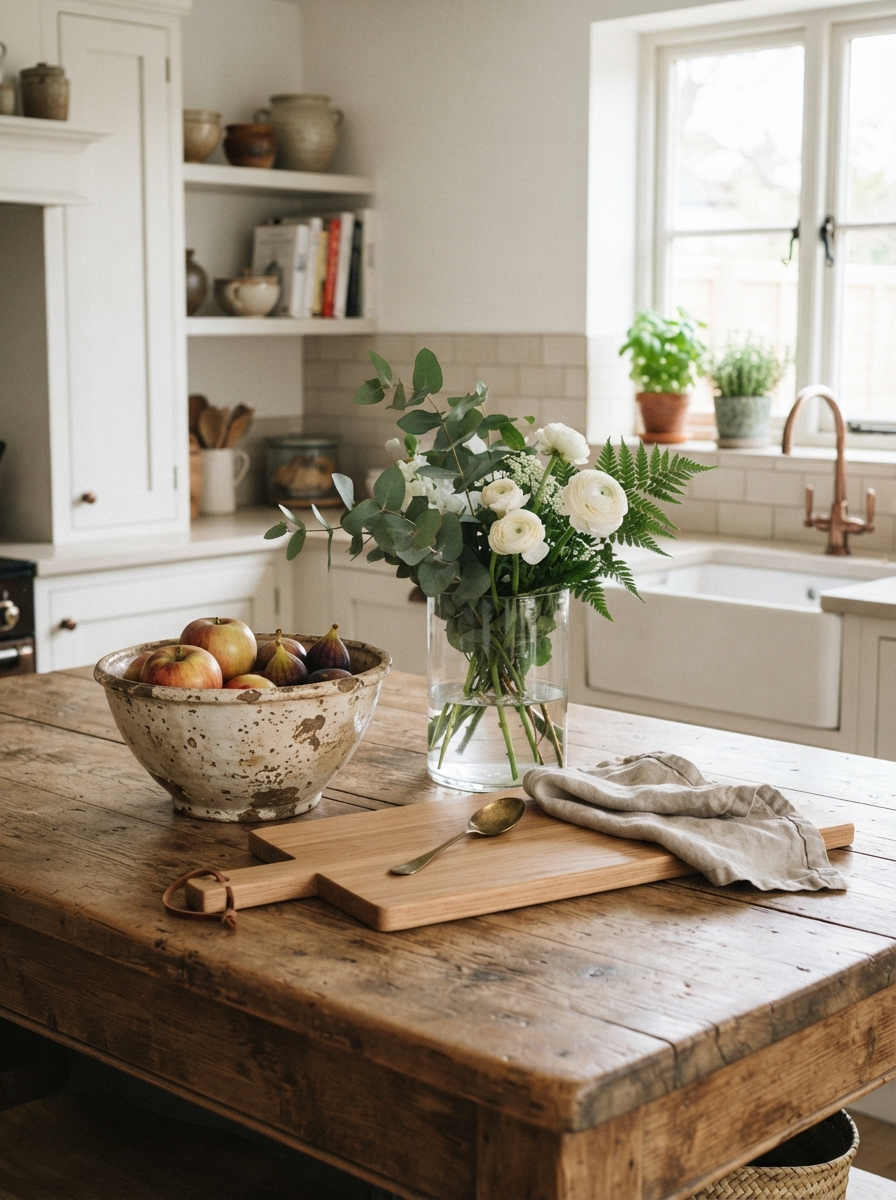
Some of the most interesting styled islands mix a genuinely vintage or inherited piece with newer, more neutral basics. A hand-thrown ceramic bowl passed down from a grandparent, a flea-market cutting board with real wear, or a brass object with an aged patina all add a sense of history that brand-new decor can’t replicate on its own. Balancing one or two of these characterful pieces against simpler, more current basics — a plain wood board, a modern glass vase — keeps the vignette from feeling either too precious or too generic, landing instead on something that feels personally collected over time.
Kitchen island shopping list
- Wood cutting board — doubles as decor and prep
- Decorative bowl — the anchor object
- Counter height barstools — measure seat height first
- Kitchen island pendant light — two or three depending on span
- Cookbook stand — keeps the stack upright
- Woven storage basket — hides the everyday clutter
Prices and availability change. Links open on Amazon.
Common Kitchen Island Styling Mistakes to Avoid
A few habits undercut an otherwise well-planned kitchen island. Overcrowding the surface with too many small objects is the most common mistake, since a kitchen island needs to stay functional for daily prep work above all else. Choosing purely decorative objects with no everyday use — a bowl that’s too delicate to actually hold fruit, a board too precious to cut on — creates styling that feels fussy rather than lived-in. Ignoring the pendant lighting above the island, which is often the single highest-impact element in the space, leaves an otherwise well-styled surface underlit. And matching every material too closely — all-wood or all-white — can make the vignette feel flat rather than layered.
Maintaining a Styled Island Day to Day
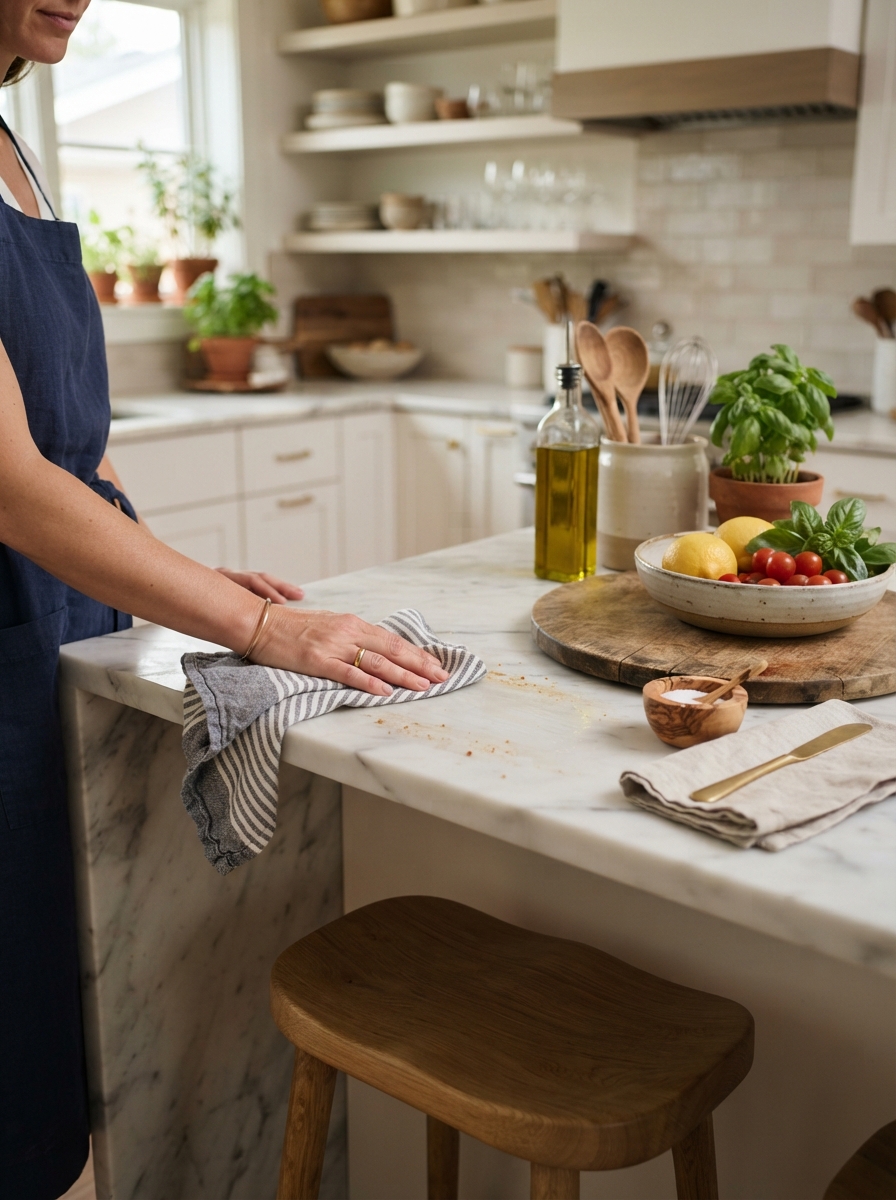
A styled kitchen island only stays styled if it’s easy to reset after actual use, so building in a quick daily routine matters as much as the initial styling choices. Wiping down the surface and returning the bowl, board, and plant to their spots takes under a minute once the arrangement becomes habit, and keeping the number of styled objects low is what makes that reset realistic on a busy weeknight. Treating the island’s styling as a loose, flexible arrangement rather than a fixed display also means it can absorb the daily chaos of mail, keys, or a forgotten grocery bag without looking permanently cluttered.
Final Thought
A kitchen island earns its place as the room’s centerpiece through the same balance every other surface in the home needs — genuine function layered with a few considered decor choices. Keep the surface mostly clear for actual use, add one or two anchoring pieces, and let the pendant lighting above do real visual work, and the island will look styled without ever feeling like it’s off-limits for daily life.
Frequently Asked Questions
What should I put on my kitchen island every day?
A large bowl for fruit or everyday items, a wood cutting board styled upright or flat, and a small plant or stack of cookbooks cover most kitchens without crowding the surface needed for actual meal prep.
How many pendant lights should hang above an island?
Two or three pendants spaced evenly along the island’s length is standard, hung so the bottom of each fixture sits 30 to 36 inches above the counter surface for both function and proportion.
Should I keep small appliances on my kitchen island?
Generally no — appliances used daily are better placed in a dedicated zone or garage cabinet, keeping the island’s surface free for the rotating styled decor and actual prep space it’s meant for.
What material should kitchen island decor be?
Choose materials that echo your existing cabinetry and hardware finishes — wood and ceramic for a warm, traditional kitchen, and marble or glass for a more modern, high-contrast space.
How do I style a small kitchen island?
Keep it to one or two objects maximum — a single bowl or a small plant does more visual work on a compact surface than a fully layered vignette, which can quickly feel cluttered on limited counter space.
Can a kitchen island be styled and still functional?
Yes — the best-styled islands use objects that serve a real purpose, like a cutting board you actually use or cookbooks you cook from, so the styling never gets in the way of the island’s everyday job.



3 Comments