

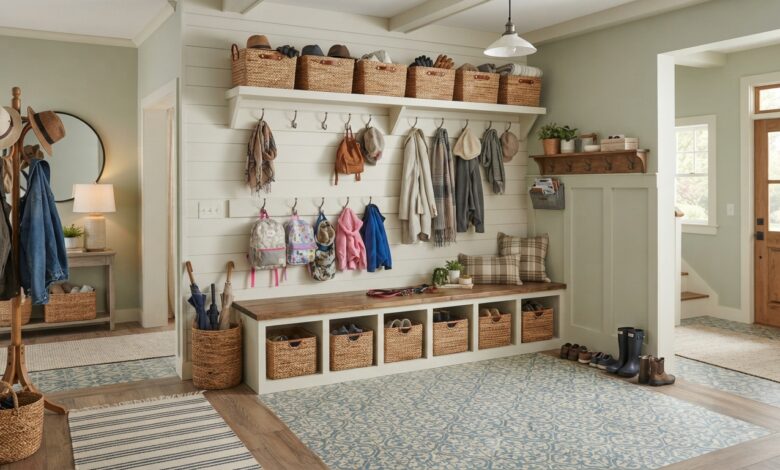
A mudroom does the least glamorous job in the house and gets judged the most harshly, because it’s the first thing anyone sees walking in and the place where coats, shoes, bags, and post accumulate fastest. The version that stays tidy isn’t the one with the most storage — it’s the one where putting things away takes less effort than dropping them on the floor. Here’s how to build a mudroom bench and surrounding storage that survives daily use.
As an Amazon Associate I earn from qualifying purchases. Some links in this post are affiliate links, at no extra cost to you.
1. Start With the Bench, Not the Storage
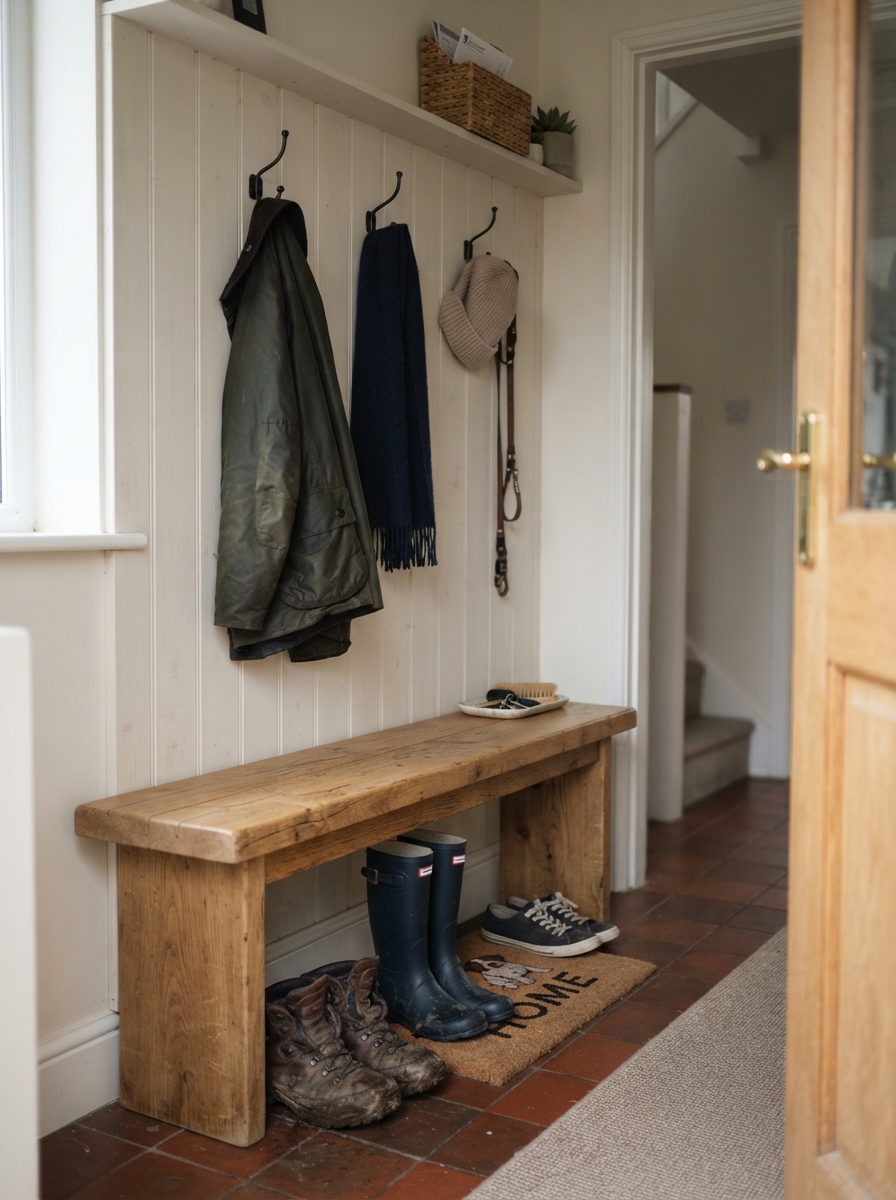
Somewhere to sit while removing shoes is what makes a mudroom function, and it’s the piece people most often skip in favour of more hooks. Aim for a seat height around 45cm and a depth of 35 to 40cm — deep enough to sit comfortably, shallow enough that it doesn’t block a corridor. Everything else in the room should be planned around that bench rather than squeezed in beside it afterwards.
2. Put Storage Underneath the Seat
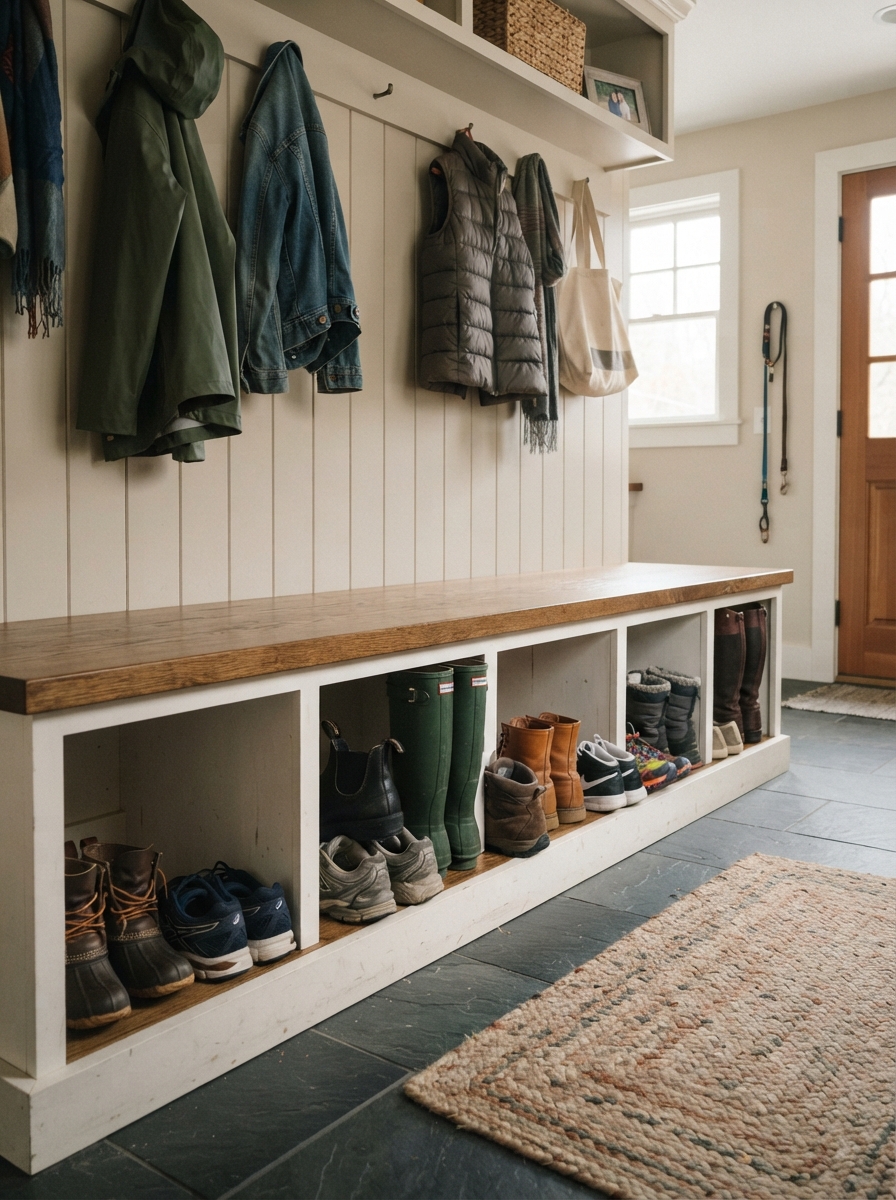
The space beneath a bench is the most valuable storage in a mudroom because it’s exactly where shoes want to live. Open cubbies work better than doors, since anything requiring a handle turn gets skipped when someone’s carrying shopping. Size the openings for the footwear you actually own — boots need roughly 35cm of height, and a cubby built for trainers becomes useless every winter.
Hooks at Two Different Heights
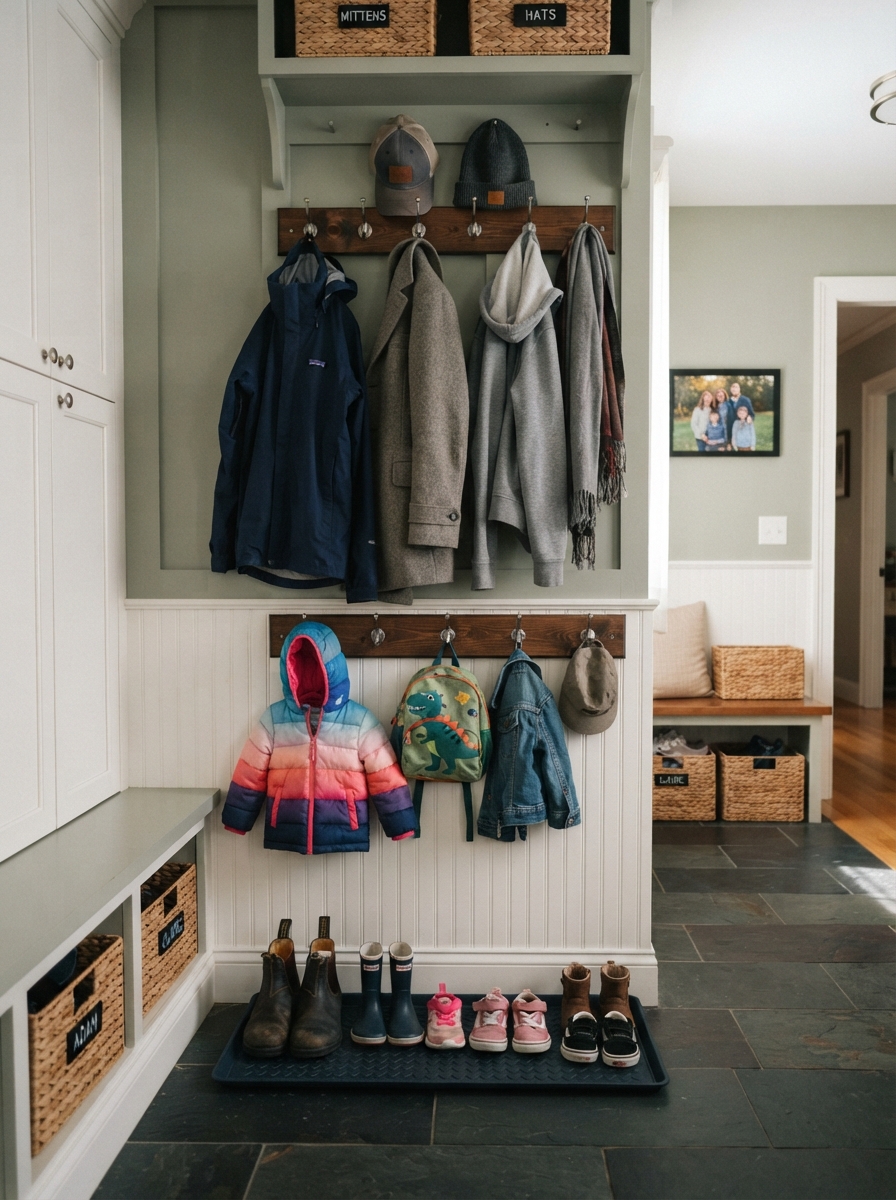
A single row of hooks at adult height means children’s coats end up on the floor. Adding a lower rail at around 110cm lets kids hang their own things, which is the difference between a system that works and one an adult has to maintain. Space hooks at least 20cm apart — closer than that and coats compress into a single lump that nothing else fits beside.
3. Make the Floor Survivable
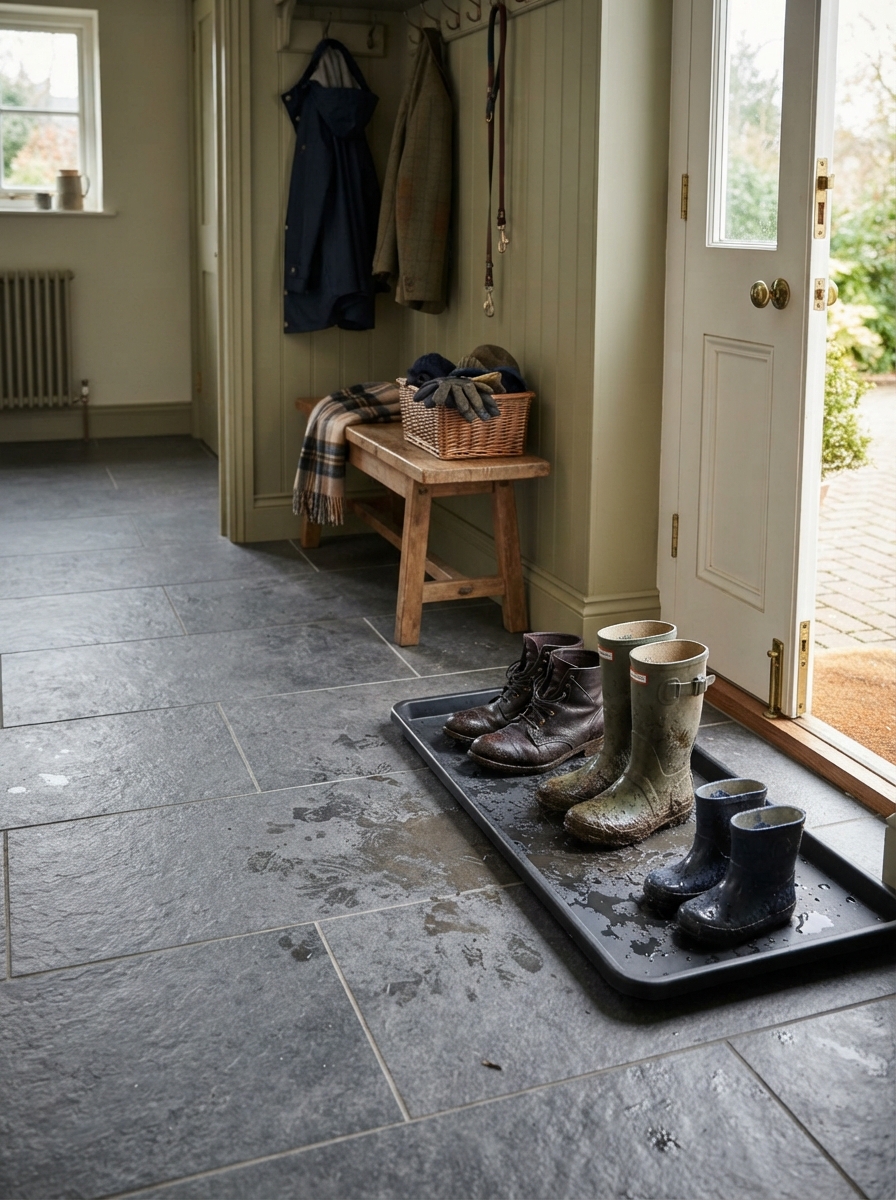
Mudrooms take wet boots, grit, and salt, and the floor is what fails first. Porcelain tile, luxury vinyl, or sealed concrete all handle it; engineered wood and laminate do not, whatever the packaging claims. Add a boot tray with a raised lip inside the door so meltwater collects somewhere containable rather than spreading across the room and under the bench.
4. Give Every Person a Defined Zone
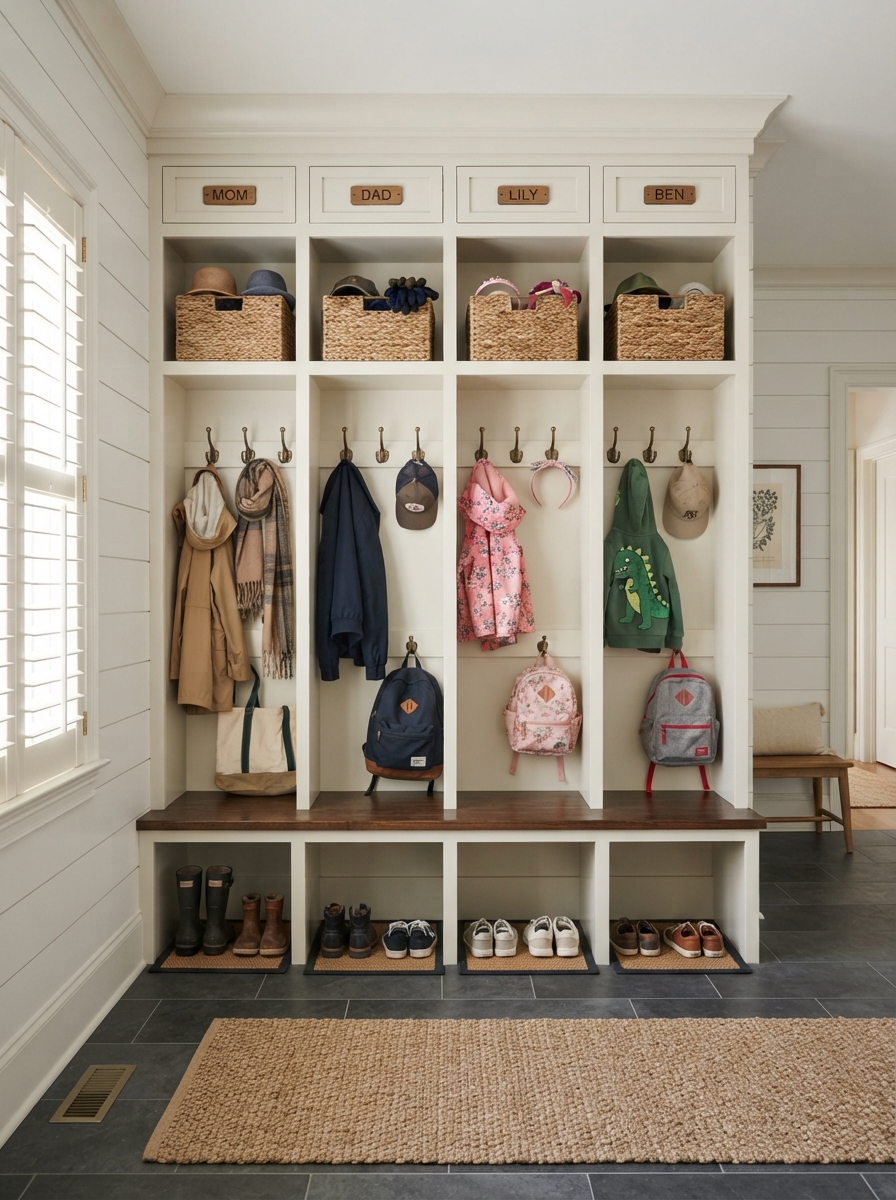
Shared storage descends into chaos faster than assigned storage. One cubby, one or two hooks, and one basket per person means nobody has to negotiate, and it’s immediately obvious whose coat is on the floor. In a narrow mudroom this can be as simple as a vertical column of space per person rather than separate lockers.
5. Add a Basket System for Everything Loose
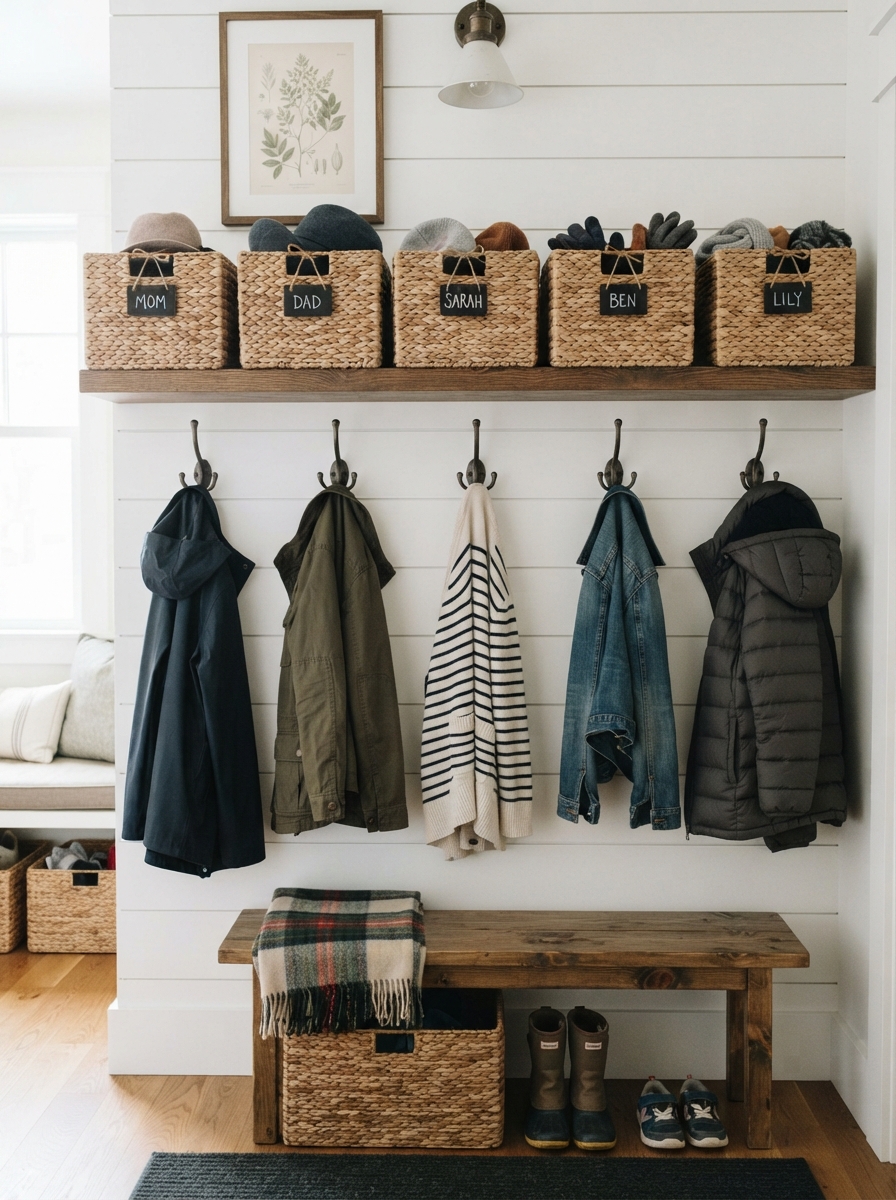
Gloves, hats, dog leads, sunscreen, and reusable bags are what actually defeat a mudroom. A labelled basket per category on a shelf above the hooks contains them without requiring anyone to fold or organise anything. Woven baskets look warmer than plastic bins and hide their contents better, which matters in a room that’s visible from the front door.
6. Anchor Anything Tall to the Wall
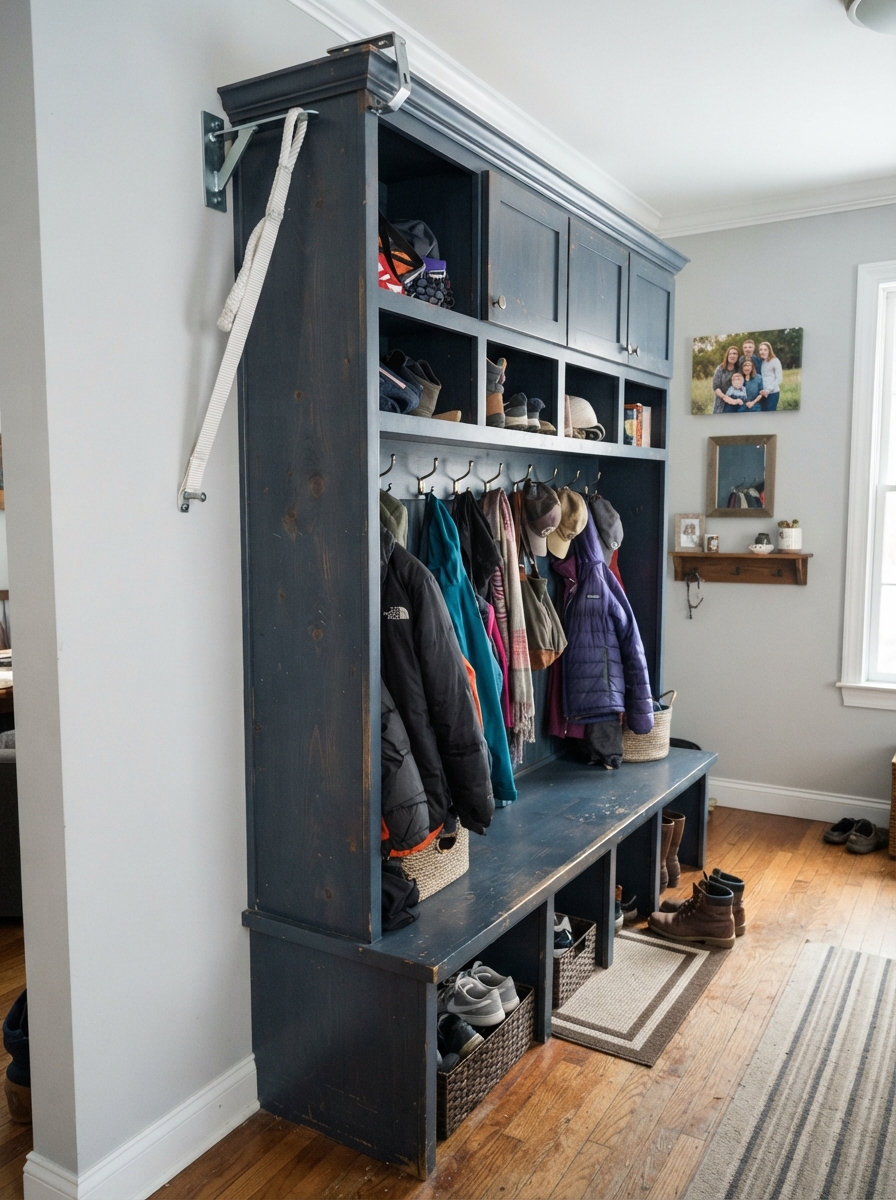
Mudroom lockers, tall shelving units, and coat cabinets are top-heavy by design and often sit in a room where children pull on hooks and climb on benches. Anchoring any tall bookshelf or storage unit to the wall prevents tipping, and it takes minutes with a bracket that costs very little. This matters more here than almost anywhere else in the house given how much force gets applied to a coat hook.
7. Light It Properly, Including the Cubbies
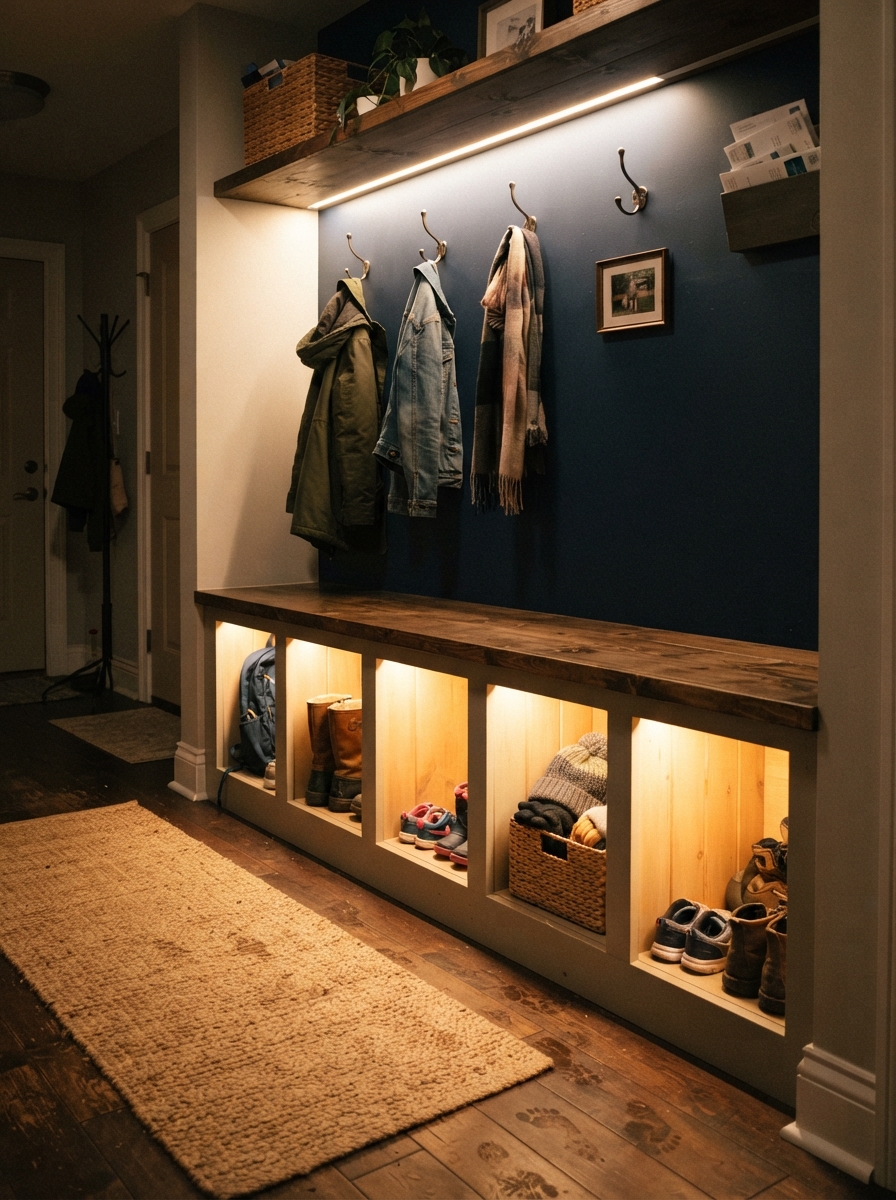
Mudrooms are frequently interior rooms with no window, used at the darkest times of day. A single overhead fixture casts shadows straight into the cubbies where you’re searching for a shoe. A strip light under the shelf above the hooks, or a small fixture angled at the bench, fixes it. Warm light around 2700K makes the entry feel welcoming rather than institutional.
Mudroom Bench Ideas by Space
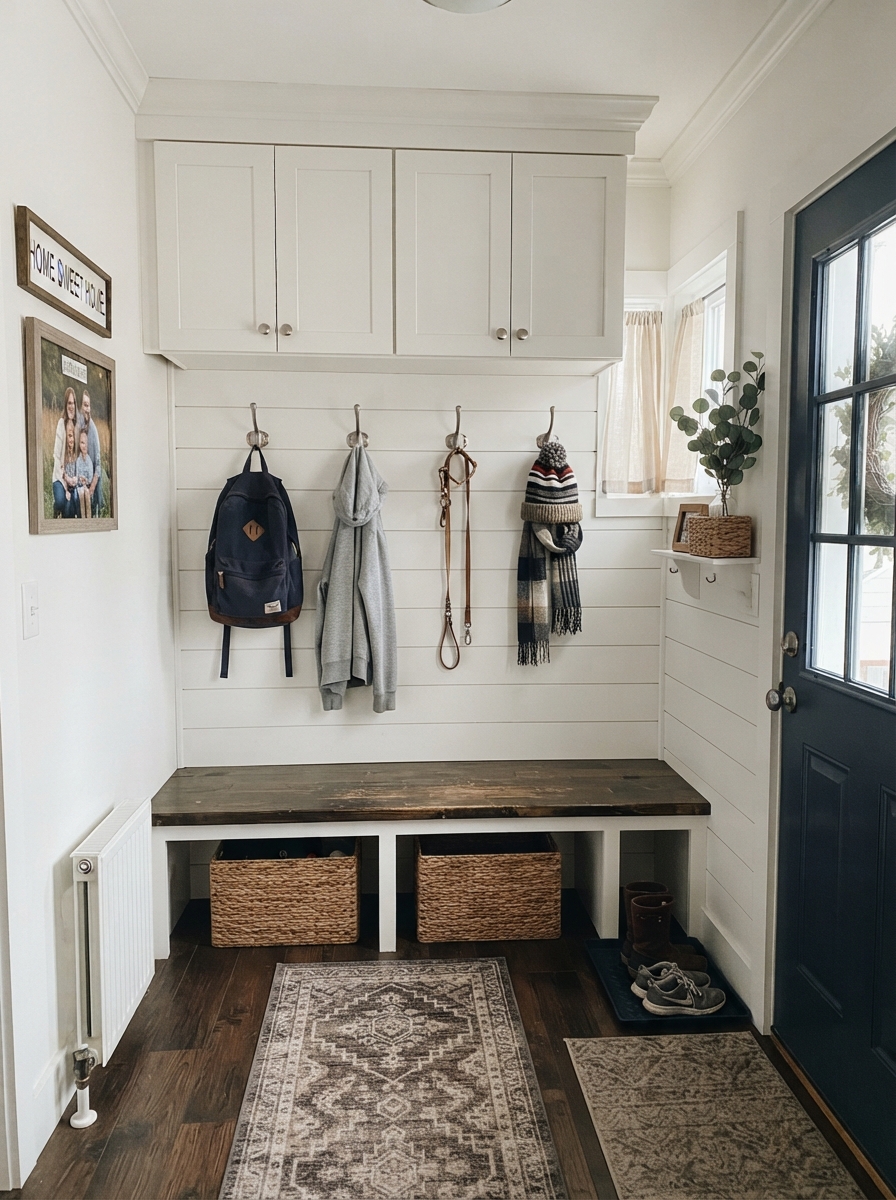
Narrow Hallway
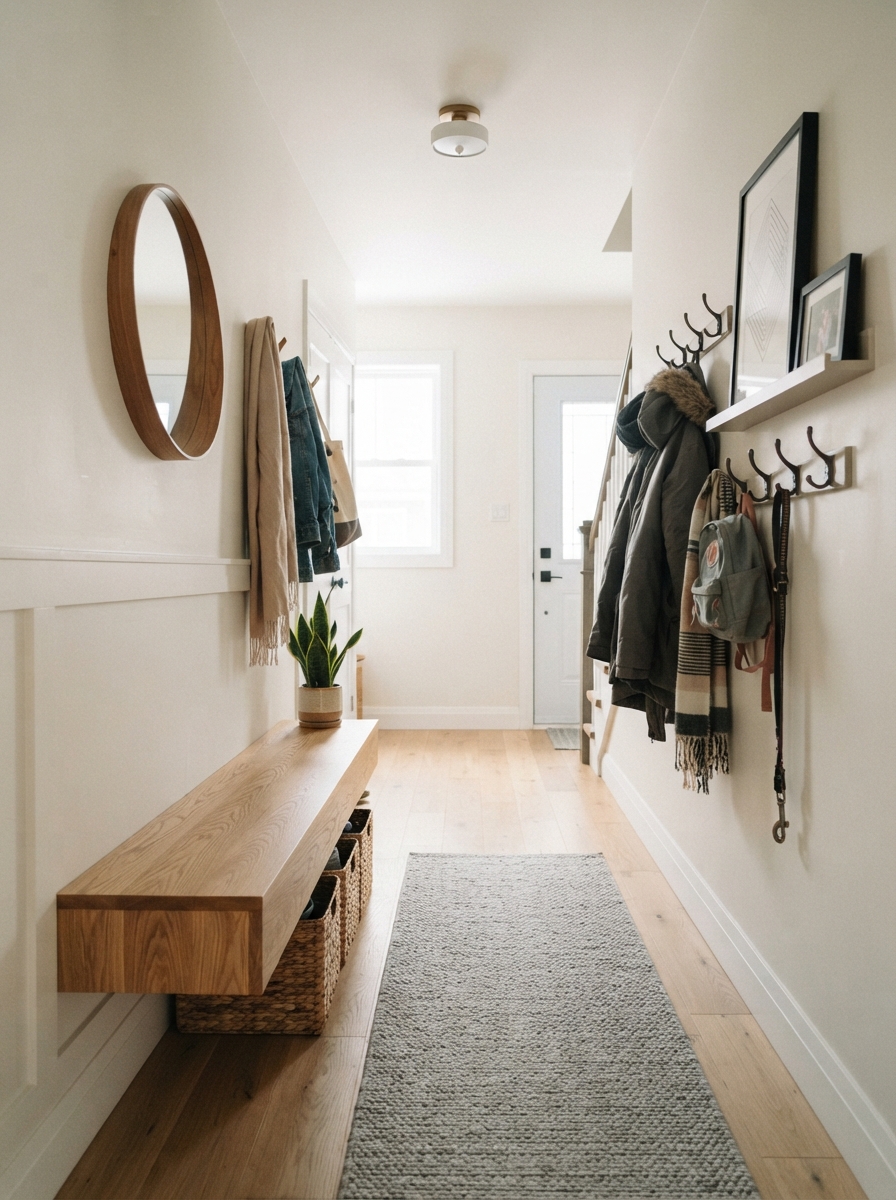
Where depth is under 40cm, a wall-mounted floating bench keeps the floor clear and makes the corridor feel wider. Pair it with a slim shoe cabinet that tilts rather than pulls out, and keep hooks on the opposite wall so people aren’t reaching over the seat.
Corner of a Kitchen or Utility Room
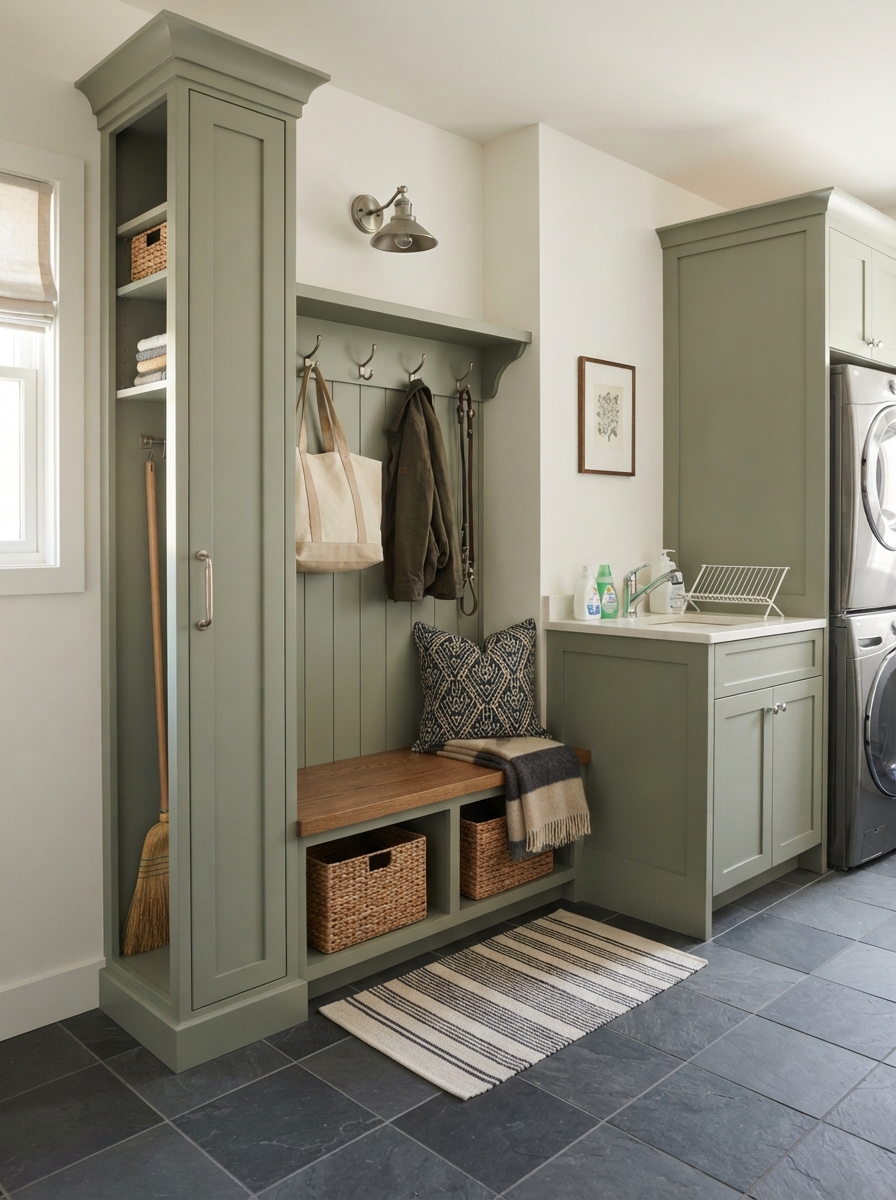
A bench tucked into a corner borrows the room’s existing finishes, so match the bench material to the cabinetry rather than treating it as separate furniture. This placement benefits most from a defined boot tray, since kitchen floors and wet outdoor shoes are a poor combination.
Dedicated Mudroom or Boot Room
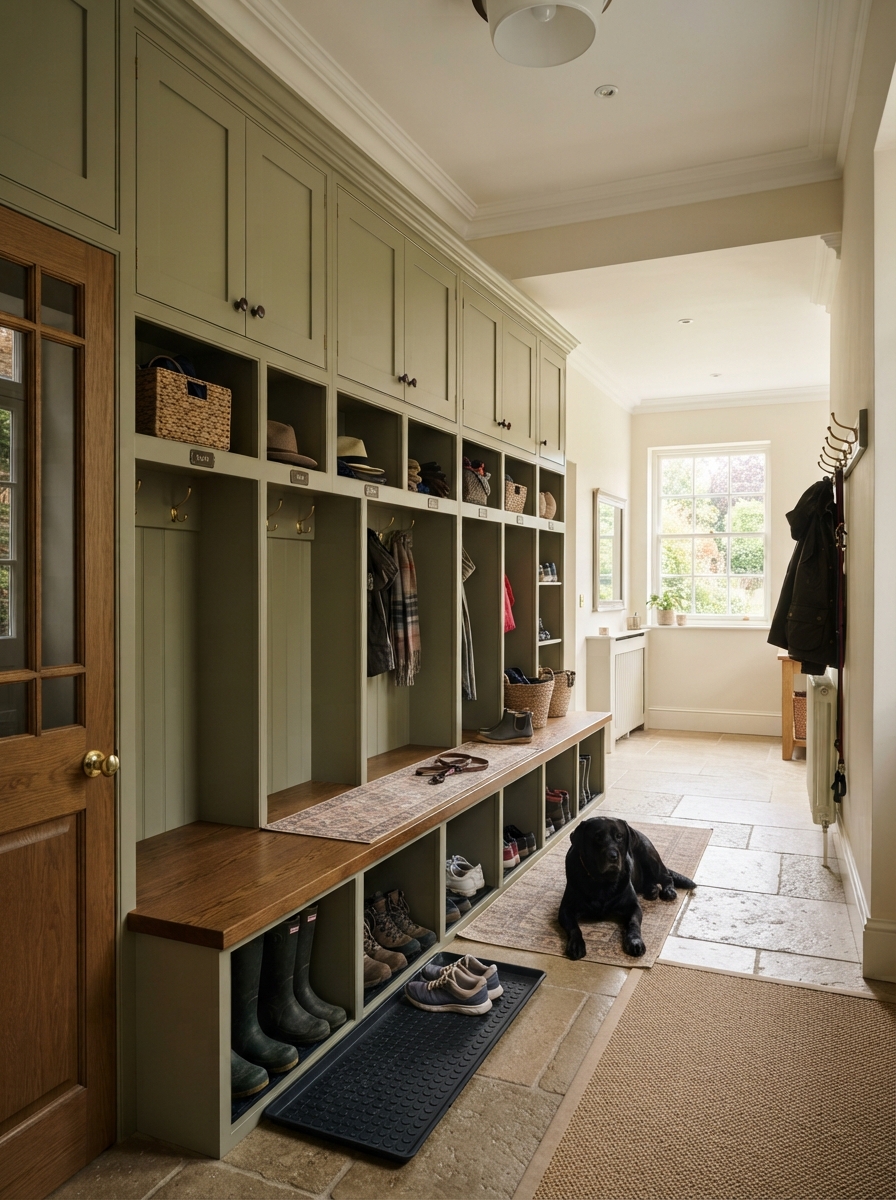
With a full room, build floor to ceiling: closed upper cabinets for seasonal items, open cubbies at eye level, bench with shoe storage below. The upper cabinets are what keep the room looking calm, because they absorb the bulky things — spare bedding, sports kit, Christmas coats — that otherwise sit visible on shelves.
Garage or Side Entrance
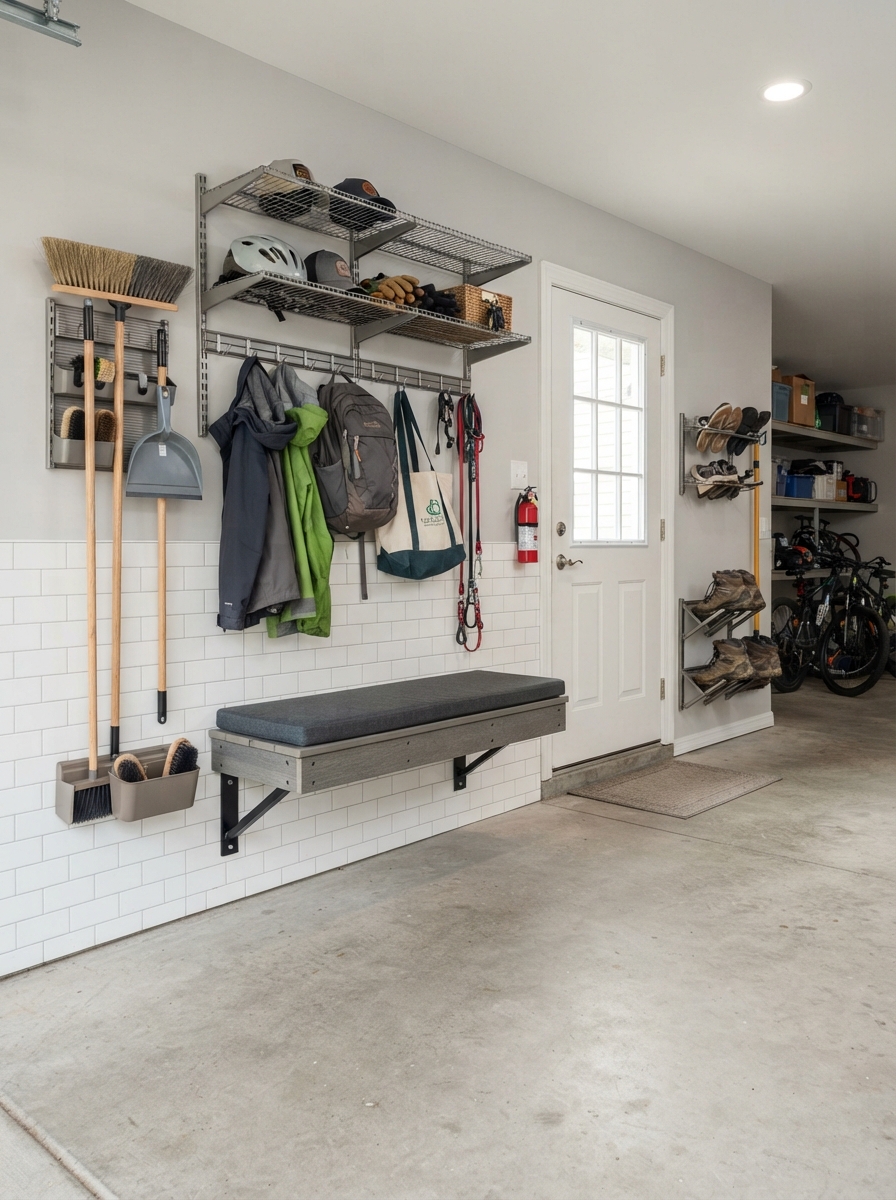
Here durability outranks appearance. Wall-mounted racks rather than furniture, a bench with a wipeable seat, and hooks rated for heavy wet coats. Keep everything off the floor so the space can be swept or hosed without moving furniture.
Choosing Materials That Handle Daily Wear
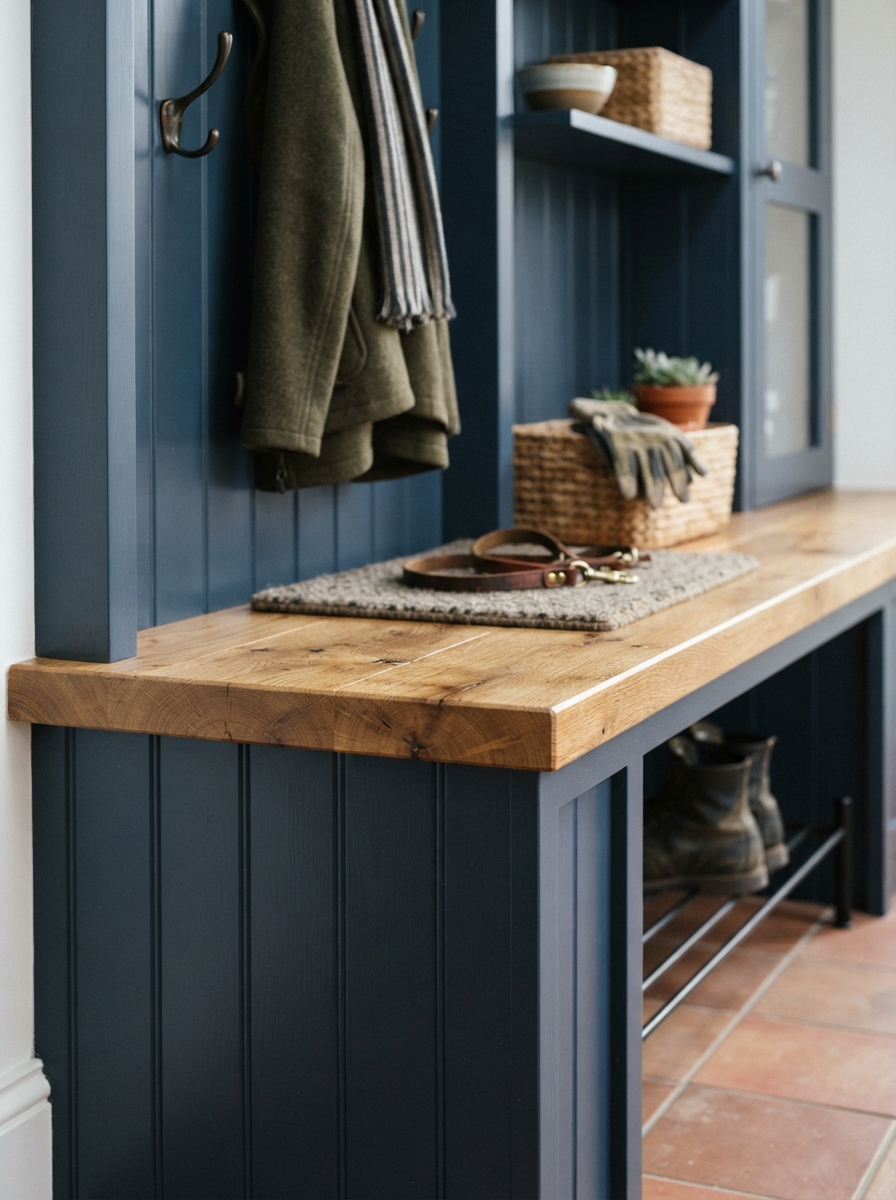
Mudroom surfaces get wet, scuffed, and knocked constantly. Painted MDF chips at every corner within a year; solid wood or plywood with a hardwearing finish holds up far better. For the bench seat, a sealed timber top or a wipeable cushion in performance fabric beats anything upholstered in a natural weave. Choose paint in an eggshell or satin finish rather than matt, because matt paint in a mudroom cannot be wiped without burnishing. For more on this, see our entryway & mudroom guide.
Styling a Mudroom So It Still Feels Like Home
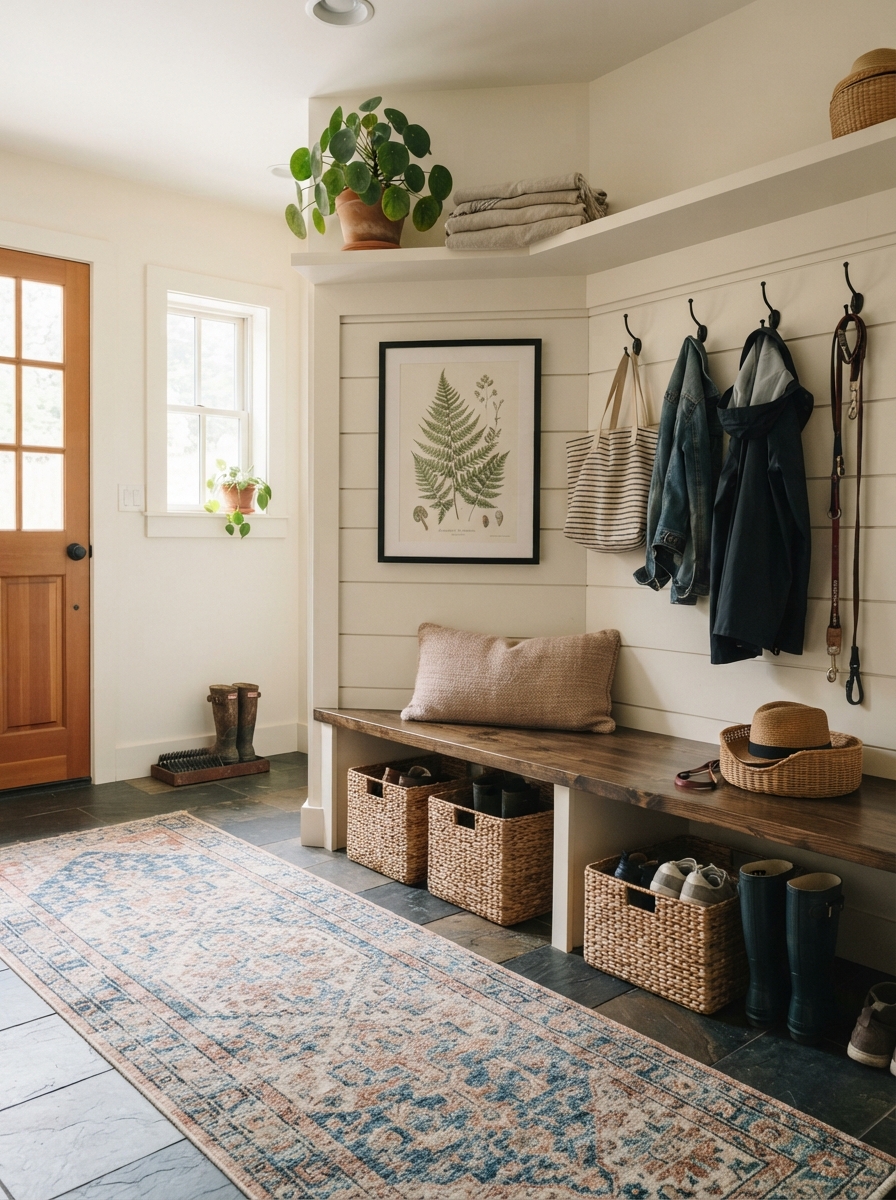
The risk with a highly functional entry is that it reads as a locker room. Two or three softening elements are enough: a runner rug, a framed print above the bench, and a plant on the upper shelf. Keep the colour palette continuous with the adjoining room so the mudroom feels like part of the house rather than a service corridor bolted onto it.
Managing Seasonal Rotation
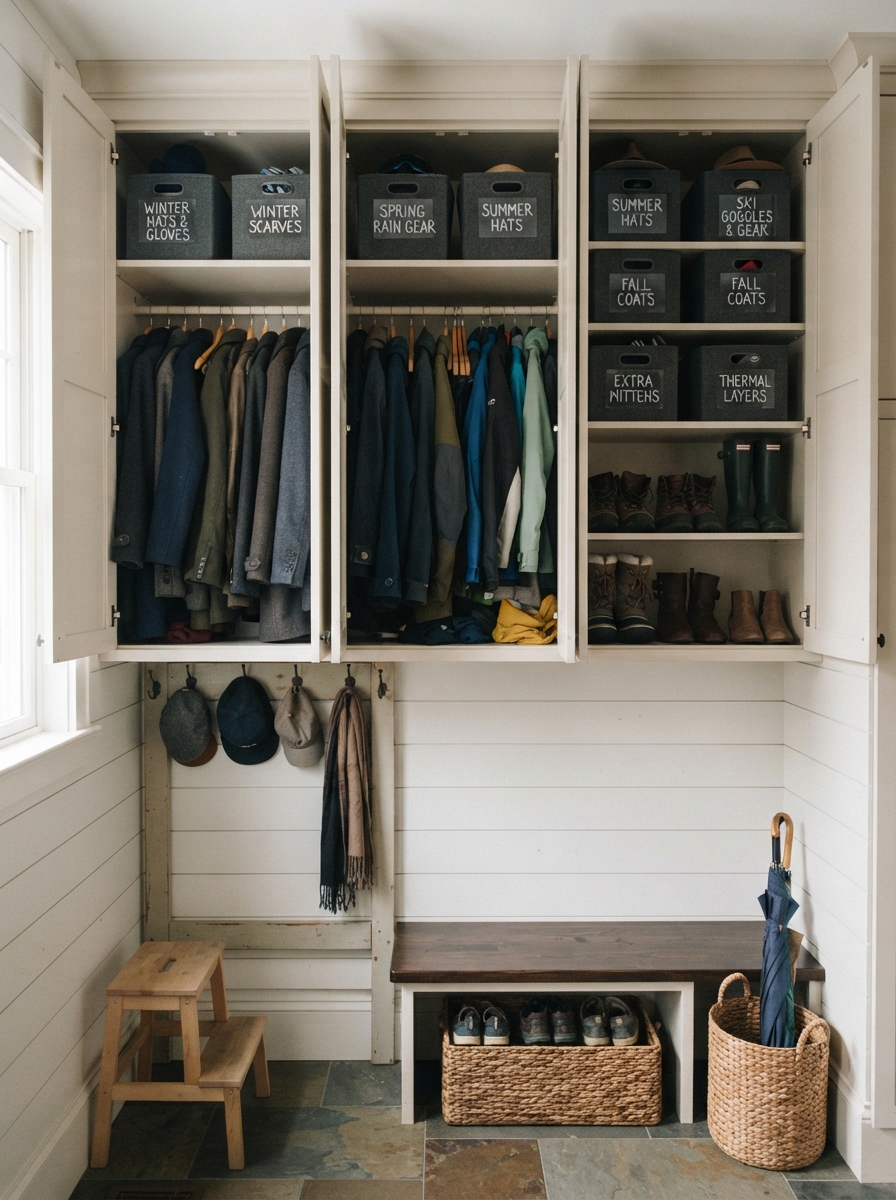
A mudroom holding four seasons of outerwear at once will never look tidy. Twice a year, move out what isn’t in use — winter coats and boots to a wardrobe in spring, sunhats and light jackets away in autumn. The upper cabinets or the top shelf are the right home for the off-season set, keeping the hooks and cubbies at working height reserved for what’s genuinely in rotation.
Budget-Friendly Mudroom Ideas
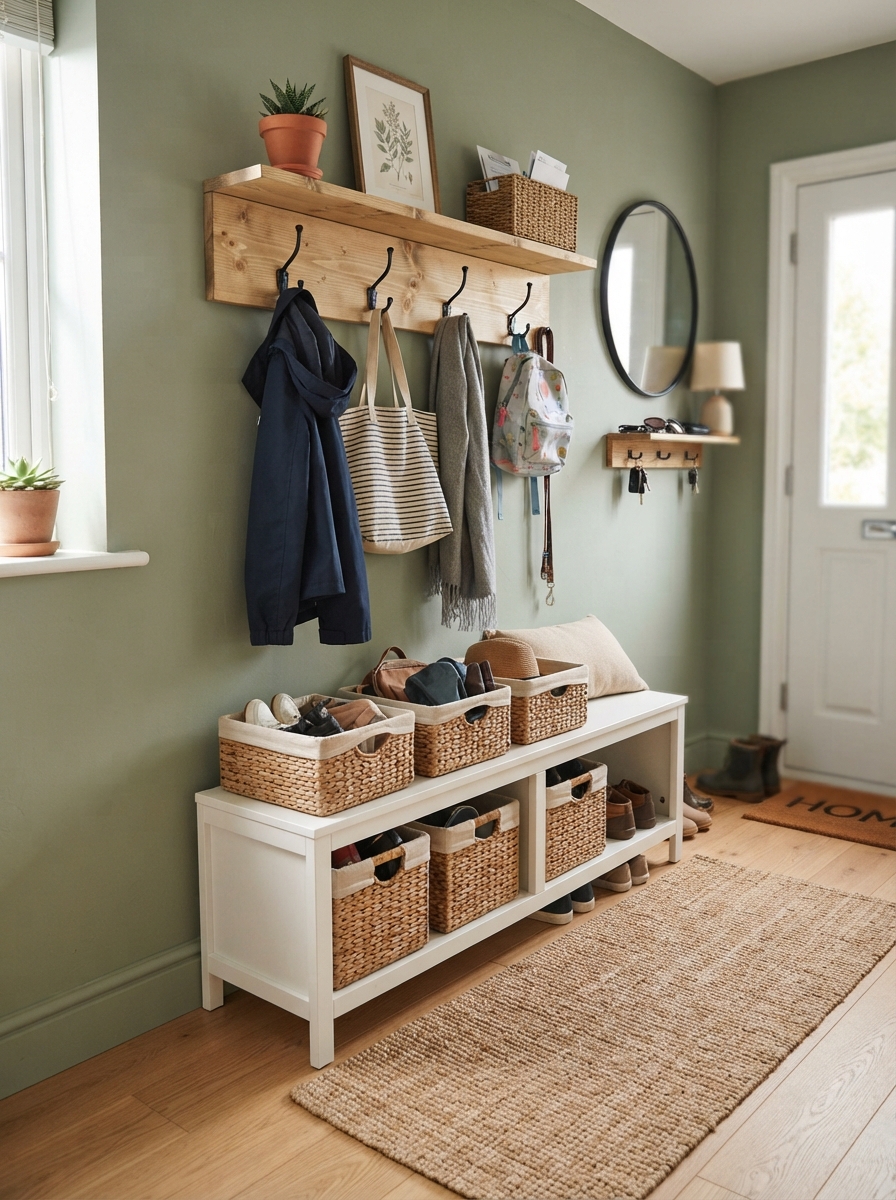
A convincing mudroom can be assembled without joinery. A flat-pack shoe bench, a length of timber with hooks screwed into it, and three baskets from anywhere covers the core function. Painting the wall behind the hooks in a deeper colour, or adding simple tongue-and-groove panelling to bench height, does more for the built-in look than expensive furniture would, and both are within reach of a weekend.
Mudroom shopping list
- Storage bench — seat plus shoe storage in one
- Wall mounted coat hooks — fit two rails at two heights
- Boot tray — contains meltwater by the door
- Woven storage baskets — for gloves, hats and leads
- LED strip light — lights the cubbies, not just the room
- Furniture anchor kit — for any tall storage unit
Prices and availability change. Links open on Amazon.
Common Mudroom Mistakes to Avoid
The most common error is installing hooks and cubbies without a bench, which quietly guarantees shoes get removed standing up and left where they fall. Others: cubbies sized for trainers rather than boots, a single row of hooks too high for children, flooring that can’t handle water, closed doors on storage that gets used in a hurry, and no boot tray, which spreads meltwater across the whole room. Avoid over-labelling too — a mudroom with a label on every basket looks organised in photographs and feels oppressive to live with.
Final Thought
A mudroom works when putting something away is the path of least resistance. Get the bench right, size the storage for the boots you actually own, split the hooks across two heights, and choose surfaces that can be wiped. Do that and the entry stops being the room you apologise for and becomes the one quietly holding the rest of the house together.
Frequently Asked Questions
How deep should a mudroom bench be?
Around 35 to 40cm gives comfortable seating without blocking circulation. Deeper than 45cm and the bench starts to dominate a narrow space while offering little extra benefit.
What is the ideal height for a mudroom bench?
About 45cm, the same as a dining chair. Much lower becomes awkward to stand up from while holding bags, and much higher leaves shorter family members’ feet off the floor.
How many hooks does a mudroom need per person?
One or two. More than that and single hooks accumulate layers of coats that hide everything underneath, which is how mudrooms become unusable despite having plenty of hooks.
What flooring is best for a mudroom?
Porcelain tile, luxury vinyl, or sealed concrete. All three tolerate water, grit, and salt. Avoid laminate and engineered wood regardless of what the water-resistance rating claims.
Can I create a mudroom without a dedicated room?
Yes. A bench with shoe storage below, a rail of hooks at two heights, and a shelf with baskets above delivers the full function in about a metre of hallway wall.
Should mudroom storage be open or closed?
Open at working height, closed above. Anything used daily while carrying something should never require opening a door; seasonal and bulky items belong behind one.
You Might Also Like
- Entryway Decor Ideas
- Closet Organization Ideas
- Small Laundry Room Decor Ideas
- 15 Small Bedroom Storage Ideas
- 15 Easy DIY Wall Decor Ideas
- Best Shoe Storage Ideas for Your Entryway
- Best Mudroom Storage Systems for Families
- How to Organize a Small Mudroom
- Kid-Friendly Mudroom Locker Ideas
- DIY Mudroom Bench with Built-In Shoe Storage





One Comment