
Balcony Privacy Ideas: How to Make a Small Balcony Feel Like Your Own

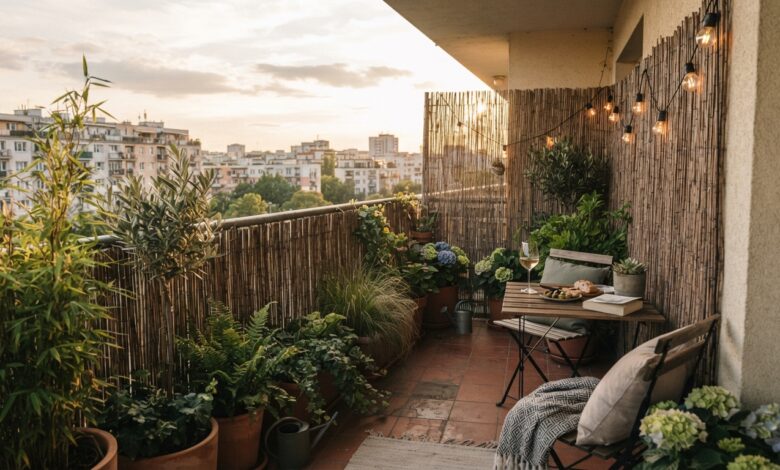
A balcony is usually the most underused square metres in an apartment, and privacy is almost always the reason. When you can see three neighbours and they can see you, the space stops feeling like part of the home and starts feeling like storage for a drying rack. Solving the sightlines first is what turns a balcony into a room you actually sit in — the cushions and lanterns only work once you’re not on display. Pour aller plus loin : outdoor & balcony.
As an Amazon Associate I earn from qualifying purchases. Some links in this post are affiliate links, at no extra cost to you.
1. Identify Which Sightline Actually Bothers You
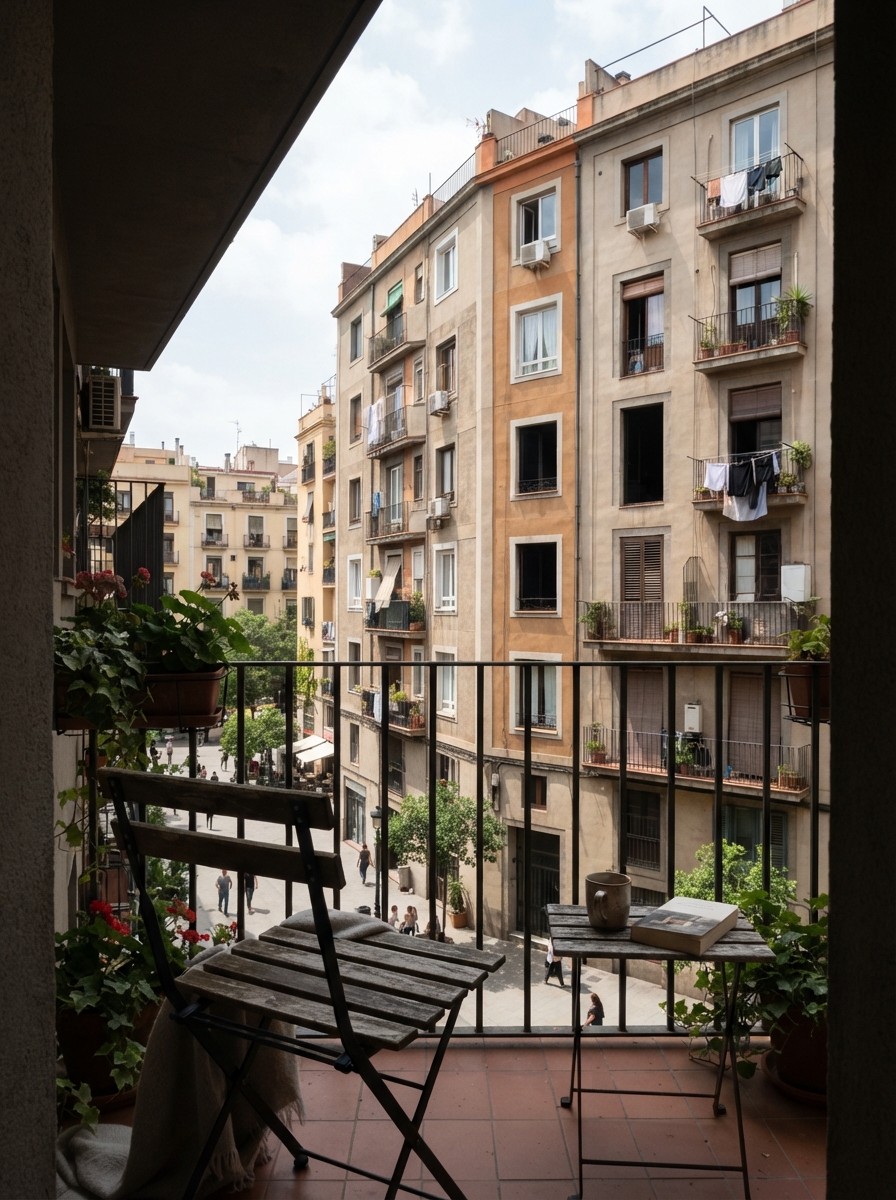
Before buying screening, sit down on the balcony at the time of day you’d realistically use it and notice where your eye goes. Most people assume they need to block everything, when in reality a single overlooking window or one stretch of railing is doing all the work. Screening only that section keeps light and airflow, costs a fraction as much, and avoids the closed-in feeling that full enclosure produces.
2. Use Railing Screens for the Fastest Fix
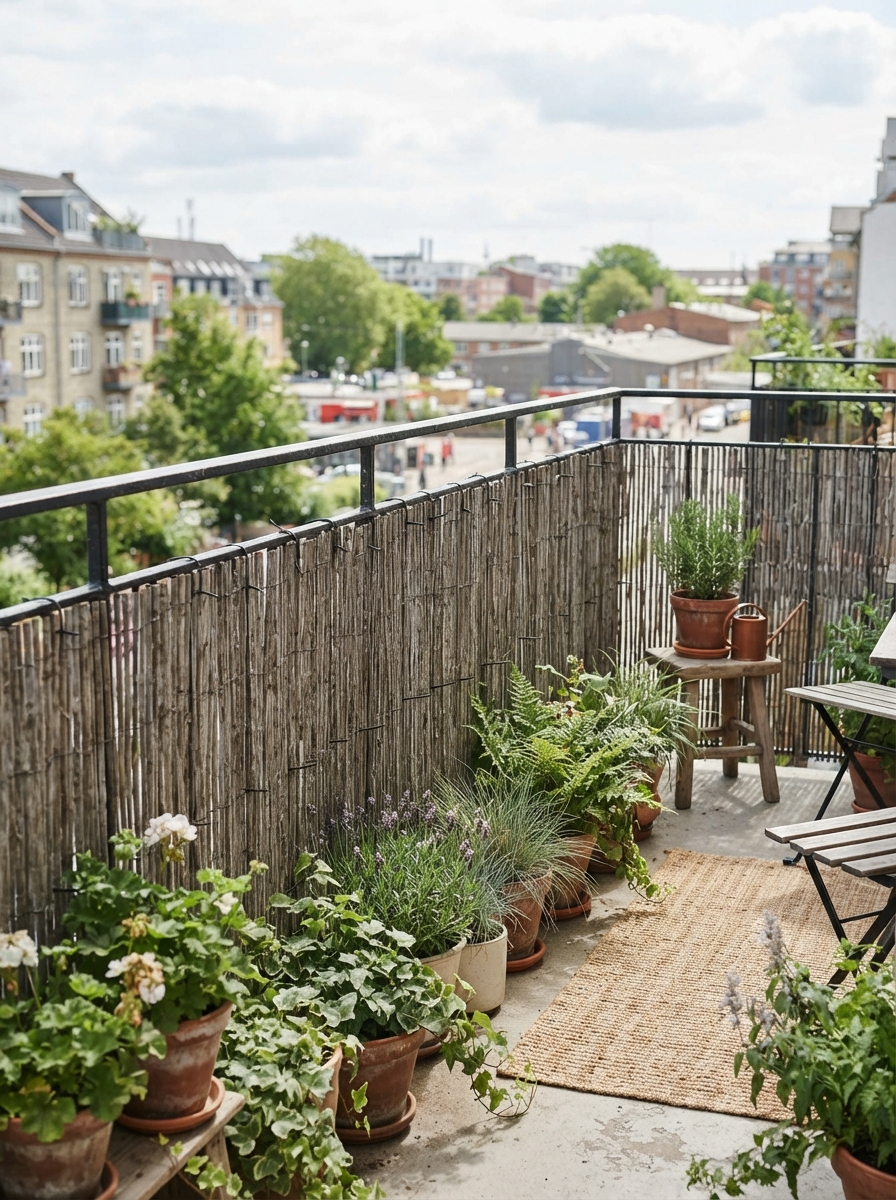
A reed, willow, or fabric screen cable-tied to the railing blocks the ground-level view in an afternoon and costs very little. Natural reed reads warmer than synthetic mesh and weathers to a soft grey. Fix it at multiple points along the top and bottom rather than just the corners, because wind gets behind a loosely tied screen and will work it free within a season.
3. Build Privacy With Plants Rather Than Panels
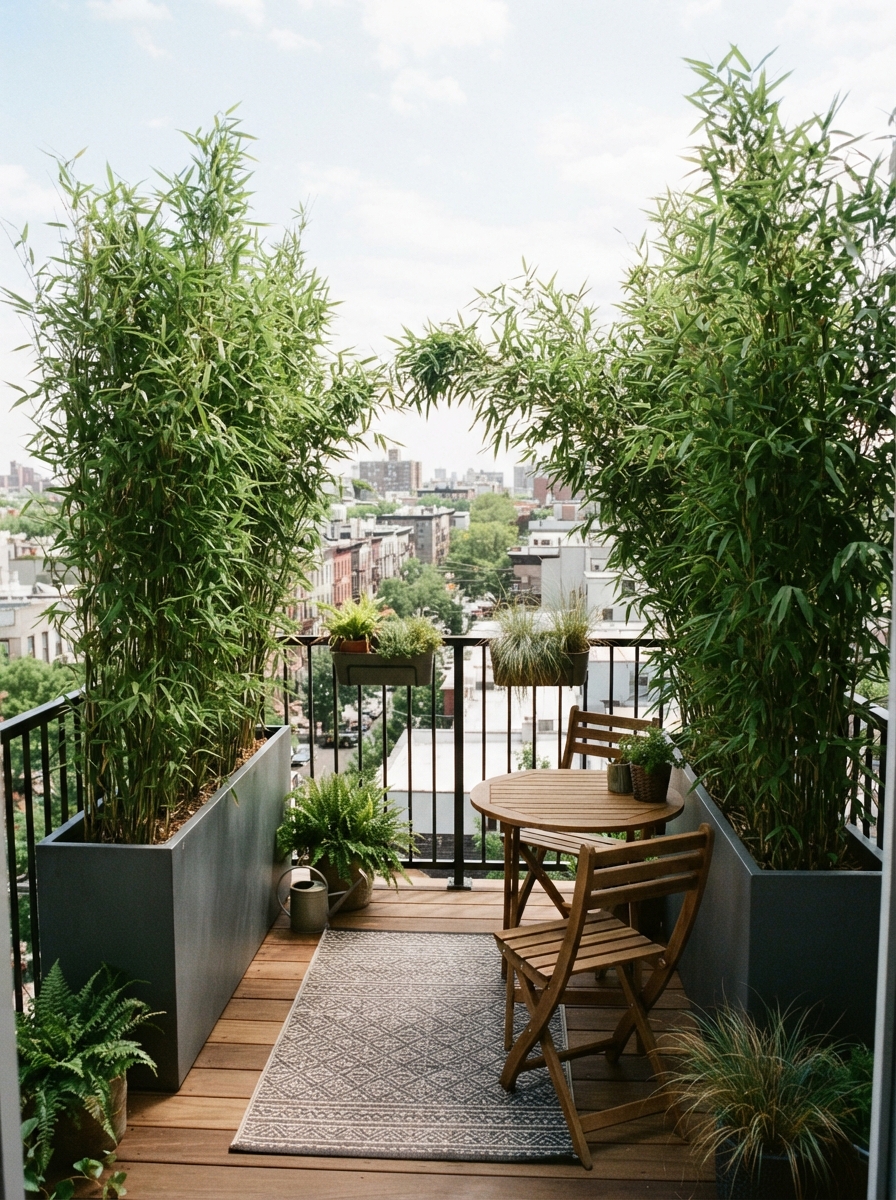
Tall planters positioned at the corners do more for a sense of enclosure than an equivalent length of screening, and they soften the space instead of walling it in. Bamboo in a deep trough, ornamental grasses, or a narrow columnar shrub all give height without much footprint. Check the mature spread as well as the height, since a plant that thrives by doubling in width will eventually take the seat you wanted.
4. Add an Overhead Layer for Upstairs Neighbours
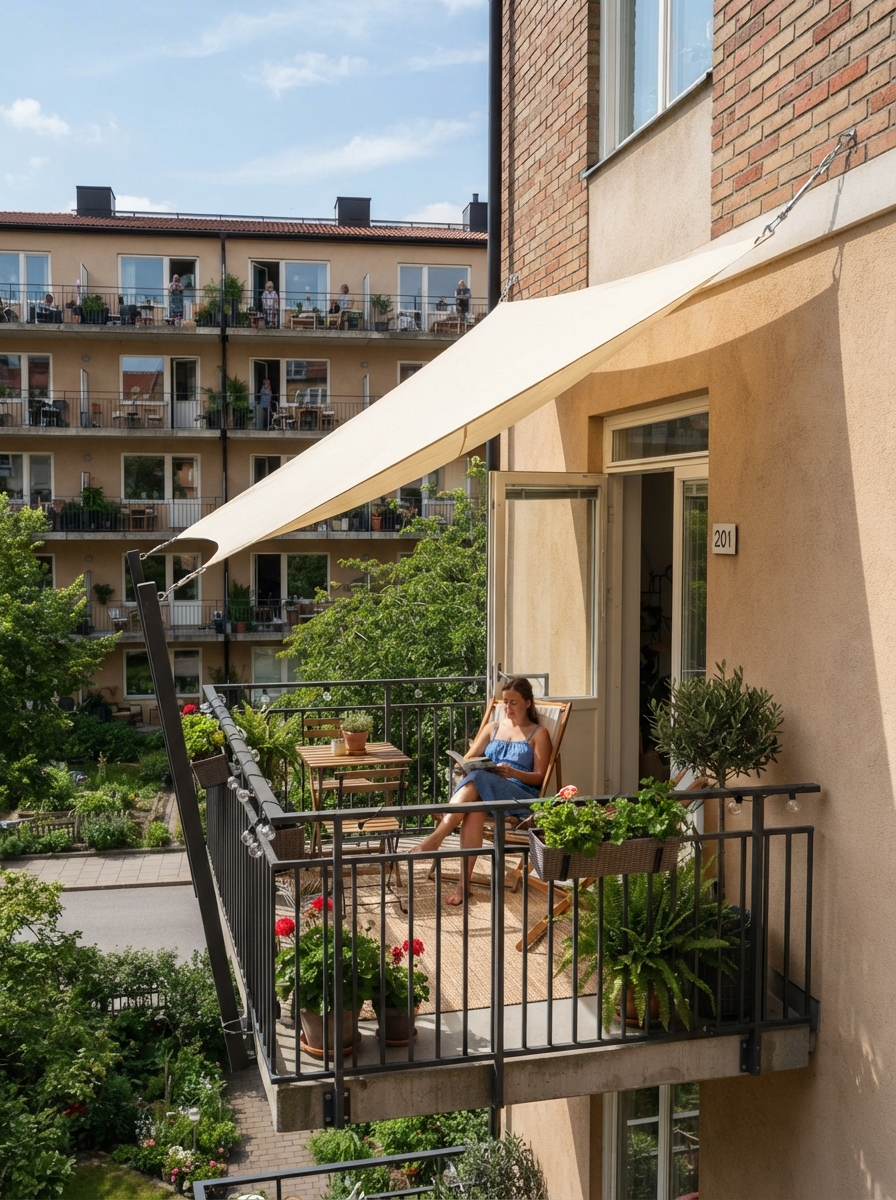
Balconies overlooked from above need a horizontal solution, not a vertical one. A retractable awning, a shade sail fixed diagonally, or a simple canopy frame handles it. Angle a shade sail rather than hanging it flat so rain runs off, and check your building’s rules before drilling into any exterior wall — most leases treat the facade differently from the balcony floor.
5. Anchor the Floor to Define the Space
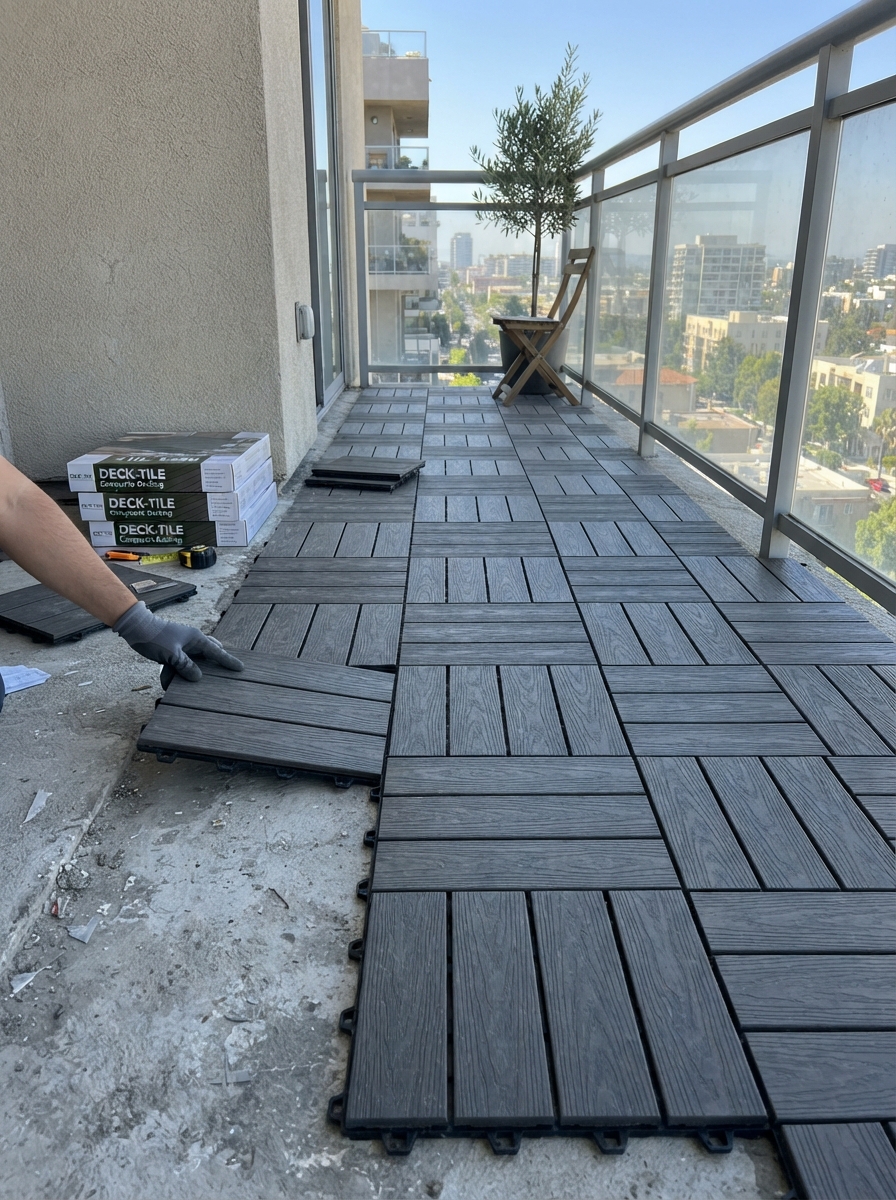
Outdoor floor tiles that click together over existing concrete, or a weatherproof rug, instantly change a balcony from leftover structure into a room. Composite deck tiles handle weather better than real wood and lift off if you move out. Whichever you choose, leave a drainage gap at the edges — anything that traps water against the floor will stain the surface underneath and cause problems with a landlord later.
6. Choose Furniture Scaled to the Depth You Have
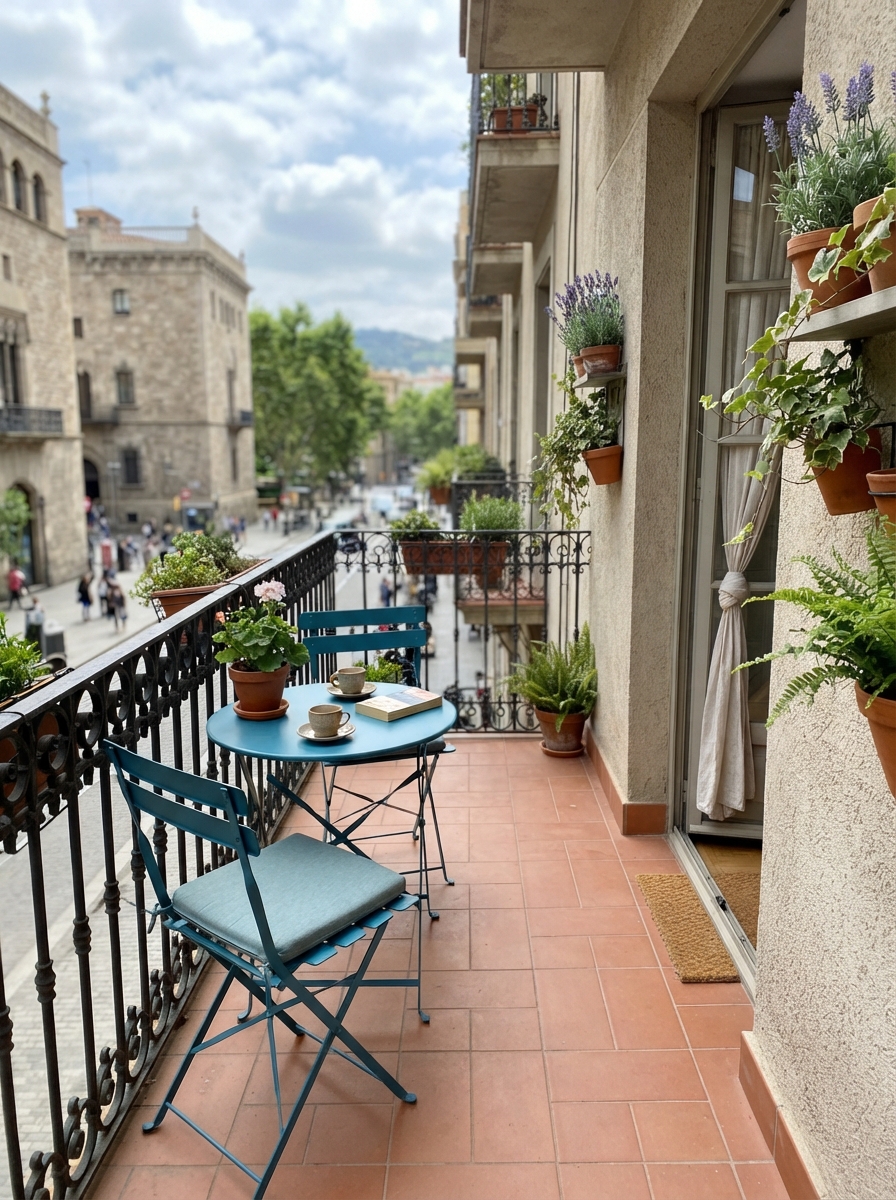
The most common balcony mistake is furniture designed for a garden. Measure the depth first: under 1.2m and you want a bistro set or a folding bench, over 1.5m and a small two-seater becomes possible. Furniture that folds flat against the wall is worth prioritising over furniture that merely looks compact, because a balcony you can clear in thirty seconds gets swept and used far more often.
7. Light It So the Space Works After Dark
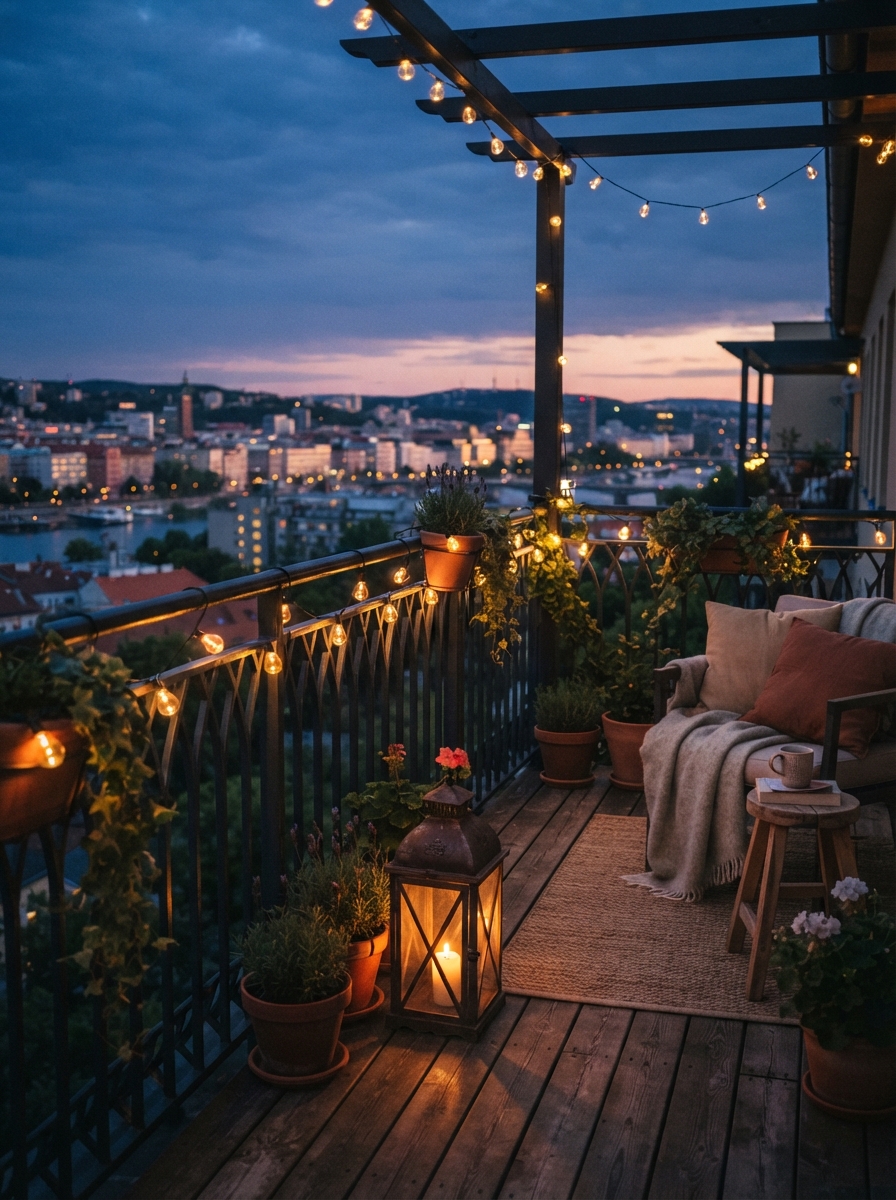
Balconies are used most in the evening, and overhead apartment lighting rarely reaches outside. Solar string lights along the railing, a battery lantern on the floor, and a single warm bulb near the door cover it without any wiring. Keep the light low and warm rather than bright and overhead — the goal is a pool of light that makes the balcony feel separate from the room behind it.
Balcony Privacy Ideas by Situation
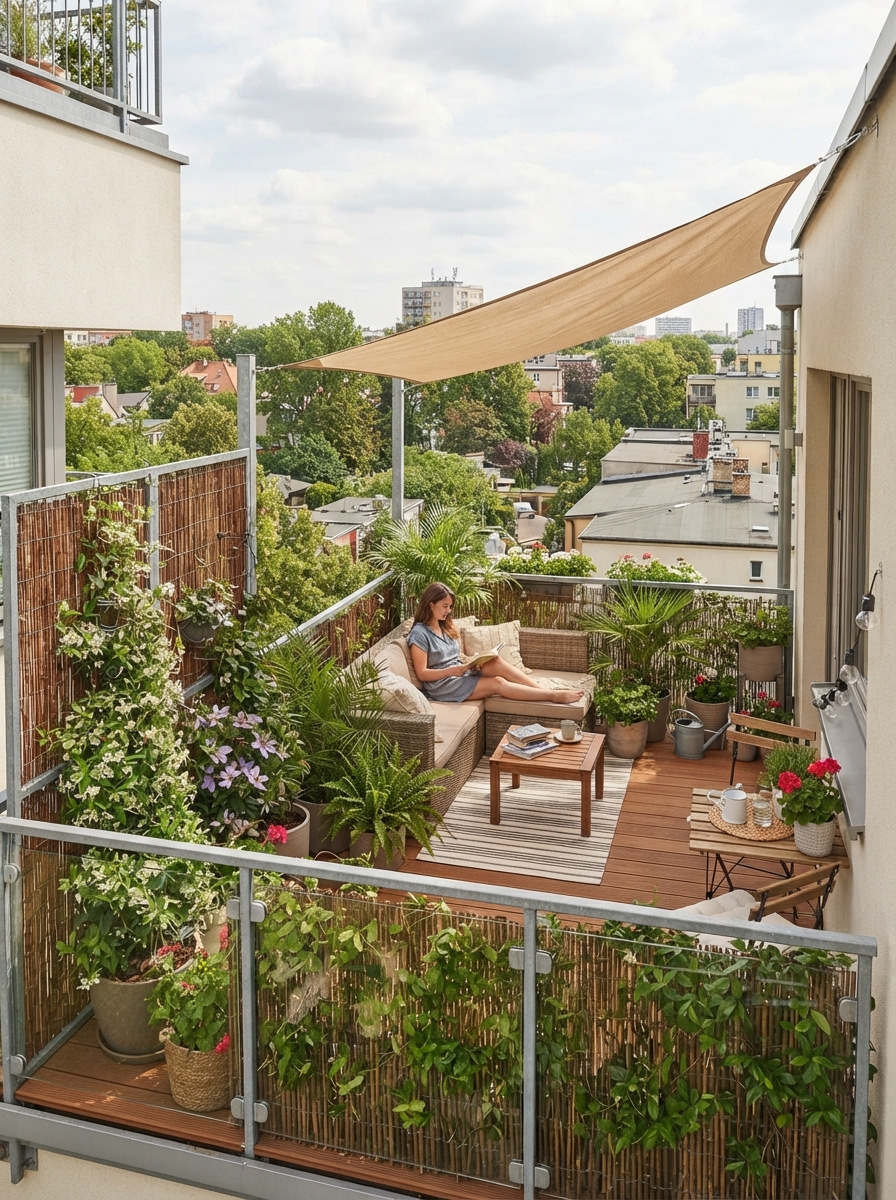
Overlooked From the Side
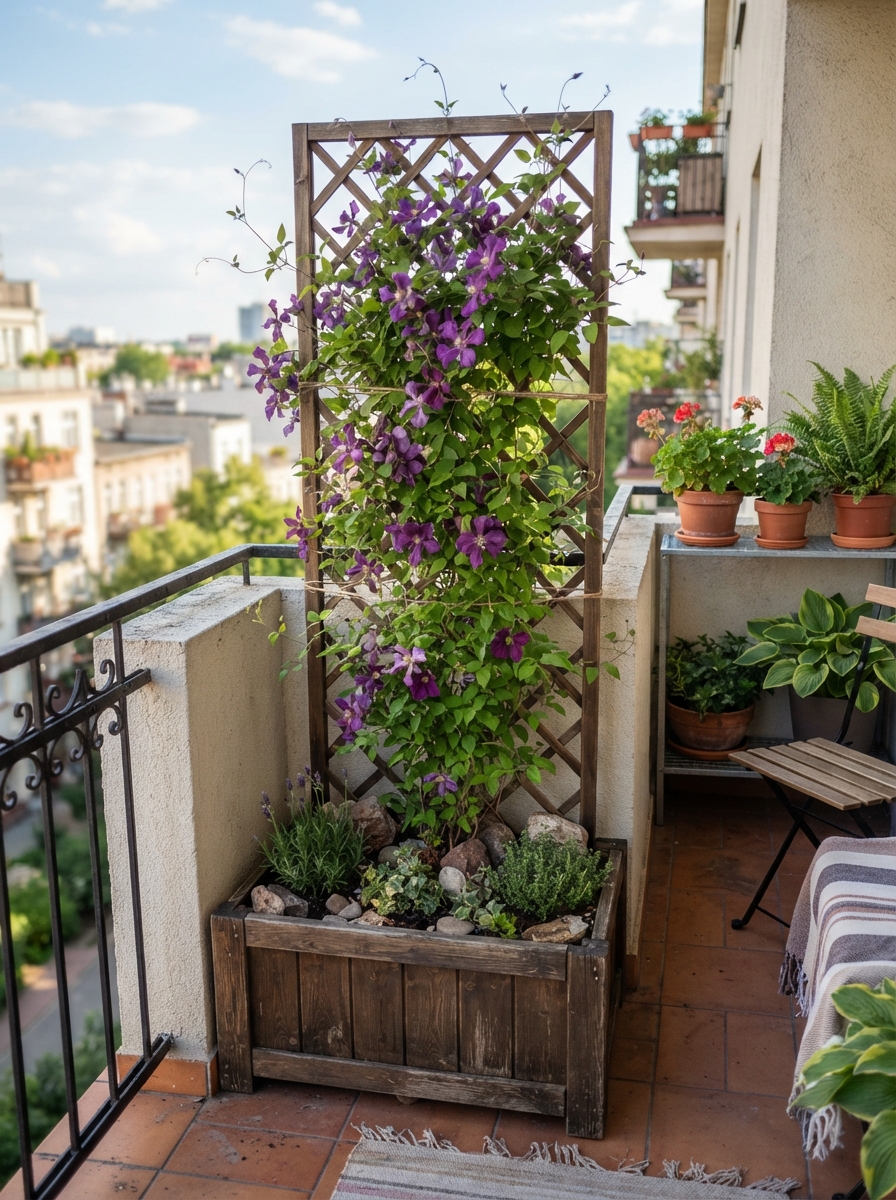
A single tall panel or trellis at one end handles this without enclosing the whole space. A freestanding trellis weighted in a planter avoids drilling altogether, and a climbing plant trained up it turns the screen into something worth looking at from your own side.
Overlooked From Above
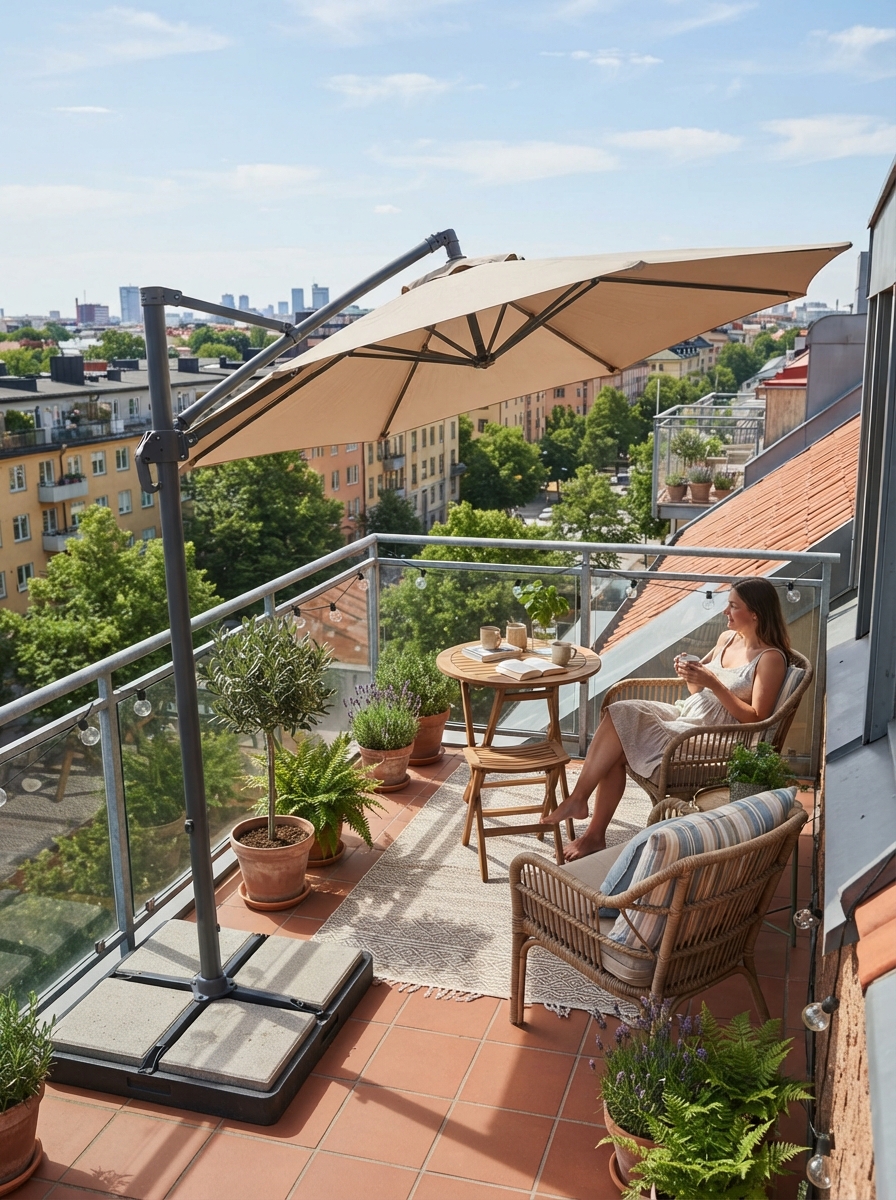
Vertical screening does nothing here. A shade sail, awning, or pergola-style frame is the only effective answer. If the building prohibits fixings, a freestanding cantilever parasol weighted properly gives the same coverage and can be taken down in high wind.
Facing a Busy Street
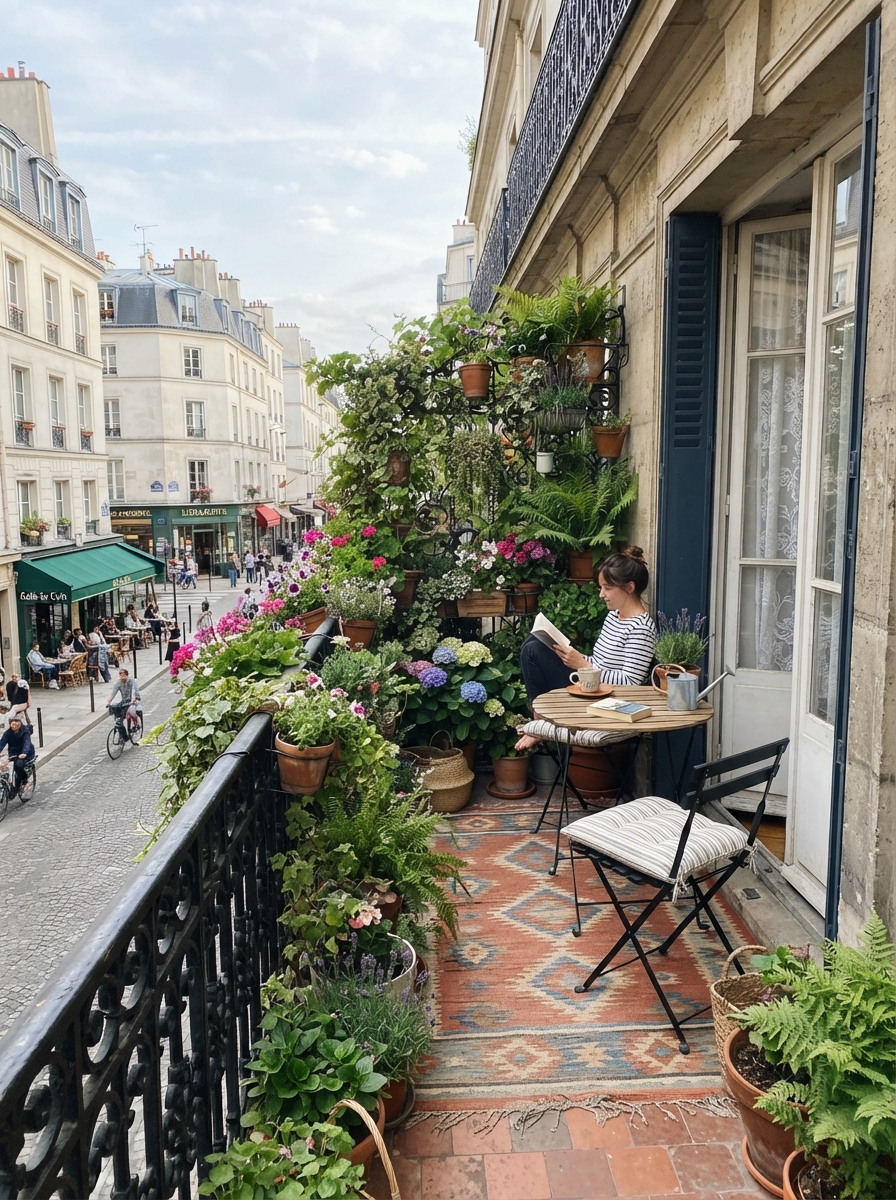
Here you’re managing noise as much as sight. Dense planting along the railing absorbs some sound, and a solid screen rather than a slatted one makes a measurable difference. Soft furnishings help too — an outdoor rug and cushions take the hard edge off sound bouncing between concrete surfaces.
Shared or Divided Balconies
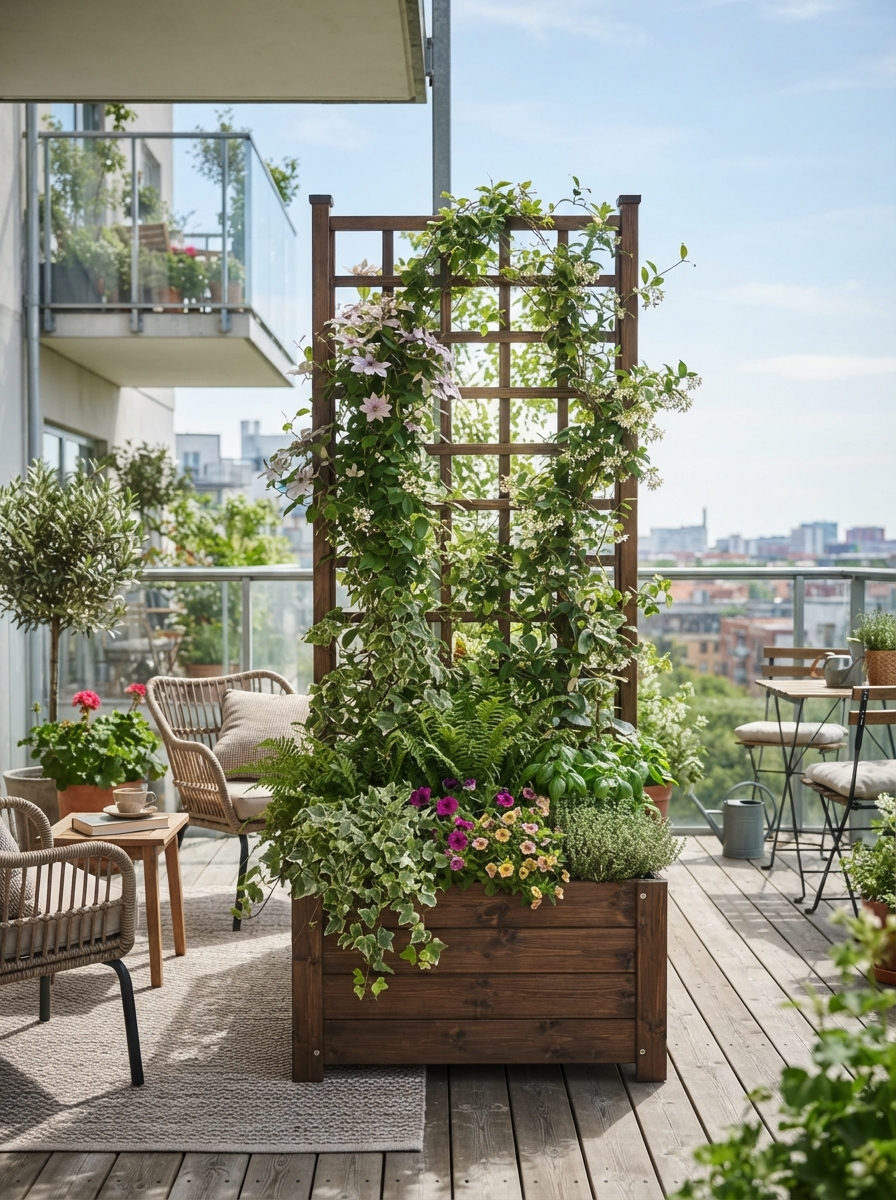
Where a balcony is split between two apartments, a freestanding divider is usually the only permitted option. A tall planter box with trellis above sits on your side of the line, needs no fixings into shared structure, and avoids the awkward conversation that comes with attaching anything to a neighbour’s boundary.
Choosing Plants That Survive a Balcony
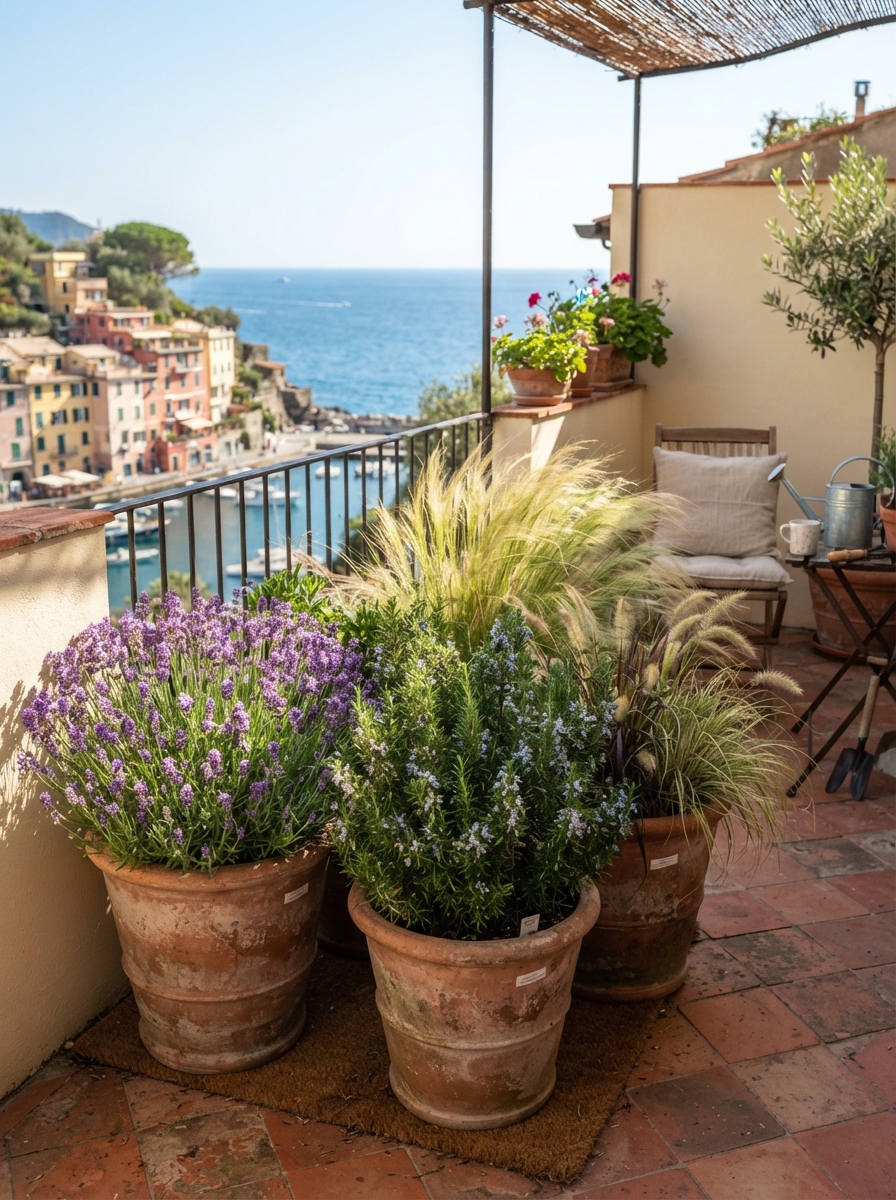
Balconies are harsher than gardens: more wind, more reflected heat off walls, and containers that dry out fast. Mediterranean plants like lavender, rosemary, and olive handle it well, as do ornamental grasses and sedum. Group containers together so they shade each other’s roots, and choose the largest planters you can accommodate — small pots on an exposed balcony need watering twice a day in summer. If you have pets who spend time outside with you, check anything new against a reliable toxicity list before buying.
Weight, Drainage, and What Your Building Allows
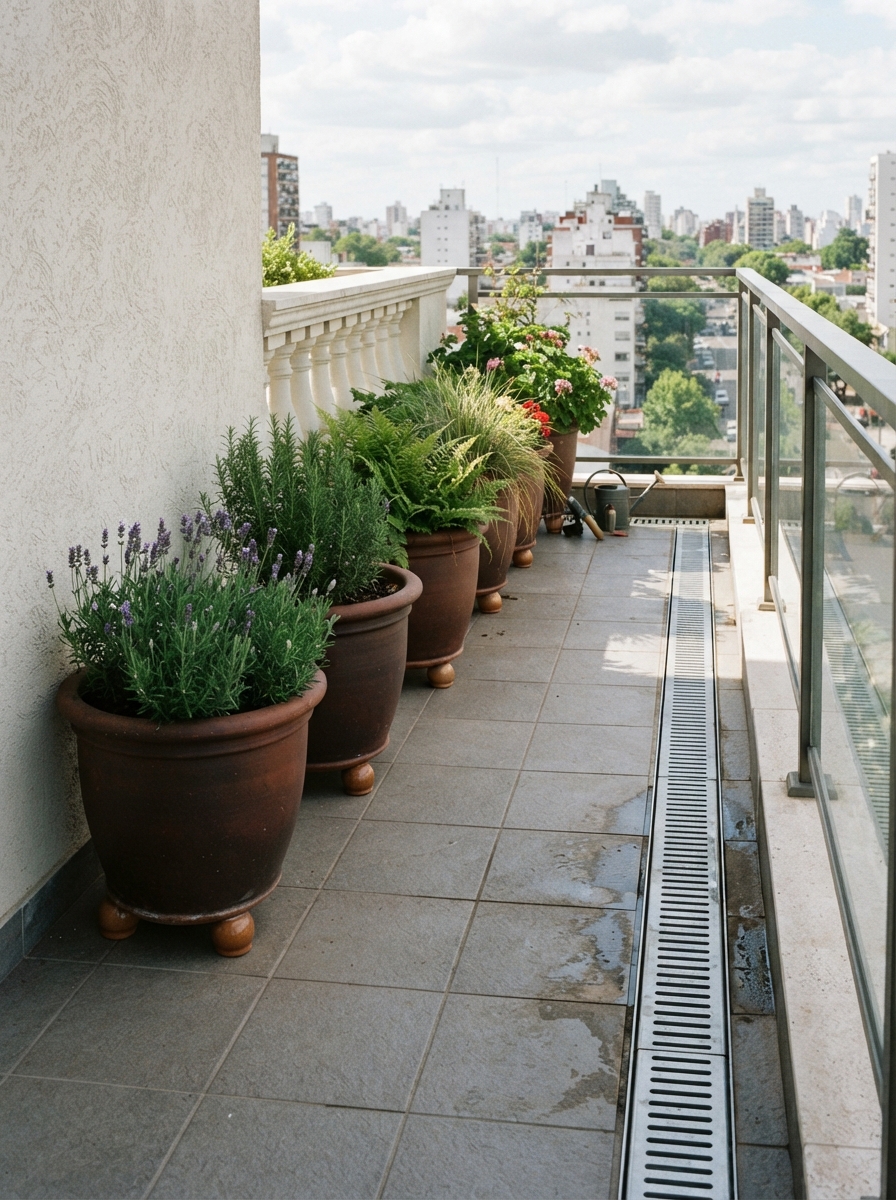
Balconies have load limits, and wet soil is heavy — a large planter can weigh over 80kg once watered. Keep heavy containers near the wall or over structural supports rather than out at the railing edge, and check your lease or building rules before fixing anything to walls, railings, or the ceiling. Drainage matters just as much: never block the drainage channel at the edge, and use pot feet so water can’t pool underneath and mark the floor.
Small Balcony Storage That Doesn’t Eat the Space
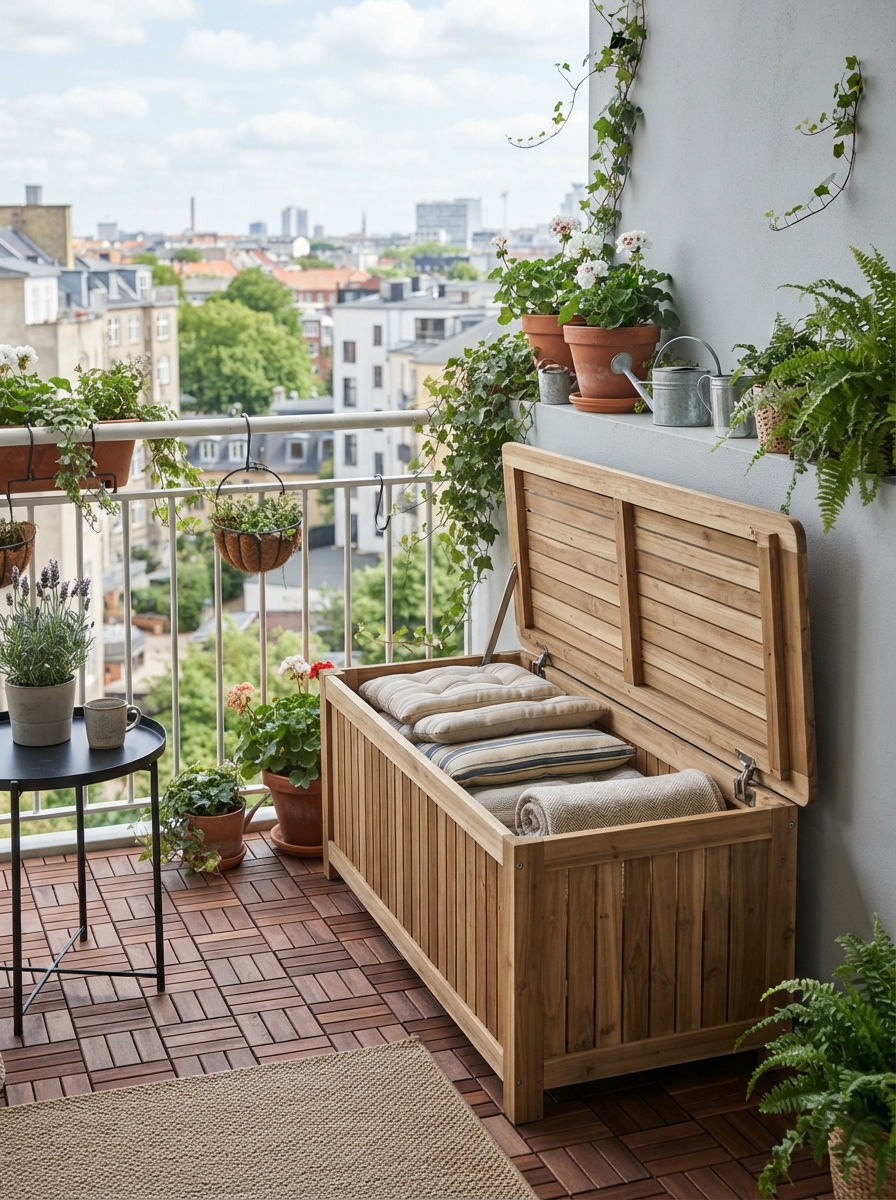
A weatherproof bench with a hollow seat is the highest-value piece on a small balcony, because it stores cushions and tools while remaining somewhere to sit. Beyond that, go vertical: a narrow wall-mounted cabinet, hooks for a folded drying rack, and a hanging organiser on the railing for small tools. Anything that occupies floor space without doubling as seating is usually the wrong choice.
Balcony Decor Ideas on a Budget
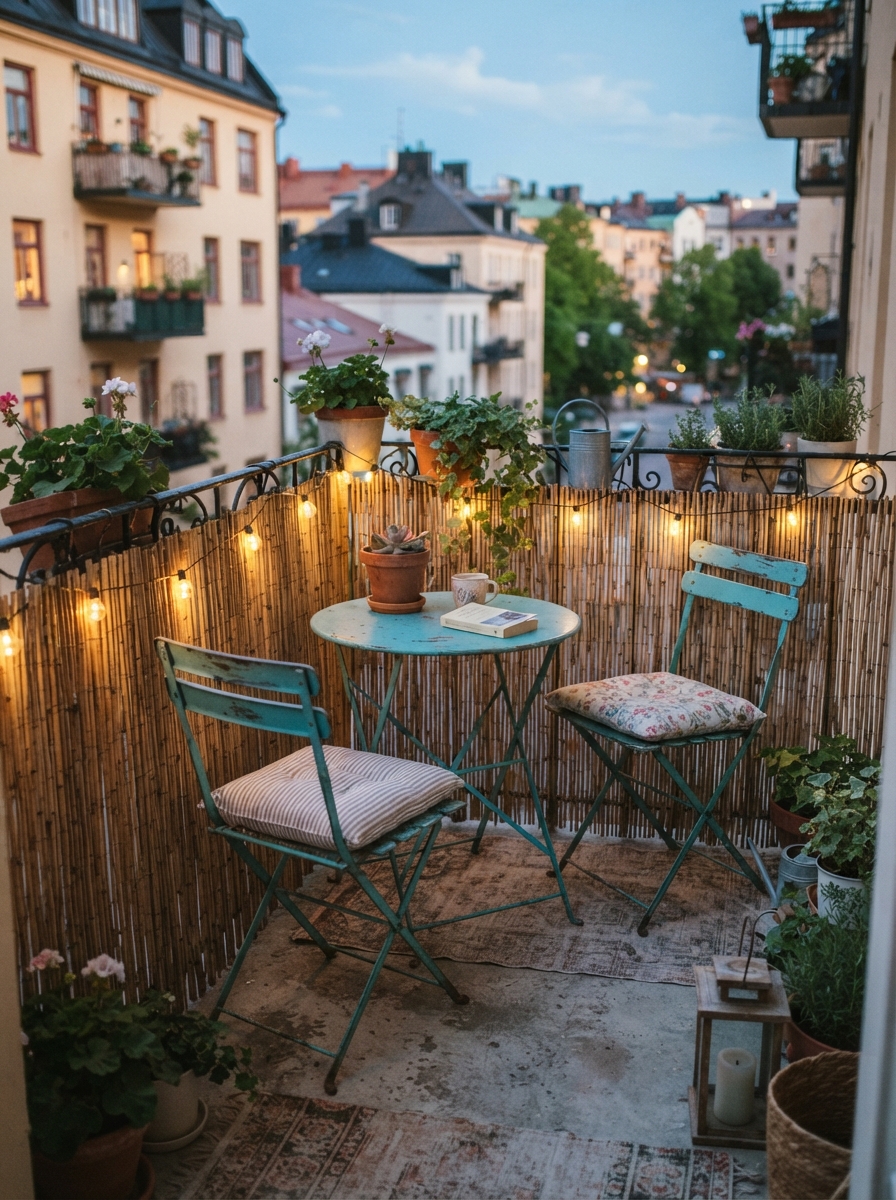
Reed screening, solar lights, and a set of deck tiles together cost less than a single piece of outdoor furniture, and they do most of the work of transforming the space. Secondhand marketplaces are full of barely used bistro sets at the end of every summer. The one thing worth buying new is anything structural — a cheap parasol base or an underweighted freestanding screen becomes a hazard in wind rather than a saving.
Keeping a Balcony Usable Through the Year
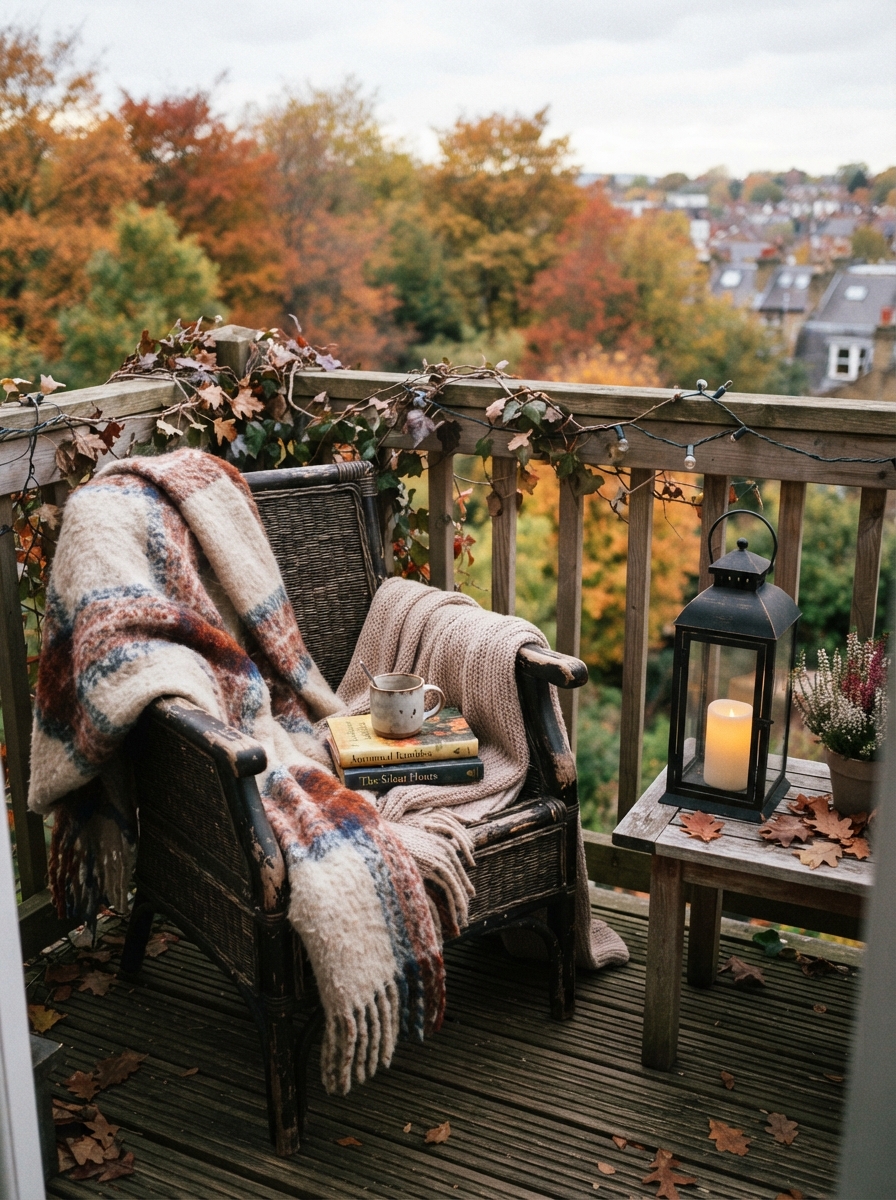
The balconies that get used are the ones set up for more than eight weeks of summer. An outdoor blanket basket, a weatherproof cushion box, and lighting that works in winter extend the season considerably. Store soft furnishings inside the bench between uses rather than leaving them out, since the fastest way to stop using a balcony is discovering everything on it is damp.
Balcony shopping list
- Reed fencing roll — fastest privacy fix
- Shade sail — the only answer for overlooking above
- Interlocking deck tiles — click over concrete, lift when you move
- Balcony bistro set — measure depth before buying
- Large outdoor planters — bigger pots need less watering
- Solar string lights — no wiring, works from spring
Prices and availability change. Links open on Amazon.
Common Balcony Decorating Mistakes to Avoid
Enclosing the entire balcony is the mistake people regret most — it kills the light and turns a small space into a box. Others worth avoiding: buying garden-scale furniture that leaves no room to walk past, fixing screening to walls without checking the lease, blocking the drainage channel with tiles or planters, using pots too small to survive a hot week, and hanging anything heavy from a railing that was never designed to carry a load. Finally, resist styling the balcony before solving the sightlines, because no amount of cushions makes a space comfortable if you feel watched sitting in it. If you want to go further, 15 small bedroom storage ideas that maximize space covers it in detail.
Final Thought
Balcony privacy isn’t about hiding — it’s about making the space feel like it belongs to you rather than to the building. Fix the one sightline that actually bothers you, add height with plants instead of walls, get the floor and the lighting right, and a strip of concrete you currently walk past becomes the room you use most from spring onward.
Frequently Asked Questions
What is the cheapest way to make a balcony private?
Reed or willow screening cable-tied to the railing. It costs very little, requires no fixings into the building, and can be removed without a trace when you move.
How do I get privacy from neighbours above?
Only an overhead solution works — a shade sail, awning, or canopy frame. Vertical screening on the railing has no effect on a view from above.
Can I attach a privacy screen to my balcony railing?
Usually yes for lightweight screening tied to the railing, but check your lease first. Fixings into walls, ceilings, or the building facade are often prohibited even when railing attachments are allowed.
What plants give the most privacy on a balcony?
Bamboo in a deep trough, tall ornamental grasses, and narrow columnar shrubs give height fastest. Check mature spread as well as height so the plant doesn’t outgrow the space within two seasons.
How much weight can a balcony hold?
It varies by building and should be confirmed with your building management rather than assumed. As a practical rule, keep heavy planters close to the wall rather than at the railing edge, and remember wet soil is far heavier than dry.
Are outdoor rugs a good idea on a balcony?
Yes, provided they’re designed for outdoor use and lifted occasionally to dry. A rug that traps moisture against the floor will stain the surface underneath and can cause problems at the end of a tenancy.



4 Comments