
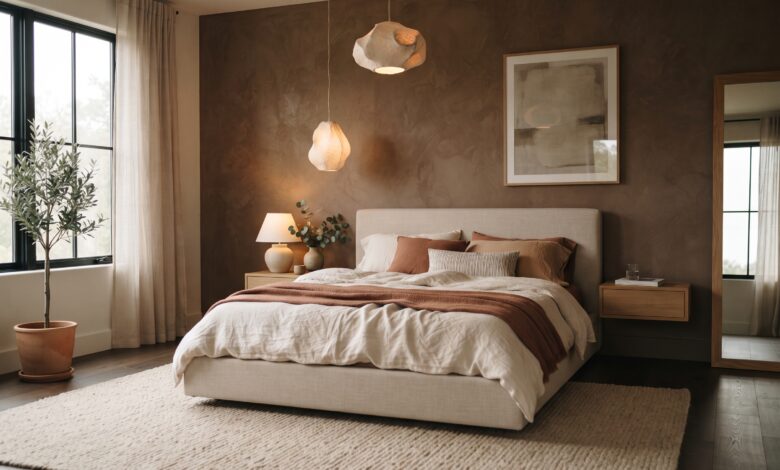
Bedroom ideas are shifting away from all-white minimalism and toward something warmer, richer, and far more personal. The bright, airy aesthetic that dominated interior design for the better part of a decade is giving way in 2026 to rooms layered with texture, wrapped in saturated color, and designed to feel like a genuine retreat rather than a catalog shoot. That shift changes almost every decision you’ll make, from paint color to furniture placement to the lights you flip on before bed.
As an Amazon Associate I earn from qualifying purchases. Some links in this post are affiliate links, at no extra cost to you.
This guide is built around three variables: your style preference, your room size, and your budget. Whether you’re working with a 10×10 studio bedroom or a spacious master suite, the advice here scales. By the time you finish reading, you’ll have a clear style direction, a bedroom color scheme suited to your space, a layout strategy, and at least one project you can start this weekend. Aesthetic Nest Decor covers room-specific design in much more detail across the site, so bookmark it as your deeper resource when you’re ready to go further. If you want to go further, cozy bedroom on a budget: 13 simple tips that work (2026) covers it in detail.
Bedroom ideas: the styles everyone is choosing in 2026
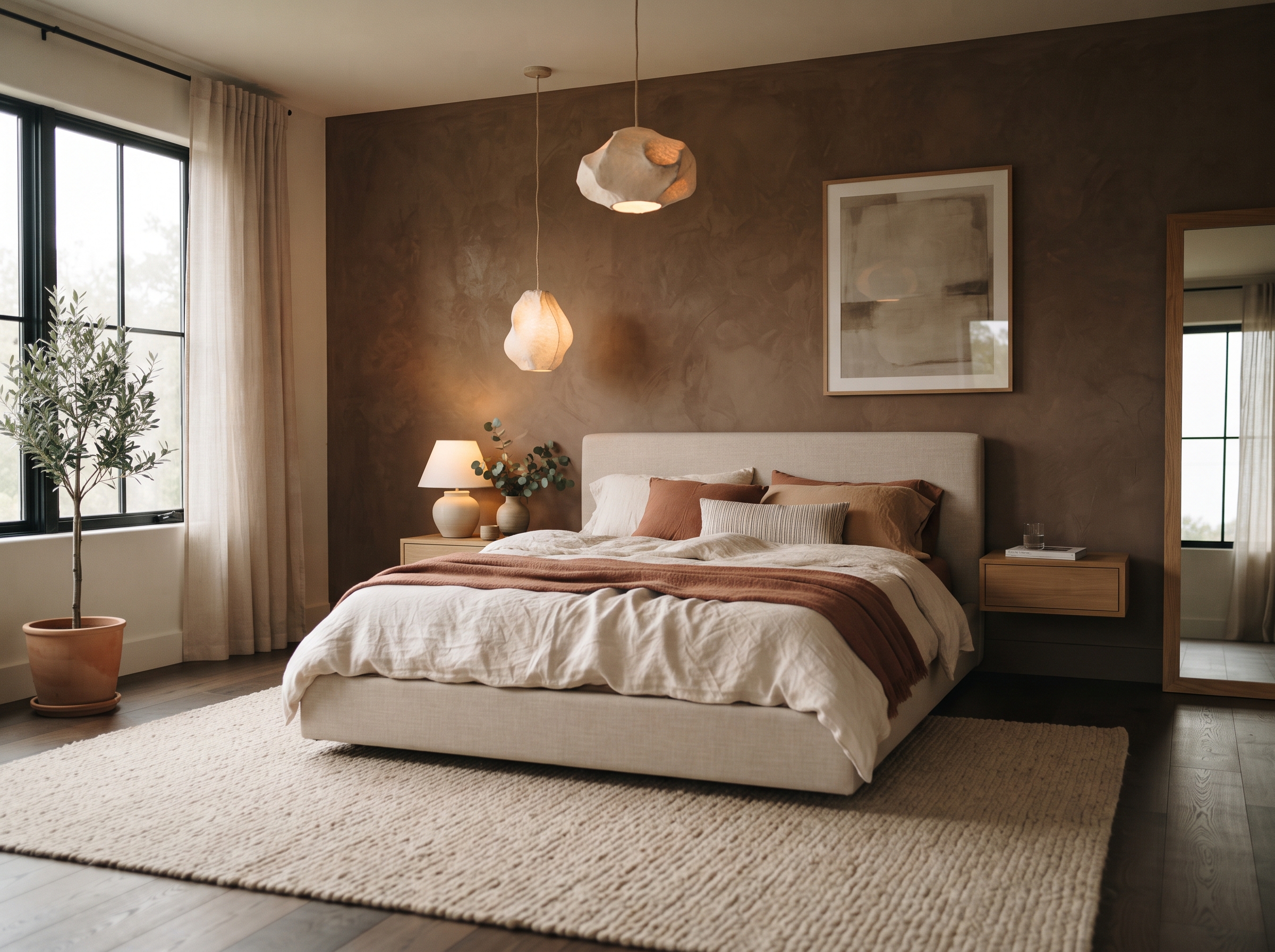
Three design directions are dominating US bedrooms this year, and they’re worth understanding before you start shopping or painting. None of them are prescriptive rules. Think of them as three distinct directions you can navigate toward, so you can recognize which one already matches your instincts.
Cocoon and soft maximalist bedrooms
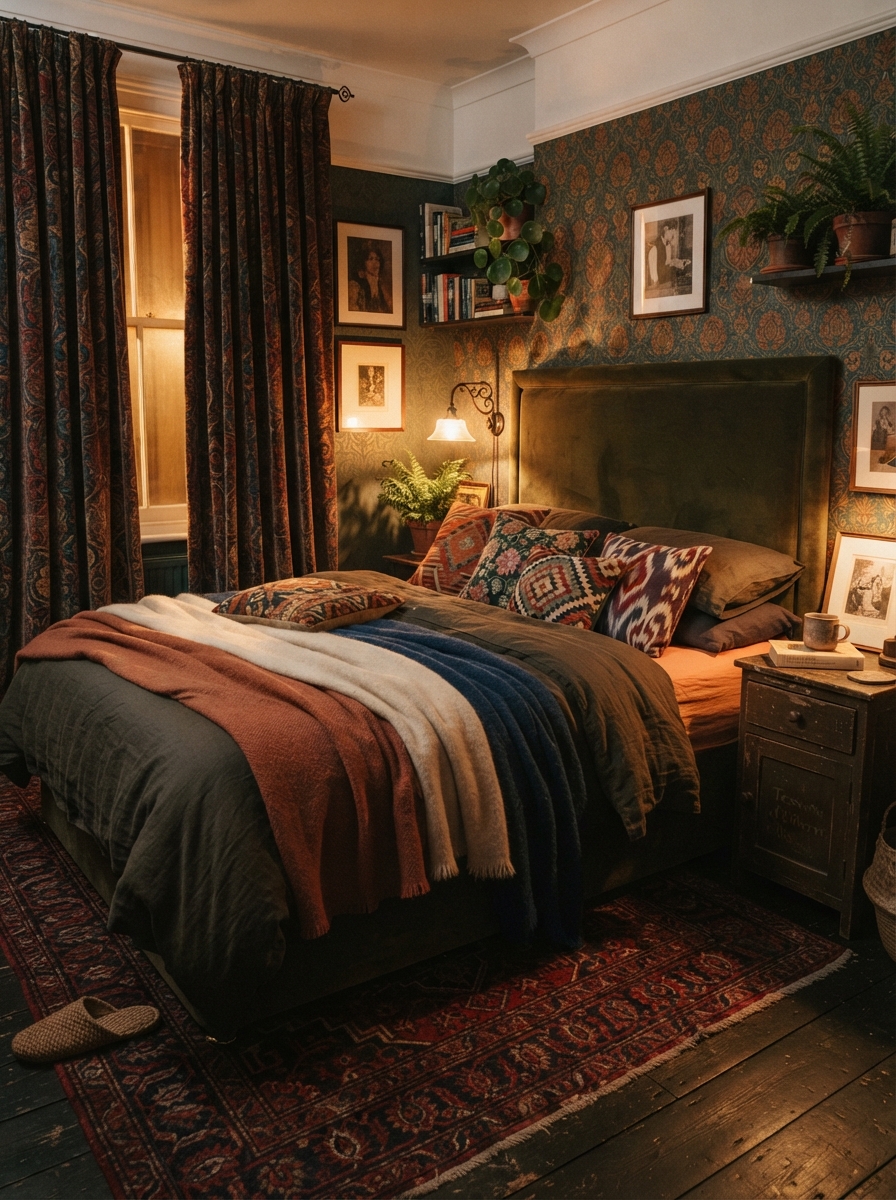
The cocoon bedroom is the defining look of 2026: tall upholstered headboards, padded wall panels, blackout curtains that pool to the floor, and bedding layered thick enough to sink into. It’s a fully intentional retreat from overstimulation, and it works because every material choice reinforces one goal: comfort. Soft maximalism operates in the same emotional register but turns up the visual richness, layering patterned textiles, complementary prints, and a mix of materials like washed linen, mohair, and silk without letting the room tip into chaos.
Minimalist and analog-inspired spaces
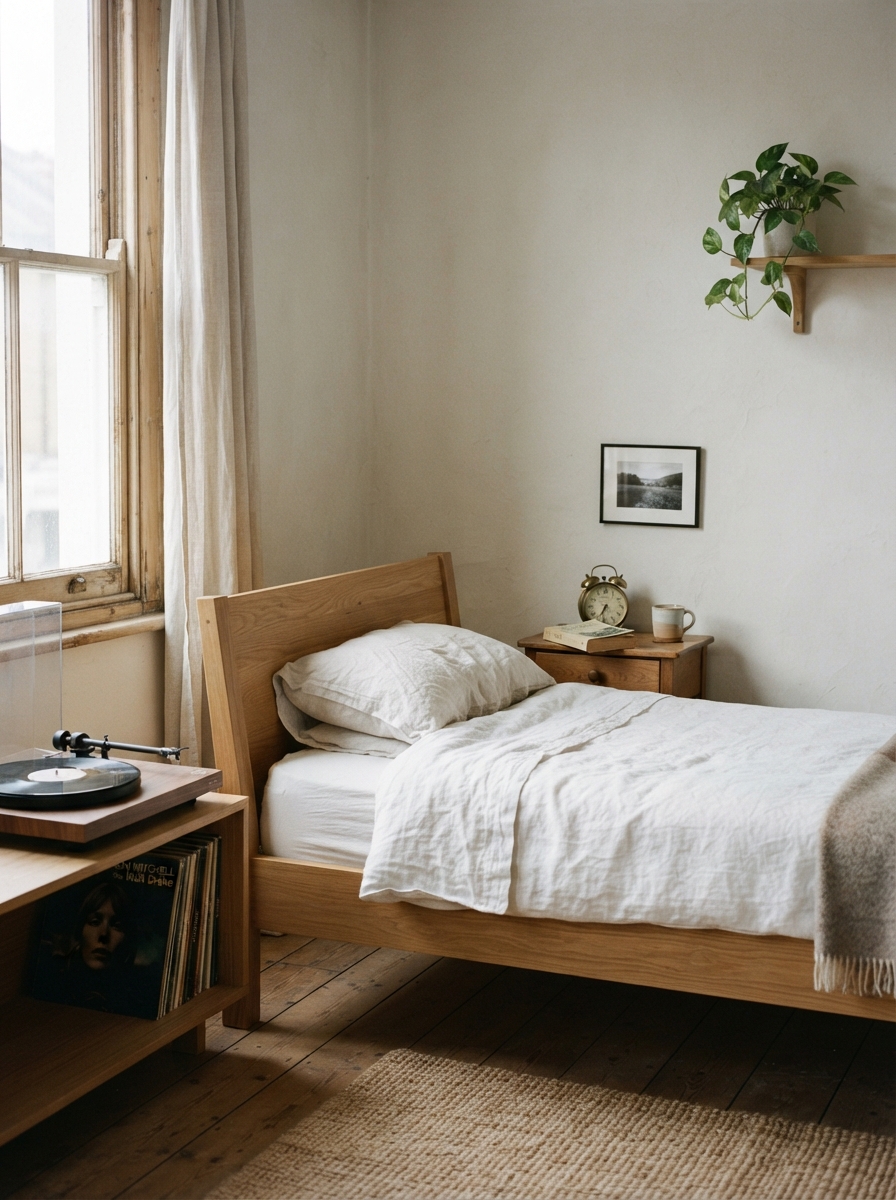
On the quieter end of the spectrum, the analog bedroom strips the room back to its essential function: sleep. Natural white oak furniture, minimal surfaces, and a deliberate absence of screens define this look. It appeals to anyone who genuinely wants their bedroom to function as a sleep sanctuary rather than a secondary living room. This style pairs especially well with warm minimalist palettes built around cream, stone, and muted terracotta instead of the cool grays that used to define “modern.”
Color-drenched and pattern-forward bedrooms
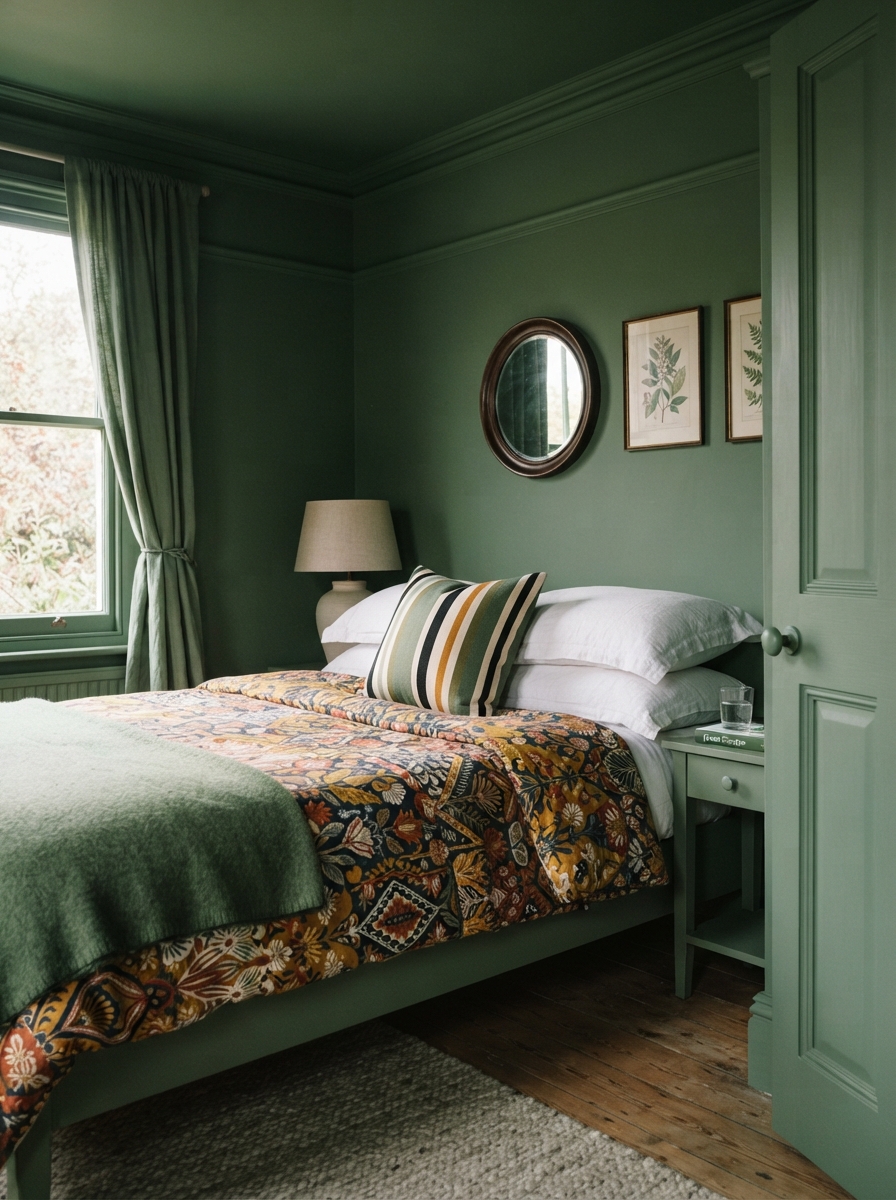
Color drenching means painting the walls, ceiling, and trim in the same saturated hue so the room becomes immersive rather than just decorated. Pattern-forward bedrooms take a similar all-in approach with bold wallpaper on a feature wall or coordinated prints across multiple surfaces. Both styles sound bold, but they work even in smaller rooms when you commit fully rather than hedge with too many contrasting elements.
Bedroom color schemes that work for your space
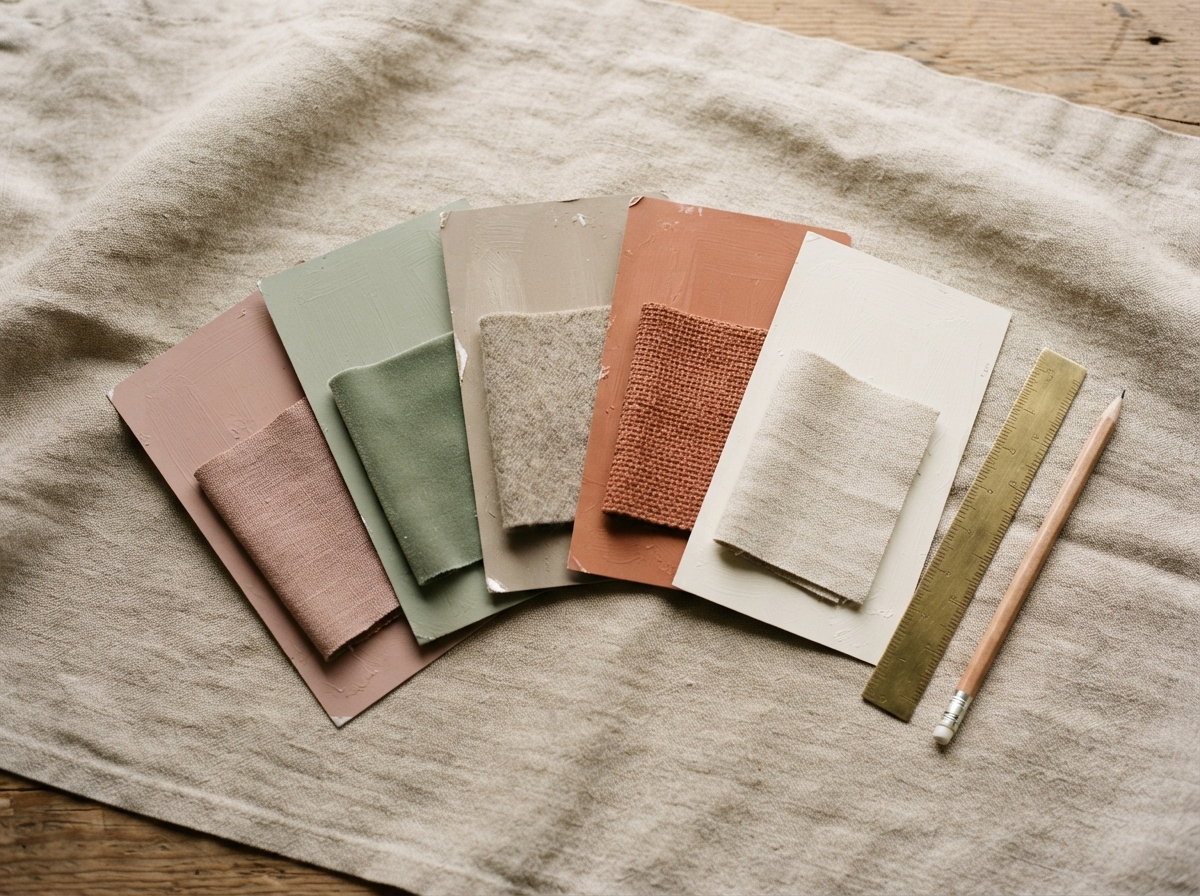
The right palette depends on two things: the size of your room and the mood you want it to create. “Use light colors in small rooms” is common advice, but it’s incomplete. The finish, undertone, and how consistently the color is applied across surfaces matter just as much as the hue itself.
Light palettes that visually expand small bedrooms
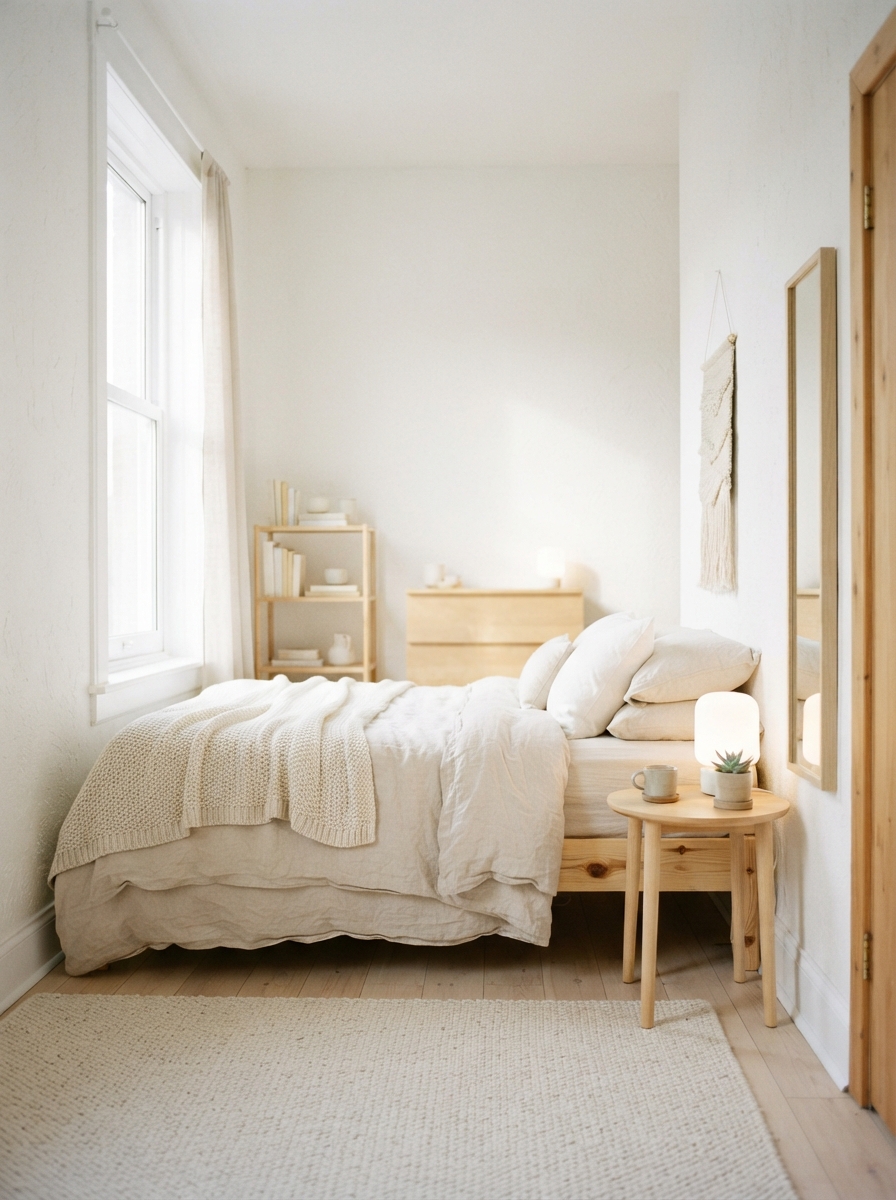
Warm whites, creamy off-whites, pale greige, muted sage, and soft blue-gray are the shades that consistently make smaller rooms feel intentional rather than cramped. The key technique is going monochromatic: use the same tone across walls, trim, and bedding. When the room’s boundaries visually blur together, the space reads as larger and calmer. Avoid stark, cool whites in small bedrooms; they tend to feel clinical rather than airy, and they highlight every imperfection in the wall.
Rich, saturated tones for a cocooning feel
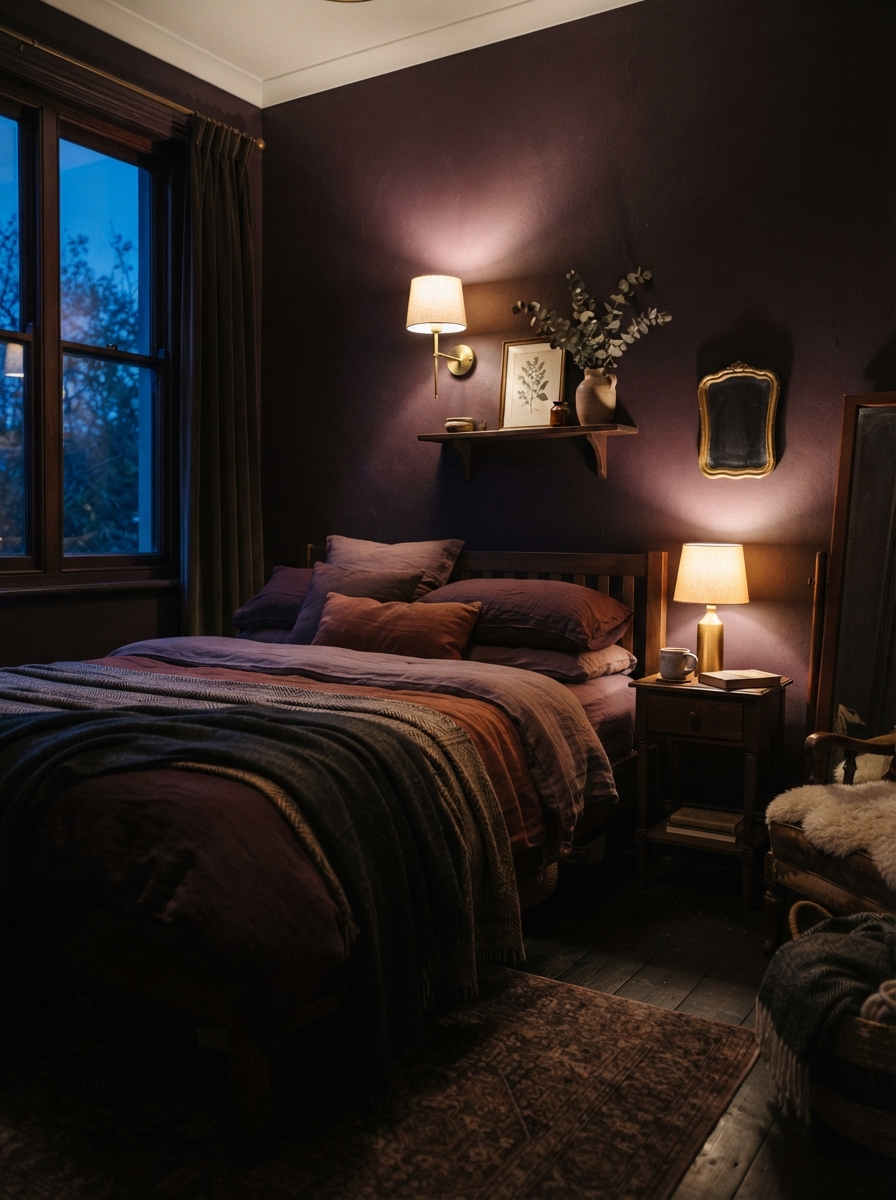
Burgundy, plum, terracotta, chocolate brown, and forest green are the palette anchors for 2026’s most covetable bedrooms. These colors work particularly well in rooms with adequate natural light, where the depth of the wall color is balanced by daylight rather than absorbed by it. Painting the ceiling the same color as the walls is a commonly recommended high-impact, low-cost trick for creating that enveloping cocoon effect without requiring expensive materials or structural changes.
How to build a two-tone scheme that doesn’t look cheap
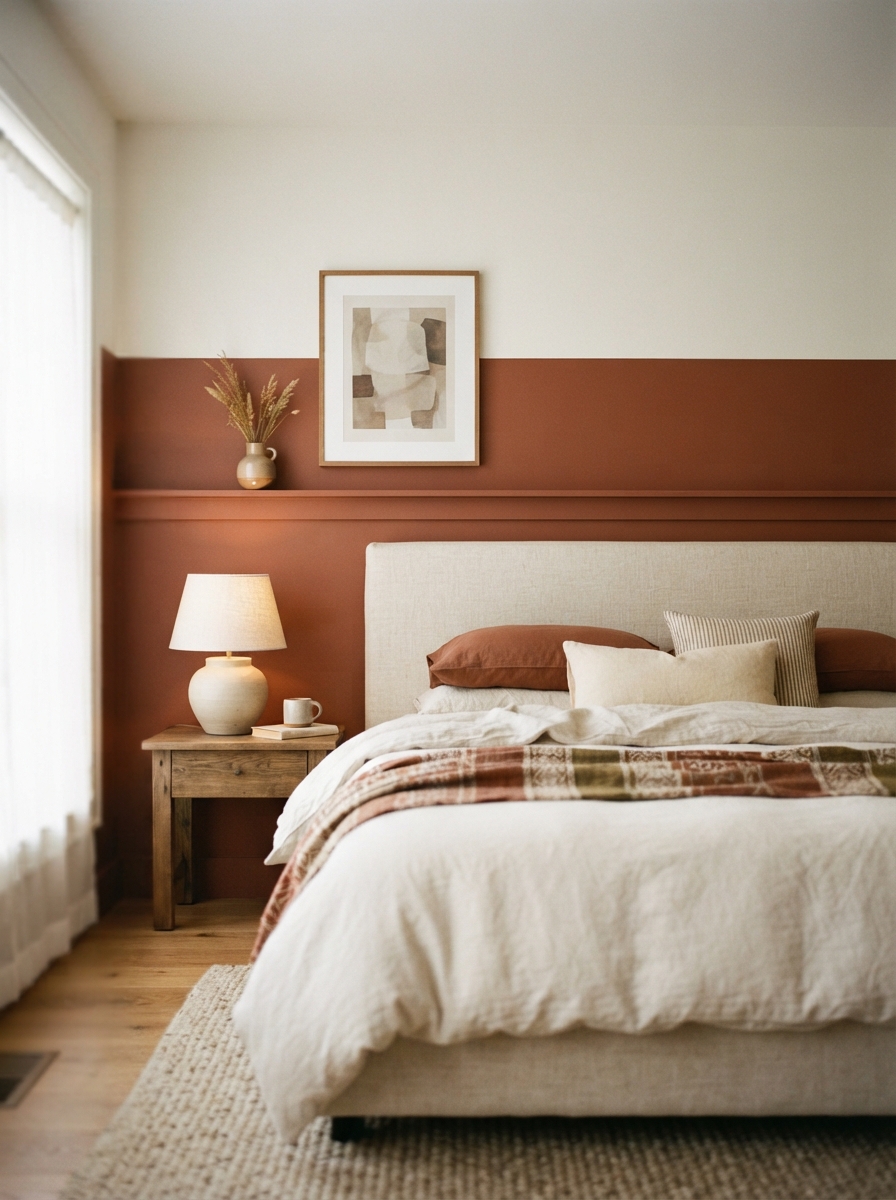
The formula is simple: one dominant anchor color for the walls, one warm accent expressed through textiles and decor. Some of the strongest pairings trending right now include chocolate brown walls with camel and cream bedding, forest green walls with natural linen and brass hardware, and terracotta walls with soft white and warm wood. The mistake most people make is introducing too many accent colors, which dilutes the impact and makes the room feel unfocused. Pick two, and let them repeat throughout the space.
Small bedroom ideas: layout and storage for every room size
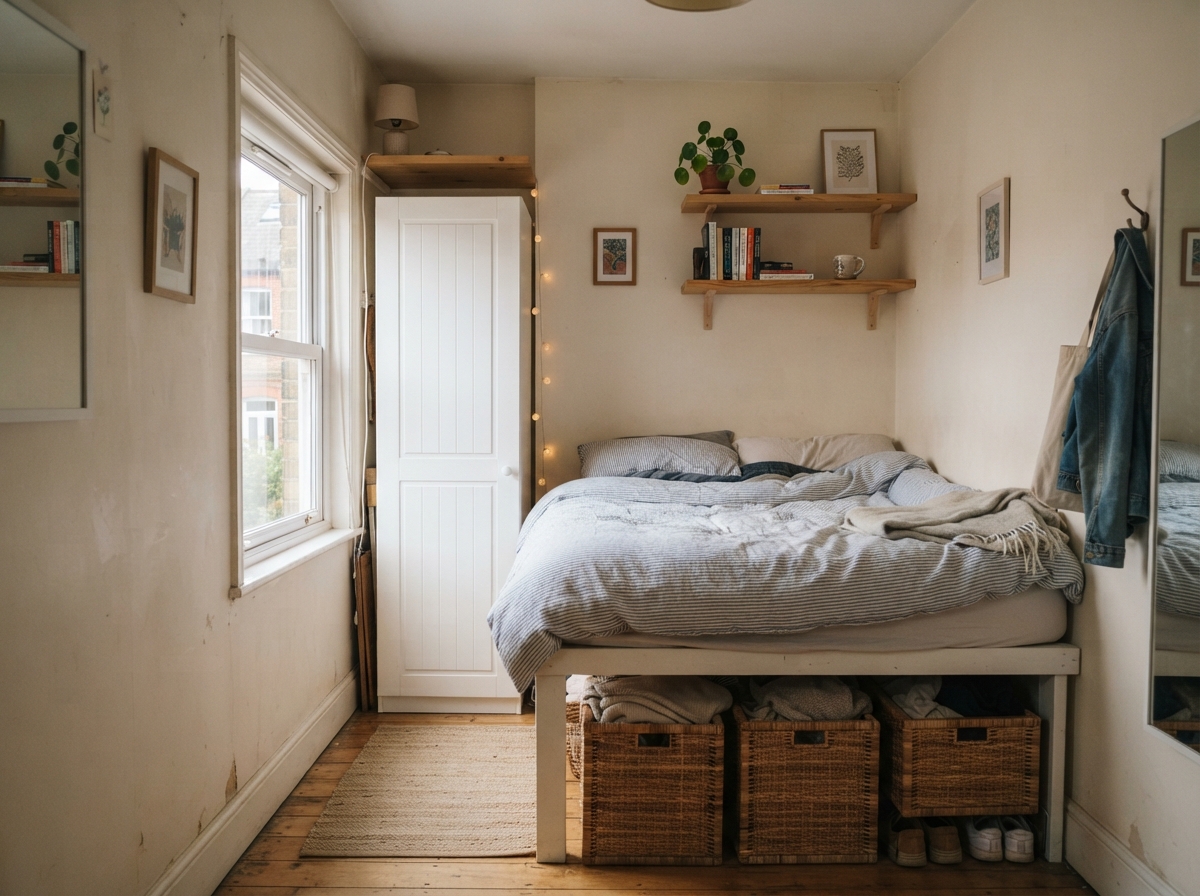
Furniture choices in a bedroom are dictated by square footage more than any other single factor. A beautiful piece that crowds a small room creates friction every time you walk through the door. Getting the layout right first makes every other design decision easier.
Small bedrooms under 10×12 feet: the multifunctional furniture rule
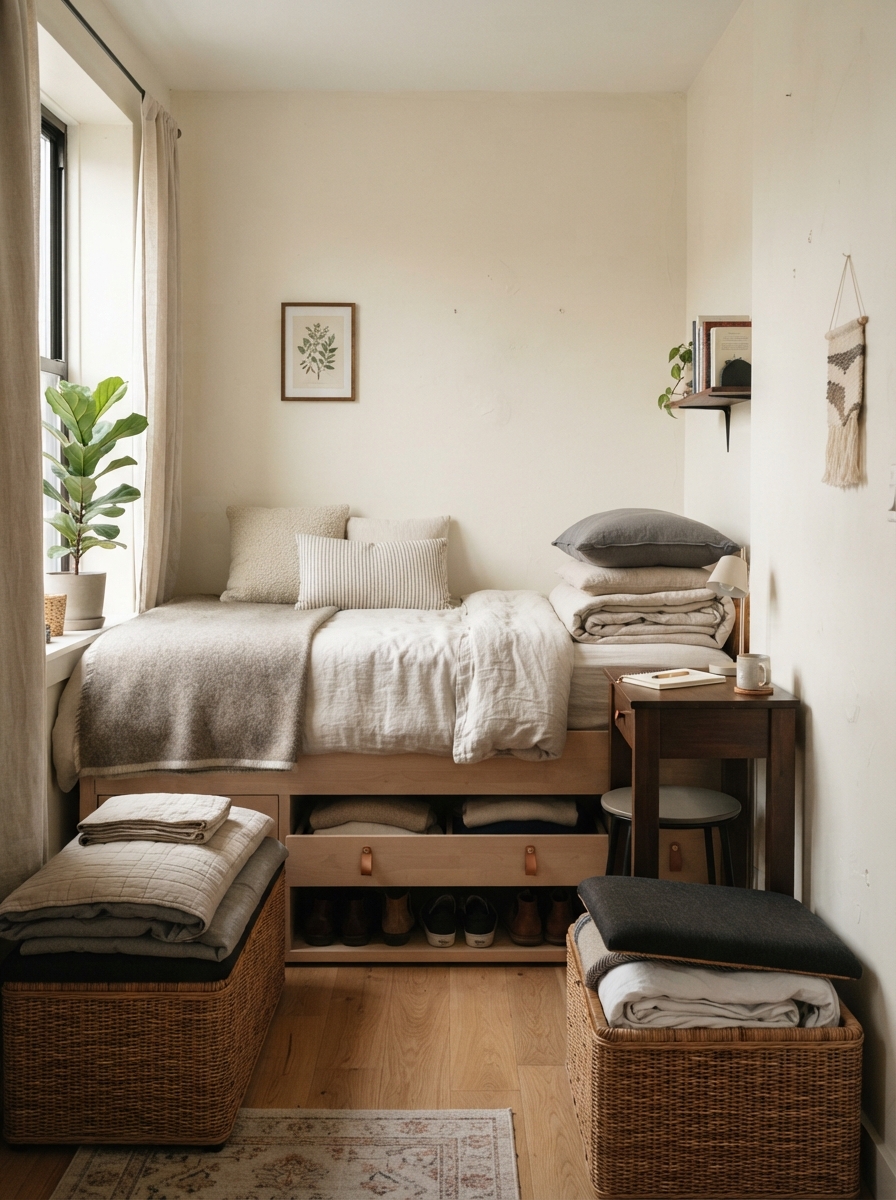
A storage bed with built-in drawers or lift-up storage is the single best investment for a tight room. It converts your largest piece of furniture from a space hog into a storage solution. There is more of this in our guide to small bedroom storage ideas, which works through vertical space, closets and the spots most people overlook. Pair it with wall-mounted floating nightstands to keep the floor clear, and choose a tall, narrow dresser over a wide low one to prioritize vertical space. Sliding-door wardrobes are often preferable to hinged doors in rooms with limited clearance because they require zero swing space. Keep the floor as clear as possible: this is what actually makes a small bedroom feel larger, not just lighter colors.
Mid-size and master bedroom layouts: zoning and focal points
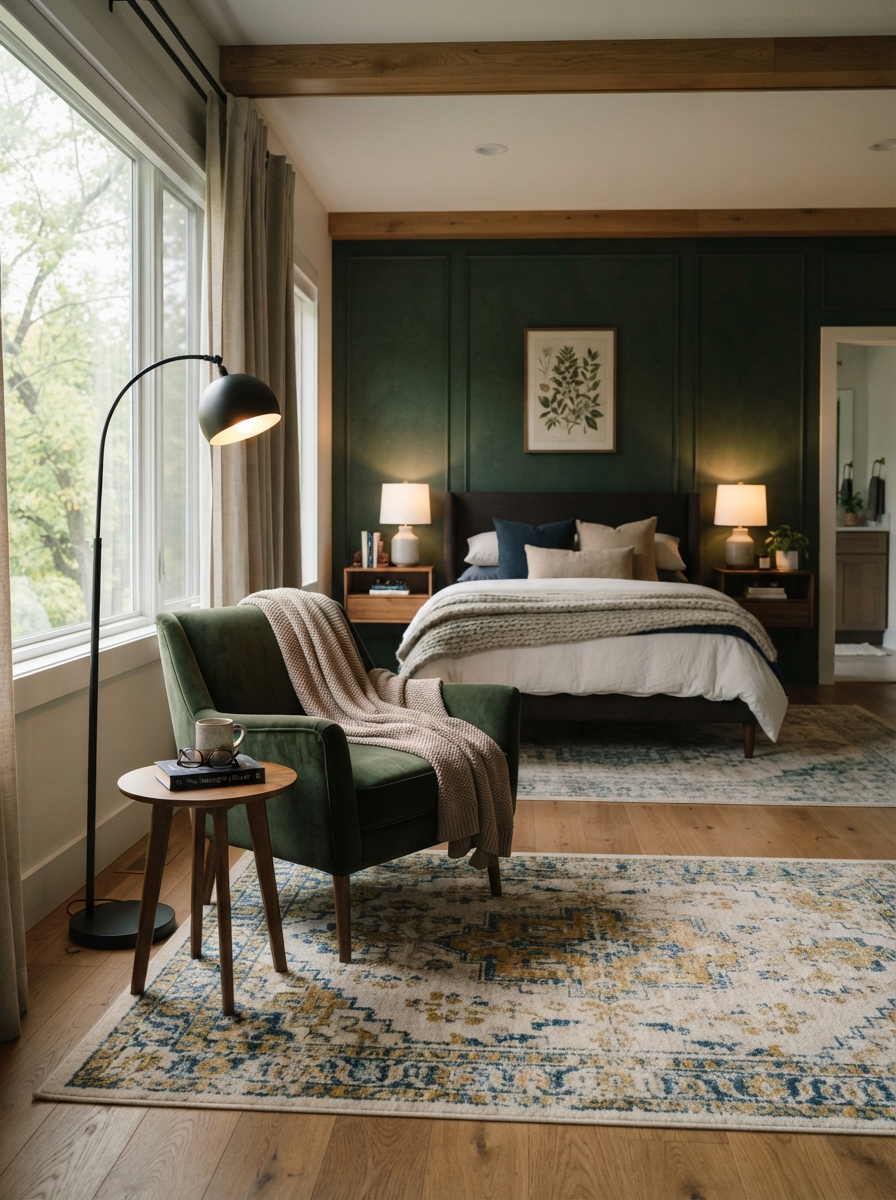
In a larger room, the challenge shifts from fitting everything in to giving the room a clear sense of purpose and direction. Anchor the space with a statement bed, then build out from there. An area rug defines a reading or dressing zone without requiring walls or partitions. Master bedroom layouts benefit from symmetry more than any other room in the house: matching nightstands, balanced lighting on both sides of the bed, and equal visual weight on each side of the headboard create the kind of calm, considered look that makes a room feel finished rather than furnished.
Lighting and decor layering that changes the whole room
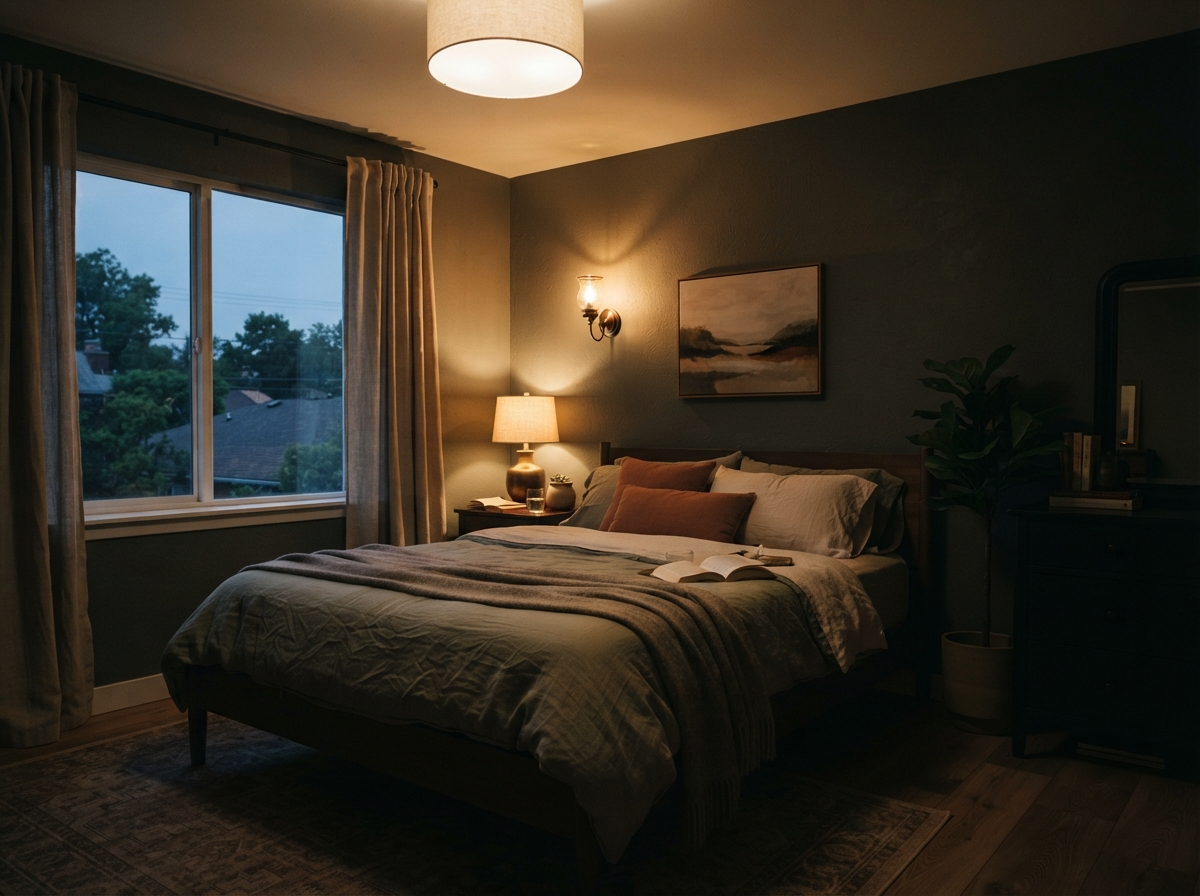
Lighting and textile layering are two of the most underused design levers in any bedroom makeover. Most people swap furniture and paint without addressing either, and the room still feels flat. Tackling both is where the real transformation happens.
The three-layer lighting approach
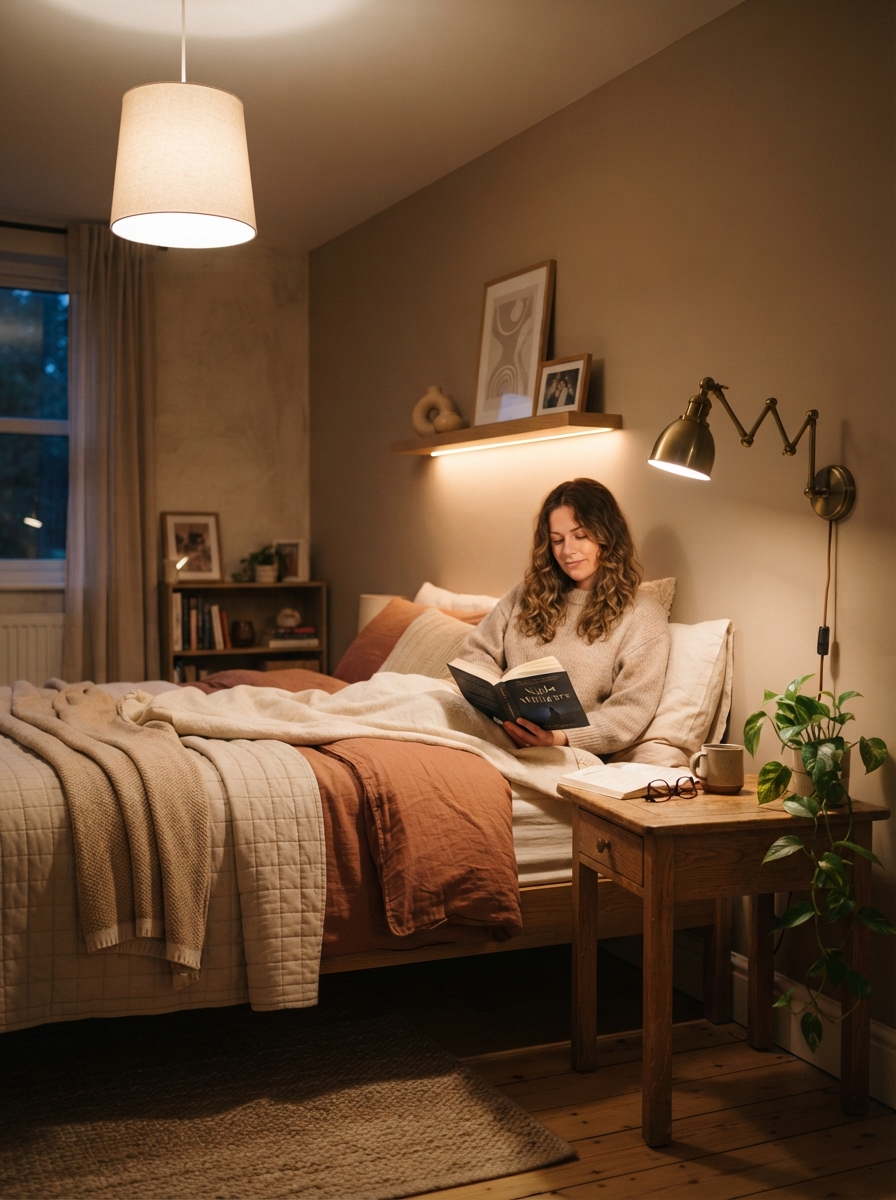
Think of lighting in three distinct layers: ambient (overhead), task (reading sconces or table lamps beside the bed), and accent (LED strips behind the headboard, a candle cluster on the dresser, or a decorative pendant). Switching from a single overhead fixture to a layered setup is one of the cheapest and highest-impact changes you can make. Plug-in wall sconces require no electrician: you hang them, plug them into the wall, and route the cord behind the headboard or along the baseboard for a clean look.
Building texture and depth through decor layering
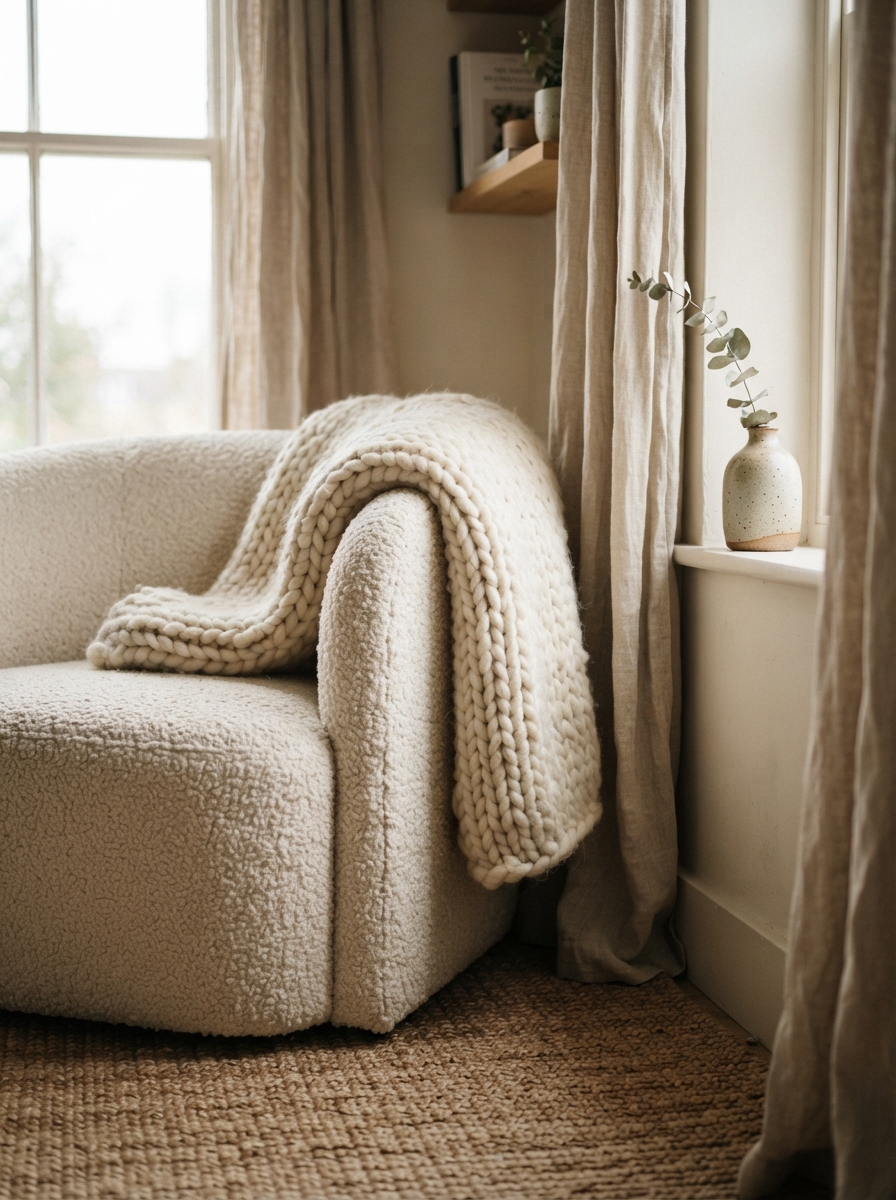
Start from the bed and work outward. A quality duvet or quilt is the base; add a folded throw at the foot, then two or three decorative pillows in complementary textures rather than matching sets. On surfaces, mix matte and natural materials: a wood tray on the nightstand, a ceramic vase, a stone coaster. Matching sets read as furniture-store display; mixing materials reads as a curated space. If you want a full room-by-room layering walkthrough tailored to your specific bedroom setup, Aesthetic Nest Decor has detailed guides covering everything from bedding combinations to nightstand styling by room size.
How much a bedroom refresh actually costs in 2026
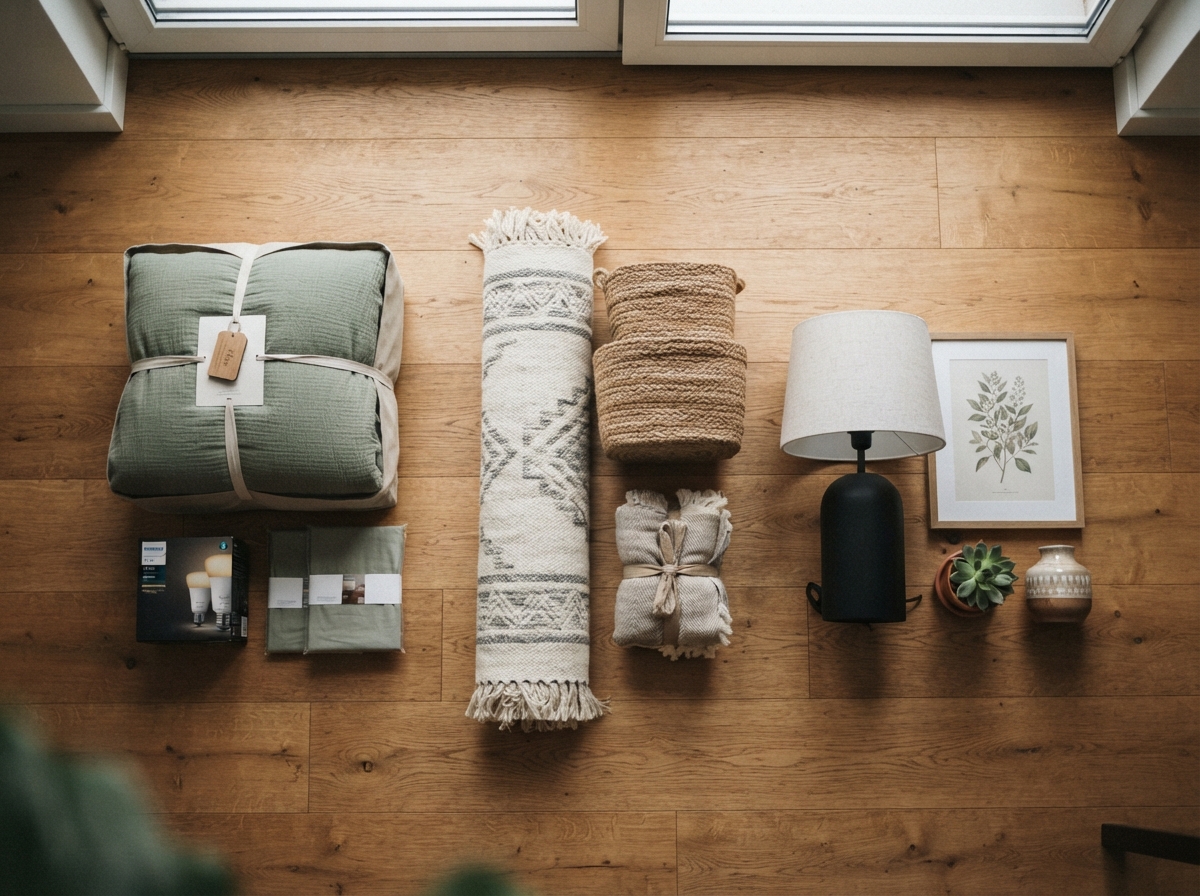
Budget expectations matter before you start shopping. The ranges below reflect decor-focused makeovers rather than full structural renovations, which are a separate category of project and cost.
Budget, mid-range, and premium: what each level gets you
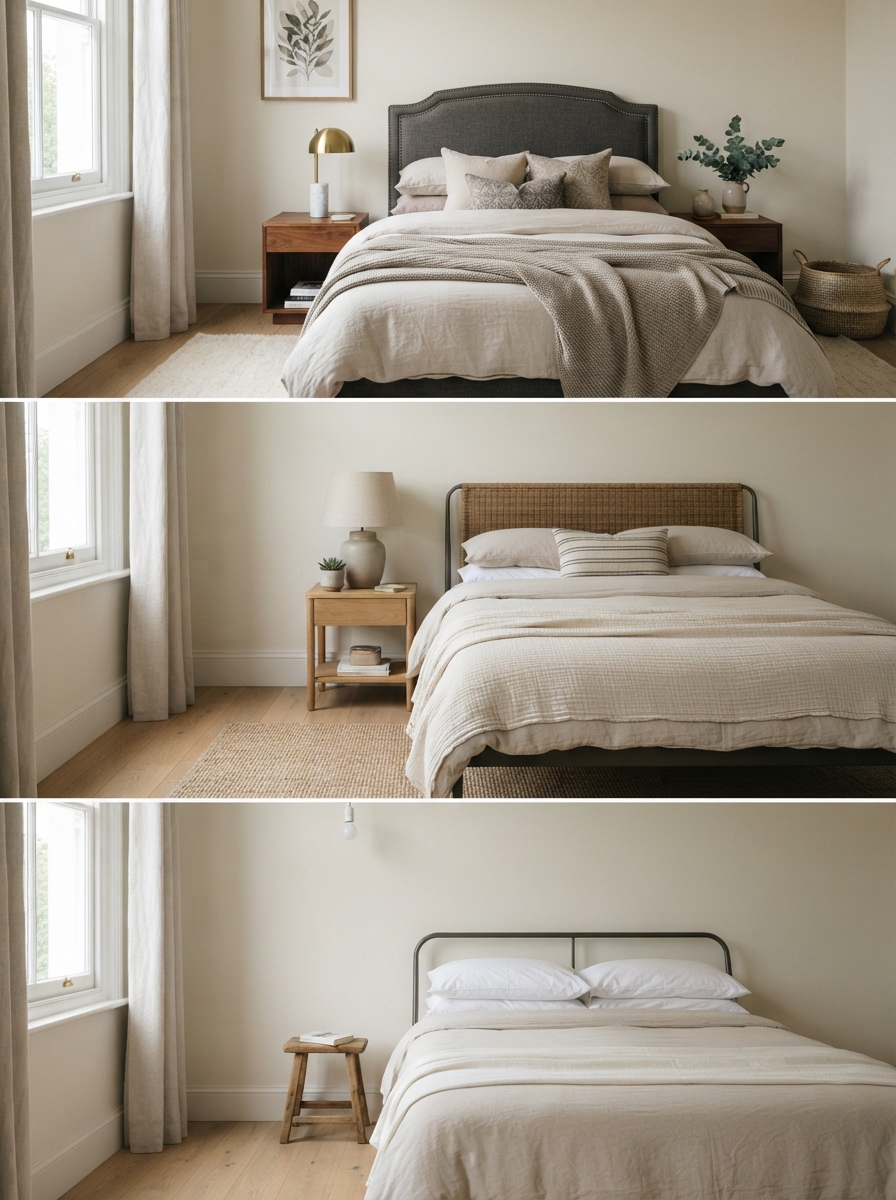
At the budget level, roughly $1,200 to $2,500 covers paint, new bedding, peel-and-stick wallpaper, lighting swaps, and a handful of decor pieces, enough to completely change the feel of a room. Mid-range makeovers in the $3,000 to $6,000 range bring in a new bed frame, dresser, window treatments, professional paint, and updated lighting fixtures. Premium refreshes from $10,000 to $15,000 and above involve built-in closets, custom upholstered headboards, flooring replacement, and a full furniture suite. All figures reflect decor makeovers; full room remodels run significantly higher depending on scope.
Where to spend and where to save
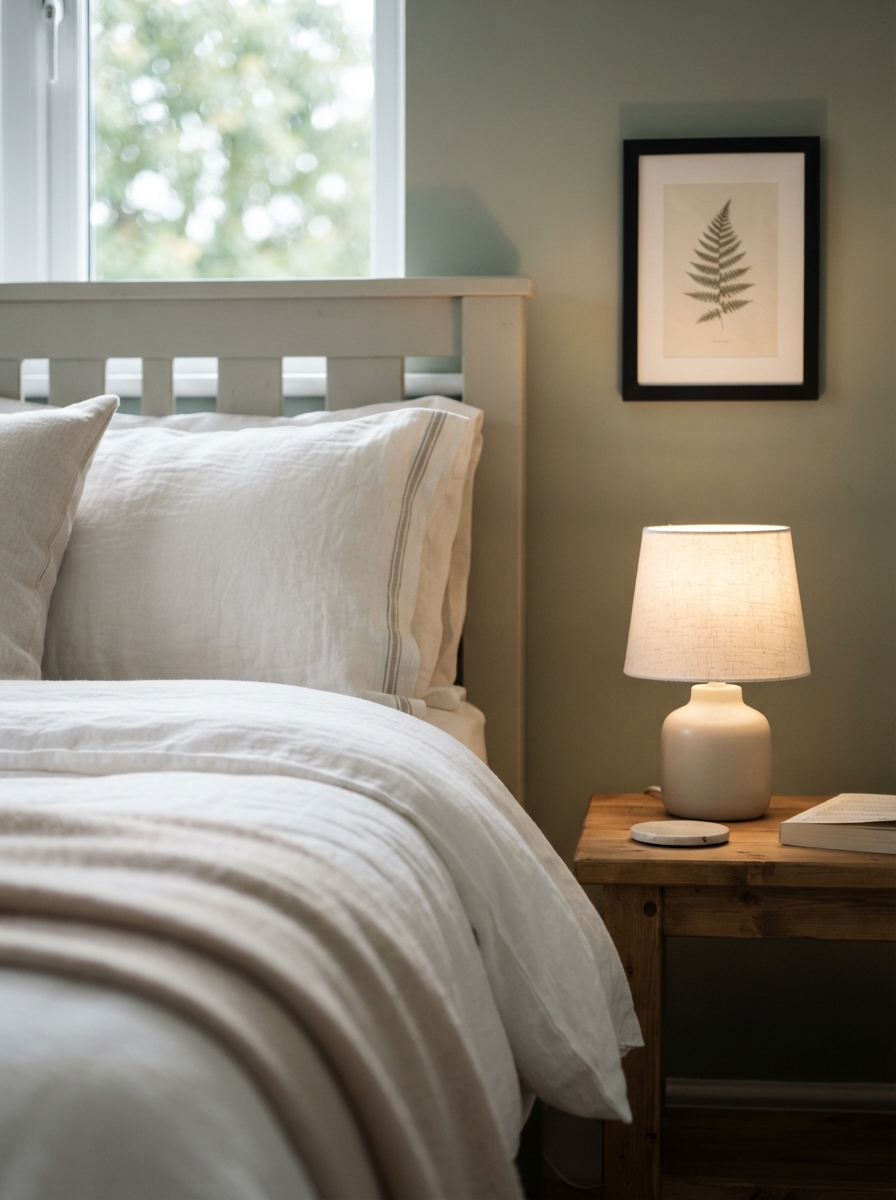
Spend on your mattress, your bed frame, and quality textiles. These are things you use every single day, quality shows, and it lasts. Save on decorative objects, accent throws, framed art, and nightstand lamps. Budget alternatives in those categories hold up just as well visually, and you’ll want to change them as your taste evolves anyway. This framework gives you a clear prioritization path before you open a single browser tab.
Weekend bedroom ideas: DIY projects with real visual impact
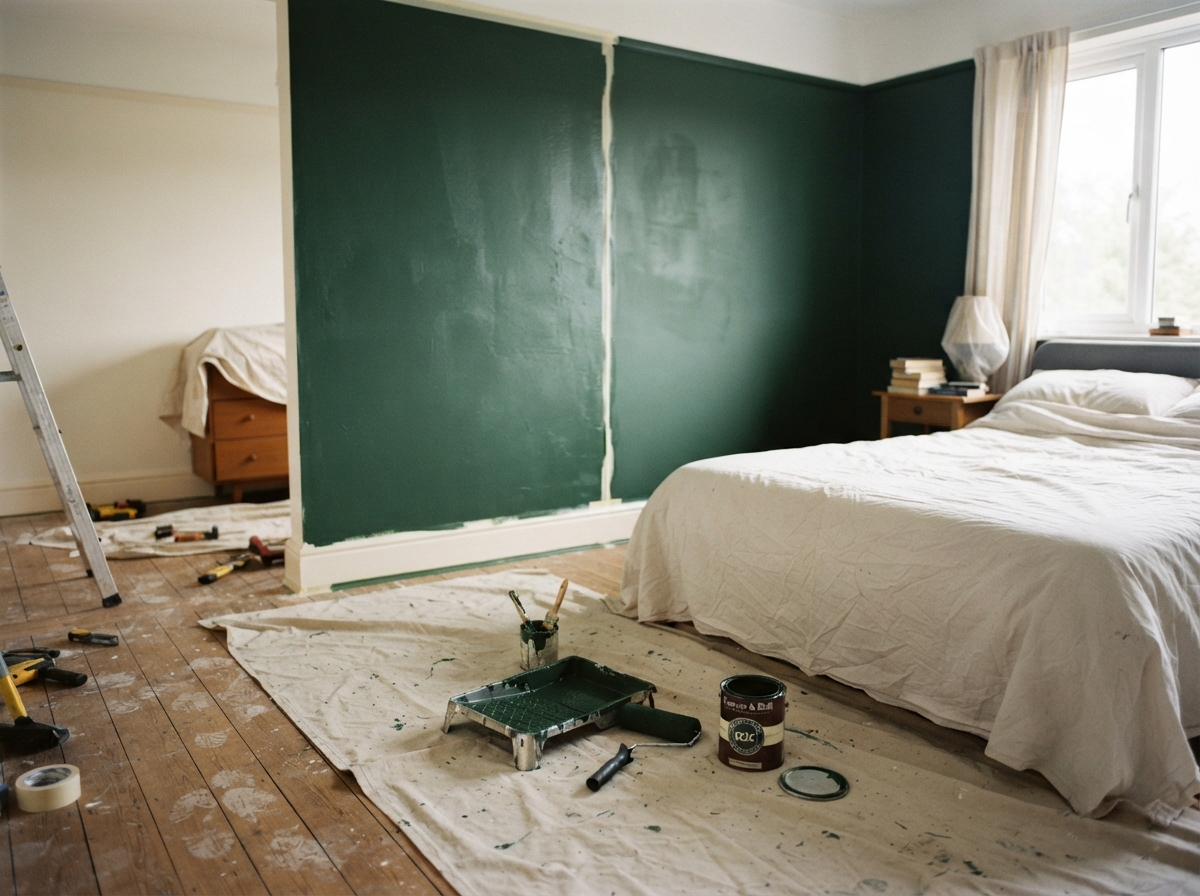
Most high-impact bedroom decor ideas don’t require a contractor or a significant budget. They require a Saturday afternoon and the right project. The following options are organized by how much time and effort they actually take.
Zero-tool upgrades you can finish in two hours
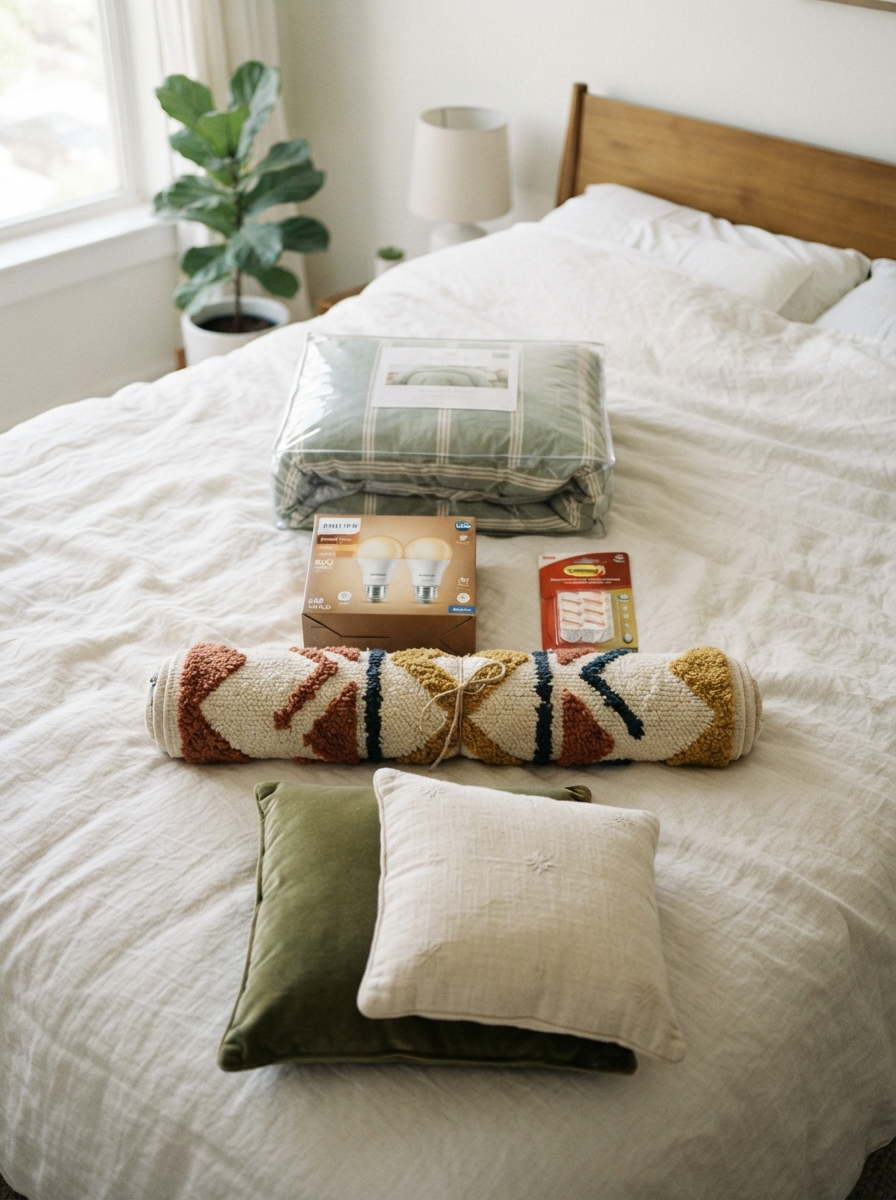
Peel-and-stick wallpaper on an accent wall takes one to three hours, requires no tools, and is fully removable, which makes it ideal for renters. A gallery wall hung with Command strips takes about the same time and can be rearranged whenever you want a change. A string light canopy above the bed requires one curtain rod, a few adhesive hooks, and about an hour of setup. Washi tape geometric designs on a single wall take one to two hours and leave no damage when removed. None of these projects require a skill level above “I’ve assembled flat-pack furniture.”
Moderate-effort projects worth the extra time
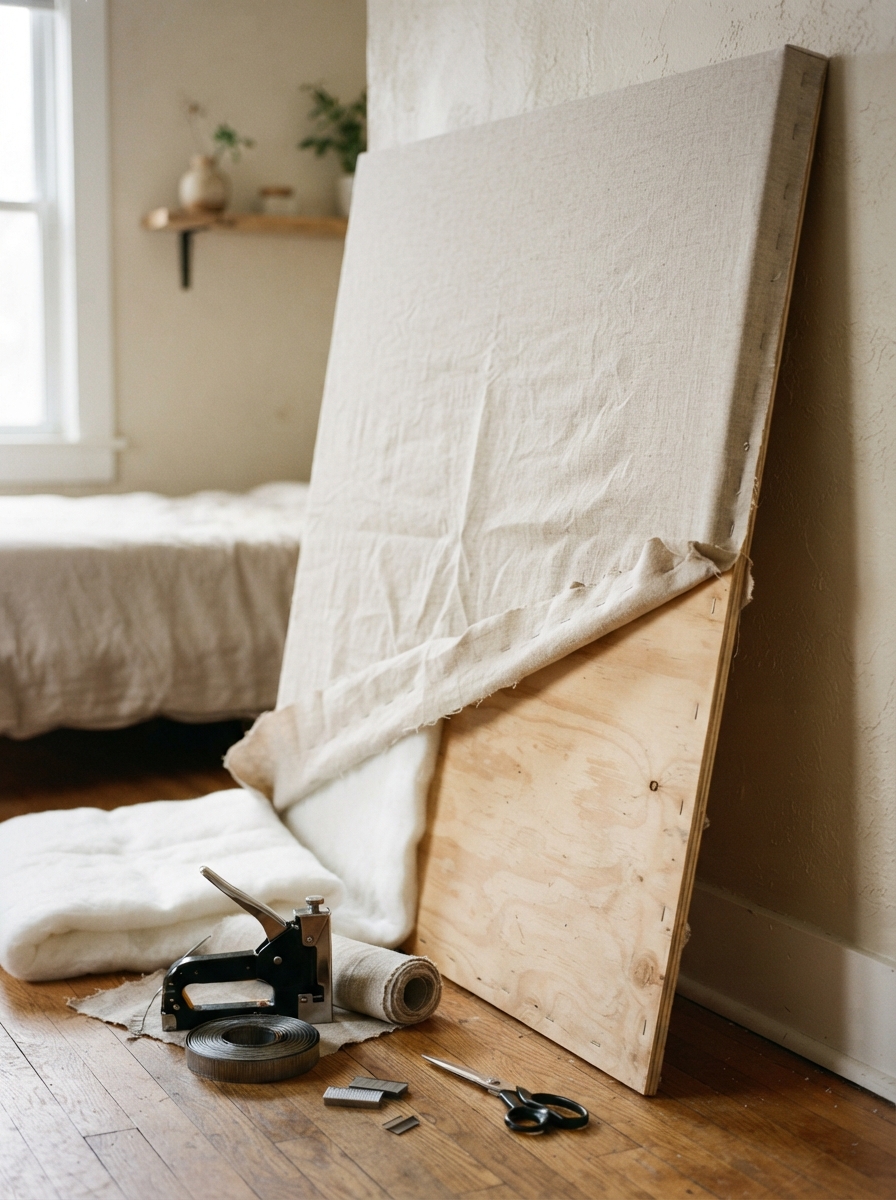
A painted faux headboard using painter’s tape and wall paint takes one afternoon and creates a surprisingly architectural focal point behind the bed. A DIY upholstered headboard made from plywood, batting, and fabric takes four to eight hours and moderate skill, but the result looks custom and is genuinely difficult to distinguish from a purchased piece. A floating nightstand shelf requires basic drilling and two to four hours, and it frees up floor space while adding a clean, intentional look to the bedside. These projects are the starting point, not the finish line. Once one change is done, the next one is always easier to see.
Bedroom refresh shopping list
- Linen bedding set — the single biggest visual change
- Bedside table lamp — one each side, warm bulbs
- Bedroom area rug — soft landing, defines the bed zone
- Blackout curtains — full drop, wider than the window
- Upholstered headboard — instant focal point
- Under bed storage boxes — the most wasted space in the room
Prices and availability change. Links open on Amazon.
Start with one bedroom idea and build from there
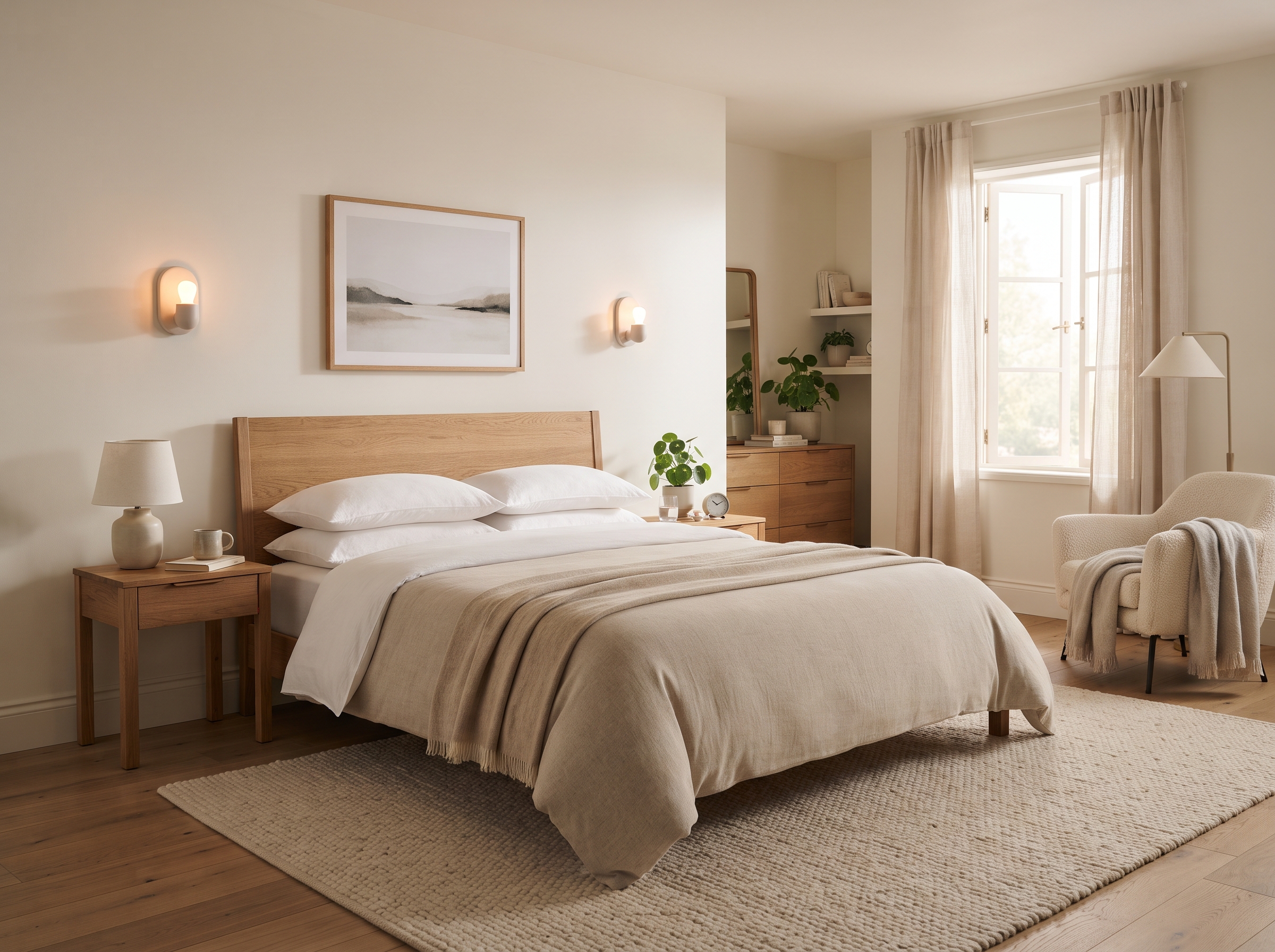
You don’t have to overhaul your bedroom in a single weekend. Pick the style that already matches your instincts, whether that’s the layered comfort of a cocoon bedroom, the calm restraint of a warm minimalist space, or the confident commitment of a color-drenched room. Then choose a palette suited to your room size and the mood you want to wake up in. From there, prioritize the layout or storage change that addresses your biggest daily frustration first.
One wall painted in the right color changes a room more than most people expect, and one lighting swap from a single overhead fixture to a layered setup does the same. Small, specific changes done with intention add up faster than waiting until you can do everything at once. That’s the real value of having a clear direction before you spend a dollar.
When you’re ready to go deeper on a specific challenge, Aesthetic Nest Decor has room-by-room bedroom guides covering small bedroom layouts, master bedroom styling, budget makeovers, and storage solutions. Browse by room, by budget, or by style, and take the next bedroom idea at whatever pace works for you.