


Fall decorating goes wrong in one predictable way: you buy a box of orange things in September, spread them across every surface, and by the second week of October the living room looks like a seasonal aisle rather than a room you live in. The rooms that actually look good in autumn barely change at all. They change texture, they change light, and they change about four objects.
What follows is the version that works in a normal living room — rented or owned, big or small — without a mantel, a fireplace, or a craft budget.
Start With Texture, Not Colour
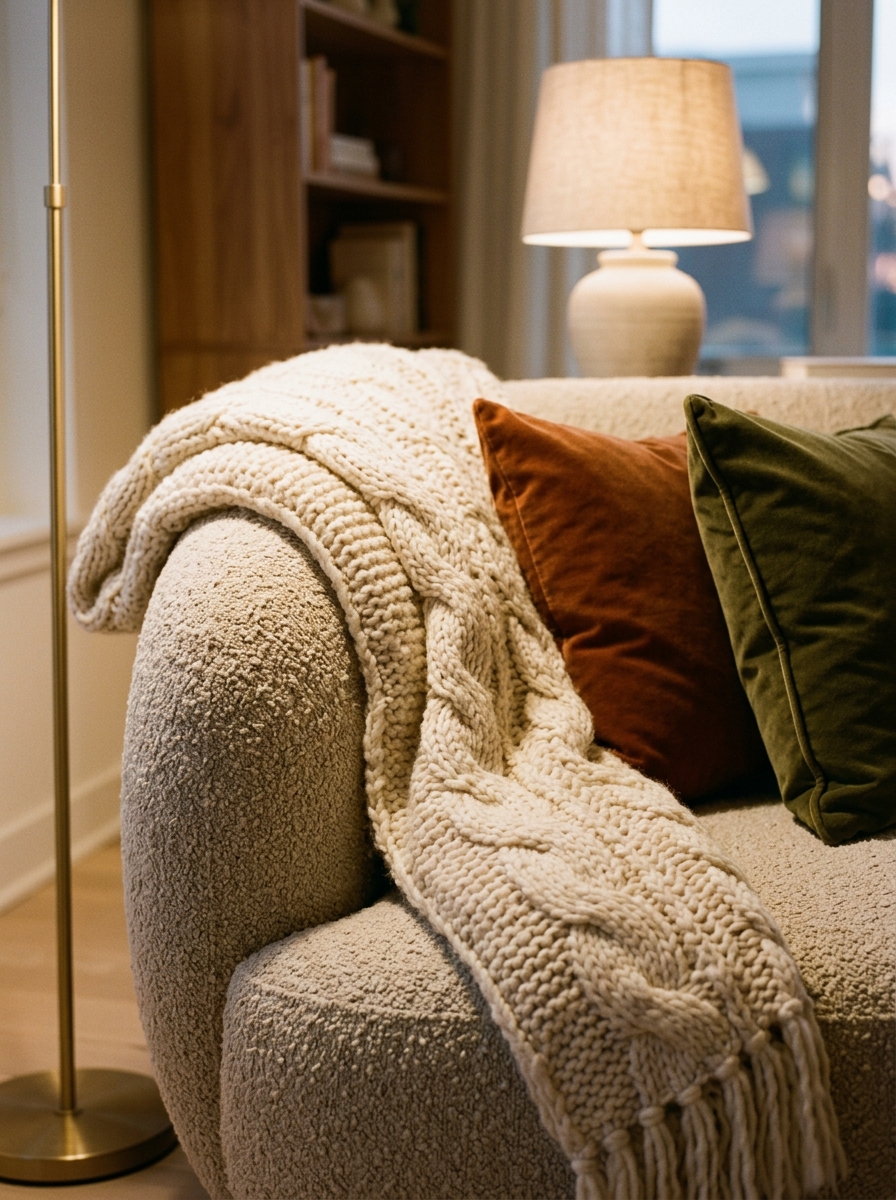
The single biggest difference between a summer living room and an autumn one is not the palette. It is the weight of the fabric. Linen and cotton read as warm-weather; bouclé, wool, velvet and chunky knit read as cold-weather. Swap the covers on two or three cushions and throw a heavier blanket over the arm of the sofa, and the room reads as autumn before you have introduced a single pumpkin.
The rule that keeps it from looking busy: one smooth texture for every rough one. If the throw is chunky knit, the cushions beside it should be flat velvet or plain wool. All-chunky looks like a pile of laundry.
Change the Light Before You Change Anything Else
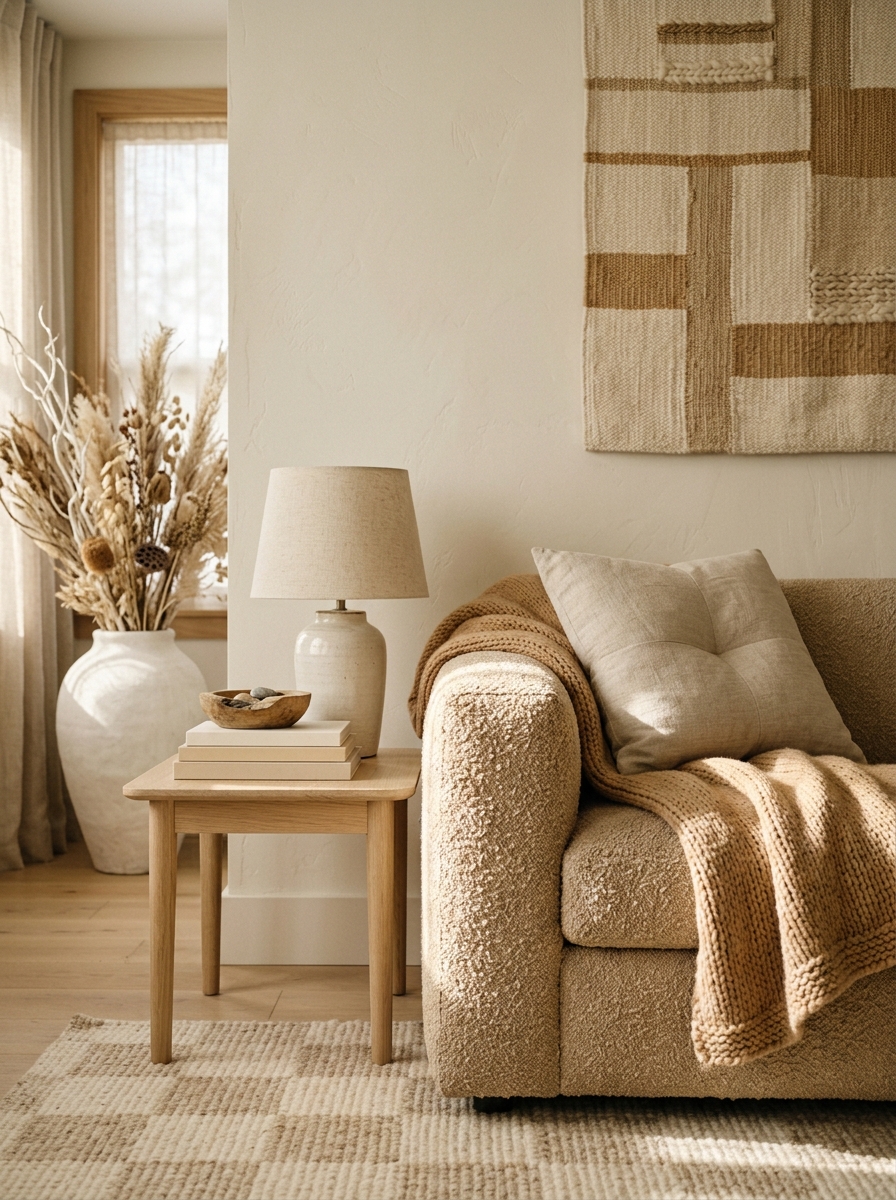
Autumn light is the real trigger — it drops early and it goes cold. Overhead lighting makes that worse, because a single ceiling fixture in a dim room flattens everything and throws shadows upward. The fix costs nothing structural: turn the big light off and add two or three low sources instead. A floor lamp behind the sofa, a table lamp on a side table, and something at floor or shelf level in the far corner.
Bulb temperature matters more than people expect. Anything above 3000K reads blue and clinical in a room with low daylight. 2700K is the number — warm white, not “daylight.”
Swap the Rug, or Layer One Over It
A rug changes a living room faster than furniture does, and you do not have to replace the one you have. Layering a smaller wool or jute rug over a larger flatweave adds depth and warmth underfoot, and it lets you keep a neutral base year-round. Anchor it so the front legs of the sofa sit on it — a rug floating in the middle of the floor makes a room look smaller, in any season.
Pick a Palette That Isn’t Orange
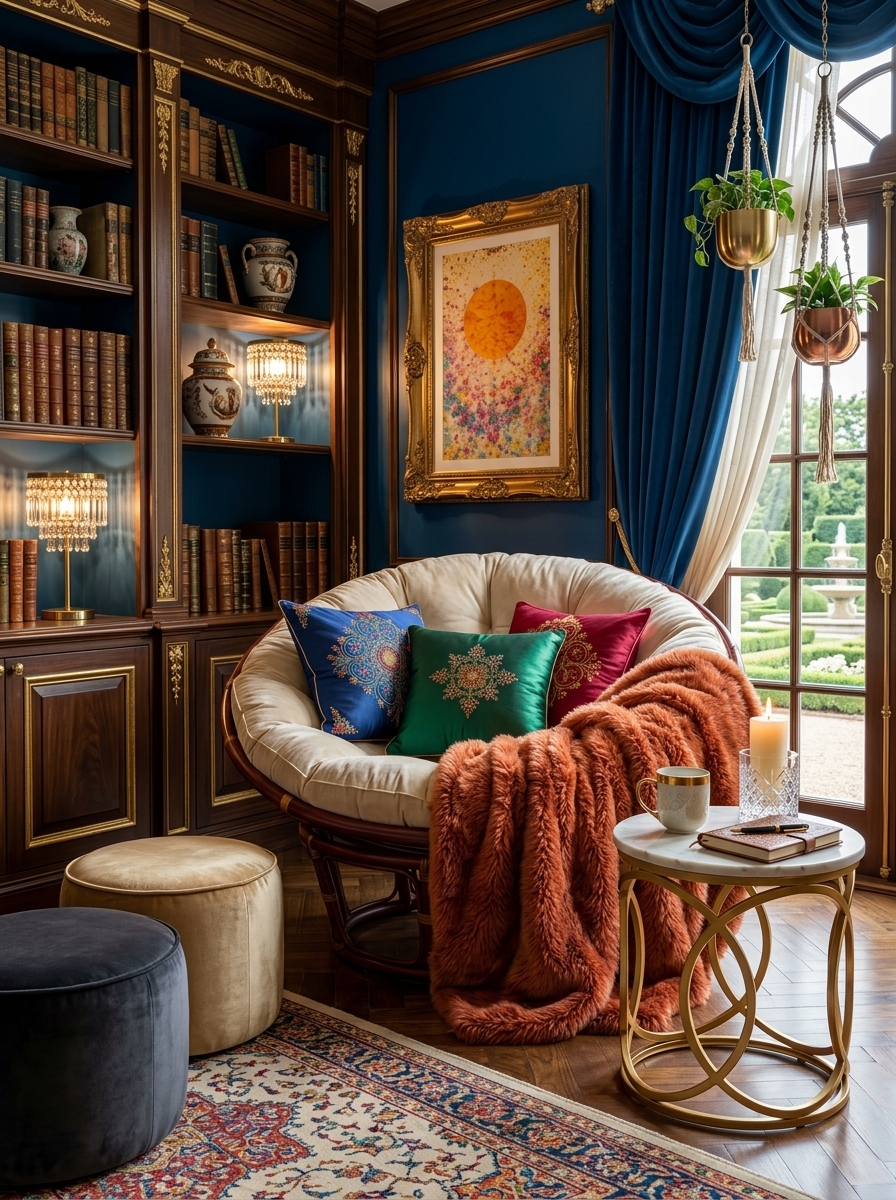
Autumn does not mean pumpkin. The colours that actually make a living room feel like October are warm neutrals with one deep accent: oatmeal, camel, clay, mushroom, and then one note of something saturated — rust, olive, ochre, oxblood, or deep teal.
Keep the accent to three appearances in the room. A cushion, a throw, and a single ceramic piece is enough. The moment a colour appears five or six times it stops being an accent and becomes a theme.
Shopping the autumn refresh?
Textiles and lighting do most of the work. These are the two categories worth spending on first — everything else can wait until the room already feels warmer.
Bring In Branches Instead of Fake Leaves
Artificial autumn foliage is what dates a room fastest. Real stems — eucalyptus, dried pampas, bare branches, wheat, hydrangea — cost less, last months, and look expensive because they have irregular shapes. One tall vase of branches in a corner does more than a dozen small arrangements.
If you want something living, the autumn-tolerant choices are olive trees, rubber plants and snake plants, all of which cope with falling light levels.
Candles, Placed Properly
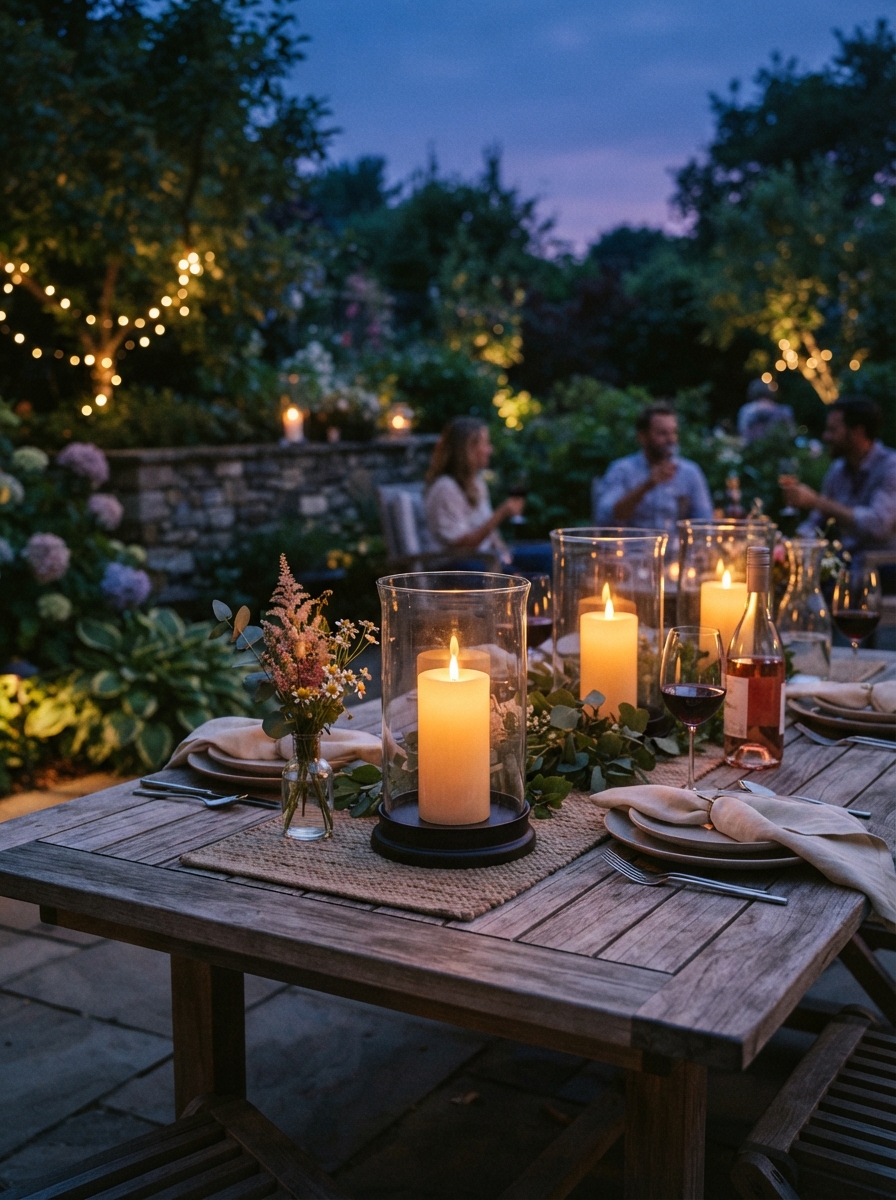
Candles are the cheapest autumn signal there is, and the most commonly misused. Scattering tealights across every surface reads as clutter. Group them in odd numbers on a single tray, vary the heights, and leave the rest of the surfaces alone.
Unscented in the living room is the better call if you already have a diffuser or scented candle going elsewhere — competing scents in one open-plan space is the decorating equivalent of two songs playing at once.
Give the Coffee Table a Job
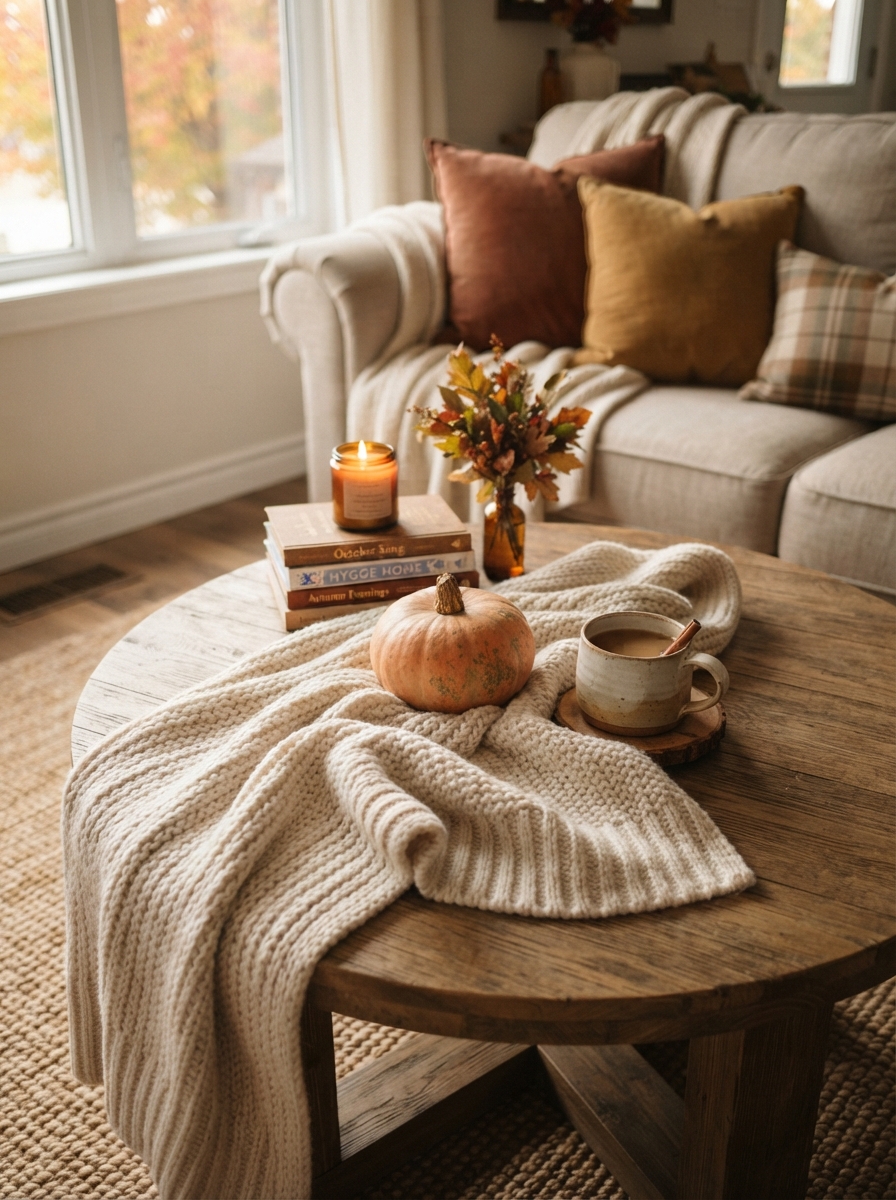
A coffee table in autumn should look like someone was just sitting there. That means a stack of two or three books, a tray, and one object with height — a vase, a candle, a small sculpture. The tray is the part people skip, and it is the part that stops the surface from sliding into clutter by November.
Warm Up the Walls Without Painting
Renters and anyone unwilling to repaint in September have three options that read as seasonal: swap the art for something warmer-toned, add a woven or textile wall hanging, or lean a large mirror to bounce what daylight is left into the room. A mirror opposite a window is the single highest-impact change on this list for a dark autumn living room.
Layer the Window Treatment
Thin summer curtains leak heat and read cold. Adding a heavier curtain over an existing sheer — or swapping to a lined pair — changes both the temperature of the room and how it photographs. Hang the rod high and wide: close to the ceiling, extending past the frame on both sides, so the window looks larger and the drop looks deliberate.
Stop at Eighty Percent
The last rule is the one that separates a room that looks styled from a room that looks staged. Decide what the finished version looks like, then leave out the last two things. Empty surface is what makes the objects you did keep look chosen rather than accumulated.
A Realistic Order to Do This In
If you are doing all of it, the order that gives the fastest visible change is: lighting first (bulbs and lamp placement), then textiles (cushions, throw, curtains), then the rug, then the small objects — branches, candles, books, ceramics. Most people do it in exactly the reverse order, which is why the small objects end up doing work they cannot do.
- Chunky knit throw blanket
- Velvet cushion covers in rust and olive
- 2700K warm white LED bulbs
- Arc or tripod floor lamp
- Jute layering rug
- Dried pampas and eucalyptus stems
- Round wooden serving tray
- Blackout lined curtains
- Large leaning floor mirror
- Ceramic taper candle holders
As an Amazon Associate we earn from qualifying purchases. Prices and availability change — check the current listing before buying.
Frequently Asked Questions
When should I start decorating for fall?
Mid-September, once the evenings noticeably shorten. Starting in August means the room reads as autumn during weather that is still summer, and by the time October arrives you are already bored of it.
How do I do fall decor in a small living room?
Textiles and light only. In a small room, extra objects cost you visual space you cannot spare, so put the entire seasonal change into cushion covers, a throw, warmer bulbs and one vase of branches.
What colours work for fall besides orange?
Rust, olive, ochre, oxblood, deep teal and camel all read as autumn without the Halloween association, and all of them sit comfortably on a neutral base you can keep the rest of the year.
Can I use fall decor if my sofa is grey?
Yes, and grey is easier than most. Warm the grey with camel, rust and cream rather than fighting it with another cool tone — the contrast between a cool sofa and warm accessories is what makes the accessories read as deliberate.