

As an Amazon Associate I earn from qualifying purchases. Some links in this post are affiliate links, at no extra cost to you. You will find more ideas in bathroom. You will find more ideas in bedroom.
Mirrors get recommended constantly for small rooms, usually without anyone explaining the part that matters. A mirror does not make a room bigger. It makes a room brighter, and brightness is what we read as space. If you want to go further, 10 gold mirror ideas that make any room look bigger covers it in detail. This guide covers living room mirror ideas step by step, with practical tips and product picks.
That distinction tells you exactly where to hang one.
Hang it where it reflects light, not wall
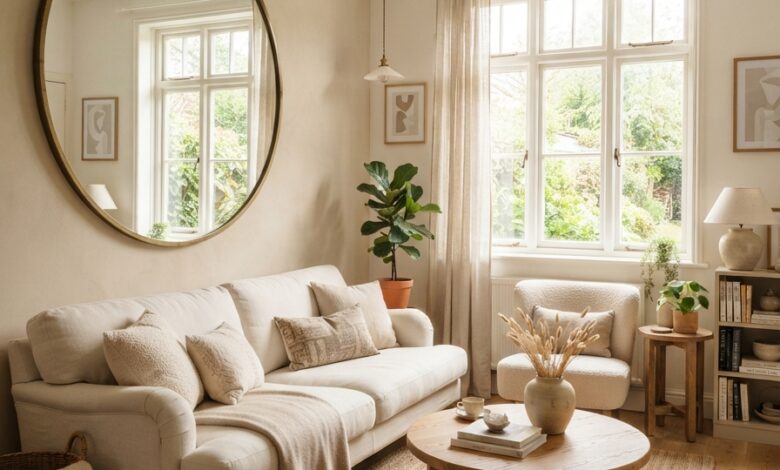
The wall opposite or adjacent to your main window is the one worth using. A mirror there catches daylight and throws it back into the room, effectively giving you a second window.
The common mistake is hanging a mirror on whichever wall happens to be empty. If that wall faces a blank wall or a dark corner, the mirror faithfully reflects a blank wall or a dark corner, and the room gains nothing.
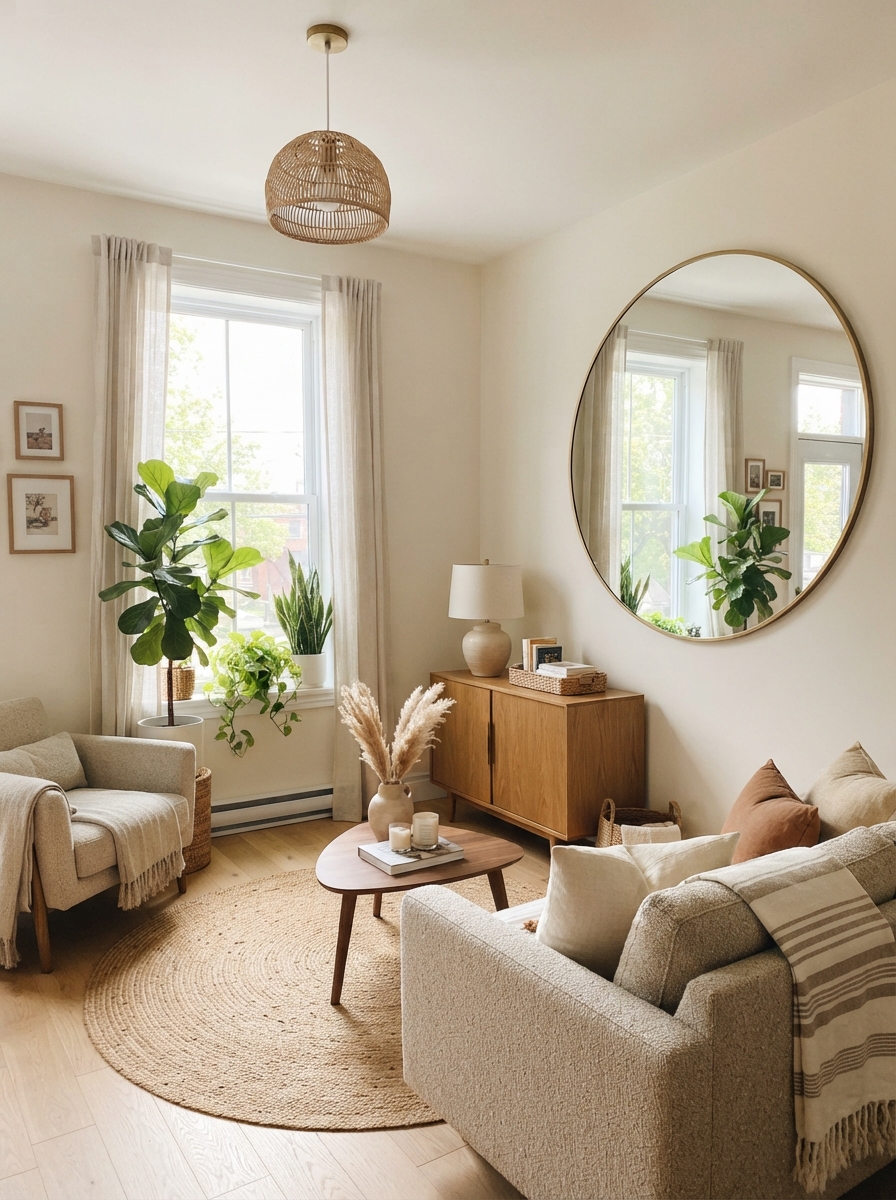
Before you commit to a fixing, hold the mirror up and look at what appears in it. If the reflection is not something you want more of, move it.
Getting the size right above a sofa
The proportions here are the same as for artwork. A mirror above a sofa should be roughly two-thirds the width of the sofa — wider and it overwhelms the seating, much narrower and it looks stranded.
Height: leave 15–20cm between the top of the sofa back and the bottom of the mirror. Any more and the two stop reading as a group; any less and it feels cramped.
Centre it on the sofa, not on the wall, unless the sofa is centred on the wall itself.
Leaning versus hanging
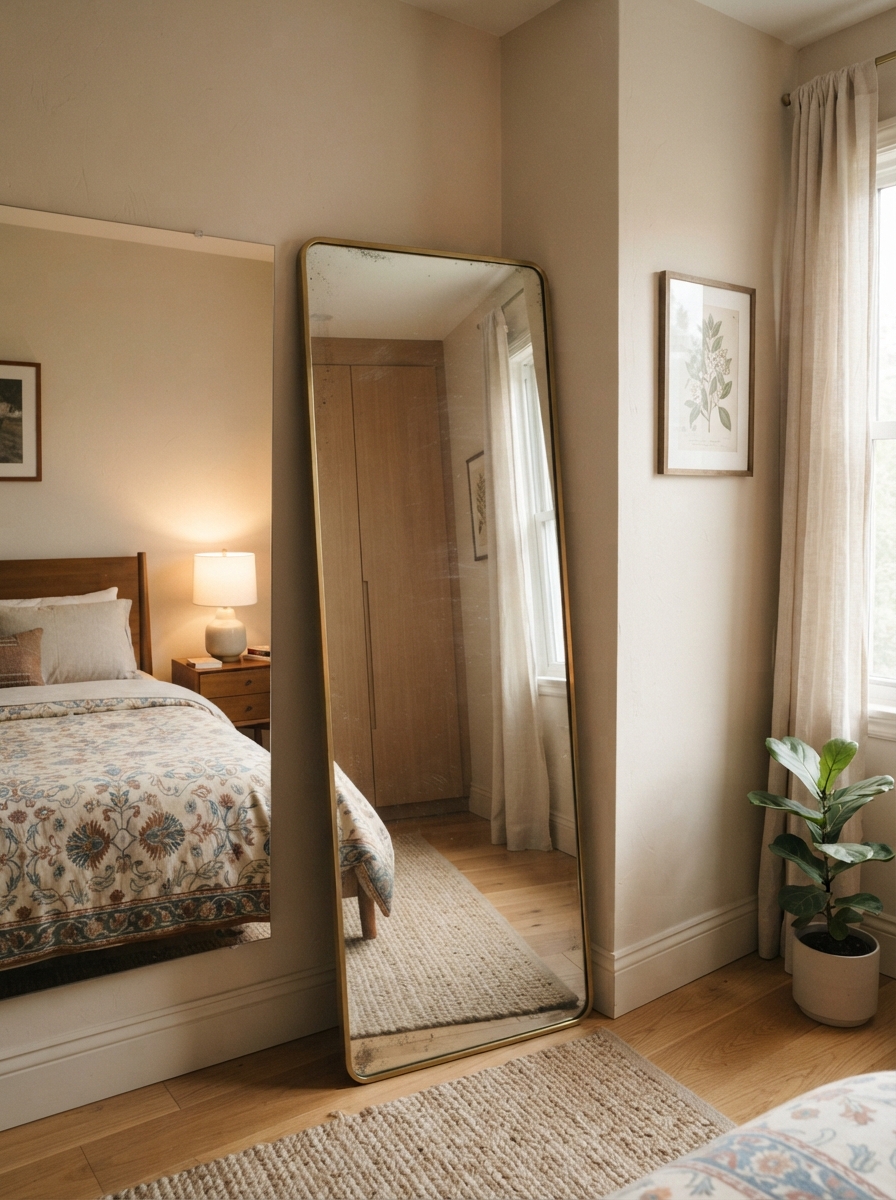
A large mirror leaned against the wall behind a console or in a corner has become a standard move, and it works for good reasons — no drilling, easy to reposition, and the slight angle catches light from more directions than a flat-mounted one.
Two caveats. It takes up floor depth, which a small room may not have. And it genuinely must be secured to the wall with a strap or bracket if there is any chance of children or pets in the room — a large leaning mirror is heavy enough to do real harm if it comes down.
Shape changes the feel more than people expect
Round mirrors soften a room full of straight lines — rectangular sofa, square coffee table, right-angled shelving. In most living rooms that contrast is welcome. If you want to go further, aesthetic living room ideas that feel like you covers it in detail.
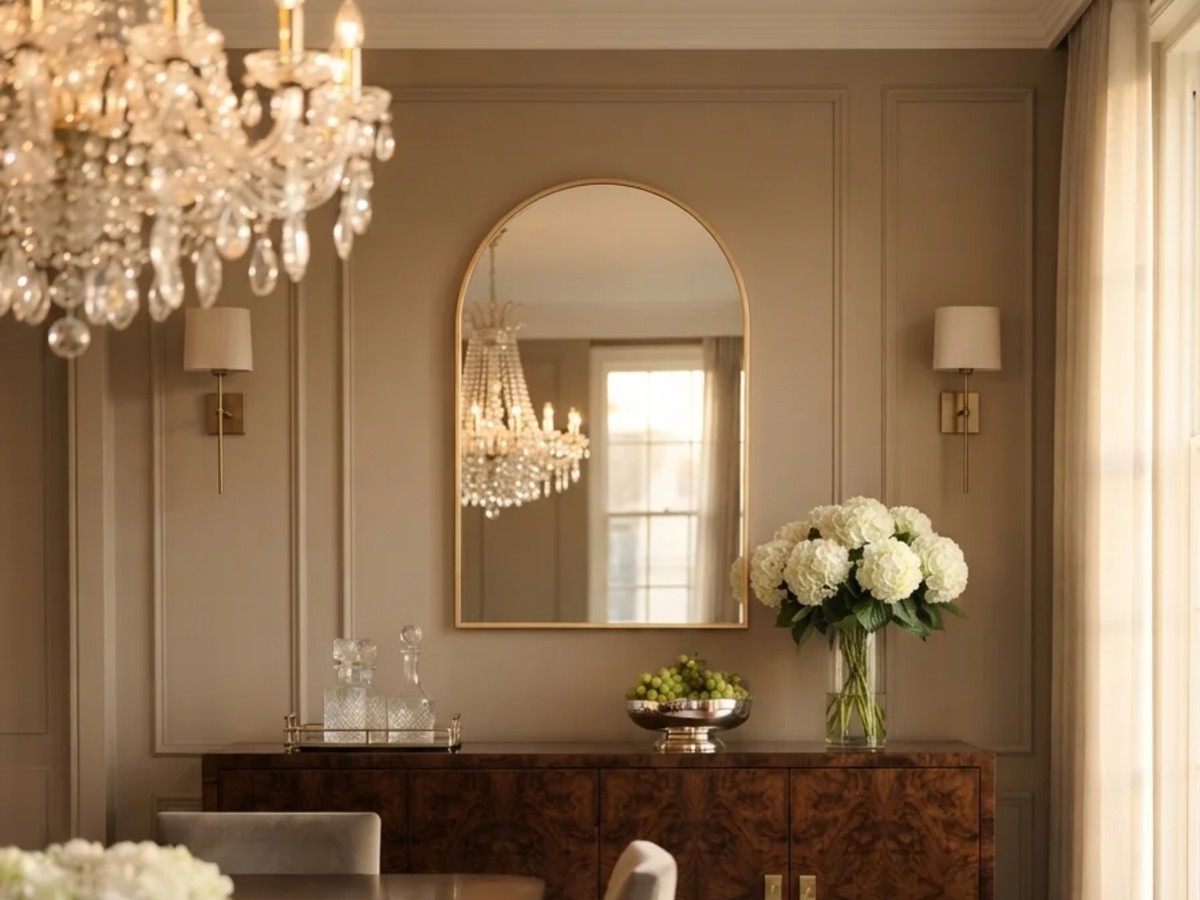
Arched mirrors draw the eye upward and make ceilings feel higher, which is useful in a room with standard 2.4m ceilings. If you want to go further, guest bedroom decor ideas that make visitors feel at Home covers it in detail.
Full-length rectangular mirrors give the strongest sense of added depth, but they need a wall with enough clear height to not look squeezed.
Three placements that do not work
Facing a cluttered area. A mirror doubles whatever is in front of it, including mess. Reflecting your least tidy corner is an unforced error.
Directly opposite the television. You will see the screen’s glare in your peripheral vision all evening.
Too high. Mirrors hung at picture-rail height reflect ceiling. The centre should sit at roughly eye level for someone standing — around 145–150cm from the floor.
For more on getting proportions right across the whole room, our interior design rules for beginners covers scale and eye-level hanging in detail.
Living Room Mirror Ideas by Room Size
The best living room mirror ideas change with the size of the room. In a small living room, a large mirror placed across from or beside a window is the single most effective way to make the space feel bigger. Choose a simple frame so the mirror reads as light, not as another object.
In a medium living room, use a mirror to balance the layout. A round or arched mirror above a console table or sideboard gives the eye a resting point and works well in a room where the sofa faces the TV.
In a large living room, mirrors can define zones. A tall floor mirror leaning in a reading corner or a pair of matching mirrors flanking a fireplace adds structure and symmetry to an open space.
Whatever the size, check what the mirror will reflect before you hang it. Stand where you usually sit and look at the spot. You want to see daylight, greenery or a piece of art, not a hallway, a TV or a cluttered shelf. That one check prevents most mirror mistakes.
Frequently asked questions
Where should a mirror go in a living room?
On the wall opposite or next to your main window, so it reflects daylight back into the room. A mirror on a wall that faces a blank wall or a dark corner reflects exactly that and adds nothing.
How big should a mirror above a sofa be?
About two-thirds the width of the sofa, hung 15–20cm above the sofa back. Wider overwhelms the seating; narrower looks stranded on the wall.
How high should a living room mirror be hung?
Centre it around 145–150cm from the floor — roughly standing eye level. Hung much higher, a mirror mostly reflects your ceiling.
Do mirrors really make a room look bigger?
Indirectly. They do not change the dimensions, they add light and depth, and we read a brighter room as a larger one. That is why placement relative to the window matters far more than the size of the mirror.





7 Comments