

As an Amazon Associate I earn from qualifying purchases. Some links in this post are affiliate links, at no extra cost to you.
Flooring is the part of a home gym people underspend on and then regret. A dropped dumbbell does not care that the subfloor was expensive, and foam puzzle mats do not stop a 20kg plate.
The right choice comes down to two things: what you drop, and what is underneath you.
Match the thickness to what you actually lift
Thickness is the whole decision, and most people either overbuy or badly underbuy.
6-8mm is enough for bodyweight work, yoga, a bike or a treadmill. It protects against scuffs and dents, not impact.
12-15mm handles dumbbells up to about 30kg being set down firmly. This is the right choice for most home gyms.
20mm and up is what you need if a loaded barbell is ever coming down from height. Below that you are relying on the subfloor to absorb the energy, and concrete cracks while timber flexes and splits.
If you are unsure, go thicker. The difference between 12mm and 20mm across a small area is modest; the cost of repairing a cracked slab is not.
Rubber tiles versus rolls versus stall mats
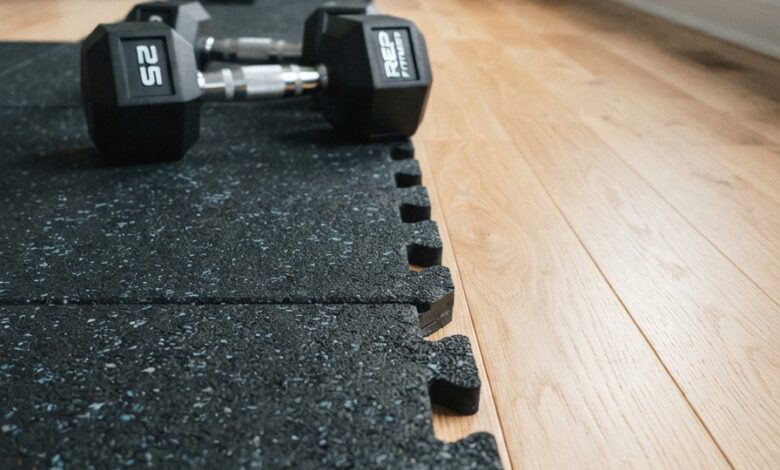
Interlocking rubber tiles are the most forgiving to install – no adhesive, easy to cut around obstacles, and you can carry them in yourself. The seams are the weak point: over time they can separate under a treadmill or a rack that shifts.
Rubber rolls give a near-seamless surface and look far better in a room you want to spend time in. They are heavy, awkward for one person to lay, and you generally have to commit to the room size.
Horse stall mats are the budget favourite for good reason – extremely dense, typically 15-19mm, and cheap per square metre from an agricultural supplier. Two warnings: they are genuinely heavy, often around 45kg each, and they smell strongly of rubber at first. Air them outdoors for a few weeks before they come inside.
What foam puzzle mats are and are not for
The interlocking foam tiles sold as gym flooring are fine for stretching, yoga and light bodyweight work. They are comfortable and cost almost nothing.

They are not impact protection. A dumbbell dropped on foam compresses it completely and transfers the energy straight through. They also tear where a rack or bench foot sits, and they dent permanently under anything heavy left in place.
Use them as a comfort layer in a corner, not as the floor of a room where weights move.
Upstairs and apartments: the noise problem
If there is a room below you, floor protection and noise control are two different problems, and rubber only solves one.
Rubber absorbs the shock that damages floors. What travels downstairs is structure-borne vibration, and that needs a decoupling layer – dense rubber over a foam underlay, or a purpose-built platform – rather than one thicker sheet.
Often the better answer in an apartment is changing what you do rather than what you stand on: use dumbbells instead of a barbell, set weights down under control, and keep the loudest work to daytime hours. Our guide to a small home gym setup covers building around those constraints.
Where to put it, and where not to bother
You rarely need to floor the whole room. Cover the lifting zone – the area under and around the rack or bench, plus about a metre of clearance where plates might land – and leave the rest.

Partial coverage costs less, looks more deliberate than a room wall-to-wall in black rubber, and keeps the space usable for other things. That matters most when the gym shares a room, which our home gym decor ideas cover in more detail.
Home Gym Flooring Maintenance and Care
Home gym flooring lasts longer when you clean and check it regularly. Sweep or vacuum rubber tiles weekly to remove grit that can scratch the surface, then wipe with a damp mop and a mild cleaner. Avoid oil-based or solvent cleaners, which can break down rubber over time.
Check the seams every few months. Interlocking tiles can drift apart under heavy use, especially where you drop weights. Push them back together and consider adding a heavier mat or a lifting platform in the spot where you deadlift or drop dumbbells.
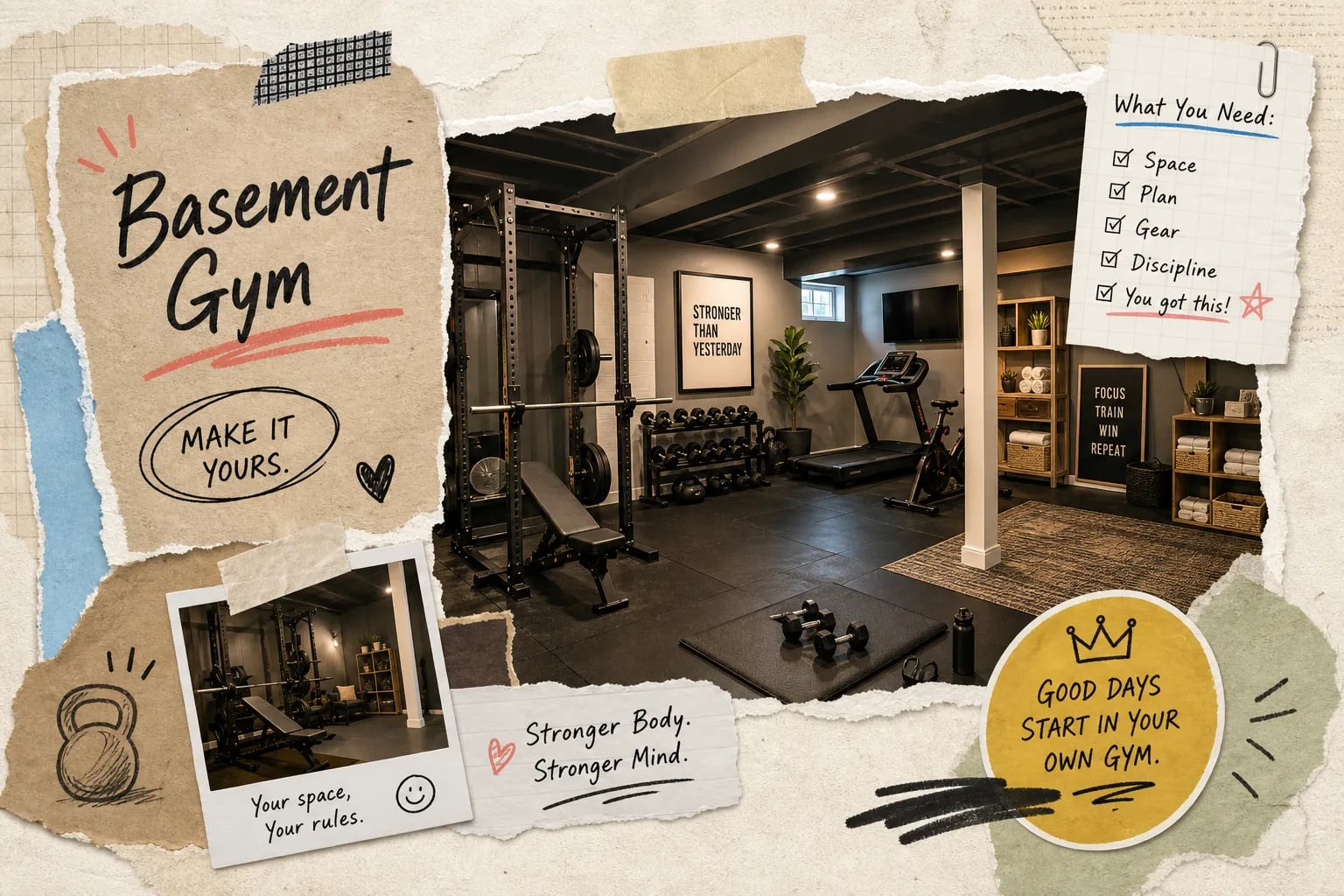
In a basement, watch for moisture. Lift a tile in a corner once a season and check the concrete underneath. If it feels damp or smells musty, run a dehumidifier and leave space for air to circulate.
Finally, expect some smell from new rubber flooring. Air it out in a garage or with the windows open for a few days before you lay it in a closed room. With these simple habits, quality home gym flooring will protect your floor and your equipment for many years.
Frequently asked questions
How thick should home gym flooring be?
6-8mm for cardio and bodyweight work, 12-15mm for dumbbells, and 20mm or more if a loaded barbell will ever be dropped. When in doubt go thicker, because the extra cost is small next to repairing a cracked slab or a split timber floor.
Are horse stall mats good for a home gym?
Yes, and they are usually the cheapest dense option per square metre, typically 15-19mm and extremely durable. Be ready for the weight, often around 45kg each, and air them outside for a few weeks because the rubber smell is strong at first.
Do foam puzzle mats protect a floor from weights?
No. They are fine for yoga, stretching and light bodyweight work, but foam compresses fully under a dropped dumbbell and passes the impact straight through to the floor. They also tear under rack and bench feet.
What flooring works for a gym in an upstairs room?
Rubber protects the floor but does not stop noise reaching the room below, because that is vibration travelling through the structure. You need a decoupling layer such as dense rubber over foam underlay. Often the more practical fix is using dumbbells rather than a barbell and setting weights down under control.




3 Comments