

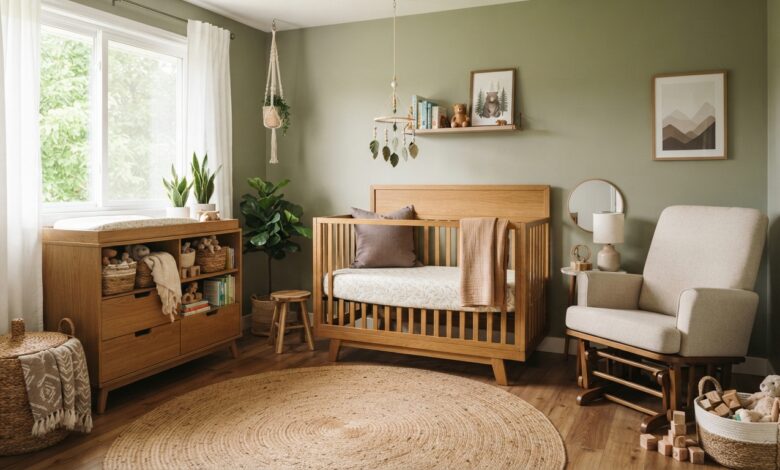
These gender-neutral nursery decor ideas help you design a room that feels dreamy, calm, and ready for whoever moves into it — without leaning on the usual pastel pink or blue playbook. Whether you’re decorating before you know the baby’s sex, planning ahead for a sibling who might use the room next, or simply prefer a more sophisticated palette than typical nursery decor, gender-neutral design gives you more flexibility and a longer shelf life for every piece you buy. Designing a nursery is one of the most exciting projects you’ll take on, but it’s also easy to get swept up in cute details and end up with a room that looks more like a Pinterest board than a space that actually functions for middle-of-the-night feedings, diaper changes, and years of daily use. Here’s a complete room-by-room guide to getting the balance right.
What Makes Nursery Decor “Gender-Neutral”?
“Gender-neutral” doesn’t mean beige and empty. It means building the room around color, texture, and shape instead of gendered signifiers like pink florals or blue trucks. Think warm neutrals, natural materials, and interesting silhouettes that would look just as intentional in a design magazine as they do in a nursery. The advantage goes beyond aesthetics: a gender-neutral nursery decor scheme works whether you’re decorating before your anatomy scan, expecting a second child who might inherit the room regardless of sex, or simply prefer a more grown-up look than primary colors and cartoon characters. It also ages better. A sage, terracotta, or oatmeal palette transitions naturally from nursery to toddler room to kid’s room without a full redo — you’re swapping a few accessories, not repainting and replacing furniture every eighteen months.
1. Choose a Warm Neutral Color Palette
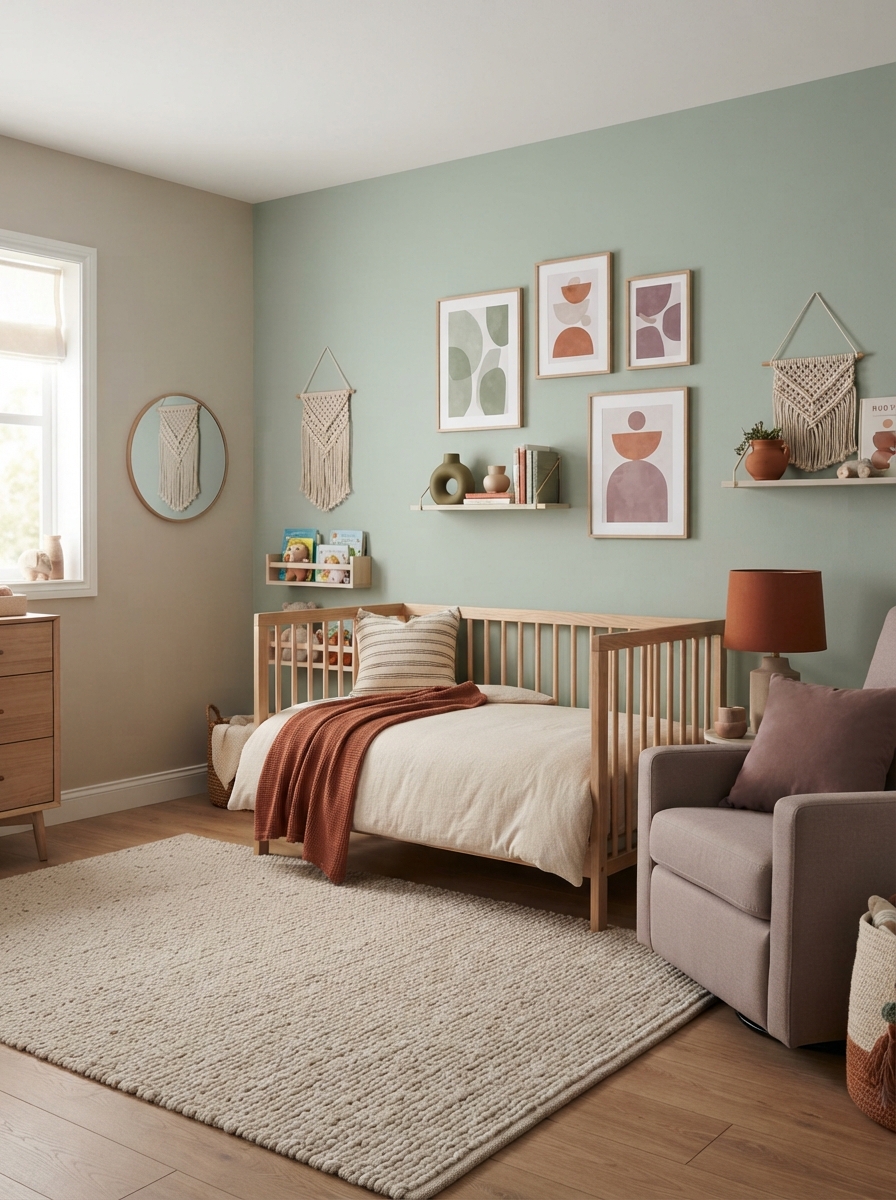
Soft sage, warm terracotta, oatmeal, dusty mauve, and warm greige all read as gender-neutral while staying warmer and more current than the stark white-and-gray nurseries that dominated the last decade. Paint one wall or the whole room in a warm neutral, then build the rest of the palette around it with textiles and accessories rather than committing to multiple wall colors. These tones also age well as your child grows out of “nursery” and into “kid’s room” — a sage wall works just as well behind a toddler bed as it does behind a crib. If you want more contrast, pair a warm neutral base with a single deeper accent color, like rust, olive, or clay, in just one or two spots: a lampshade, a throw, or a picture frame. That keeps the palette cohesive instead of scattered.
2. Layer Natural Textures
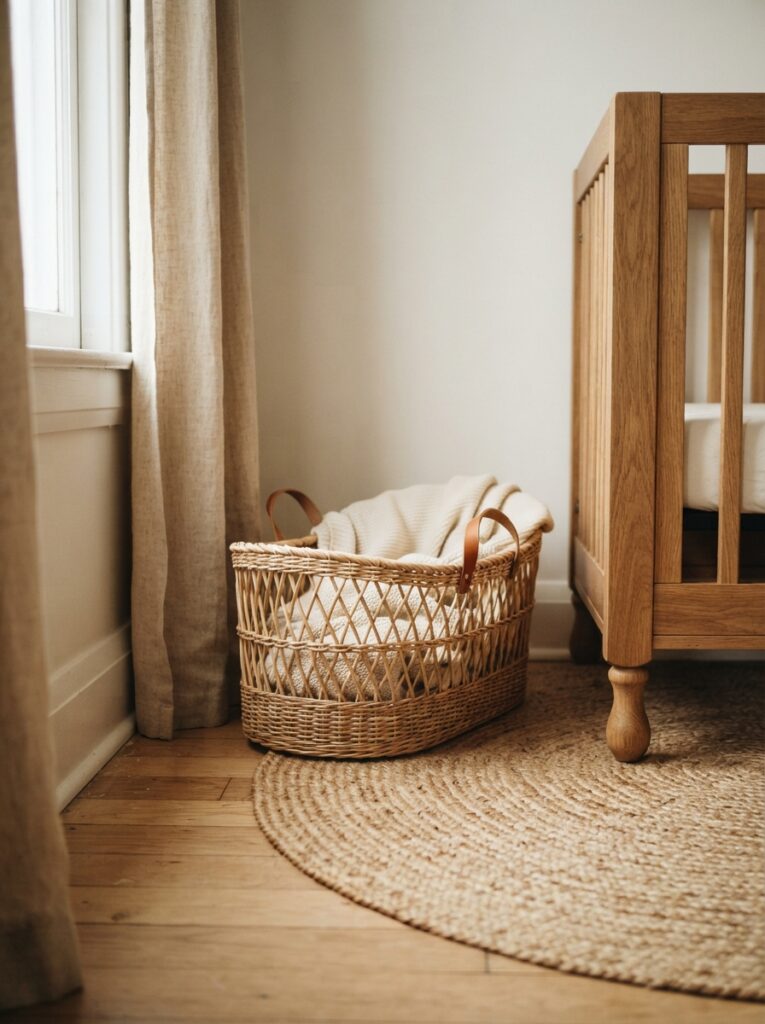
A jute or wool rug, a solid wood crib, rattan or woven baskets for storage, and linen curtains bring warmth and depth without relying on primary colors, patterns, or cartoon characters to do the visual work. Natural texture is what separates a nursery that feels curated from one that feels sparse, and it’s especially useful in a gender-neutral space where you’re intentionally avoiding busy prints. Mix at least three different textures in every room — smooth wood, nubby wool, woven rattan — the same way a stylist would layer a living room. A single textured item, like a chunky knit blanket draped over the glider or a woven wall hanging, can carry a whole corner of the room on its own.
Want the shortcut?
As an Amazon Associate I earn from qualifying purchases. Some links in this post are affiliate links, at no extra cost to you.
Browse current options and prices.
3. Add a Statement Wall
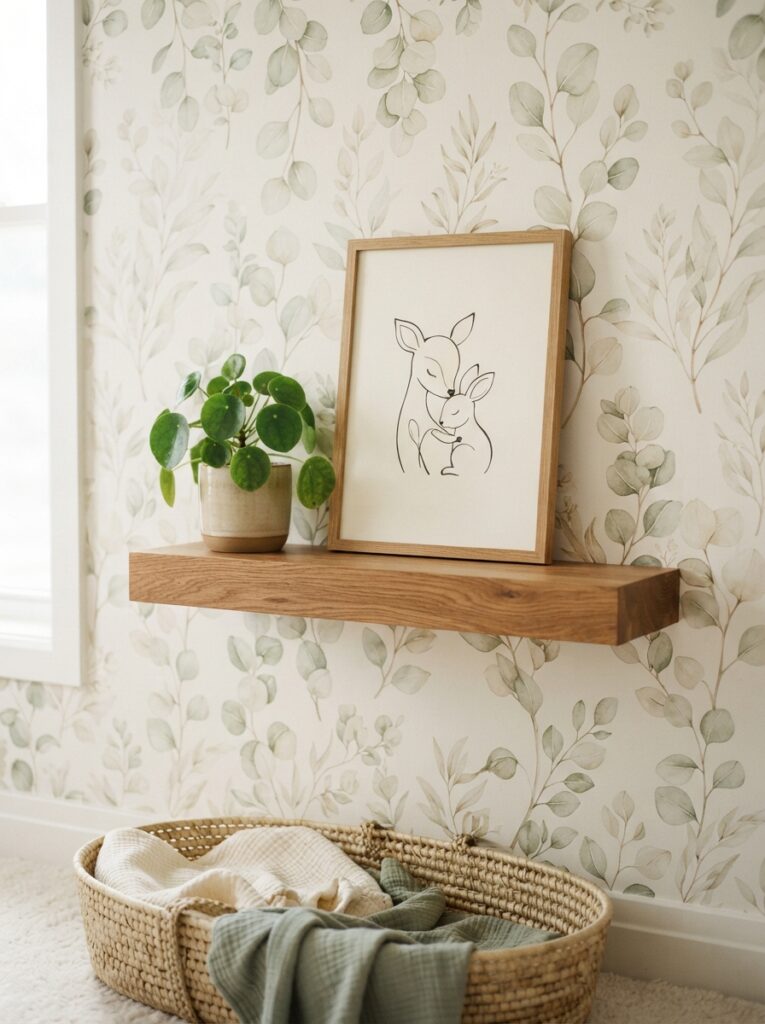
Wallpaper with a subtle botanical, abstract, or geometric print, or a soft painted accent wall in a slightly deeper tone than the rest of the room, gives the space personality without being overly theme-specific. Peel-and-stick wallpaper is a smart choice here since it’s renter-friendly and easy to remove or replace as your child’s taste changes down the line. Keep the rest of the walls a solid neutral so the statement wall actually reads as a feature rather than competing with itself. If wallpaper feels like too much commitment, a large piece of framed art, a plate wall, or a cluster of shelves styled with books and small objects can create the same focal point with zero permanence.
4. Prioritize Soft, Layered Lighting
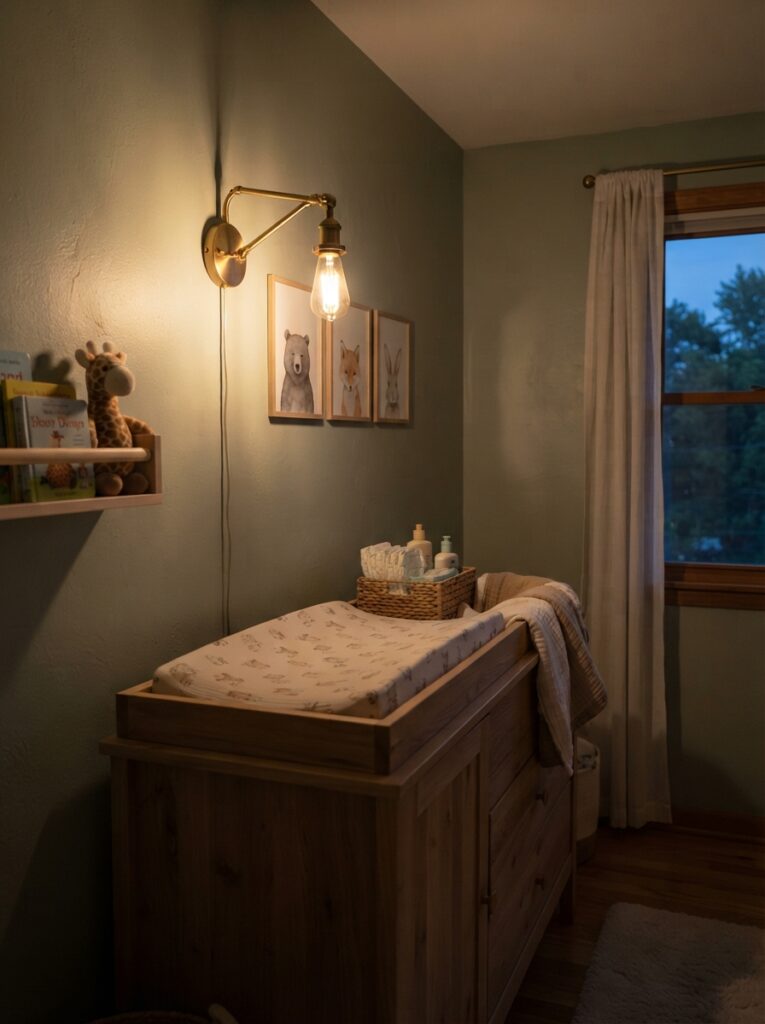
A dimmable floor lamp, a soft wall sconce near the changing area, and a plug-in nightlight make middle-of-the-night feedings and diaper changes far easier on everyone’s eyes than a single harsh overhead fixture. Layer at least two light sources at different heights: one bright enough for daytime diaper changes and one dim enough not to fully wake a sleepy baby, or parent, at 3 a.m. A dimmer switch on the main overhead light, if you have one, is one of the best small upgrades you can make. Warm-toned bulbs, 2700K or lower, read cozier than cool white light and photograph better too, which matters if you’re documenting the space.
5. Choose Furniture That Grows With Your Child
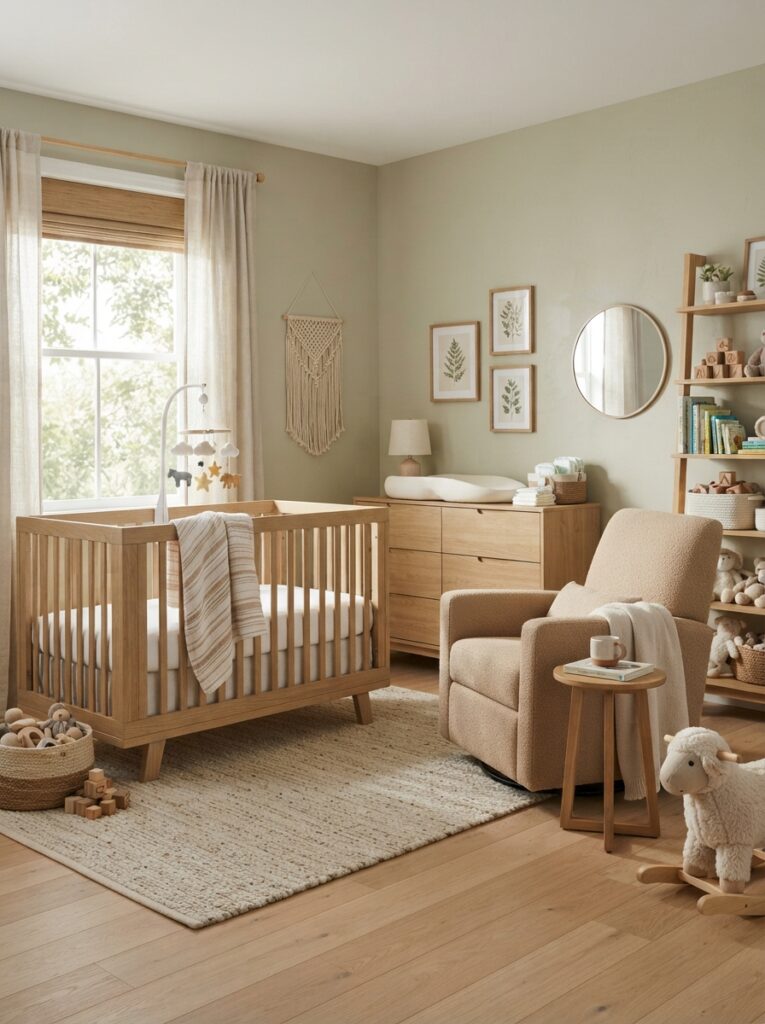
A convertible crib that becomes a toddler bed and eventually a full-size bed frame, and a dresser that doubles as a changing table now and a regular dresser later, save money and reduce how often you need to redecorate as your child grows. Look for a glider or accent chair in a durable, easy-to-clean fabric rather than a delicate finish, since it will get years of heavy use well past the newborn stage. When shopping, prioritize pieces in solid neutral finishes, natural wood, white, black, or a warm neutral upholstery, over anything explicitly “nursery” styled or covered in a juvenile print, since neutral pieces transition seamlessly as the room’s function changes.
6. Keep Storage Soft and Accessible
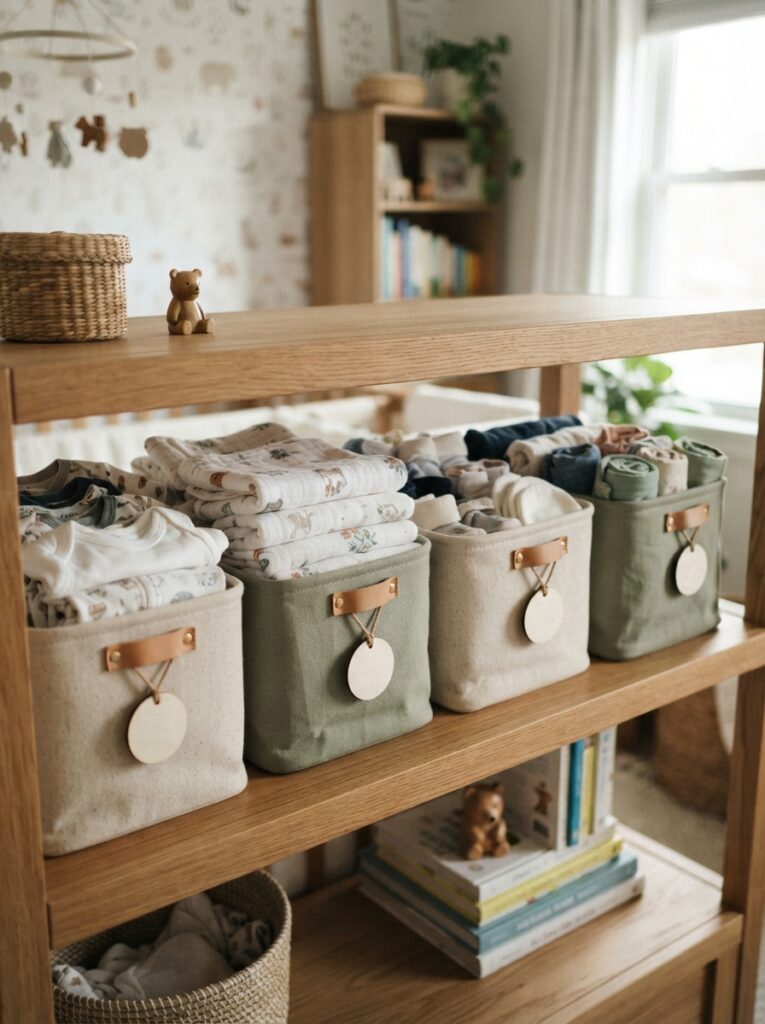
Fabric bins, low open shelving, and baskets keep diapers, clothes, swaddles, and toys within reach and easy to grab one-handed — a detail that matters far more once the baby actually arrives than it does while you’re decorating. Closed storage looks tidier in photos, but open storage is what you’ll actually use at 2 a.m., so aim for a mix: closed drawers for out-of-season clothing, open bins for daily essentials. Label baskets by category, diapers, swaddles, burp cloths, so anyone helping with childcare, a partner, grandparent, or sitter, can find what they need without asking.
7. Add One Meaningful Personal Touch
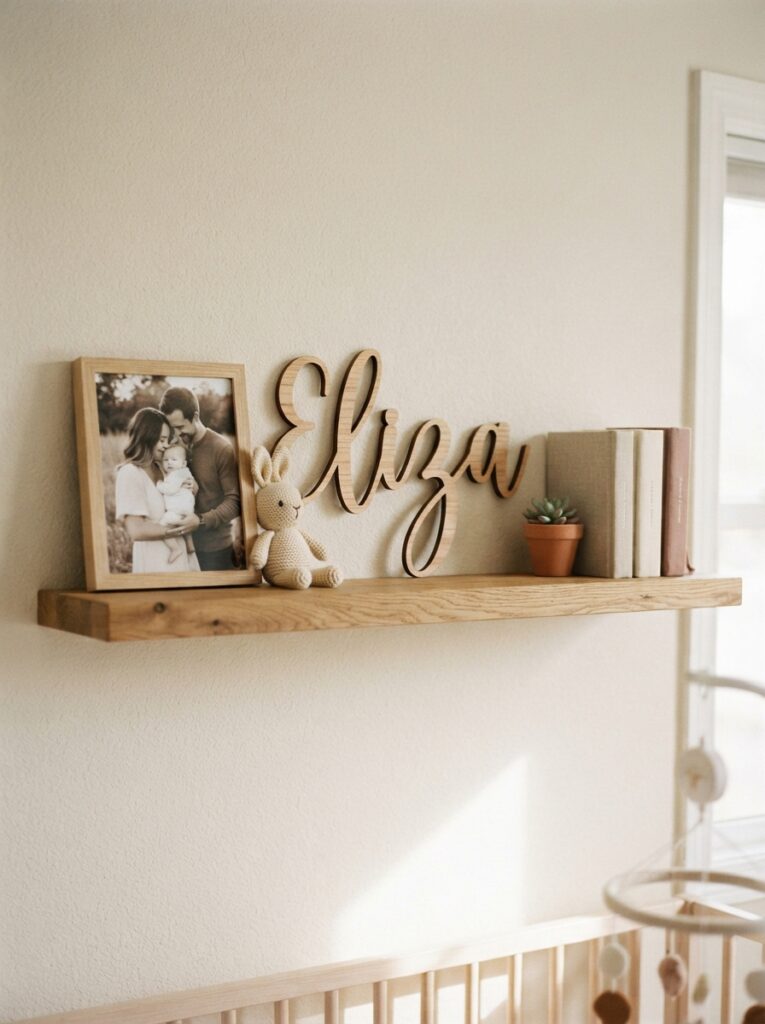
A piece of original art, a family heirloom, a custom name sign, or a handmade quilt makes the space feel personal rather than showroom-perfect. This is the detail you’ll remember years later, long after the specific paint color or crib model has faded from memory. Resist the urge to make every element in the room “mean something” — one or two personal touches read as intentional, while too many competing sentimental objects can make a small room feel cluttered.
8. Choose Gender-Neutral Patterns Over Themes
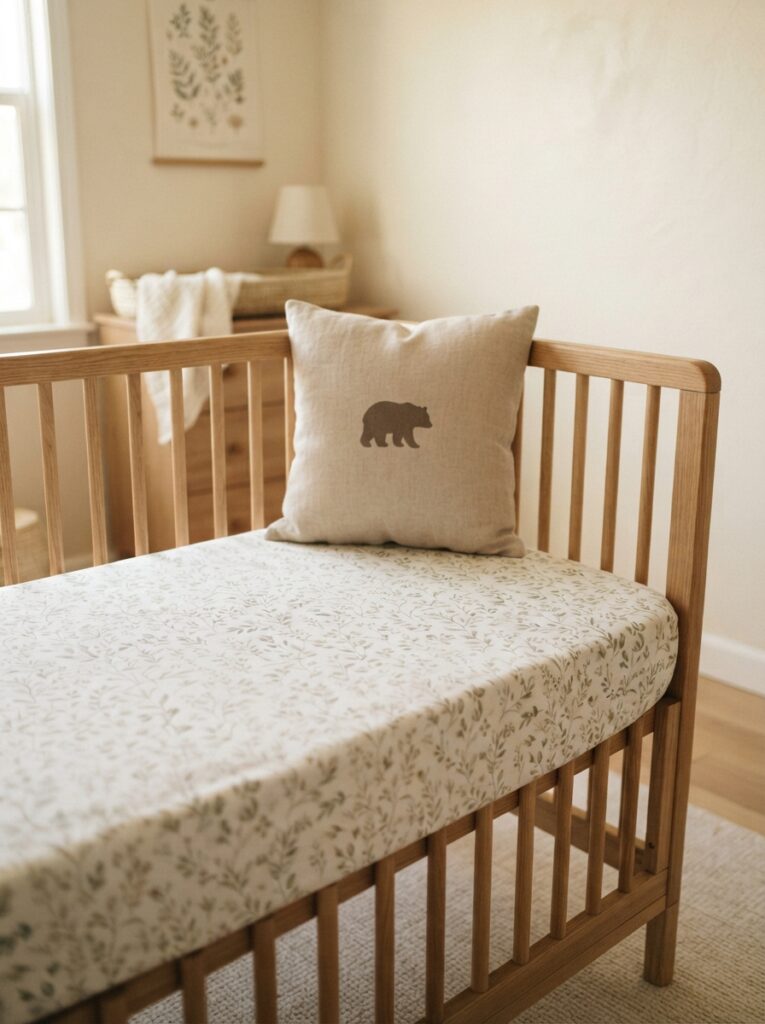
Skip cartoon characters and licensed themes in favor of prints that work regardless of who moves into the room next: botanical leaves, soft geometric shapes, cloud or rainbow motifs, and animal silhouettes in muted, sophisticated tones rather than bright primary colors. A patterned crib sheet, a single accent pillow, or a framed print is usually enough — you don’t need to commit the whole room to one motif, which makes it far easier to update later without a full redesign. If you do want a stronger pattern moment, a wallpapered ceiling or ceiling medallion is a fun, low-commitment place to put it, since it’s out of the sightline of daily furniture arranging.
9. Create a Cozy Reading and Feeding Corner
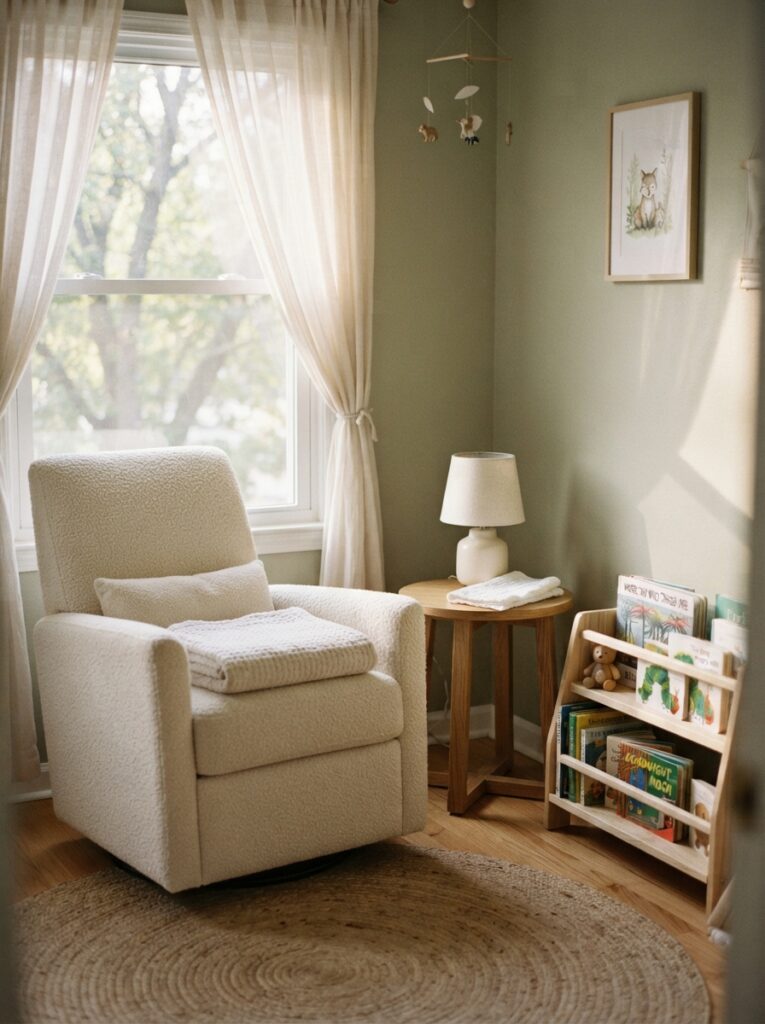
A glider or slipper chair near a window, paired with a small side table for water, burp cloths, and a reading lamp, turns 3 a.m. feedings into a calmer, more comfortable routine. Add a low bookshelf or wall-mounted ledge nearby to start a board-book collection within easy reach — it’s a detail that gets more daily use than almost anything else in the room. A soft rug underfoot and a footstool nearby round out the corner and make it a spot you’ll actually want to sit in for twenty-minute stretches, not just a chair you photographed once.
10. Mix Metals and Materials Thoughtfully
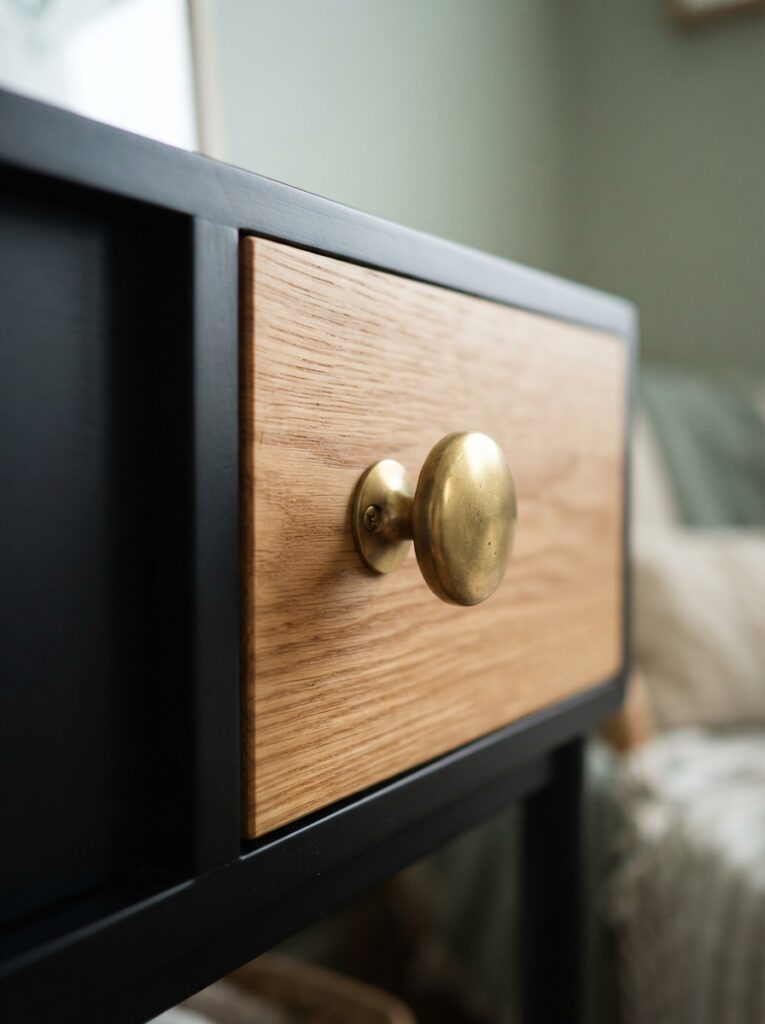
Warm brass, matte black, and natural wood tones all pair well with a neutral nursery palette, but mixing more than two metal finishes in one small room can start to look accidental rather than intentional. Pick one dominant metal, brass or black are the most versatile, and use it consistently across hardware, light fixtures, and frames. Natural wood tones, oak, walnut, or rattan, act as a neutral in their own right and pair with either metal choice without clashing. This kind of restraint is what separates a professionally styled gender-neutral nursery decor scheme from one that feels like leftover pieces from different rooms.
11. Incorporate Plants and Greenery Safely
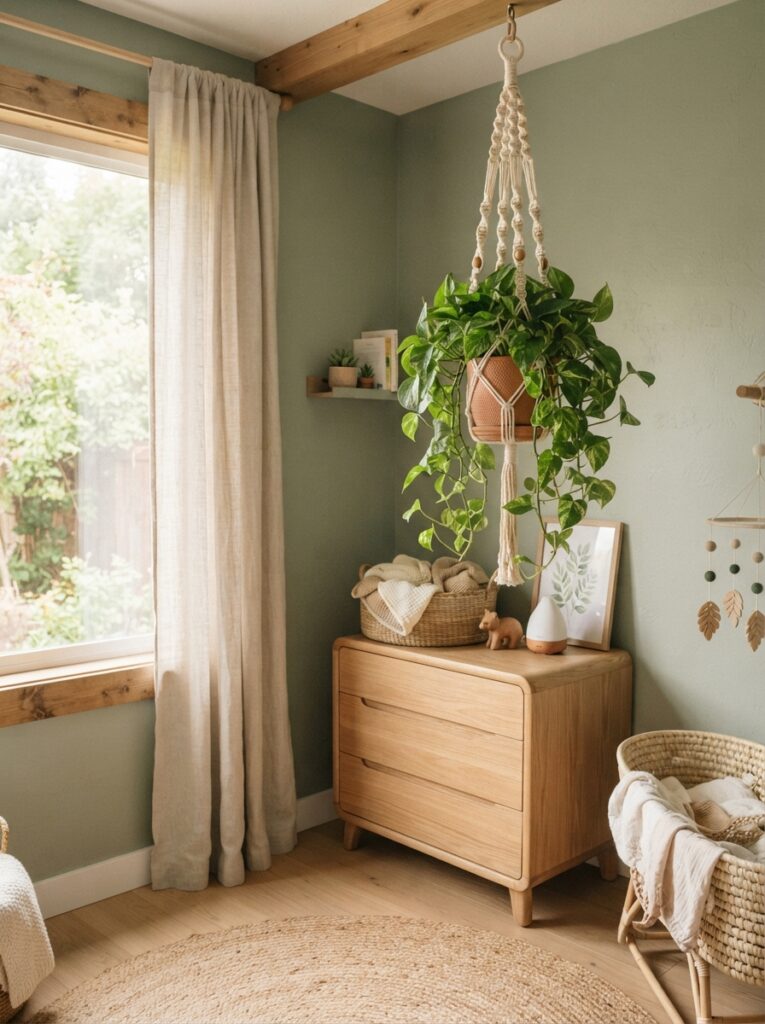
A few low-maintenance plants, pothos, snake plant, or a faux fiddle leaf fig if you’d rather skip the upkeep, soften a nursery’s hard edges and tie the natural-material theme together. Keep any real plants out of the crib’s reach and double-check that anything you bring in is non-toxic, since curious toddlers eventually explore everything within arm’s length. A hanging planter or a high shelf keeps greenery in the design without it becoming a safety concern once your child starts pulling up on furniture. Faux greenery is a perfectly good substitute if you’d rather not worry about watering during the newborn haze.
12. Design an Interesting Ceiling or Overhead Moment
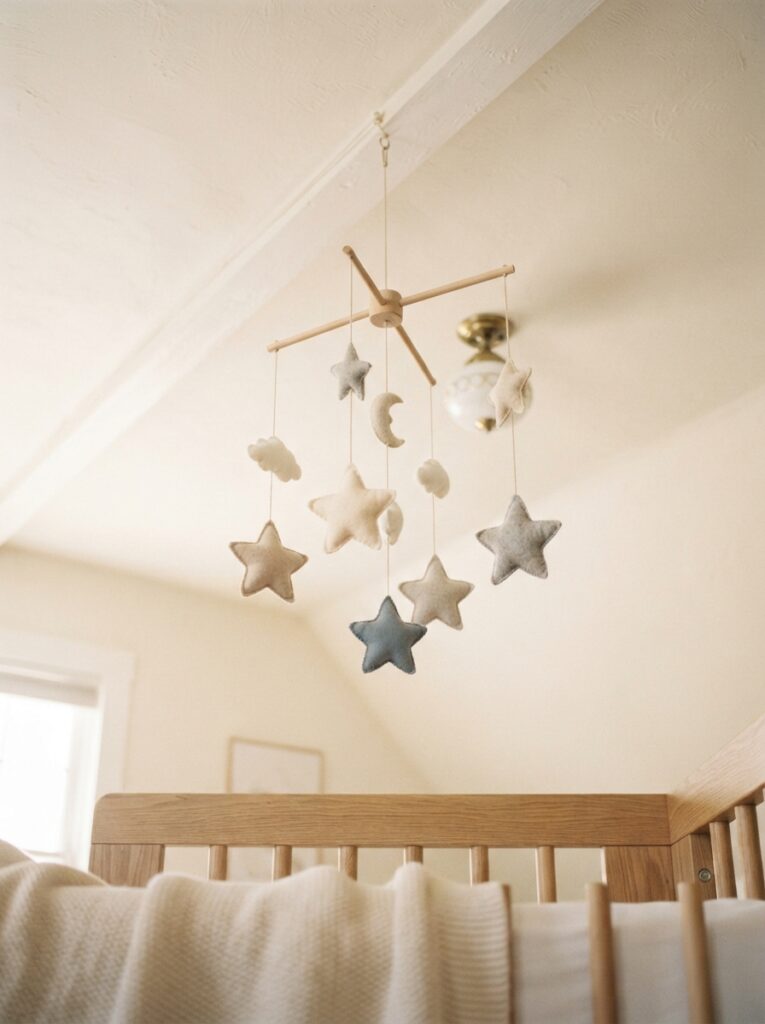
The ceiling is one of the most overlooked surfaces in nursery design, and it’s a low-commitment place to add pattern or interest without affecting the rest of the room. A paper star or fabric mobile hung above the changing area, a soft canopy over the crib positioned well out of reach, or a wallpapered or painted ceiling in a soft tone all draw the eye up in a room where floor space is often tight. If you want visual interest without added clutter, this is one of the easiest wins in the whole room.
13. Choose the Right Window Treatments
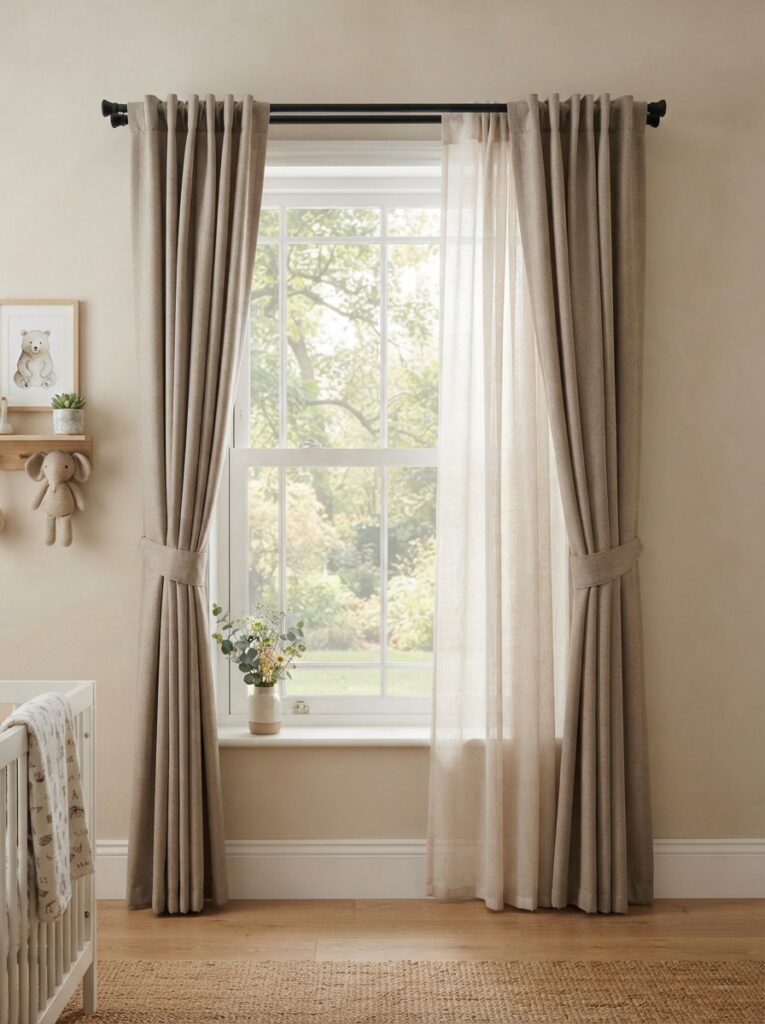
Cordless blackout curtains or shades are non-negotiable in a nursery — corded window treatments are a documented safety hazard, and blackout fabric makes an enormous difference for daytime naps. Choose a soft neutral linen or a subtle textured fabric rather than a busy print, since curtains cover a large visual area and can easily overwhelm a small room if they’re too loud. Layer a sheer panel behind a blackout curtain if you want the room to feel bright and airy during the day while still being able to fully darken it for naps.
14. Think Through Flooring and Rugs
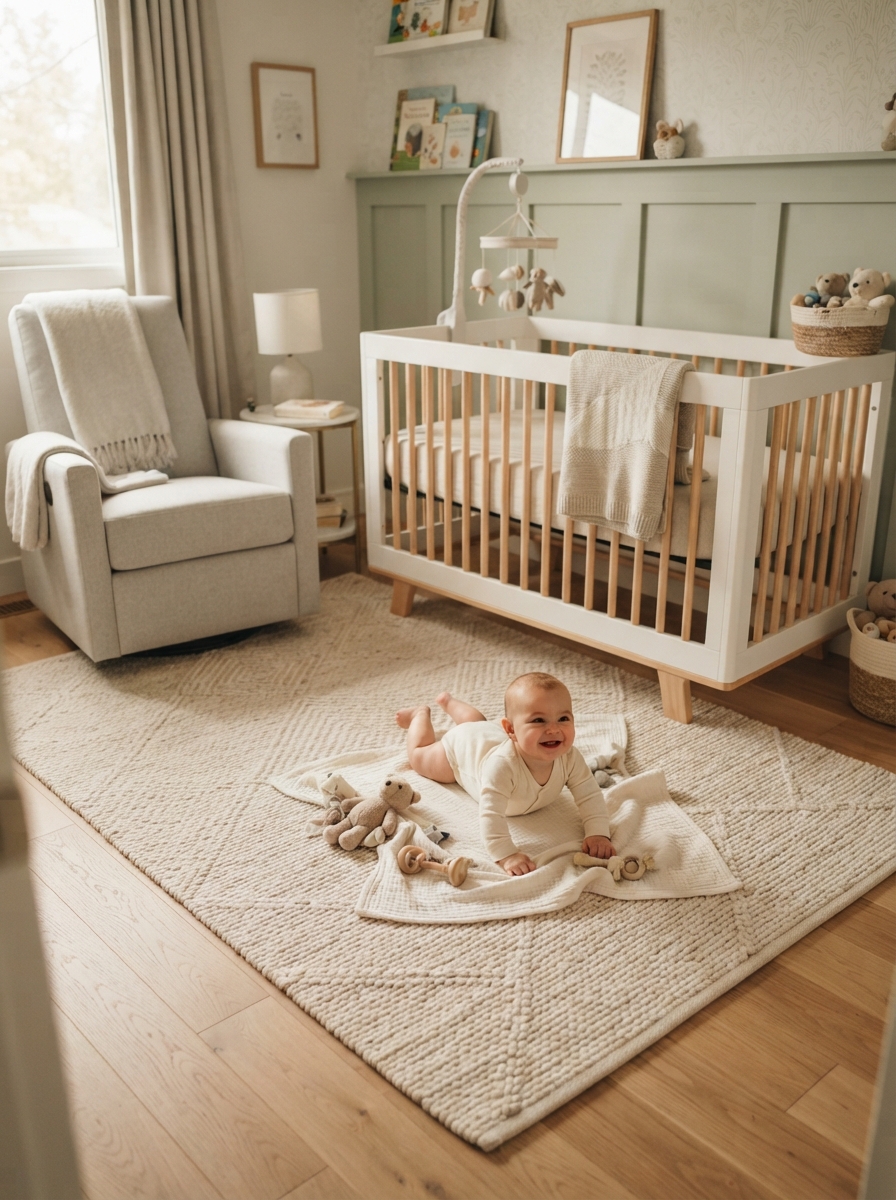
If you’re not replacing the existing flooring, a large area rug in a natural fiber like jute or wool anchors the furniture and adds warmth underfoot for barefoot late-night visits. Avoid loose, shaggy rugs near the crib once your baby starts crawling, since fibers and loose threads are both a safety and a cleaning concern. A low-pile rug or one with a flat weave is easier to keep clean and safer for tummy time, which will likely happen on this exact rug more than anywhere else in the house.
Gender-Neutral Nursery Color Palette Ideas
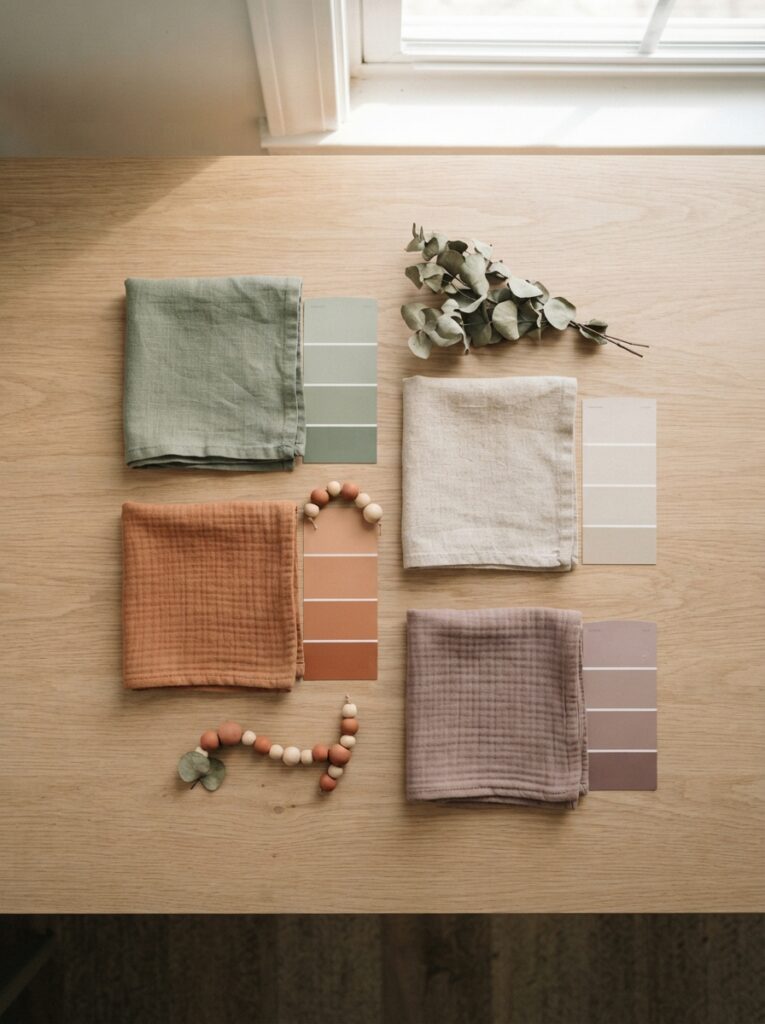
If you want more specific direction than “neutral,” here are five palettes that work well together: sage green with warm white and natural wood; oatmeal and terracotta with black accents; dusty blue-gray with mustard and cream; warm greige with olive and brass; and soft clay with sage and rattan, close enough to work for any nursery without reading as explicitly gendered. Pick one base wall or textile color, one deeper accent, and let wood tones and natural materials fill in the rest. Resist adding a third or fourth “statement” color — the most photograph-ready gender-neutral nurseries usually rely on just two colors plus neutral wood and texture, not a rainbow of accent shades competing for attention.
Budget-Friendly Gender-Neutral Nursery Decor Ideas
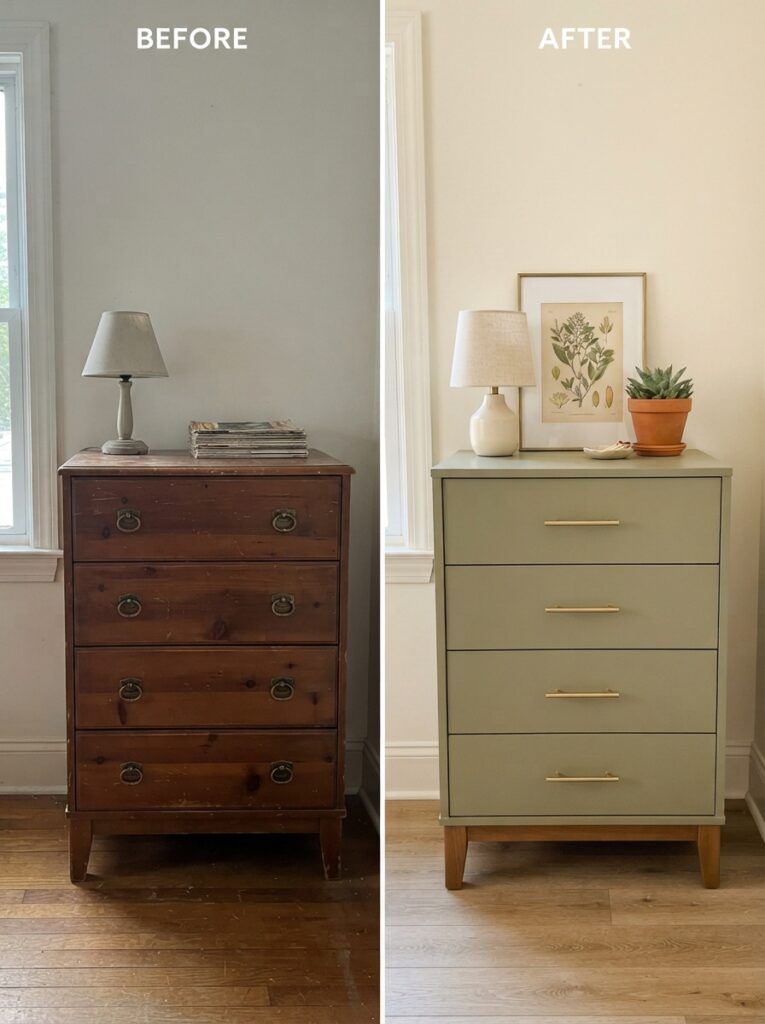
You don’t need a full furniture budget to pull off gender-neutral nursery decor ideas that look intentional. Removable wallpaper or a peel-and-stick border covers a statement wall without the cost or commitment of paint and professional installation. A secondhand dresser gets a completely fresh look with new hardware and a coat of paint in your chosen neutral, often the single best value upgrade in the whole room. Thrifted frames, a vintage rug, or a hand-me-down glider reupholstered in a solid fabric can all read as designer choices once they’re styled together with a consistent color story. Buy the crib and mattress new for safety reasons, but almost everything else, dressers, rugs, art, accent chairs, can come secondhand with a little cleaning and restyling.
Nursery Layout for Small Rooms
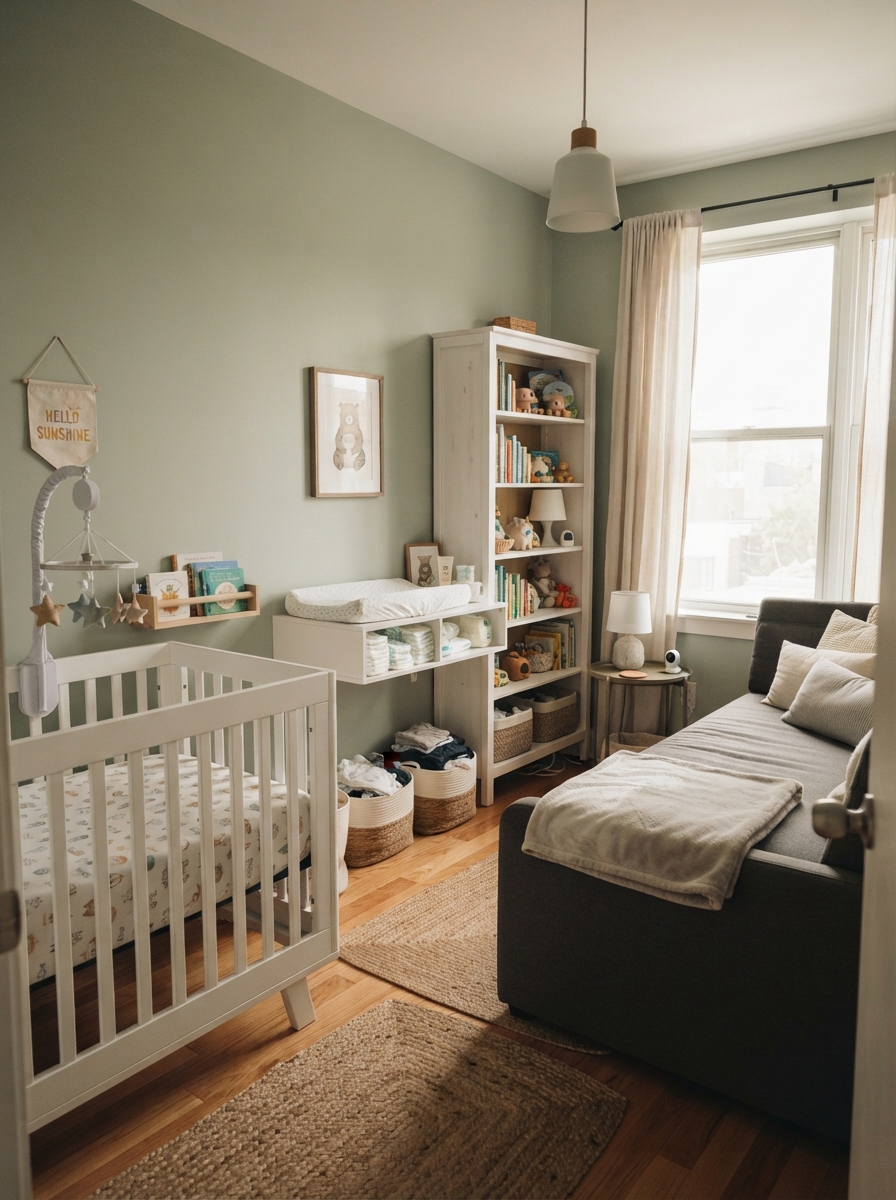
Not every nursery gets a full spare room. In a smaller space, prioritize the crib and changing area first, then fit storage around them rather than the reverse. A wall-mounted shelf above the changing table saves floor space for baskets underneath. If the nursery doubles as a guest room or home office, a daybed or a fold-down desk can share the space with the crib without either function feeling like an afterthought — just keep sightlines to the crib clear for safety and easy nighttime checks. Vertical storage, tall narrow bookshelves instead of wide dressers, is almost always the better call in a tight footprint.
Nursery Safety Essentials Beyond Decor
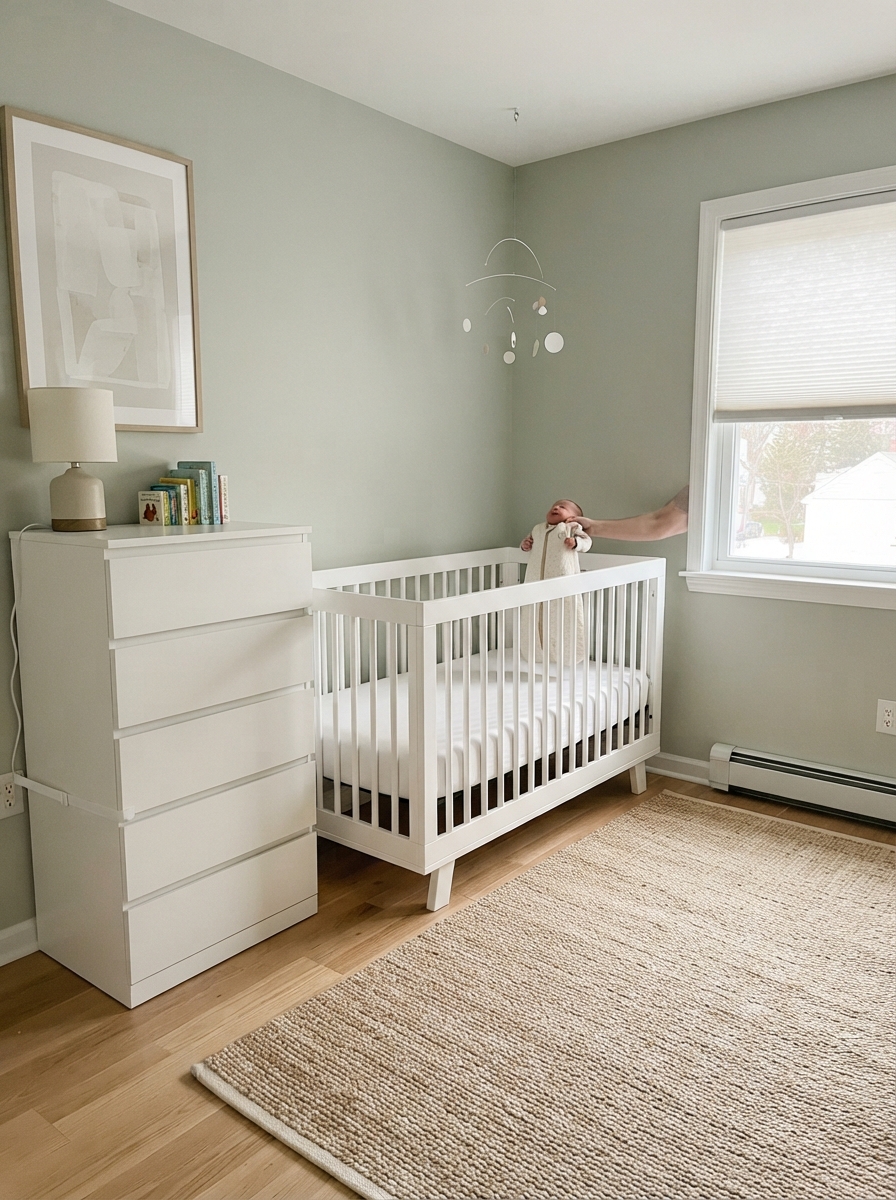
Style matters, but a few non-negotiables come first: anchor tall furniture like dressers and bookshelves to the wall, keep the crib completely free of blankets, pillows, and bumpers, install cordless window treatments, and place the crib away from windows, cords, and radiators. Double-check that any rug, mobile, or wall decor is positioned well outside the reach of a standing toddler, since babies grow into new hazards faster than most parents expect. These details don’t have to compromise the look — anchored furniture and cordless blinds are invisible once installed, but they matter far more than any color choice, and no styling detail is worth compromising on any of them.
From Nursery to Kid’s Room: Planning Ahead
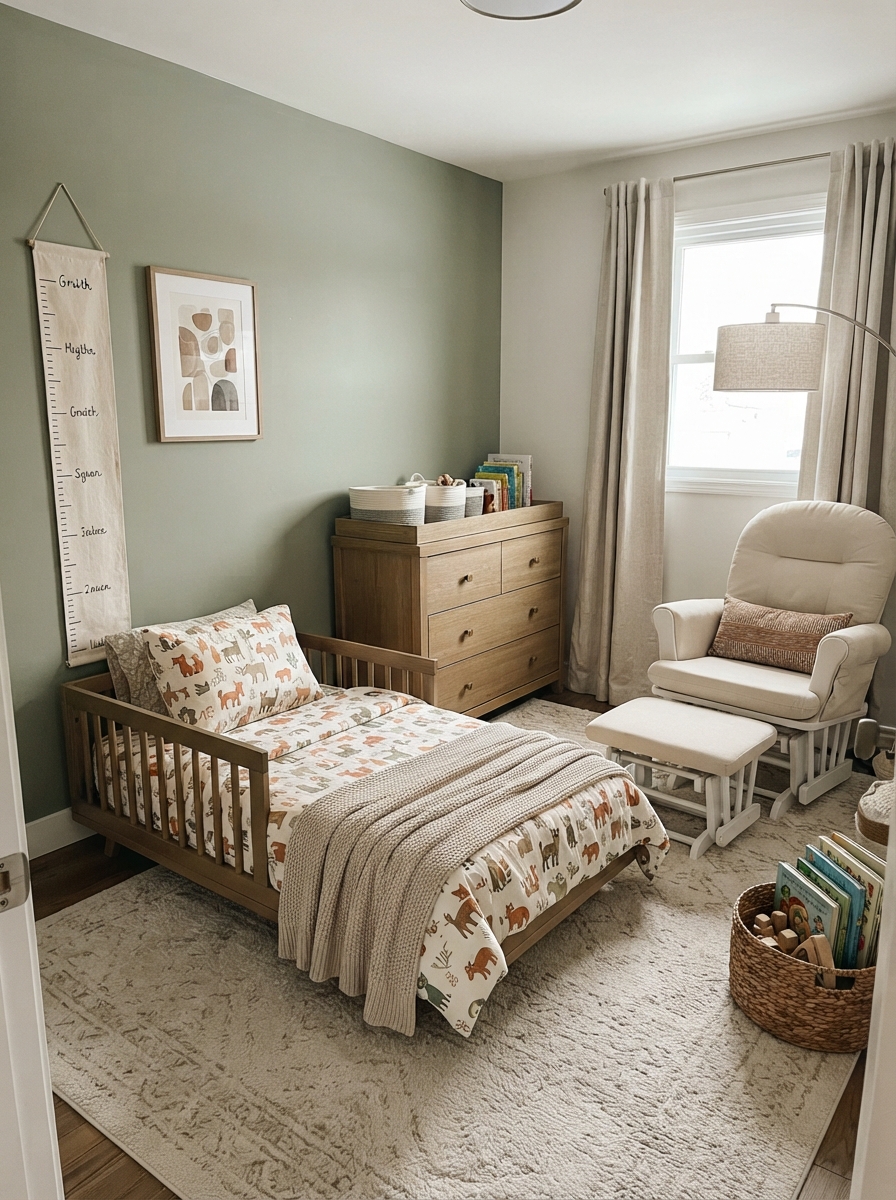
One of the biggest advantages of gender-neutral nursery decor ideas is how easily the room transitions as your child grows. A sage or oatmeal wall works behind a crib and, a few years later, behind a toddler or twin bed with zero repainting. Swap crib sheets for patterned bedding, add a growth chart or a piece of art your child picks out themselves, and keep the core furniture, dresser, rug, glider, in place. Because you avoided anything explicitly babyish or gendered from the start, the room can evolve gradually, a new lamp here, a new bedspread there, instead of requiring a full teardown the moment your toddler outgrows “nursery” as a label.
Nursery shopping list
- Nursery blackout curtains — daytime naps depend on it
- Changing table organizer — everything within one arm
- Nursery storage baskets — soft sided, no sharp edges
- Baby night light — warm and dimmable
- Nursery wall decals — damage free, easy to change
- Furniture anchor straps — non negotiable
Prices and availability change. Links open on Amazon.
Final Thought
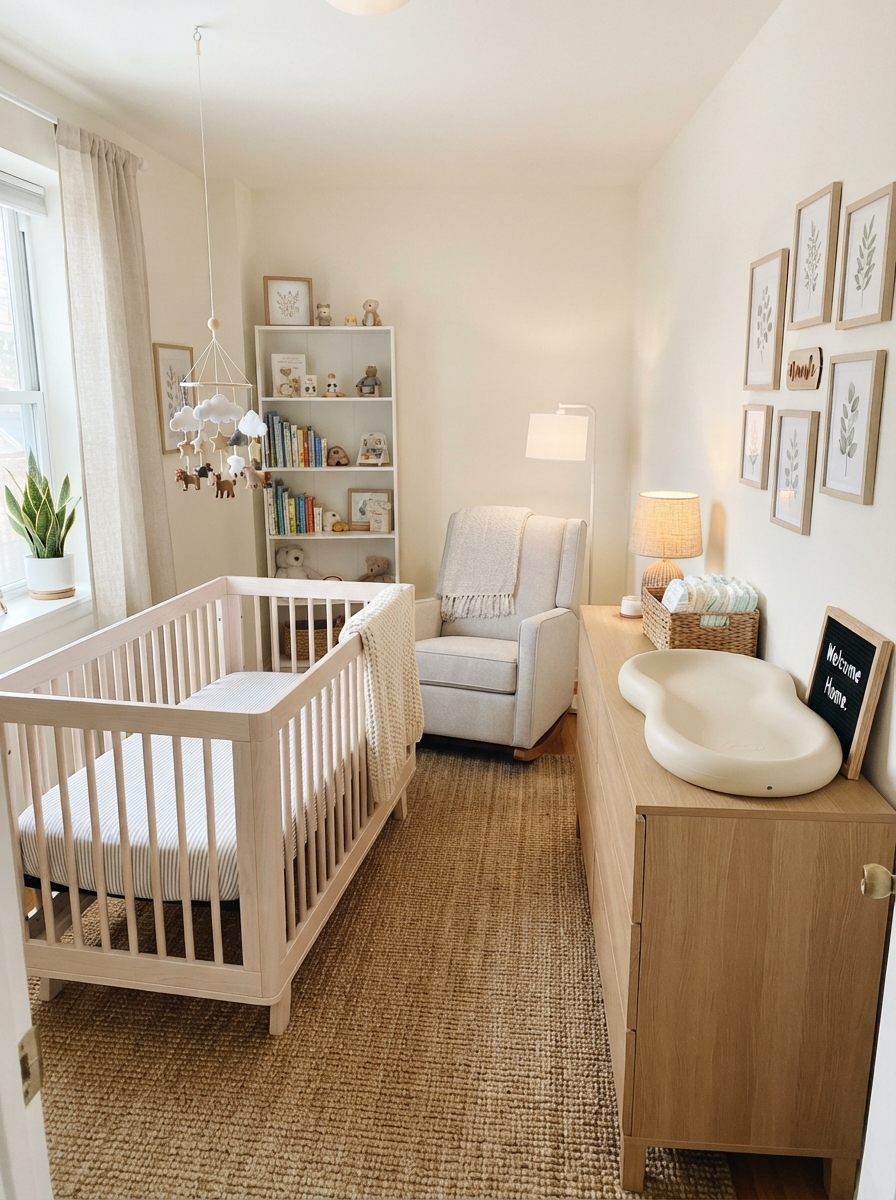
A great nursery balances the dreamy details with real function — furniture that adapts, storage you can reach one-handed, and lighting that works at 3 a.m. These gender-neutral nursery decor ideas work because they start with a neutral palette and natural textures, then layer in the personal touches, patterns, and small design moments that make a room feel like home rather than a showroom. Start with the two or three items that will anchor the whole room, the crib, the rug, and the wall color, then build out from there one piece at a time. For more nursery planning guidance, visit The Bump.
Frequently Asked Questions
What colors work best for a gender-neutral nursery?
Warm neutrals like sage green, terracotta, oatmeal, dusty mauve, and warm greige all read as gender-neutral while feeling warmer and more current than stark white or gray. Pair one base neutral with a single deeper accent color for the best results.
How do I make a nursery feel gender-neutral without it looking empty or boring?
Lean on texture, pattern, and natural materials instead of color to add interest — a statement wall, a textured rug, woven baskets, and a few well-chosen patterns all add personality without relying on pink or blue.
Do I need to buy all new furniture for a gender-neutral nursery?
No. Secondhand dressers, chairs, and decor can all be refreshed with paint, new hardware, or reupholstering. For safety, buy the crib and crib mattress new, but almost everything else can be sourced secondhand.
How can I make gender-neutral nursery decor work for a small room?
Prioritize the crib and changing area first, use vertical and wall-mounted storage instead of bulky furniture, and keep the color palette simple, one base neutral and one accent color, so the small space doesn’t feel visually busy.





2 Comments