
Coffee Station Ideas: How to Build a Corner That Actually Speeds Up Your Morning

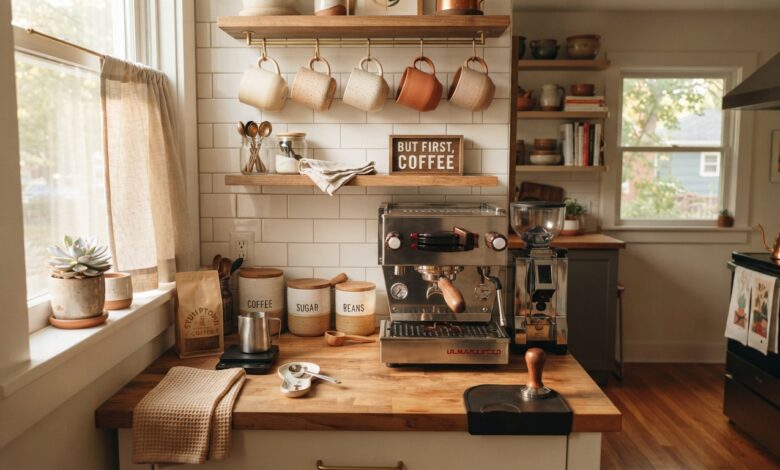
A coffee station earns its place by removing friction from a routine you already repeat every morning. Done well, it keeps the machine, the beans, the mugs, and the spoons within one arm’s reach and off the rest of your counters — which is what makes the whole kitchen feel calmer, not just the corner holding the kettle. Here’s how to build a coffee station that looks considered and genuinely speeds up your morning.
As an Amazon Associate I earn from qualifying purchases. Some links in this post are affiliate links, at no extra cost to you.
1. Claim a Dedicated Zone, However Small
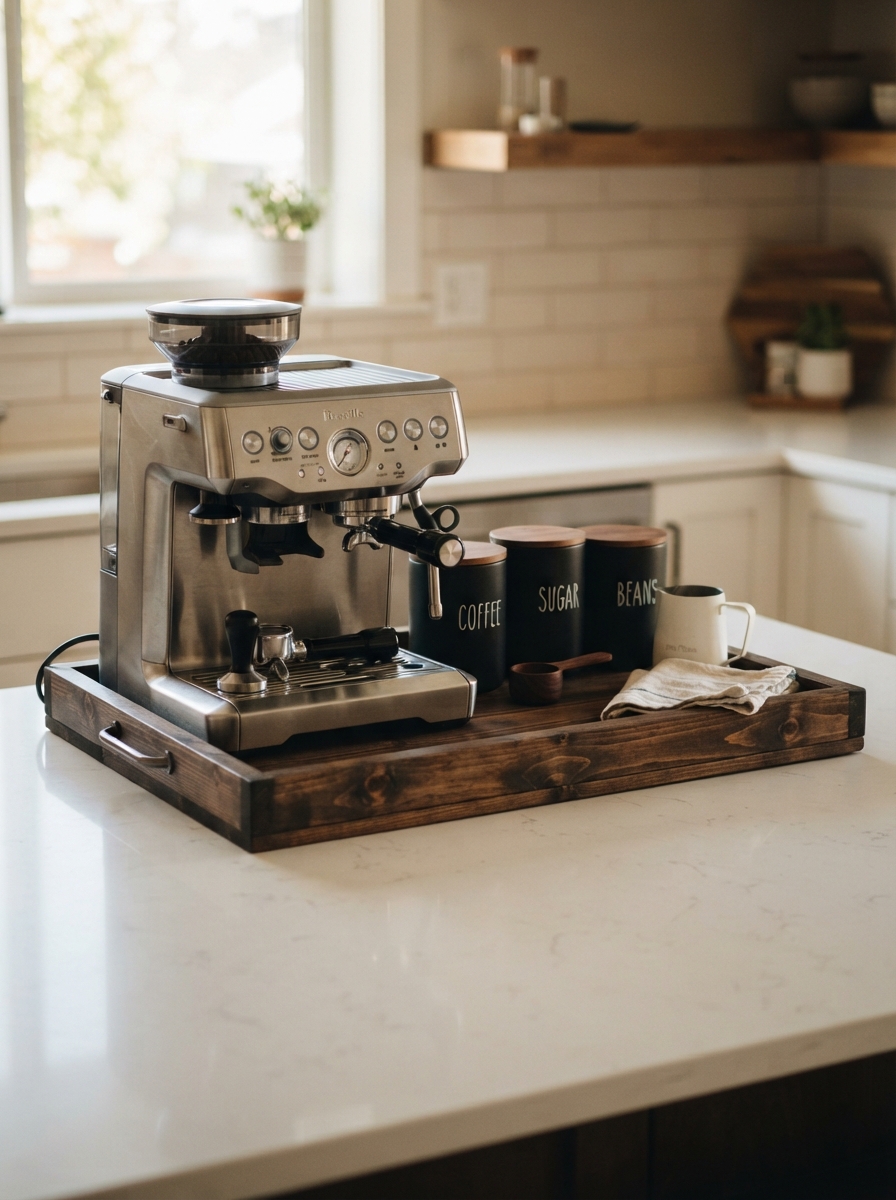
The single biggest upgrade is deciding that one specific surface belongs to coffee and nothing else. A 60cm stretch of counter, the top of a narrow cabinet, or a rolling cart against a blank wall all work. What matters is that the zone has a visible edge, because the moment coffee gear starts migrating along the counter it stops reading as a station and starts reading as clutter. A tray, a runner, or a change in surface material is usually enough to define it.
2. Work Out Your Actual Morning Sequence First
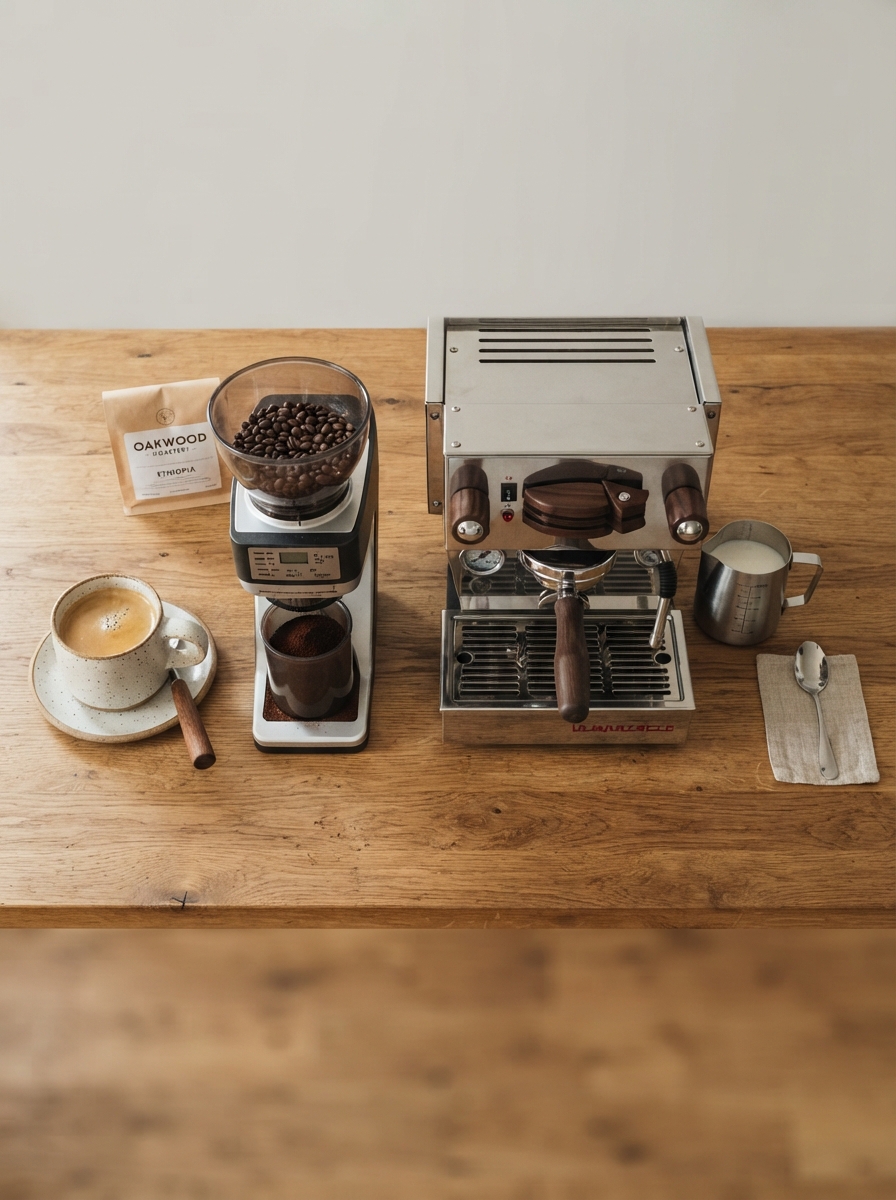
Stand where you’d make coffee and mime the process: reach for mug, grind beans, fill water, brew, add milk, stir, bin the grounds. The order you touch things is the order they should sit. Most badly designed stations fail because the mugs live above the sink and the spoons live in a drawer three steps away. Arrange for the sequence you actually perform, not for symmetry.
3. Get the Beans and Pods Off the Counter
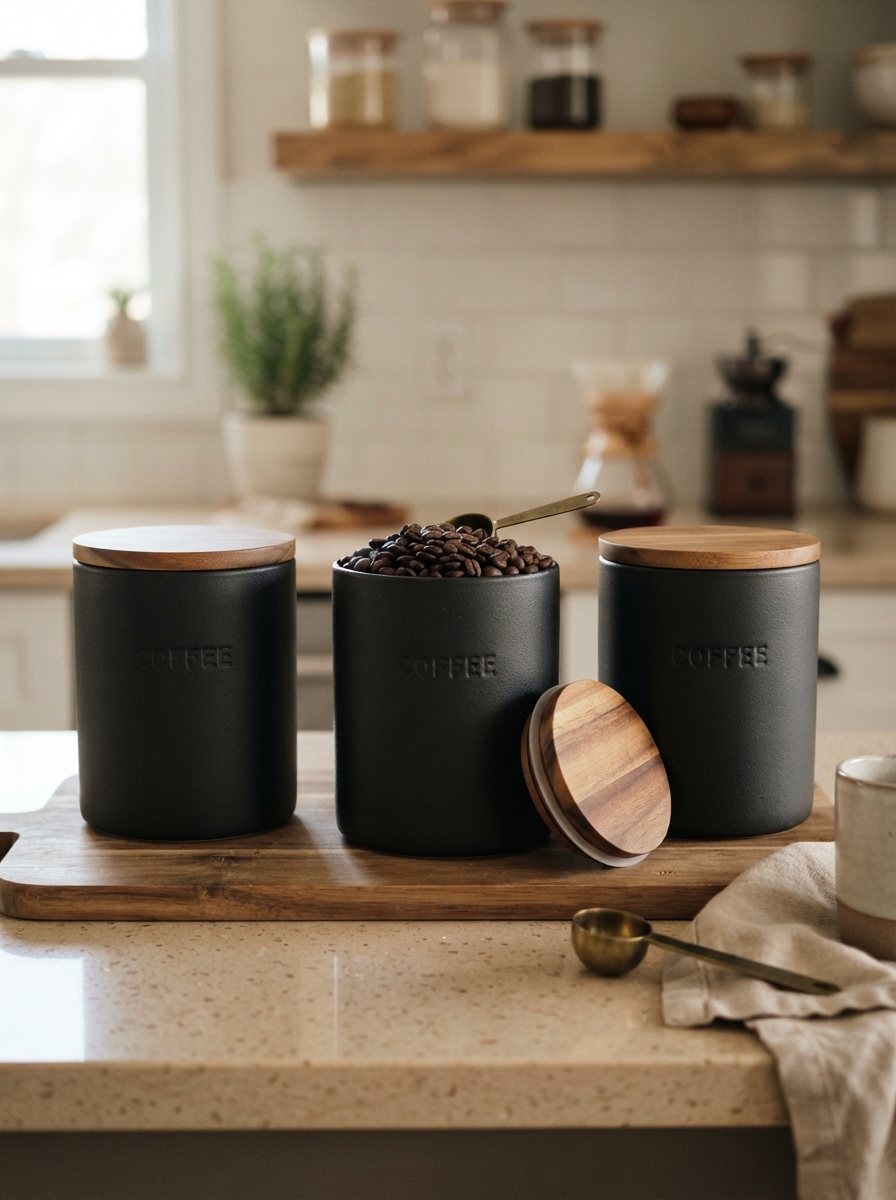
Bags of beans and jumbles of pods are what make a coffee corner look messy in photographs and in life. Decant beans into an opaque airtight canister — light and oxygen are what stale coffee tastes like — and keep pods in a drawer insert or a lidded box rather than a wire carousel. If you want the canister visible, choose one material and repeat it: three matching ceramic jars read as intentional, three mismatched ones read as leftovers.
Setting up your station?
Canisters, mug hooks, carts and trays in one search.
4. Hang the Mugs Instead of Stacking Them
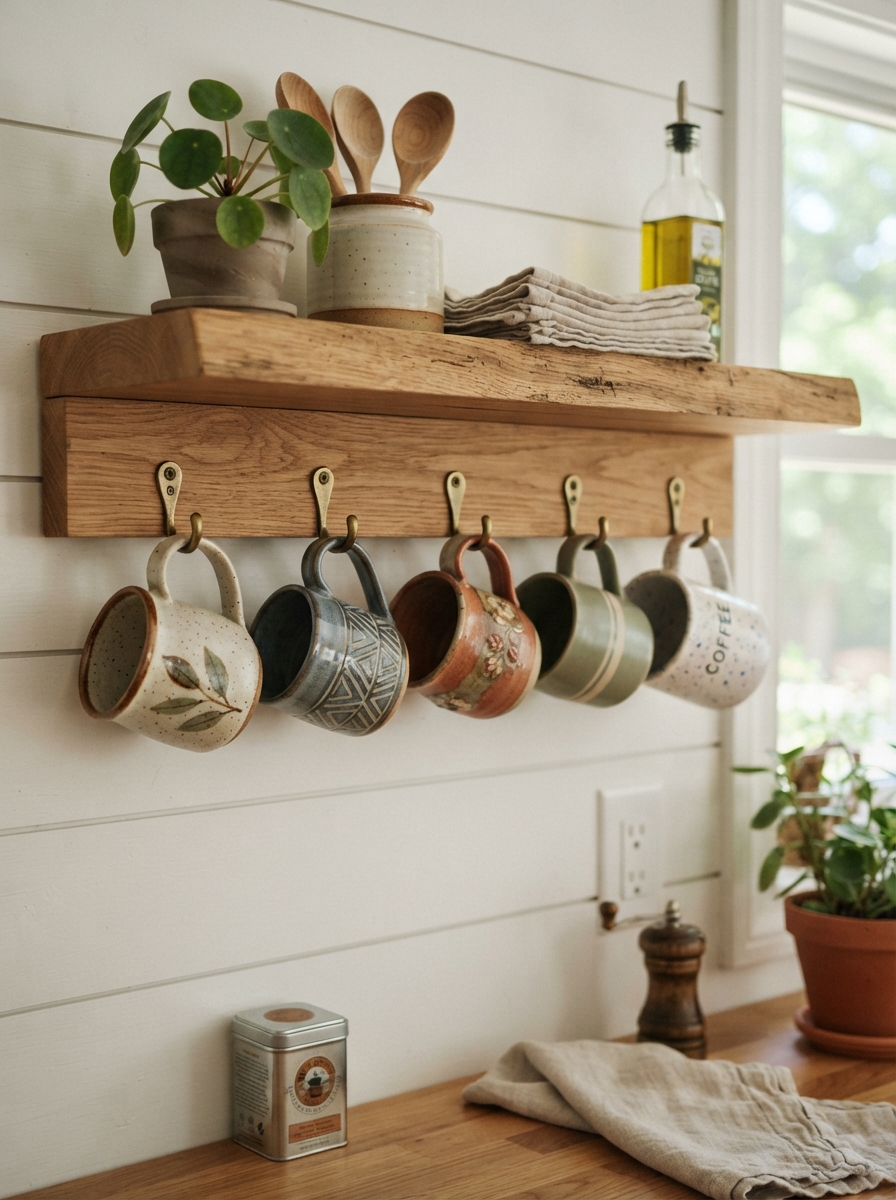
Mug hooks under a shelf or along the side of a cabinet free up an entire shelf and add a layer of visual interest at eye level. Space hooks about 12cm apart so handles don’t collide, and hang only the mugs you actually use daily — the novelty ones from holidays belong in a cupboard. If drilling isn’t an option, an under-shelf hook rail or a small standing mug tree achieves the same effect without hardware.
5. Add a Shelf Above for Vertical Storage
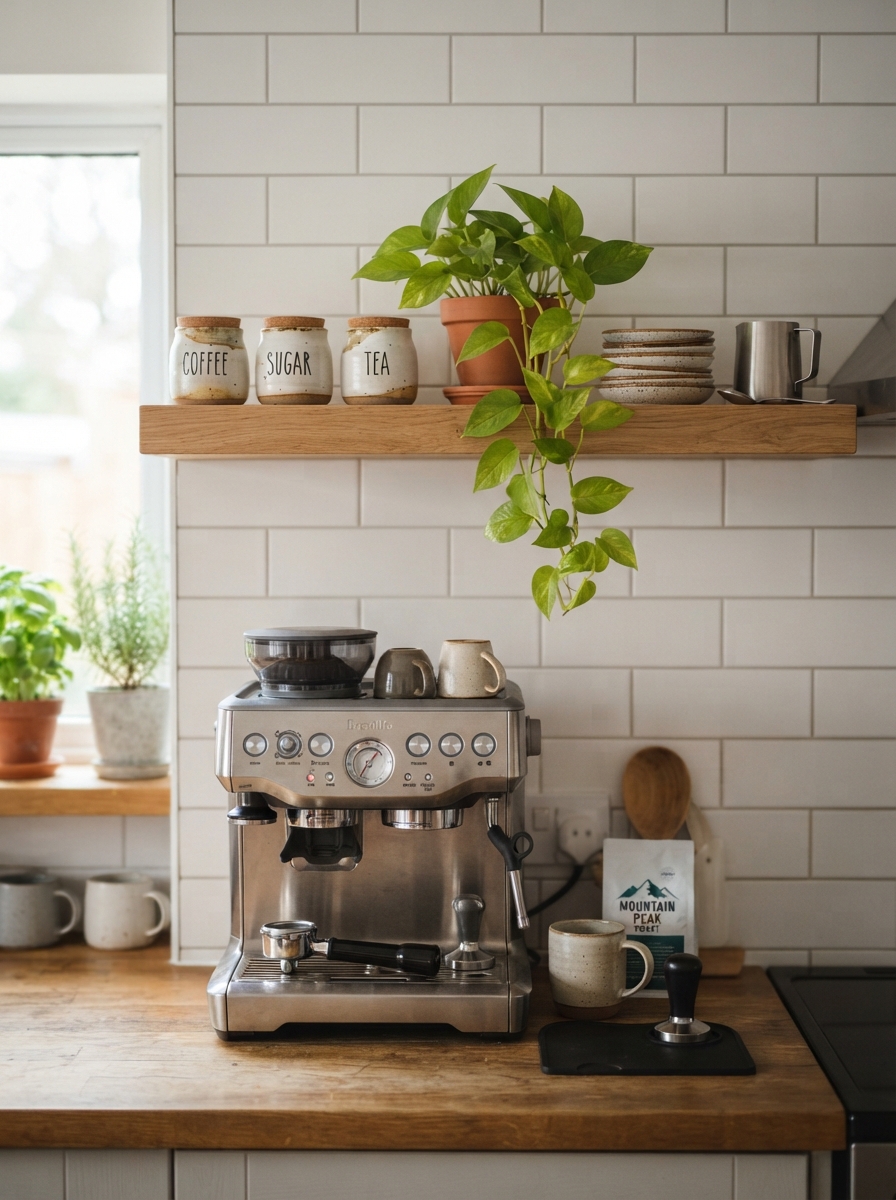
A single floating shelf above the station doubles your capacity without consuming counter space. Keep it to a shallow depth — around 15 to 20cm — so it holds canisters, a small plant, and a stack of saucers without looming over the person making coffee. The same styling logic that works on any shelf applies here: vary heights, leave breathing room, and resist filling every centimetre.
6. Solve the Water Problem
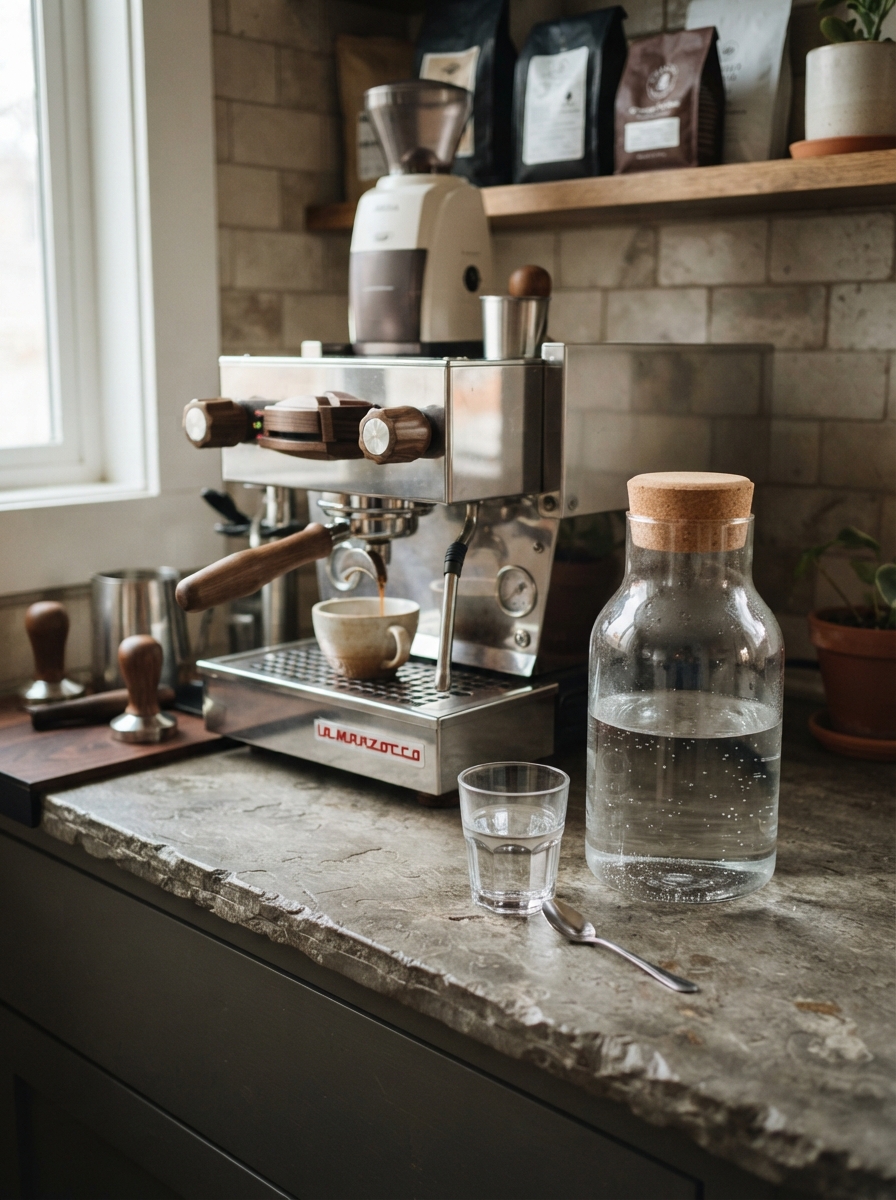
The most common daily annoyance in a coffee station placed away from the sink is carrying water back and forth. A wide-mouthed glass carafe or a small filter jug kept on the station means one trip instead of three, and reads as part of the styling rather than an appliance. If your machine has a removable tank, make sure the station has enough overhead clearance to lift it out without moving the whole unit.
7. Light It Like a Small Workspace
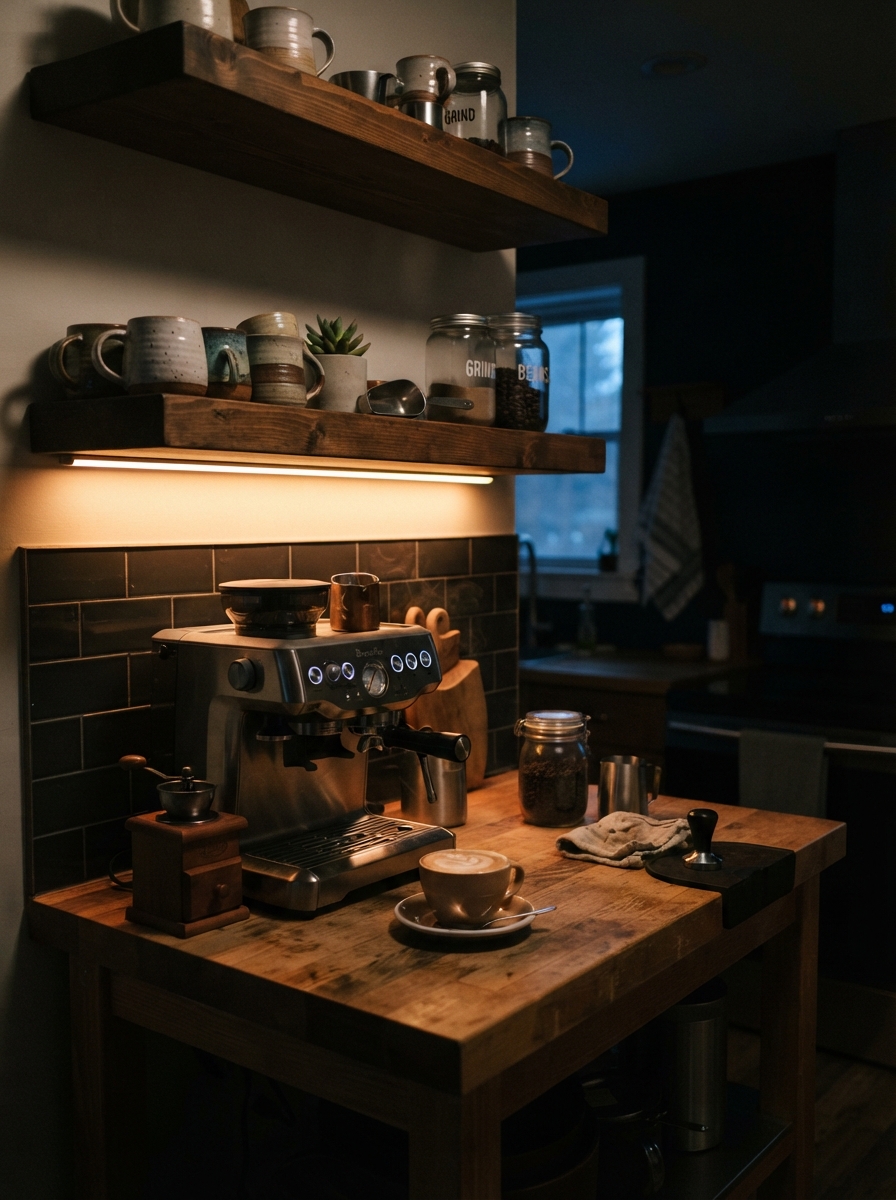
Coffee gets made before sunrise for much of the year, and overhead kitchen lighting rarely reaches into a corner. A slim LED strip under the shelf above, or a single small lamp if there’s a socket nearby, turns the station into a warm pool of light rather than a dark counter. Warm-toned bulbs around 2700K suit an early-morning routine far better than the cooler light used over a prep area.
Coffee Station Ideas by Location
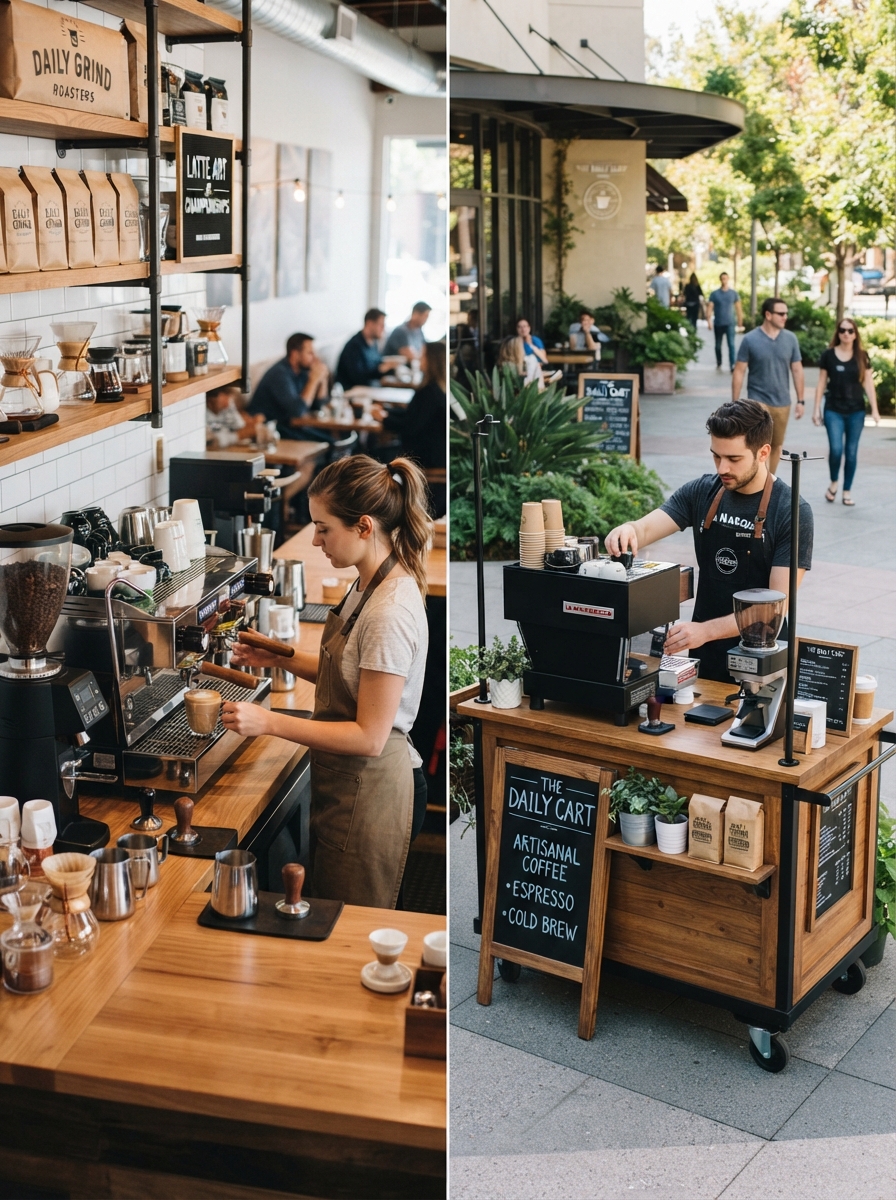
On a Kitchen Counter
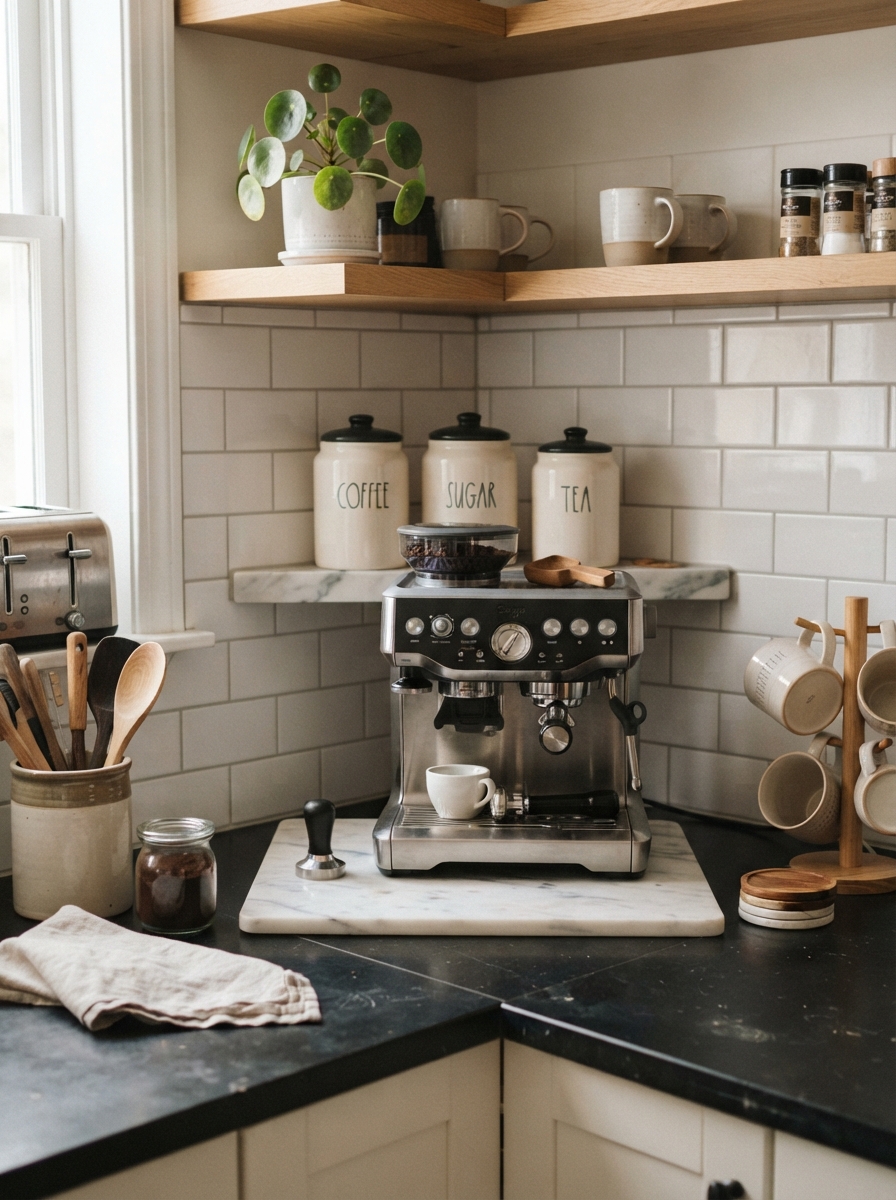
The simplest option, and the one that most needs a defined boundary. Set the machine on a tray or a marble board so the zone has edges, push it into a corner rather than centring it on a run of counter, and keep everything within the tray’s footprint. When the tray is full, something has to leave — a useful built-in limit.
On a Rolling Cart
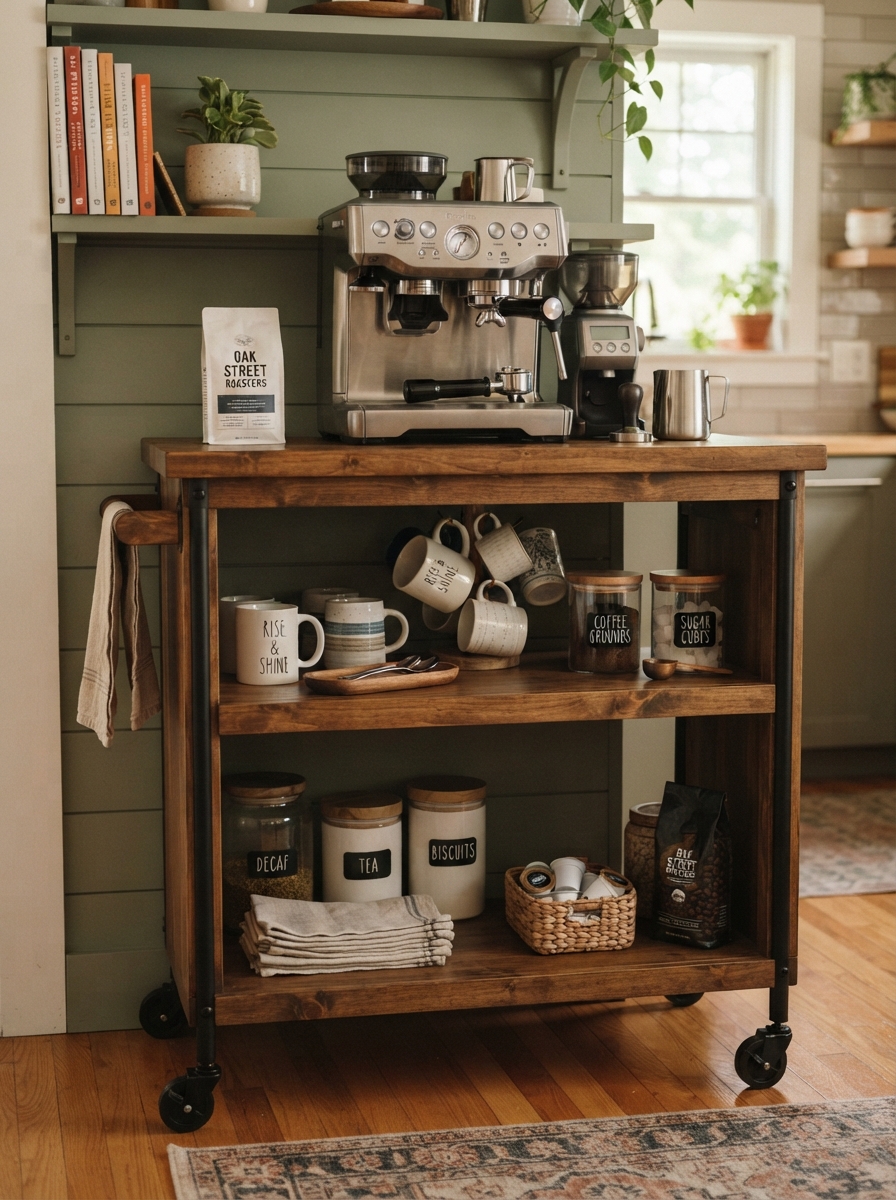
A bar cart or utility trolley turns coffee into a movable station, which suits small kitchens and rentals where counter space is fixed. Three tiers handle it comfortably: machine on top, mugs and canisters in the middle, spare beans and cleaning supplies at the bottom. Choose one with locking castors, since a cart that rolls when you press the machine’s buttons is a daily irritation.
Inside a Cabinet or Armoire
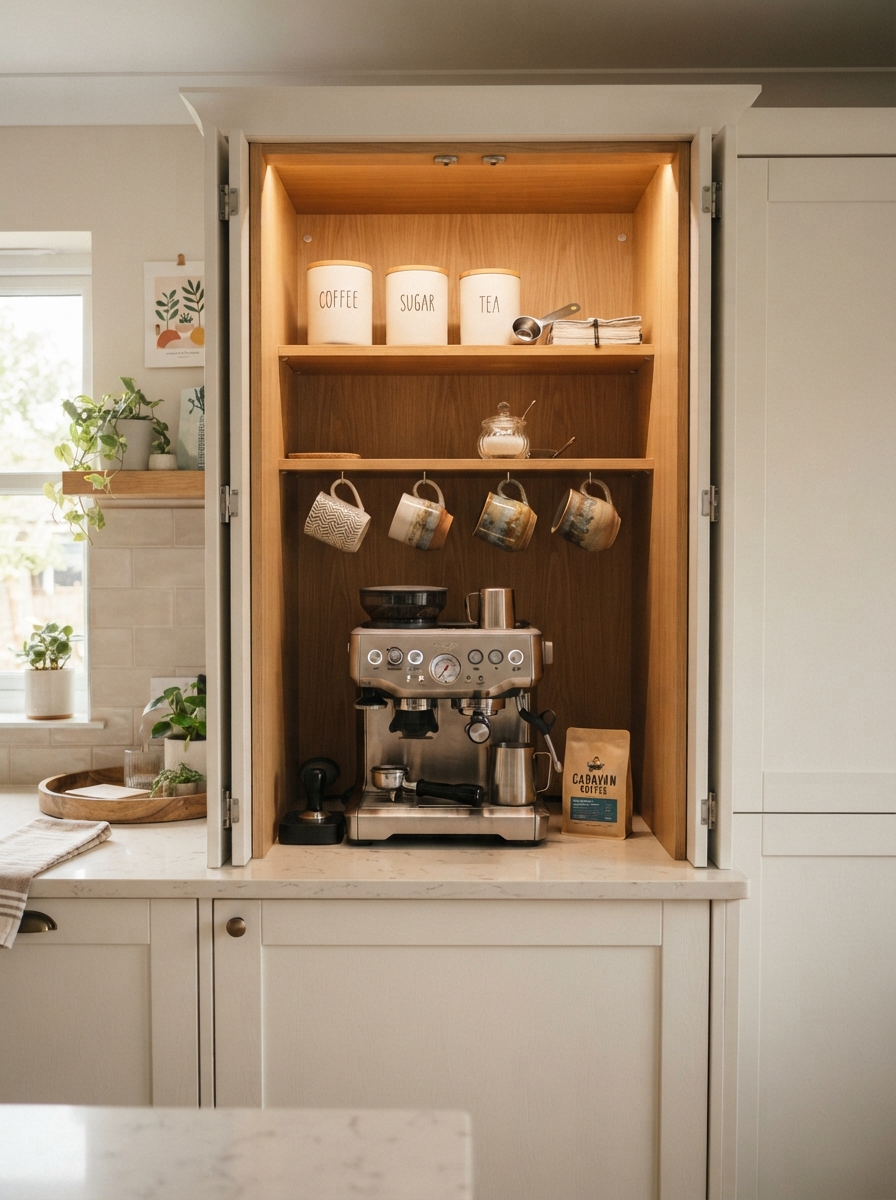
A cabinet with doors that fold back lets the whole station disappear between uses, which is ideal in an open-plan space where the kitchen is visible from the sofa. The requirements are a socket inside the cabinet, enough depth for the machine plus clearance behind it, and — critically — the ability to slide the machine forward before brewing so steam doesn’t sit against the cabinet’s underside.
On a Sideboard in a Dining or Living Area
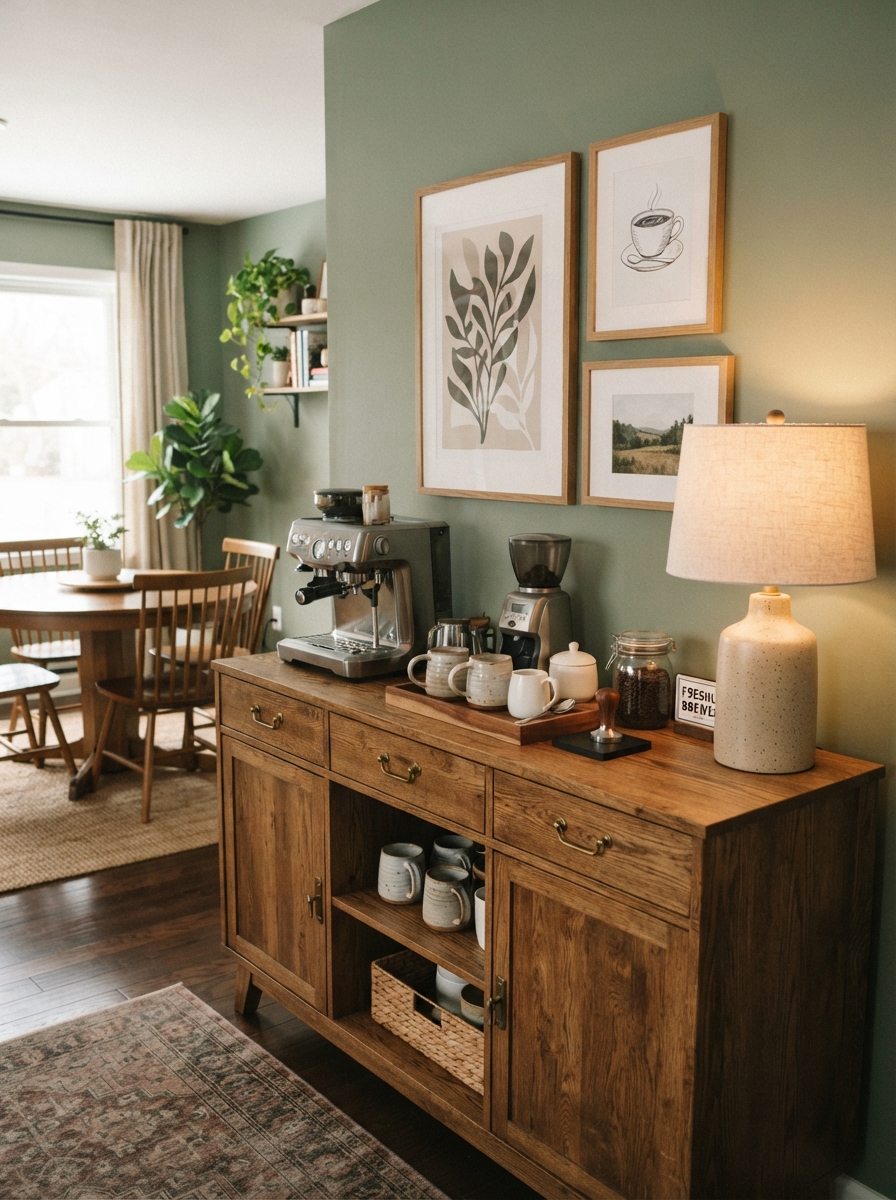
Moving coffee out of the kitchen entirely works well when the kitchen is small or shared. A sideboard gives generous surface area and closed storage underneath, and the station can then be styled to match the living space rather than the kitchen — a lamp instead of a strip light, a framed print behind, a ceramic tray rather than stainless steel.
Choosing Materials That Suit Your Kitchen
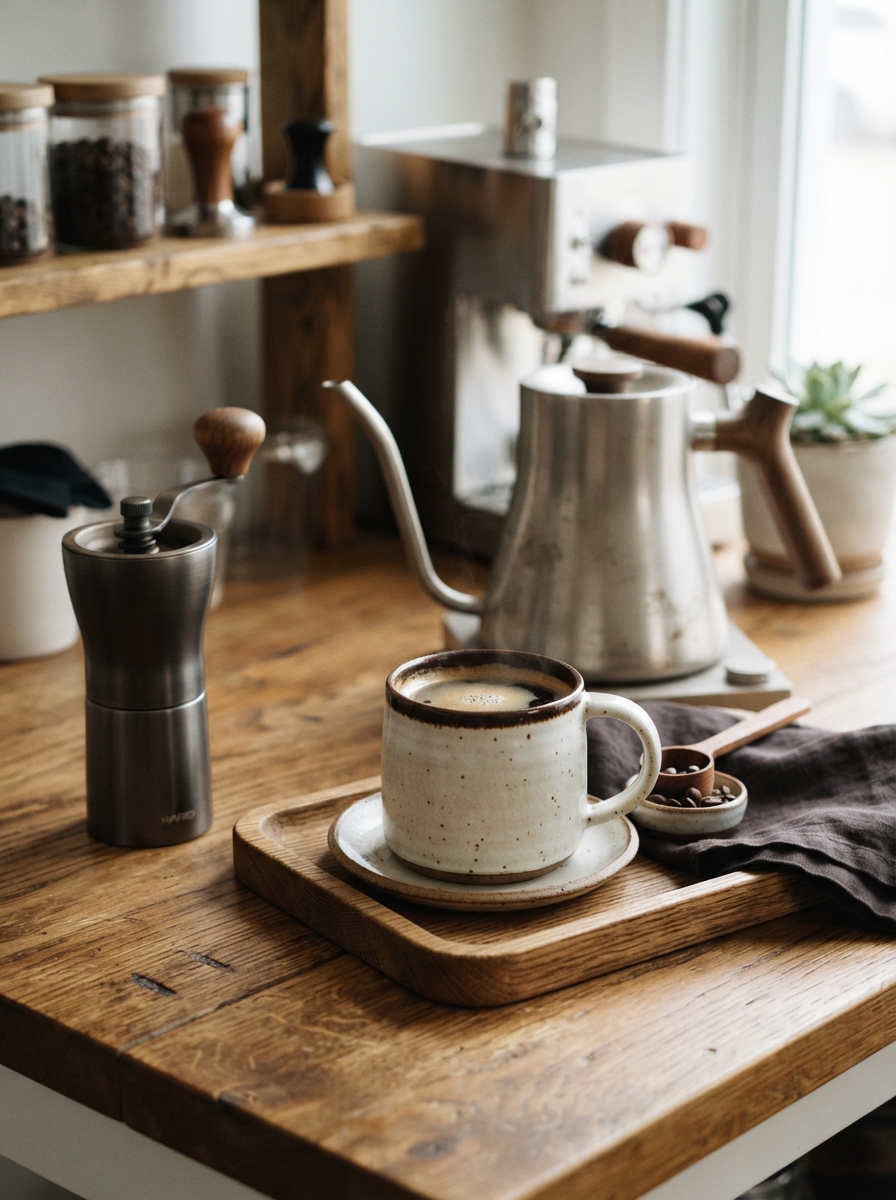
Coffee stations look best when they echo finishes already present rather than introducing a new palette. A kitchen with warm wood cabinetry pairs naturally with wood trays, woven baskets, and stoneware in warm neutrals. A high-contrast kitchen with black or white cabinetry suits matte ceramic, glass canisters, and brushed metal far more than rustic wood. Pick two materials and repeat them across the tray, the canisters, and the mugs.
Styling a Coffee Station Without Clutter
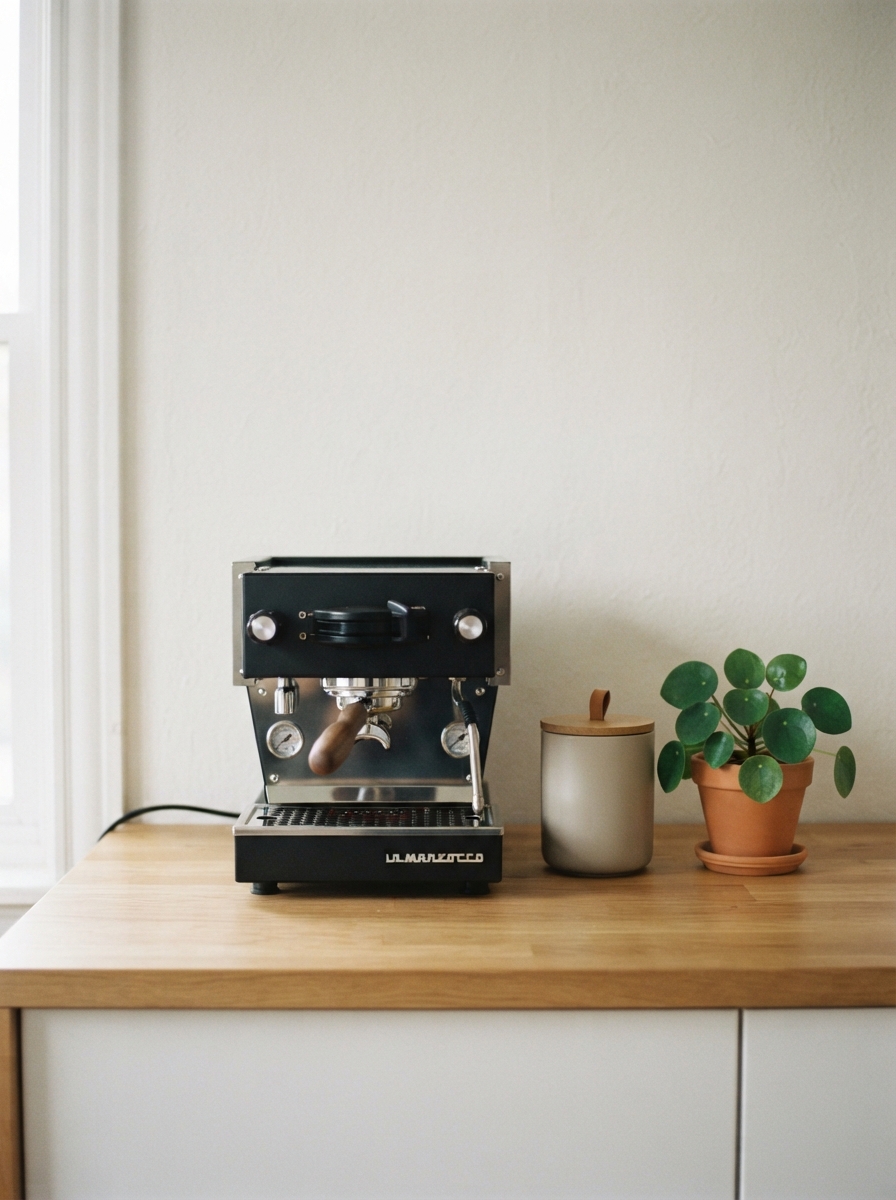
The rule that keeps these corners looking good is one decorative object maximum. A small plant, a stack of two linen napkins, or a framed print — one of them, not all three. Everything else on the station should be something you touch daily. Coffee stations photograph beautifully in magazines because the stylist removed six items you would actually need; build for the version you’ll live with, then remove one thing.
Keeping It Clean Day to Day
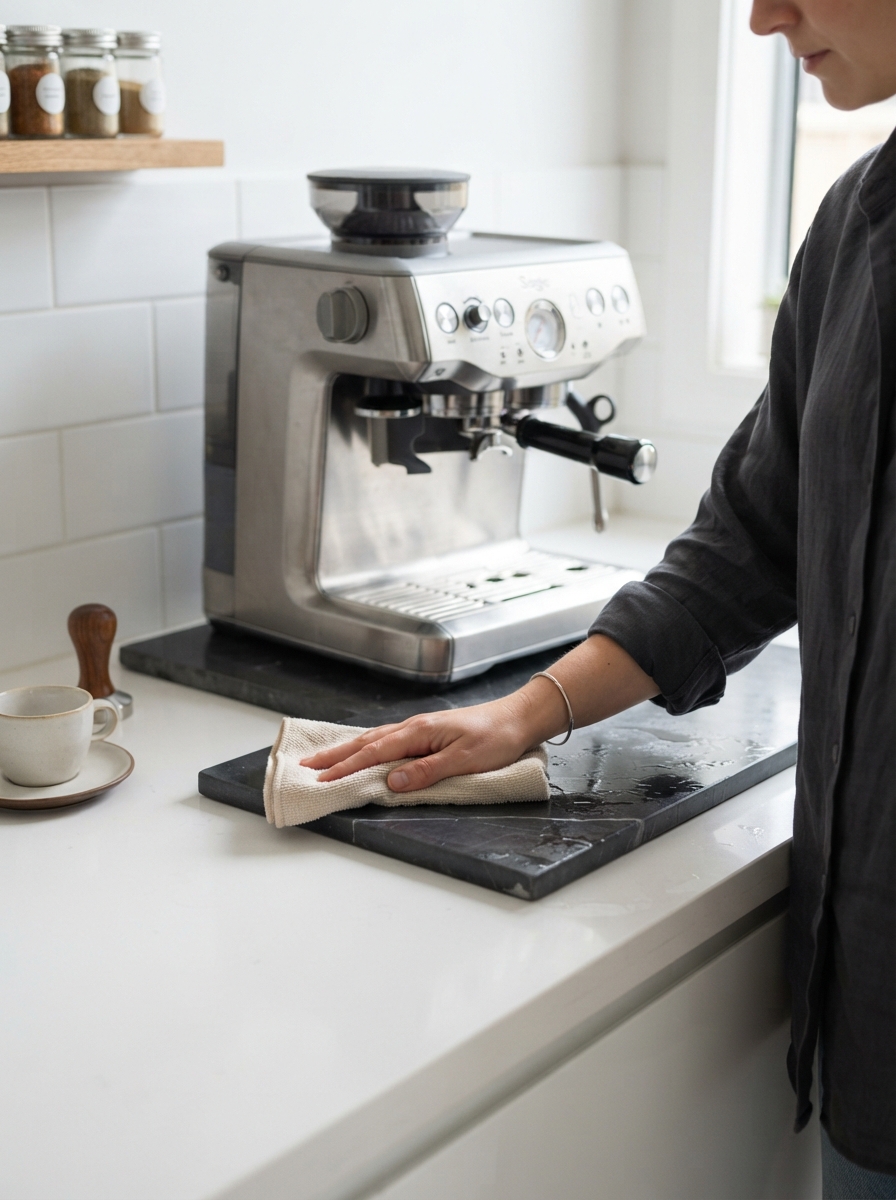
Ground coffee stains, milk splashes, and limescale are the three things that age a station fastest. A wipeable surface under the machine — a tray, a stone board, a sheet of toughened glass cut to size — means the daily wipe takes five seconds instead of involving the whole counter. Descale on a schedule rather than when the machine complains, and keep a small dedicated cloth at the station so cleaning never requires walking away.
Coffee Station Ideas on a Budget
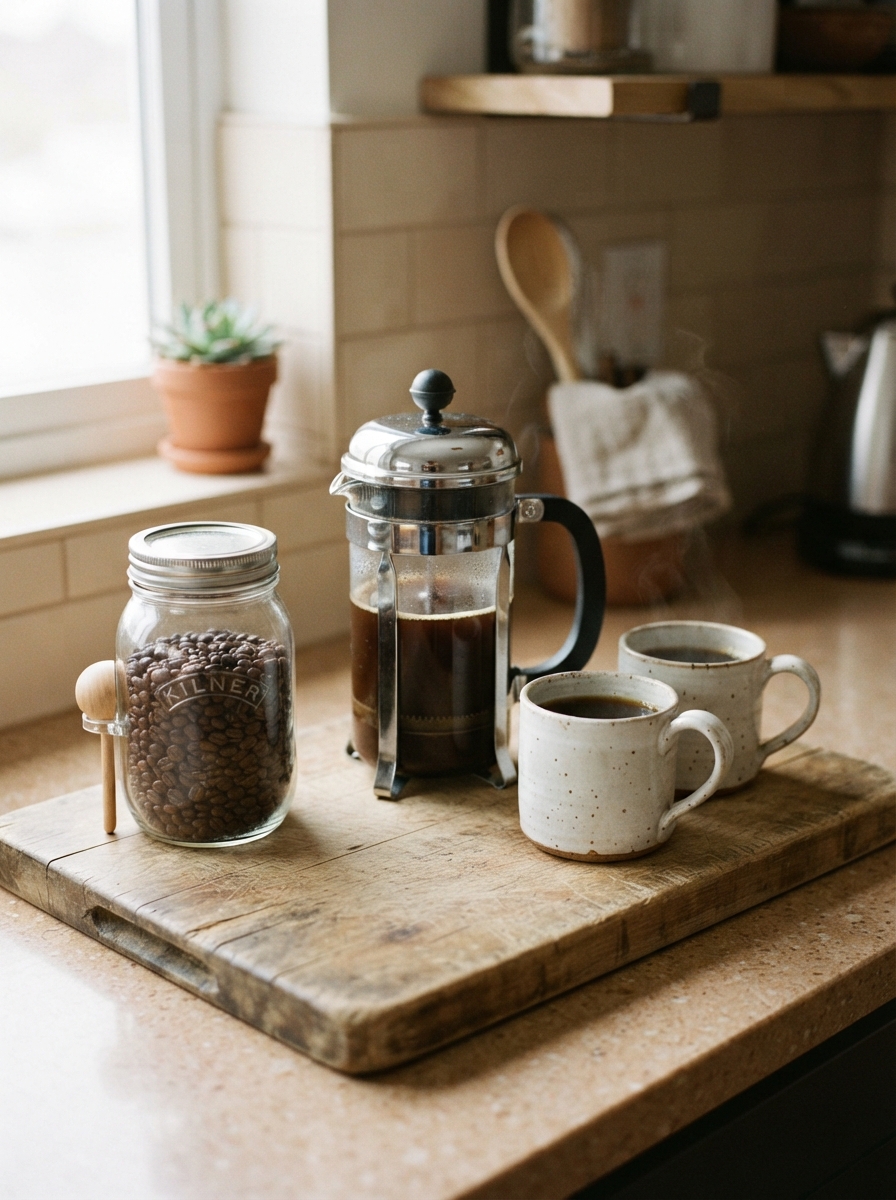
Almost nothing here requires expensive purchases. A wooden chopping board becomes a tray, a set of mug hooks costs very little, and decanting beans into a jar you already own is free. The two upgrades genuinely worth paying for are an airtight opaque canister, which measurably improves how the coffee tastes after day three, and decent lighting, which changes how the corner feels more than any decorative object will.
Making a Coffee Station Work for Guests
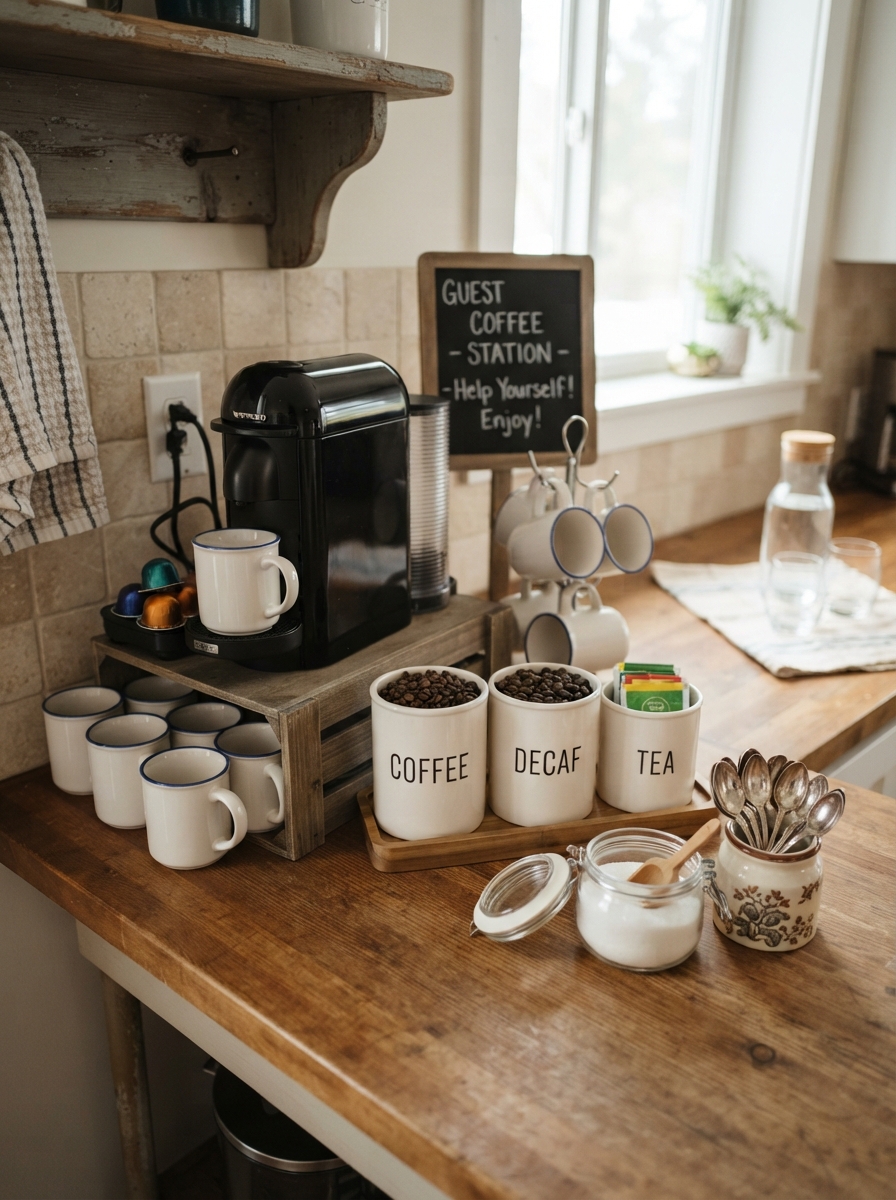
If you entertain, a station that guests can use without asking questions is worth designing for. Keep one labelled canister of an easy default coffee, leave the mugs visible rather than in a closed cupboard, and put sugar and a spoon where they’re obvious. The test is whether someone staying overnight could make themselves a cup at 7am without opening a single drawer.
Coffee station shopping list
- Airtight coffee canister — opaque keeps beans fresh
- Mug hooks under cabinet — frees an entire shelf
- 3 tier rolling cart — a movable station for small kitchens
- Glass water carafe — one trip instead of three
- Floating shelf — vertical storage above the machine
- Coffee scale — the upgrade that changes the cup
Prices and availability change. Links open on Amazon.
Common Coffee Station Mistakes to Avoid
The most frequent error is building the station around how it looks rather than the sequence you perform, which produces a corner that photographs well and frustrates you daily. Close behind: leaving beans in their original bags, over-styling with objects you have to move every morning, choosing a cart without locking wheels, and placing the station somewhere with no socket, which quietly guarantees an extension lead across a worktop. Finally, avoid squeezing the machine so tightly under a shelf that you can’t lift the water tank — a mistake that only reveals itself after everything is in place.
Final Thought
A coffee station is one of the few pieces of decorating that pays you back every single morning. Get the sequence right, contain it within a defined zone, and light it properly, and a corner that used to collect clutter becomes the part of the kitchen you look forward to using before the rest of the house wakes up.
Frequently Asked Questions
How much counter space does a coffee station need?
Around 60cm of width is enough for a machine, a small canister, and a mug or two. Anything under 40cm tends to force items onto neighbouring counters, which defeats the purpose of having a defined zone.
Where should a coffee station go in a small kitchen?
Look for a corner near a socket and away from the main cooking triangle, so making coffee doesn’t collide with someone preparing food. A rolling cart or a sideboard just outside the kitchen often works better than squeezing into the counter run.
Should coffee beans be stored in glass or ceramic?
Opaque containers are better. Light degrades roasted coffee, so ceramic or stainless steel with an airtight seal keeps beans tasting fresh longer than clear glass sitting on an open shelf.
Can I put a coffee station inside a cabinet?
Yes, provided there’s a socket inside and you can slide the machine forward before brewing. Steam trapped against a cabinet’s underside will damage the finish over time.
What is the difference between a coffee bar and a coffee station?
The terms are used interchangeably. In practice, coffee bar usually implies a larger setup with seating or a dedicated piece of furniture, while coffee station describes any defined zone built around the daily routine.
How do I stop my coffee corner looking cluttered?
Limit yourself to one decorative object, decant anything that came in packaging, and give the zone a physical boundary like a tray. If an item isn’t touched daily, it belongs in a cupboard.




2 Comments