
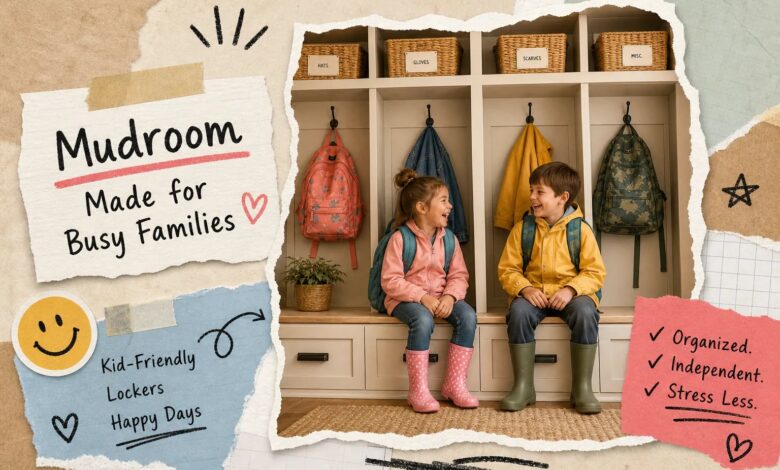
Picture 3:15 PM on a Tuesday. The back door swings open, and within 30 seconds the floor is buried under two backpacks, a wet soccer cleat, a permission slip that needed to be signed yesterday, and three mismatched gloves. Nobody hung anything. Nobody put away their shoes. Coats end up on the floor. The problem isn’t that your kids are chaotic; it’s that the storage system doesn’t match how kids actually move through a space. The right mudroom locker ideas for families with kids work with their habits rather than against them, which means correct sizing, reachable hook heights, and one dedicated spot per child.
As an Amazon Associate I earn from qualifying purchases. Some links in this post are affiliate links, at no extra cost to you.
Mudroom organization for families is one of the most-requested topics here at Aesthetic Nest Decor, and it’s easy to see why: an entryway that functions well reduces daily friction and changes the rhythm of an entire household. This guide walks through cubby dimensions, hook heights, material choices, labeling strategies, and budget options so you can plan a system that fits your actual family, not a generic blueprint. If you want to go further, entryway & mudroom covers it in detail.
How Many Lockers Your Family Actually Needs
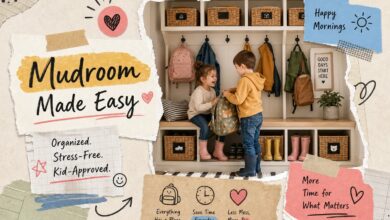
A frequent mistake in family mudrooms is shared storage. When coats, backpacks, and shoes feed into one general zone, accountability disappears fast. Assign one dedicated locker bay or cubby section to each child, labeled with their name, and the system becomes largely self-maintaining, meaning fewer parental reminders and more independent put-away behavior. Two kids, two bays. Three kids, three bays. This sounds obvious, but plenty of families skip the individual assignment and end up with a tangled pile of gear every afternoon.
Short on wall space? Our guide to organizing a small mudroom with limited wall space works around it.
Lockers are one approach among many — our mudroom storage ideas guide covers the alternatives.
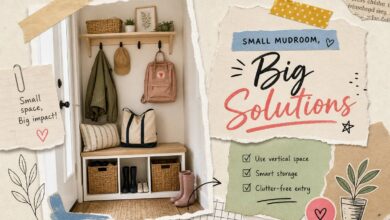
For entryways under 50 square feet, a single-wall layout is the most practical approach. It keeps storage on one side and preserves a clear walking path, with a minimum 36-inch-wide corridor in front of the lockers. In very tight spaces, narrow labeled cubbies with hooks above and shoe trays below outperform full-height lockers because they use less depth and keep the visual weight lower. A bench opposite the lockers only works if you have enough clearance. If you don’t, skip it and use the floor zone for a shoe bin instead.
Getting the Sizing Right, Mudroom Locker Ideas for Families with Kids
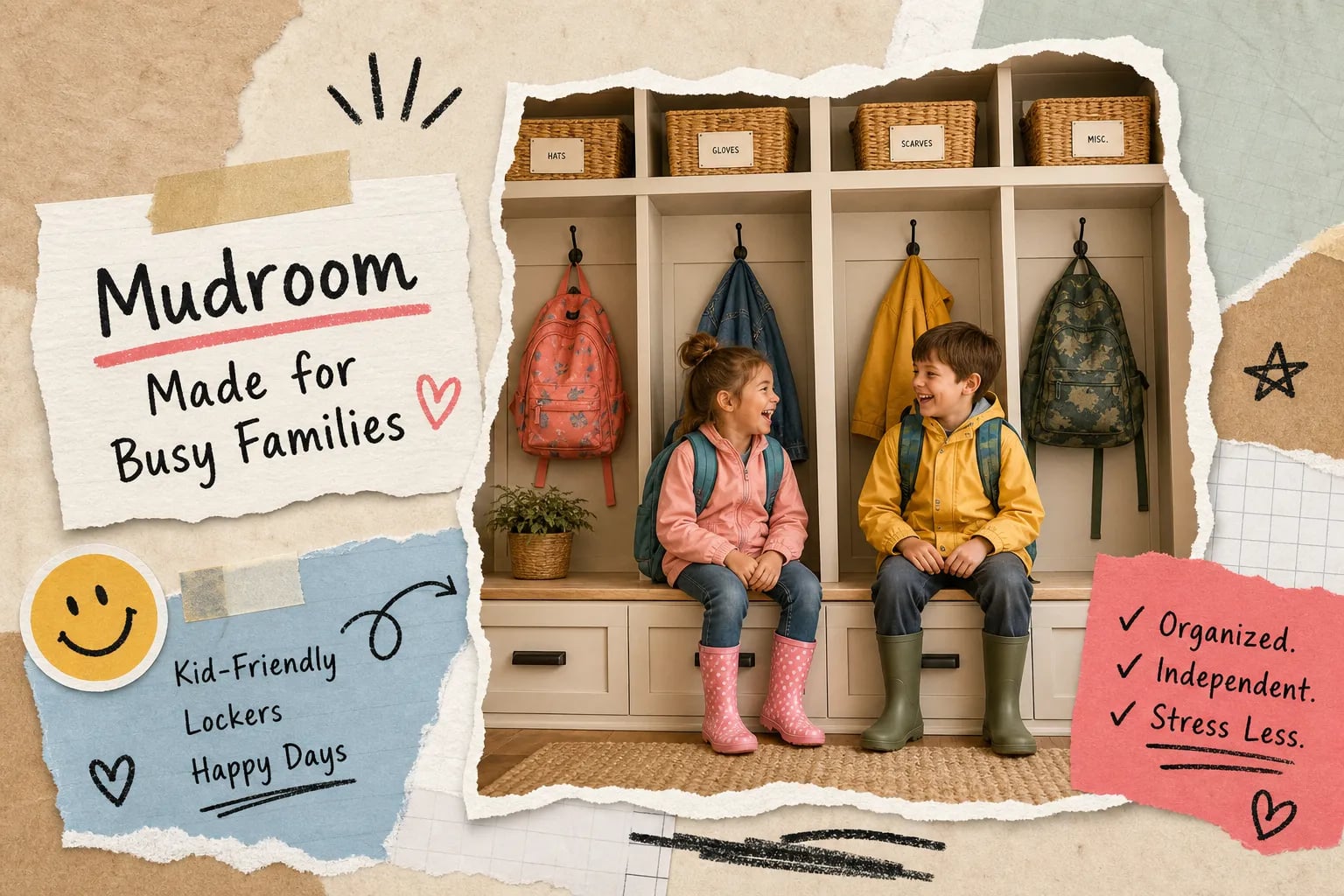
A standard school-age cubby works well at 15 inches wide, 18 inches deep, and 48 to 60 inches tall for a coat-and-backpack section. Coats need at least 12 to 15 inches of width and 18 inches of depth so they hang without bunching. Backpacks need 15 to 18 inches of width and about 16 to 18 inches of depth so straps don’t catch on the sides. For shoes, a lower compartment at 12 to 15 inches deep handles most kids’ sneakers, with 15 inches being the smarter call for boots or larger sizes. These dimensions are adapted from school locker and cubby specifications for residential use, making them a reliable starting point for real kids’ gear.
Hook height is the detail most guides skip, and it makes or breaks whether kids will actually use the system independently. Here’s what works by age:
- Ages 2 to 4: hooks at 24 to 30 inches from the floor
- Ages 5 to 8: hooks at 36 to 42 inches from the floor
- Ages 9 to 12: hooks at 48 to 54 inches from the floor
Hook Heights, Shelf Levels, and Multi-Age Households
For shelves, keep the main kid-access level at 12 to 24 inches for toddlers, 24 to 36 inches for preschool and early elementary-age children, and 30 to 42 inches for older kids. If your household spans a range of ages, install a double-hook row, one lower, one higher. Every child gets a reachable spot, and the system won’t need a full redo in two years just because someone hit a growth spurt.
Materials and Finishes That Hold Up to Family Life
For kid-heavy mudrooms, HPL (high-pressure laminate), scratch-resistant, moisture-proof, and wipeable with a damp cloth, is one of the strongest surface choices available. Thermofused laminate works equally well for shelf and door interiors. Sealed plywood makes a better carcass than MDF or particleboard because it holds screws more securely and handles humidity without swelling, which matters in a mudroom where wet gear is a daily reality. Powder-coated steel is the go-to for hooks, shelf brackets, and hardware: it resists corrosion and cleans up without special products.
Finishes to Avoid, and What to Use Instead
Avoid unfinished or lightly finished MDF in mudroom conditions. It absorbs moisture and deteriorates faster than you’d expect, especially along the bottom shelf where wet shoe soles make regular contact. On any painted wood or plywood surfaces, satin or semi-gloss enamel is the practical standard. Both finishes wipe clean easily, hold up to daily contact, and don’t show scuffs the way flat paint does. For a natural wood look with serious durability, a moisture-resistant polyurethane or high-performance clear coat gives you the warmth of wood grain without the ongoing upkeep. Seal every surface, including the interior of cubbies, since damp backpacks and wet shoe soles will find any unfinished area and exploit it.
Labeled Cubbies and the Zone Logic That Makes Kids Self-Sufficient
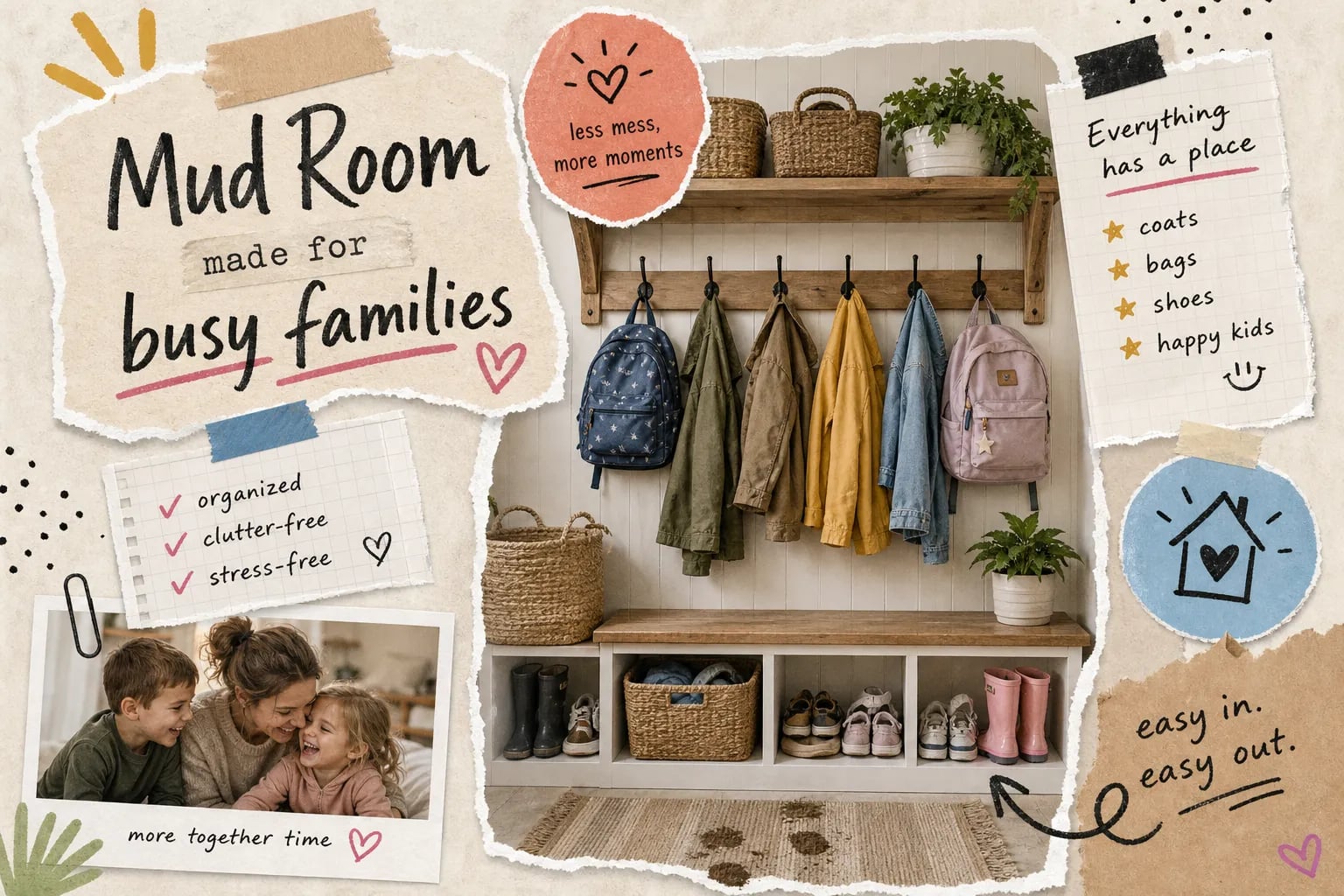
A label on the outside of each bay tells a child exactly where their stuff belongs. Keep labels large, readable, and at eye level for the child using that section. For younger kids, pair the name with a simple icon: a coat, a shoe, a backpack. Chalkboard labels are a practical option for families whose arrangements shift as kids grow; they read as intentional rather than improvised. Acrylic or brass name plaques add a more finished look for built-in setups. Whatever format you choose, consistency matters more than aesthetics. One label style across all bays signals a designed system rather than a patchwork.
Inside each bay, structure the space into three vertical zones. The upper zone holds the hook for the coat and backpack. The middle zone, if the locker is tall enough, holds a small shelf for hats, gloves, or a lunchbox. The lower zone handles shoes, either on a slatted shelf or in a small bin or tray. This top-to-bottom logic mirrors the order in which kids need things when they walk in: coat and bag first, shoes last. When every child has the same zone structure in their section, the routine becomes automatic rather than something you have to remind them about every afternoon.
Styling Mudroom Lockers So They Look Designed, Not Just Functional
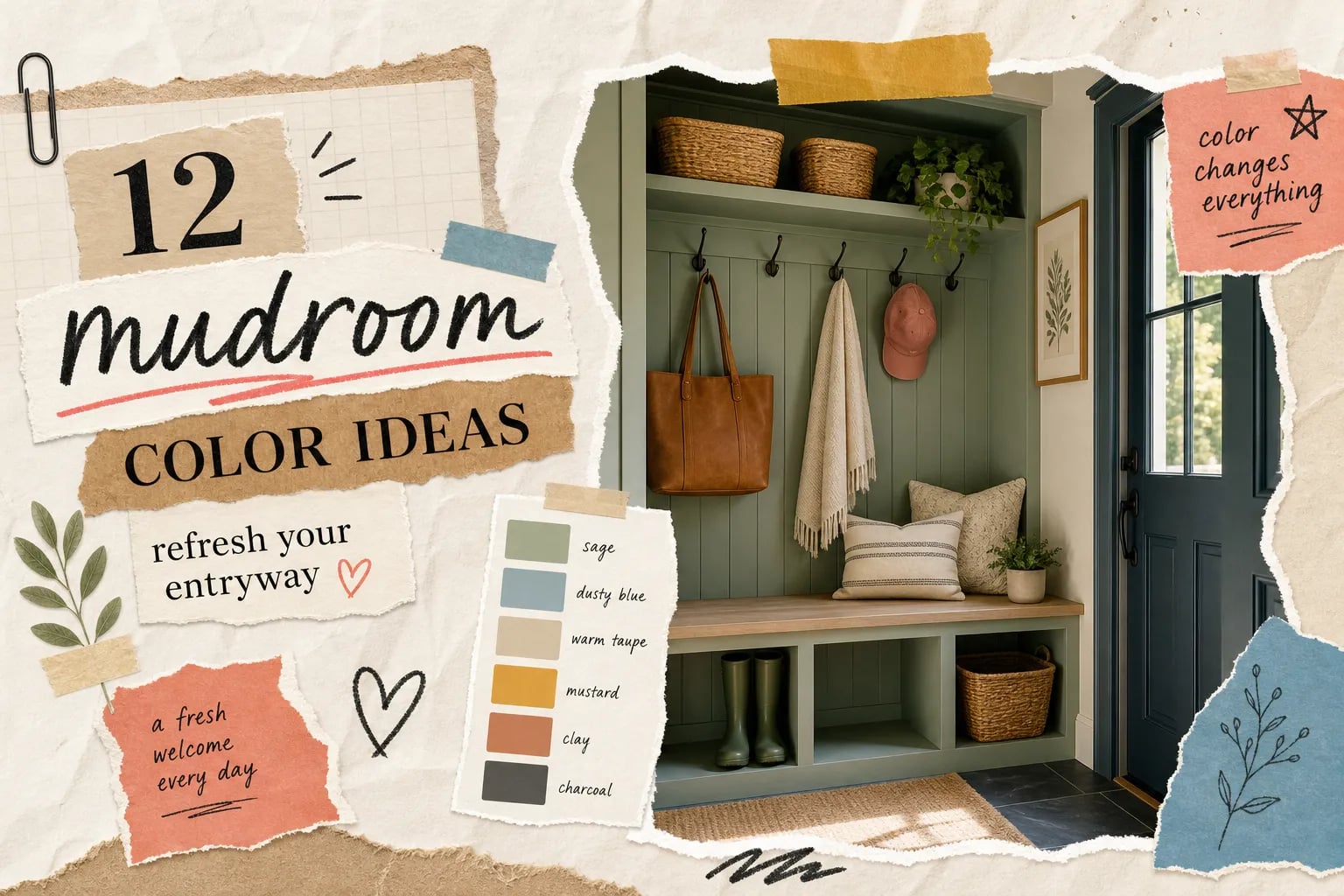
The fastest way to make mudroom lockers look designed rather than assembled is to choose one cohesive color for all the cabinetry and one metal finish for all the hardware, then stick to both throughout the space. White, off-white, and warm greige are popular choices because they can make small entryways feel more open and tend to show everyday scuffs less dramatically than dark colors. Matte black hooks and knobs create a sharp, modern contrast against light cabinetry. Brass hardware reads warmer and pairs naturally with homes that already carry wood tones. The goal is for the lockers to look like they were planned as part of the home, not assembled from whatever was on the hardware store shelf.
The mudroom doesn’t have to match the rest of the house exactly, but it should feel like it belongs to the same design story. If your living room uses warm wood tones and linen textures, bring in a wood-topped bench or linen storage bins in the mudroom. If your home runs more modern and minimal, keep the locker fronts flat-panel and the accessories edited. The Aesthetic Nest Decor entryway styling guide covers how to carry color palettes and material choices from your entry into connected spaces so the whole home feels considered rather than assembled room by room.
Custom Built-Ins vs. Prebuilt Units: What Your Budget Can Handle
Custom built-in mudroom lockers typically run from about $5,000 to $12,000 for a professionally installed setup, with larger or more detailed systems reaching $20,000 or more. That price covers design, materials, and labor, and it gets you something that fits your exact wall dimensions and matches your home’s trim and millwork. Prebuilt or modular units are a different story. Individual units often start around $350 to $1,000 each, with semi-custom modular systems in the $1,200 to $4,000 range for a complete installation. For most families, modular systems hit a practical sweet spot: they look organized and intentional, they’re easier to reconfigure as kids grow, and they don’t require a contractor.
The most cost-effective middle ground is using modular cabinet systems as locker carcasses, then adding custom doors, hooks, and a coat of semi-gloss paint to make them look built-in. Simple trim around the top and sides where the units meet the wall creates the built-in illusion without the custom price tag.
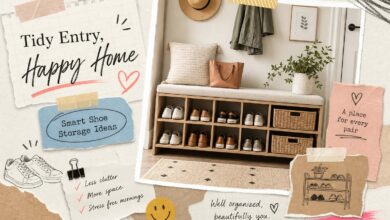
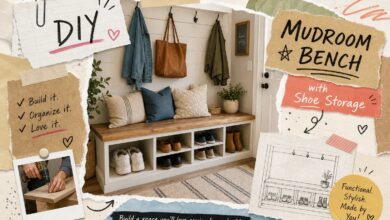
For families working with a tighter budget, a row of wall-mounted hooks with labeled baskets below and a single bench with shoe cubbies underneath handles most of the same organizational function without any cabinetry at all. The key is giving each child a named, dedicated spot regardless of what the system is built from. The materials can flex; the one-section-per-child structure cannot.
Kids Mudroom Locker shopping list
- Kids locker unit — one column per child
- Low height coat hooks — so they hang their own coat
- Labelled storage bins — removes the daily negotiation
- Kids bench with cubbies — sit down to change shoes
- Storage bin labels — pictures work before reading does
- Furniture anchor straps — non negotiable with climbers
Prices and availability change. Links open on Amazon.
Putting It All Together: Mudroom Locker Ideas for Families with Kids
The best family mudroom locker setup comes down to three non-negotiables: one dedicated section per child, hardware installed where kids can actually reach it, and surfaces that survive daily abuse without constant upkeep. Nail the sizing, label each section clearly, and choose a finish that holds up to wet gear, the system will mostly run itself. The styling layer is what makes it feel like an intentional part of your home rather than a functional afterthought, and small choices in color, hardware, and material cohesion do the heavy lifting there.
Whether you go the custom built-in route or put together a modular system on a tighter budget, the framework is the same. These mudroom locker ideas for families with kids give your household a structure they’ll actually use, and that’s the whole point. For more room-by-room solutions built around how real families live, browse the full Aesthetic Nest Decor library for entryway, kids’ room, and small-space guides that carry the same practical approach from the mudroom to the rest of your home.