
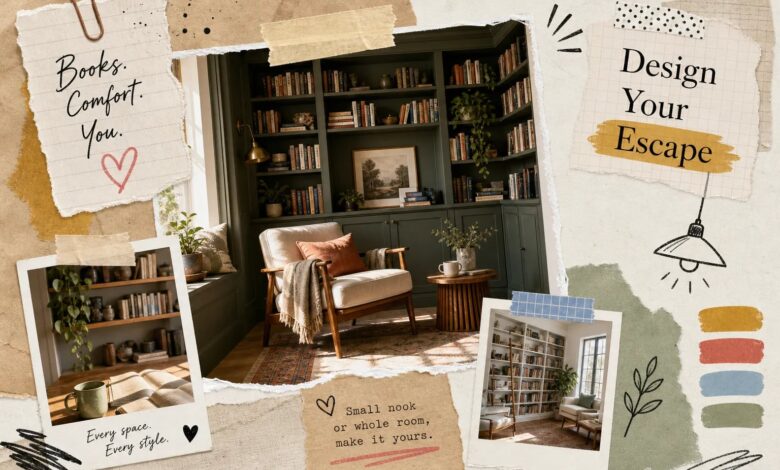
Home library design is no longer something you stumble across in a magazine and assume it’s for someone else’s house. Interest in dedicated reading spaces has grown steadily in recent years, and for good reason: a well-designed home library delivers real daily value, whether that means a full room lined with walnut built-ins or a cozy corner nook tucked beside a window with a single good lamp. For most people, the barrier isn’t square footage or budget, it’s not knowing where to start.
At Aesthetic Nest Decor, we hear this from readers regularly: they want the space but don’t know which style fits their home, how much shelving they actually need, or what their budget can realistically cover. This guide answers all of that directly. By the end, you’ll have a style direction, a practical layout approach, a clear picture of costs, and a simple checklist of home library ideas to start planning or commissioning your space. For more on this, see our Home office guide.
Home library design: Pick your style before you pick a single shelf
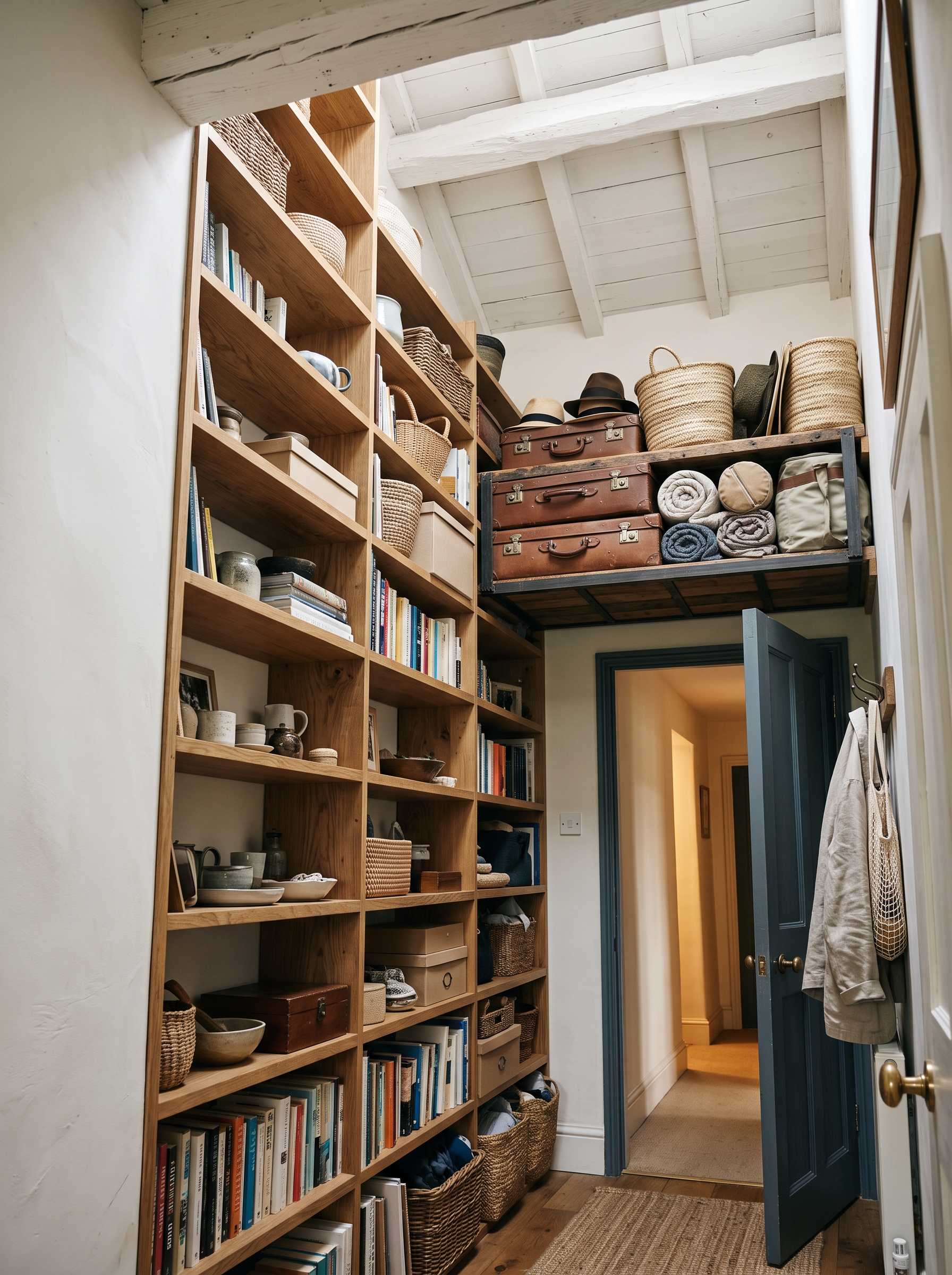
Style decisions shape every practical choice that follows, from the materials you spec to the lighting you buy. Getting this right first saves you from costly backtracking. Home library design in 2026 centers on five clearly defined aesthetics, each with a distinct look and feel.
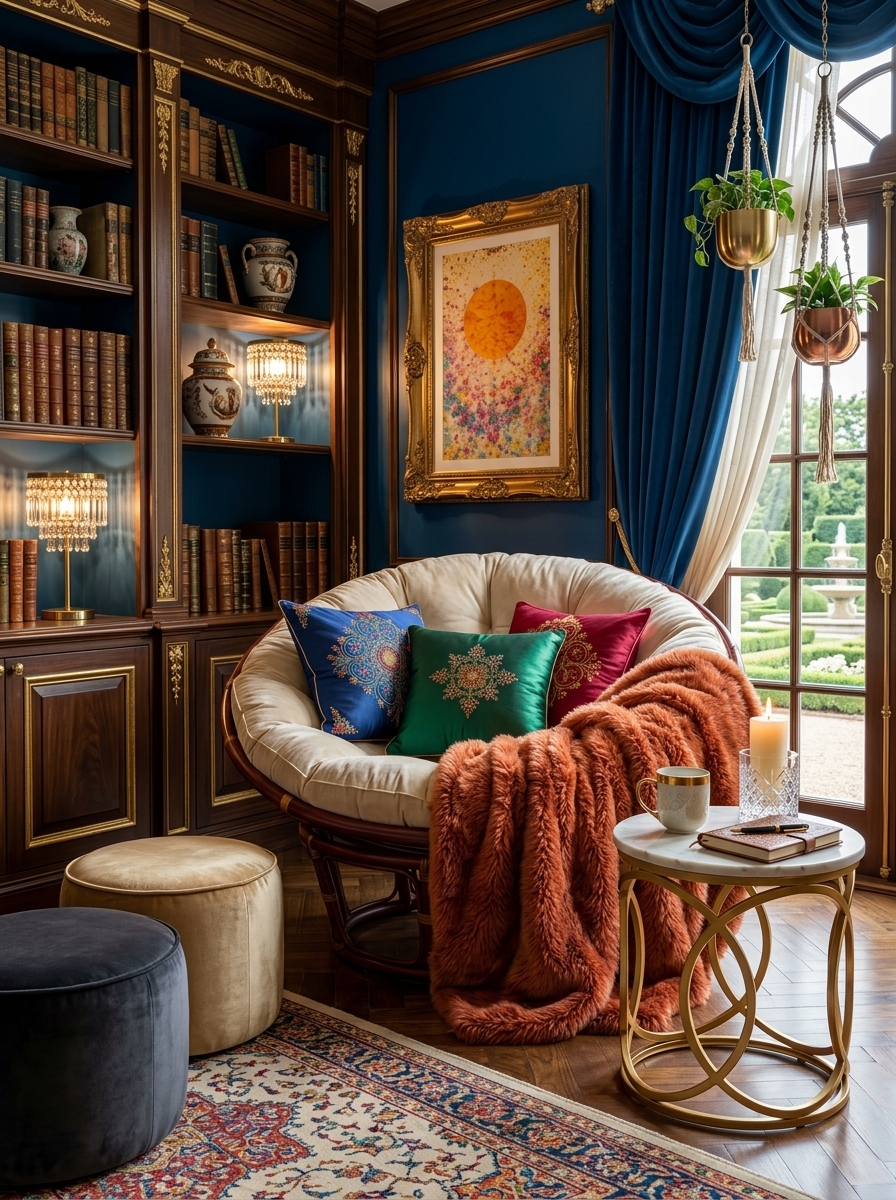
Dark academia is the most atmospheric option: deep moody walls in charcoal, forest green, or navy, leather seating, brass hardware, and rich stained wood. The effect is scholarly and cocoon-like. Bookcase-wealth (also called curated modern) is minimal but intentional, with vintage touches and shelves that feel collected rather than staged. Traditional paneled libraries lean into classic built-in bookshelves, wainscoting, and floor-to-ceiling shelving for a formal den feel. Mid-century modern keeps the lines clean with teak or walnut shelving and warm retro details. And then there’s the compact reading nook, which works in nearly any home: small-scale built-ins, a window seat, and L-shaped shelving that turns a tight corner into a proper retreat.
To narrow your choice, look at your home’s architecture. Open-plan spaces with modern finishes tend to suit the curated modern or mid-century look. Older traditional rooms with existing trim and molding are natural fits for the paneled or dark academia styles. If you’re working with a small room or an awkward nook, the compact reading nook approach will serve you better than trying to scale down a grand built-in design. Think about what the room needs to do as well: quiet reading retreat, occasional home study design, or showpiece room. That function influences every decision after this one. For more on this, see our interior design tips guide. Related reading: affordable interior design principles every homeowner needs.
Home library layout options from studio nook to full room
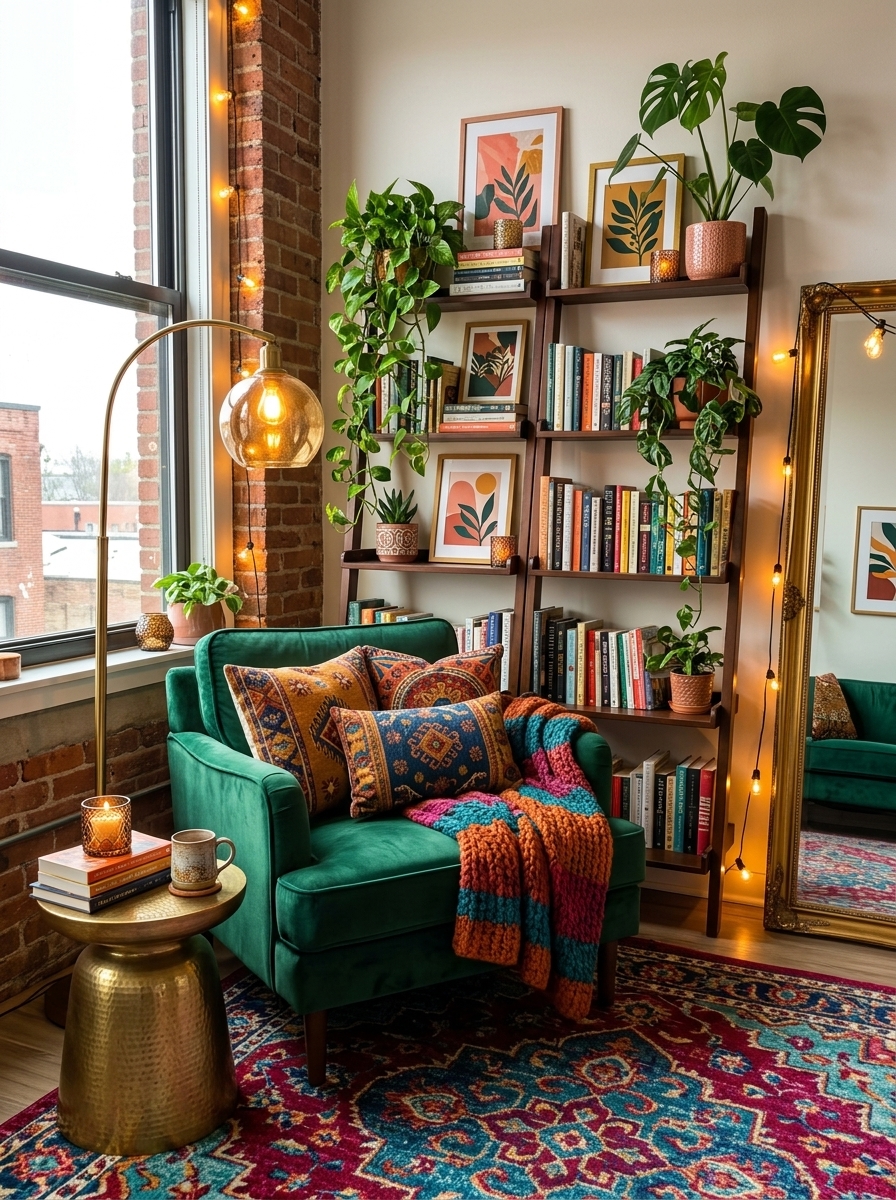
Once you have a style direction, the layout translates it into a floor plan. Home library design scales well across space sizes, the principles stay the same whether you’re working with a full spare bedroom or a hallway alcove.
Making the most of a full dedicated room
In a room dedicated entirely to a library, wraparound shelving on two or three walls gives you the highest storage capacity and the most immersive feel. As a practical design note, positioning windows on walls perpendicular to the shelving rather than directly behind them helps reduce glare on reading surfaces and limits light exposure to book spines over time. Plan for a central seating area or reading table, and keep a clear path of at least 36 inches between shelf runs and furniture so the room stays functional and comfortable to move through. Lower closed-base cabinets add hidden storage and a finished look that anchors the shelving.
Small library ideas for nooks, corners, and single walls
You don’t need a dedicated room to create a real home library feel. Floor-to-ceiling shelving on one uninterrupted wall maximizes book capacity without eating floor space. Corner and L-shaped shelving turns dead angles into storage that would otherwise go completely unused. Floating shelves above eye level work especially well in tight nooks because they remove the visual bulk of a full bookcase while still holding a solid collection. Built-ins framing a doorway or window add library character while using wall space that typically gets ignored.
For shelf dimensions in any size space: shelves in the 8-to-10-inch depth range work well for paperbacks and smaller-format books, particularly in shallow or space-constrained installations; 10 to 12 inches accommodates hardcovers and art books comfortably. Shelf spacing of 9 to 12 inches covers most collections, with adjustable shelves being the smartest investment if your books vary in size. Keep frequently used books between waist and eye level, heavier volumes low for stability, and leave a little open space on each shelf rather than packing them edge to edge. That breathing room makes a small library feel intentional rather than cramped.
Shelving styles, library shelving solutions, and honest cost expectations
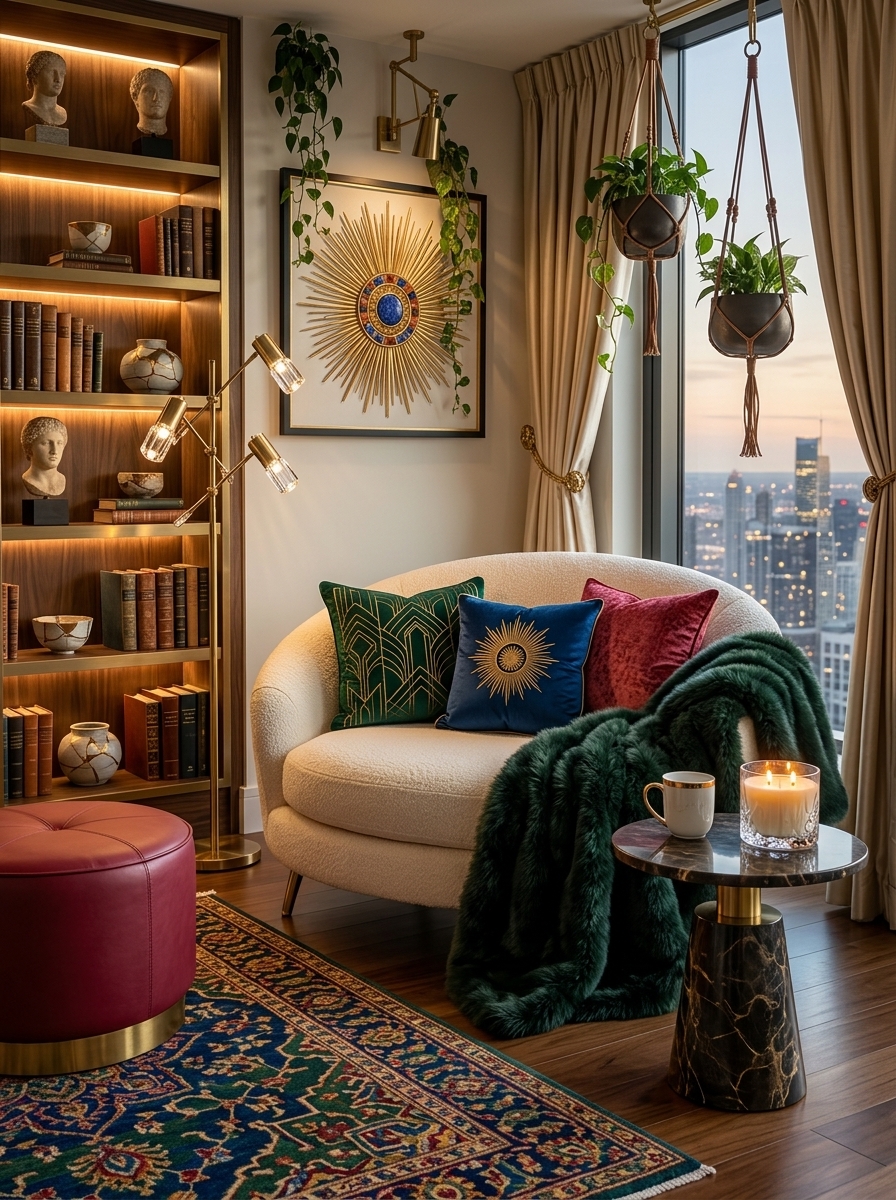
This is where home library planning gets concrete. There are three main shelving approaches, and the right one depends on your budget, your rental status, and how permanent you want the result to feel.
Floating shelves are the most affordable entry point and the most renter-friendly option. They’re visually light, easy to install, and can be removed without major wall damage. The trade-off is limited load capacity and no base cabinet storage, which matters if your collection is large. Freestanding bookcases are the mid-range, flexible choice: movable, no installation required, and available in a wide range of heights. Tall narrow units in the 72-to-84-inch range give you the most storage per square foot. For the most space-efficient setup, modular systems, the kind popularized by flat-pack retailers, are widely used to achieve a near-built-in look at a fraction of the price, especially when finished with trim and a painted base.
Custom built-ins deliver the highest visual impact and the highest cost. In 2026, entry-level custom work runs $150 to $400 per linear foot. Mid-range custom built-ins fall between $400 and $900 per linear foot. Premium library walls, full cabinetry, and high-end finishes push $900 to $1,200 or more per linear foot. For a roughly 10-foot wall, that means total costs ranging from about $2,500 for a carpenter-installed basic setup to $6,000 or more for premium custom work. A well-executed DIY library wall using prefab bookcases, trim, and a painted finish typically runs $800 to $1,500 in materials, roughly a quarter to half the cost of hiring out the work.
For materials and finishes in 2026, walnut tones dominate for a richer, deeper look. Rift-sawn and quarter-sawn white oak offers a softer contemporary feel with subtle grain. Painted built-in bookshelves in moody shades like deep navy, forest green, charcoal, or near-black create that dramatic envelope effect that defines the dark academia and traditional paneled styles. Hardware trends favor brass, bronze, aged iron, and matte black, all choices that read as warm and tactile rather than stark, which fits the direction home library design has moved.
Lighting your reading space for comfort, not just looks
Lighting is where a lot of home library designs fall flat. General overhead lighting alone almost never delivers enough intensity or direction for comfortable reading, and a beautifully styled room with bad lighting is still a frustrating room to use.
The comfortable reading target is 300 to 500 lux on the reading surface, which translates to roughly 30 to 50 footcandles. Casual reading and browsing sit comfortably at the lower end of that range: 300 to 400 lux with a warm lamp nearby. Sustained reading or study sessions benefit from 400 to 500 lux with a focused task lamp. Long sessions with small print may call for 500 lux or more, especially for older readers. In every case, localized, directed light outperforms diffuse ambient light from above.
Swing-arm wall sconces positioned beside a reading chair are one of the most effective and space-efficient choices. They keep the light source close, direct it exactly where you need it, and free up surface space. Floor lamps work well when positioned over the shoulder rather than in front of you. Clip-on and desk task lamps solve the problem in small nooks where wall installation isn’t practical. Inside built-in shelves, LED strip lighting adds warmth and makes browsing your collection easier, especially in lower-lit rooms.
Stick to warm-to-neutral color temperatures across all fixtures to avoid the visual fatigue that cooler blue-toned light causes over long reading sessions. Always test a fixture in your actual reading spot before committing to it.
Seating and cozy library decor that complete the room
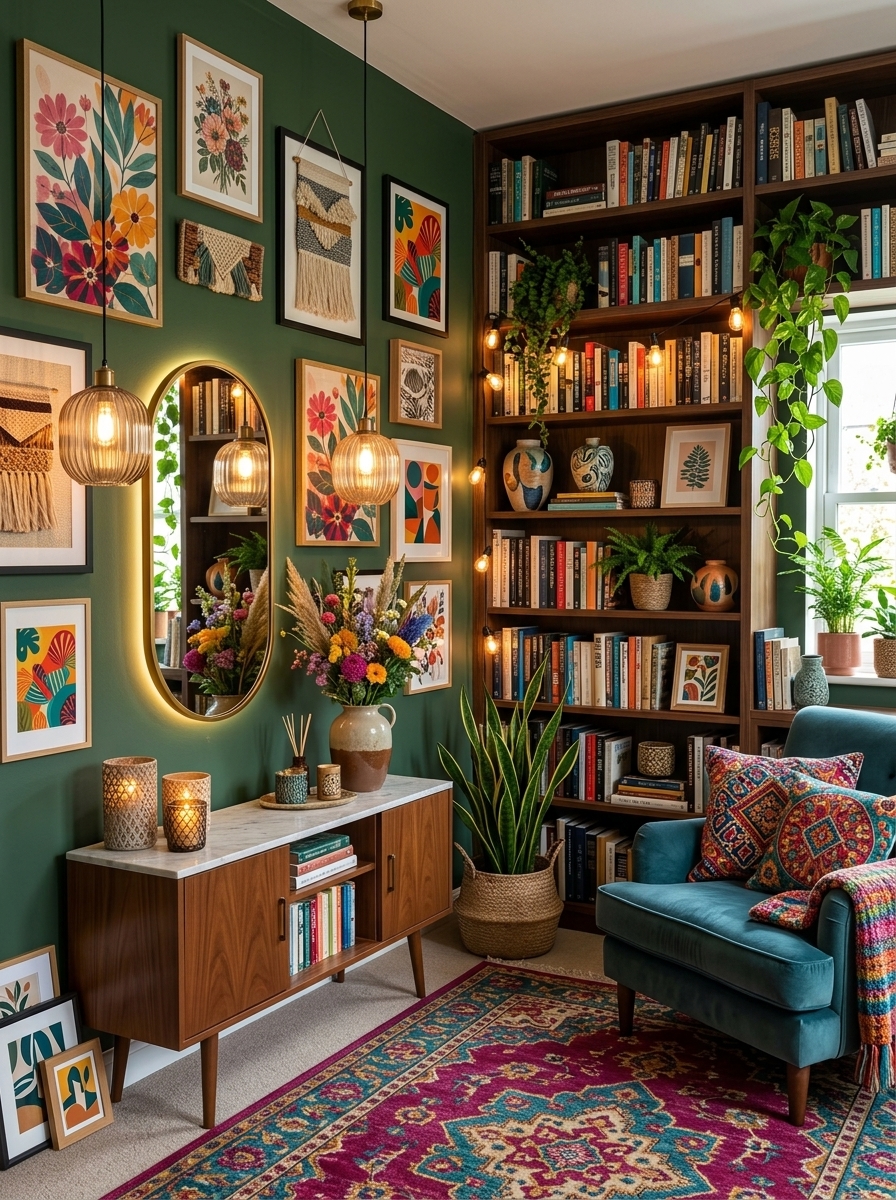
Seating and color are the final design layer, and they’re where a home library shifts from functional storage to a room you actually want to spend time in. Get these right and everything else clicks into place.
Wingback armchairs provide classic upright support and are particularly good for longer reading sessions because the high back reduces neck and shoulder strain. Club chairs offer a lower, more lounging feel that suits casual reading well. Chaise lounges work beautifully in a dedicated library room with enough floor space to stretch out. Built-in window seats with cushions are the most space-efficient seating solution for nook-style layouts since they double as storage. Scale matters here: a large wingback in a tight nook overpowers the space. Leave at least 30 to 36 inches around your seating for comfortable movement, and prioritize lower back support and seat depth when choosing between options. For more on this, see our 15 small bedroom storage ideas that maximize space guide.
Color palettes by style give you a clear starting point. For dark academia, work with charcoal, forest green, deep navy, and warm brown accents in brass and aged leather. Curated modern libraries read best with warm white or cream walls, natural wood shelving, and rich textile accents as contrast. Mid-century modern calls for warm taupes, terracotta, and mustard tones with walnut shelving and clean furniture lines. Traditional paneled libraries feel most complete in classic whites, deep greens, or burgundy with crown molding reinforcing the look. For small nook-style spaces, lighter colors keep the room from closing in, though a single bold accent wall behind the shelves can create drama without overwhelming the space.
Your planning checklist before you spend a dollar
Every great home library starts with five locked-in decisions, made in the right order. Skipping any of them is typically where mid-project budget overruns start.
- Style direction: Pick one of the five aesthetics above and commit to it. Every material and finish choice flows from here.
- Available wall space and layout approach: Measure your ceiling height and usable wall width. Know whether you’re renting or owning before you commit to built-ins. A full room, a single feature wall, and a corner nook each call for a different layout strategy.
- Shelving type and budget range: Decide between floating shelves, freestanding bookcases, or custom built-ins based on your budget and permanence needs. Get your per-linear-foot numbers down on paper before you shop.
- Primary and supplemental lighting setup: Plan for at least one task light positioned for your reading chair, separate from general room lighting. Note where your outlets and switches are before choosing fixtures.
- Seating and color palette: Confirm your chair fits the scale of the space with 30 to 36 inches of clearance around it, and choose your wall color after your shelving material so the palette works as a whole.
Measure twice, buy once applies here more than in almost any other room project. Know your ceiling height, your wall width to the inch, and your approximate book count before you order a single shelf bracket or bookcase.
For readers ready to execute a smaller space, the reading nook design guide here at Aesthetic Nest Decor walks through the full setup process from layout to furniture sourcing. For those planning a library wall on a tighter budget, our budget-friendly library wall guide covers DIY shelving options, detailed cost comparisons, and styling tips so the final room looks custom without the custom price tag. Both are worth bookmarking before you head into a hardware store or send your first inquiry to a carpenter.
Build Your Home Library
As an Amazon Associate we earn from qualifying purchases.
Start with what excites you, then build toward it
Not every home library needs to be a floor-to-ceiling built-in room. The most satisfying libraries are the ones that fit how you actually live: your book collection, your reading habits, your available square footage, and your honest budget. Whether you’re working with a spare bedroom, a quiet hallway alcove, or just one strong feature wall, there’s a version of this that works for your home. If you want to go further, Home gym covers it in detail.
Good home library design rewards planning over impulse buying. The clearer your vision going in, from style direction through shelving type and lighting setup, the more you’ll love the finished space. Use this guide as your foundation, lock in those five decisions before you spend anything, and build from there with intention. The room you end up with will be one you actually use every day, not just one that photographs well.