
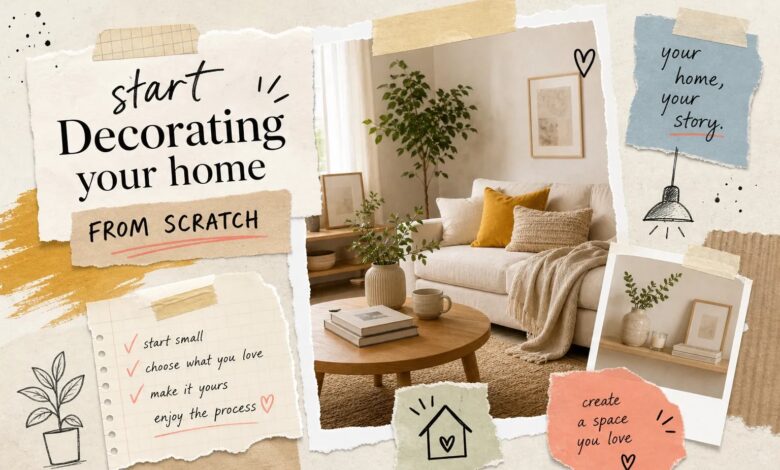
If you’re asking “how do I start decorating my home from scratch with no design experience,” you’re already ahead of most beginners, because you’re looking for a sequence before you start spending. You moved in, the boxes are gone, and now you’re staring at four blank walls with a browser full of Pinterest boards that somehow all look completely different. That mix of excitement and paralysis is where almost every first-time decorator gets stuck. And the reason isn’t a lack of taste. It’s a lack of sequence. This guide covers how to start decorating your home step by step, with practical tips and product picks.
Most beginners stall because they jump straight into shopping before they know what they actually need. They buy a beautiful lamp at a weekend market, get home, and realize it doesn’t match anything else in the room, because there’s nothing else in the room yet. That single decision loop, repeated a dozen times, is how people end up with spaces that feel random and unfinished no matter how much money they spend.
This guide gives you the sequence. Pick a style first, set a budget, buy the right anchor pieces, and work through one room at a time. At Aesthetic Nest Decor, that room-by-room approach is what we come back to again and again because it’s the method that actually works for real homes with real budgets. By the time you finish reading, you’ll have a plan you can start acting on today.
How Do I Start Decorating My Home From Scratch With No Design Experience?
The “buy first, regret later” trap
Impulse buying is the single biggest reason beginner rooms feel mismatched. A piece that looked incredible in the store arrives home and immediately competes with everything around it because there was no plan guiding the choice. Before you browse anything, run through four quick checks: measure the room’s full dimensions, measure every doorway the furniture needs to pass through, map the main traffic pathways through the space, and write one sentence describing what the room needs to do. That sentence becomes your filter for every decision that follows.
Define the room’s job before picking a single thing
Ask yourself how many people use this room daily and what functions it actually serves. Does the guest room need to double as a home office? Does the living room handle movie nights, homework, and the occasional overnight guest? A room that pulls double duty needs to be planned with both jobs in mind from the start. Decor that looks great but ignores how the space is actually lived in creates friction every single day, and that friction compounds fast in smaller homes and apartments.
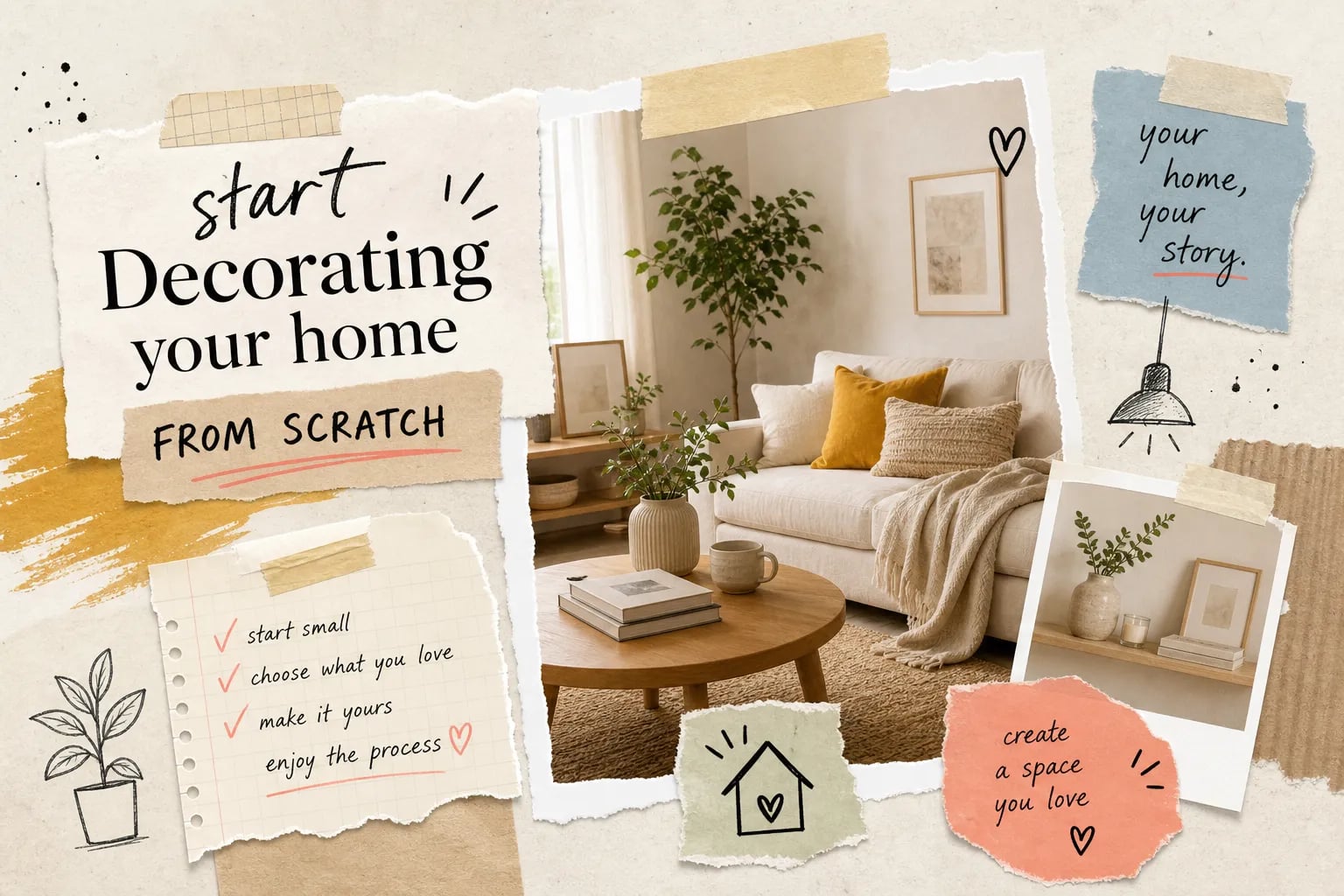
How to Find Your Decorating Style and Build a Mood Board
Picking a style that matches your real life
The best starting style for a beginner isn’t the one that photographs best; it’s the one that fits how you actually live. Modern farmhouse and transitional styles tend to be popular choices for U.S. first-time homeowners because they’re warm, flexible, and easy to build on over time. Renters tend to gravitate toward minimalist, coastal, and contemporary looks because those styles rely on furniture and textiles rather than structural changes. A simple way to find your direction: write down three words that describe how you want your home to feel. “Calm, warm, and functional” points to a very different set of choices than “bold, layered, and eclectic,” and knowing the difference saves you from buying pieces that fight each other.
Building a simple color palette that ties every room together
Start with one anchor item, a favorite piece of art, a rug pattern, or a fabric you love, and build outward from there. The three-color framework keeps things manageable: one base neutral for walls and large furniture, one main color for rugs, curtains, and upholstery, and one accent for artwork, pillows, and small accessories. The key to making the whole house feel connected is keeping the same undertones consistent across rooms. Warm-toned walls paired with cool-toned furniture will always feel slightly off, even if you can’t immediately name why. Test paint swatches in your actual room lighting, morning and evening, before you commit to anything on the walls.
Setting a Budget That Actually Works: A Budget Home Decor Guide for Beginners
What decorating each room actually costs
Having real numbers makes budgeting a planning tool instead of a source of anxiety. In 2026, a budget living room setup runs roughly $2,500 to $5,000 for the full package of furniture and decor. A budget bedroom lands around $1,500 to $3,500. Mid-range budgets move those figures to $5,000 to $7,500 per room on average. Kitchens vary widely depending on whether you’re styling an existing kitchen or building it from scratch; a decor-focused refresh stays in the $1,500 to $6,000 range, but a full kitchen setup climbs into mid-range territory quickly once you factor in appliances and storage. None of these numbers are fixed, but knowing the range prevents the common mistake of spending 80% of your total budget on a single room and having nothing left for the rest of the house.
Where to spend more and where to save
Invest where you spend time and where quality actually holds up. That means putting real budget behind the sofa frame, the mattress, and the dining table, pieces you use every single day that also set the visual foundation of the room. Save on accessories, seasonal decor, and trend-driven pieces, which are easy and affordable to swap out as your taste evolves. Pairing one quality splurge with intentional savings elsewhere is how a well-decorated room on a realistic budget becomes completely achievable, not a compromise.
Always Buy Anchor Pieces First, Everything Else Follows
The 5-step purchase order every room follows
This decorating checklist for new homeowners starts with one principle: the largest, most-used piece in the room sets the scale, layout, and style direction for everything else. Once the sofa is in place, it tells you how big the rug should be, how many chairs can fit, and what height the coffee table needs to be. Every piece after the anchor is chosen in direct response to it. The sequence works like this:

- Anchor piece: sofa, bed, or dining table, whatever defines the room’s primary function
- Essential supporting furniture: chairs, nightstands, dressers, storage units
- Secondary tables and functional extras: coffee table, TV unit, side tables, shelving
- Soft furnishings: rug, curtains, lighting fixtures
- Decorative accents: mirrors, artwork, plants, throw pillows, candles
Beginners who skip this order end up with rooms that feel unfinished even when they’re technically full of furniture. The pieces simply don’t respond to each other, and the room reads as a collection of individual items rather than a cohesive space.
Why the rug always feels wrong when you buy it first
The “rug that’s too small” is probably the most universal beginner decorating mistake, and it almost always happens for the same reason: the rug was purchased before the sofa was chosen. Once the sofa is in place, the rug size becomes obvious: it needs to be large enough to anchor all the main furniture in the seating area, not just float in the middle of the room like an island. The same logic applies to nightstands and the bed, the bed size determines the scale of every piece alongside it. A king bed with tiny nightstands looks unbalanced. A queen with oversized bedside tables feels cramped. Buy the anchor, then let it guide every measurement that follows.
Room-by-Room Steps If You Have No Design Experience
Start with the rooms you live in every day
The living room and primary bedroom come first because they have the most direct impact on how you feel in your home every day. A living room with a well-chosen sofa, a properly sized rug, and layered lighting will do more for your daily mood than a perfectly decorated guest room that gets used three times a year. For the living room, focus on the sofa and the anchor rug as your first two decisions. For the bedroom, the bed frame and bedside lighting are the two choices that transform the feel of the room most immediately. Get those right and the rest of the room practically tells you what it needs.
Room-by-room resources to guide each space
Once you’ve decorated one room well, that skill transfers directly to the next. You’ll have learned how to measure, how to sequence purchases, and how to edit choices against a clear brief. The hard part gets easier fast. For each room you move into, the kitchen, the entryway, a balcony, a secondary bedroom, Aesthetic Nest Decor has room-specific guides built for exactly that space. Rather than applying general advice to a room with its own specific challenges, those guides address the actual decisions you’ll face, whether that’s a compact kitchen counter setup, a mudroom bench for a small entryway, or a balcony that needs both function and privacy. They’re the clearest next step once you’re ready to go deeper into any particular room.
Simple Design Rules That Make Any Room Look Pulled Together
The three design principles beginners get the most value from
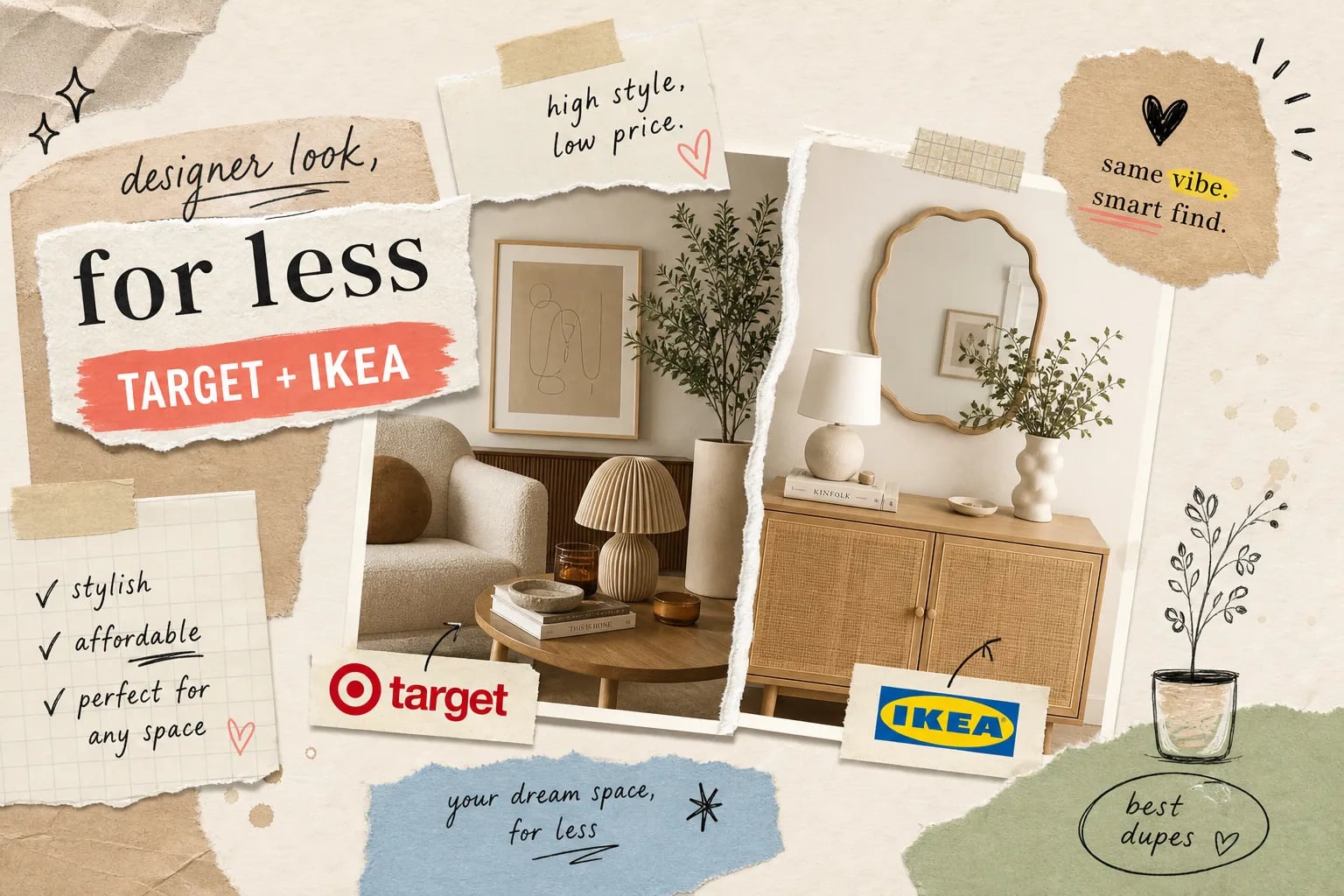
Interior design has seven core principles, but three of them do the most work for beginners: balance, scale, and emphasis. Balance means distributing visual weight so the room feels stable, two lamps flanking a console is a classic example of symmetrical balance. Scale means choosing furniture that fits the room proportionally; a sofa that’s too small for the wall behind it creates a scale problem that’s immediately visible even if you can’t name it. Emphasis means giving every room one clear focal point: a statement mirror above a fireplace, a large piece of artwork above the bed, or a bold rug that anchors the seating area. One strong focal point organizes the entire room around it and prevents that scattered, unfinished feeling.
The lighting mistake that makes every room feel unfinished
A single overhead light is the fastest way to make a room feel flat, harsh, and incomplete, and it’s the default setup in most apartments and new builds. Good lighting comes in three layers: ambient (the overhead source that provides general illumination), task (a desk lamp, a reading light, or under-cabinet kitchen lighting), and accent (a floor lamp, sconces, or shelf lighting that creates warmth and depth). Plan your lighting before you finalize furniture placement so you know where outlets and fixture points need to be. A room with furniture arranged beautifully but lit by a single ceiling bulb will always feel like it’s missing something, because it is.
Starter Pieces for a Room From Scratch
As an Amazon Associate we earn from qualifying purchases.
You Already Have Everything You Need to Start
Starting from scratch feels like a lot all at once, but the process is genuinely simpler than it looks when you follow the right order. Plan before you shop. Find the style that fits your real life, not just your mood board. Set a budget and protect it by spending on anchor pieces first. Finish one room before you start the next, and let each completed space build your confidence for the one that follows.
You don’t need a design degree or years of trained practice. You need a clear sequence and resources that address your specific rooms, not just general advice. Aesthetic Nest Decor is built for exactly that: real homes, real budgets, and decor decisions that hold up once kids, pets, and daily life enter the picture.
So if you’re still wondering how do I start decorating my home from scratch with no design experience, the answer is simpler than it looks. Pick your anchor piece and go from there. The best room you’ll ever decorate is the one you actually start.