
As an Amazon Associate I earn from qualifying purchases. Some links in this post are affiliate links, at no extra cost to you.
Picture your favorite sofa three months after adopting a dog or cat. There are claw marks along the armrest, a faint smell that no candle has successfully covered, and fur woven so deep into the cushion that a lint roller is basically decorative at this point. Choosing the right pet friendly furniture is one of the most frequent concerns readers bring to Aesthetic Nest Decor, not how to style a room, but how to keep it looking styled once the pets move in.
The good news is that buying pet-friendly furniture your pets can actually live on is a solvable problem. It just requires knowing what to evaluate before you swipe your card. This guide gives you a practical framework built around three things that actually matter: material durability, color and pattern selection, and how easy the piece is to clean. No aspirational showroom photos, no vague advice. Just the decision tools that save you money and frustration long-term.
What “Pet-Friendly” Actually Means When You’re Shopping
Furniture frequently marketed as pet-friendly on a product page often doesn’t back that claim up with anything specific. The label tends to be more branding than standard, and knowing how to evaluate a piece yourself gives you a real advantage whether you’re in a store or scrolling product pages online.
Three criteria separate pet-proof furniture that actually survives pets from furniture that just looks okay on day one. The first is durability: how the fabric holds up against scratching, clawing, and daily heavy use. The second is cleanability: whether stains and odors can be genuinely removed, not just masked. The third is maintenance design: whether covers come off, can be washed, or whether individual parts can be replaced. A sofa can score well on two of these and fail completely on the third, and that failure will cost you, a stain-resistant fabric paired with non-removable cushion covers, for example, often leads to early replacement when a real accident soaks through.
Your pet type also shifts which criteria to weigh most heavily. Dog owners should prioritize stain resistance and odor resistance first, since accidents, drool, and muddy paws are the primary threats. Cat owners need to focus on scratch resistance and snag resistance, because cats actively claw upholstery. A fabric that holds up beautifully for a golden retriever can be shredded in weeks by a determined cat.
Pet Friendly Furniture Fabrics That Hold Up Against Pet Wear
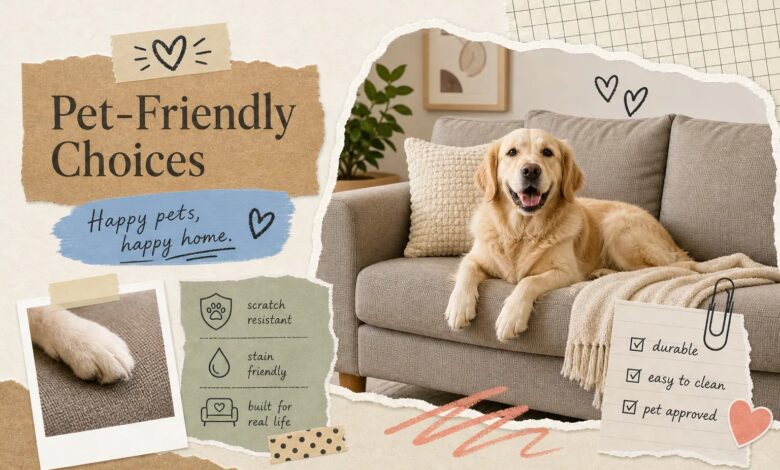
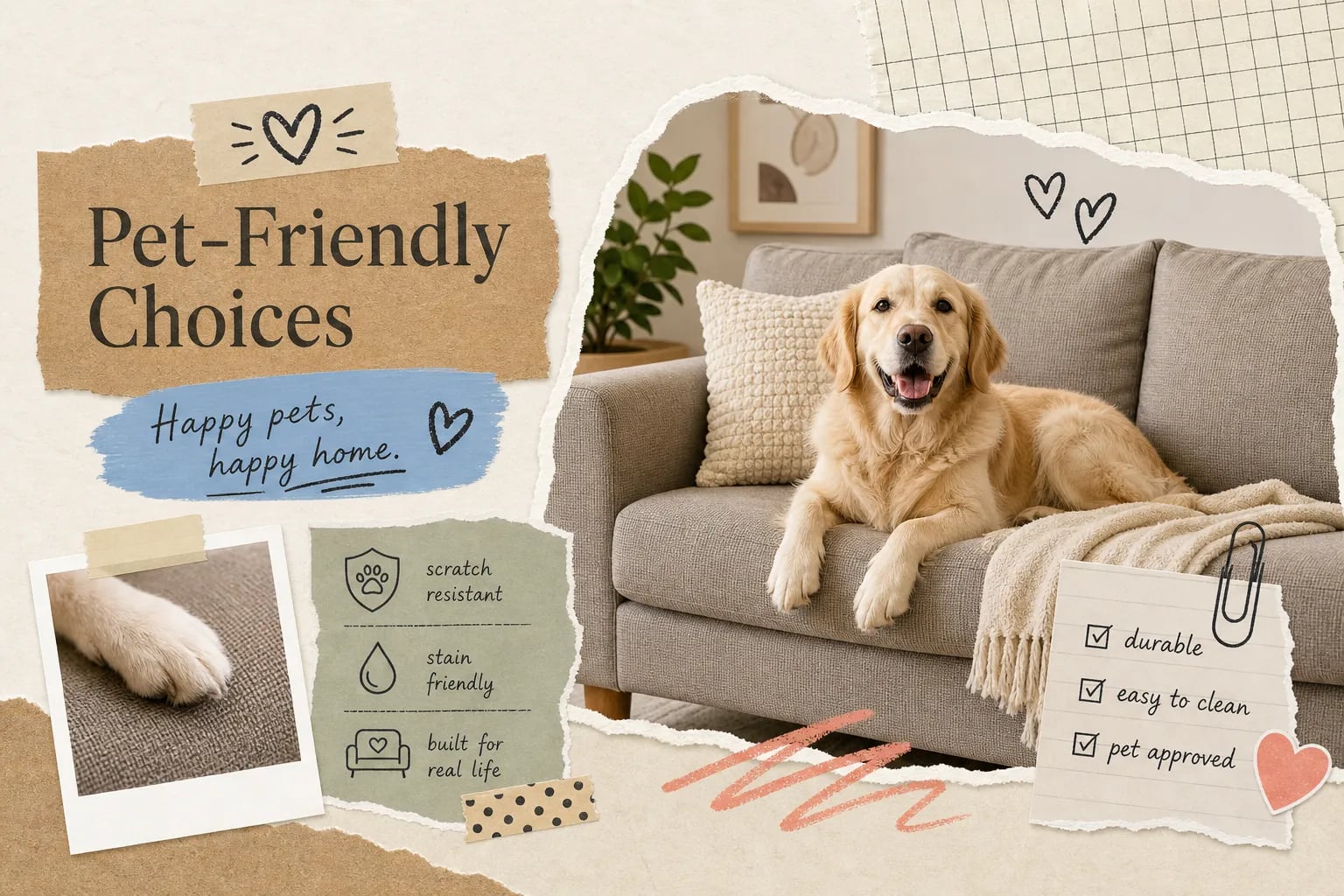
Upholstery fabric is the single biggest factor in how long your furniture lasts with pets in the house. The evidence consistently points in one direction: tight-weave, moisture-resistant synthetics outperform natural fibers in nearly every pet-relevant category.
Performance Fabrics and Abrasion Ratings
Performance fabrics are the strongest all-around choice for most pet owners. Fabrics engineered under systems like Crypton have stain resistance built into each fiber rather than applied as a surface treatment, which means the protection doesn’t wash out over time. Crypton specifically resists odor-causing microbes, something that matters enormously for pet accidents, and it earns high marks for both stain and odor resistance across independent reviews. Microfiber is the budget-friendly version of this category: tightly woven enough to resist snagging and staining, easy to blot clean, and available at every price point.
Both performance fabric and microfiber earn strong marks for scratch resistance because the dense weave doesn’t snag or pull easily under claws. For abrasion resistance, look for fabrics rated at a Wyzenbeek double-rub count of 30,000 or higher, that’s the standard threshold for high-use pet households. Any performance fabric couch marketed toward active households should list this number; if it doesn’t, ask before you buy.
Leather and Outdoor Performance Fabrics
Protected leather is excellent for pet hair because fur sits on the surface and wipes off cleanly, and it resists odors well. The trade-off is visible scratching, which makes it a real problem for cat households specifically. Outdoor performance fabrics like Sunbrella are very strong on stains and moisture resistance, though they can feel more patio than living room depending on the style and furniture silhouette. Both are worth considering for the right household.
Fabrics to Avoid
Linen, velvet, loose-weave chenille, and untreated cotton share a common problem: they either snag under claws, absorb stains deeply, or trap pet hair in a way that no vacuum fully solves. These fabrics look beautiful in a showroom and age badly in a home with active pets. If you’re drawn to a velvet sofa, know that you’re choosing style over function, and plan your cleaning routine accordingly.
Color and Pattern Choices That Actually Work with Pet Hair
Choosing the right fabric material gets you halfway there. Choosing the right color and pattern handles the other half: the constant, unavoidable reality of shedding.
The practical approach is to choose a sofa color that’s close to your pet’s coat. A white lab owner who buys a dark charcoal sofa is going to fight visible fur every single day, regardless of how often they vacuum. Mid-tone, heathered fabrics hide shedding best because the variation built into the weave breaks up any single-color contrast. Medium gray and taupe/greige are the most versatile choices for mixed-color shedders or households with more than one pet. If your dog or cat has multi-colored or spotted fur, you have the most flexibility of all: a warm medium gray or greige works with almost any fur color.
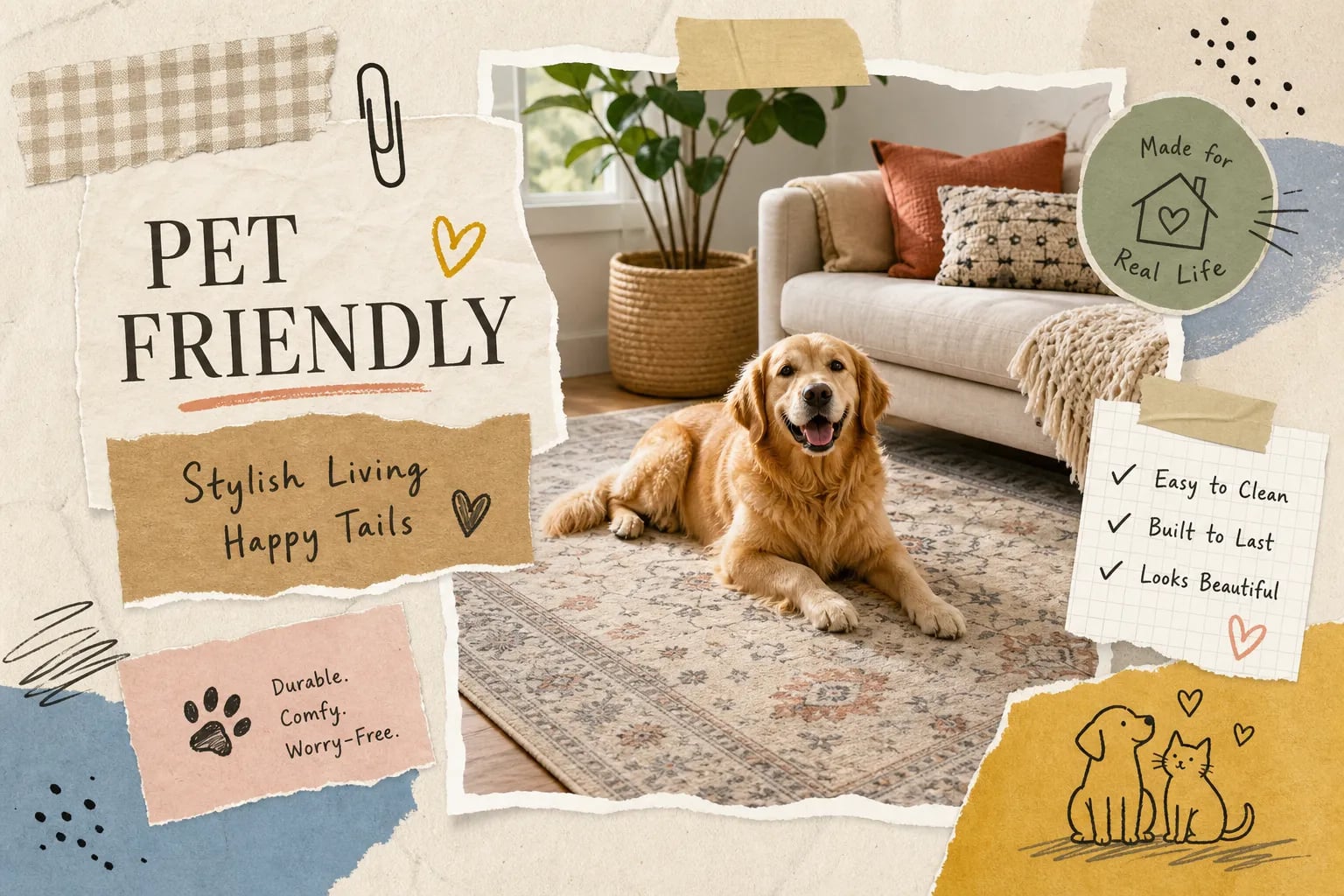
Small-scale patterns are especially forgiving on pet furniture because they camouflage both hair and minor surface wear. Subtle geometric prints, flecked bouclé, or tweed-style weaves all read as intentional texture rather than evidence of use. Solid, flat-weave fabrics in a single tone show everything: fur, pilling, and fading at the seat and armrests. A little visual texture in the fabric goes a long way toward keeping your sofa looking put-together instead of worn.
Cleanability: The Feature Most Buyers Overlook Until It’s Too Late
A stain-resistant sofa is only as useful as your ability to clean it when an accident actually occurs. The material matters, but so does the physical design of the furniture and the cleaning routine you can realistically commit to.
Removable, machine-washable covers are the highest-value feature you can buy in pet-resistant upholstery and furniture for pet households. They change everything when a real accident happens. Washable slipcover sofas and modular designs from brands like Lovesac, Burrow, IKEA KIVIK, Cozey, and Anabei all offer this in different ways and at different price points. Modular furniture takes this further by letting you replace a single damaged section rather than the whole piece. Zippered cushion covers and slipcover-friendly designs are the next best option if a fully modular system is out of budget. At the lower end, washable slipcovers from brands like Easy-Going run $50 to $66 and give you the machine-washable advantage without purchasing new furniture at all.
A cleaning routine that keeps up doesn’t have to be complicated. Vacuum your upholstered furniture weekly using a pet hair attachment. Treat any accidents immediately by blotting, never rubbing, with a clean cloth, then applying an enzyme-based cleaner and letting it dwell for ten to fifteen minutes before blotting dry.
Enzyme cleaners are the right tool for organic stains: urine, vomit, saliva, and mud all break down under enzymatic action in a way that soap and water alone can’t match. Rocco & Roxie, Nature’s Miracle, and Bissell Professional are the most consistently top-rated options for upholstery. Depending on the fabric and how heavily the piece is used, plan to deep-clean your upholstered furniture every one to three months, and budget for a professional cleaning every six to twelve months.
How to Choose Pet Friendly Furniture: Designs and Brands Built for Pet Homes
Once you know your fabric and color direction, the next step is narrowing to furniture that’s physically designed for the way pets use a home, not just labeled as pet-friendly on a product card.
Modular frames, replaceable covers, and reinforced corner seams are the features that extend furniture life in a pet household. A sofa with a lifetime frame warranty and washable covers is a fundamentally better long-term purchase than a cheaper piece you’ll replace in three years. Pay attention to feet height as well: furniture closer to the floor accumulates more fur underneath and is harder to vacuum around.
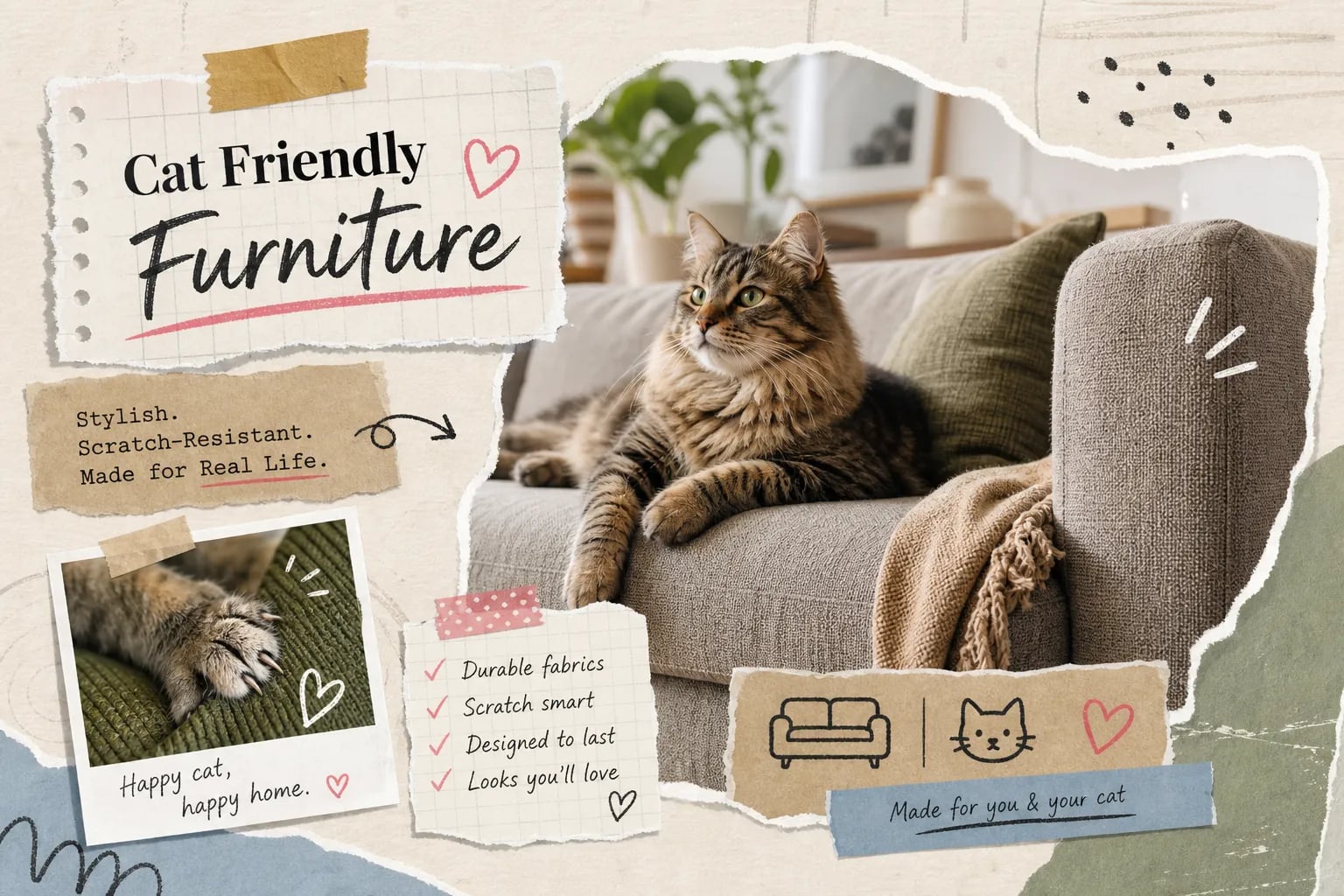
For sofas, Lovesac Sactionals and the Burrow Nomad consistently appear in top reviews for pet households. Both offer washable covers, tight-weave performance fabric, and modular or replaceable components. Lovesac has earned strong durability scores in independent testing and appears frequently across editorial roundups in this category. At lower price points, IKEA KIVIK and Anabei washable sectionals give you the machine-washable advantage without the premium price, both fitting comfortably in the $800 to $2,000 range. For dining chairs and occasional seating, Poly & Bark’s Finnley Dining Chair with removable, washable covers starts around $150 and performs well for pet households at that price point.
If you want to go deeper on specific furniture types, the guides at Aesthetic Nest Decor break down sofas, chairs, and rugs separately with full fabric comparisons and styling tips for rooms where pets are a daily reality. The framework here gives you the foundation; those guides give you the specifics.
Making the Right Call for Your Household
Buying pet-friendly furniture your pets can live on isn’t about finding a single universally “best” sofa. It’s about understanding your pet’s specific habits, matching materials to those habits, and choosing a design you can actually maintain over time. Cats and dogs have different failure modes, and the right fabric for one household can be completely wrong for another.
Start with material: performance fabric or microfiber covers the widest range of pet households and every price point. Match your color choice to your pet’s fur, and lean toward heathered or textured weaves over flat solids. Treat removable covers as a non-negotiable if your pet spends any significant time on the furniture, because sooner or later something will need to be washed, and the ability to do that at home matters more than almost any other feature.
Aesthetic Nest Decor has dedicated guides covering pet-friendly decor room by room, the best rugs for homes with dogs, and how to build a home that looks intentional even with pets living in it full time. Choose pet friendly furniture that matches your pet’s habits and your household’s reality, then explore our room-by-room guides at Aesthetic Nest Decor to shop smarter.