

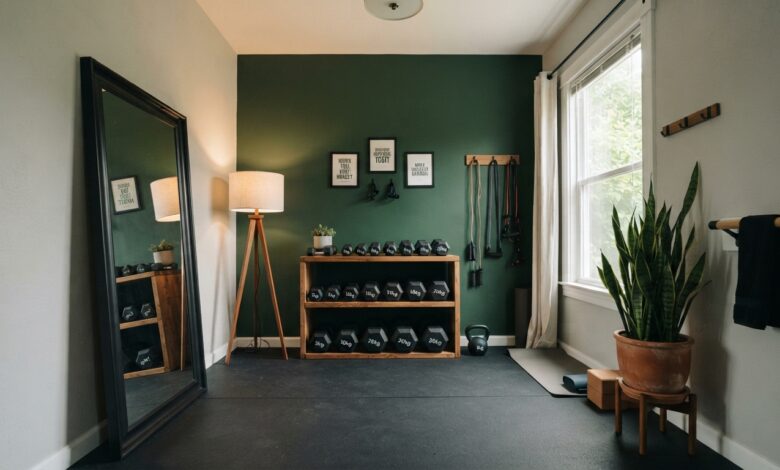
A home gym doesn’t have to look like a hotel fitness room dropped into a spare corner. With the same layering approach used in the rest of your home — color, texture, and a few intentional details — a workout space can feel like a genuine extension of your decor instead of a purely functional afterthought. Here’s how to design a home gym you’ll actually want to spend time in. This guide covers home gym decor ideas step by step, with practical tips and product picks.
As an Amazon Associate I earn from qualifying purchases. Some links in this post are affiliate links, at no extra cost to you.
1. Choose a Palette That Energizes Without Overwhelming
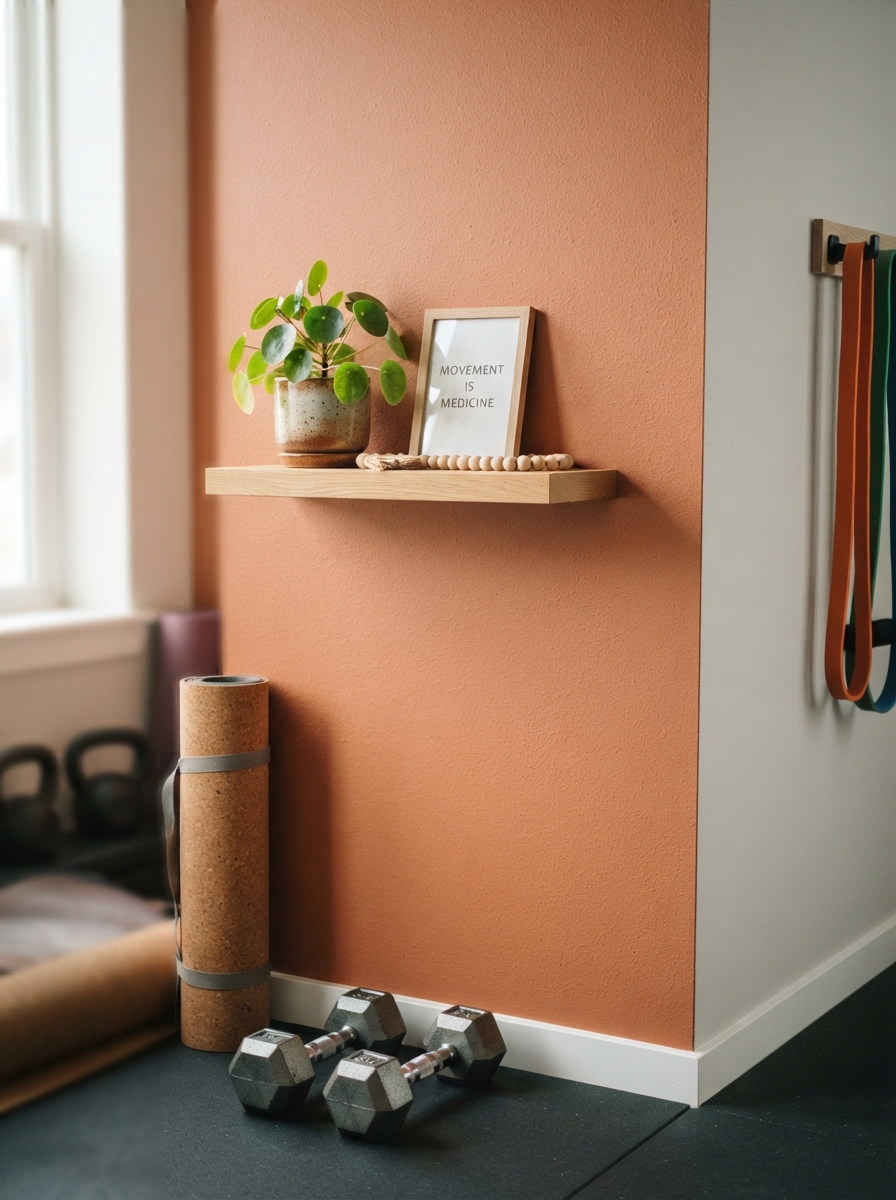
Bright white or light gray walls keep a small gym space feeling open, while a single accent wall in a deeper color — forest green, terracotta, or navy — adds personality without visual noise. Avoid stark, clinical white paired with black equipment only, since that combination reads as sterile rather than motivating. A warm neutral base with one bold wall gives you a space that feels considered rather than purely utilitarian.
Short on space? Our small home gym setup guide covers gear and layout for tight rooms.
2. Invest in Proper Flooring
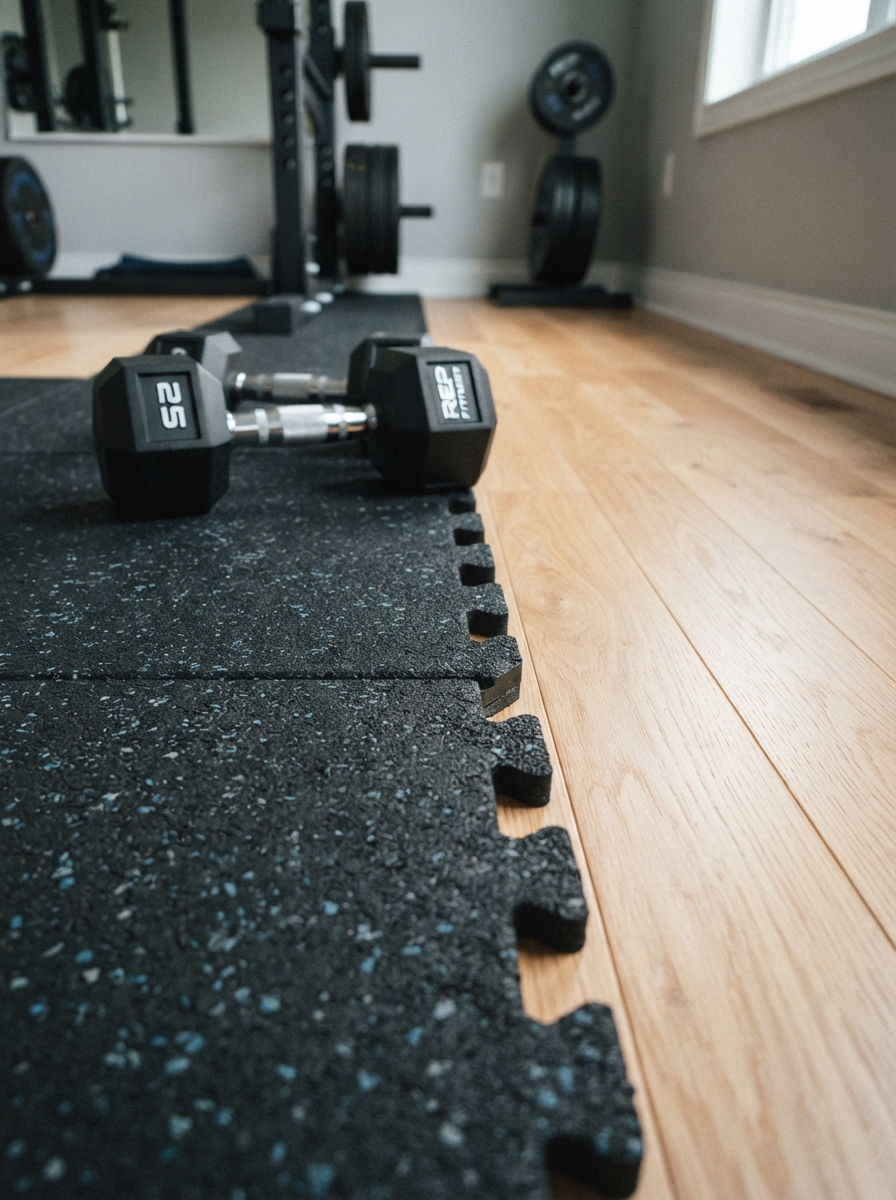
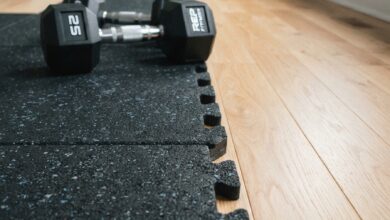
Interlocking rubber tiles or a dense foam mat protect both your floor and your equipment, and they instantly signal that the space is a dedicated gym rather than a room with a treadmill pushed into the corner. Choose a neutral tone — black, charcoal, or a warm gray — that reads as intentional flooring rather than a gym-class throwback. For carpeted rooms, a large all-in-one rubber mat covering the full workout footprint avoids the patchwork look of smaller interlocking tiles peeking out around the edges.
3. Add a Full-Length Mirror
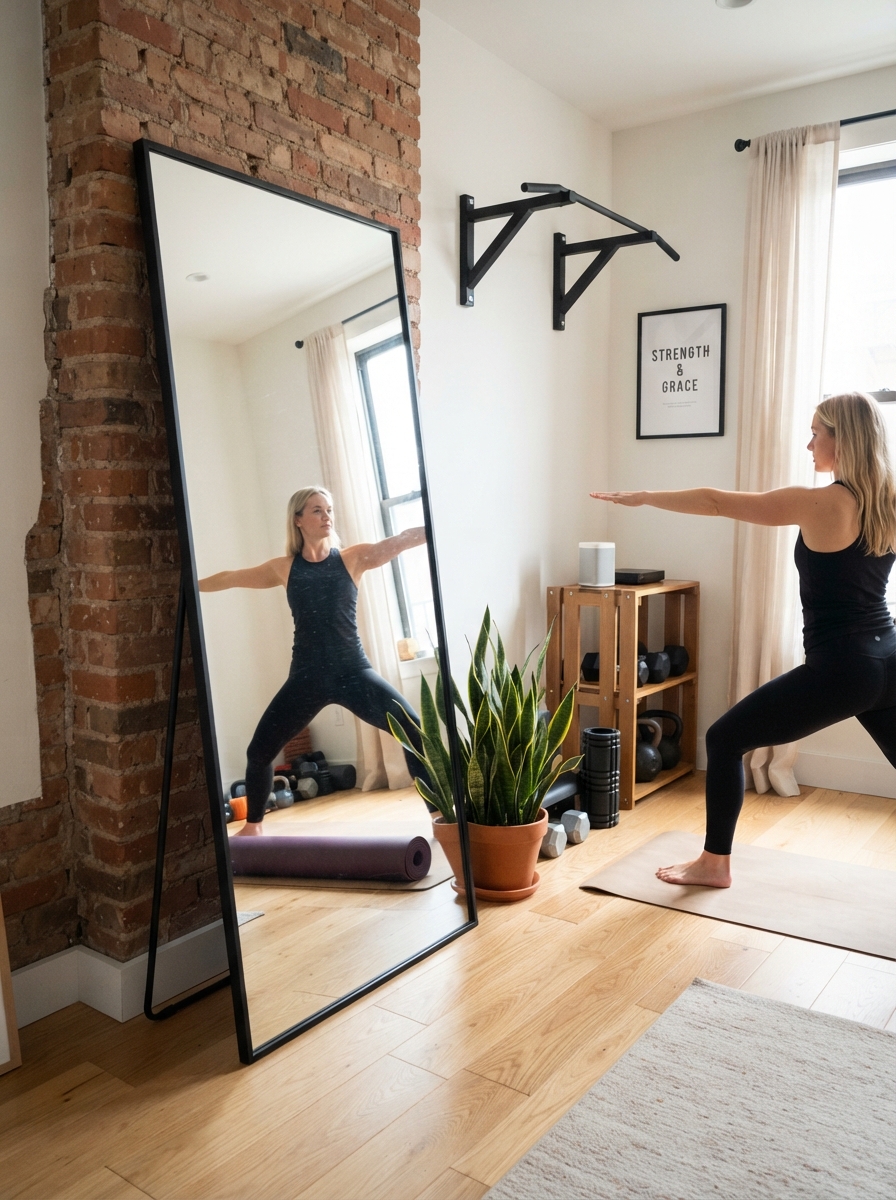
Beyond checking your form, a large mirror bounces light around the room and makes a small space feel considerably bigger. A single oversized leaning mirror does more visual work than several small ones scattered around, and it doubles as a genuine decor piece the rest of the day when the room isn’t in use.
4. Keep Equipment Organized, Not Hidden
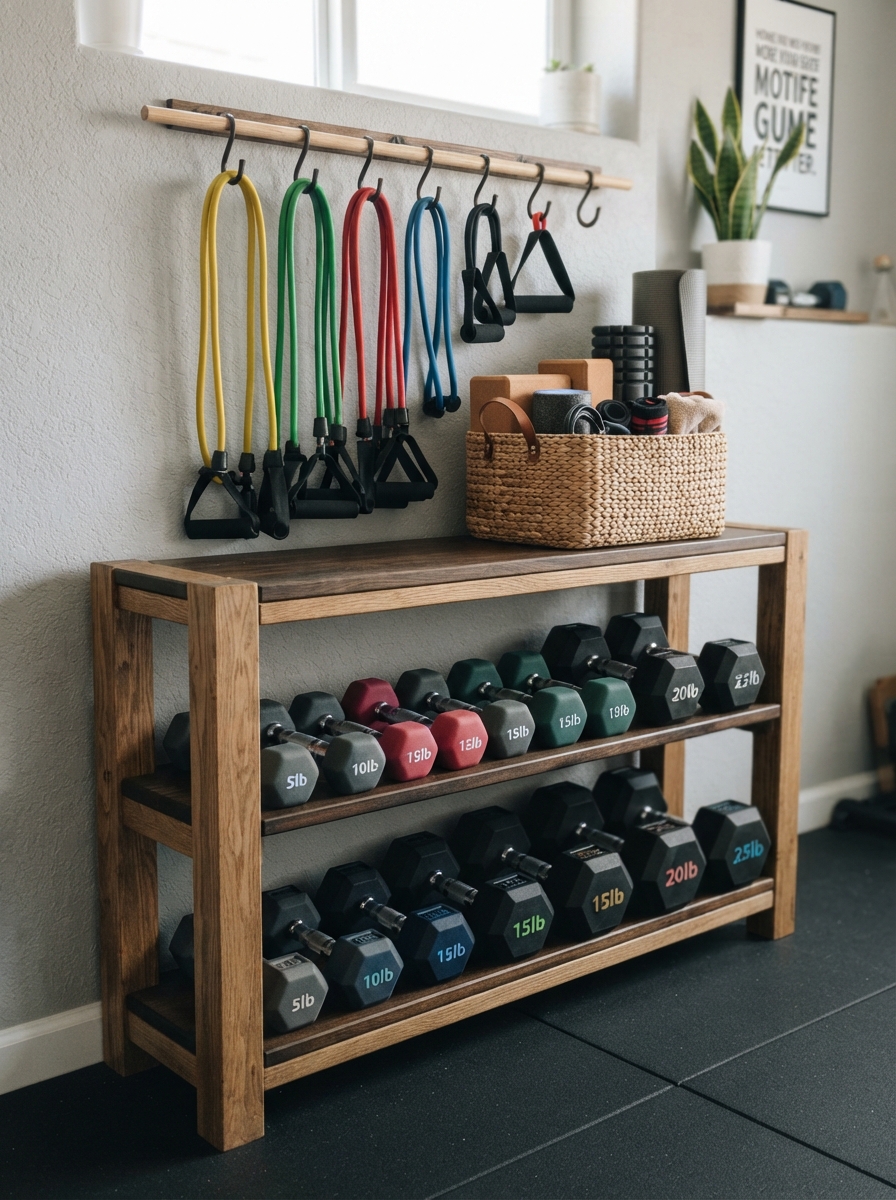
Open shelving or a slim storage rack for weights, resistance bands, and mats keeps the room functional and prevents the “gear pile in the corner” look that undercuts an otherwise well-designed space. A woven basket for smaller accessories like jump ropes and grip chalk keeps loose items from cluttering the floor. The goal isn’t to disguise that it’s a gym — it’s to make the gear look like it was placed there on purpose.
5. Layer in Plants for Life and Air Quality
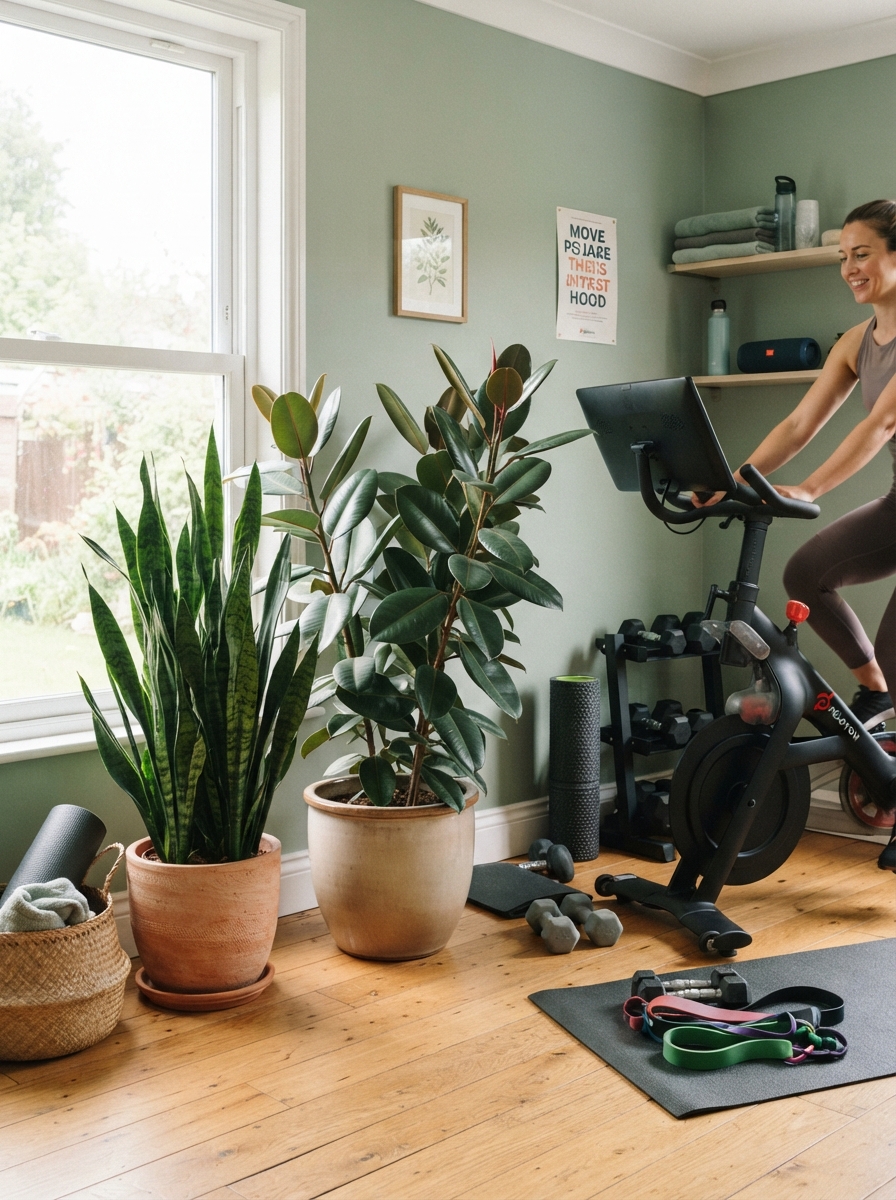
A large snake plant or a pair of rubber plants tolerate the temperature swings and occasional neglect of a home gym better than more delicate species, and they soften a room that’s otherwise full of hard surfaces and metal. Plants also genuinely help with air quality in a room where you’re breathing harder than usual.
6. Get the Lighting Right
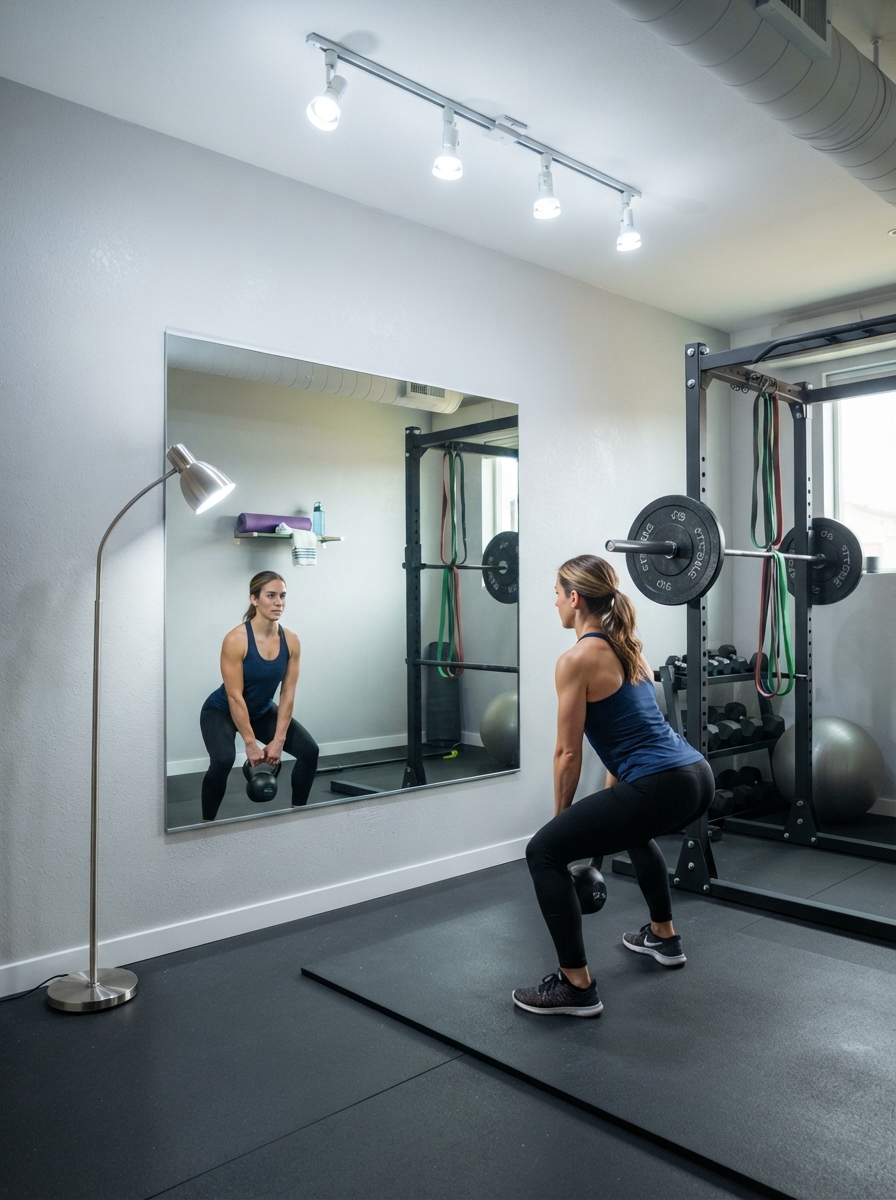
Bright, even lighting matters more here than almost anywhere else in the house — dim, moody lighting that works beautifully in a living room can make a workout space feel sluggish and uninspiring. Layer overhead lighting with a floor lamp in a corner to eliminate harsh shadows, and choose a cooler, energizing bulb temperature (4000–5000K) rather than the warm amber tone you’d use in a bedroom.
7. Add Motivational Art or a Statement Wall
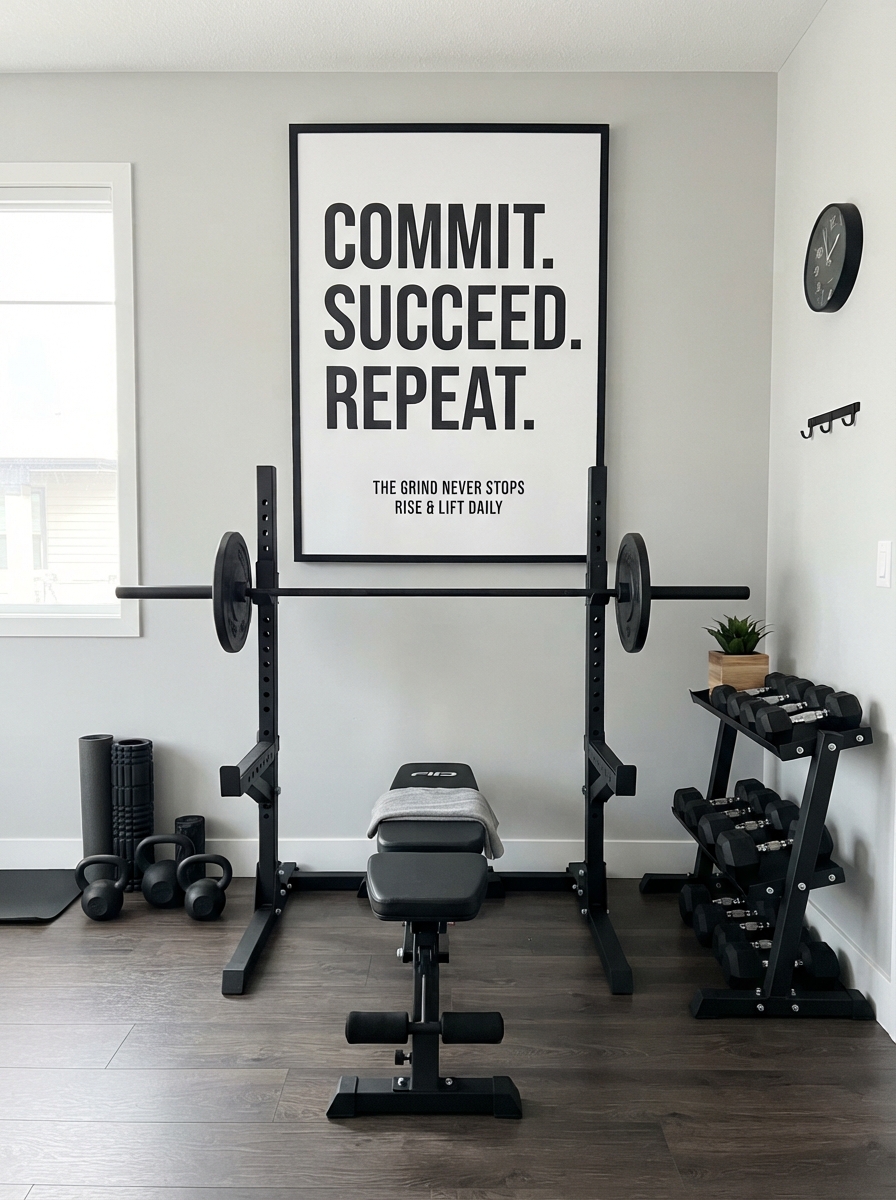
A large piece of graphic art, a framed motivational print, or even a chalkboard wall for tracking personal records gives the room a focal point beyond the equipment itself. Keep it to one or two pieces rather than a cluttered gallery wall — a home gym benefits from the same negative-space principle as any other room.
8. Manage Cords and Tech Thoughtfully
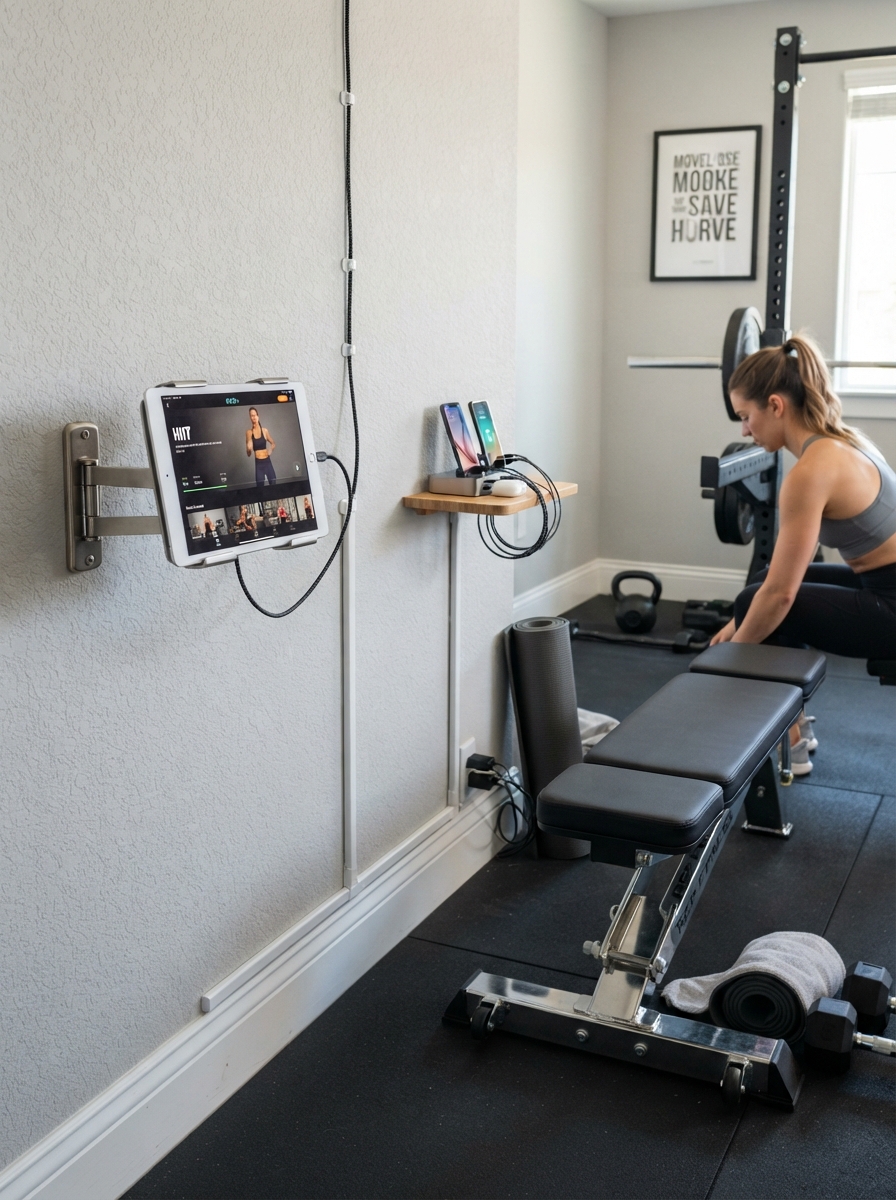
A wall-mounted TV or tablet holder for following workout videos, paired with a simple cord management channel or clips along the baseboard, keeps a room full of electronics from looking chaotic. A small charging station or shelf near the equipment prevents phones and earbuds from ending up on the floor mid-workout.
Home Gym Ideas by Space Size
Small Apartment Corner
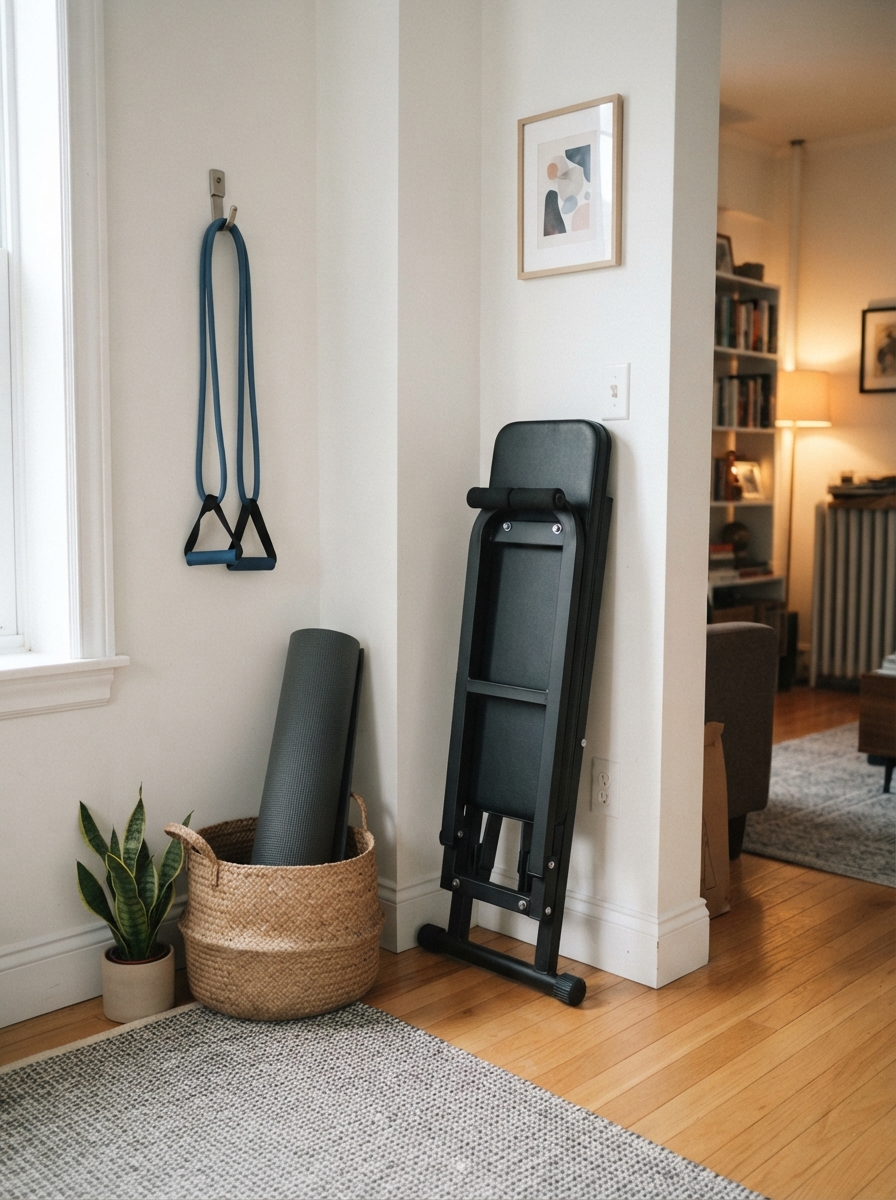
A folding or wall-mounted setup — a foldable bench, resistance bands hung on hooks, and a rolled mat stored in a basket — lets a single corner double as a workout space and revert to normal living space afterward. Choose equipment that can be tucked away rather than committing an entire room.
Spare Bedroom
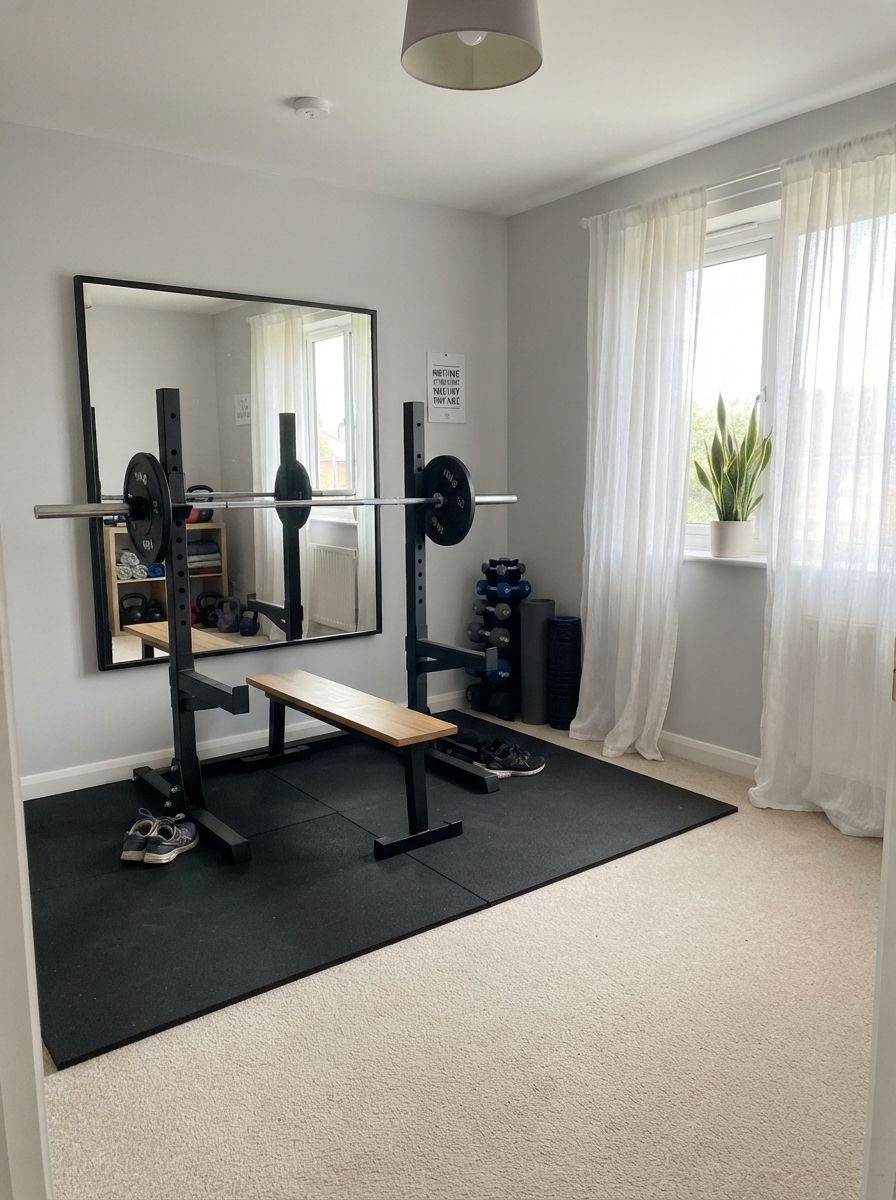
A spare bedroom offers enough room for a small rack, a mirror, and open floor space for mat work, without needing to sacrifice an entire garage. This is often the easiest room to convert since it typically already has decent flooring and a closet for equipment storage.
Garage Gym
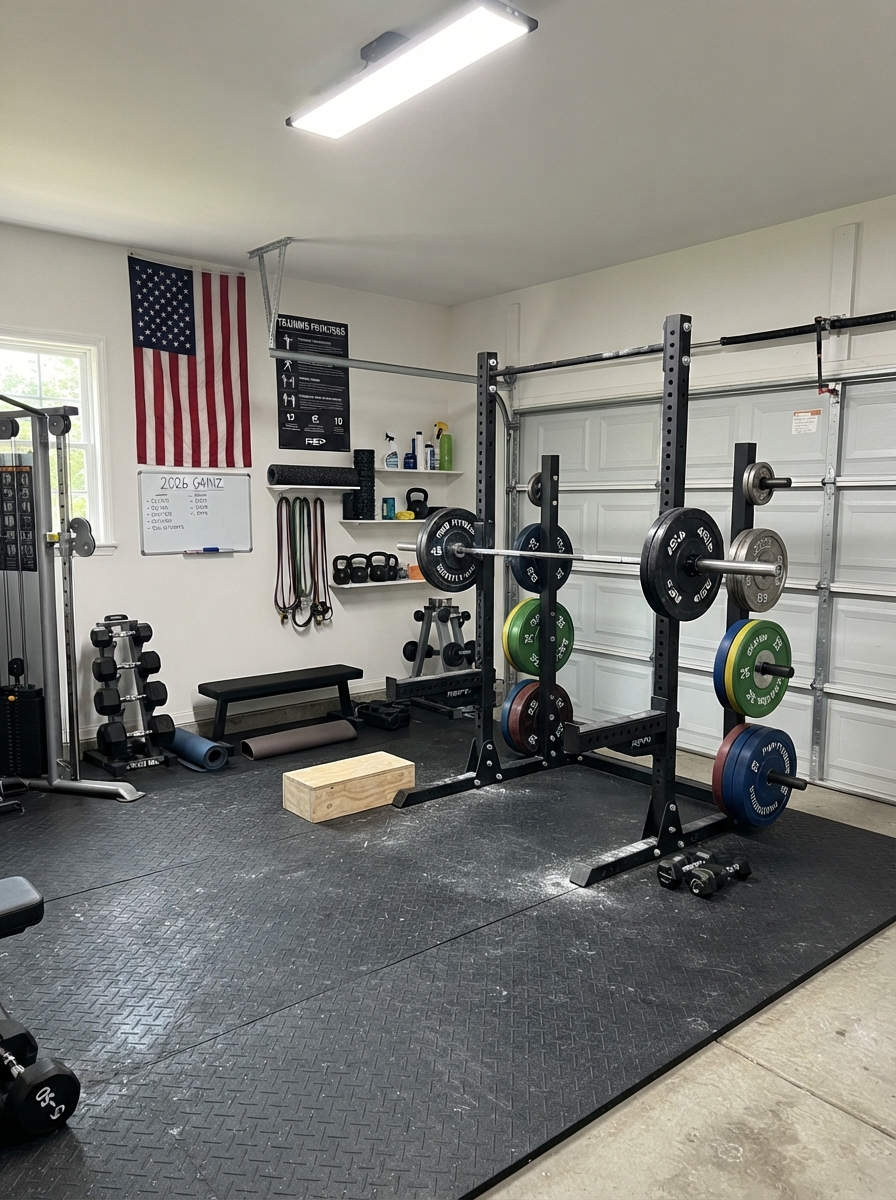
Garages handle heavier equipment and noise better than any other room, but need the most intentional decor work to avoid feeling purely utilitarian — insulated flooring, a real light fixture instead of a bare bulb, and a coat of paint on visible walls go a long way. A space heater or portable AC unit is often worth the investment if you want the garage gym to get regular use through extreme temperature months.
Basement Gym
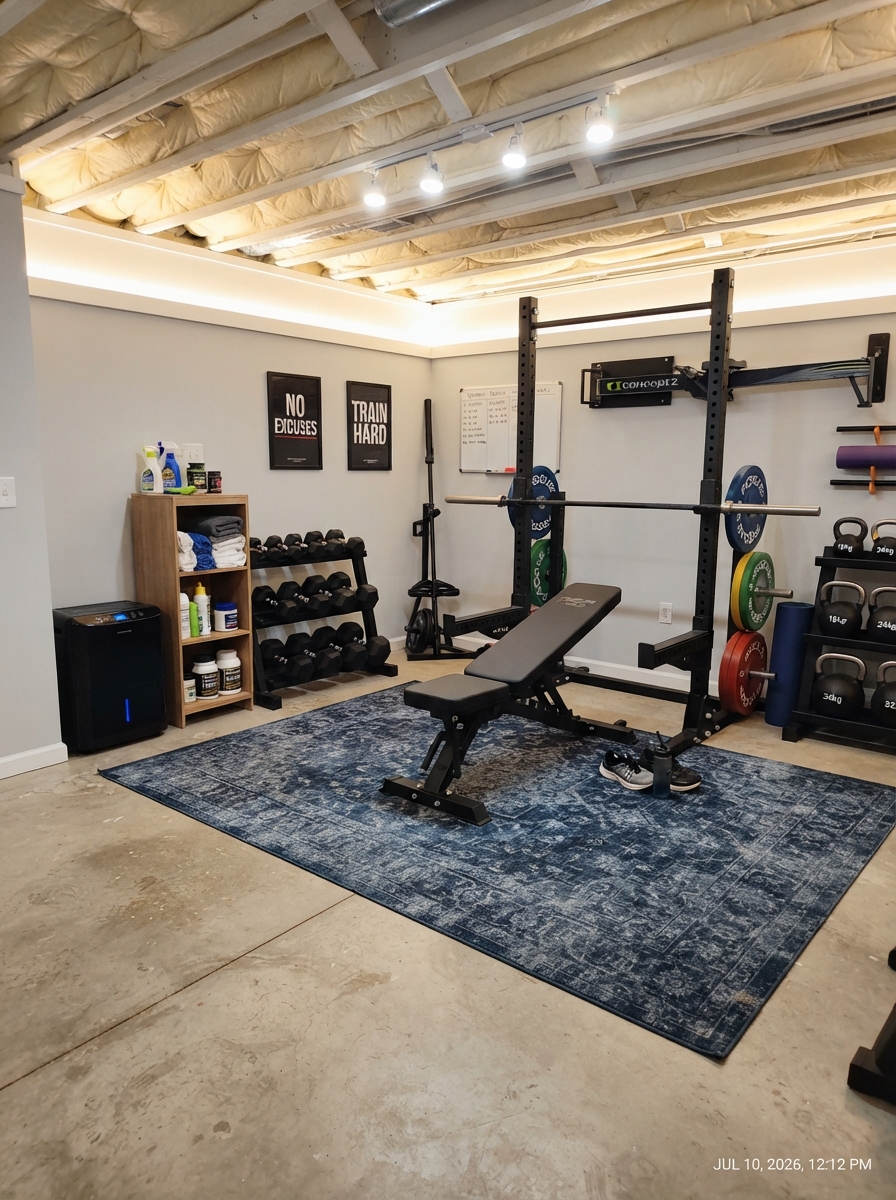
Basements offer the most square footage for a full setup but often need a dehumidifier and brighter lighting to counter naturally darker, more humid conditions. A large area rug over concrete flooring adds warmth to the stretching and mat-work zone specifically.
Designing for Your Workout Style
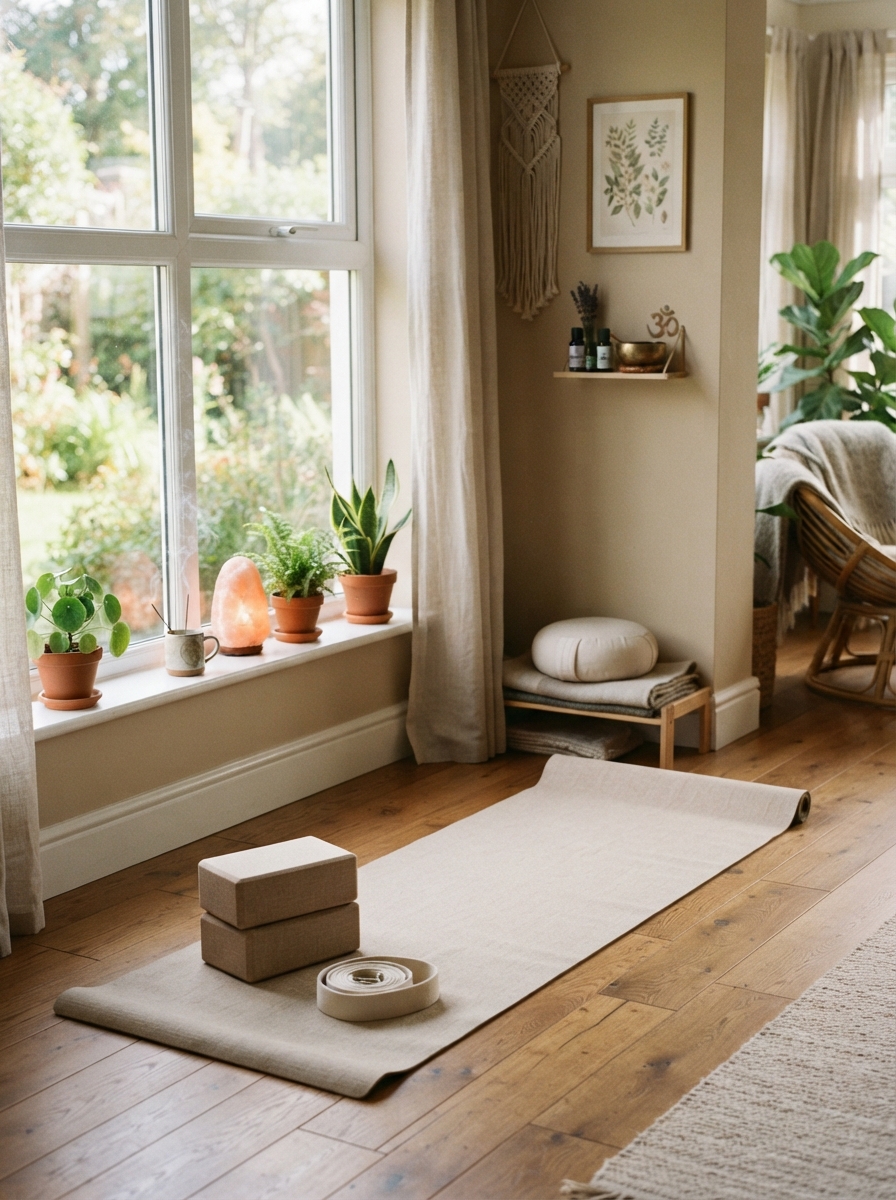
A home gym should look different depending on what you actually do in it, rather than following a single generic template. A yoga or pilates space benefits from a softer palette, a large mirror, natural light, and a dedicated spot for folded blankets and blocks — the goal is calm rather than intensity. A strength-training setup leans harder into durable, dark flooring, visible storage for plates and dumbbells, and brighter task lighting, since this space needs to handle heavier impact and louder equipment. A cardio-focused room built around a treadmill or bike benefits most from a wall-mounted screen or tablet holder and a fan or ventilation source positioned directly at the machine, since sustained cardio generates more heat than interval strength work. Matching the room’s styling to its actual primary use keeps the design choices functional rather than purely decorative. If you want to go further, dining room decor ideas for a space you’ll love covers it in detail.
Soundproofing and Noise Considerations
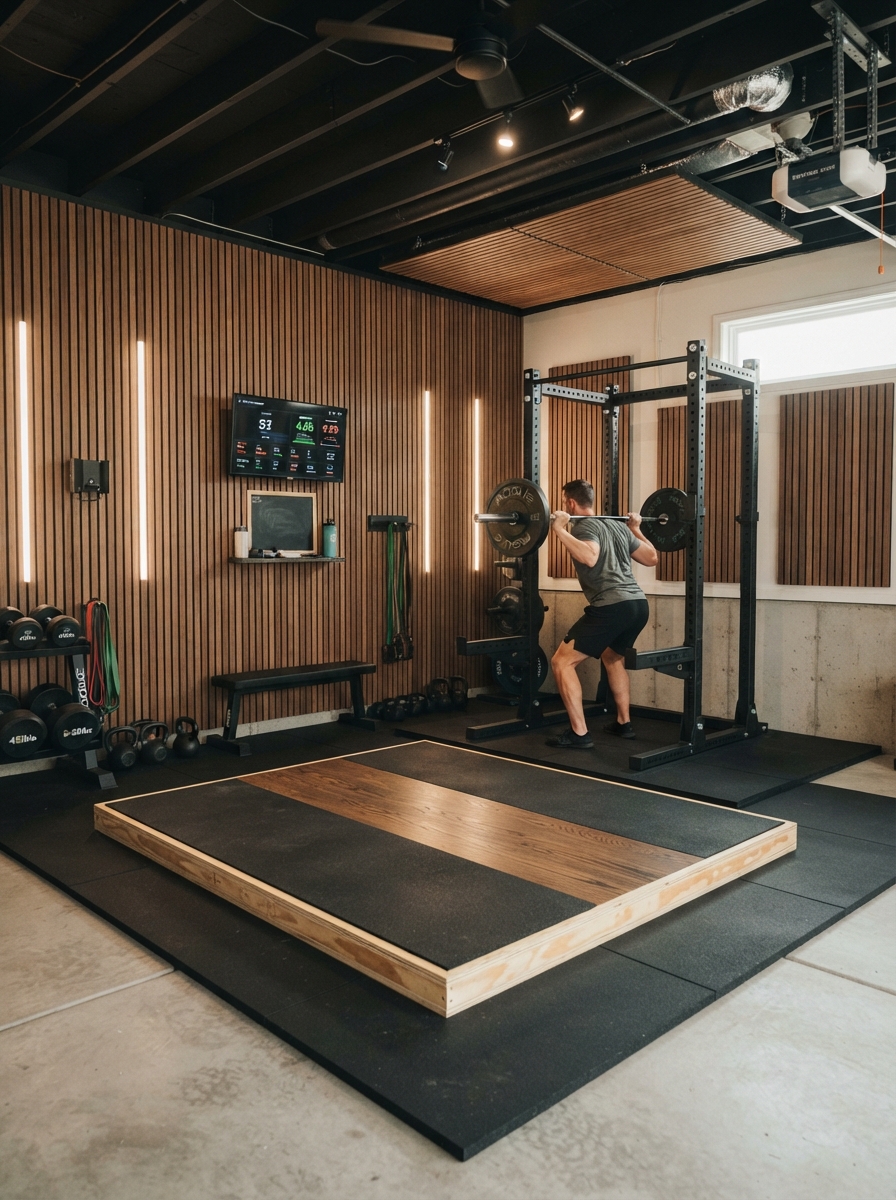
Dropped weights, jumping movements, and blasting music can strain relationships with downstairs neighbors or other rooms in the house faster than any decor choice can compensate for. A thick rubber or foam flooring layer absorbs far more impact noise than a thin yoga mat alone, and doubling up mats directly under a squat rack or platform reduces both noise and vibration significantly. Acoustic panels, which have become widely available in decor-friendly finishes rather than purely industrial felt, can line one wall to dampen echo in a garage or basement without looking like a recording studio. If noise is a genuine concern, scheduling heavier lifting sessions during reasonable hours matters just as much as any physical soundproofing.
Home Gym Storage Solutions for Small Spaces
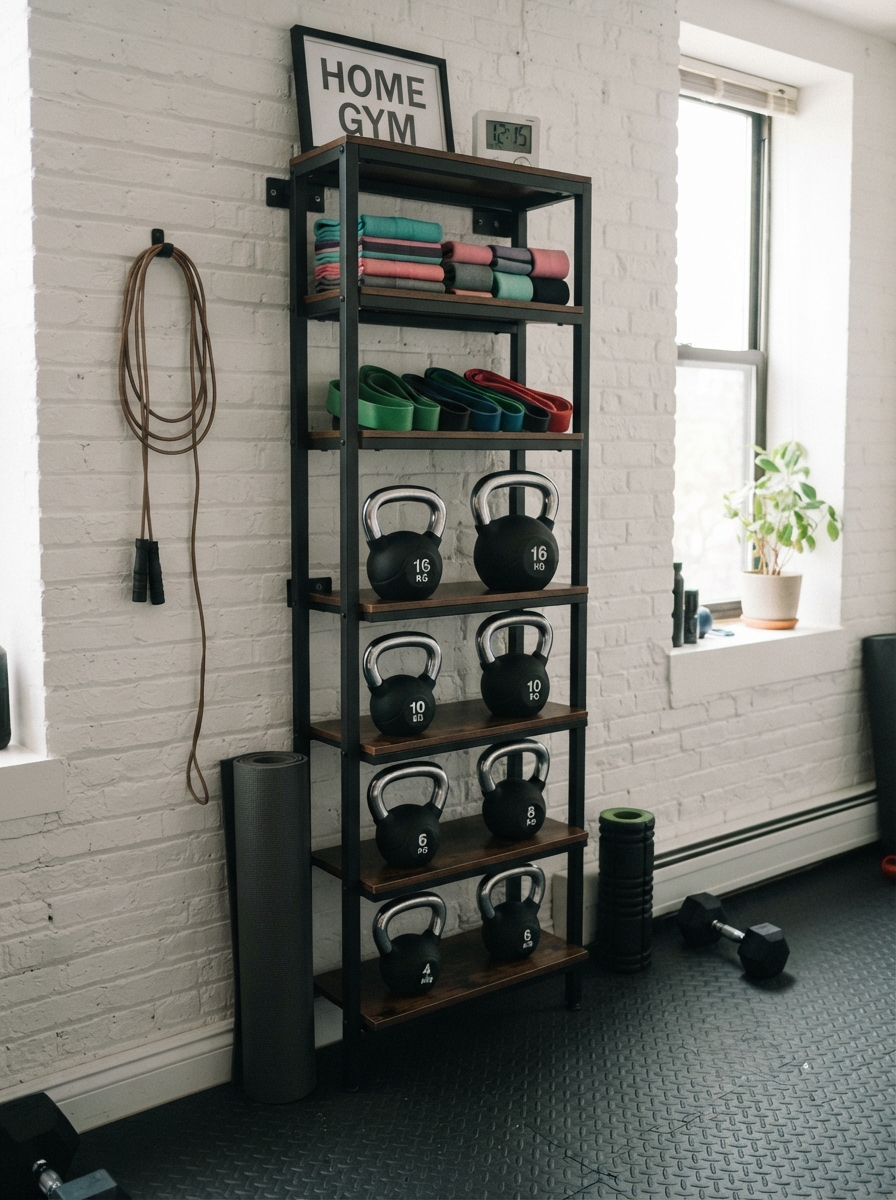
Vertical storage is the single best strategy for a home gym with limited square footage. A wall-mounted rack for resistance bands, jump ropes, and yoga mats keeps the floor clear for actual movement, while a slim, tall shelving unit in a corner holds dumbbells and kettlebells without eating into usable space. Furniture that serves double duty — a storage ottoman that also works as a step platform, or a bench with a lift-top seat for storing mats — lets a multi-purpose room revert seamlessly to a guest space or living area when it’s not workout time. Labeling bins or baskets for smaller accessories (grip chalk, resistance loops, a foam roller) also speeds up both setup and cleanup, which matters most in a room that isn’t dedicated solely to fitness.
Building a Home Gym on a Budget
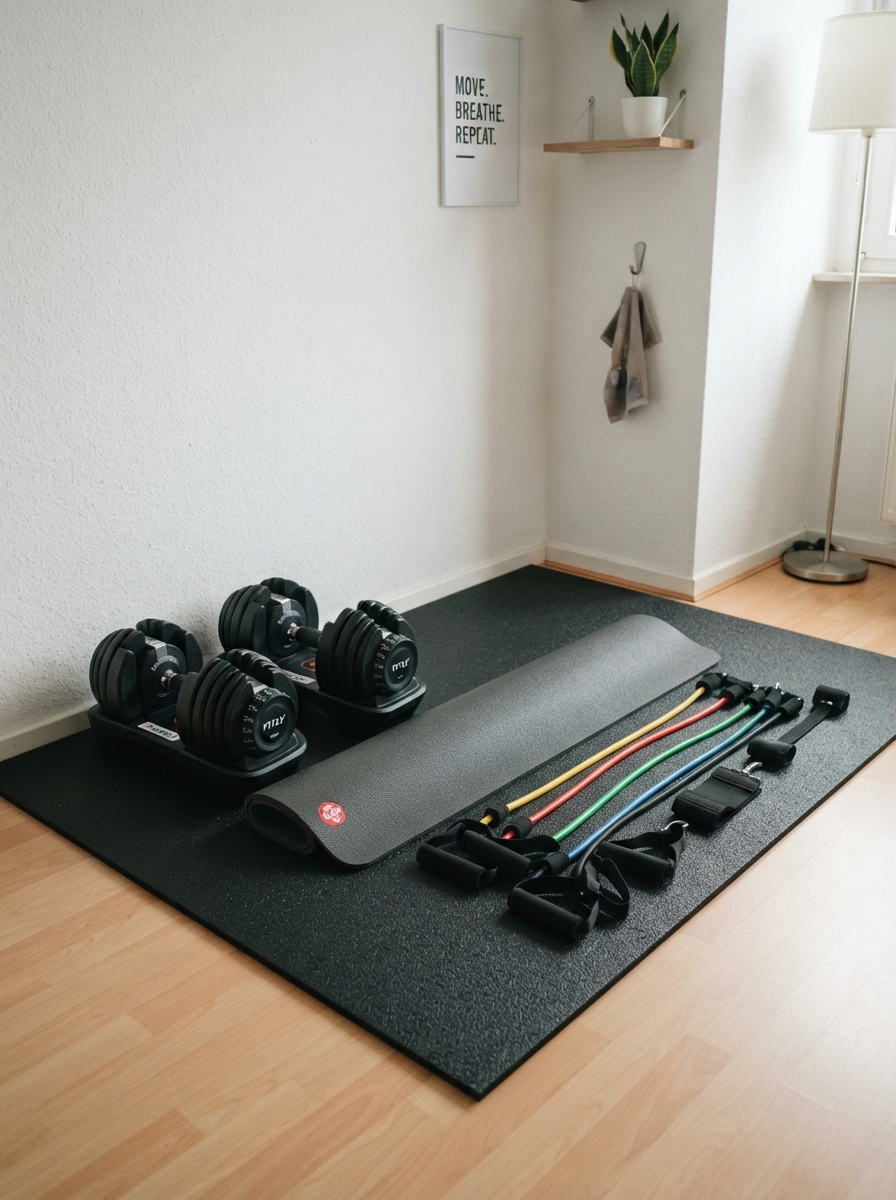
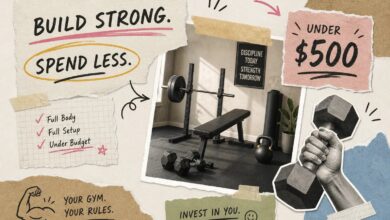
A functional, good-looking home gym doesn’t require a full equipment room. Start with the highest-impact basics: a set of adjustable dumbbells, a yoga mat, and a resistance band set cover most bodyweight and strength training needs for well under $150 combined. A secondhand marketplace listing is often the best source for a bench or rack, since gym equipment holds up well and depreciates quickly in resale value. Spend your remaining budget on the mirror and the flooring mat before any additional equipment, since those two elements do the most to make the space feel like a real gym rather than a corner with weights in it.
Kitting out a home gym?
Compare current prices on racks, benches and flooring.
Personalizing a Shared or Multi-Use Space
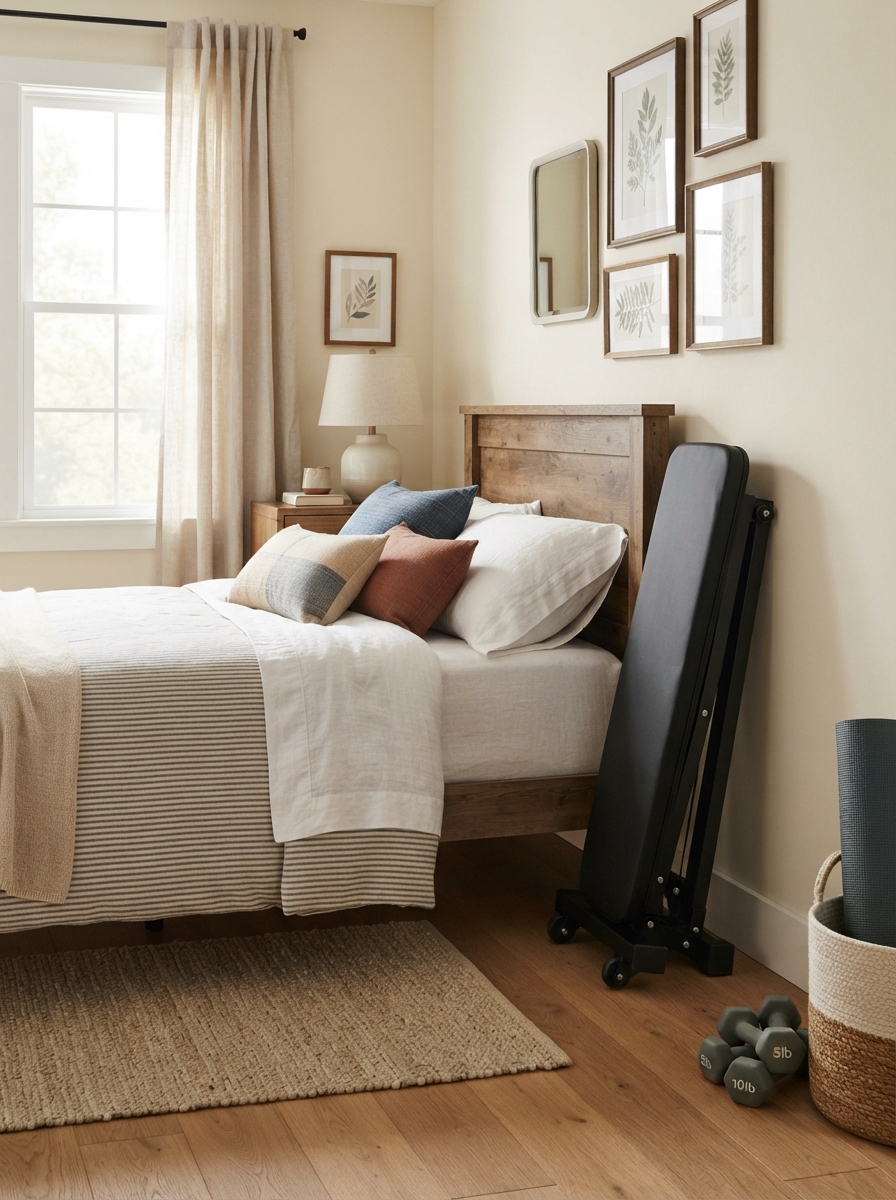
Many home gyms have to coexist with another function — a guest bedroom, a home office corner, or part of a finished basement used for other activities. A fold-flat bench or a rack that breaks down easily lets the room reset quickly for guests or other uses. Choosing decor elements that work in both contexts, like a large mirror or a piece of art, means the room doesn’t feel like it’s wearing two mismatched identities depending on the day. A rolling storage cart for smaller equipment can be tucked into a closet or behind a door entirely when the space needs to look like a guest room rather than a gym, which matters more for resale value or when hosting overnight visitors than most people initially plan for.
Home gym shopping list
- Rubber gym flooring tiles — protects the floor and cuts noise
- Adjustable dumbbells — one pair replaces a whole rack
- Folding workout bench — stores flat against a wall
- Full length mirror — for form checks and light
- Resistance band set — cheapest way to add range
- Wall mounted storage rack — keeps kit off the floor
Prices and availability change. Links open on Amazon.
Common Home Gym Decor Mistakes to Avoid
A few habits undercut an otherwise well-planned home gym. Skipping proper flooring is the most common mistake, since bare carpet or hardwood wears quickly under repeated equipment use and dropped weights. Choosing dim, ambient lighting borrowed from the rest of the house works against the energizing atmosphere a workout space needs. Overcrowding the room with more equipment than you actually use regularly creates clutter that discourages you from using the space at all — it’s better to keep a smaller, well-organized setup than an ambitious one that goes unused. And neglecting ventilation or airflow, especially in a garage or basement conversion, makes the room uncomfortable well before your workout is over.
Final Thought
A home gym earns a place in your decor the same way any other room does — through intentional color, good lighting, and a few personal touches layered over genuinely functional basics. Get the flooring, mirror, and lighting right first, and the space will motivate you to actually use it, not just look good empty. Treat it as a real room in your home rather than an equipment closet, and it will show in how often you actually walk into it.
Frequently Asked Questions
What flooring is best for a home gym?
Interlocking rubber tiles or a dense foam mat are the most popular choices, since they protect both the floor underneath and any equipment dropped during use, while also being easy to clean and replace section by section if needed.
How much space do I need for a home gym?
A functional setup for bodyweight training and free weights can fit in as little as 50 square feet, though a dedicated room with 100 or more square feet allows for a bench, a rack, and open floor space for mat work simultaneously.
What lighting works best for a workout space?
Bright, cool-toned lighting (4000–5000K) works better than the warm ambient lighting used elsewhere in the home, since it reads as energizing rather than relaxing, and layered overhead plus floor lighting helps eliminate shadows during movement.
Can a home gym still look stylish?
Yes — the same principles used elsewhere in the home (a considered color palette, one or two art pieces, plants, and organized rather than hidden storage) apply just as well to a workout space as to any other room.
How do I keep a home gym from feeling cluttered?
Open shelving or a slim rack for equipment, a basket for small accessories, and buying only the equipment you use regularly all help keep the space feeling intentional rather than like a storage overflow room.
Do I need special flooring over carpet?
Yes — carpet compresses unevenly under equipment and doesn’t protect against dropped weights, so a rubber mat or interlocking tile layer placed directly over the carpet in the workout zone is worth adding even if you don’t renovate the rest of the room.

2 Comments