

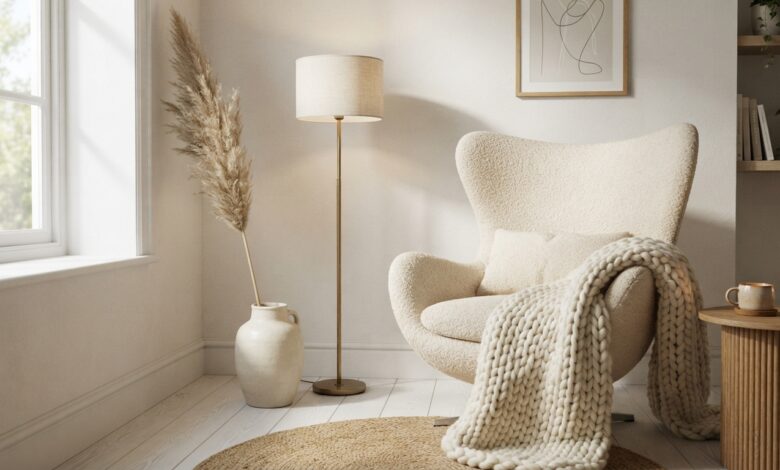
Scandinavian design has stayed popular for a reason: it’s calm, functional, and genuinely livable rather than just photogenic. The style centers on light, natural materials, and restraint — but restraint doesn’t have to mean cold or sparse. Here’s how to bring real Scandinavian design principles into your home.
As an Amazon Associate I earn from qualifying purchases. Some links in this post are affiliate links, at no extra cost to you.
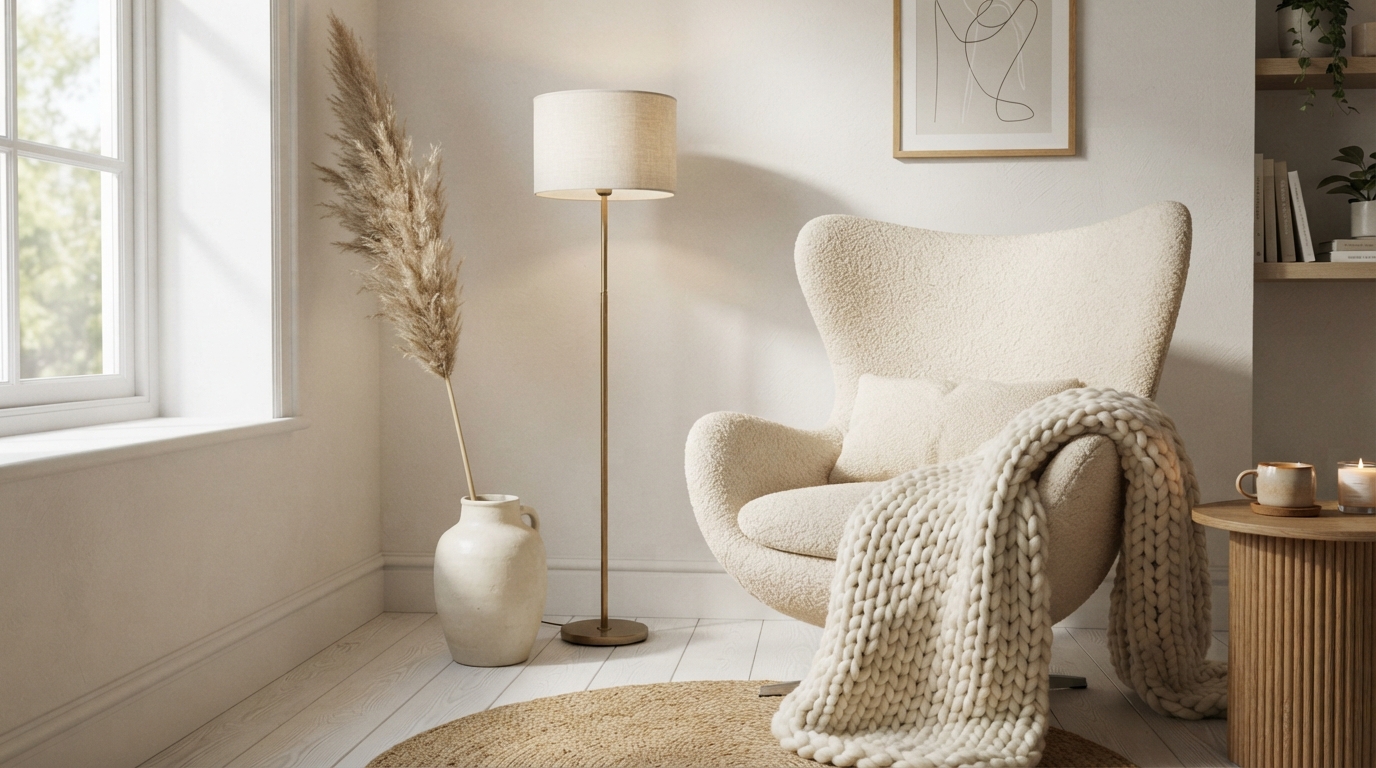
1. Start With a Light, Neutral Palette

White, soft gray, and warm beige walls form the base of Scandinavian design, reflecting as much natural light as possible. This isn’t about being boring — it’s the canvas that lets texture and a few bold accents stand out. Test paint swatches on the wall at different times of day before committing, since Scandinavian neutrals shift noticeably between morning and evening light.
2. Prioritize Natural Materials
Light woods like ash, pine, and birch, along with wool, linen, and leather, ground the space in warmth. Avoid glossy or synthetic finishes, which read as cold rather than serene. When shopping, run your hand over a material before buying — authentic natural texture is part of what makes the style feel considered rather than generic.
3. Keep Furniture Functional and Simple
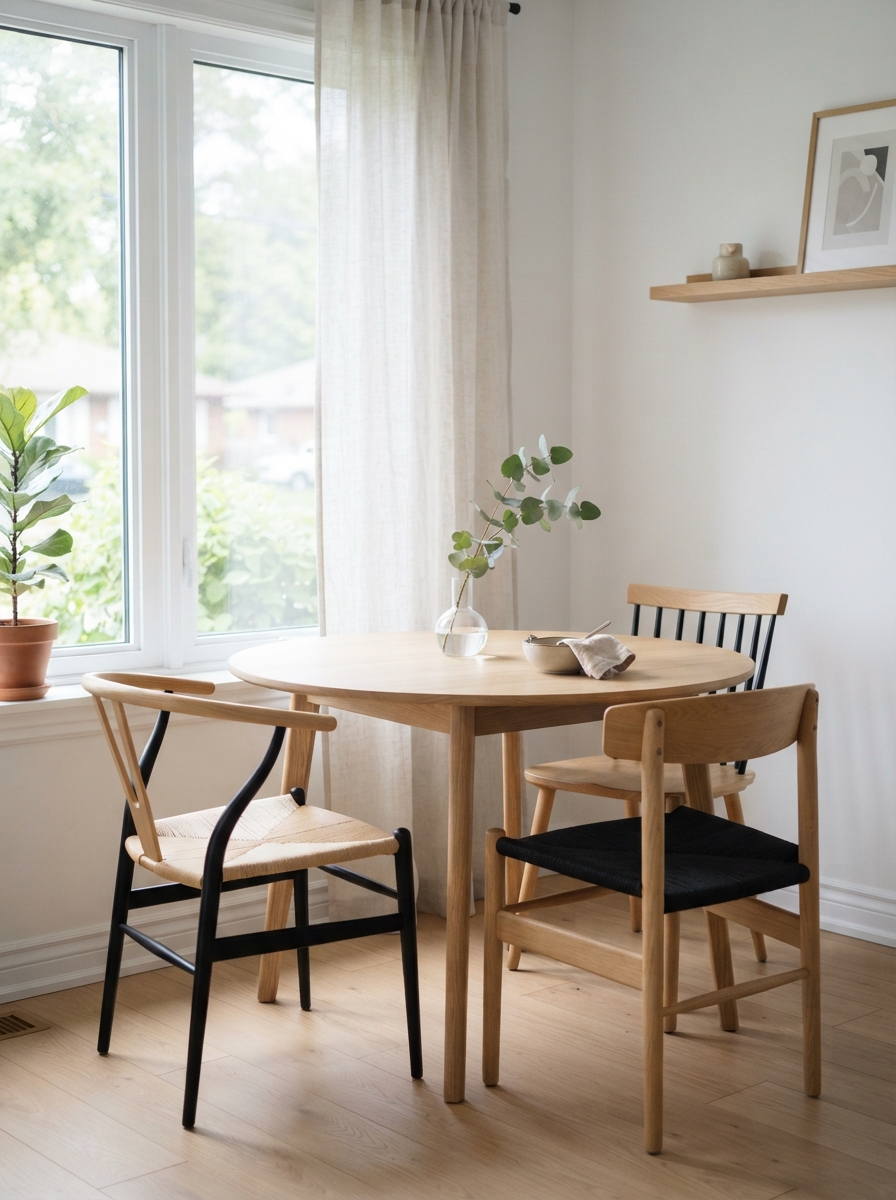
Scandinavian furniture favors clean lines and visible craftsmanship over ornamentation. Every piece should earn its place — if it’s not beautiful or useful, it doesn’t belong. This is also a practical filter when shopping: ask whether a piece would still look good with nothing else around it, since Scandinavian rooms rarely have enough visual noise to hide a mediocre piece.
4. Layer in Texture, Not Color
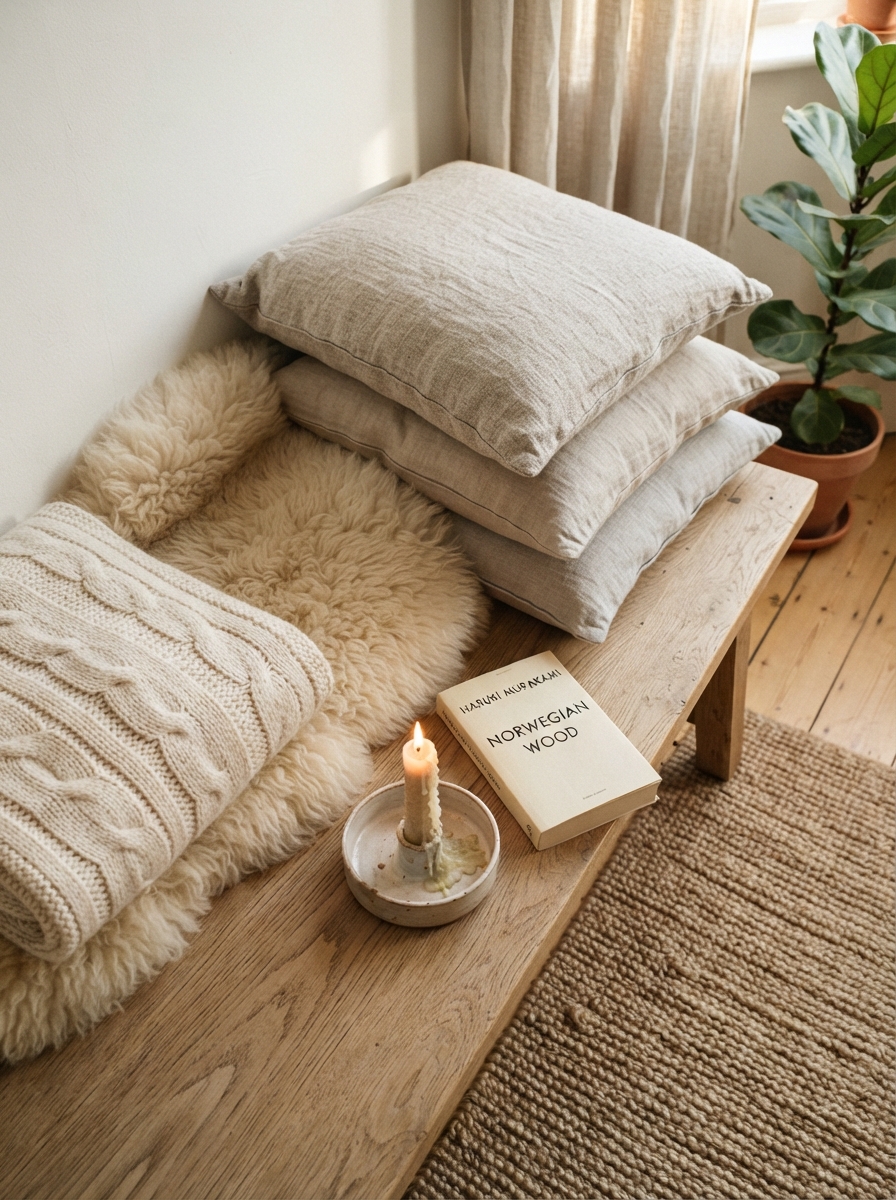
Because the palette stays neutral, texture does the visual work: a chunky knit throw, a sheepskin on a chair, a woven jute rug. Mix at least three textures in any room to avoid flatness. This layering is also the foundation of hygge, the Danish concept of coziness that Scandinavian design is often associated with — the goal is a room that looks calm but feels warm and touchable.
5. Maximize Natural Light
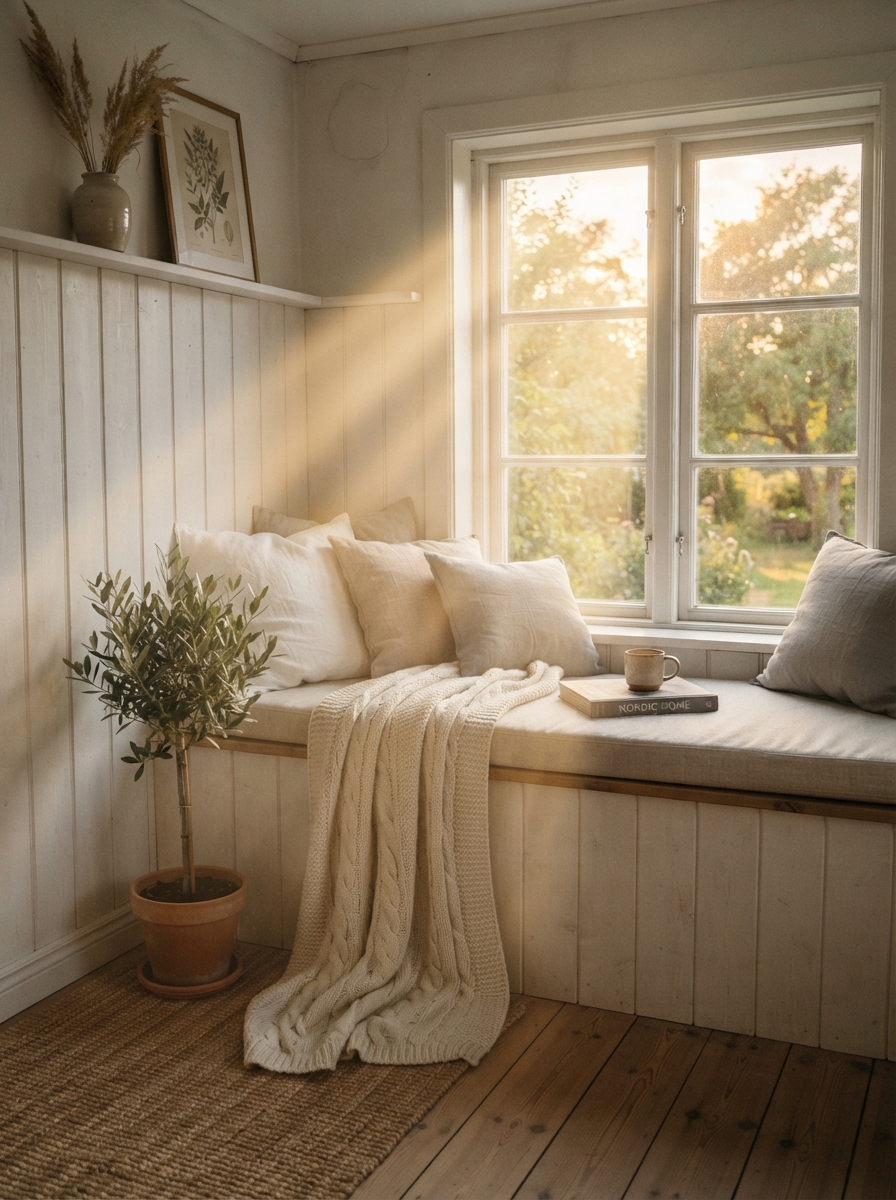
Sheer or minimal window treatments, mirrors placed to bounce light, and keeping windows unobstructed are all core to the style. Scandinavian design developed partly as a response to long, dark winters — light is treated as precious. A large mirror placed directly across from a window can noticeably brighten a room by bouncing daylight deeper into the space.
6. Add One Bold Accent
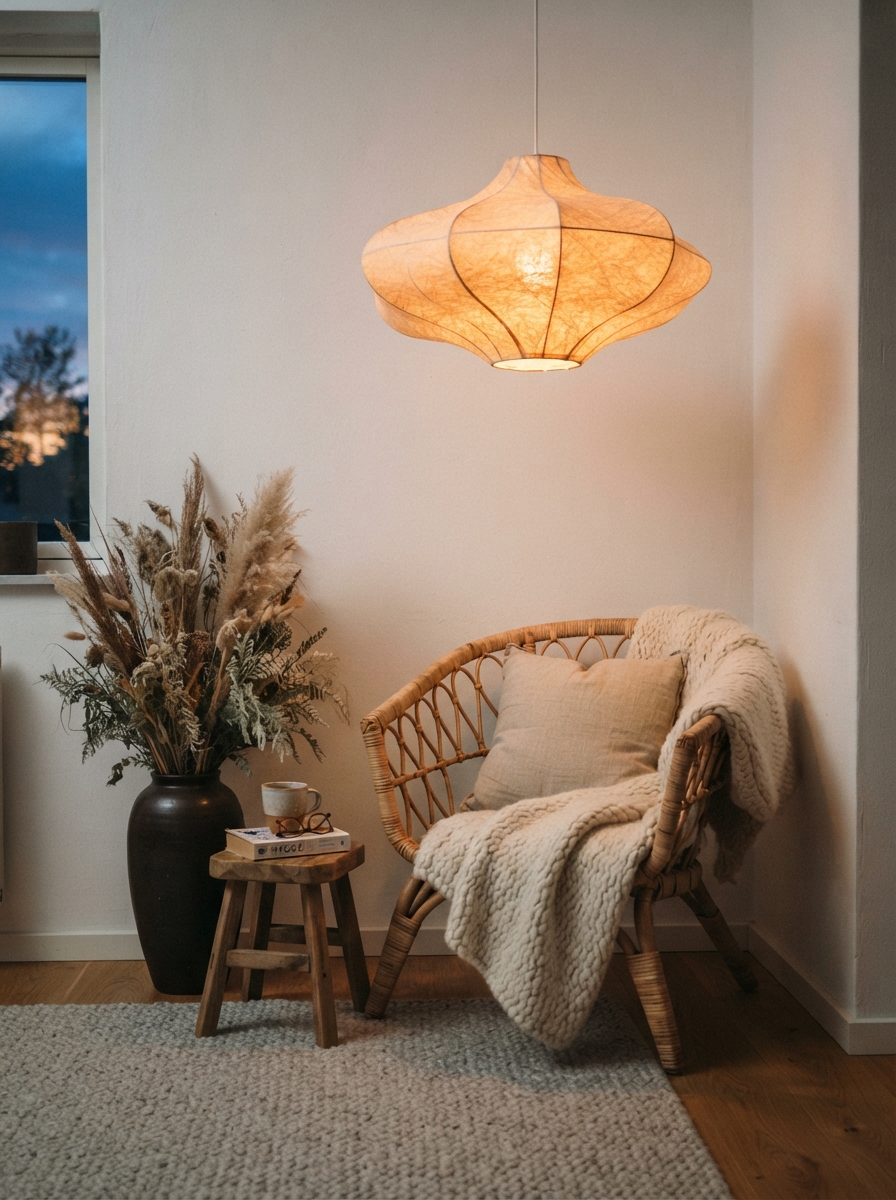
A black pendant light, a single piece of graphic art, or a dark accent chair keeps an all-neutral room from feeling flat. Scandinavian spaces are calm, not lifeless — one confident contrast makes the whole room work. Resist the urge to add a second bold accent; the power of this move comes specifically from its rarity in an otherwise quiet room.
7. Embrace Negative Space
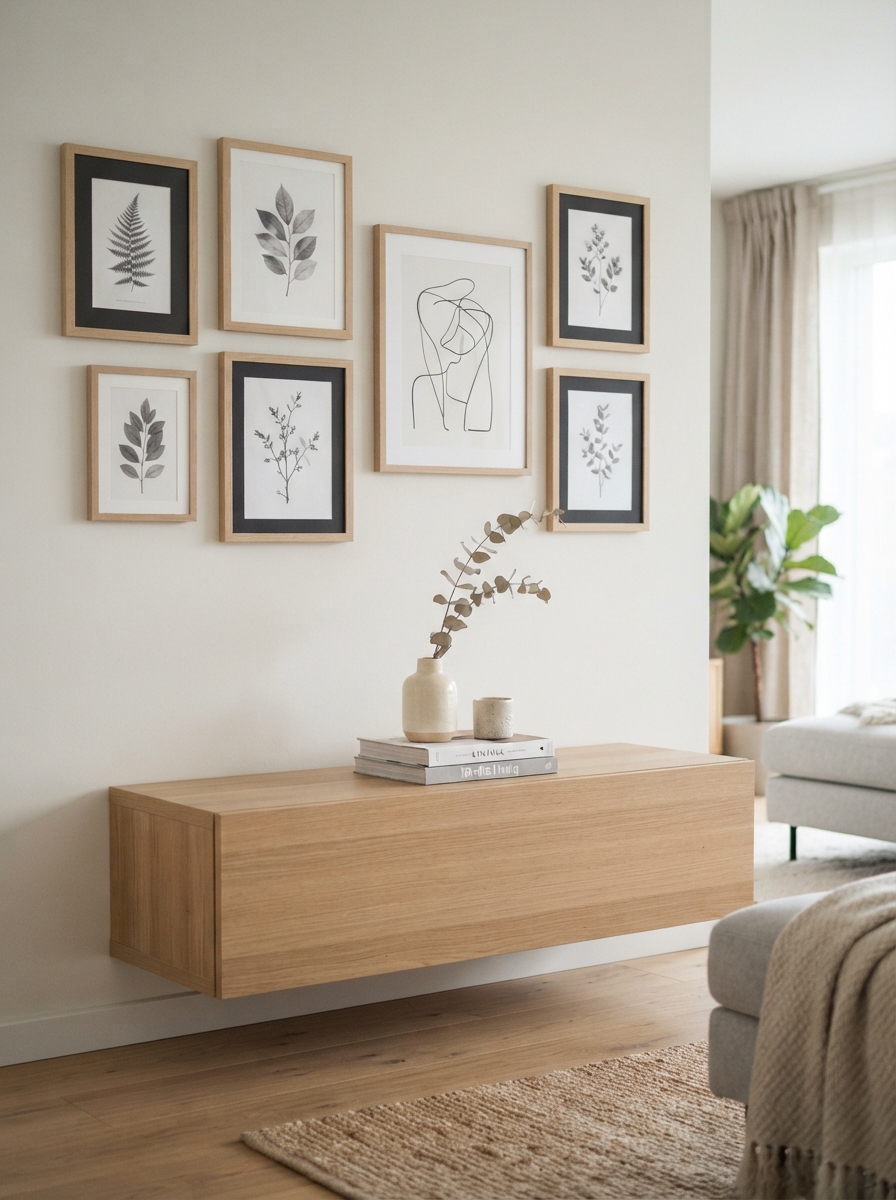
Resist the urge to fill every surface. Empty space around furniture and on shelves is part of the design, giving the eye room to rest — this is the throughline connecting Scandinavian style to the broader minimalist movement. Even a gallery wall should have breathing room around each frame rather than being packed edge to edge.
Scandinavian Design Room by Room
Living Room
A light linen or wool sofa, a low wood coffee table, and a single black or rattan pendant overhead capture the look. Keep the rug pale and let one dark accent chair or piece of art carry the contrast.
Bedroom
White or oatmeal linens, a simple wood bed frame, and a wool throw at the foot of the bed are all it takes. Skip heavy curtains in favor of light linen panels that still let morning light in.
Kitchen
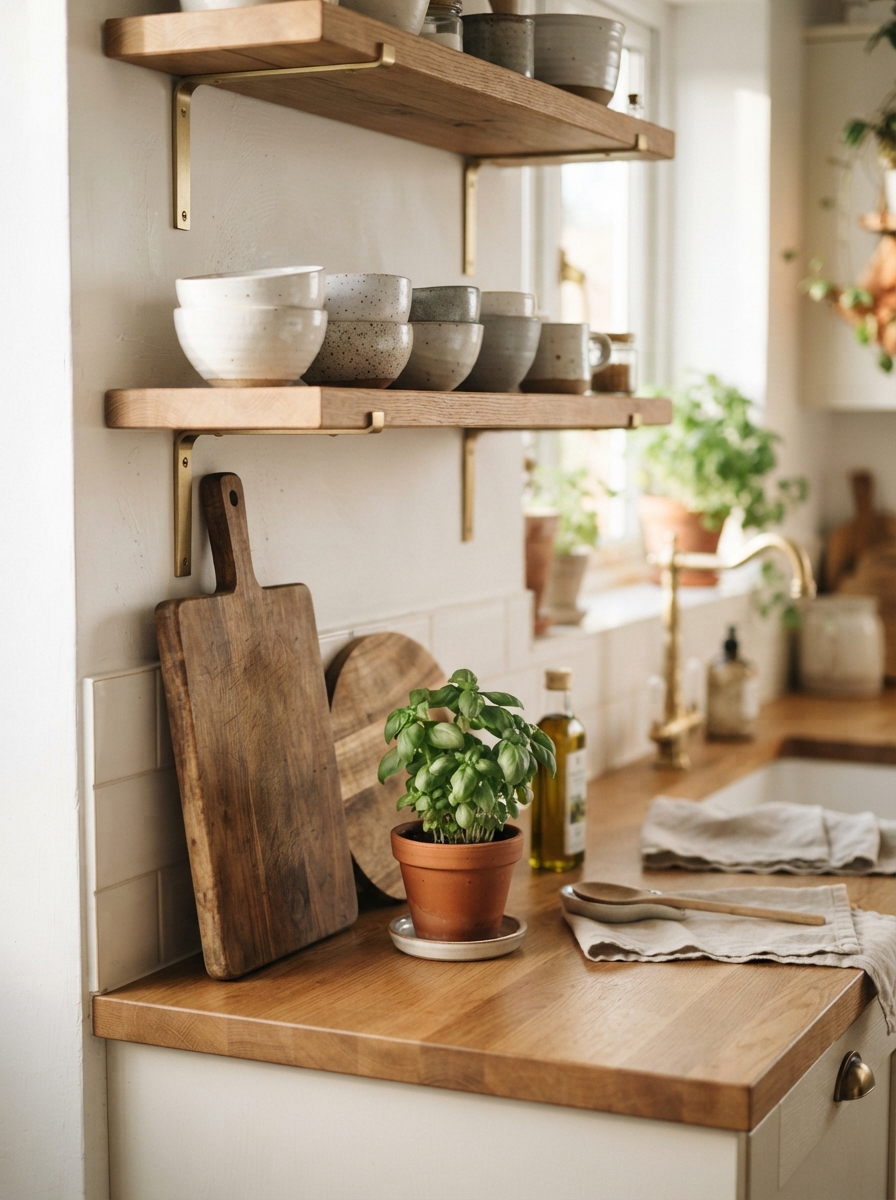
Open shelving in light wood, white or pale cabinetry, and simple ceramic dishware displayed rather than hidden all reflect the Scandinavian instinct to make everyday objects part of the decor. Choose a small set of matching bowls and mugs rather than displaying a mismatched collection, since the open-shelf look only works when what’s on it is curated.
Home Office
A simple birch or ash desk, a single task lamp, and a woven storage basket keep a home office functional without visual clutter. Position the desk near a window whenever possible — natural light matters even more in a room where you’re working for hours at a time.
Iconic Scandinavian Brands and Designers to Know
A few names come up repeatedly in Scandinavian design and are worth knowing if you want to shop or research further. HAY and Muuto (Danish) are known for accessible, contemporary takes on the style’s core principles — clean lines, natural materials, functional forms. Marimekko (Finnish) brings the style’s one permitted burst of boldness through bold graphic textiles, often used sparingly as a single statement cushion or piece of art. Arne Jacobsen and Hans Wegner, both Danish mid-century designers, created some of the most recognizable Scandinavian chairs still in production today, and their designs (or well-made replicas) are a reliable way to add an authentic anchor piece to a room. IKEA, despite being a mass-market retailer, still draws directly from these same principles and remains the most accessible entry point for budget-conscious Scandinavian styling. For more on this, see our interior design tips guide.
Scandinavian Design and Its Related Sub-Styles
Several popular aesthetics branch directly out of Scandinavian design, and knowing the differences helps you pick the right direction for your own home. Japandi blends Scandinavian restraint with Japanese wabi-sabi, favoring darker woods, more asymmetry, and handmade ceramics over the brighter, more symmetrical Scandinavian base. Scandi-boho softens the style’s clean lines with rattan, macrame, and a wider range of plants, trading some of the restraint for warmth and personality. Coastal Scandinavian leans into driftwood tones, linen in soft blues and sandy neutrals, and rope or woven textures for a beachier, breezier version of the same formula. If pure Scandinavian design feels slightly too austere for your taste, one of these related styles is often the easier entry point, since they borrow the palette and material language while allowing more visual warmth.
Building a Scandinavian Shopping List on Any Budget
If you’re starting from scratch, prioritize purchases in this order for the best return per dollar. First, paint — a warm white or soft greige on the walls does more to establish the look than any single furniture piece. Second, a natural-fiber rug (wool, jute, or sisal) grounds the room and reads as authentically Scandinavian even in a budget version. Third, one piece of substantial wood furniture, whether a coffee table, console, or dining table, since this becomes the visual anchor the rest of the room builds around. Fourth, textiles — linen cushion covers, a chunky throw, and a few ceramic vases — which is where you layer in the texture that keeps the space from feeling sparse. Last, your one bold accent: a black lamp, a graphic print, or a dark chair. Buying in this order means even a half-finished room will already look intentional rather than unfinished.
Shopping Secondhand for Scandinavian Pieces
Because Scandinavian style prizes visible craftsmanship and natural materials over trend-driven finishes, it’s one of the easiest aesthetics to build from secondhand and thrifted furniture. Look specifically for solid wood pieces from the 1960s–80s — teak and pine furniture from this era was built with the same clean-lined philosophy and has often held up better than newer particleboard equivalents. A dated finish can usually be sanded back and left natural or given a light whitewash for a few dollars in supplies. Ceramic vases, ashtrays repurposed as trinket dishes, and simple wood-framed mirrors are also common secondhand finds that slot straight into the style. Estate sales and local marketplace listings tend to turn up better Scandinavian-adjacent pieces than big-box thrift stores, since sellers there are often clearing out exactly this generation of furniture.
Budget-Friendly Scandinavian Design
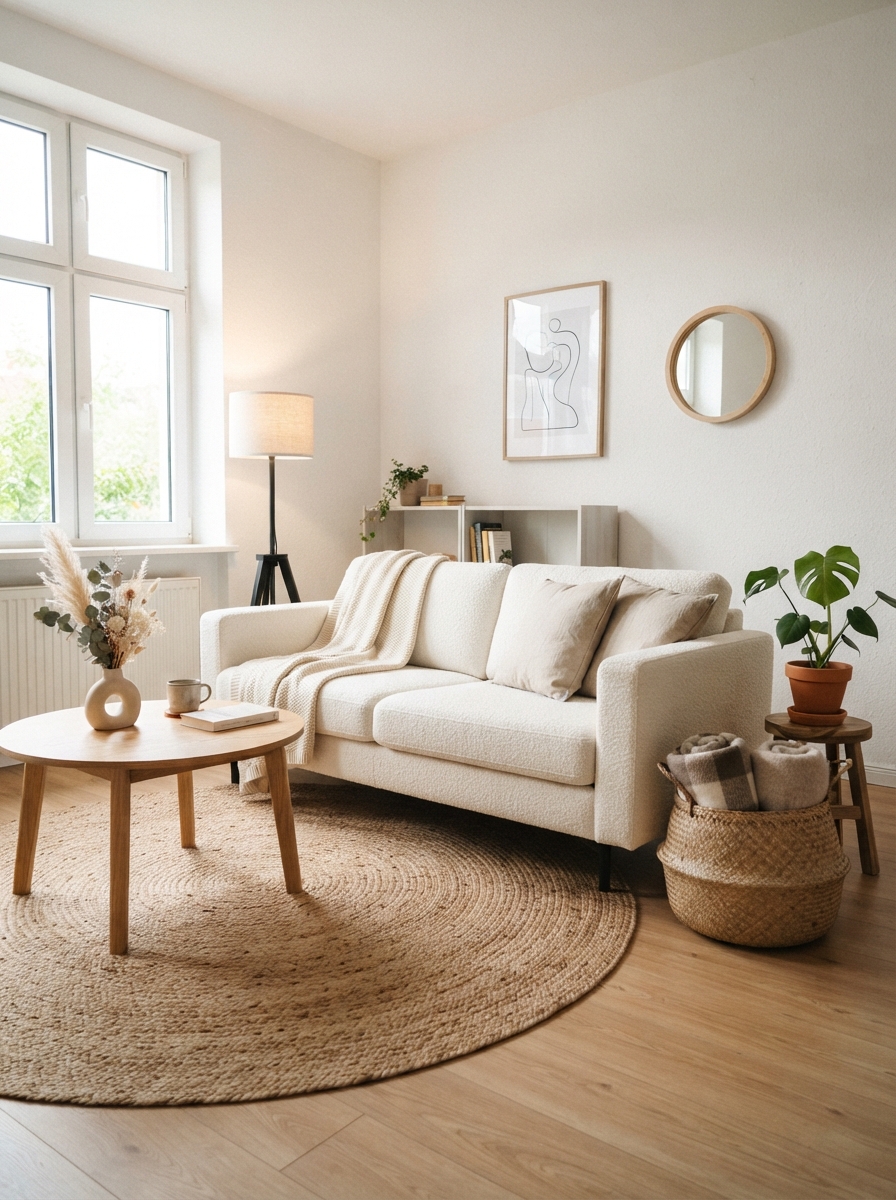
Scandinavian style is one of the more affordable aesthetics to achieve, since it relies on editing and material choice rather than expensive statement pieces. A fresh coat of white or warm-white paint is the single highest-impact, lowest-cost change you can make. A jute or wool-look rug from a budget retailer reads as authentically Scandinavian at a fraction of designer prices. Thrifted wood furniture, sanded and left natural or given a light whitewash, often looks more considered than new pieces. And a single dried floral arrangement (pampas grass or eucalyptus) costs under $15 and does more visual work than an entire shelf of small decor objects.
Scandinavian shopping list
- Light wood furniture — the base of the whole look
- Wool throw blanket — texture over minimalism
- Paper lantern light — soft diffused light
- Neutral area rug — warm white or oatmeal
- Ceramic vase set — simple shapes, matte finish
- Sheepskin rug — the classic Scandi layer
Prices and availability change. Links open on Amazon.
Common Scandinavian Design Mistakes
- Going too stark. All-white with no texture reads clinical, not calm. Texture is what separates Scandinavian from generic minimalism.
- Mixing too many wood tones. Stick to one or two wood finishes throughout a room to keep it cohesive.
- Skipping the bold accent. A room with zero contrast can feel flat on camera and in person — one dark or graphic element makes the neutral palette pop.
- Over-decorating shelves and surfaces. Scandinavian style depends on negative space; a shelf styled with ten small objects reads as clutter rather than curation.
- Choosing trend-driven pieces over functional ones. A chair that looks striking in a photo but is uncomfortable to sit in works against the style’s core value of genuine livability.
Scandinavian Design for Renters
Most of what defines Scandinavian style is fully renter-friendly, since it leans on furniture, textiles, and light rather than permanent finishes. Peel-and-stick light wood flooring or a large jute rug can cover an unappealing rental floor without any installation. Removable wallpaper in a subtle texture or soft color achieves the effect of a fresh coat of paint without violating a lease, and it comes down cleanly when you move. Swappable elements — a floor lamp instead of a hardwired fixture, freestanding open shelving instead of built-ins, and furniture rather than fitted cabinetry — let a renter build the full look and take nearly all of it to the next apartment. Focus your one-time investment on furniture and lighting, since those transfer between homes, and save the cheaper textile swaps for whatever needs to adapt to a new room’s proportions.
Sustainable and Ethical Sourcing in Scandinavian Design
Sustainability has always been closely tied to the Scandinavian design philosophy, which favors durable, well-made pieces meant to last decades over disposable furniture replaced every few years. When shopping new, look for FSC-certified wood, which confirms the timber came from responsibly managed forests, and prioritize brands that publish their manufacturing and material sourcing openly. Buying secondhand or vintage is arguably the most authentically Scandinavian choice available, since it keeps well-built furniture in circulation rather than adding new production to the world. Natural, biodegradable materials — wool, linen, and solid wood — also age better and require less frequent replacement than synthetic alternatives, which lines up with the style’s underlying value of buying fewer, better things rather than accumulating more.
Final Thought
Scandinavian design works because it balances restraint with warmth — natural materials, thoughtful light, and just enough contrast to keep a neutral room interesting. Start with the palette and materials, then edit down until only what you love remains. For more on the style’s origins and modern interpretations, visit Elle Decor.
Frequently Asked Questions
What’s the difference between Scandinavian and minimalist design?
Minimalist design prioritizes having as little as possible; Scandinavian design prioritizes warmth and function first, with restraint as a byproduct rather than the goal. A Scandinavian room can hold more objects than a strict minimalist one, as long as each object is natural, functional, or genuinely loved.
Is Scandinavian design expensive to achieve?
Not necessarily. Paint, a jute rug, thrifted wood furniture, and one dried floral arrangement can achieve the core look for a fraction of designer prices, since the style depends more on editing and material choice than on expensive statement pieces.
What colors work best in Scandinavian design?
White, soft gray, warm beige, and oatmeal form the base palette, with black used sparingly as the single bold accent. Avoid cool-toned grays that can read as sterile rather than warm.
Can Scandinavian design work in a small apartment?
Yes — in fact, small spaces often suit the style especially well, since the light palette and negative-space principles both help a small room feel larger and less cramped than a maximalist approach would.
What’s the difference between Scandinavian and Japandi style?
Japandi takes the Scandinavian foundation and adds Japanese wabi-sabi influence — darker woods, more asymmetry, and handmade, imperfect ceramics — for a moodier, more grounded version of the same restraint-based philosophy.
How do I keep a Scandinavian room from feeling boring?
The bold accent and texture layering are the two moves that keep the style from tipping into boring: one confident dark or graphic element, combined with at least three different textures (wool, wood, linen, jute) in every room.




2 Comments