
As an Amazon Associate I earn from qualifying purchases. Some links in this post are affiliate links, at no extra cost to you.
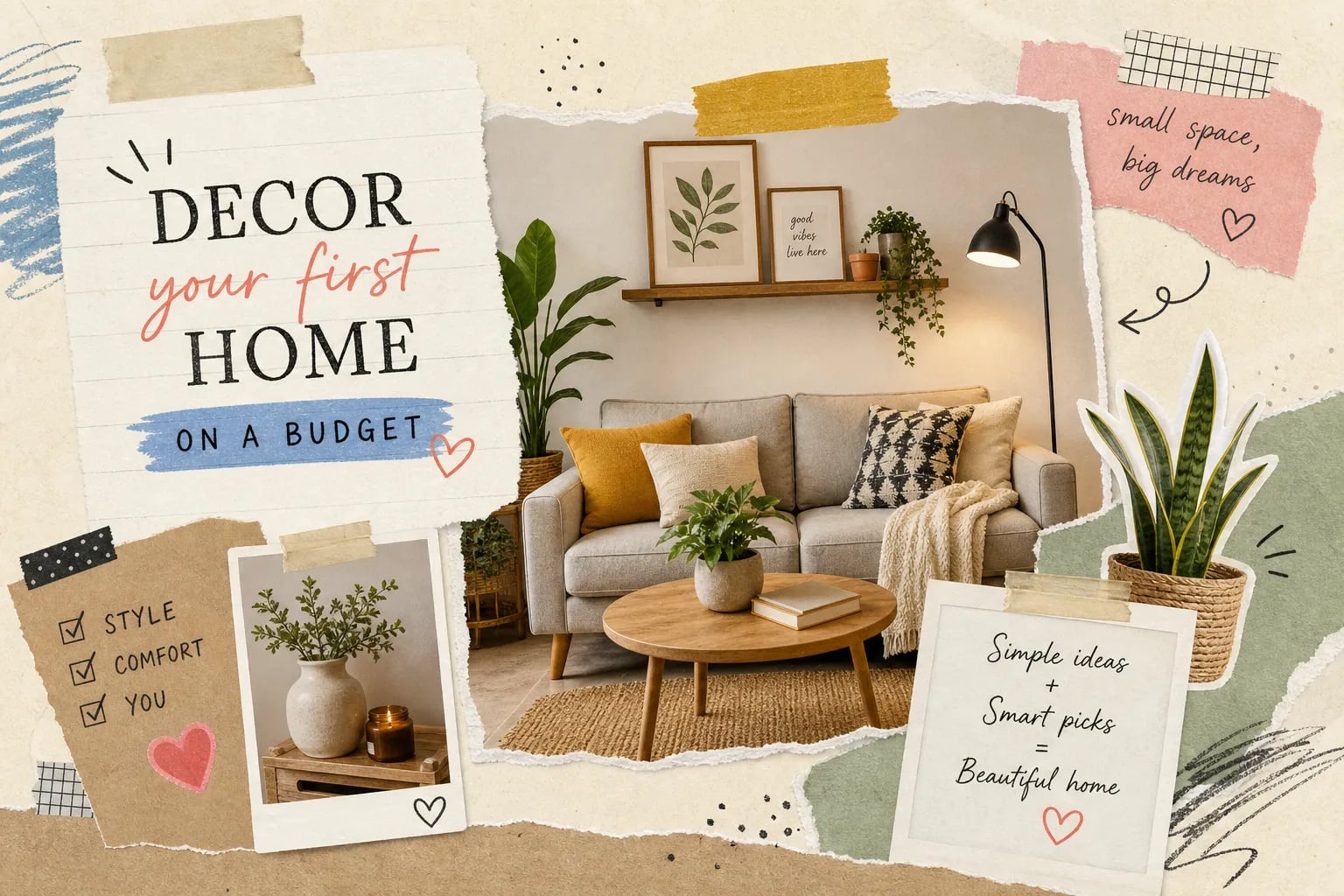
Moving into your first home is thrilling and completely overwhelming at the same time. The blank walls, the empty rooms, the seemingly endless options waiting for a decision, it’s a lot to process before you’ve even unpacked a single box. If you’re searching for home decor ideas for first-time homeowners, you’re already ahead of the curve, because knowing where to start is half the battle. Many new homeowners feel pressure to make everything look finished right away, and that’s exactly where trouble starts. Spending without a plan often results in mismatched rooms, a blown budget, and a house that still doesn’t feel like home.
This guide is a practical, prioritized starting point, not a Pinterest board of $10,000 living rooms. It’s a framework for decorating your first home in a sequence that makes sense, at a budget level that’s realistic for real people. Aesthetic Nest Decor’s room-by-room guides are worth bookmarking for when you’re ready to go deeper into specific spaces, but start here first. By the end, you’ll know which rooms to tackle first, how to build a look that flows throughout your whole house, and how to make smart spending decisions every step of the way.
Home decor ideas for first-time homeowners: where to start
The most common decorating mistake new homeowners make is trying to do everything at once. They spread the budget thin across every room, run out of money before the important spaces are done, and end up with a house full of half-finished rooms. The smarter move is to work in a deliberate sequence, starting with the spaces you use every single day. Think of this as your move-in decorating checklist: bedroom and living room first, secondary rooms later.
The bedroom and living room deserve your budget first
Your mattress, bed frame, and sofa are the anchor pieces of your daily life. They’re also the most expensive items per room, so they should claim the largest share of your early decorating budget. Interior design guidance consistently recommends allocating roughly 20% of your total decor budget to the primary bedroom and about 25% to the living room. Start with your mattress and bed frame, because sleep quality is non-negotiable from night one. Then move to the sofa, followed by a dining table and chairs. Side tables, rugs, curtains, and art can be layered in gradually over the following weeks and months as the budget allows.
Why it’s okay to leave secondary rooms empty for now
A guest bedroom with only a bed and a lamp is better than a fully decorated guest room funded by cutting corners on a mattress or skimping on the living room sofa. Resist the pressure to fill every room on day one. A room-by-room approach stretches your budget further and gives you time to make better decisions about what you actually want in each space, rather than grabbing whatever’s available just to fill the void.
Build a whole-house color palette before buying anything
Choosing colors room by room as you go is one of the most common and costly mistakes when decorating a new home. You end up with clashing undertones, furniture that doesn’t translate between spaces, and a house that looks like several different people decorated it independently. Locking in a whole-house palette before you buy a single piece of furniture prevents all of that, and it’s something anyone can do without a design degree. This is one of the most overlooked budget home decorating tips for people just getting started.
The 60-30-10 rule and why it works for a starter home
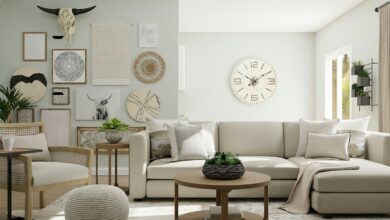
The 60-30-10 rule is a well-established interior design guideline: 60% of the visual space goes to your dominant color (walls and large furniture), 30% goes to secondary colors (textiles, curtains, accent chairs), and 10% goes to accent colors (pillows, art, small decor objects). This balance creates visual interest without making every room feel chaotic or disconnected. A neutral wall color as your dominant 60%, a warm linen or sage green as your 30%, and a dusty terracotta or navy as your 10% accent can carry across a living room and primary bedroom simultaneously. This combination lets each space feel distinct and personal while keeping the whole house visually cohesive.
How to keep rooms connected without making them match
Keep your trim and ceiling color the same throughout the house, because continuous white or off-white trim is one of the strongest visual threads tying rooms together. Match your metal finishes across fixtures and hardware so the home feels intentional rather than assembled by accident. And keep your undertones aligned: if your base colors run warm, your accent pieces should run warm too. Mixing warm and cool undertones across rooms is the fastest way to make a house feel disjointed, even when you can’t quite identify why it feels off.
Decor items that deliver the biggest visual payoff
Furniture gets most of the attention in a first-home budget, but it’s the layering pieces that actually make a room feel finished. Rugs, lighting, art, and bedding are the four categories that consistently deliver the highest visual impact for the money. As home decorating ideas for new homeowners go, these layering pieces tend to be far more transformative, dollar for dollar, than additional furniture purchases.
Why an area rug is the most powerful purchase in any room
An area rug does three things at once: it grounds the furniture arrangement, adds color and texture, and makes a room feel complete in a way that no single furniture piece can match. The most common sizing mistake is going too small. A rug that doesn’t extend under the front legs of your sofa or reach far enough around your bed makes a room feel smaller and cheaper, even if the rug itself is high quality. The living room and primary bedroom are the best places to invest in a quality rug first. In most cases, even a budget option from a mass retailer adds more visual cohesion than no rug at all.

Lighting and wall art as the fastest room transformers
Swapping a builder-grade ceiling fixture for a statement pendant or adding layered lamps changes the mood of a room more dramatically than most people expect. Lighting is one of the easiest upgrades to overlook and one of the fastest to actually feel once it’s in place. Art follows the same logic: affordable prints, downloadable artwork, or even fabric stretched over a frame can make blank walls feel intentional and personal for very little money. Think of rugs, lighting, and art as the first layer you add after anchor furniture is in place, and your rooms will go from bare to finished faster than you’d expect.
Where to spend more and where to save smartly
The splurge-versus-save question trips up a lot of people decorating their first home. Some underspend on pieces they’ll regret within a year, and others waste money on decorative items that could have been budget options without anyone ever noticing the difference. Knowing which category each item falls into before you shop is what separates a smart decorating budget from a scattered one. These home decor ideas for first-time homeowners on a budget work best when you’re strategic about where every dollar goes.
The pieces worth a bigger investment
Three items stand out as worth spending more on: your mattress, your sofa, and a quality area rug for the living room. These get daily use, they’re difficult to replace cheaply without sacrificing quality, and they define the functional and visual tone of their entire room. Think of it as “spend here once, not again for years” rather than “spend here to impress.” A well-chosen sofa should realistically last a decade or more with proper care, making a higher upfront cost far more economical over time than a budget piece you’ll need to replace in three years.
The categories where budget options genuinely win
Accent pillows, throws, side tables, decorative trays, wall art, and seasonal decor are all categories where affordable options are nearly indistinguishable from premium ones in everyday use. The core strategy for a starter home is mixing one investment piece in a room with several budget accessories layered around it. Thrift stores, secondhand apps, and end-of-season sales are reliable sourcing strategies for these accent categories. A $200 sofa cushion isn’t doing anything a $20 one from a discount retailer can’t do just as well when it’s the fifth pillow on a thoughtfully chosen couch.
Easy weekend projects that make a new house feel like yours
Reading about home decor ideas for first-time homeowners is one thing. Actually doing something about it this weekend is another. These projects are beginner-friendly, require no specialized skills, and many cost under $20 to $30. They’re also the kinds of changes that shift a room from “we just moved in” to “we actually live here” in a single afternoon.
Low-effort decor upgrades anyone can finish in an afternoon
The fastest, lowest-barrier wins for a new home include peel-and-stick wallpaper on a single accent wall or inside a bookcase, swapping generic cabinet hardware for pulls or knobs that match the room’s palette, layering throw pillows and a textured blanket on the sofa to make it look styled, and arranging a simple gallery wall using Command strips and printable art. Most of these require only minimal tools, a measuring tape and a screwdriver for any hardware swaps, and each one delivers a noticeable shift in how the room feels. Styling an existing piece of furniture with layered textiles is the single fastest way to make a room feel intentional after move-in.
Simple DIY projects for the first month
Once you’re past the first weekend, a few slightly more involved projects are still well within beginner territory. Painting one accent wall takes an afternoon and delivers a room transformation that punches well above its price tag. Refreshing a thrifted lamp or small side table with spray paint can save a piece that would have cost three times as much new. Creating a decorative tray arrangement on a coffee table, a small plant, a candle, and a few stacked books, takes about fifteen minutes and makes the whole room look styled. A basic gallery wall combining personal photos with affordable art prints rounds out the first month beautifully and costs less than most people expect. Most of these easy home decor projects for beginners can be completed for well under $30 and require nothing more than a paintbrush, a hammer, and an afternoon.
Make it yours, one smart decision at a time
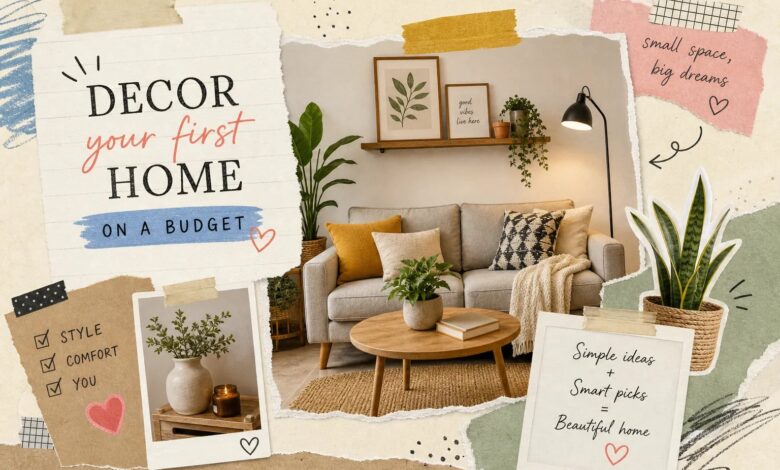
Decorating a first home isn’t about finishing everything at once. It’s about making smart, sequenced decisions that build toward a space that feels cohesive, livable, and genuinely yours. Anchor the rooms you use every day, lock in a color strategy before you buy anything substantial, invest where the daily use justifies it, and layer in personality through rugs, lighting, art, and simple weekend projects.
The best home decor ideas for first-time homeowners aren’t about spending the most, they’re about spending in the right order. The framework here gives you a solid foundation, but each room in your home deserves its own deeper treatment once you’re ready for it. Aesthetic Nest Decor’s room-by-room guides go further on every space, from the entryway and kitchen to the bedroom and beyond. As you tackle each room in sequence, those guides are worth returning to at every stage of the process. Your home will come together one good decision at a time, and that’s exactly how it should.