

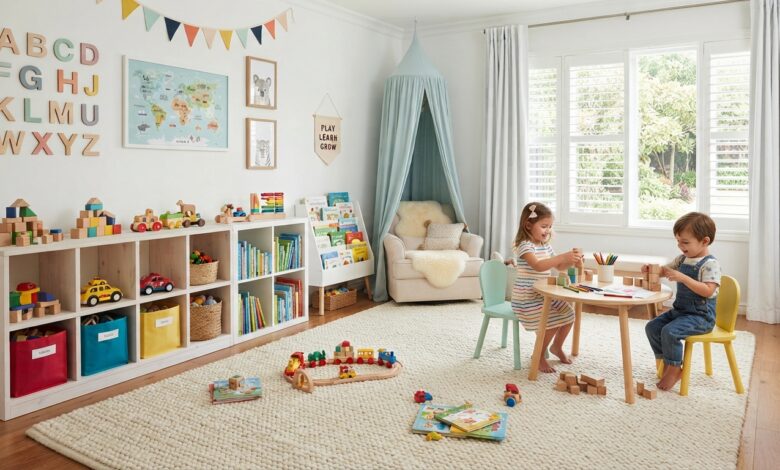
A kids playroom works best when it looks good enough to live with and holds up to the chaos of actual play. Getting that balance right comes down to smart storage, durable materials, and decor that feels intentional rather than overwhelming. Here’s how to style a playroom that stays functional and still looks pulled together. This guide covers kids playroom decor ideas step by step, with practical tips and product picks.
As an Amazon Associate I earn from qualifying purchases. Some links in this post are affiliate links, at no extra cost to you.
1. Choose Storage That Kids Can Actually Use
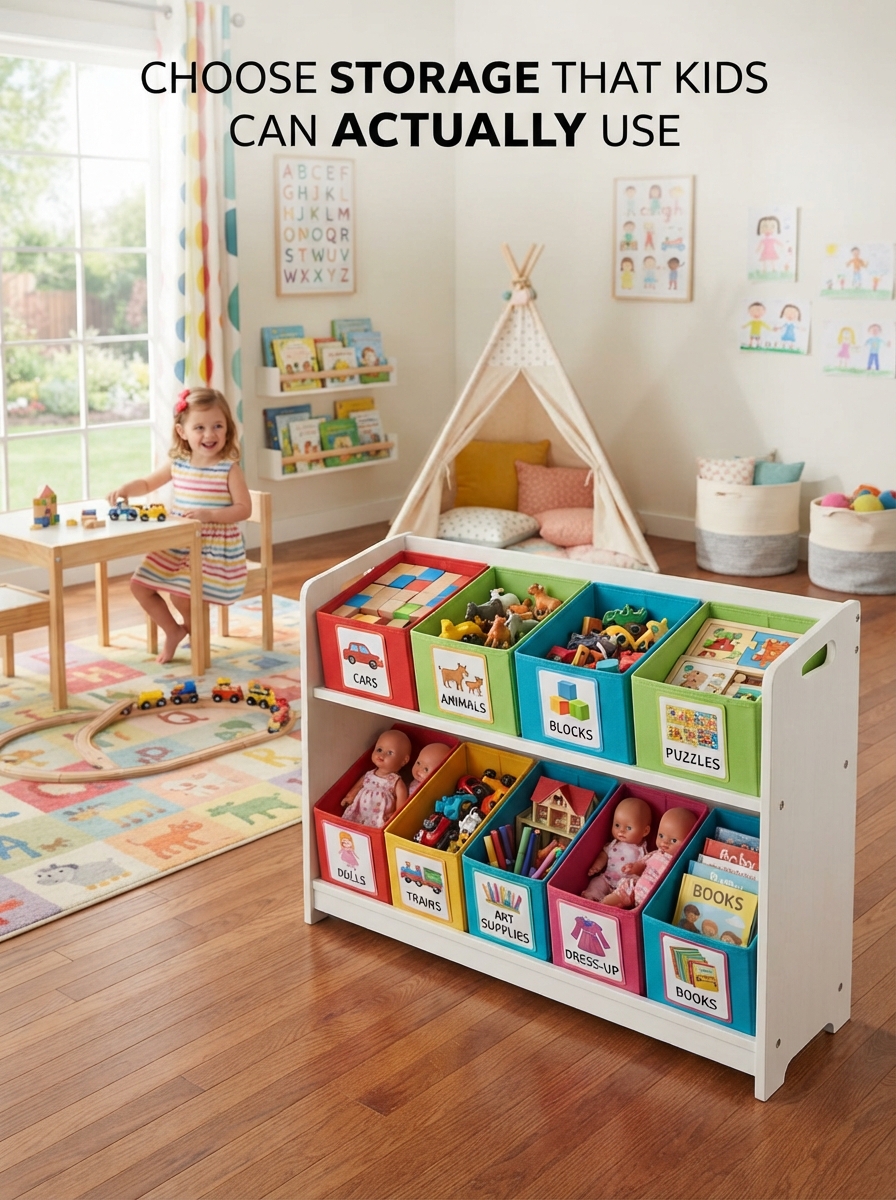
Low, open bins and shelves at a child’s height make cleanup genuinely achievable, since a toddler or young child can’t be expected to put things away on a shelf they can’t reach. Labeled bins — with pictures for pre-readers or words for older kids — turn cleanup into a sortable game rather than a vague instruction to “clean up,” and open bins are faster for both loading and unloading than anything with a lid or door.
Sorting the toy chaos?
Bins, low shelving and labelled storage for playrooms.
2. Anchor the Room With a Soft Rug
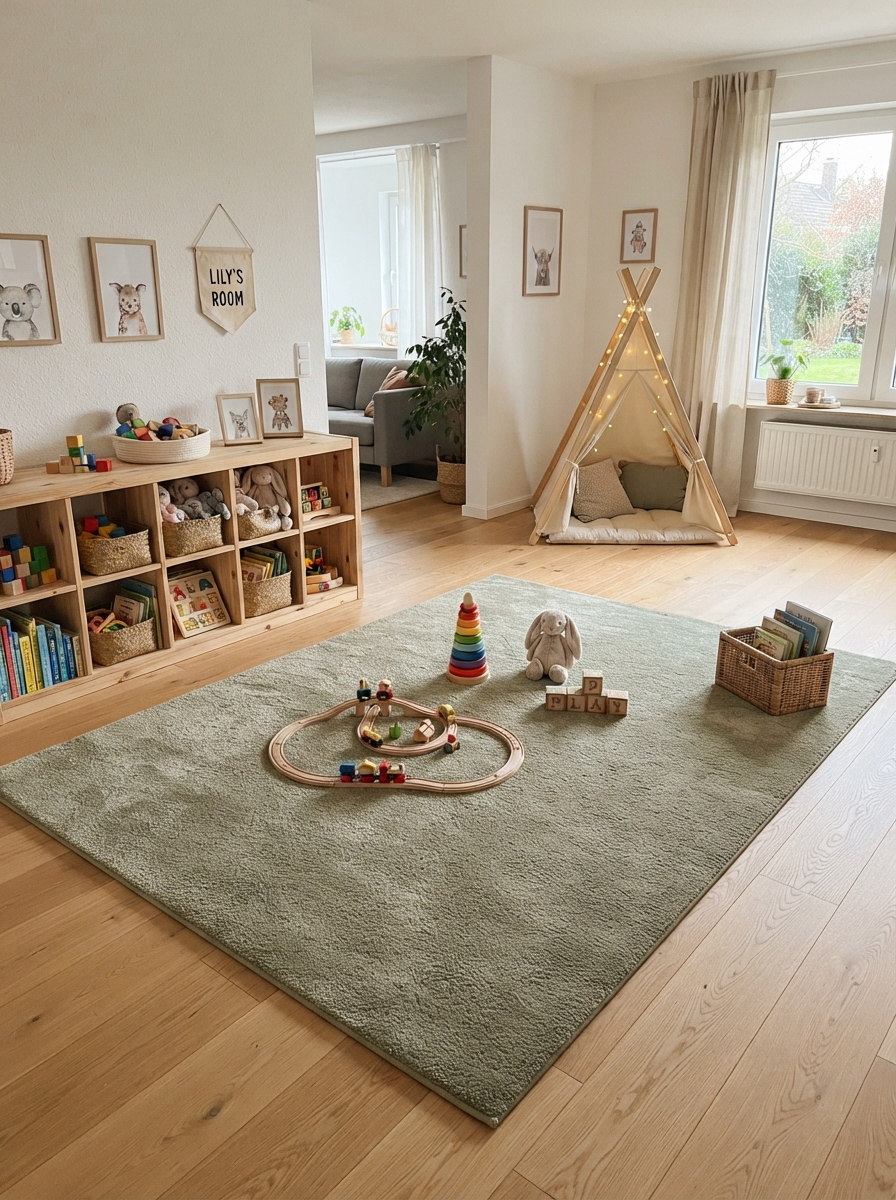
A large, plush rug gives kids a defined, comfortable spot for floor play and protects a hard floor from the daily wear of blocks, cars, and dropped toys. Choose a low-pile, stain-resistant style over a shag or high-pile rug, since a flatter weave is both easier to clean and safer for kids building or racing toys across it.
3. Add a Reading Corner
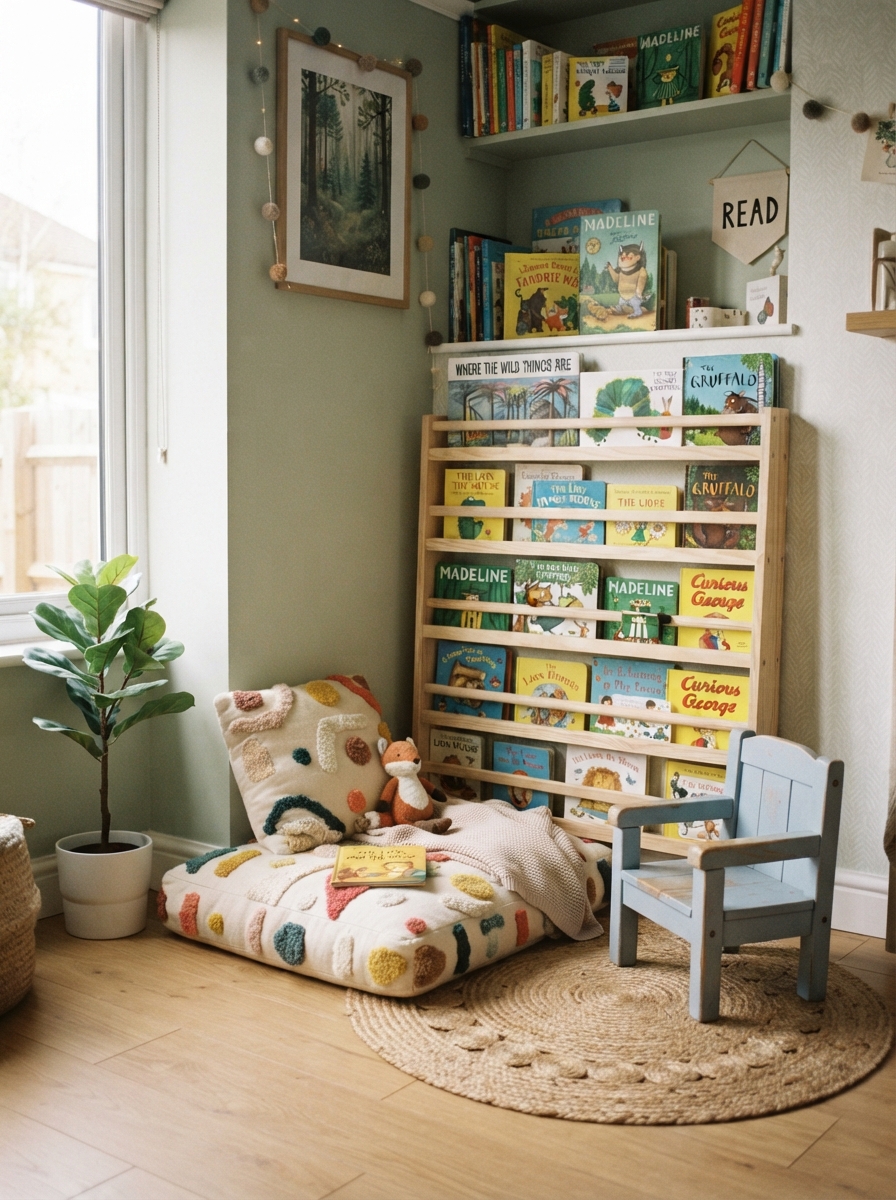
A small bookshelf paired with a floor cushion, bean bag, or mini chair creates a calmer alternative to the more active zones of the room. Facing book covers outward on a front-facing shelf, rather than shelving them spine-out, helps young children choose books independently and adds a colorful, gallery-like visual element to the wall.
4. Use a Table Scaled to Kid Size
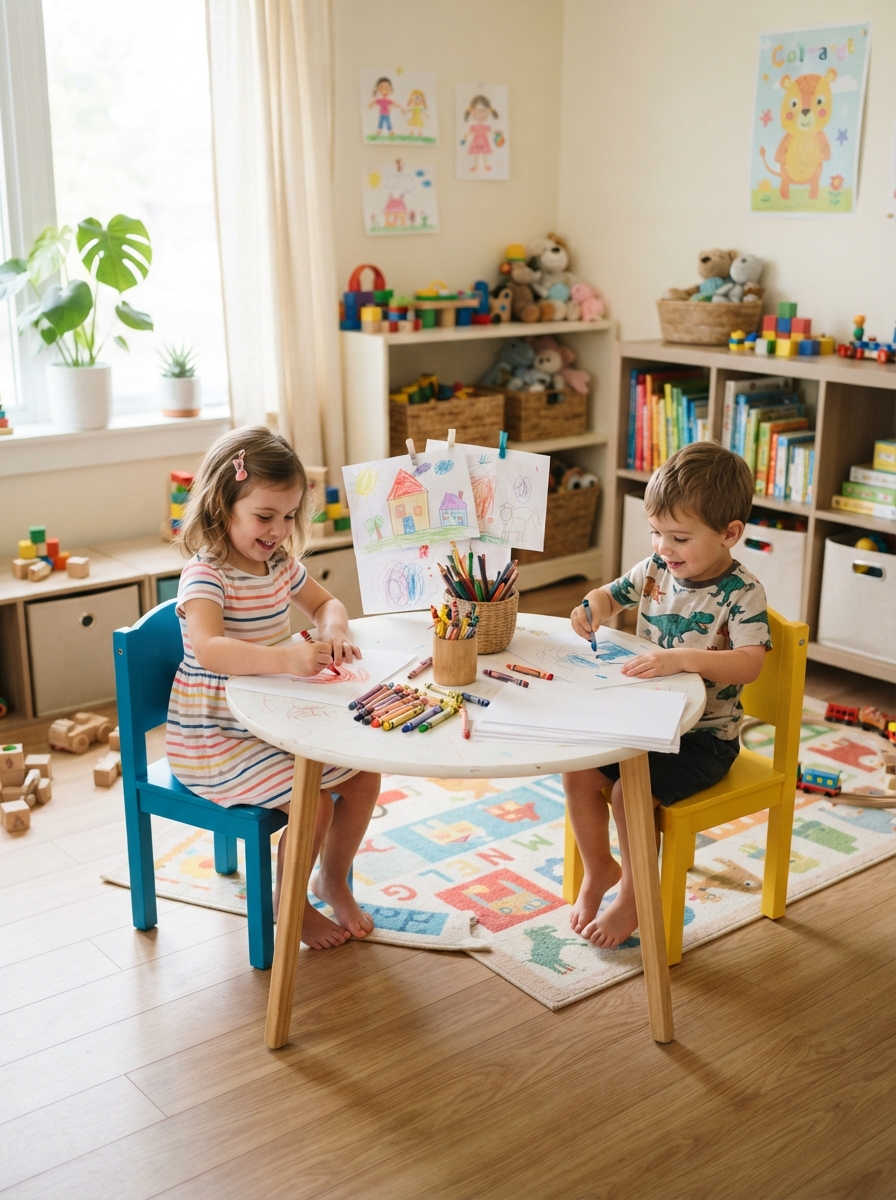
A low table paired with two or three small chairs gives kids a dedicated surface for coloring, building, or snack time that isn’t the family dining table. A table with a wipeable surface — laminate or a sealed wood finish — holds up far better than raw wood or fabric-topped furniture to markers, glue, and spilled juice.
5. Bring in Color Without Overwhelming the Room
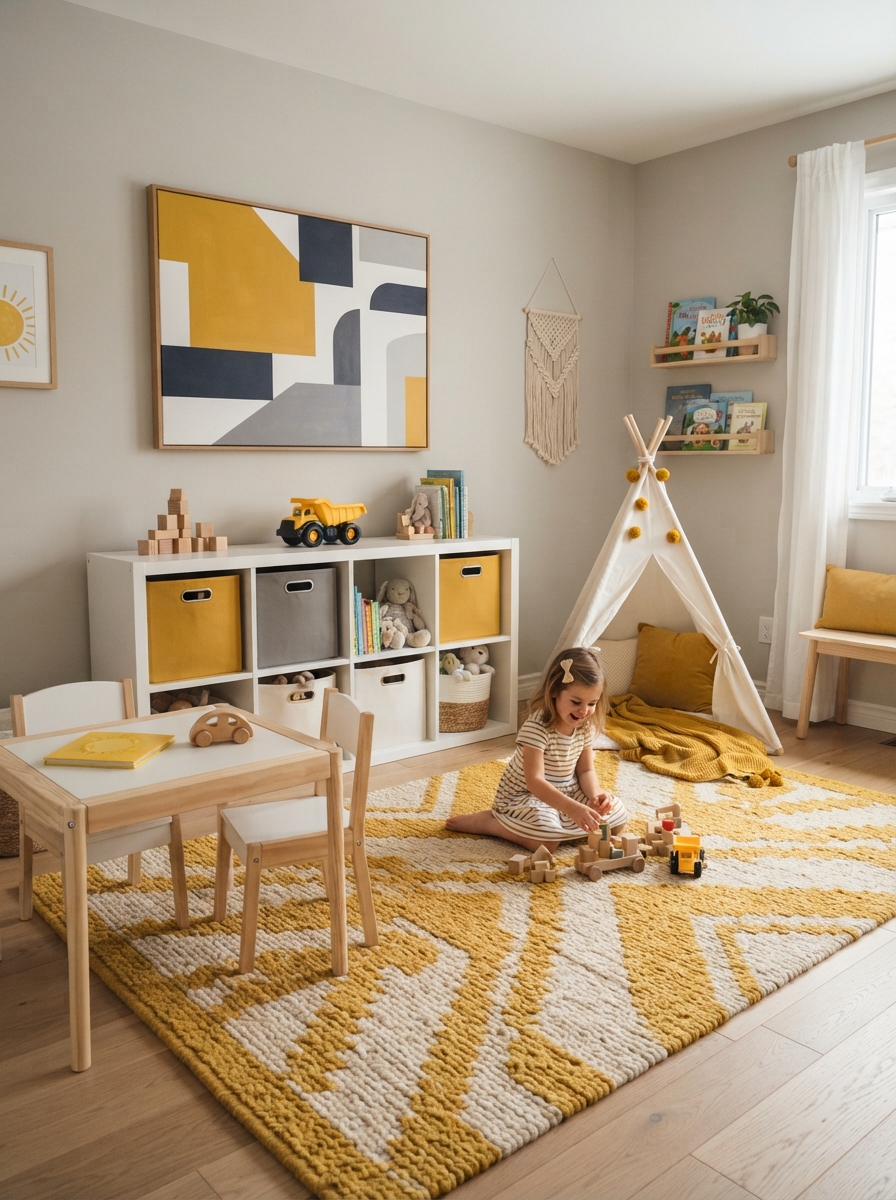
Playrooms can handle more color and pattern than most other rooms in the house, but grounding the bold choices against a neutral wall or floor keeps the space from feeling chaotic. Choosing one or two accent colors and repeating them across a few key pieces — a rug, a set of bins, a piece of wall art — reads as considered rather than a random assortment of primary-colored toys taking over the whole room.
6. Display Art and Creations on the Wall
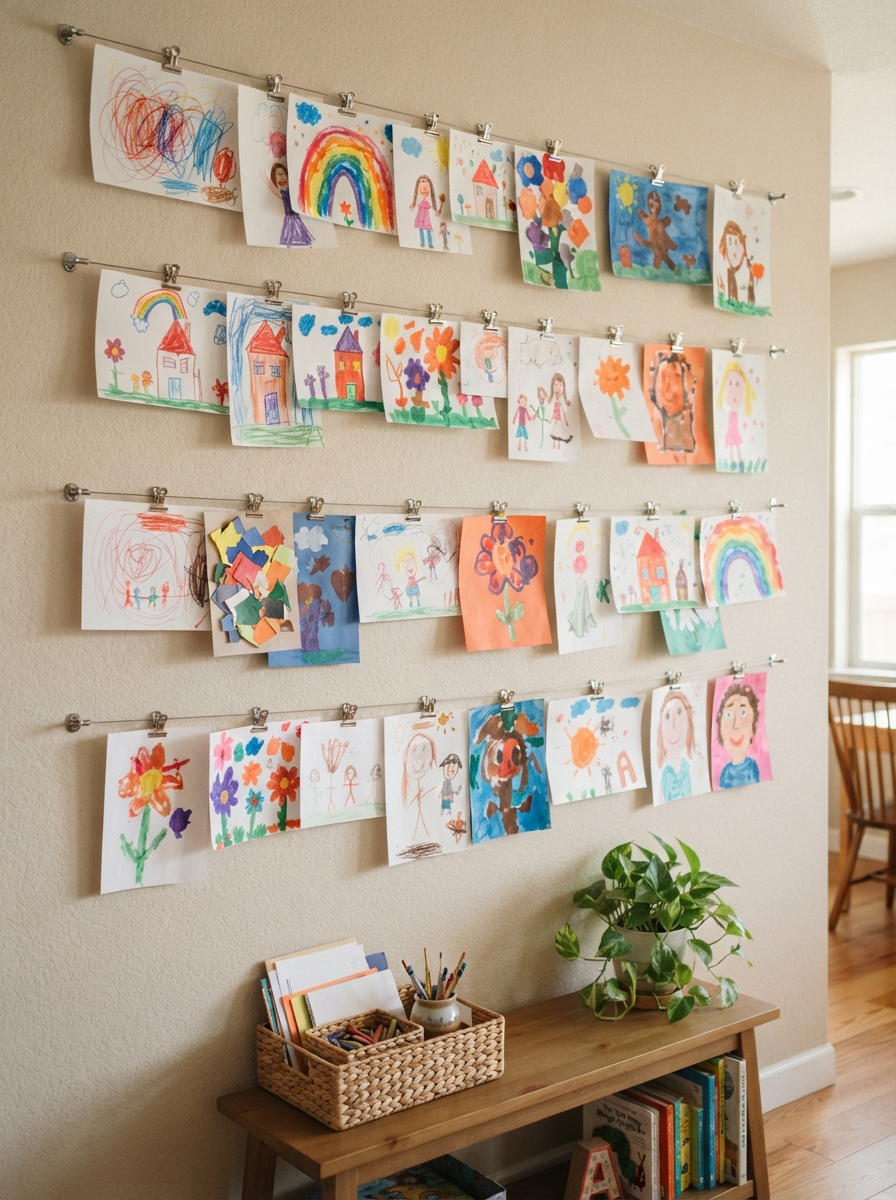
A dedicated spot for displaying a child’s own artwork — a wire and clip display, a cork board, or a simple picture ledge — gives their creative work a proper place instead of letting it pile up on the fridge or a counter. Rotating the displayed pieces every week or two keeps the wall feeling fresh and gives kids a sense of ownership over the room’s decor.
7. Keep a Toy Rotation System
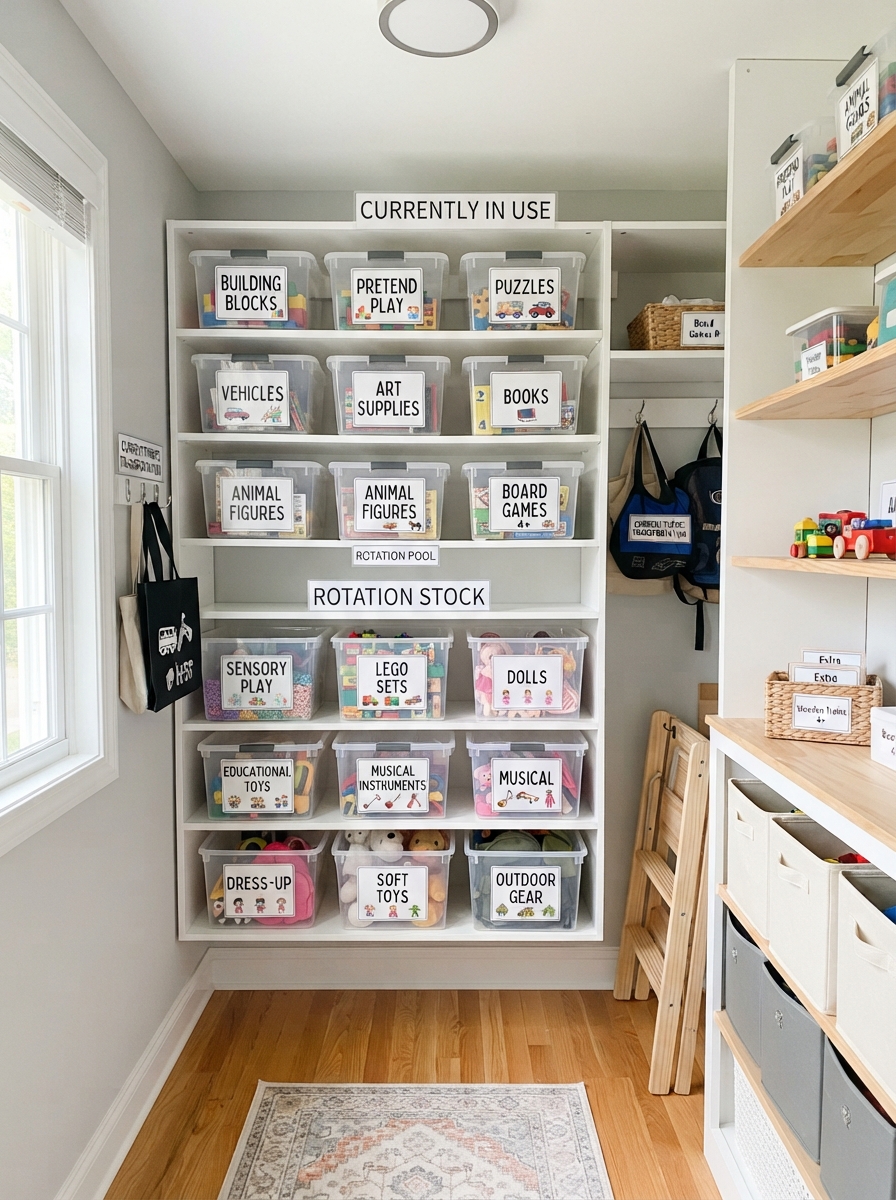
Storing a portion of the toy collection out of sight — in a closet or garage bin — and rotating it in every few weeks keeps the playroom from feeling perpetually overstuffed. A smaller, rotating selection of toys actually gets played with more attentively than an overwhelming full collection left out all at once, and it makes the room easier to keep tidy day to day.
Playroom Ideas by Age
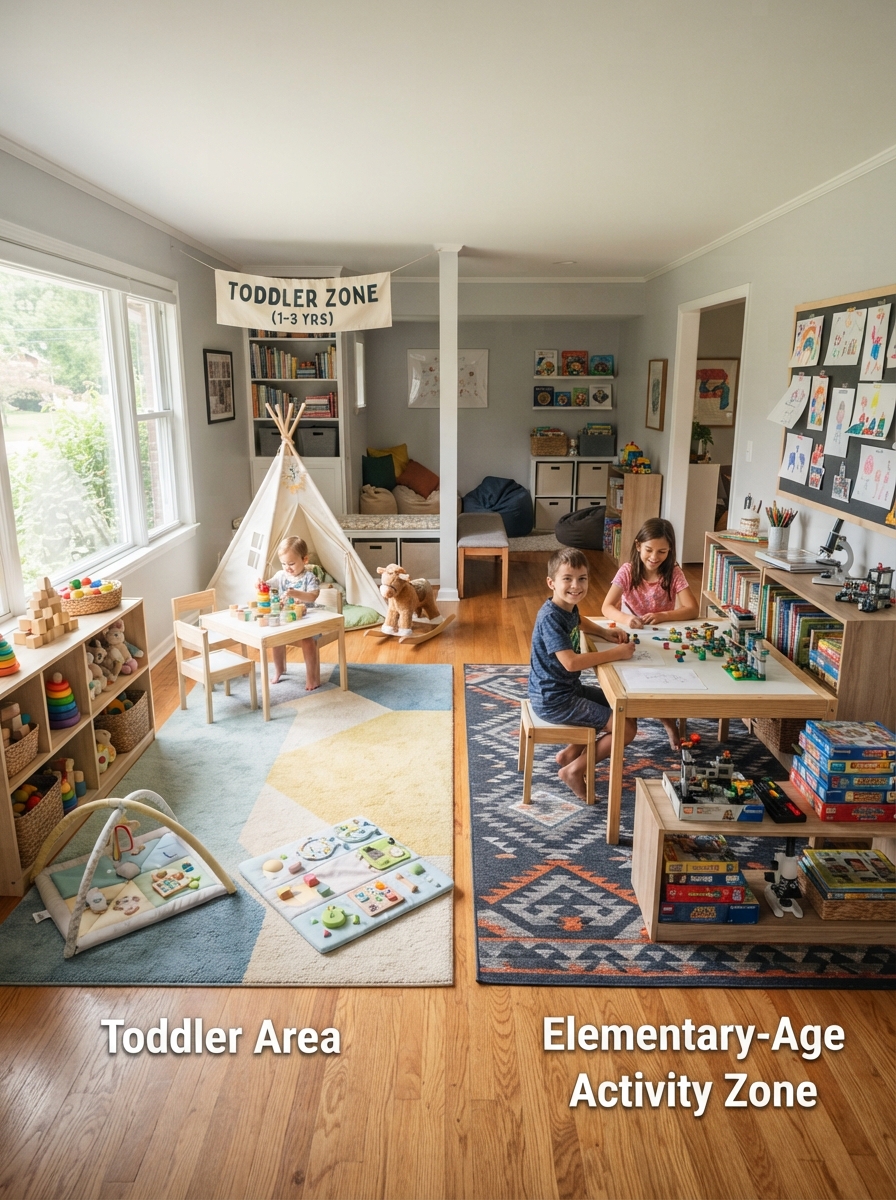
Toddlers
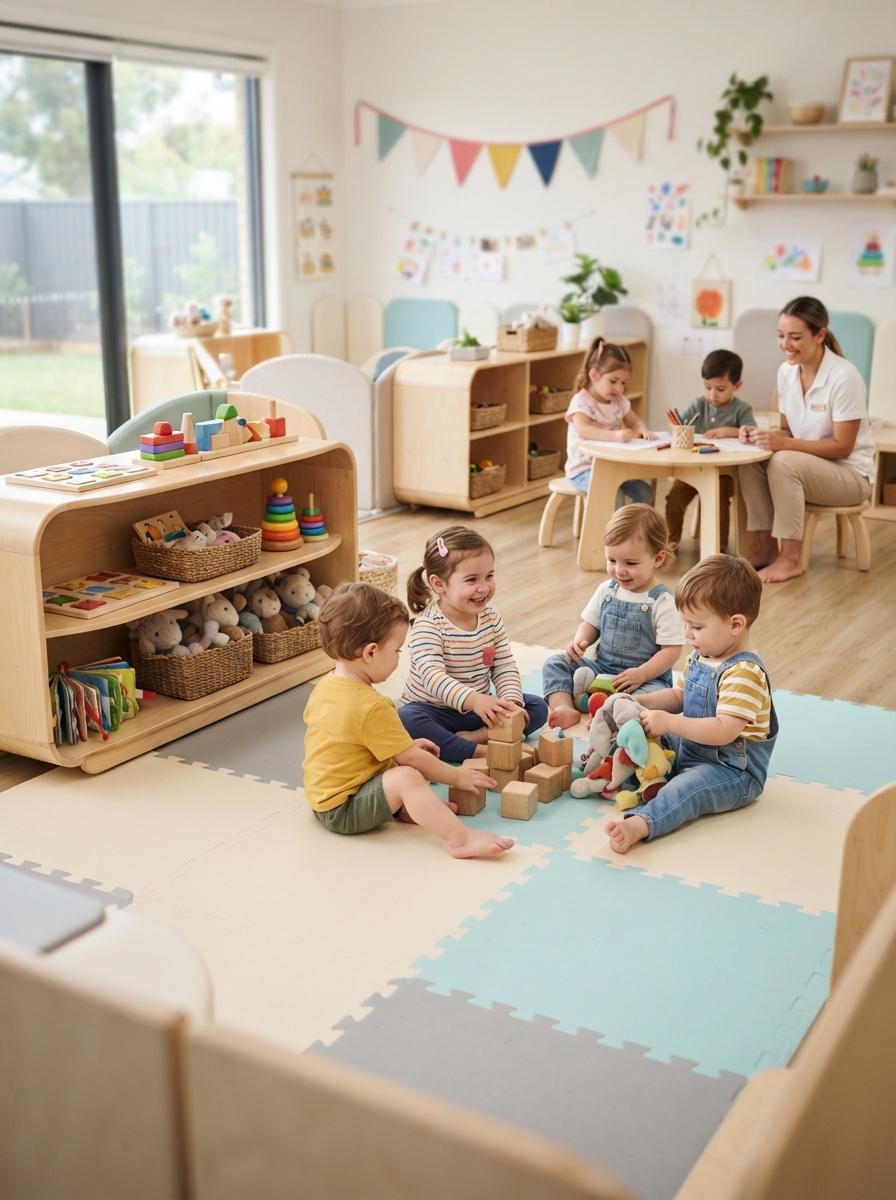
A toddler playroom benefits most from soft flooring, rounded-edge furniture, and very low, open storage, since independence at this age means being able to reach and put away toys without help. Keeping small parts and choking hazards in higher, closed storage while leaving larger toys accessible on low shelves balances safety with independent play.
Elementary Age
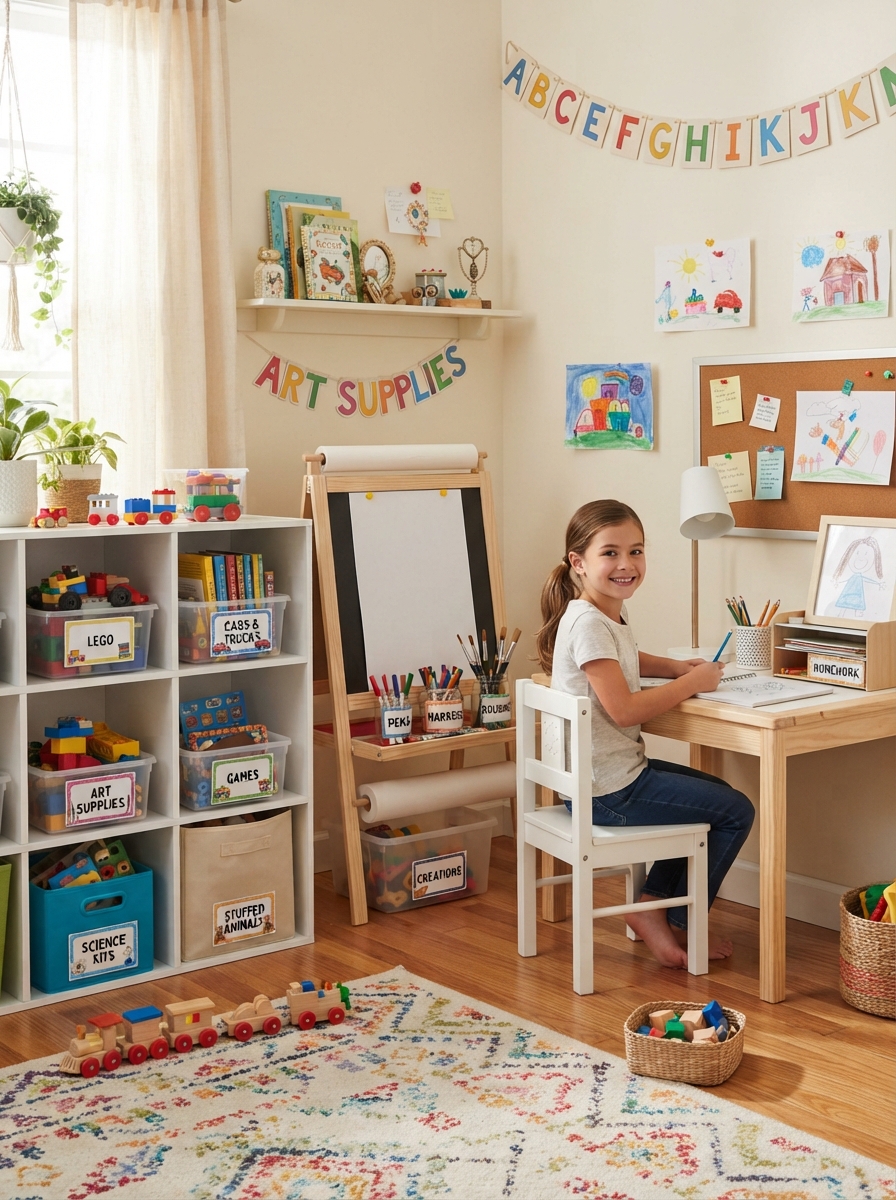
Kids in this range can handle more organized systems — labeled bins by category, a dedicated art supply station, a small desk for homework or drawing. This is also the age where displaying their own creative work becomes more meaningful, since school-age kids take real pride in seeing their art or projects on display.
Shared Sibling Playroom
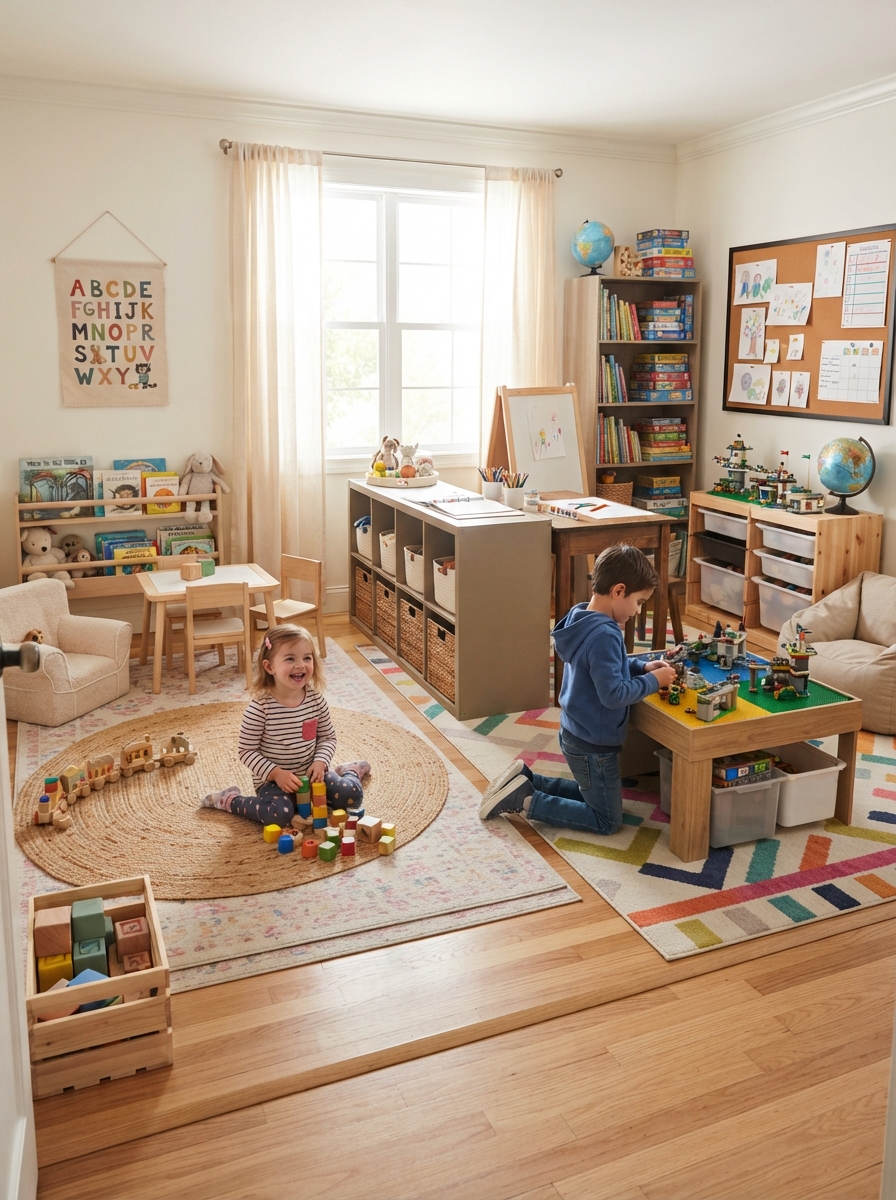
A playroom shared by kids of different ages works best when it’s zoned — a lower, simpler area for a younger child and a slightly more complex activity zone for an older one, ideally on opposite sides of the room to reduce toy conflicts. Storage labeled by owner, not just by toy type, can also cut down on disputes over whose bin is whose.
Small Playroom or Shared Space
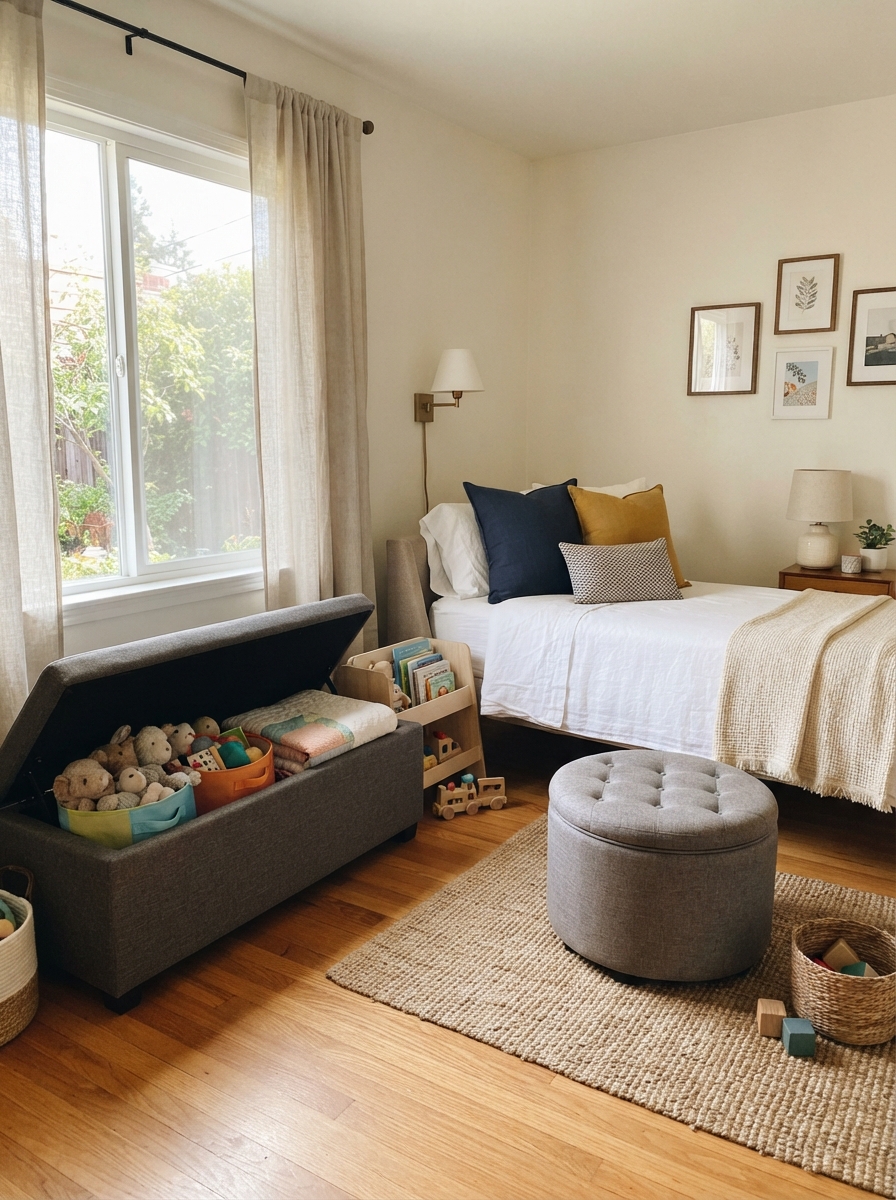
A playroom that doubles as a guest room or a corner of a living room needs storage that closes — bins with lids, a storage ottoman, a bench with a lift-up seat — so the space can transition to its other function without a full toy cleanup event. Furniture on wheels also helps a dual-purpose room reconfigure quickly between play mode and its other use.
Choosing Durable Materials for a Playroom
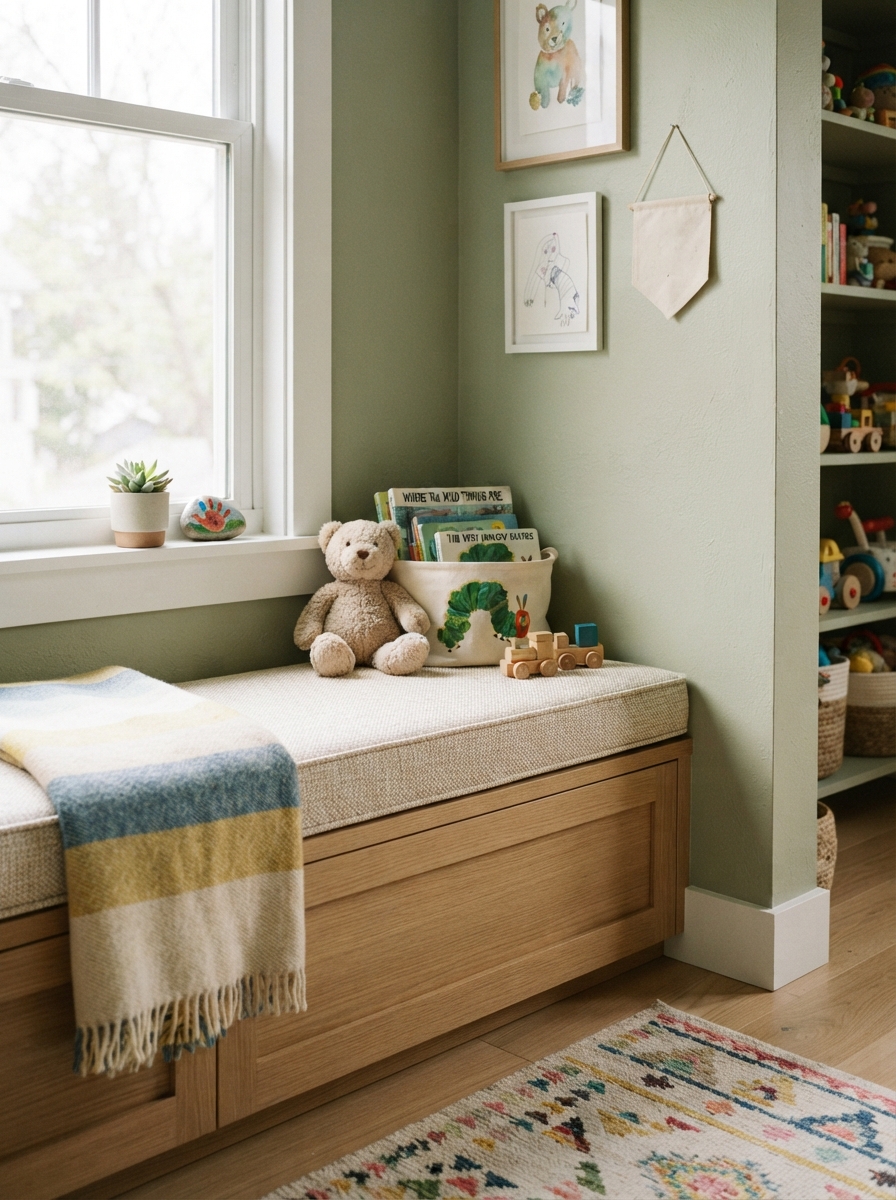
Playroom furniture and surfaces take more daily abuse than almost anywhere else in the home, so material choices matter more here than pure style. Performance fabrics or leather-look vinyl on any upholstered seating hold up to spills far better than delicate natural fabrics. A washable paint finish on walls — many brands now offer scrubbable matte options — means marker and crayon marks wipe away instead of becoming permanent. Solid wood or laminate furniture outlasts particleboard pieces under the rougher handling a playroom naturally invites.
Lighting a Playroom for Both Play and Calm
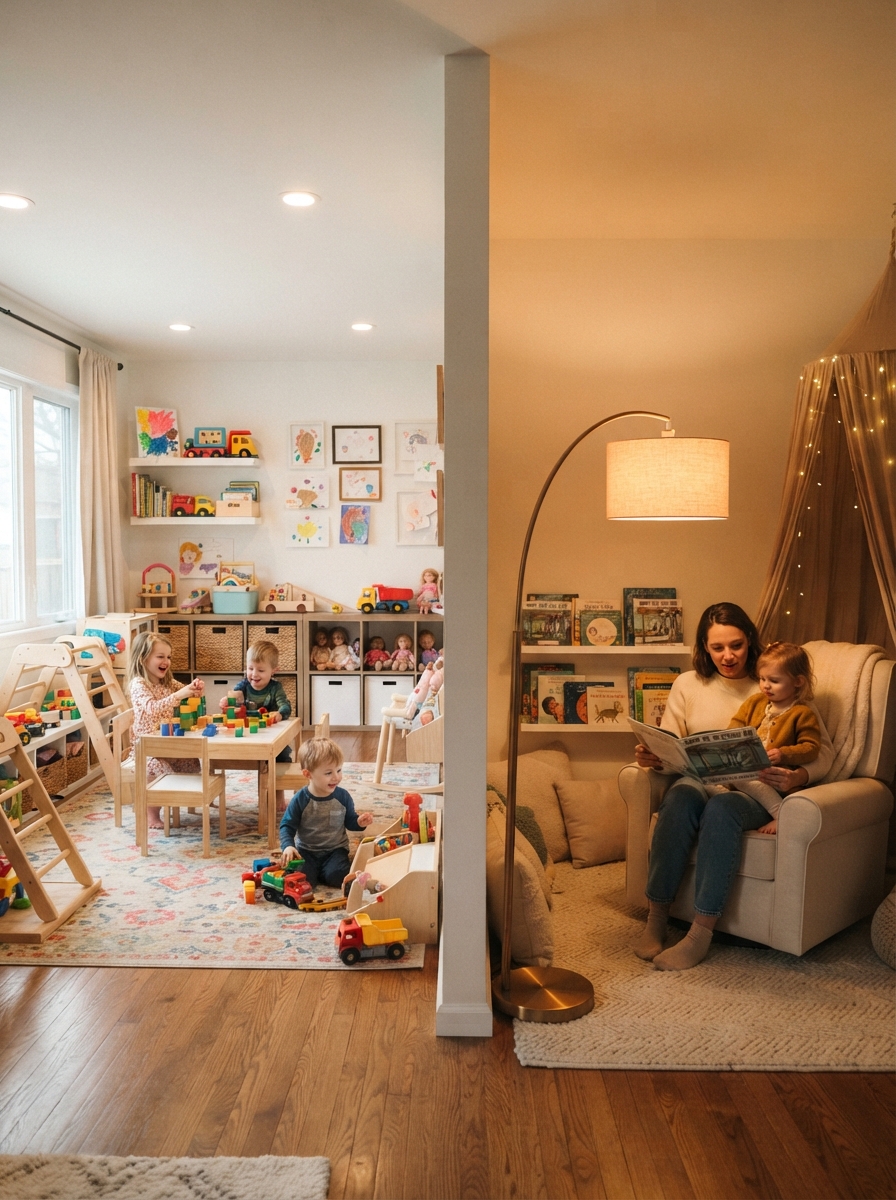
A playroom benefits from layered lighting more than a single overhead fixture can provide on its own. Bright, even overhead light supports active play and craft time, while a floor lamp or table lamp near the reading corner creates a softer option for winding down. Avoiding harsh, cool-toned bulbs throughout the whole room helps the space feel warm rather than clinical, even during the most energetic play sessions.
Creating Zones Within an Open Playroom
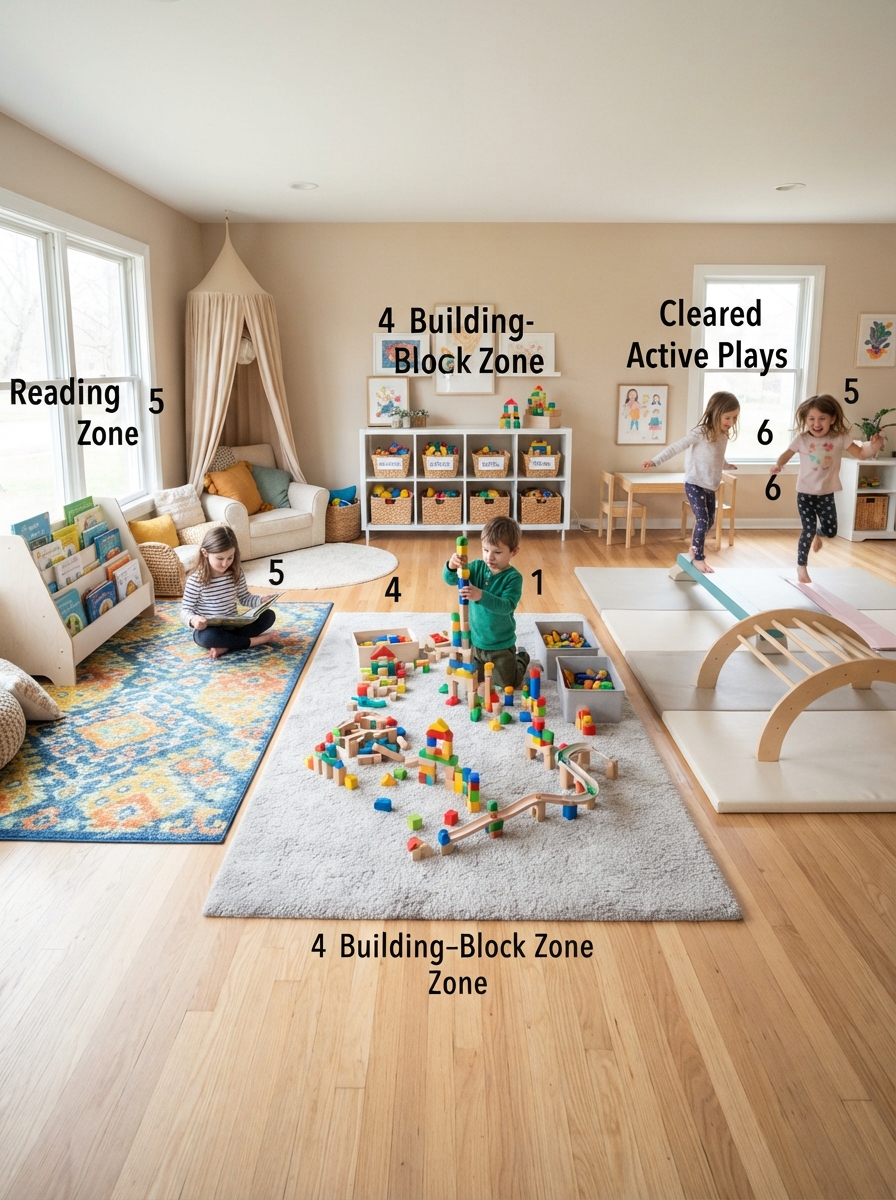
Even a single open room can feel organized when it’s broken into distinct activity zones rather than left as one undefined play area. A rug under the reading corner, a different rug or floor mat under a building-block zone, and a cleared section for active or imaginative play all help kids intuitively understand what happens where. This kind of zoning also makes cleanup more manageable, since toys have an obvious “home” zone to return to rather than a single catch-all floor.
Budget-Friendly Playroom Styling
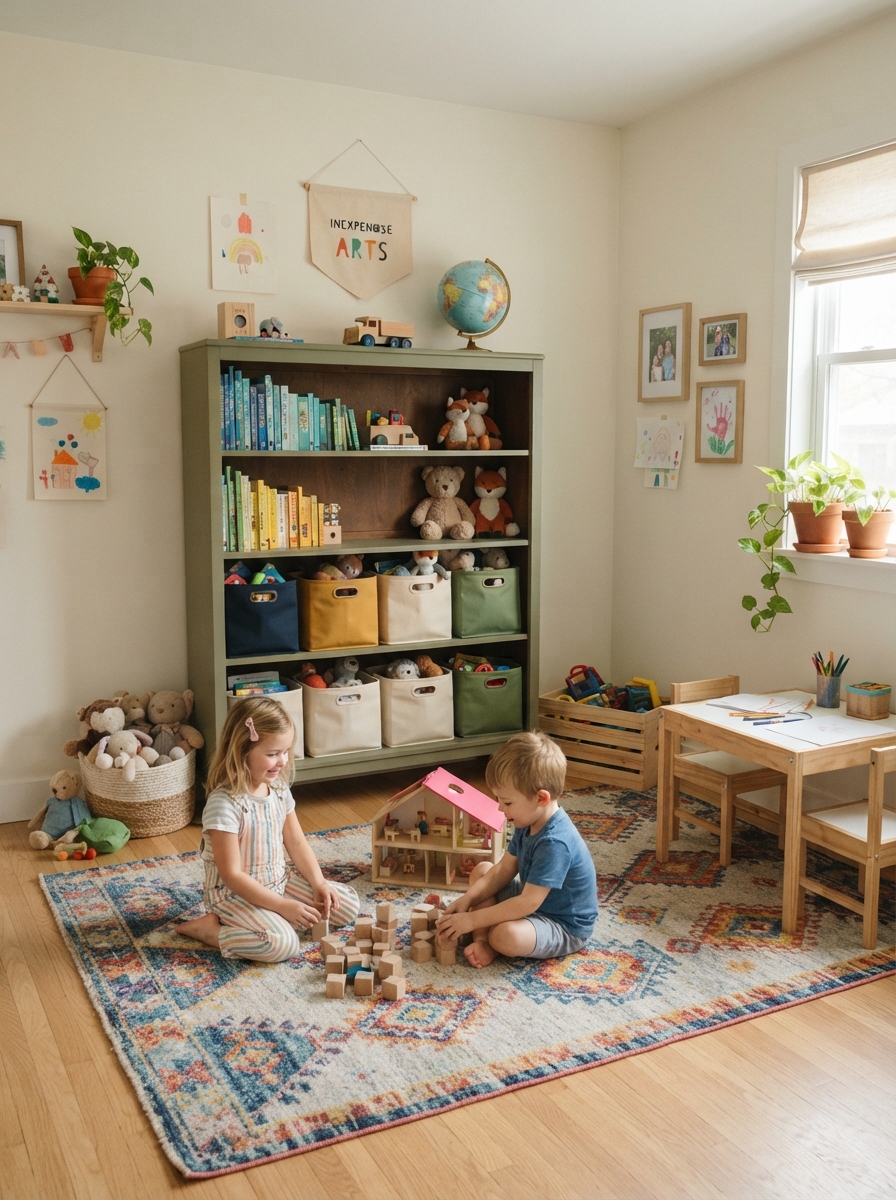
A well-styled playroom doesn’t require an expensive renovation or brand-new furniture set. Secondhand bookshelves and storage cubbies, repainted in a single cohesive color, can match a new furniture set for a fraction of the cost. Fabric bins from a budget retailer sort just as effectively as designer versions. A large remnant rug from a flooring store often costs far less than a retail area rug of the same size. And a simple gallery wall of a child‘s own artwork costs nothing beyond a few frames or clips, while adding more genuine personality than store-bought art ever could.
Involving Kids in the Playroom’s Design
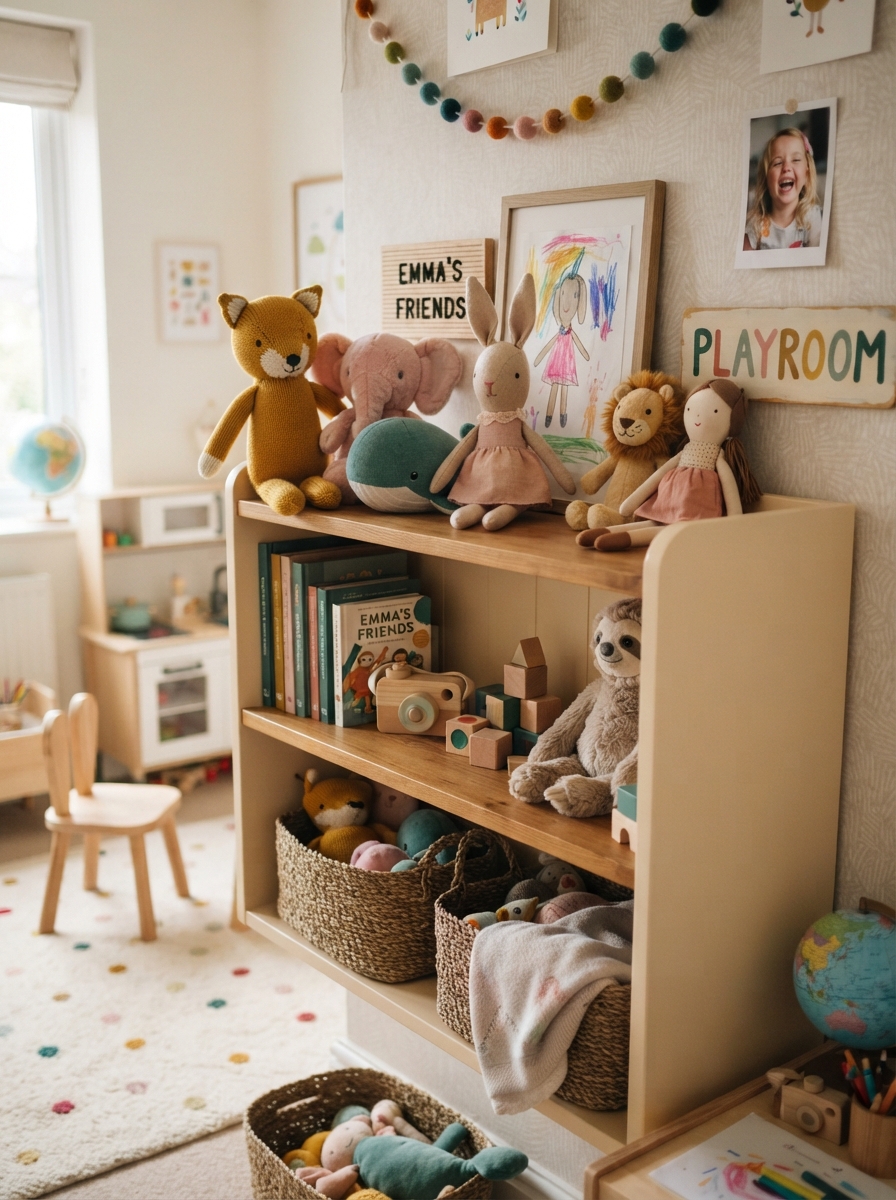
A playroom that kids helped shape tends to get used and respected more than one that was decorated entirely without their input. Letting a child choose the accent color, pick which stuffed animals get a designated shelf, or decide where their reading corner goes gives them a stake in keeping the space organized. Even young children can meaningfully weigh in on small decisions, like which bin label goes with which toy category, which builds both their investment in the room and their own organizational skills over time.
Safety Considerations Behind the Styling
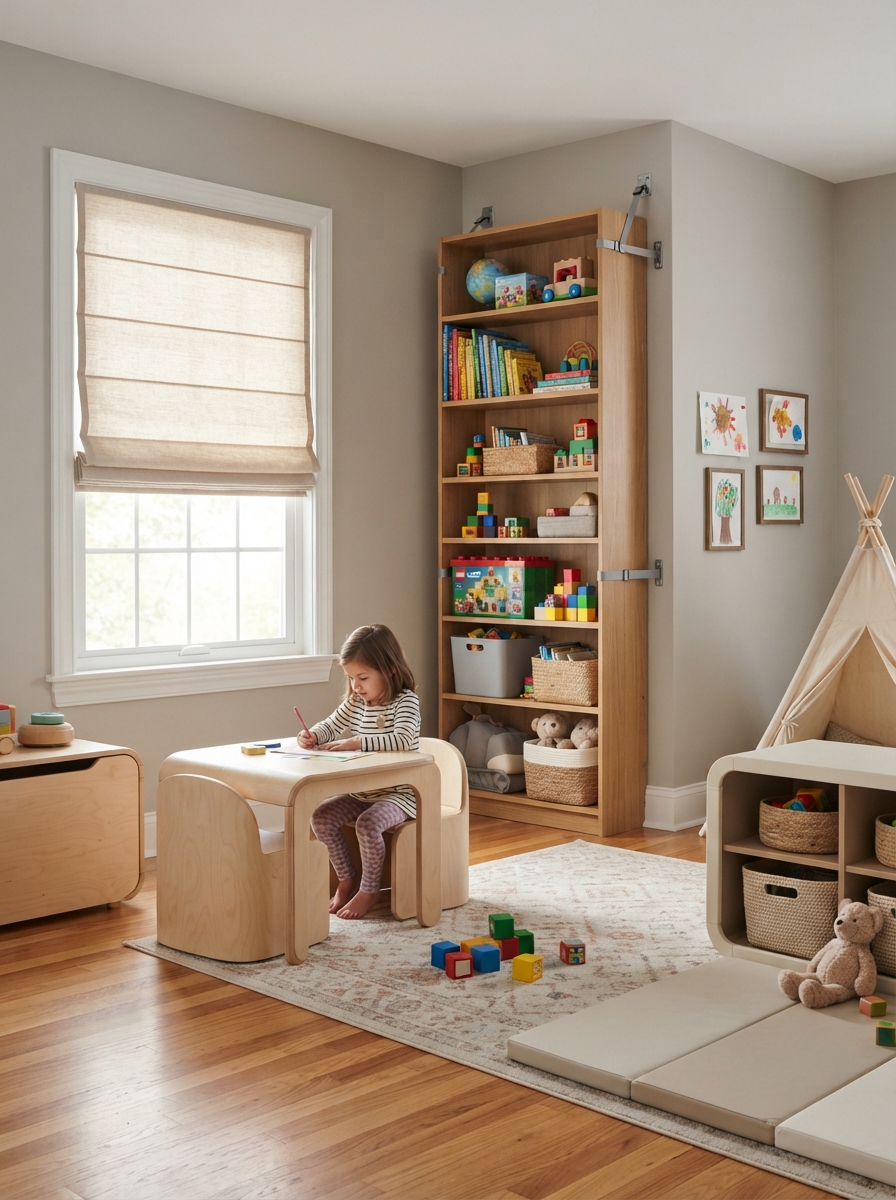
Every decor choice in a playroom should hold up to a basic safety check before it earns a spot in the room. Anchoring any tall bookshelf or storage unit to the wall prevents tipping, which matters even more in a room designed to encourage climbing and active play. Rounded-edge furniture reduces injury risk during the inevitable collisions of active play, and cord-free window treatments remove a hazard that’s easy to overlook in an otherwise well-styled room. None of these choices need to compromise on style — anchoring hardware and corner guards are available in finishes that blend into the furniture rather than standing out.
Seasonal and Holiday Playroom Refreshes
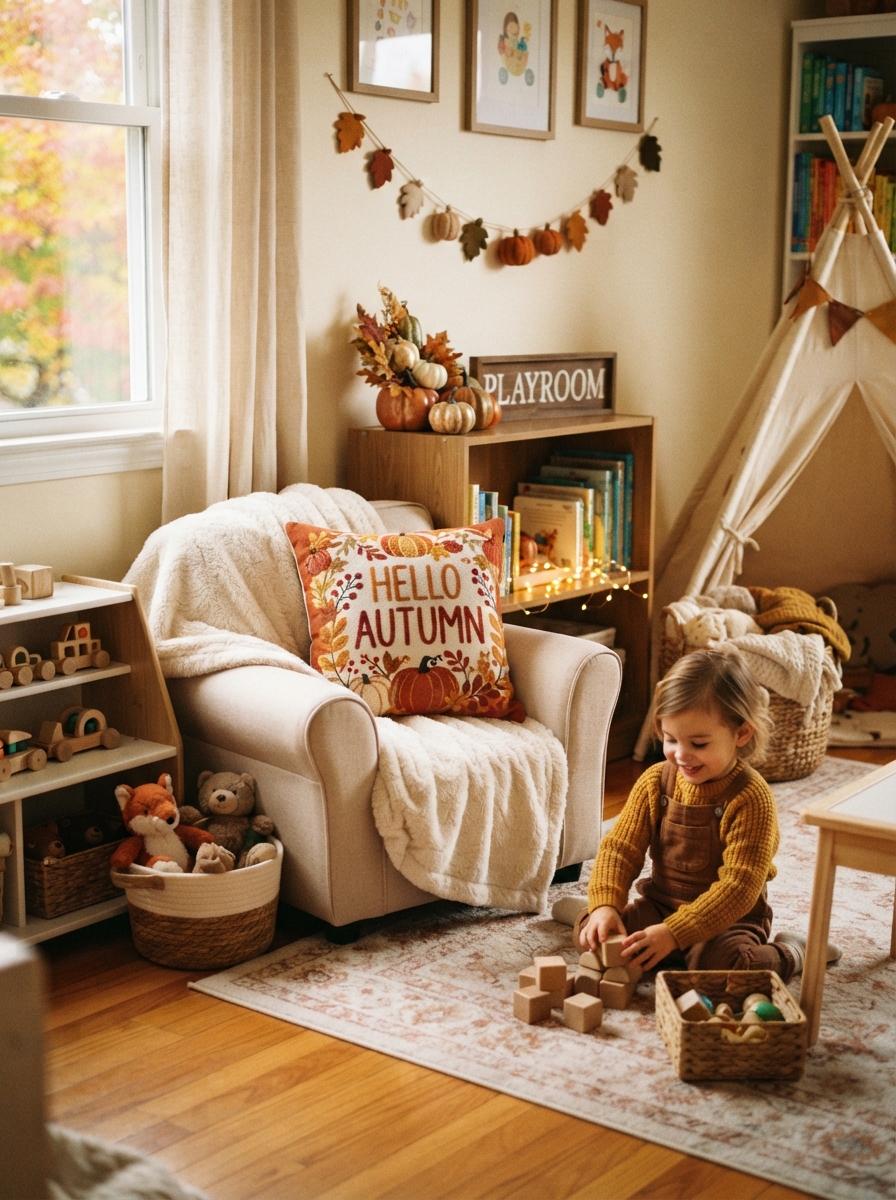
A playroom can absorb seasonal decorating in smaller, more playful ways than the rest of the house. A rotating seasonal bin — a few themed toys, a small decoration, a stack of holiday-appropriate books — lets the room shift with the calendar without a full redecoration. Swapping a single throw pillow or a piece of displayed art for a seasonal version keeps the room feeling current while leaving the core storage and furniture systems untouched. Involving kids in choosing the seasonal additions also turns the refresh itself into a fun, low-stakes activity rather than a chore handled entirely by a parent.
Playroom shopping list
- Kids toy storage bins — open bins beat lidded boxes
- Kids table and chairs — scaled to child height
- Washable playroom rug — defines the floor play zone
- Kids bookshelf — front facing so covers show
- Cork board — for displaying artwork
- Furniture anchor straps — non negotiable for tall units
Prices and availability change. Links open on Amazon.
Common Playroom Styling Mistakes to Avoid
A few habits undercut an otherwise well-planned playroom. Choosing storage that’s too high or too complex for a child to use independently defeats the purpose of giving kids their own space to manage. Keeping every single toy out at once, rather than rotating the collection, overwhelms both the room’s appearance and a child’s ability to focus on any one thing. Skipping durable, washable materials in favor of purely decorative fabric or finishes leads to a room that shows wear within months. And leaving the room without any defined zones can make even a well-stocked playroom feel like a disorganized toy dump rather than an intentional space. If you want to go further, high-end looks for less that look like the real thing covers it in detail.
Making a Playroom Grow With Your Kids
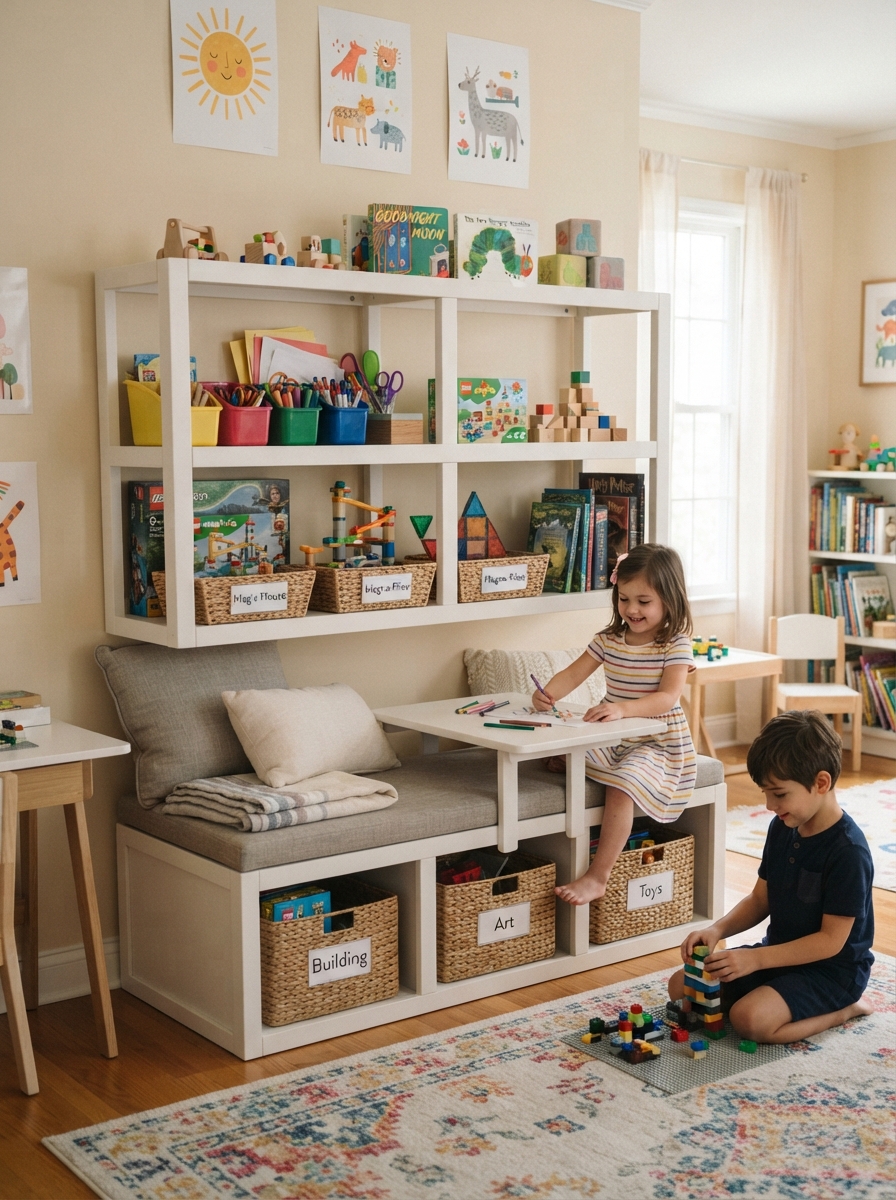
A playroom rarely needs a full redesign as kids age — it more often needs its furniture and storage adjusted to match new stages. A low table that suited toddler play can be swapped for a slightly taller desk once a child starts school, while the same open shelving can shift from holding board books to housing craft supplies or a growing collection of building sets. Choosing a few foundational, style-neutral pieces early on — a versatile rug, a neutral storage bench, simple shelving — means the room can evolve through several years of changing interests without needing to be rebuilt from scratch each time.
Final Thought
A great kids playroom is judged less by how it photographs and more by how well it survives an actual afternoon of play — accessible storage, durable materials, and a bit of color and personality will always outperform a picture-perfect room that’s too precious for real use. Get the function right first, and the styling will follow naturally.
Frequently Asked Questions
What storage works best for a kids playroom?
Low, open bins and shelves positioned at a child’s height work best, since they let kids put toys away independently rather than requiring adult help for every cleanup.
How do I keep a playroom from looking cluttered?
Rotating toys in and out of sight rather than keeping the full collection out at once, along with grounding bold colors against a neutral wall or floor, keeps a playroom feeling organized rather than overwhelming.
What flooring is best for a playroom?
A low-pile, stain-resistant rug over a hard floor gives kids a comfortable, protected play surface that’s still easy to clean, making it more practical than a high-pile rug or bare hard flooring alone.
How do I organize a playroom for kids of different ages?
Zoning the room by age — a simpler, lower area for a younger child and a slightly more complex zone for an older one — along with labeling storage by owner, helps a shared playroom work for multiple ages at once.
Should I display my kid’s artwork in the playroom?
Yes — a dedicated display spot, like a wire and clip system or a cork board, gives a child’s creative work a proper place and adds genuine, personal decor to the room at no cost.
How often should I rotate toys in a playroom?
Every few weeks works well for most households — it’s frequent enough to keep the room feeling fresh and toys feeling novel, without becoming a constant chore.


4 Comments