

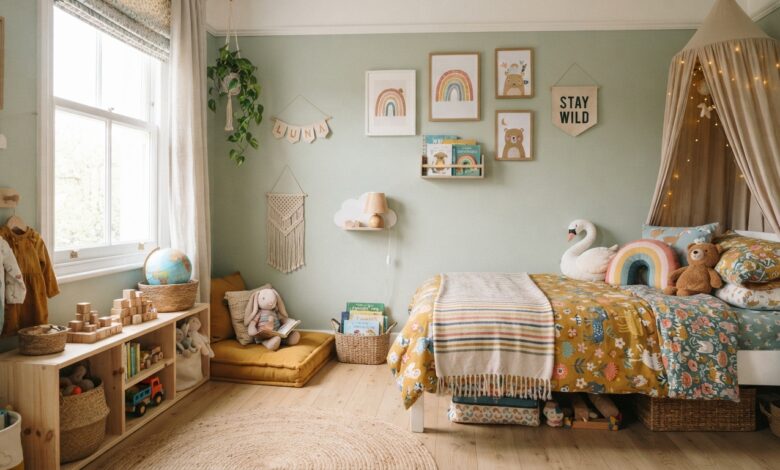
These kids bedroom decor ideas balance what children actually want with what a room needs to function day to day: enough storage for an ever-growing pile of toys, a layout that can flex as they get older, and a look that feels playful without becoming impossible to maintain. A kids’ bedroom works hardest of almost any room in the house — it’s a place to sleep, play, do homework, and store a rotating collection of interests — so the best approach treats it as a flexible system rather than a single finished design.
What Makes a Kids’ Bedroom Feel Both Fun and Functional
The best kids bedroom decor ideas share one thing in common: they plan for change. Kids’ interests, heights, and needs shift constantly, so a room built entirely around a single theme or a specific age group often needs a full redo within a year or two. Instead, aim for a flexible base — walls, flooring, and major furniture in colors and styles that can stay put — and layer in personality through things that are easy and cheap to swap out, like bedding, art, and small accessories.
1. Choose a Palette That Can Grow With Them
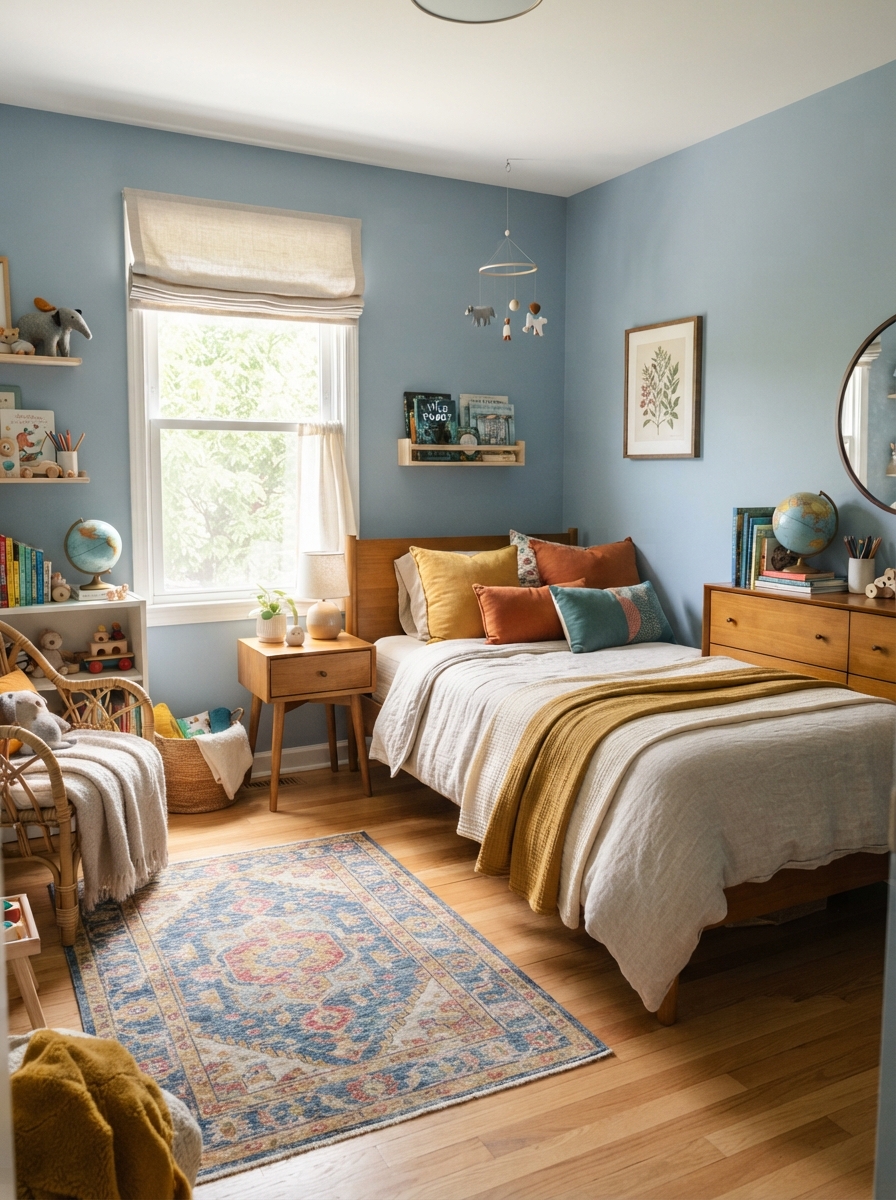
Soft, slightly muted colors, rather than bright primary tones, tend to age better as a child moves from toddlerhood into the elementary years and beyond. Sage green, warm terracotta, soft blue, and dusty pink all work at almost any age and pair easily with whatever theme or interest a child develops next. Save the most trend-driven, character-specific colors for bedding and decor rather than paint or flooring.
2. Prioritize a Growth-Friendly Bed
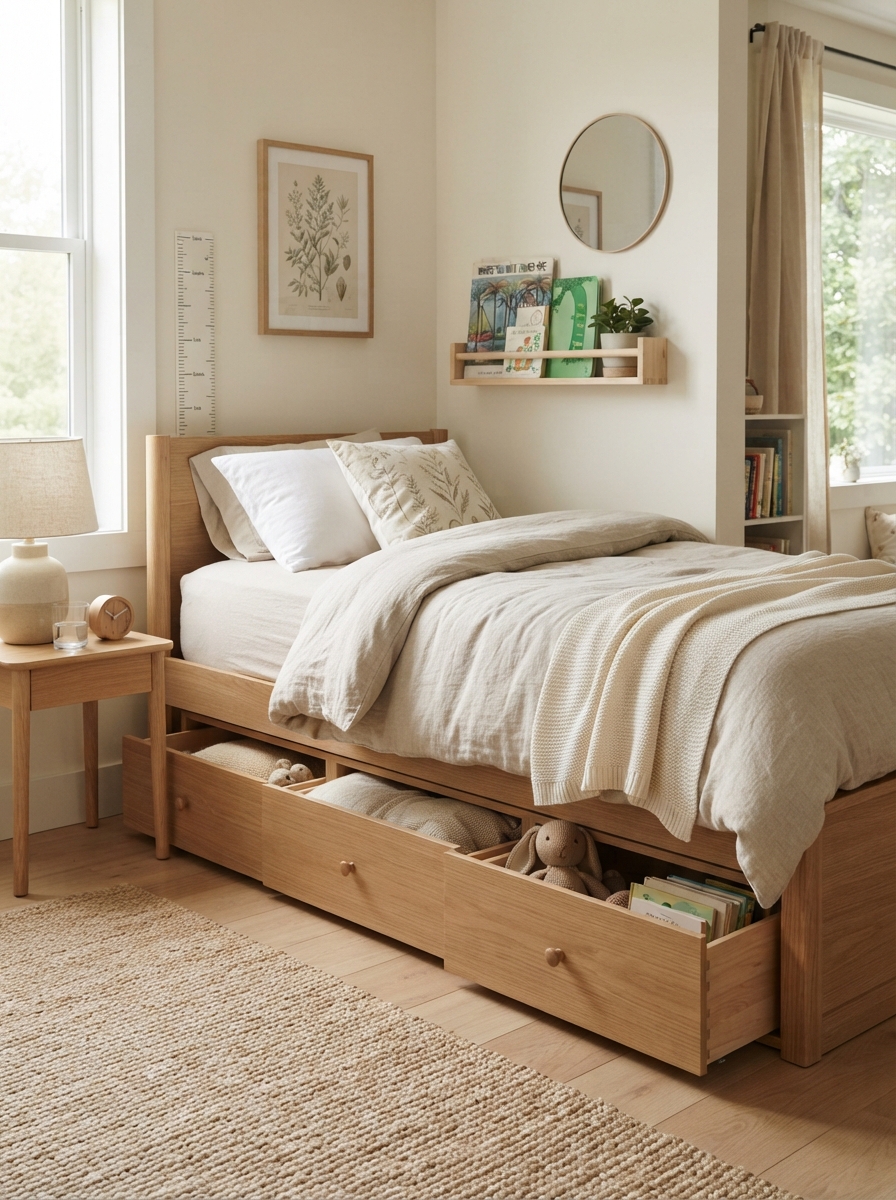
A twin or full-size bed with a simple frame usually outlasts a toddler or theme bed by several years, saving you from replacing furniture as your child grows. If space allows, a bed with built-in storage drawers underneath adds function without taking up additional floor space, which matters a lot in a room that also needs space to play.
Want the shortcut?
If the toys are taking over the bedroom, our kids playroom decor ideas give them somewhere else to live. For more on this, see our bedroom guide.
As an Amazon Associate I earn from qualifying purchases. Some links in this post are affiliate links, at no extra cost to you.
Browse current options and prices.
3. Add Open, Kid-Height Storage
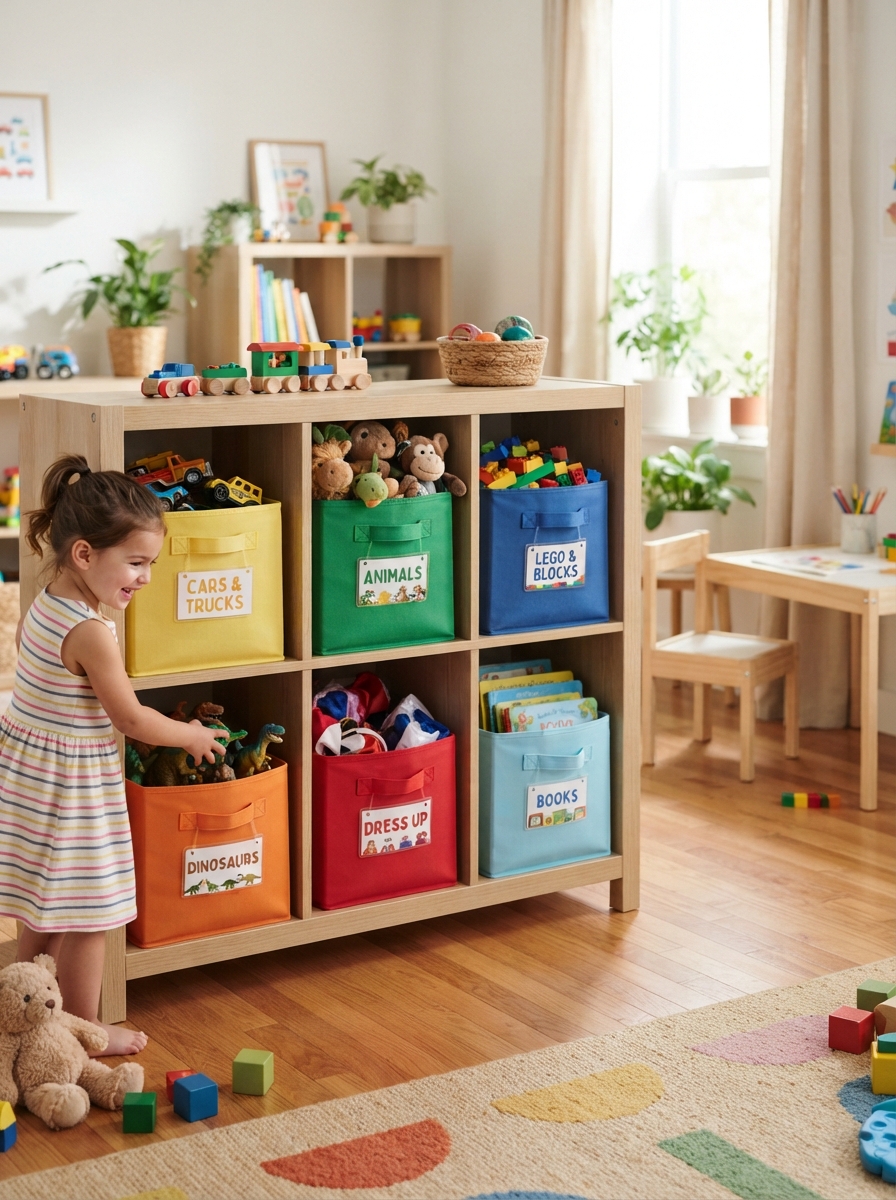
Low, open shelving and bins that a child can reach without help make daily cleanup realistic instead of something a parent has to do for them. Kids are far more likely to put toys away when the storage is at their height and doesn’t require opening a complicated cabinet or asking for help.
4. Create a Dedicated Play Zone
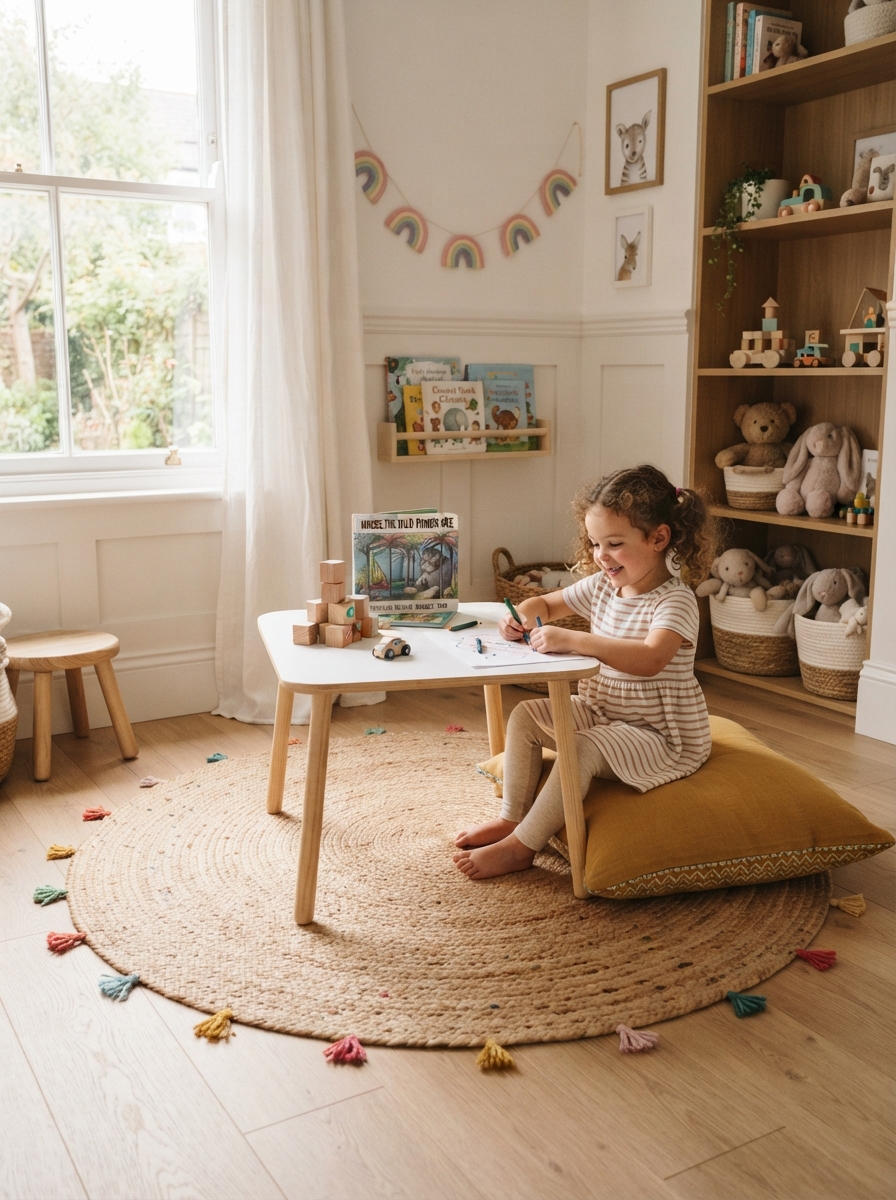
Even in a small room, setting aside a specific corner or rug area for play helps contain the mess and gives a child a clear sense of where building, drawing, or pretend play happens. A soft rug, a small table, and a nearby bin for whatever’s currently in rotation are usually enough to define the zone without needing extra square footage. A folded blanket or a floor cushion nearby extends the zone for reading or quiet play without adding any new furniture.
5. Use Labels and Bins for Easy Cleanup
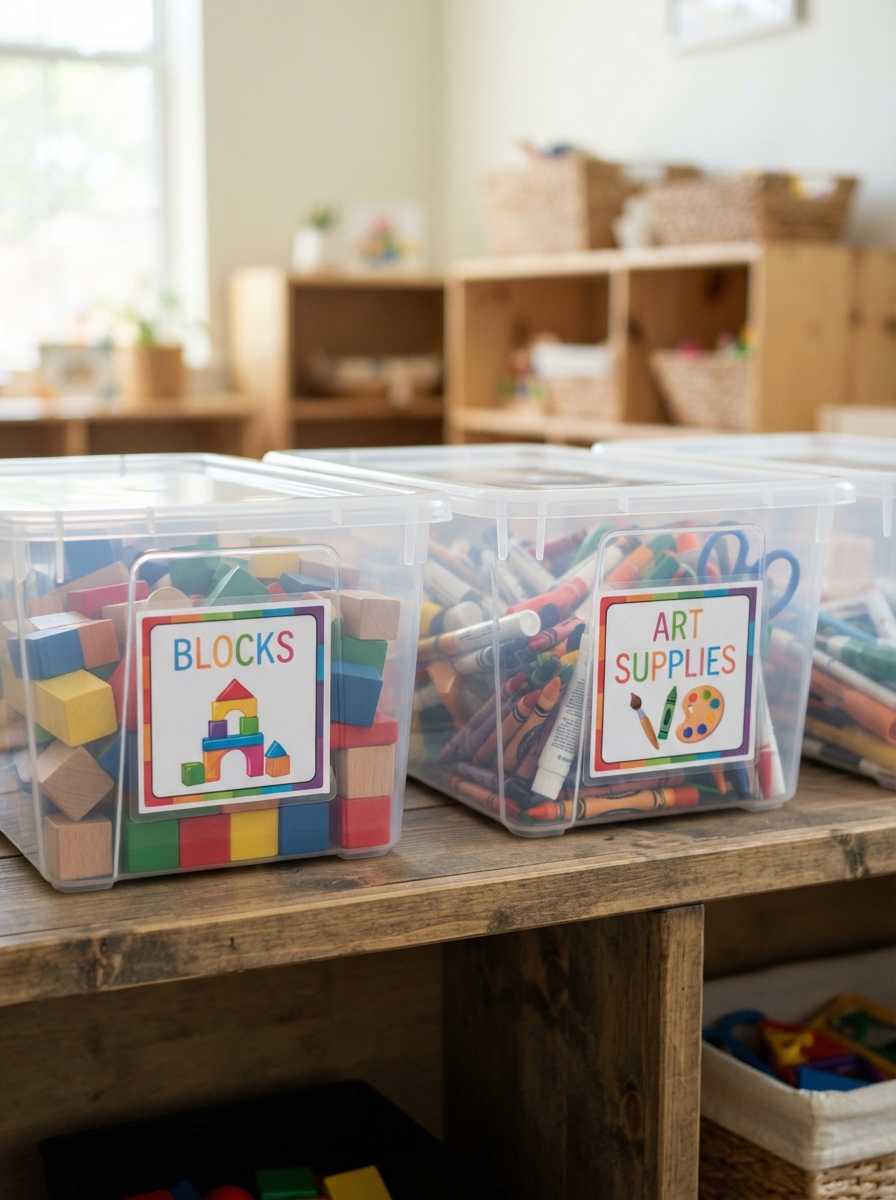
Picture labels for kids who can’t read yet, or word labels for older children, turn cleanup into a matching game instead of a chore that requires parental direction every time. Clear or fabric bins in a few consistent colors keep the look tidy even when the categories themselves — blocks, dolls, art supplies — change over time.
6. Add a Reading Corner
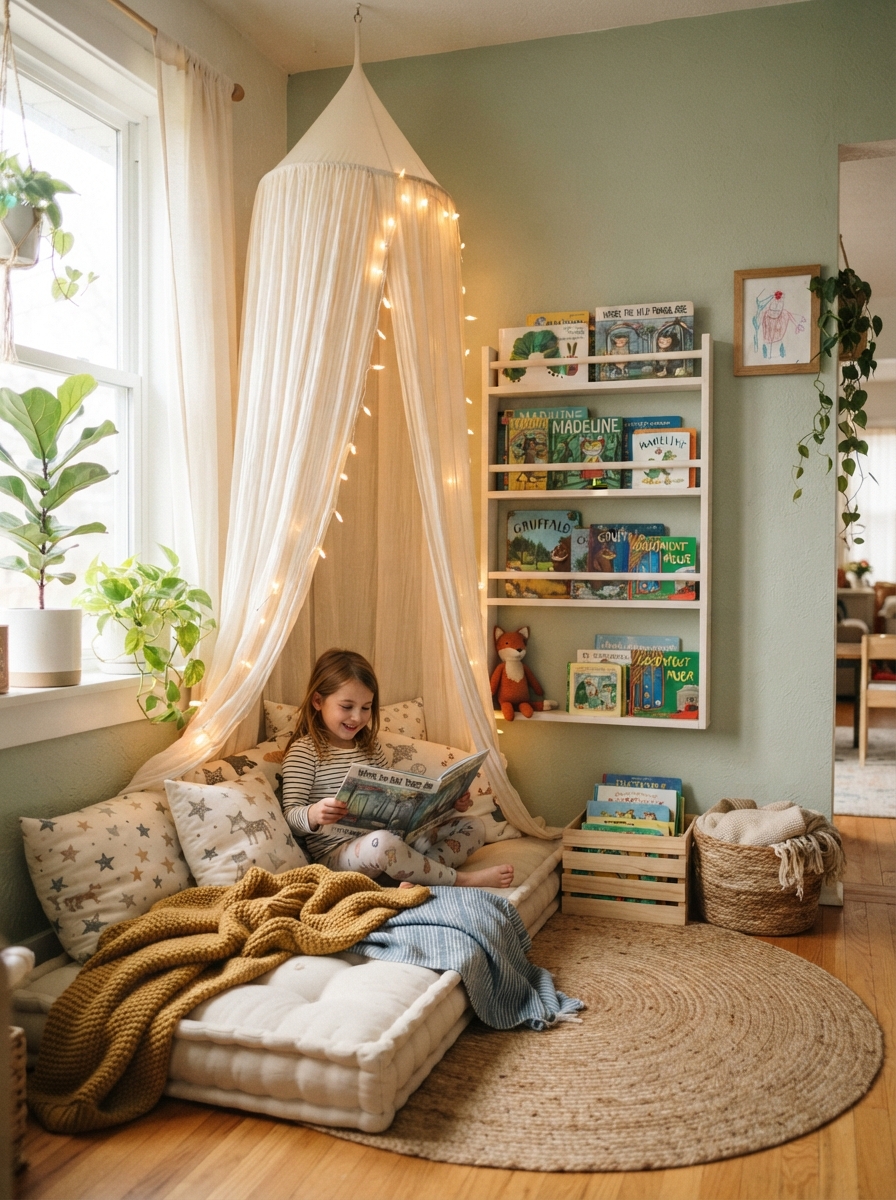
A small chair, a floor cushion, or a canopy nook with a shelf of favorite books encourages reading time and gives a child a cozy spot that’s distinct from both the bed and the play area. A clip-on or floor lamp nearby means the space works for reading even after lights-out for the rest of the room.
7. Choose Durable, Washable Fabrics
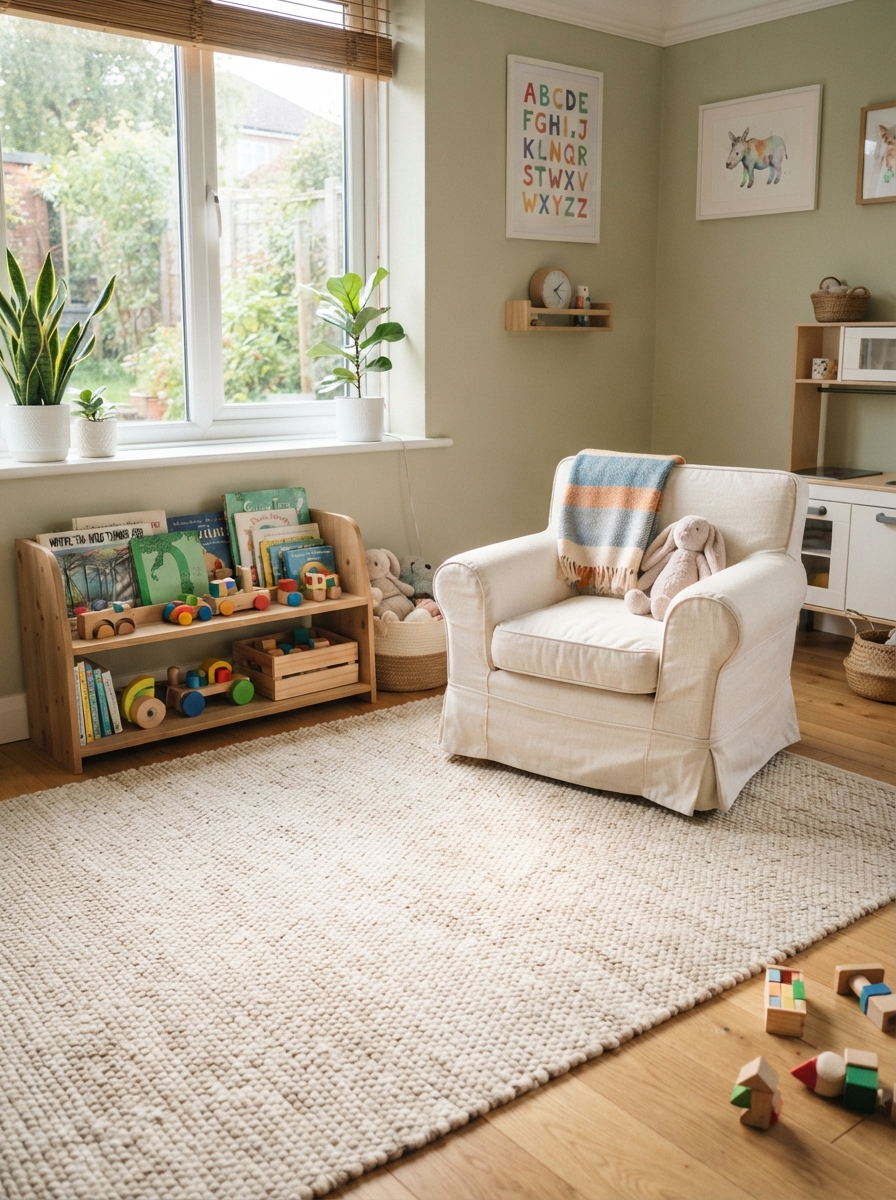
Kids’ rooms see more spills, art projects, and general wear than almost any other room in the house, so prioritize washable rugs, stain-resistant bedding, and slipcovers that can be laundered rather than dry-clean-only fabrics or delicate textures. This single decision saves more stress long-term than almost any other choice on this list.
8. Incorporate Wall Decals or Removable Wallpaper
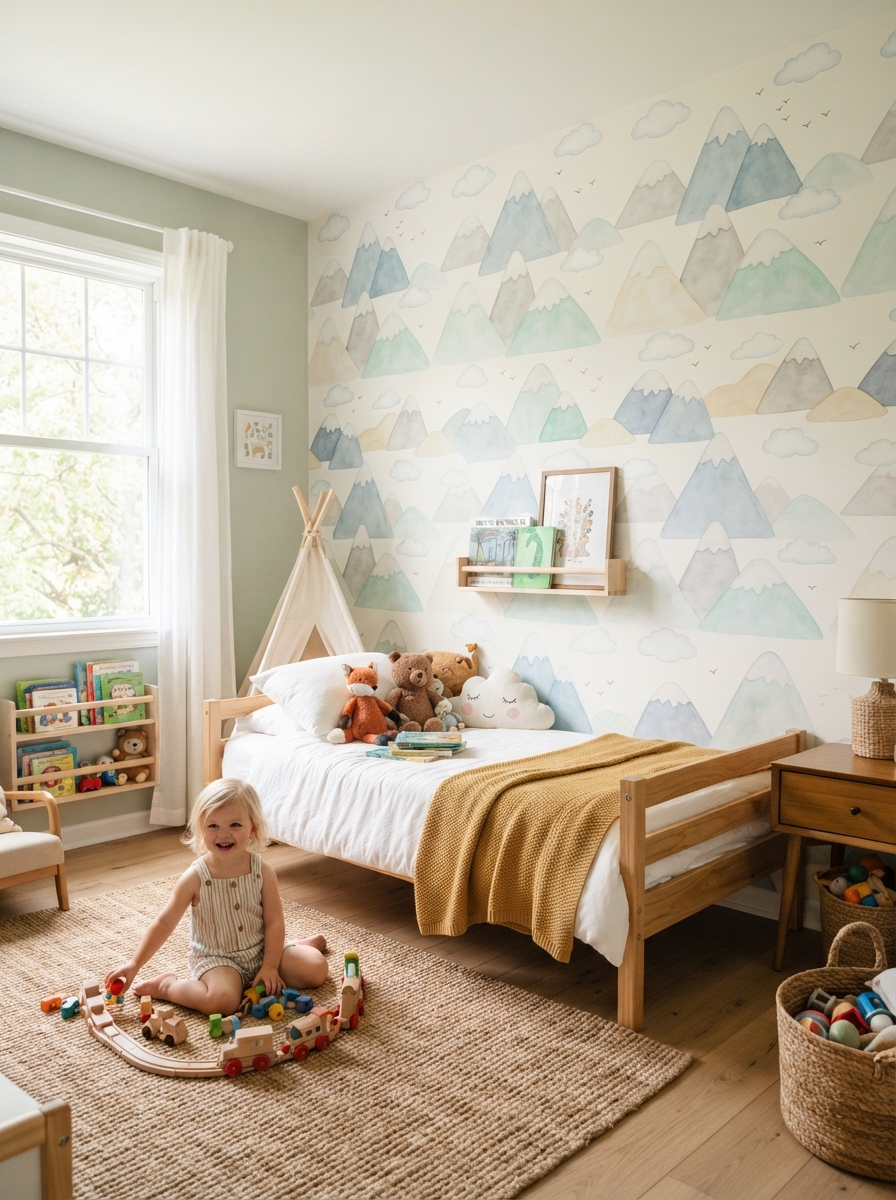
Removable wallpaper and wall decals let you add pattern, color, or a favorite theme without committing to paint or risking damage to walls in a rental. They’re also easy to update as interests change — a dinosaur decal wall can become a space-themed one in an afternoon without repainting anything.
9. Add a Study or Homework Space
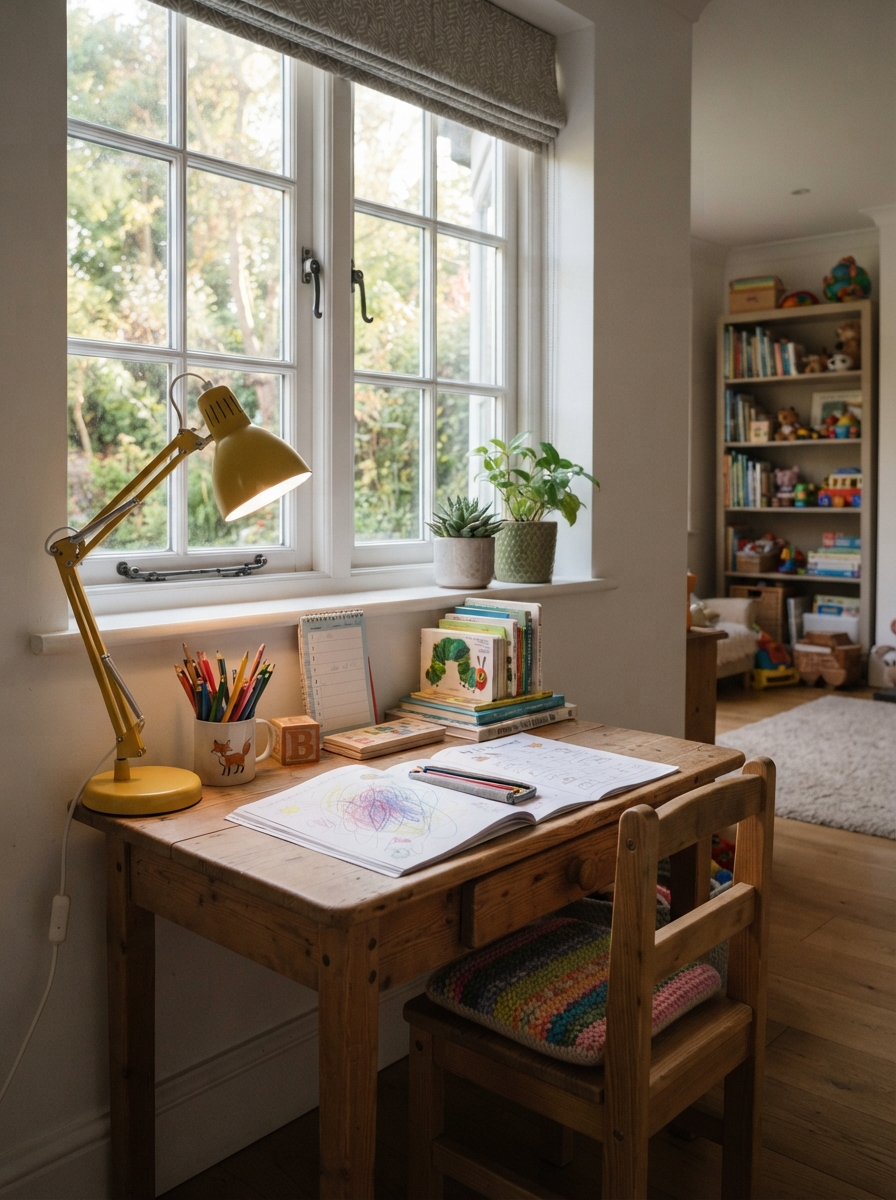
A small desk with good task lighting gives an older child a consistent spot for homework and creative projects, and it keeps school supplies contained to one area instead of scattered across the room. If space is tight, a fold-down or wall-mounted desk works well and can be tucked away when not in use.
10. Layer in Soft, Adjustable Lighting
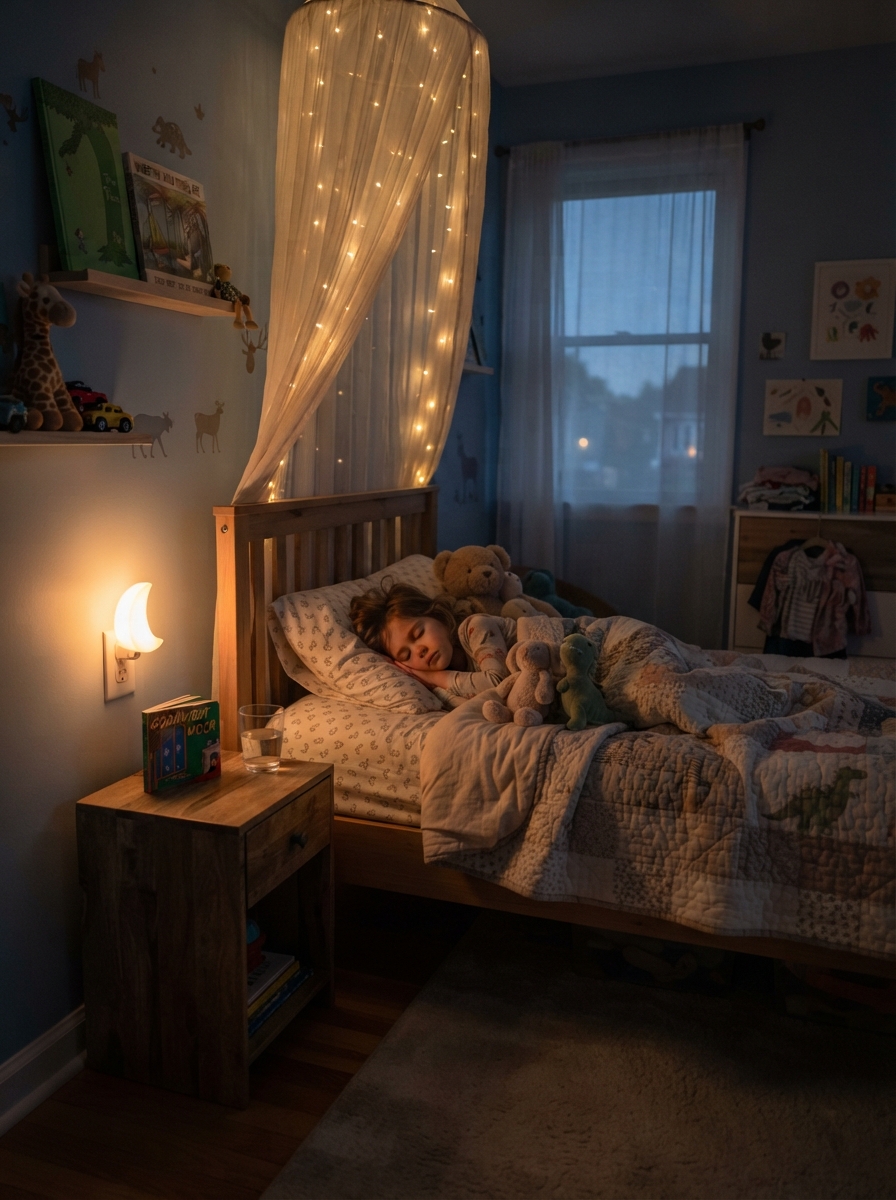
A dimmable overhead fixture, a soft nightlight, and a reading lamp near the bed give you control over the room’s mood at different times of day, from bright and energetic during play to calm and soft at bedtime. Battery-powered string lights or a plug-in nightlight with a soft glow also help ease bedtime anxiety for younger children.
11. Display Kids’ Art and Creations
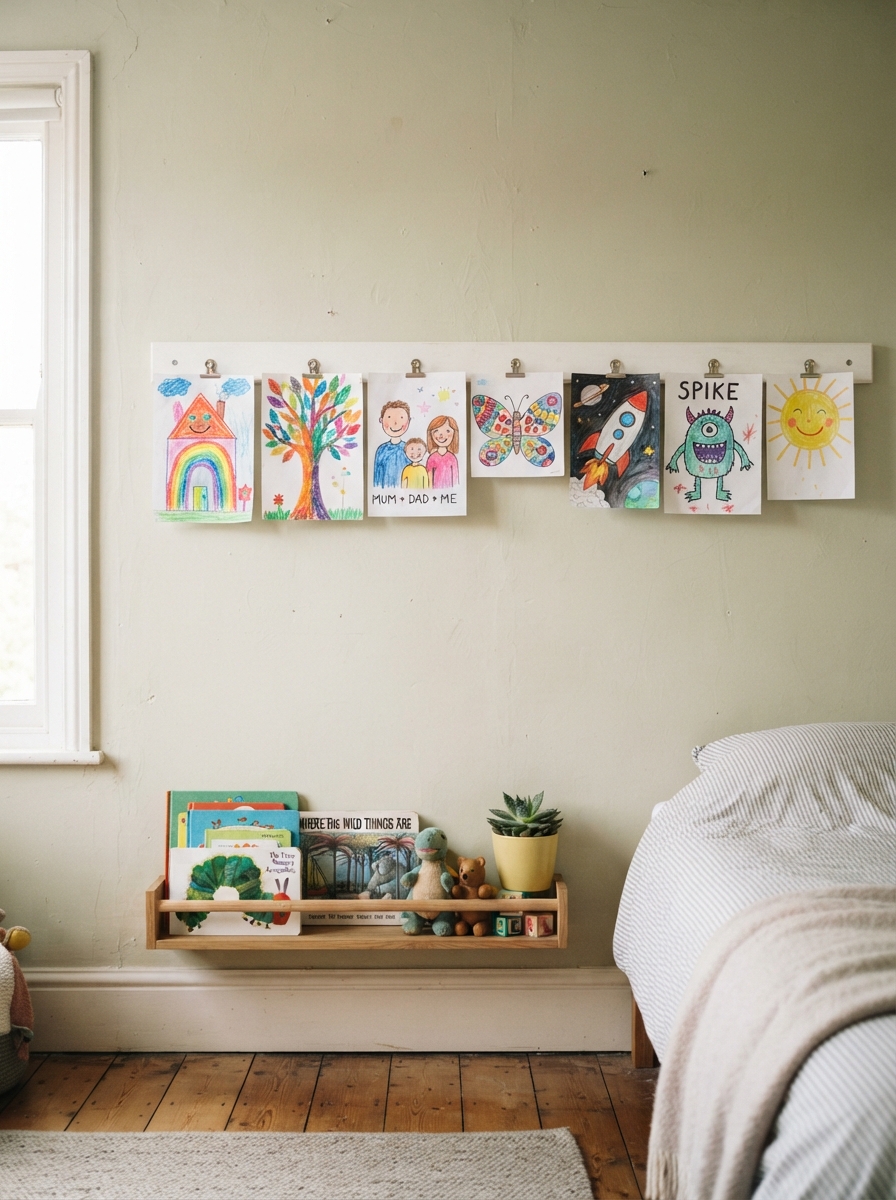
A simple clip rail, a corkboard, or a rotating gallery frame gives a child’s own artwork a real place of honor instead of it living on the refrigerator or in a drawer. Rotating the display every few weeks keeps it feeling fresh and gives kids a sense of ownership over their space.
12. Add a Growth Chart or Height Marker
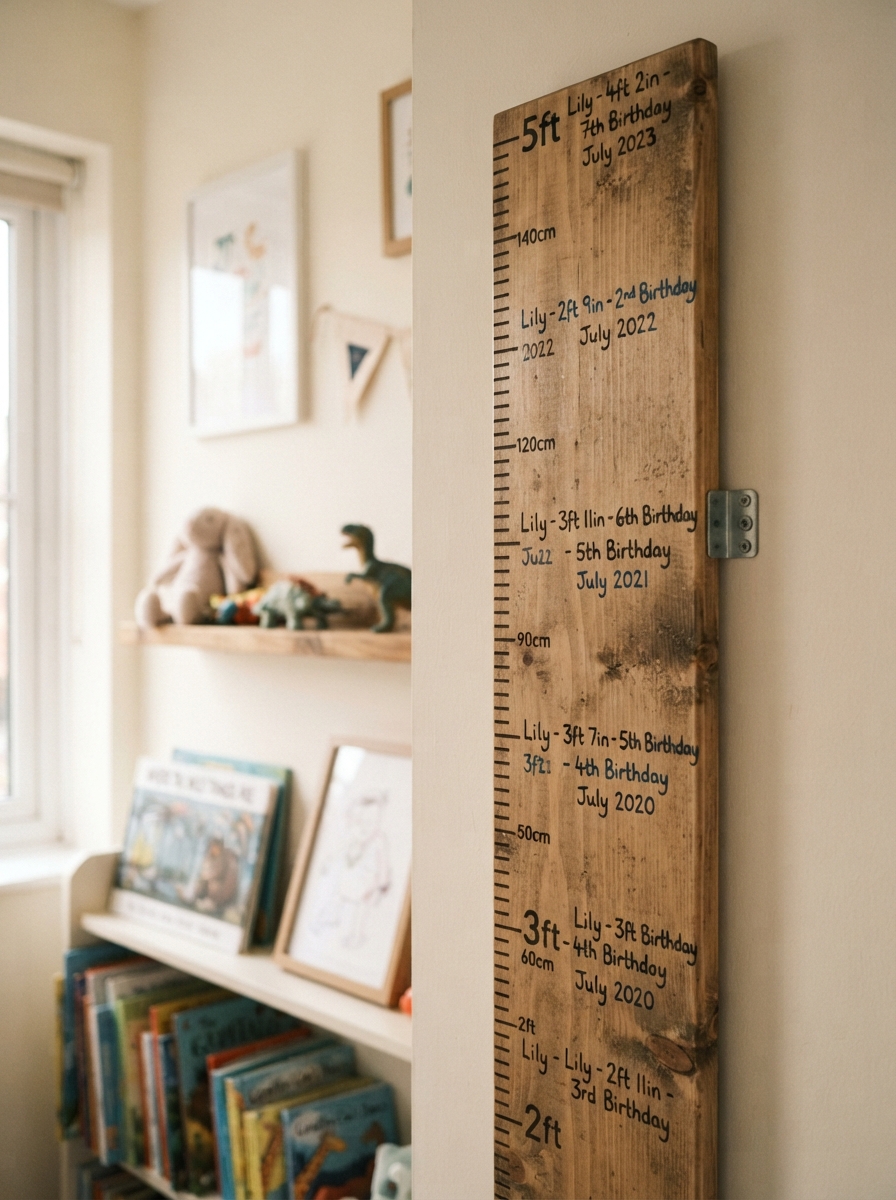
A wall-mounted growth chart, whether a simple wood ruler or a fabric hanging version, is both a fun decor moment and a way to track height over the years without marking directly on the wall. It’s a small addition that becomes more meaningful the longer a family lives in the same home.
13. Include Safety-Conscious Furniture Choices
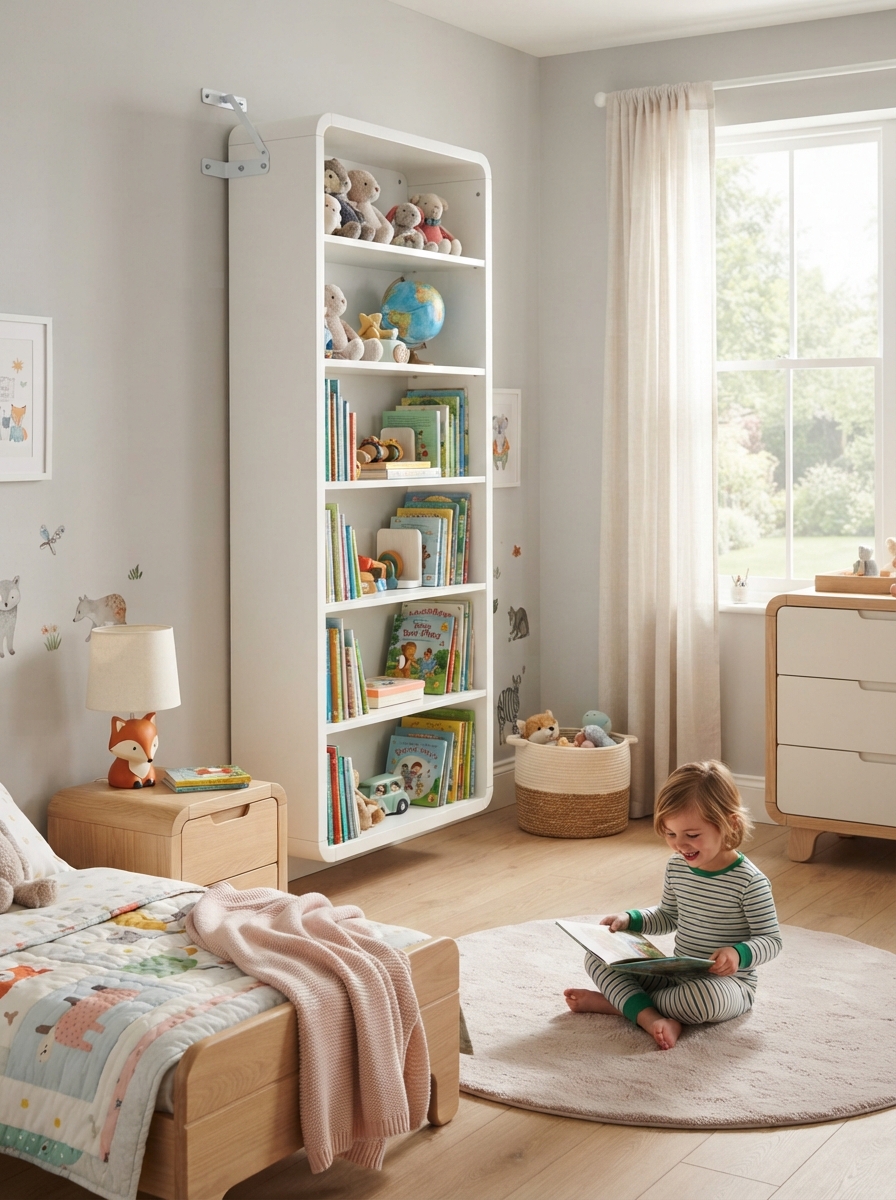
Anchor tall furniture like bookshelves and dressers to the wall, round out sharp furniture corners where possible, and choose cordless window treatments in any room where young children sleep or play. These choices don’t have to compromise style — most furniture brands now offer anchoring hardware and cordless options as standard.
14. Personalize With a Favorite Theme (Subtly)
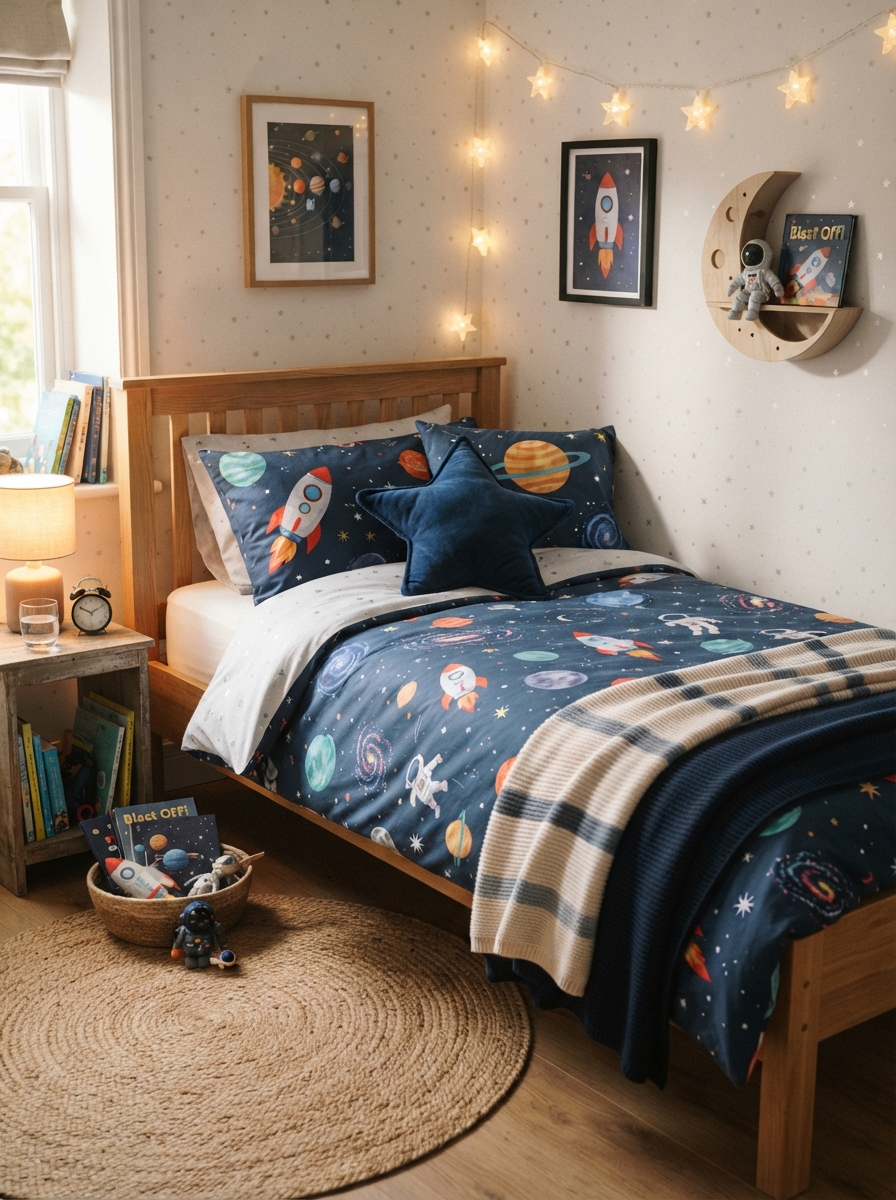
Rather than committing an entire room to a single character or interest, use theme elements in easily swapped items like bedding, a lampshade, or a few art prints. This lets a child’s room reflect their current favorite thing without requiring a full redecoration when that interest inevitably changes in six months.
15. Add a Cozy Rug
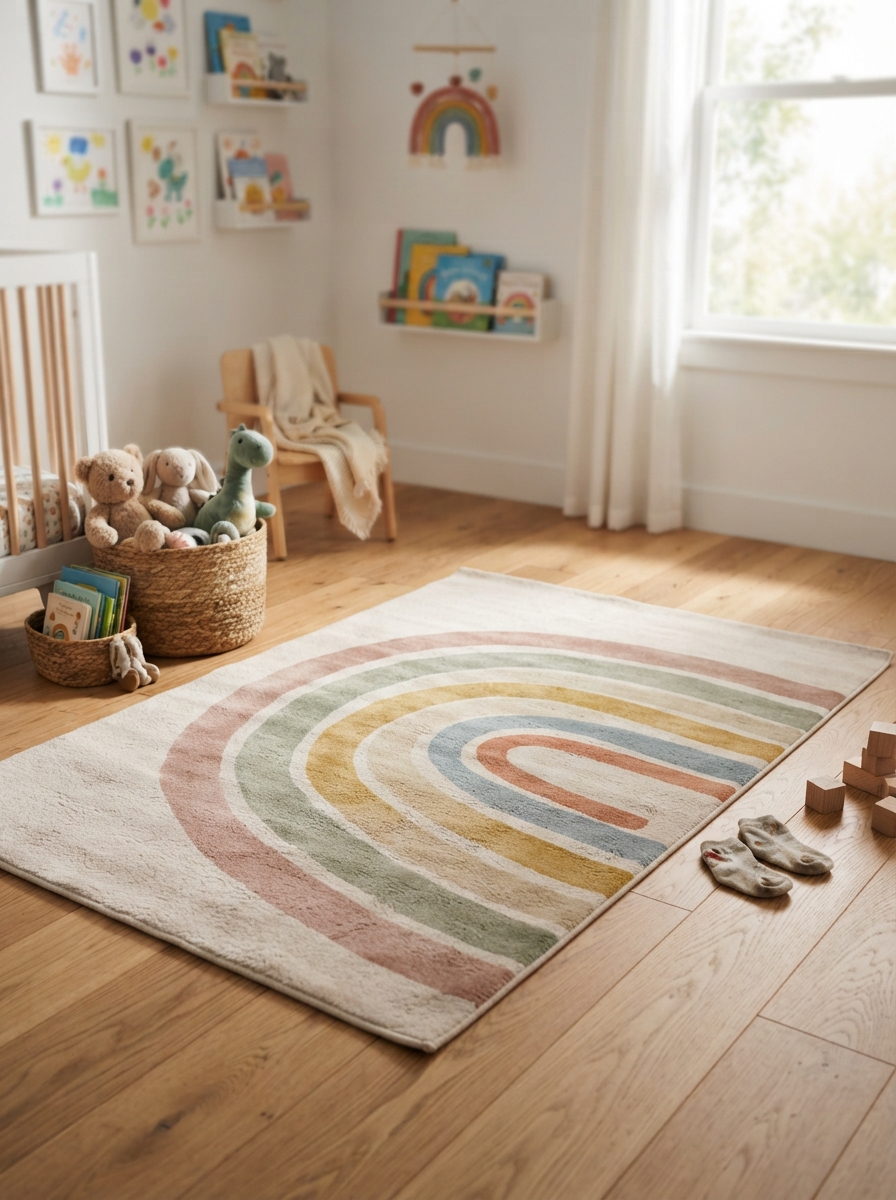
A soft, washable area rug defines the play space, adds warmth underfoot, and gives kids a comfortable spot to sit and play on the floor, which is where most young children actually spend the bulk of their time in a bedroom. Look for low-pile, machine-washable options that can handle spills and regular wear.
16. Add a Chalkboard or Whiteboard Wall
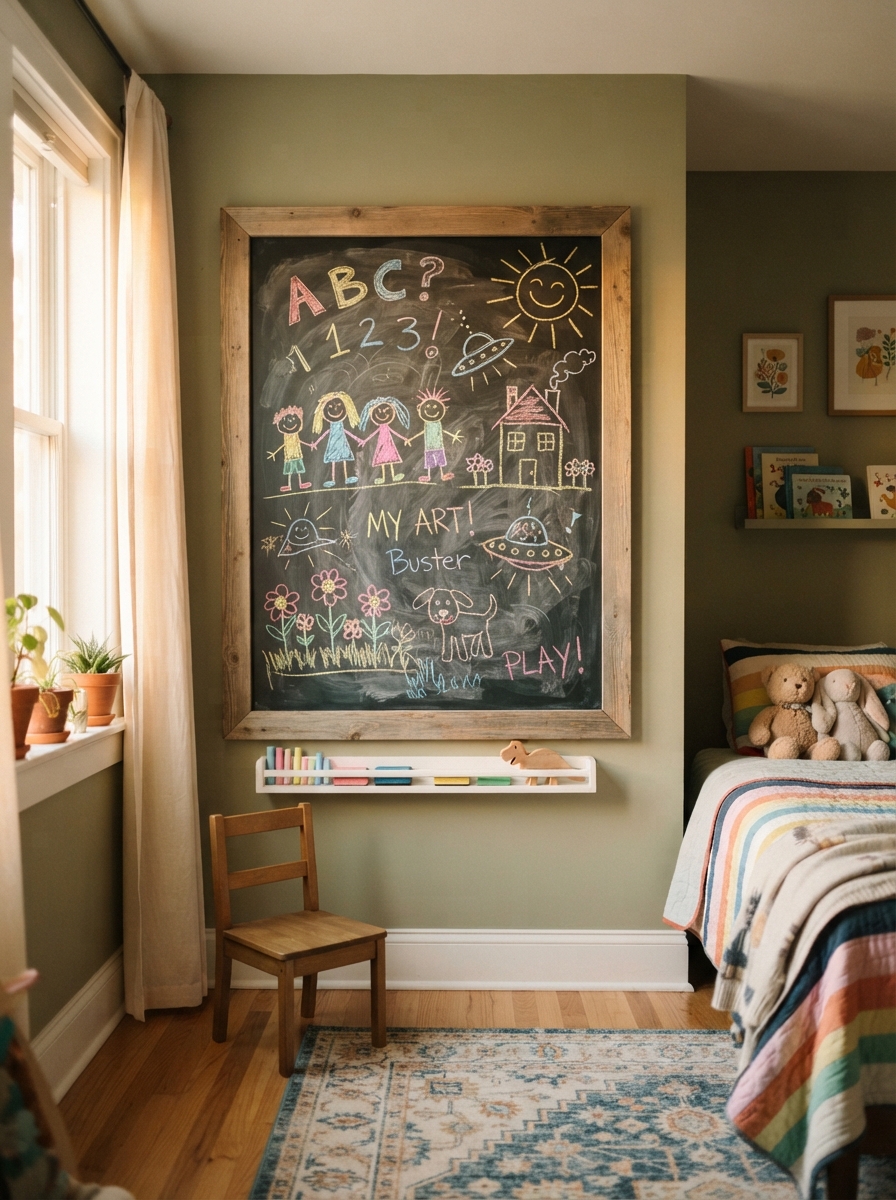
A section of chalkboard paint or a large framed whiteboard gives kids an approved place to draw directly on a wall, which cuts down on the temptation to use crayons elsewhere in the house. It also doubles as a spot for a weekly schedule, chore chart, or rotating message once kids are old enough to read and write.
17. Plan for Multiple Kids Sharing a Room
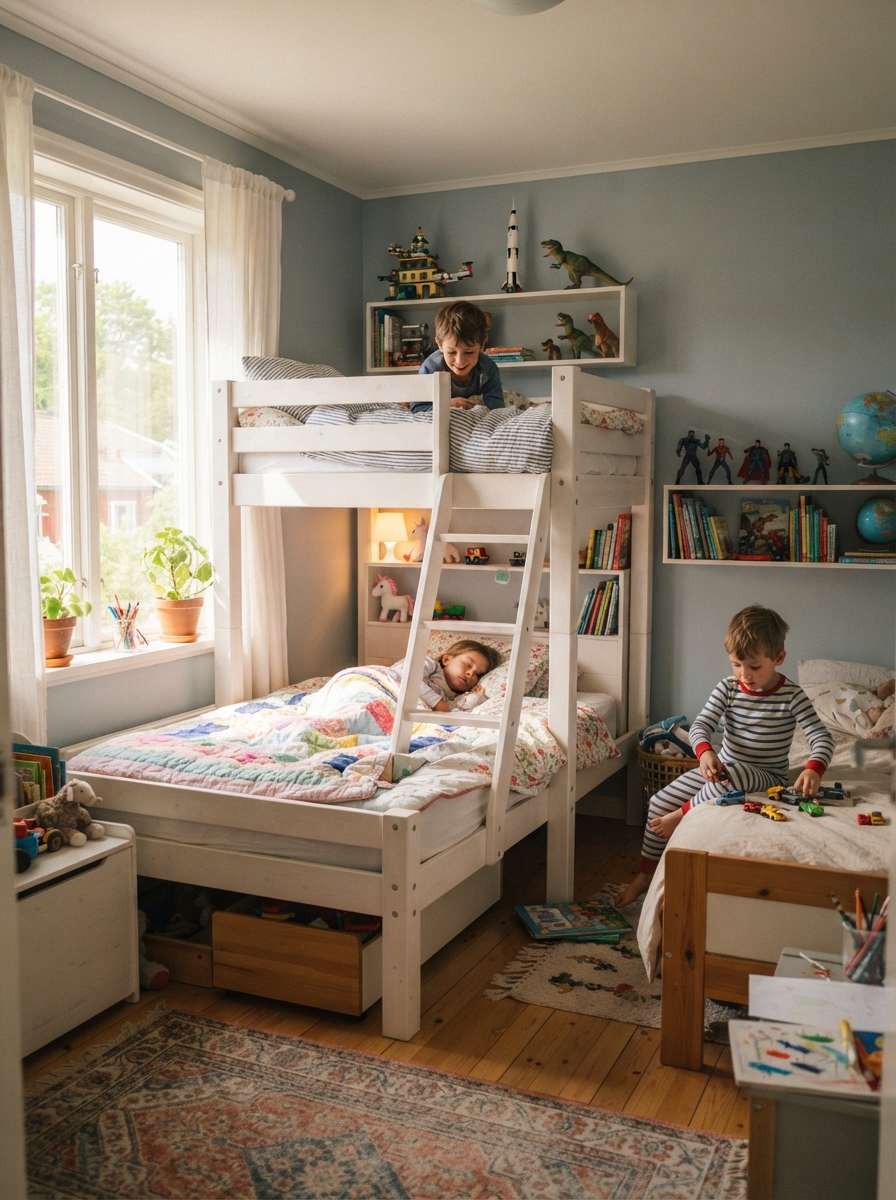
If siblings share a room, bunk beds or trundle beds save floor space for play, and giving each child their own small storage unit or shelf — even if it’s just one cube of a larger unit — helps establish a sense of personal space within a shared room. A curtain or room divider can also create a small sense of privacy without a full wall.
Kids Bedroom Color Palette Ideas
If you want more specific direction, these combinations work well for kids’ rooms at almost any age: soft sage green with white and natural wood; warm terracotta with cream and brass; dusty blue with white and a pop of yellow; and blush pink with sage green for a gender-neutral, nature-inspired look. Because kids’ tastes shift quickly, keep the boldest, most trend-driven colors confined to bedding, art, and accessories rather than paint or big furniture pieces.
Budget-Friendly Kids Bedroom Decor Ideas
You don’t need to buy everything new to make a kids bedroom decor idea work well. Secondhand furniture, especially dressers and bookshelves, holds up fine with a fresh coat of kid-safe paint, and children rarely care whether a piece is new as long as it looks good and works for them. Removable decals and wallpaper cost far less than a full repaint and can be swapped as interests change. Rotate toys and books in and out of storage bins rather than buying all-new organizational furniture, and check community groups or consignment sales for gently used kids’ furniture before buying new.
Layout Tips for Small Kids’ Bedrooms
In a small room, a loft bed frees up significant floor space for a play area or desk underneath, and wall-mounted shelving keeps the floor clear for movement and play. Choose furniture that serves double duty, like a storage ottoman that doubles as extra seating, or a bed with built-in drawers, rather than adding separate pieces for every function. Keep a clear pathway from the door to the bed at all times, both for safety and so the room doesn’t feel cramped no matter how much is going on inside it.
Kids Bedroom Safety Essentials
Beyond decor, a few safety basics matter more than any styling choice: anchor all tall furniture to wall studs, choose cordless blinds or curtains, keep the crib or bed away from windows and cords, use outlet covers where relevant, and make sure any rugs have a non-slip pad underneath. None of these compromise the look of the room, and they matter most in the years before a child fully understands these risks themselves. Revisit these basics every year or two as your child grows, since needs like outlet covers and crib placement change quickly during early childhood.
Kids Bedroom shopping list
- Kids bedroom rug — soft underfoot, washable
- Toy storage bins — open bins beat lidded boxes
- Kids bookshelf — front facing so covers show
- Blackout curtains — the sleep upgrade parents notice
- Kids night light — warm, dimmable
- Wall decals — damage free personality
Prices and availability change. Links open on Amazon.
Kids Bedroom Mistakes to Avoid
A few common missteps undercut otherwise good kids bedroom decor ideas. Overcommitting to a single character theme in paint or large furniture usually means an expensive redo within a year or two, so keep theme elements in the easily swappable items instead. Storage that’s too high or complicated for a child to use independently just becomes a parent’s chore rather than a system the child can maintain. And skipping safety anchoring on tall furniture is one of the most common — and most preventable — oversights in kids’ room design.
Final Thought
A great kids’ bedroom balances a child’s personality and play needs with a layout that can adapt as they grow, and it doesn’t need to be perfectly styled to work well. Start with safe, growth-friendly furniture and kid-height storage, since those get used every single day, then layer in the personality and theme elements that make the space feel like theirs. For more kids’ room inspiration, visit Apartment Therapy.
Frequently Asked Questions
What colors work best for a kids bedroom?
Soft, slightly muted tones like sage green, dusty blue, and warm terracotta age well as children grow, since they pair easily with whatever theme or interest comes next. Save bold, trend-driven colors for bedding and accessories rather than paint or major furniture.
How can I make toy cleanup easier for kids?
Low, open shelving at a child’s height combined with labeled bins turns cleanup into something kids can manage independently. Picture labels work well for children who can’t read yet, and consistent bin colors keep the room looking tidy even as toy categories change.
What’s the most important safety consideration for a kids bedroom?
Anchoring tall furniture like bookshelves and dressers to wall studs is one of the most important and most commonly overlooked safety steps. Cordless window treatments and non-slip rug pads are also worth prioritizing in any room where young children sleep or play.
How do I decorate a kids room on a budget?
Secondhand furniture refreshed with kid-safe paint, removable wall decals instead of a full repaint, and rotating toys through storage bins all keep costs low while still making the room feel considered and personal.


2 Comments