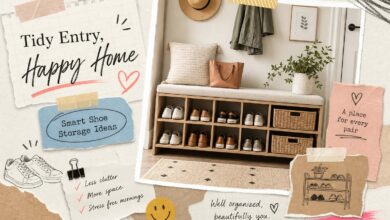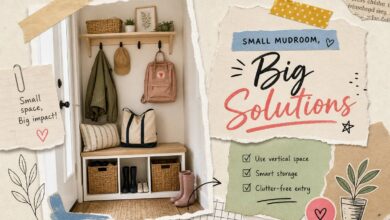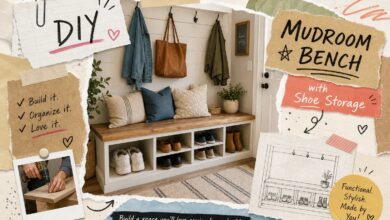

The backpack lands on the floor before the door even closes. Shoes pile up in a trail from the threshold to the kitchen. The wet coat gets draped over the doorknob because there’s nowhere else to put it. If that scene plays out in your home every single day, these mudroom storage ideas can help, because your entry isn’t failing you; it just hasn’t been set up to work yet.
As an Amazon Associate I earn from qualifying purchases. Some links in this post are affiliate links, at no extra cost to you.
Most families treat the mudroom as an afterthought. They buy one decorative hook rail, shove a boot tray near the door, and call it organized. What they end up with is a slightly better-looking version of the same chaos. The fix isn’t more stuff; it’s the right storage matched to how many people actually use the space.
This guide organizes mudroom storage ideas by type first, then filters them by household size, so you’re not reading through 30 generic suggestions to find the two that apply to your entry. Aesthetic Nest Decor editors have selected product picks throughout based on real-world family use, not just what photographs well in a staged space. You’ll come away with a clear layout, a practical shopping list, and at least one fix you can put in place today. For more on this, see our 35 aesthetic bedroom ideas for every style & budget (2026) guide.
How Family Size Should Drive Your Mudroom Storage Decisions
Before buying a single hook or basket, figure out who is using the space and how many of them there are. The number of people in your household determines which storage types to prioritize, how much vertical space you need, and whether a shared system or assigned zones will actually stick. A couple doesn’t need a six-cubby locker bank. A family of five with school-age kids almost certainly does, roughly one dedicated cubby or vertical zone per person is a useful starting benchmark.
With small children in the house the priorities shift — see our best mudroom storage systems for families with young kids.
Working with limited funds? Our budget mudroom storage solutions under $100 narrow it down, and there are locker ideas for families with kids and a DIY bench with built-in shoe storage if you want to build rather than buy.
Small Households (1, 2 People): Streamlined and Minimal
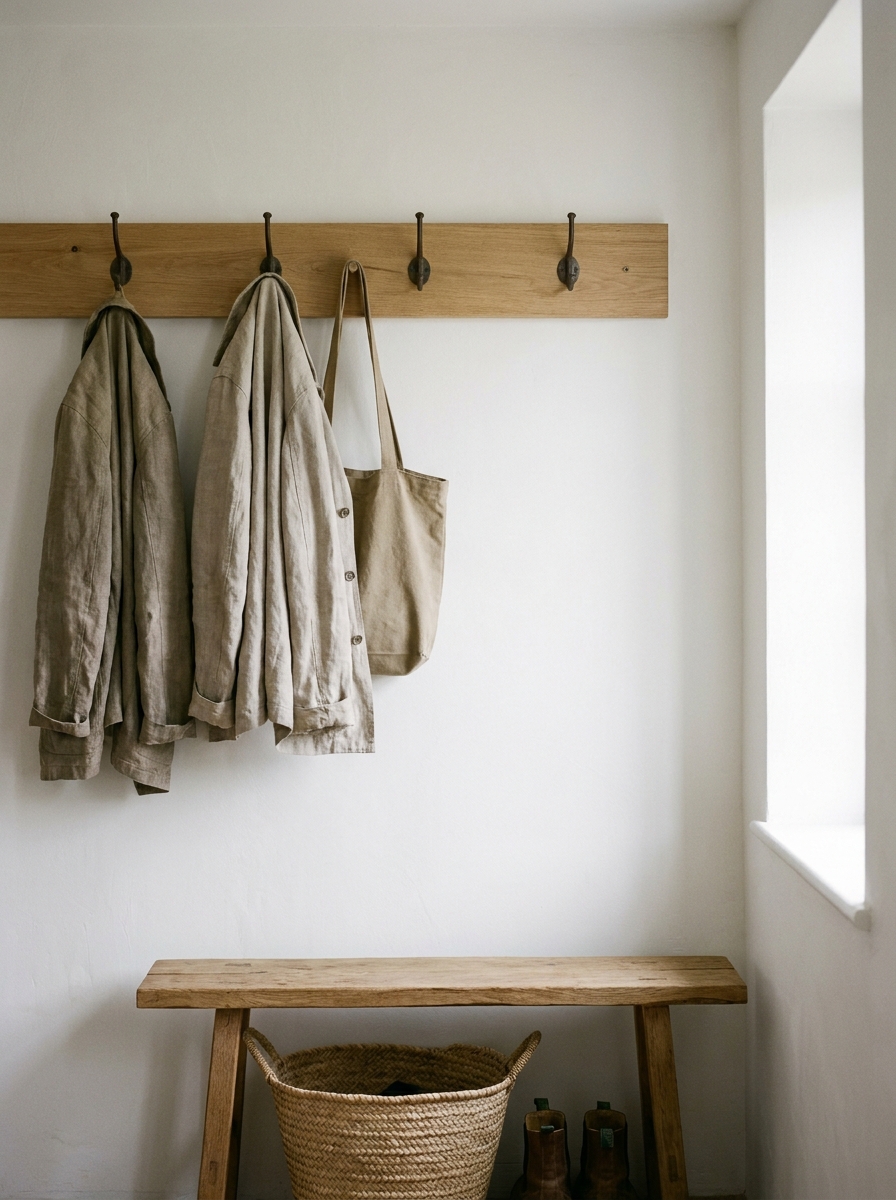
For one or two people, the goal is visual calm and immediate usability, not maximum capacity. A wall-mounted rail with four to six heavy-duty hooks handles coats and bags as a rule of thumb for this household size. A shallow floating bench with one or two baskets underneath keeps shoes off the floor without overwhelming the space. A slim shoe cabinet or single-tier rack completes the system. Keep it tight: the fewer pieces you install, the faster the entry stays tidy.
Families with Young Children: Kid-Height Hooks and Labeled Cubbies
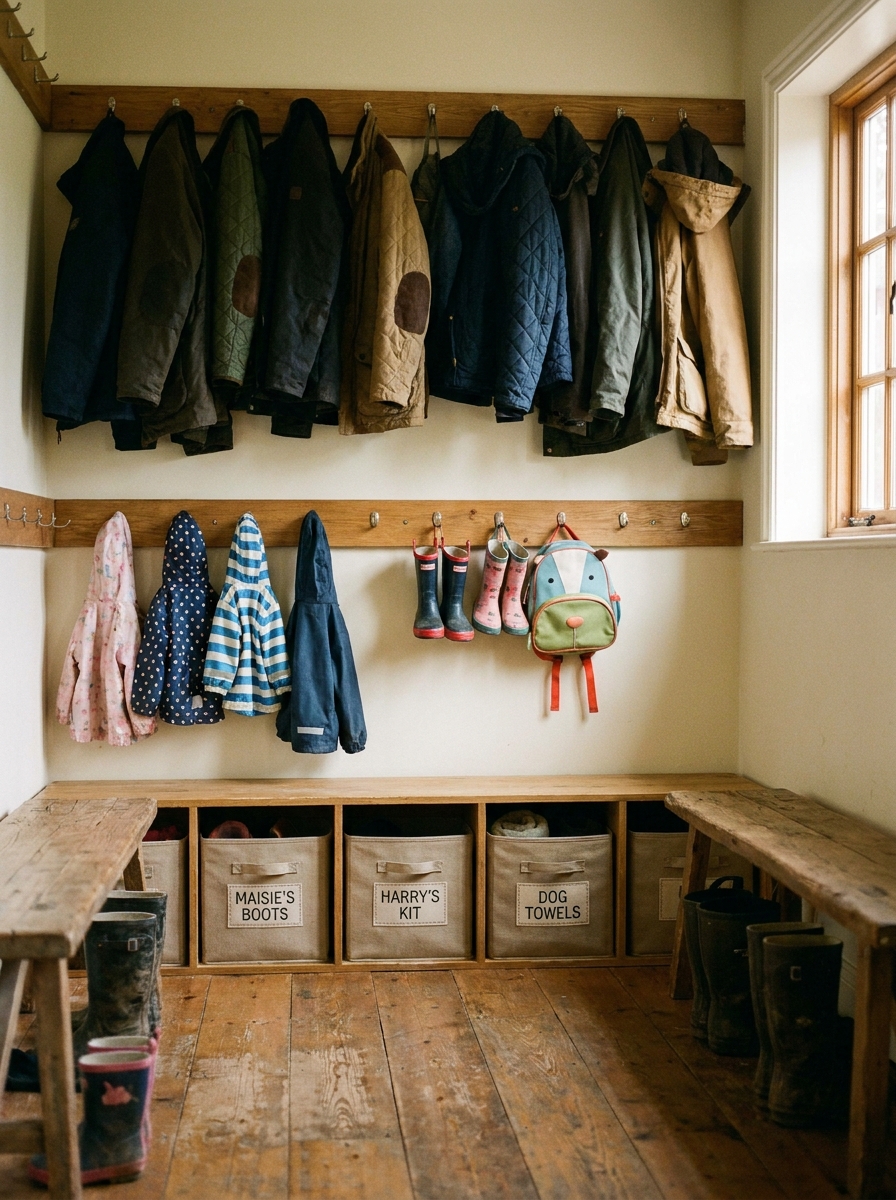
The most effective layout for families with kids under 10 uses a two-tier hook system. Place the lower row at 36 to 42 inches off the floor so kids can hang and retrieve their own backpacks and coats without asking for help. Adult hooks go at 60 to 66 inches. Bench height should sit at 17 to 19 inches for most school-age kids; drop it to 14 to 16 inches if toddlers are part of the equation. Open cubbies sized at 15 to 18 inches wide and 14 to 16 inches deep fit standard kids’ backpacks comfortably and give children a clearly visible spot they can own, a genuine self-sufficiency win.
Large Families (4+ Members): Zone-Based Vertical Storage
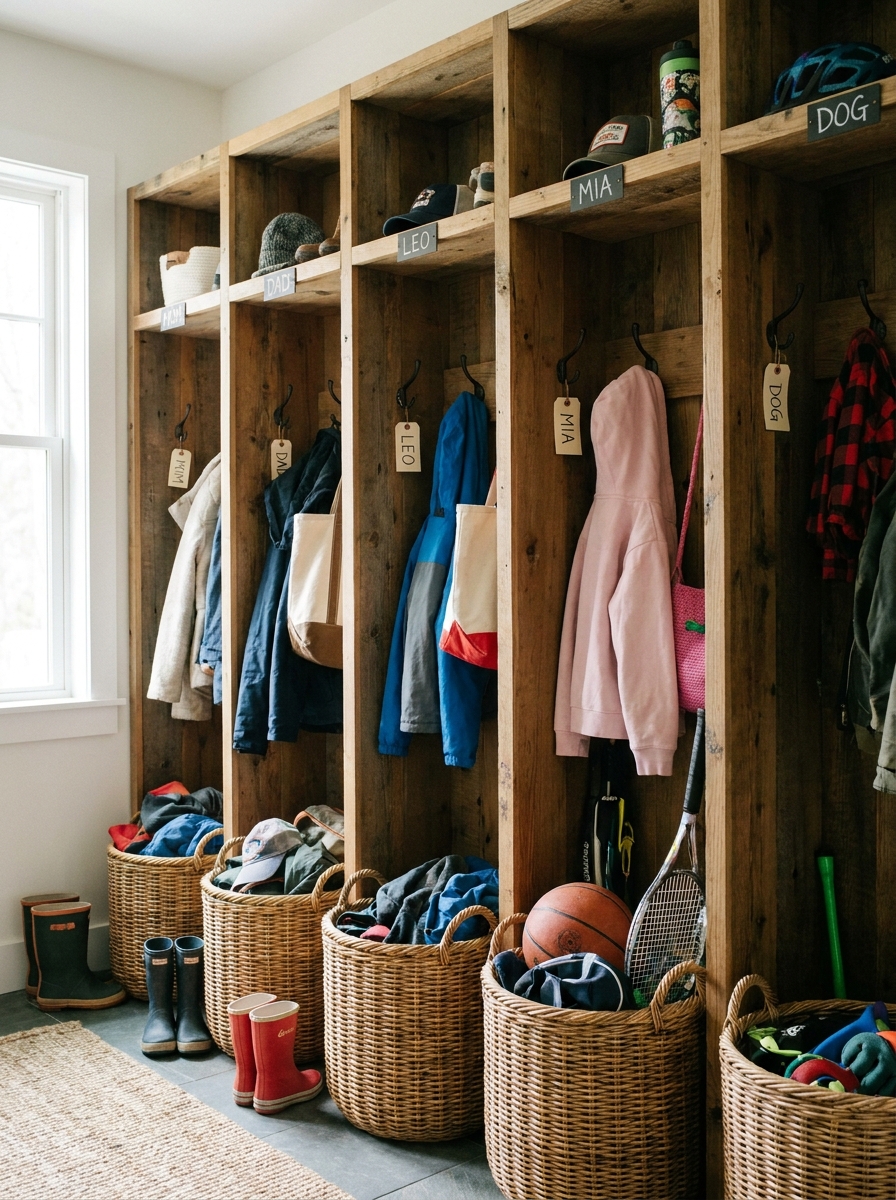
Four or more people sharing one entry requires a fundamentally different approach. Assign each person a dedicated vertical zone, a locker-style column, rather than treating hooks and cubbies as shared resources. Floor-to-ceiling storage is the most space-efficient format here because it uses wall height instead of floor width. As a practical example, a 48-inch-wide run of tall, narrow lockers with 12-inch-wide columns can serve four people while consuming roughly the same floor footprint as a freestanding bench.
Mudroom Storage Ideas: Start with Wall-Mounted Hooks and Rails
Hooks are the highest-impact, lowest-cost addition to any entry. They work even when there’s no bench, no cabinet, and no dedicated mudroom room. A coat on a hook is a coat off the floor, which is the entire point of entryway storage. Everything else builds on this foundation.
Single-Row vs. Double-Tier Hook Rails
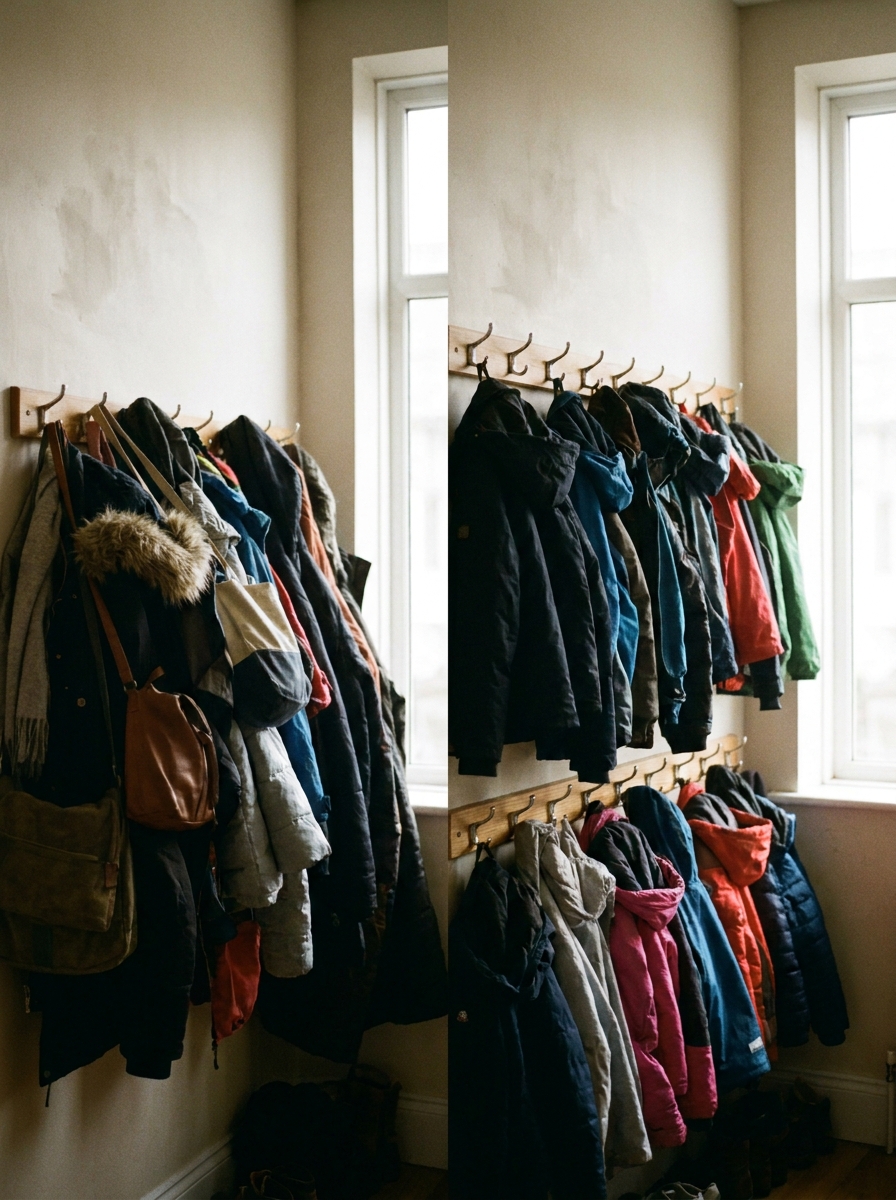
A single row of heavy-duty hooks handles adult outerwear and work bags well. A double-tier rail adds a lower row for kids, which means both generations can self-serve without anyone acting as a coat valet. For households with children, the double-tier configuration is one of the most practical upgrades available. It typically costs close to the same as a single rail and eliminates one of the most common daily friction points in family routines.
What to Check Before Buying a Hook Rail
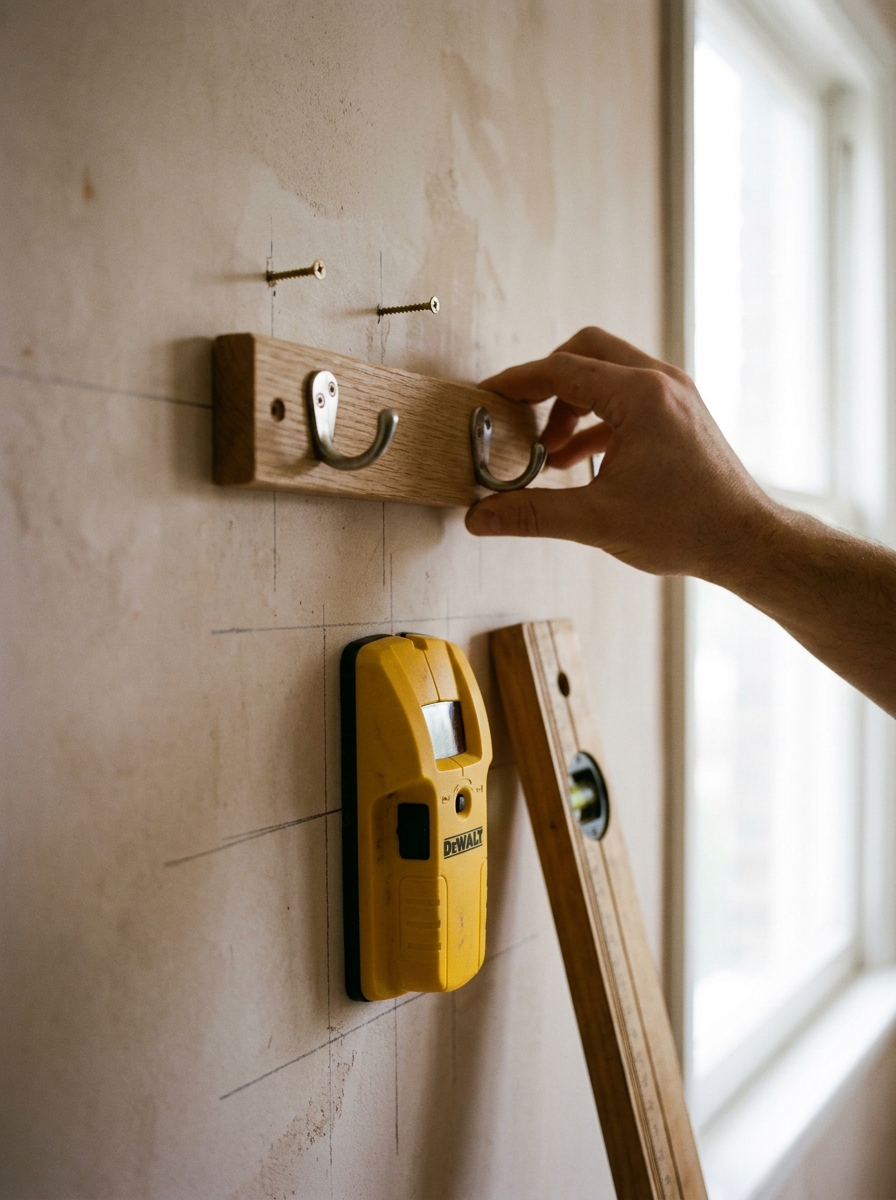
Most people skip the specs and buy based on looks, which is how you end up with a pretty rail that pulls out of the wall after three months. Before purchasing, check the weight rating per hook, a wet winter coat plus a heavy backpack can easily reach 15 pounds or more on a single hook, so look for a rating that leaves a clear safety margin. Confirm whether the mounting plate spans studs or requires wall anchors, and look for a finish that resists moisture and scuffs. High-traffic entryways are hard on hardware. Aesthetic Nest Decor editors have reviewed hook rails available from retailers including Home Depot, Target, and Amazon; top picks are linked in our Mudroom Essentials guide for quick reference.
Shop wall-mounted hooks
Best value
29-Inch Coat Rack with Shelf and 11 Hooks
Eleven hooks plus a top shelf on one 29-inch board. This covers a family of four on a single wall without a full build-out.
Check price on Amazon →Upgrade pick
Modern Wall-Mounted Coat Rack, Solid Wood
Solid wood with concealed fixings. Worth it if the mudroom is visible from the living space and a plain peg rail would look unfinished.
Check price on Amazon →As an Amazon Associate we earn from qualifying purchases.
Cubbies and Baskets for Daily Gear: Mudroom Organization Ideas That Actually Stick
A hook rail keeps coats and bags off the floor. Cubbies and baskets handle everything else: gloves, sunglasses, library books, charging cables, and all the small daily items that have no natural home. Without a designated spot for each of those, they migrate to the bench seat or the floor, and the entry looks cluttered again fast.
Open Cubbies vs. Locker-Style Cabinets: Which Works Harder
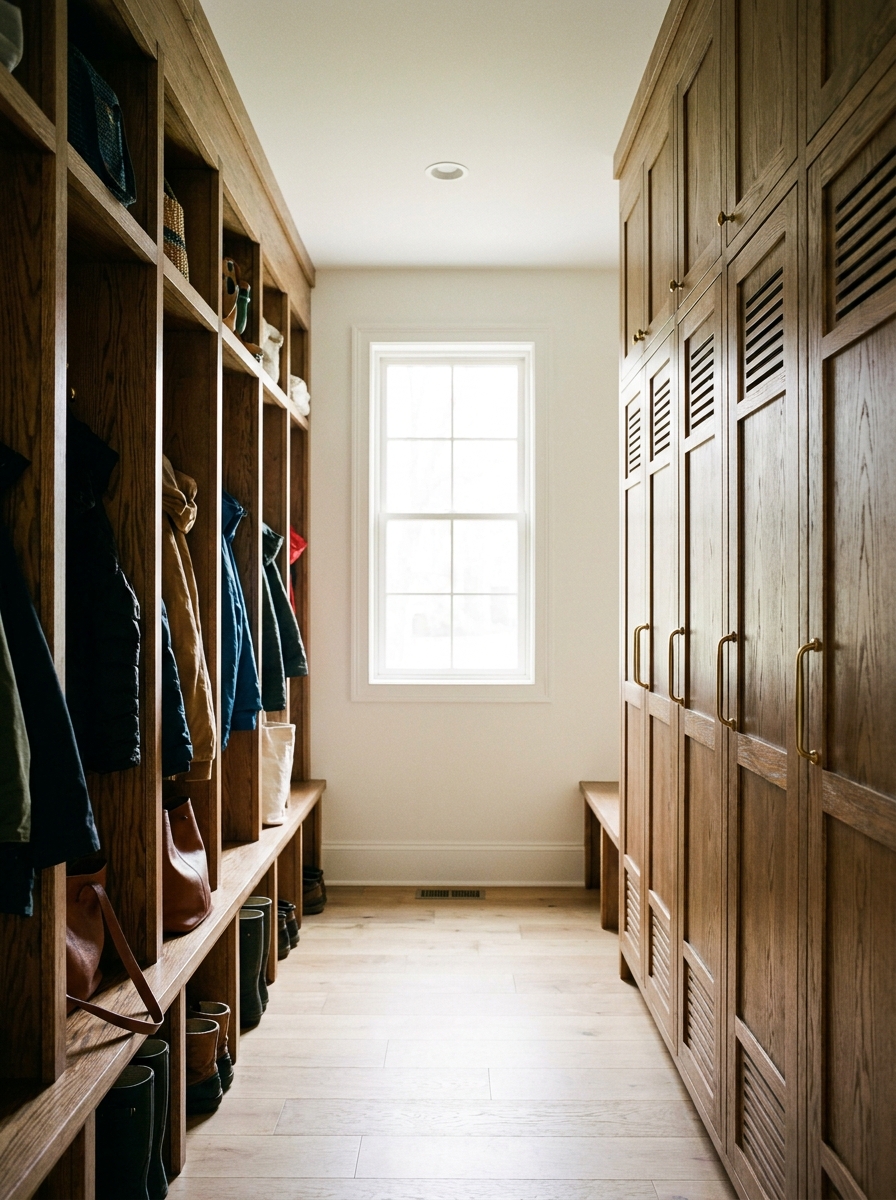
Open cubbies are easier for kids to use independently, allow wet gear to air out, and are generally faster to access in the morning rush. Closed cabinet doors look cleaner and work well for older households where aesthetics matter as much as function. For families with kids under 10, open cubbies win on practical grounds: kids can see their items, grab them without adult assistance, and return them to the right spot. If the visual mess of open storage bothers you, use matching baskets inside the cubbies to create a tidier look without sacrificing accessibility.
Basket Depth and Material for a Mudroom That Gets Wet
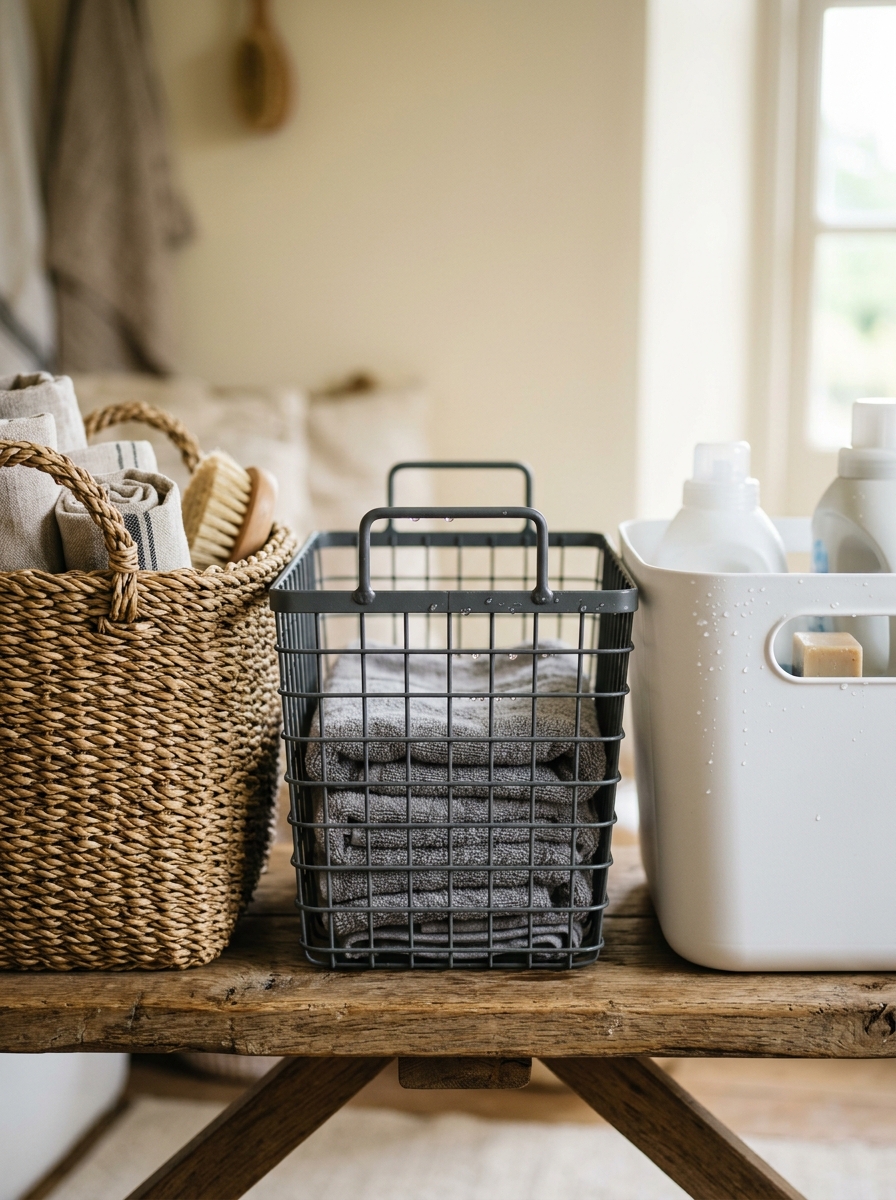
Natural seagrass and woven jute baskets look beautiful in photos and absorb moisture in real life, which leads to mildew and odor in a mudroom environment. Stick to washable polypropylene, coated wire, or HDPE plastic baskets for daily-use cubbies where wet coats and muddy shoes are in the picture. Coated wire baskets also allow better airflow for damp items, which speeds up drying. Reserve natural-fiber baskets for dry storage areas like shelving above the main hooks, where they can handle hats, scarves, and other accessories without absorbing moisture.
Shop cubby baskets and bins
Best value
Small Wicker Storage Baskets for Organizing
Sized for standard cubbies. Buy one per person so each family member has a single landing spot for gloves, hats and keys.
Check price on Amazon →Upgrade pick
Woven Storage Baskets, 5 Pack Decorative Bins
Five matching bins in one order, which is what keeps an open cubby wall looking deliberate instead of collected over time.
Check price on Amazon →As an Amazon Associate we earn from qualifying purchases.
Shoe Storage for Mudrooms: Options Ranked by Floor Space Saved
For a family of three or more, shoe storage strategy matters more than almost any other mudroom decision because footwear volume grows fast and most storage formats underperform at scale. The ranking from most to least floor-space-efficient: pull-out racks and slim vertical towers, wall-based cubbies, ventilated bins, and boot trays.
Pull-Out Racks and Slim Towers for Tight Entries
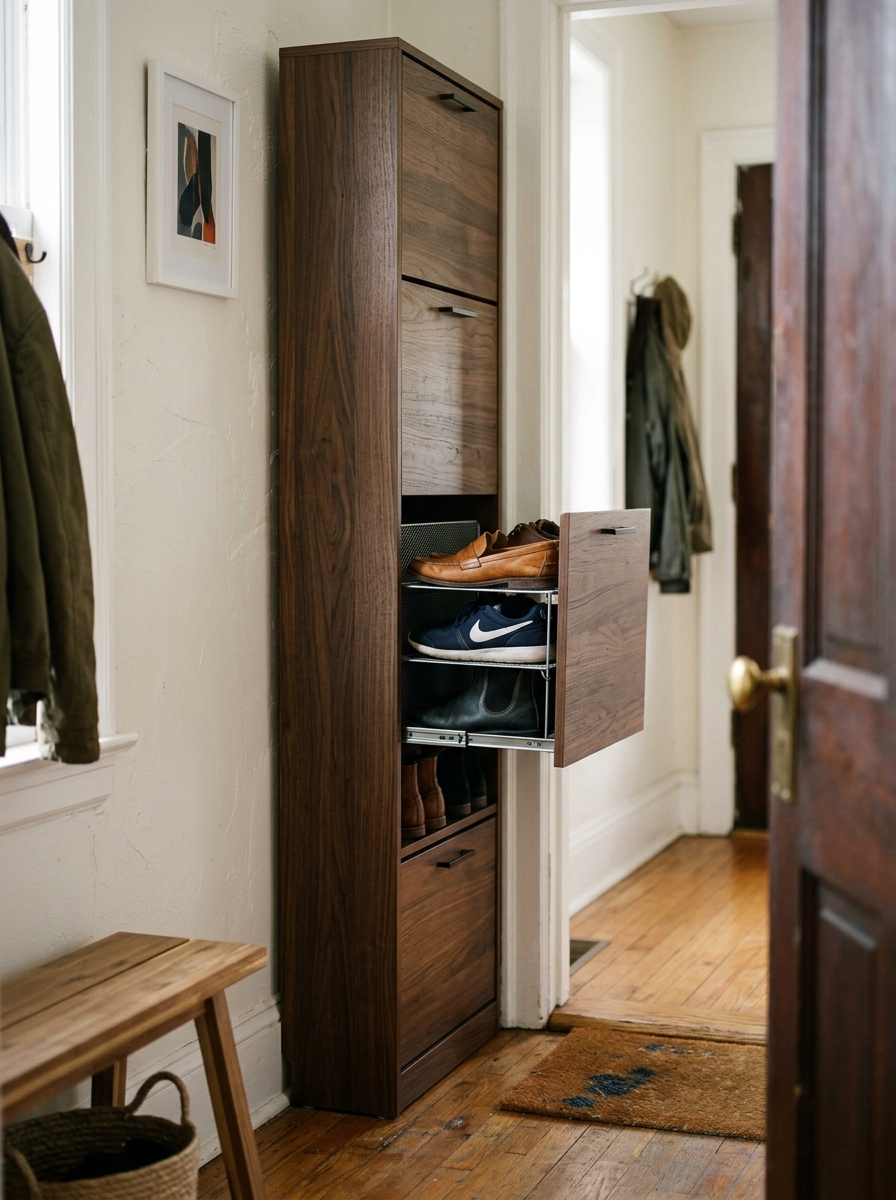
Pull-out racks and multi-tier slim towers store shoes vertically or inside a concealed cabinet, which means they use height and depth rather than spreading across the floor. A slim two-tier tower can hold several pairs in a narrow footprint, look for product listings that specify pairs per tier and overall width before buying so you can match capacity to your household’s actual needs. The IKEA Ställ tilt-out shoe cabinet consistently earns strong reviews for narrow entryways, and the Yamazaki Home 6-Tier Shoe Rack is a solid open-air alternative in the same category. Both come in under $150 and are widely available at U.S. retailers.
Boot Trays and Ventilated Bins: What They’re Actually Good For
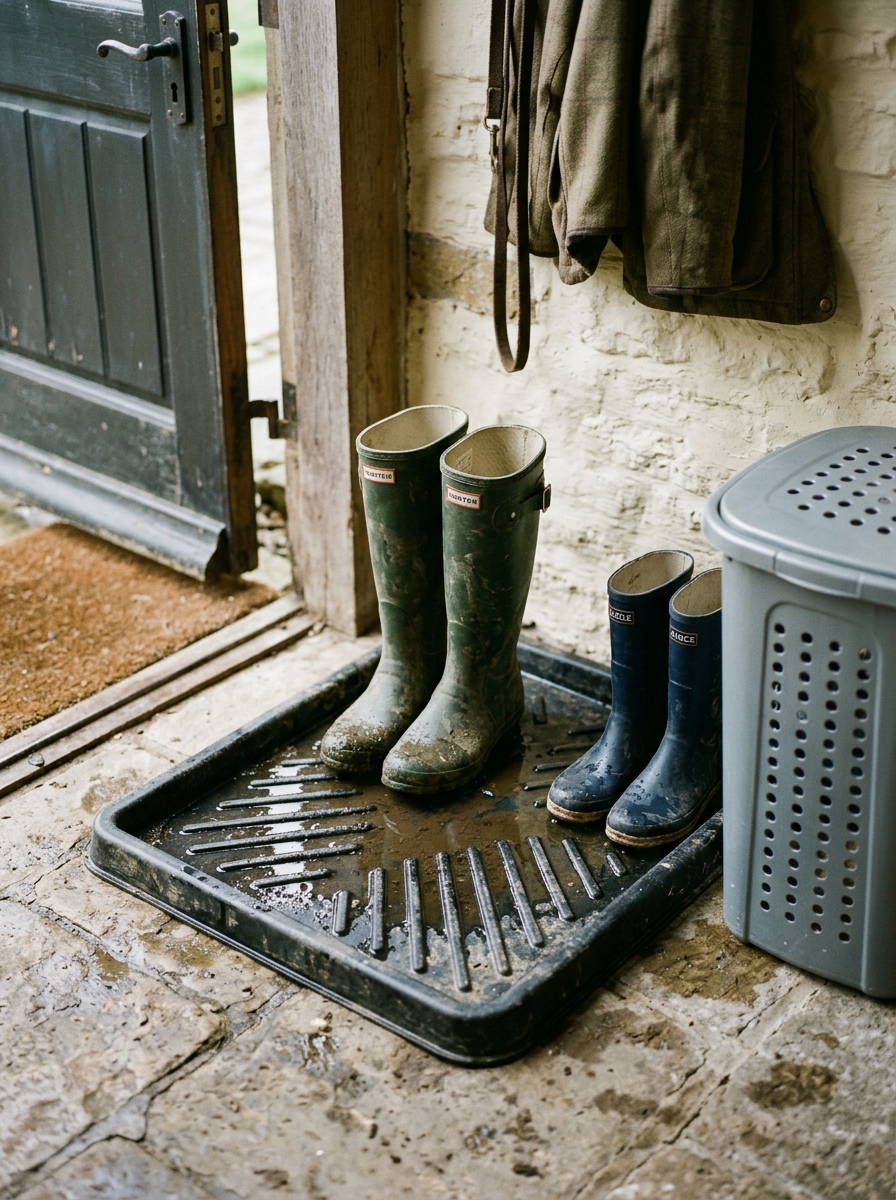
Boot trays are wet-weather tools, not everyday shoe storage systems. Position one near the door for muddy or snow-covered footwear during active weather, then store it when the season passes. Ventilated bins work well for rotating seasonal shoes out of the daily traffic zone: think summer sandals stored in a labeled bin on an upper shelf during winter. Neither format serves as a primary shoe system for a family with regular daily needs. Use them as supplements to your main rack or tower, not replacements.
Shop mudroom shoe storage
Best value
Storage Bench with Cushion and Shoe Shelf
Seat and shoe storage in one footprint. The cushion matters more than it sounds when people sit down to pull boots off.
Check price on Amazon →Upgrade pick
Narrow Shoe Cabinet with 2 Flip Drawers, 31.5 Inch
Only about 9 inches deep, so it works in an entry hallway where a bench would block the path.
Check price on Amazon →As an Amazon Associate we earn from qualifying purchases.
Small Mudroom Hacks for Entries Under 6 Feet Wide
A narrow hallway, a corner of the laundry room, or a door with three feet of clear wall space on each side can still function as an organized entry. If that corner is doing double duty, our small laundry room decor ideas cover how to keep it looking intentional rather than like overflow storage. The principle for tight spaces is consistent: one wall with hooks, a slim bench, and shoe storage. The opposite wall stays clear. Everything goes vertical.
Floating Bench with Under-Seat Baskets: The MVP Small-Space Setup
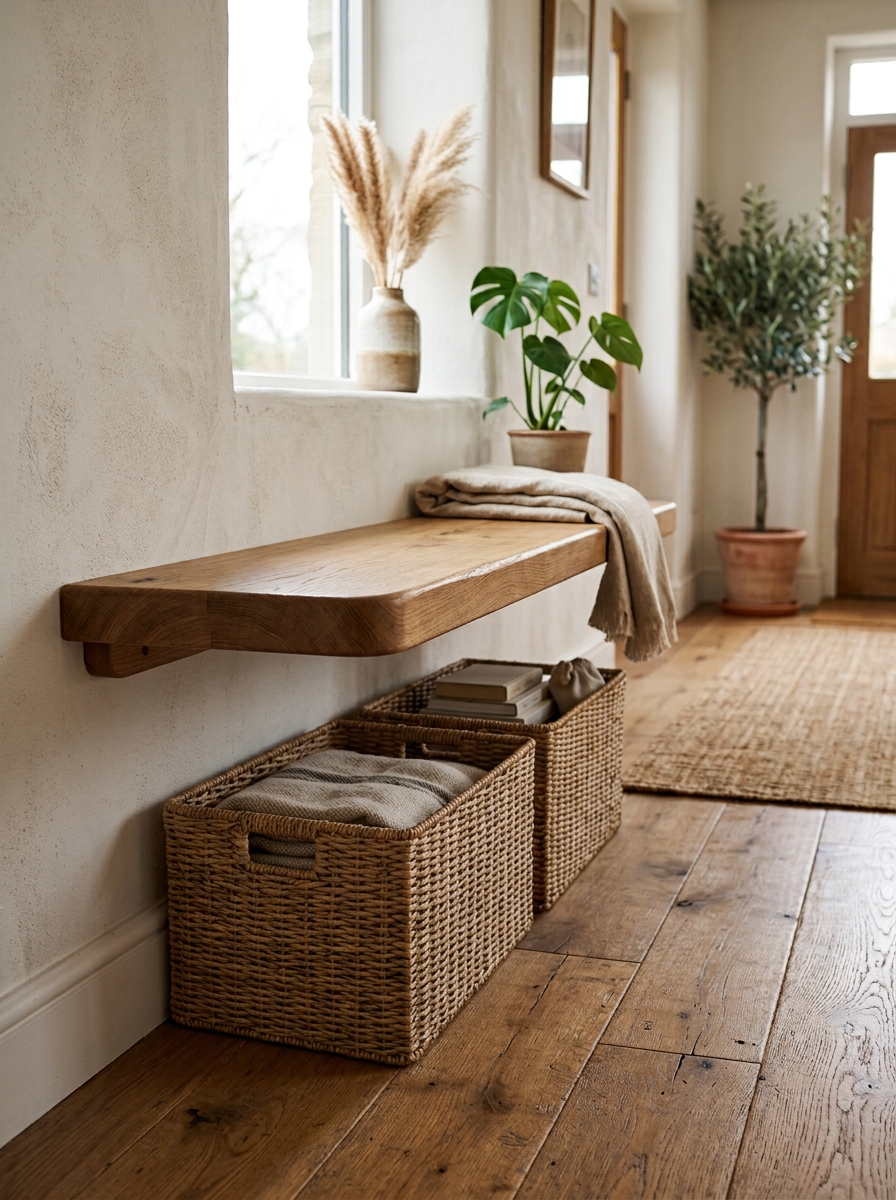
A wall-mounted floating bench is the single best investment for a narrow entry. It provides a place to sit while putting on shoes, keeps the floor visually clear underneath, and creates immediate storage with two or three baskets below. Mount it at 17 to 19 inches from the floor and anchor it to studs, this is a firm safety requirement for a surface that adults and kids will actually sit on. Aesthetic Nest Decor editors’ top pick for small entries is a simple solid-wood floating style; you’ll find it linked with full product specs in our Small Entryway Essentials round-up.
Vertical Shelving and Over-Door Solutions That Reclaim Wall Height
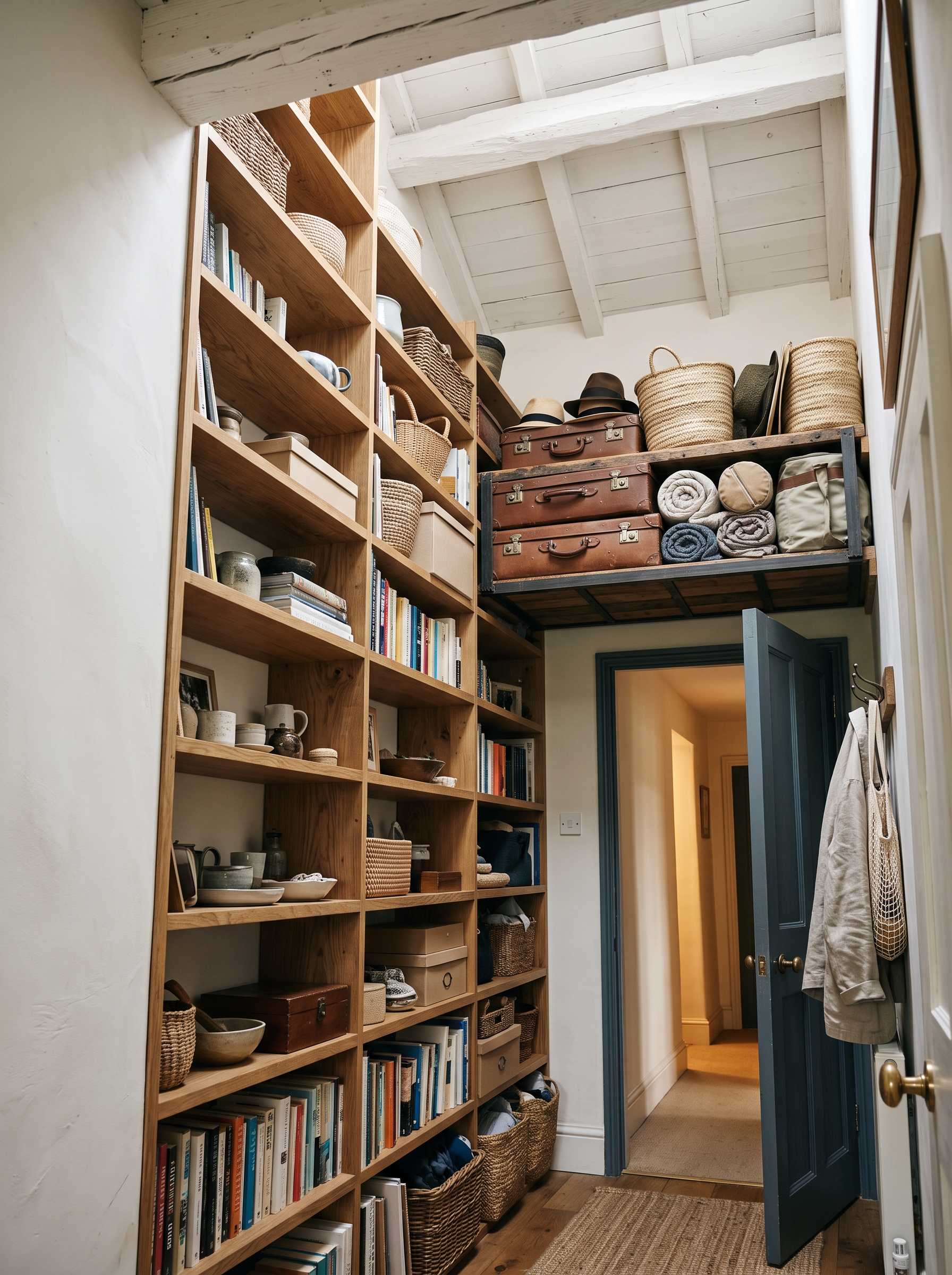
Floor-to-ceiling shelving is the narrow entry’s best tool for adding capacity without consuming width. A single column of shelving 10 to 12 inches deep can hold baskets, seasonal bins, and display items above the primary hook zone. Over-door organizers on the entry door itself are another frequently overlooked entryway storage solution: a simple over-door rack can add four to six pockets for mail, keys, dog leashes, and other grab-and-go items without requiring a single wall anchor.
The one thing to buy this week
Under $20
Heavy Duty Rubber Boot Tray with Raised Lip
The raised lip holds melted snow and mud instead of letting it run onto the floor. Cheapest fix on this page and the one you notice daily.
Check price on Amazon →As an Amazon Associate we earn from qualifying purchases.
Mudroom Cabinet Ideas: Built-In vs. Modular
Most families spend too long debating built-ins versus modular systems before committing to either. The honest answer is that built-ins are worth the cost in specific situations and rarely worth it in others. Knowing which category you’re in saves both money and renovation regret.
What Built-Ins Actually Cost (and When They Earn It)
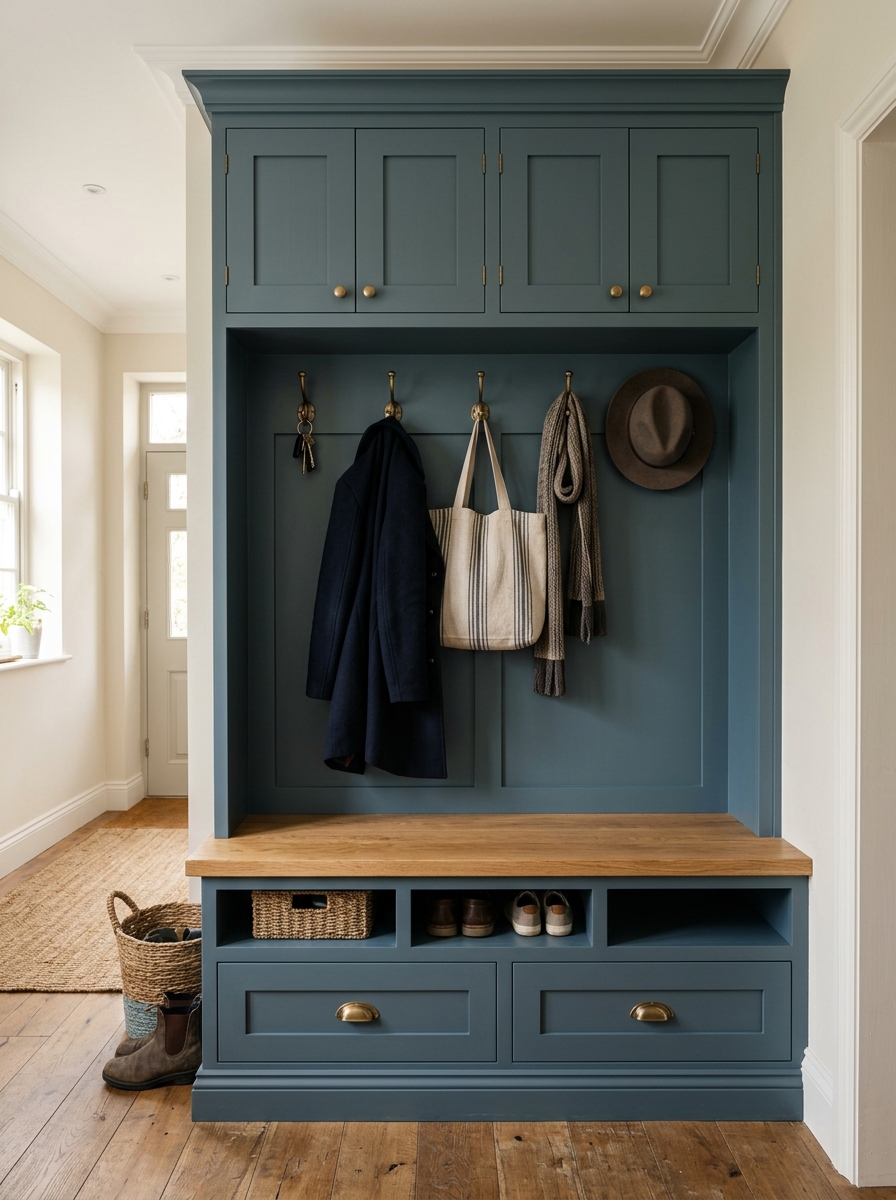
A basic custom mudroom bench with cubbies runs $3,000 to $10,000 installed at 2026 pricing. Full-wall premium systems with cabinetry and lockers reach $12,000 to $22,000. Built-ins earn that price when the mudroom is a permanent feature of the home, when the space has irregular dimensions that off-the-shelf products can’t fill cleanly, or when resale value is part of the calculation. For renters, families in transitional homes, or anyone not planning a long-term stay, the math on custom built-ins rarely holds up.
Best Modular Systems for Under $500
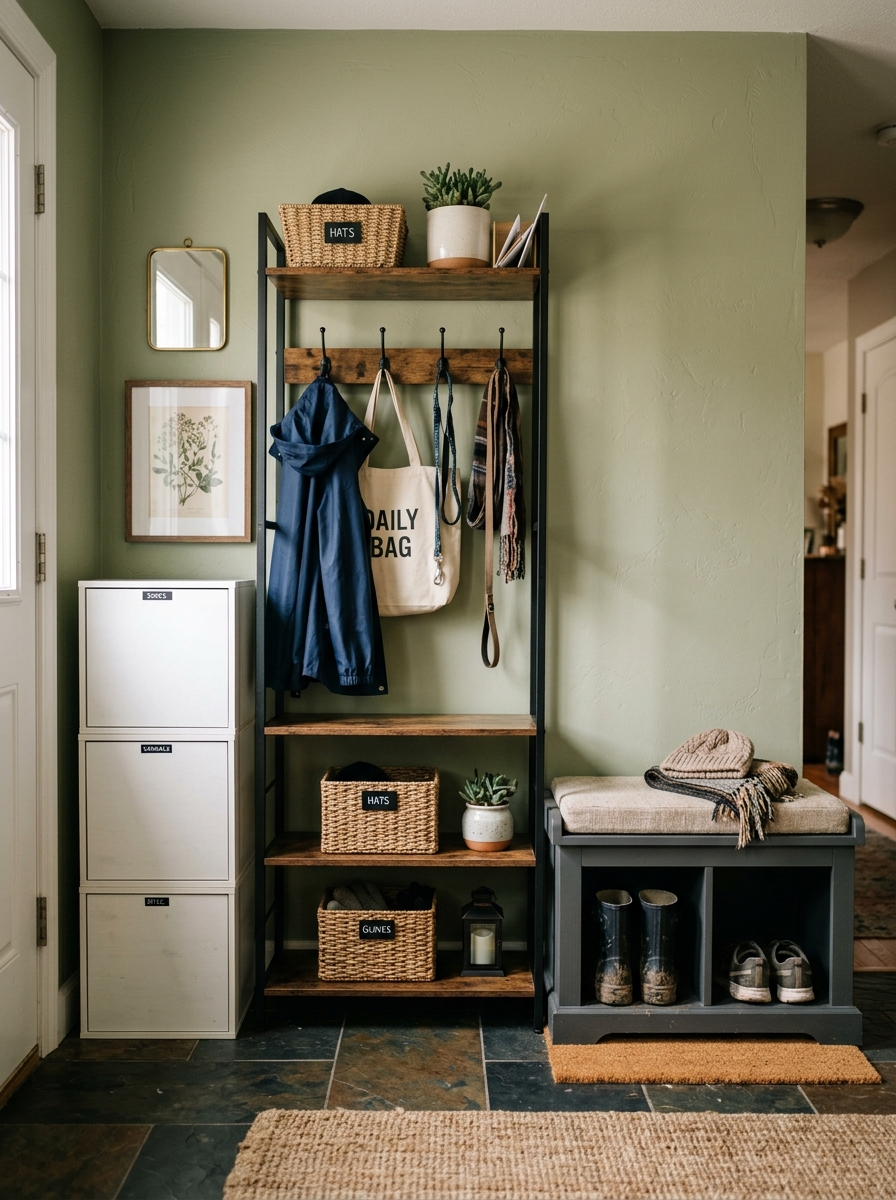
Modular mudroom storage systems in the $200 to $500 range handle the vast majority of family needs without the lead time, contractor coordination, or upfront cost of custom work. IKEA’s HEMNES hallway series offers individual bench pieces starting around $99, with the flexibility to mix benches, shoe storage, cabinets, and shelving to suit your wall length. The real advantage of modular systems isn’t just cost: they reconfigure as kids grow and move with you when you relocate. Aesthetic Nest Decor editors’ top modular picks, sturdy and practical, designed for households where people actually live, are listed with affiliate links in our Mudroom Storage Essentials collection.
Mudroom Storage shopping list
- Wall mounted coat hooks — fit two rails at two heights
- Mudroom storage bench — seat plus shoe storage
- Woven storage baskets — for gloves, hats and leads
- Boot tray — contains the wet by the door
- Over door hooks — no drilling, instant capacity
- Furniture anchor kit — for any tall unit
Prices and availability change. Links open on Amazon.
Start with One Mudroom Storage Idea Today
The right mudroom storage setup isn’t the most expensive or the most elaborate. It’s the one that matches the number of people using the space, the width of the entry, and the daily habits of your household. A custom built-in won’t fix a system problem, and a beautiful basket collection won’t help if there are no hooks to hang the coats on in the first place.
Start with hooks. Add a bench with under-seat storage. Size your cubbies to the people actually using them. Choose shoe storage based on your available floor space, not on how many pairs you wish you could store. The product picks referenced throughout this guide are editorial selections by the Aesthetic Nest Decor team, chosen for real-world family use, because a mudroom that only looks good in a staged photo isn’t actually doing its job.
Pick one mudroom storage idea from this guide and get it ordered or installed this week.