
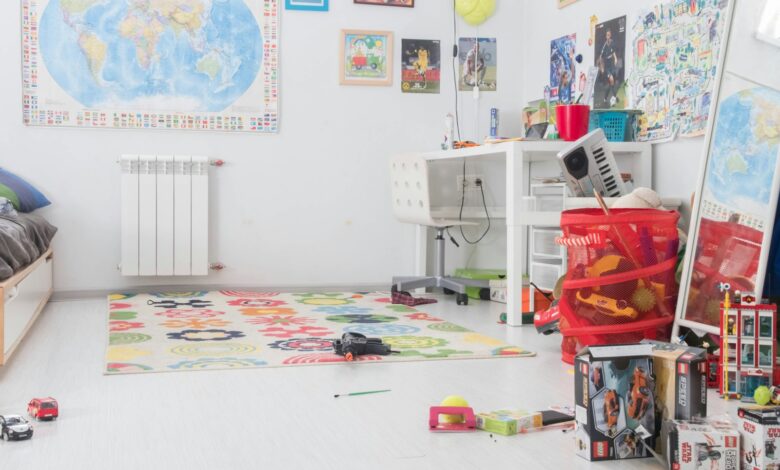
Kids room decor that works beautifully for a two-year-old will feel completely wrong by the time that same child turns nine. And if you’ve already repainted once, bought new bedding twice, and swapped out a cartoon-covered dresser, you know exactly how expensive that cycle gets. The good news is that most parents are making this harder than it needs to be, they’re choosing themes first and infrastructure second.
This guide takes an age-by-age approach to kids room decor, covering toddlers through tweens with specific theme directions, storage strategies, and a shopping breakdown by budget tier. At Aesthetic Nest Decor, our kids’ bedroom guides are built around one core principle: design the base to last, then use accessories to express whatever phase your child is in right now. That’s the framework for everything below.
Want the shortcut?
As an Amazon Associate I earn from qualifying purchases. Some links in this post are affiliate links, at no extra cost to you.
Top picks: Humble Crew Toy Organizer, Peel and Stick Wall Decals and Touch Bedside LED Lamp.
Check price on Amazon →Kids room decor for toddlers: themes and first steps that actually last
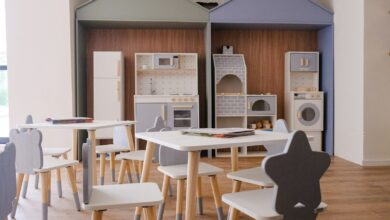
The toddler window, roughly ages one through four, is when parents most often over-commit to a theme. Character-specific licensed decor looks great on day one and often dates within a year or two. The better move is to choose a motif with staying power from the start.
Choosing a theme that won’t feel babyish too soon
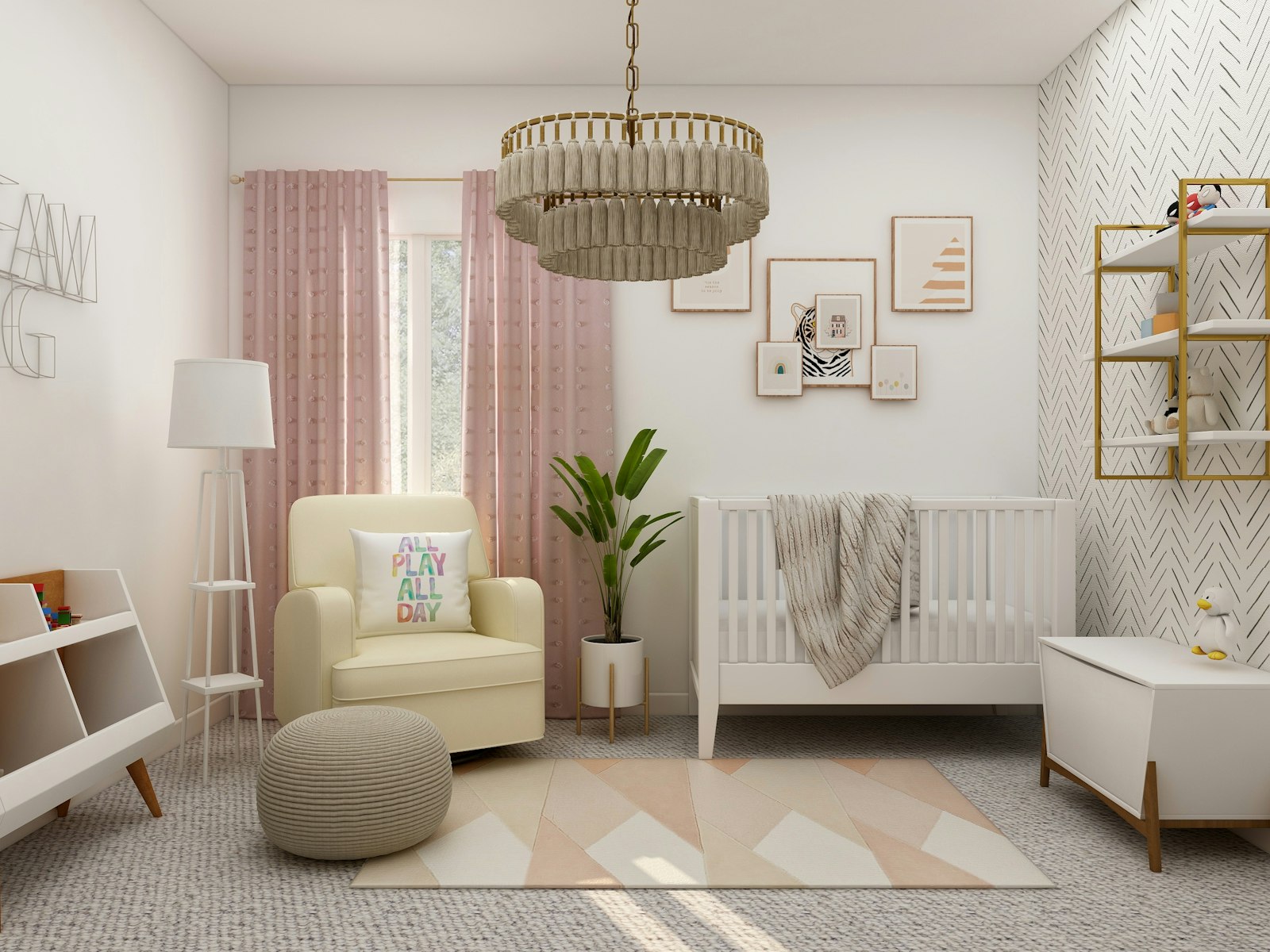
The strongest toddler room directions right now are woodland animals, dinosaurs, under-the-sea, and nature-inspired motifs styled in muted, earthy tones rather than saturated cartoon primaries. These themes age up gracefully because they aren’t tied to a specific character or franchise. A room built around forest animals in sage, warm beige, and terracotta can carry a child comfortably across multiple early childhood years, with only small accessory updates along the way. For more ideas, see our guide to Kids Playroom Decor Ideas: How to Style a Space That Still Gets Played In.
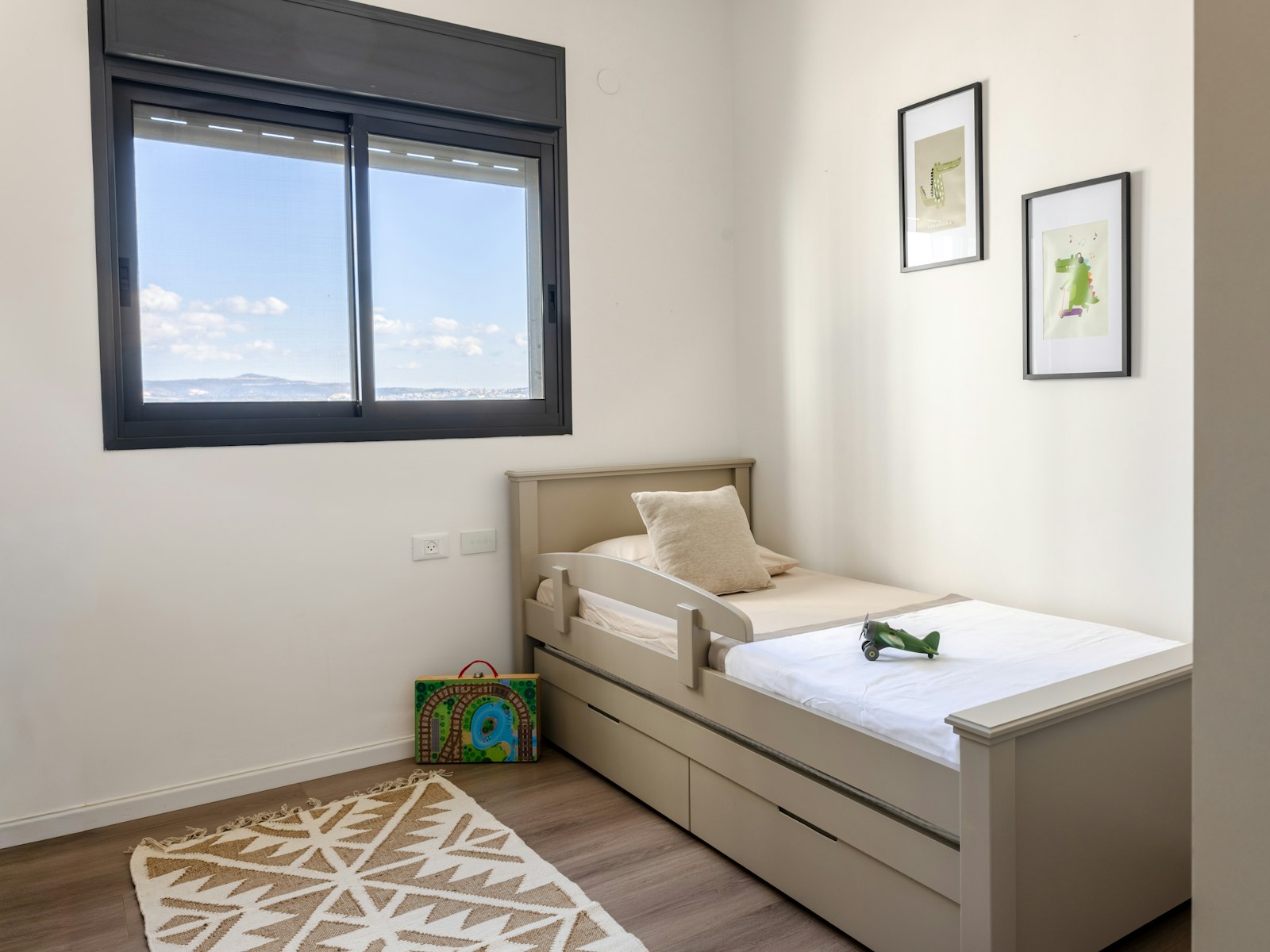
For introducing a theme without committing the walls, use wall decals, a themed duvet cover, and a single statement rug. These three elements do most of the visual work and can all be swapped out without touching the paint or furniture. Peel-and-stick decals from Amazon or specialty decal shops are inexpensive and removable, many run well under $50, and require no tools, no damage, and no long-term commitment.
Safe materials and smart beginner storage
For a toddler’s room, the material decisions matter as much as the aesthetic ones. Choose solid wood furniture with water-based or zero-VOC finishes, organic cotton bedding, and low-VOC wall paint. Engineered wood products like MDF and particleboard often rely on formaldehyde-based adhesives, which are worth avoiding in a room where your child sleeps and plays for hours each day. Look for furniture labeled GREENGUARD Gold certified if you want a straightforward quality check.
Storage logic for this age is simple: keep it low and keep it open. Low shelves your toddler can reach independently, a few labeled fabric baskets for toys, and a cube organizer like the IKEA TROFAST (storage combinations run $97 to $149) give you a functional system without blocking sightlines or creating climbing hazards. The goal is a clear floor for play and a place for everything that’s easy enough for a three-year-old to use. Walmart bins in the $5 to $15 range fill out the system without stretching the budget.
School-age kids room decor: rooms that reflect who they’re becoming
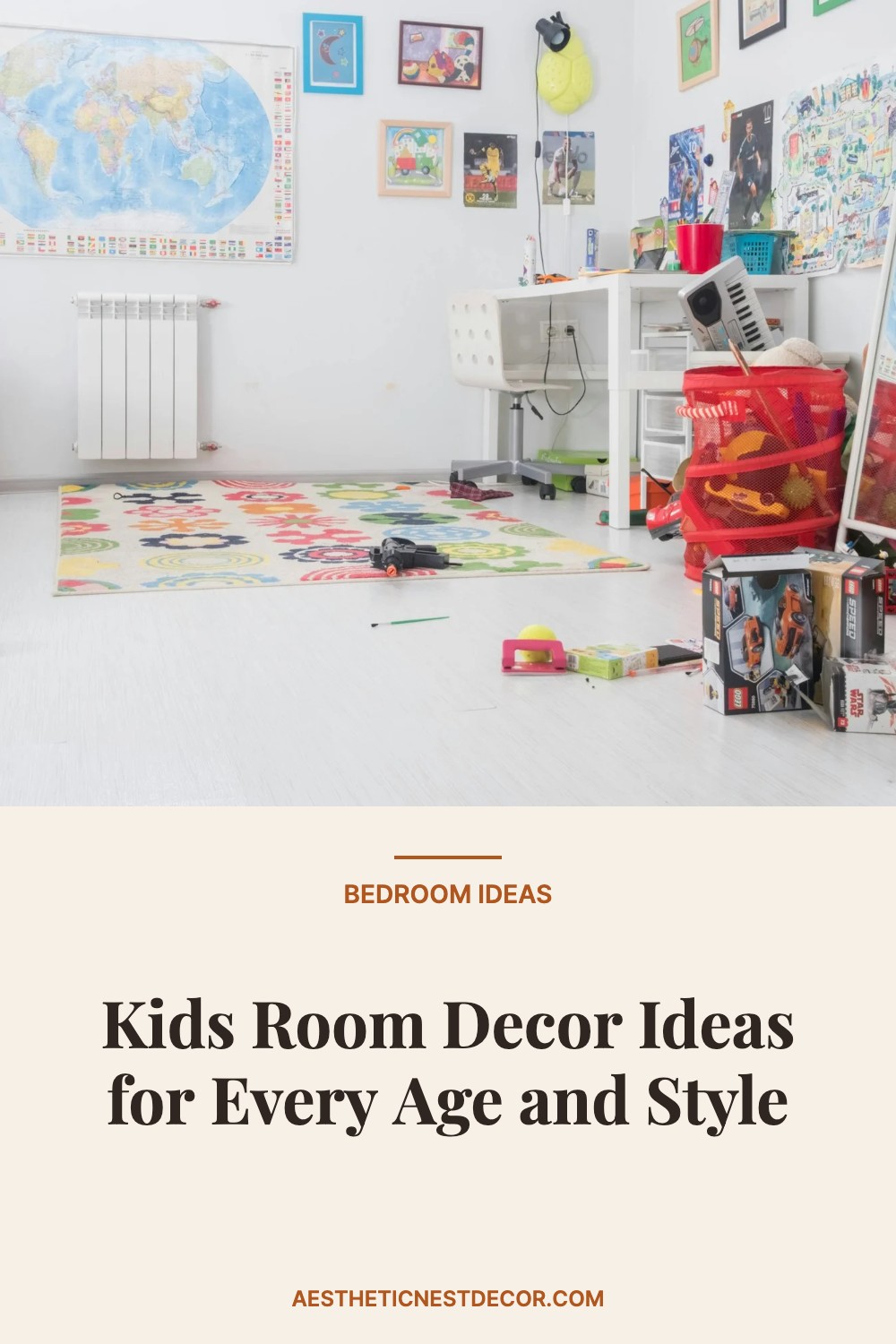
The elementary years, roughly ages five through ten, are when a generic “kid room” stops feeling right. Your child has real interests now, and the room is a place where they do homework, host friends, and spend time alone. It needs to do more than look cute.
Interest-led themes that move past generic “kid style”
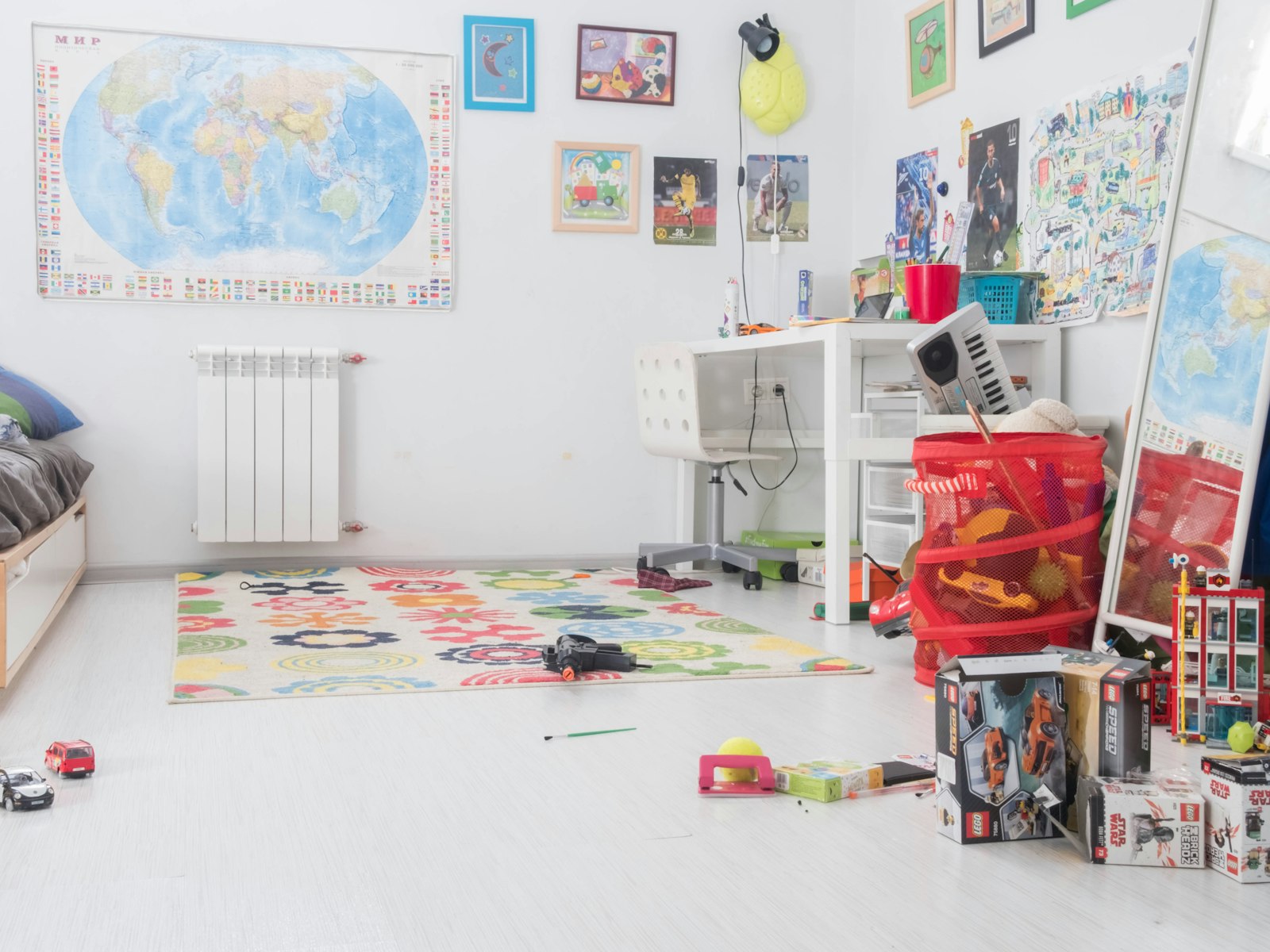
This is the age where a room can and should reflect a specific child’s personality. Sports, science, music, maps and travel, nature collections, a favorite color story, these all make for rooms that feel personal rather than generic. The approach that works best is pairing a neutral base (sage green, warm beige, dusty blue) on the walls with interest-specific accessories rather than committing to wall-to-wall themed wallpaper. When the interests shift, the accessories change. The walls stay put. We cover this in more detail in Kids Bedroom Decor Ideas That Balance Fun and Function.
Specific accent pieces to focus on: a themed rug, two or three framed art prints, open display shelves for collections, and a personalized bulletin board. Together, these give the room a clear personality without requiring a structural commitment. They’re also what you change first when your kid decides they’re done with soccer and exclusively interested in astronomy.
Building in a study zone without crowding the room
A study zone doesn’t need a lot of space to work. A wall-mounted fold-down desk or a narrow freestanding desk pushed against one wall, paired with a good task lamp and a few desktop organizers, is enough to create a functional homework area. IKEA and Target both carry budget-friendly desk options in the $60 to $120 range that do the job without eating up the entire room. The key is keeping the study zone visually distinct from the sleep zone, even in a small room. A small rug under the desk, a different lighting source, or even just a different color on that wall section creates enough separation to make the space feel intentional.
Tween room decor: when the cartoon phase is officially over
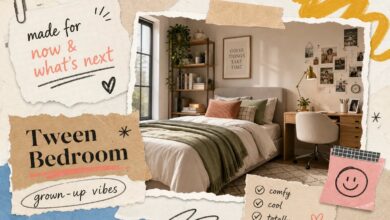
At some point between ages ten and thirteen, most kids announce they want their room to look “more grown-up.” This is not a crisis. It’s actually the most design-forward age group because tweens are old enough to have real preferences and mature enough to commit to a direction.
Style directions that replace character-based decor
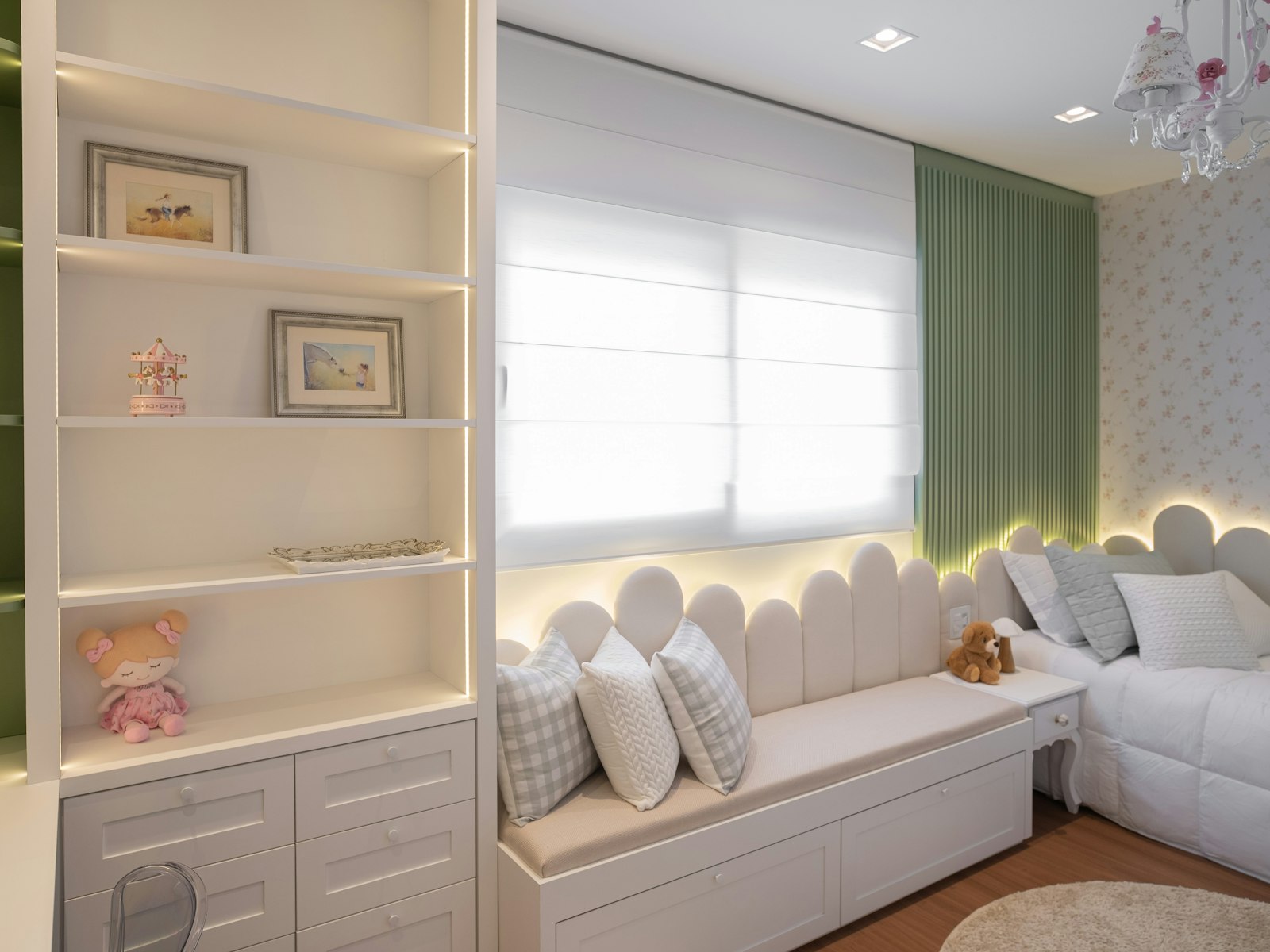
Forget specific themes and think in style identities instead: sporty-modern, boho layered, minimalist-cool, travel-inspired, or artsy and maximalist. These directions give the room a cohesive look without being childish. Mood lighting does a lot of heavy lifting at this age. String lights, an adjustable arc lamp, or a dimmable bedside lamp immediately make a room feel older and more intentional. Layer bedding in muted palettes (dusty blue, warm terracotta, olive, or blush) and add one or two statement art pieces rather than a collection of small prints. You might also like Winter Bedroom Decor: 4 Layers for the Coziest Room in the House.
Browse Pinterest with your tween before buying anything. Spend a few minutes saving images together, identify what they have in common, and you have a design brief, one they actually feel ownership over. That brief is what you shop from, and that shared process tends to reduce conflict because the direction came from them, not at them. A reader favorite for this is the Sorbus Cube Storage Bins.
Desk, display, and lighting upgrades for older kids
By the tween years, the study zone is no longer optional. A proper desk with drawer storage, a task light with enough wattage to actually work by, and a comfortable chair are worth prioritizing in the budget. Floating shelves are the right display solution at this age: they’re clean, they hold art prints and small collections without taking up floor space, and they look significantly more grown-up than the cube organizer from a few years ago. For bedding, Pottery Barn Kids and West Elm offer quality, durable pieces worth considering for larger items built to last. For lighting, Target’s selection in the $30 to $80 range covers the basics without overspending on something the tween will want to update in a year or two anyway. If you are shopping for this, the Humble Crew Toy Organizer is a well-reviewed option.
Shop the look: Storage
 Humble Crew Toy OrganizerEasy cleanupCheck price on Amazon →
 Sorbus Cube Storage BinsKid-height cubbiesCheck price on Amazon →
 Humble Crew Kids BookshelfBooks they can seeCheck price on Amazon →
 Melissa & Doug Wooden Toy ChestHides bigger toysCheck price on Amazon →
As an Amazon Associate we earn from qualifying purchases. Prices and ratings change, so check Amazon for today’s details.
Decor that grows with your child: the future-proof approach
The single most useful mindset shift for decorating a kids’ room is separating what stays from what changes. Most parents get this backwards, spending on themed items that lock them in and then skimping on the structural pieces that should actually last.
Start with a neutral base and change the accessories
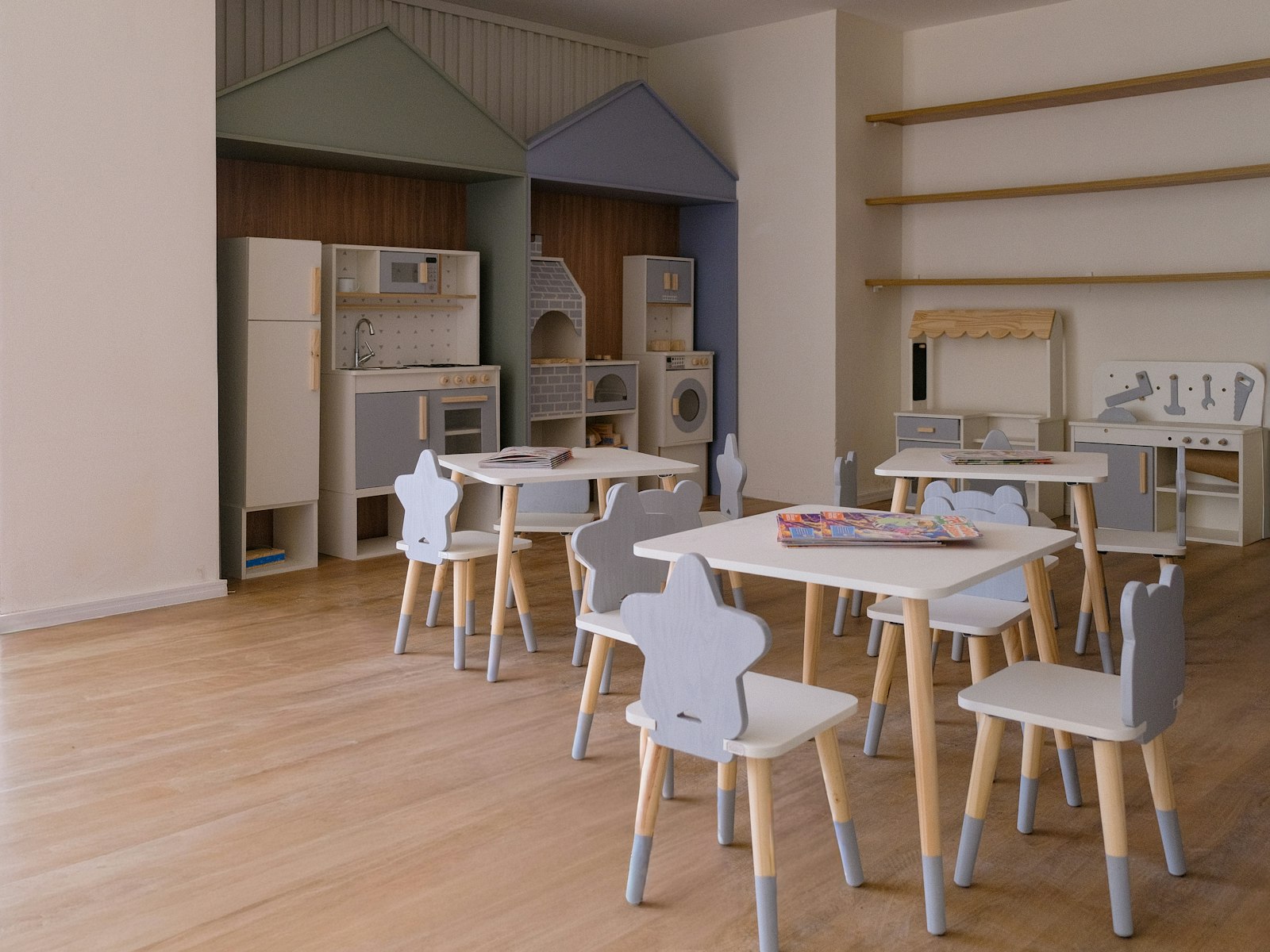
Paint the walls and invest in larger furniture pieces in flexible, neutral tones: warm beige, sage green, soft white, or warm gray. These colors work across every age and every theme. Then use bedding, rugs, kids wall decor, and small accessories to express the current phase. When your child grows out of the dinosaur stage, you swap the rug and the duvet cover, not the dresser and the bookcase. This approach saves money and reduces decorating fatigue without asking your kid to sleep in a beige box with no personality.
2026 color palettes that work from toddler to teen
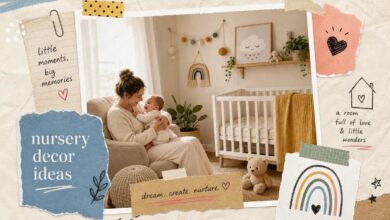
The earthy, muted color story driving kids room decor in 2026 is worth understanding because it’s inherently flexible. Sage green, terracotta, warm ochre, dusty blue, muted blush, and warm taupe all outlast bright primaries and licensed character colors, they’re sophisticated enough to still feel right at age twelve. A simple formula that works at every age: one wall color, two complementary textile colors for bedding and rug, one accent piece like a lamp or framed print, and one themed element you can swap as interests evolve. That’s the whole system. If you want to go further, read Nursery Decor Ideas to Inspire Your Baby’s Perfect Room.
Shop the look: Decor
 Peel and Stick Wall DecalsChange themes as they growCheck price on Amazon →
 Wonder Space Kids Bed CanopyA cozy reading spotCheck price on Amazon →
 OLANLY Washable Area RugSoft and washableCheck price on Amazon →
 SEHSUVC Alphabet Wall ArtEasy art swapsCheck price on Amazon →
As an Amazon Associate we earn from qualifying purchases. Prices and ratings change, so check Amazon for today’s details.
Storage solutions that work at every age and room size
Storage is where kids’ rooms most often fail, not because there isn’t enough of it, but because it’s the wrong kind in the wrong place. Getting this right once saves you from reorganizing every couple of years.
Vertical shelving and under-bed storage for small rooms
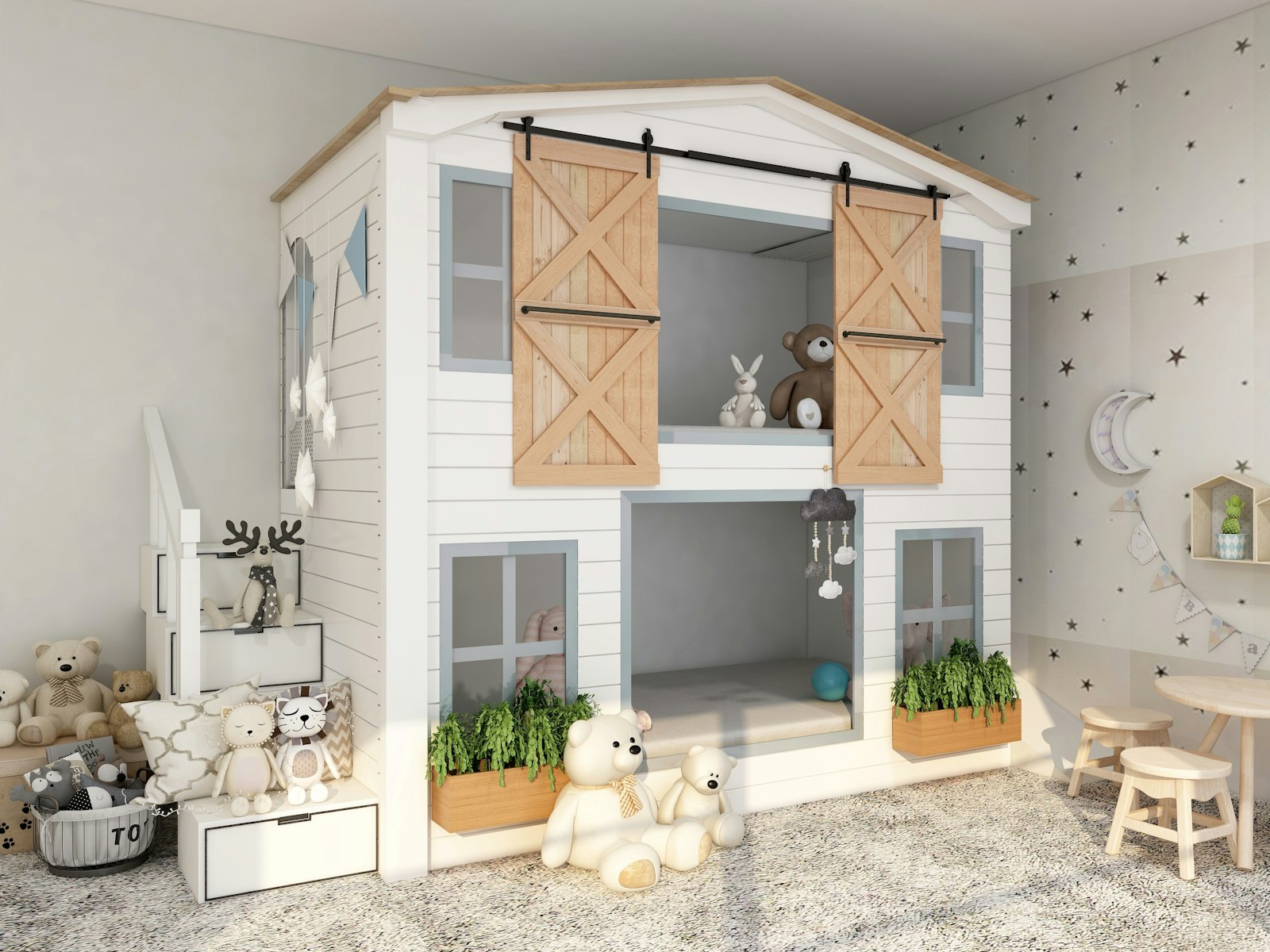
Vertical space is the most underused resource in a child’s bedroom. Wall shelves, placed at child-reachable height for younger kids and higher for tweens, keep the floor clear without sacrificing storage capacity. For rooms under 150 square feet, under-bed storage is the single best move: rolling bins and flat drawers handle extra bedding, seasonal toys, and out-of-rotation clothes without requiring additional furniture. The IKEA TROFAST and FLISAT systems are well-regarded starting points in the $20 to $150 range and hold up through multiple years and multiple phases.
Cube organizers and labeled bins for shared bedrooms
For kids sharing a room, cube organizers with color-coded or labeled fabric bins give each child a defined zone. Labeled, intuitive kids storage solutions increase the likelihood kids will help with cleanup, and faster cleanup means less friction for everyone. Bench-style storage with hidden bins is a dual-purpose solution that earns its floor space near a door or at the foot of a bed. Most of these systems carry easily from the toddler years through elementary school, so the upfront cost spreads across several years of use rather than getting replaced every other season. Related: Guest Bedroom Decor Ideas That Make Visitors Feel at Home.
Where to shop and what to spend: a quick budget breakdown
Budget planning for a kids’ room works better when you organize it by item type rather than by store. Some categories reward spending more; others don’t.
Budget picks under $50 per item
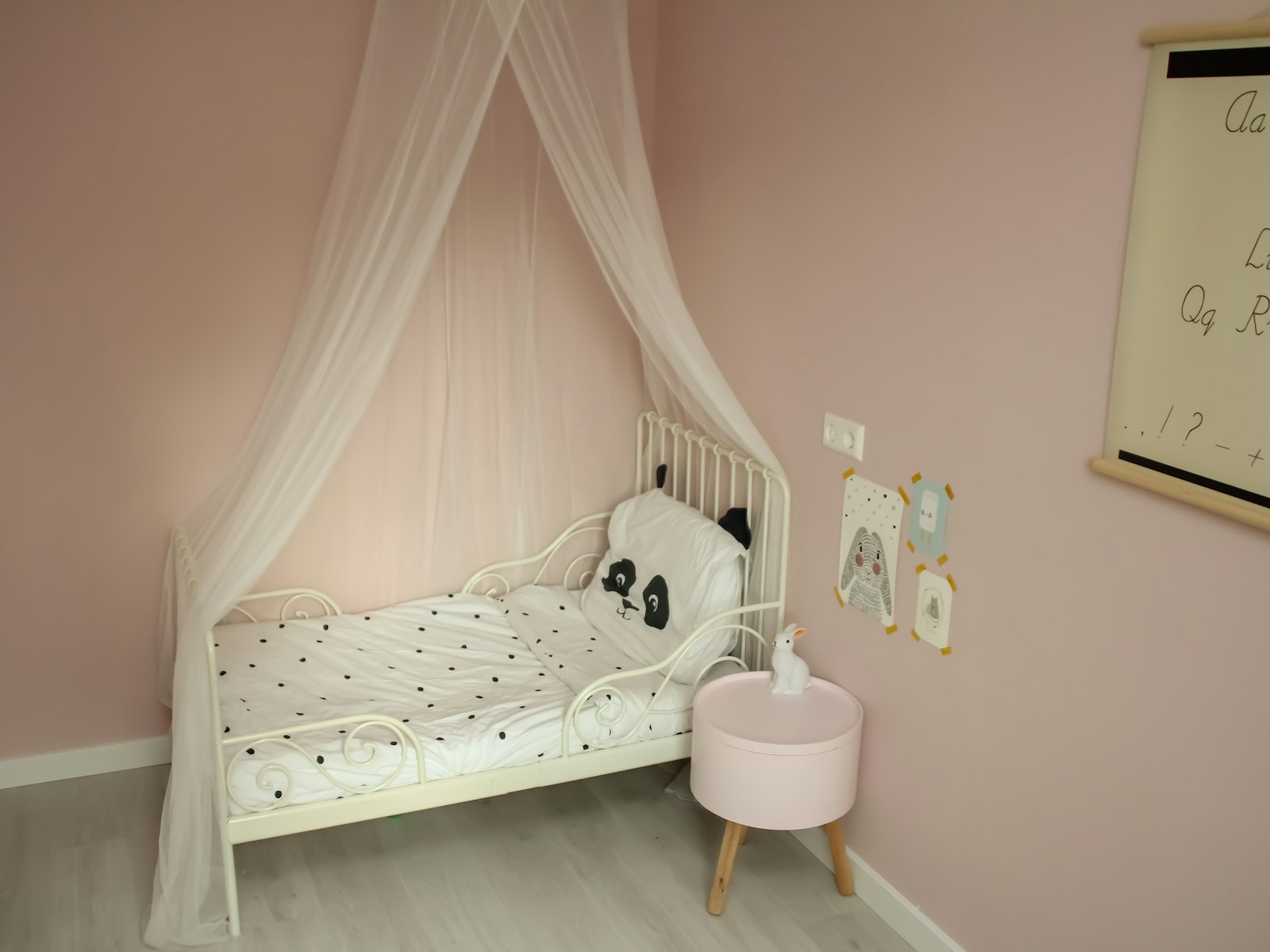
IKEA covers most of the basics well at this tier: rugs from $15 to $30, kids storage solutions from $10 to $150, kids bedding and lighting from $17 to $40. Walmart fills in similar price points for bins, basic rugs, and small lamps. Peel-and-stick kids wall decor from Amazon or specialty shops handles the themed detail without permanent commitment. Buy storage, basic lighting, and decals at this tier. These are the items most likely to change as your child grows. A reader favorite for this is the Kids Desk Lamp.
Mid-range and splurge options worth the price difference
Target is the reliable mid-range choice for rugs ($20 to $120) and bedding ($20 to $100), with enough variety to find something that fits the room without overspending. Pottery Barn Kids and West Elm are worth considering for larger rugs with better durability, solid wood furniture pieces, and quality kids bedding and lighting that holds up through repeated washing and years of use. The principle is straightforward: spend more on what stays, spend less on what changes. A quality area rug can last many years with proper care; a themed duvet cover may only last until the phase ends, often a year or two for younger children.
For more room-specific shopping breakdowns and age-appropriate kids room decor guides, Aesthetic Nest Decor’s kids’ bedroom content goes deeper on each of these categories, including specific product picks organized by room size, age group, and budget. If you are shopping for this, the Touch Bedside LED Lamp is a well-reviewed option.
Shop the look: Lighting and comfort
 Touch Bedside LED LampCalm bedtime glowCheck price on Amazon →
 Kids Desk LampLight for homeworkCheck price on Amazon →
 Big Joe Classic Bean BagComfy reading seatCheck price on Amazon →
 Reginary Flower Floor CushionsFloor seating for playCheck price on Amazon →
As an Amazon Associate we earn from qualifying purchases. Prices and ratings change, so check Amazon for today’s details.
Shopping list
- Humble Crew Toy Organizer — easy cleanup
- Sorbus Cube Storage Bins — kid-height cubbies
- Humble Crew Kids Bookshelf — books they can see
- Melissa & Doug Wooden Toy Chest — hides bigger toys
- Peel and Stick Wall Decals — change themes as they grow
- Wonder Space Kids Bed Canopy — a cozy reading spot
- OLANLY Washable Area Rug — soft and washable
- SEHSUVC Alphabet Wall Art — easy art swaps
- Touch Bedside LED Lamp — calm bedtime glow
- Kids Desk Lamp — light for homework
- Big Joe Classic Bean Bag — comfy reading seat
- Reginary Flower Floor Cushions — floor seating for play
Prices and availability change. Links open on Amazon.
Keep reading: Kids Playroom Decor Ideas: How to Style a Space That Still Gets Played In · Kids Bedroom Decor Ideas That Balance Fun and Function · Winter Bedroom Decor: 4 Layers for the Coziest Room in the House · Nursery Decor Ideas to Inspire Your Baby’s Perfect Room · Guest Bedroom Decor Ideas That Make Visitors Feel at Home
Helpful resources: the CPSC Anchor It! tip-over guidance, the AAP childproofing checklist, the ENERGY STAR light bulb guide.
Frequently Asked Questions
How do I decorate a kids room on a budget?
Use removable wall decals, washable rugs and simple storage bins. These are inexpensive and easy to change as your child grows.
What colors are best for a kids room?
Soft neutrals with one or two accent colors age better than bold themes and work from toddler to tween.
How can I make a kids room easy to keep tidy?
Store toys at kid height in labeled bins so children can put things away themselves.
Start here, adjust as they grow
Great kids room decor isn’t about choosing a perfect theme today. It’s about building a flexible base that evolves without requiring a full redo every few years. Toddlers need safe materials and simple, swappable themes. School-age kids need rooms that reflect real interests and support homework. Tweens need personalized spaces that feel age-appropriate without looking like a design magazine they’ll never actually live in.
The practical path forward: paint the walls and buy the large furniture in a neutral tone, then layer in personality through textiles, kids room accessories, and thoughtful lighting. When the interests shift, and they will, you’re updating the duvet and swapping a rug, not starting over from scratch. That approach saves money, reduces stress, and keeps the room feeling right as they grow.
Aesthetic Nest Decor’s kids’ bedroom guides cover each age group and room type in detail, with specific decor picks, storage solutions, and styling formulas built for real homes and real budgets. If you want to go deeper on any room or age group covered here, that’s your next stop.
Save This for Later
Pin this image to your Pinterest board so it is ready when you need it.