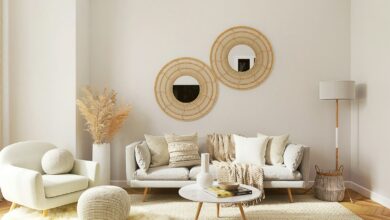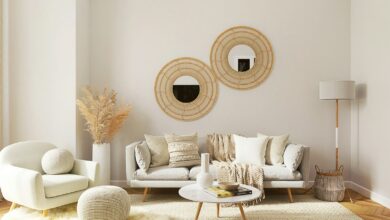

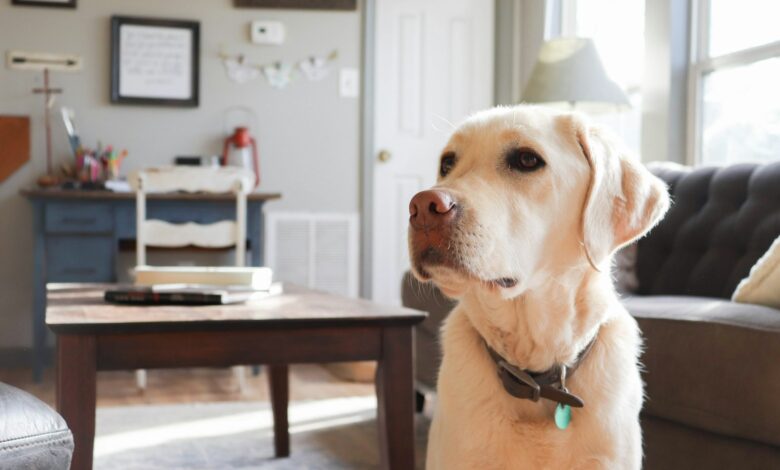
Dog proof home design is the art of balancing style and durability so your house looks intentional even with real dog life happening inside it. Most dog owners hit the same wall at some point: you want a home that looks considered, not one that quietly surrendered to pet life. The dog bed dominates the living room, the couch looks like it lost a fight, and the entryway smells like wet Lab no matter what you do. The frustrating part is that none of this is inevitable. A home designed around real dog life can look just as polished as any room you’d find in a shelter magazine, because the choices that make a home durable are often the same ones that make it feel clean and intentional.
At Aesthetic Nest Decor, we write a lot about function meeting aesthetics in every room of the house. The pet-friendly angle is one we return to often, because it’s where readers feel the tension most. This guide breaks it down room by room: flooring, textiles, entryway configuration, room-by-room storage and safety, and built-in features worth budgeting for. Start with whatever room creates the most daily friction, and build from there.
Want the shortcut?
As an Amazon Associate I earn from qualifying purchases. Some links in this post are affiliate links, at no extra cost to you.
Top picks: Washable 2×6 Runner Rug, Retractable Pet Gate and Bissell Pet Hair Eraser Hand Vacuum.
Check price on Amazon →Dog Proof Home Design: Flooring That Holds Up to Paws and Daily Chaos
Flooring is the single most impactful material decision in any pet-friendly home. Everything else is easier to change, but the floor is under every interaction, every muddy entrance, every water bowl spill, and every zoom session across the house. Getting this right from the start saves a lot of regret.
Luxury vinyl plank: the practical sweet spot for most dog owners
Luxury vinyl plank consistently earns the top spot for pet households for one reason: it does everything adequately rather than excelling at one thing while failing at another. It’s fully waterproof and scratch-resistant when you choose a thick wear layer. Many flooring professionals recommend a 12 mil or higher wear layer for pet homes, though your installer can advise based on your specific breed and household traffic. It’s also warmer underfoot than tile for most homeowners, and available at an installed cost of roughly $5 to $12 per square foot including labor. When shopping, pay attention to the surface texture: a hand-scraped or embossed finish hides claw marks far better than a high-gloss smooth finish that telegraphs every scratch. For more ideas, see our guide to Pet-Friendly Furniture: What to Look for Before You Buy.
Click-lock installation is worth prioritizing if you want easier future replacement of damaged planks, this is a widely cited installer recommendation, and it makes a practical difference when a section gets gouged or water-damaged. Look for this feature when comparing products at the same price point.
When tile or sealed concrete makes more sense
Tile wins in rooms where moisture is the primary threat: bathrooms, kitchens, and mudrooms. Porcelain in particular is virtually scratch-proof and handles standing water, wet paws, and cleaning chemicals without complaint. Sealed concrete serves the same performance role in open-plan spaces or homes going for an industrial-modern look. The real caveat with both is slip risk: wet paws on a smooth tile surface is a genuine hazard. Choose a matte or textured finish, and use non-slip bath mats in high-rinse zones to reduce falls.
If you already have hardwood floors
Don’t rip them out unless they’re already damaged beyond recovery. Harder species like hickory, white oak, and Brazilian cherry hold up better than softer options like pine or cherry. A fresh coat of polyurethane in a satin or matte finish adds protection and hides wear better than high-gloss. Area rugs in high-traffic zones, hallways, play areas, and the path from the back door, protect the wood underneath while giving the room a layered, styled look. This is a maintenance strategy, not a permanent fix, but it can extend a hardwood floor’s lifespan significantly in a dog household.
Furniture Fabrics and Washable Rugs Worth Buying Once
The second layer of any dog proof home design effort is textiles: what the couch is made of, what the rug looks like after six months, and whether your living room still feels pulled-together when company arrives. Performance fabrics have become much more common and better engineered in recent years, and there’s no reason to choose between durability and a room that looks designed. We cover this in more detail in Pet-Friendly Home Decor Ideas That Still Look Stylish.
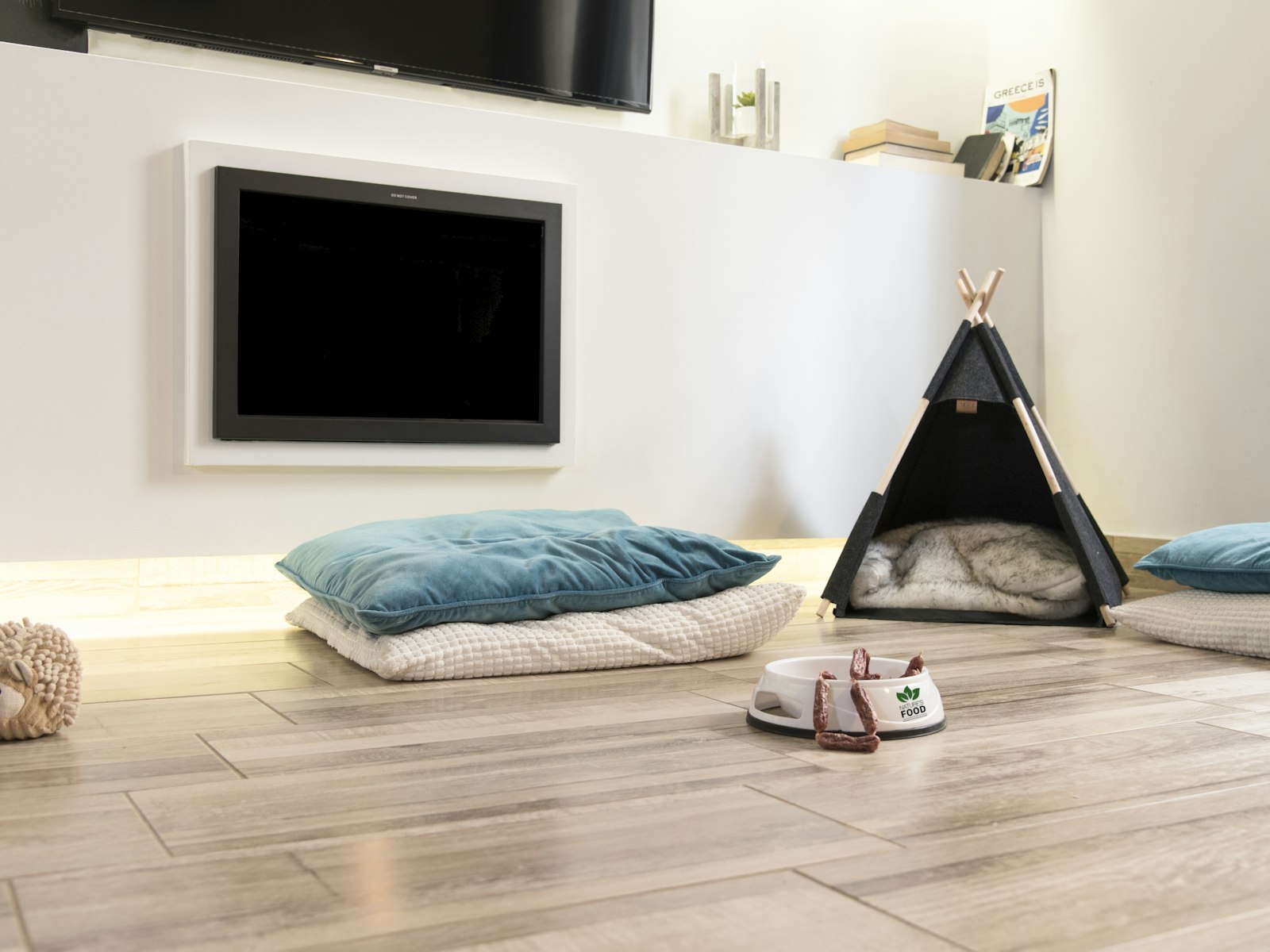
The performance fabric categories dog owners need to know
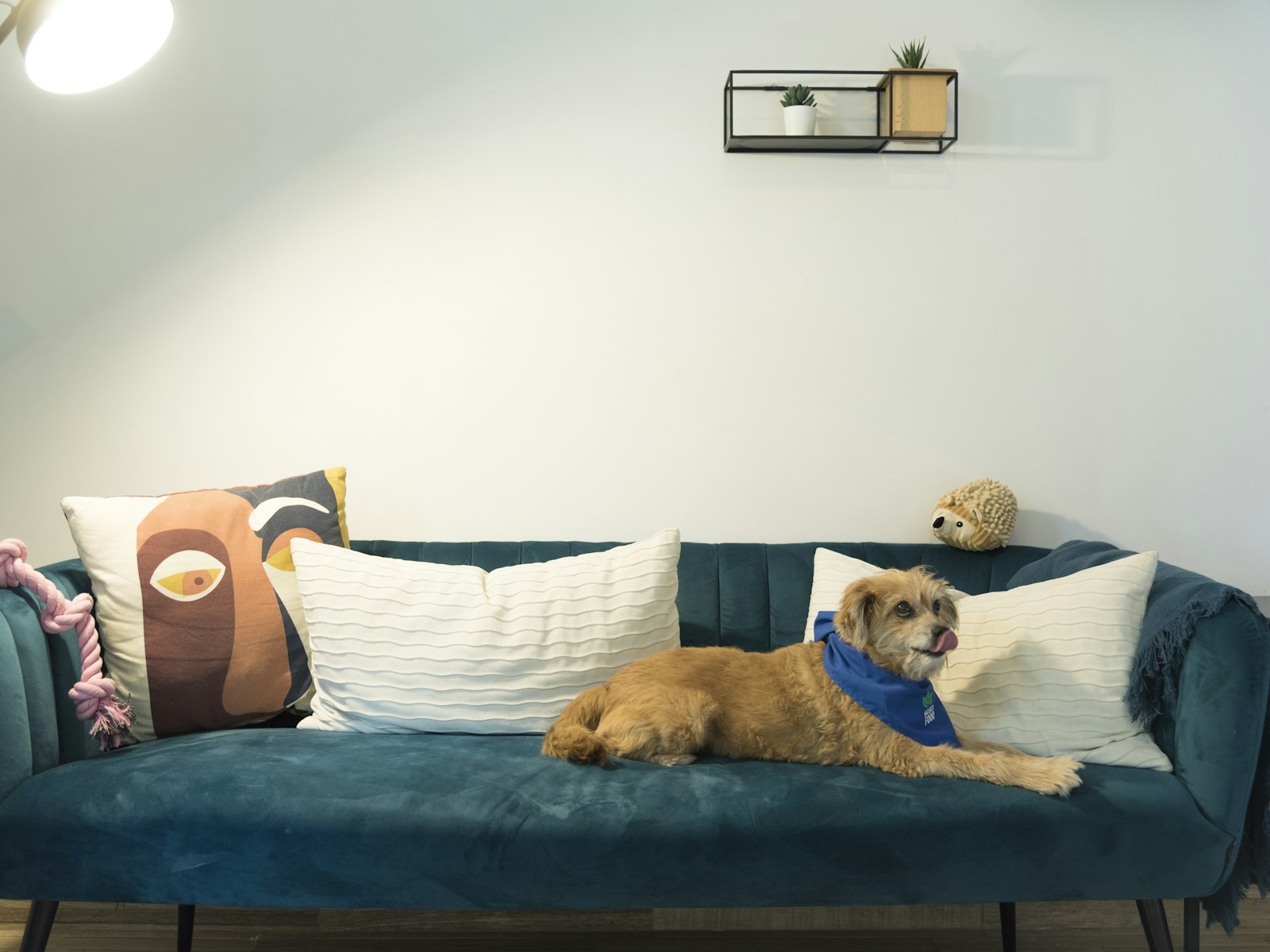
Microfiber and microsuede are the most accessible starting point: tightly woven, easy to wipe down, resistant to liquid penetration, and available at almost every price point. Crypton-treated textiles are engineered with built-in stain, odor, and moisture resistance, making them especially practical for households with multiple dogs or frequent accidents.
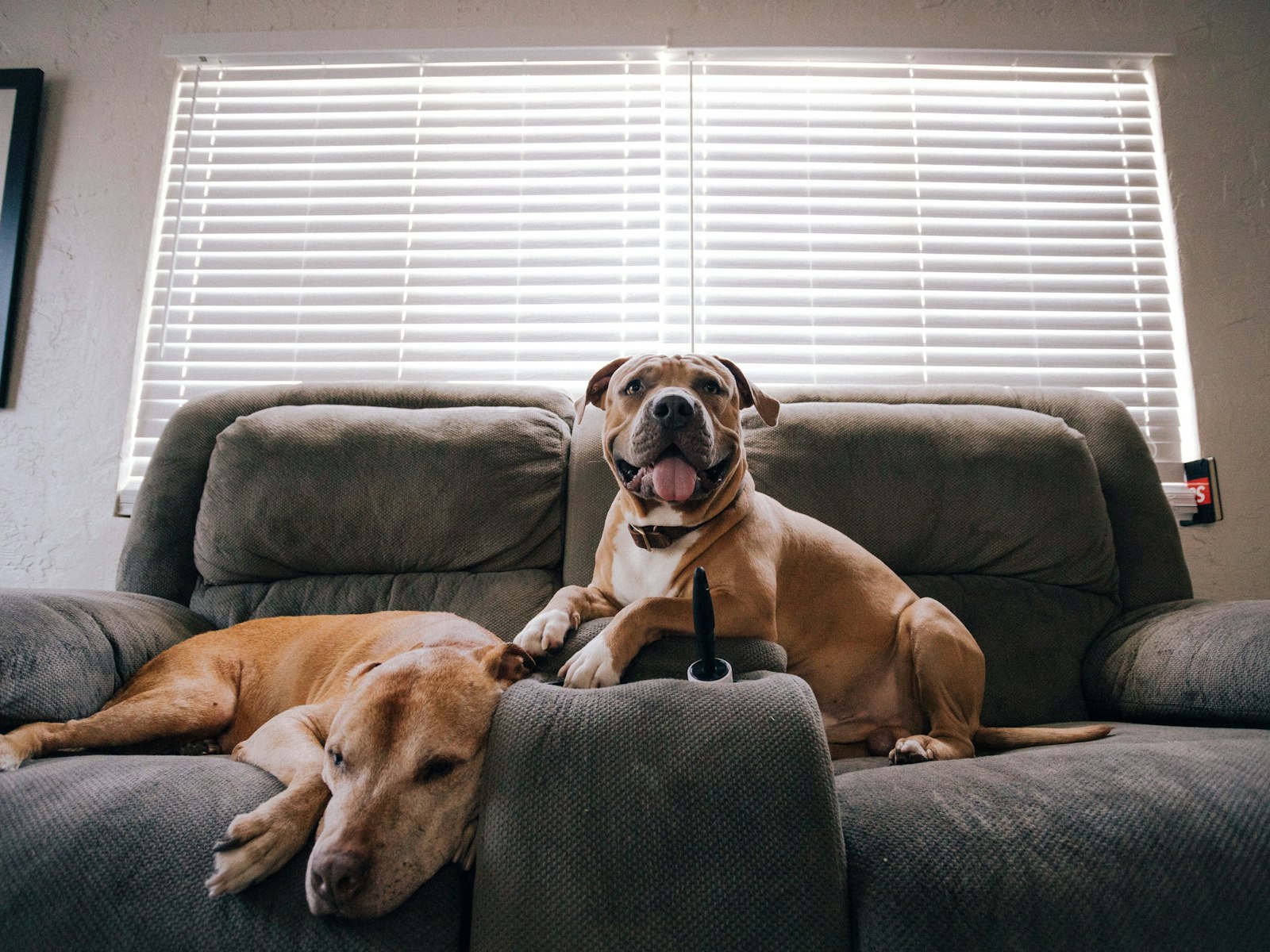
Sunbrella and other outdoor-grade upholstery fabrics have become a genuine interior option, with a softer look than earlier generations and excellent cleanability. Tightly woven polyester blends round out the category as the best budget-friendly choice, offering good scratch resistance and easy vacuuming. Fabrics to skip: silk, loose-weave linen, traditional velvet, and tweed. All four trap hair, snag on claws, and show wear quickly.
The leather debate: worth it or a scratch magnet?
Leather divides dog owners, and both sides have a point. It wipes clean, resists fur embedding, and doesn’t absorb odors the way fabric does. The trade-off is visible scratches, particularly on smooth-finish leathers. Full-grain leather with a protective topcoat holds up better than bonded or split-grain options. Bi-cast leather is often positioned as a budget middle ground, but trade sources note it can be less durable over time and prone to flaking, so weigh the lower upfront cost against its shorter lifespan. If your dog is a jumper or a chewer, leather is a poor bet regardless of finish. If they’re calm and mostly floor-level, full-grain is a legitimate long-term investment. A reader favorite for this is the Easy-Going Reversible Couch Cover.
Choosing a washable rug that doesn’t look like a compromise
Flat-weave cotton and low-pile synthetic rugs are the most machine-washable options, and they’ve gotten significantly more design-forward in recent years. Look for a pile height under half an inch, a rubber or non-slip backing for hard floors, and a size your washer can actually handle. One styling trick worth knowing: layer a smaller washable rug over a larger natural fiber base like jute or sisal. The base rug carries the visual weight of the room while the washable layer handles the daily abuse, and you swap it out as needed without changing the entire look. If you are shopping for this, the Washable 2×6 Runner Rug is a well-reviewed option.
Shop the look: Durable surfaces
 Washable 2×6 Runner RugSurvives muddy pawsCheck price on Amazon →
 Easy-Going Reversible Couch CoverProtects the sofaCheck price on Amazon →
 Bedsure Orthopedic Dog BedA bed that looks goodCheck price on Amazon →
 BISSELL Little Green CleanerHandles accidents fastCheck price on Amazon →
As an Amazon Associate we earn from qualifying purchases. Prices and ratings change, so check Amazon for today’s details.
Dog Proof Home Design: What a Well-Configured Entryway Actually Does
The entry zone is the highest-return space in any dog-friendly home project. A well-configured mudroom or front entry stops mud, moisture, and tracked debris before it reaches the rest of the house. The goal isn’t just cleanliness; it’s containment by design, where every element does a specific job and nothing looks improvised.

The layered entry sequence that actually contains the mess
Think of the entry as three zones in sequence. Zone one is a textured, absorbent mat at the exterior door, at least three to four feet long, that scrapes and absorbs debris from paws before anything else happens. Zone two is a transition area just inside the door with a small bench, hooks, and access to cleaning supplies. You might also like Kid-Friendly Mudroom Locker Ideas for Busy Families.
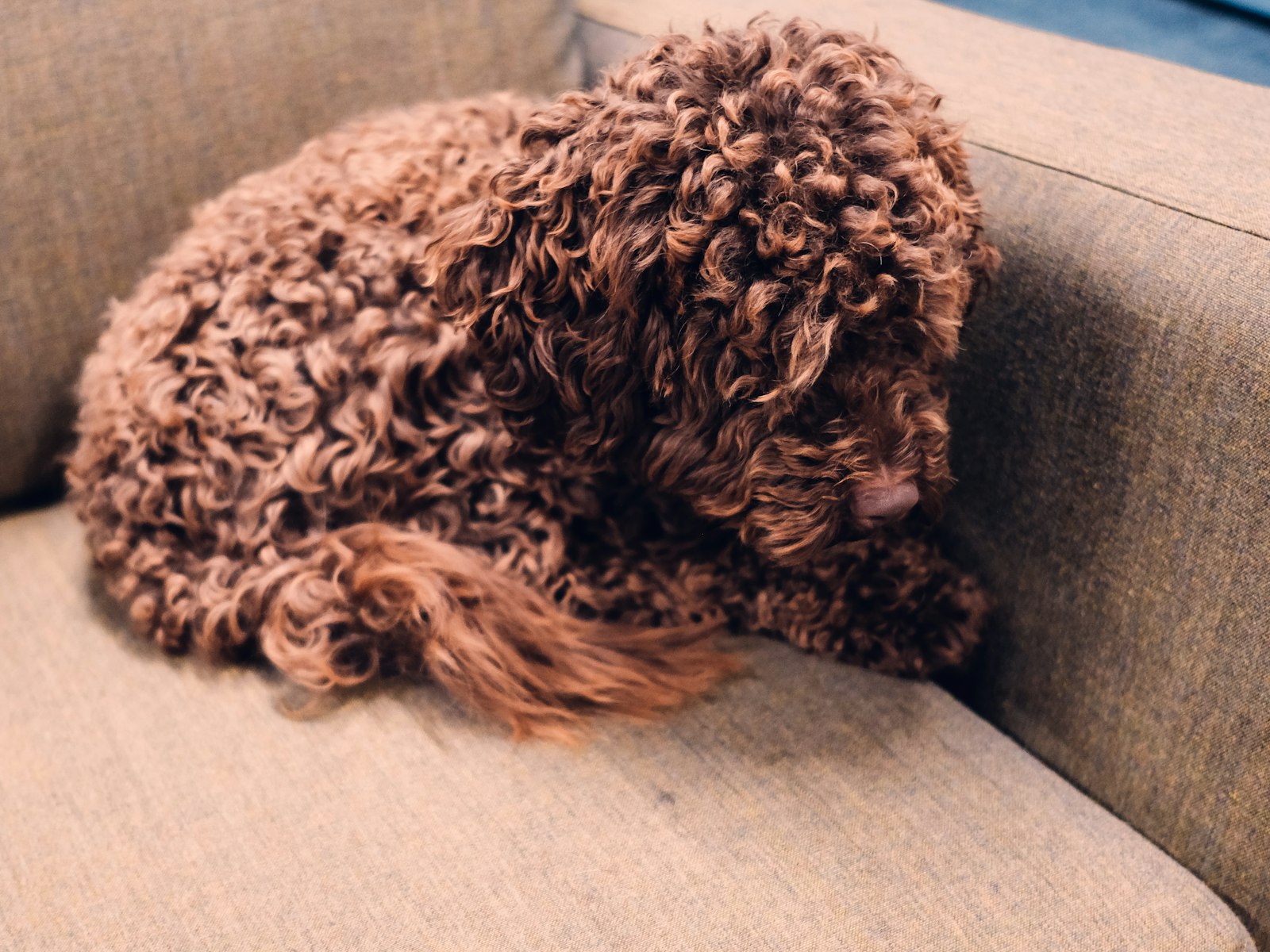
Zone three is a gate, pocket door, or closed interior door that keeps the dog in the entry until cleanup is done. The sequence matters as much as the individual fixtures: skip zone three and the first two zones don’t accomplish much.
Setting up a paw cleaning station without gutting the space
A functional paw station doesn’t require a renovation. The practical minimum is microfiber towels on a hook, grooming wipes in a shallow drawer, and a handheld sprayer connected to a utility sink if the space allows. Allow a 36 to 42 inch landing zone near the door so there’s room to close the exterior door before the dog reaches the rest of the house. For larger renovations, a built-in wash station with a linear drain and sloped, sealed tile floor is the most effective version: water stays contained, cleanup is fast, and the station reads as a built-in architectural feature rather than an afterthought.
Storage that keeps leashes, gear, and towels out of sight
Closed cabinetry consistently outperforms open hooks for visual cleanliness, but hooks at multiple heights solve the practical problem. Position leash hooks at arm level, towel hooks lower and within reach of the cleaning station, and use a shallow drawer for wipes and waste bags. A low basket or bench cubby handles dog shoes, seasonal gear, and backup towels. Everything should be reachable from the cleaning position so you’re not crossing the room with wet paws in hand. If you want to go further, read Gifts for Home Decor Lovers: 16 Picks for the Person Who Styles Everything.
Room-by-Room: Keeping Pet Gear Out of Sight and Hazards in Check
Beyond the entry, every room in the house has two overlapping concerns: where does the dog’s gear go so it doesn’t visually dominate the space, and what hazards are worth addressing before they become an emergency. Working through the house room by room takes less time than most people expect and produces a short, actionable fix list. The sections below cover the rooms where both problems show up most often.
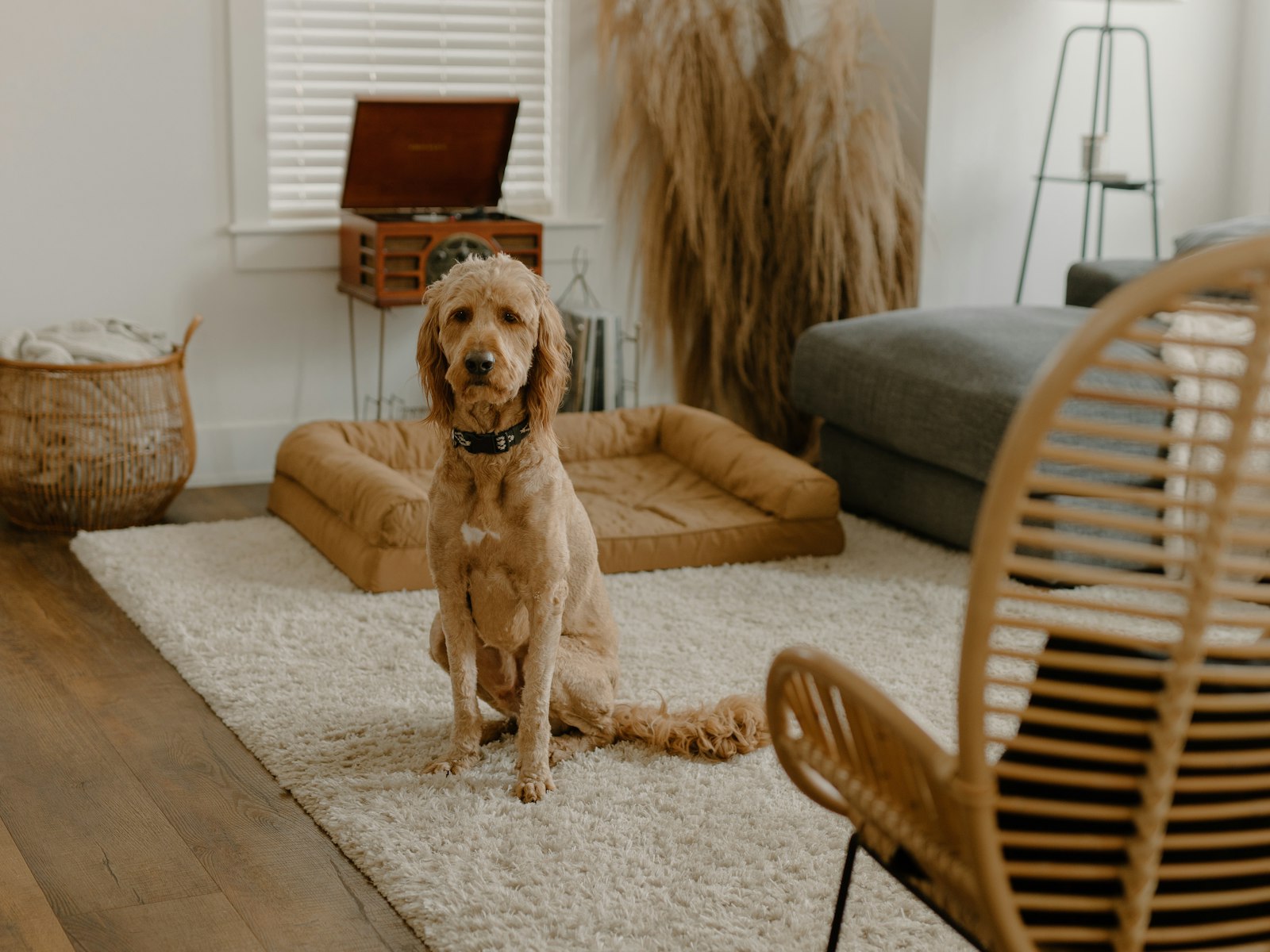
Kitchen and living room: storage that doubles as decor
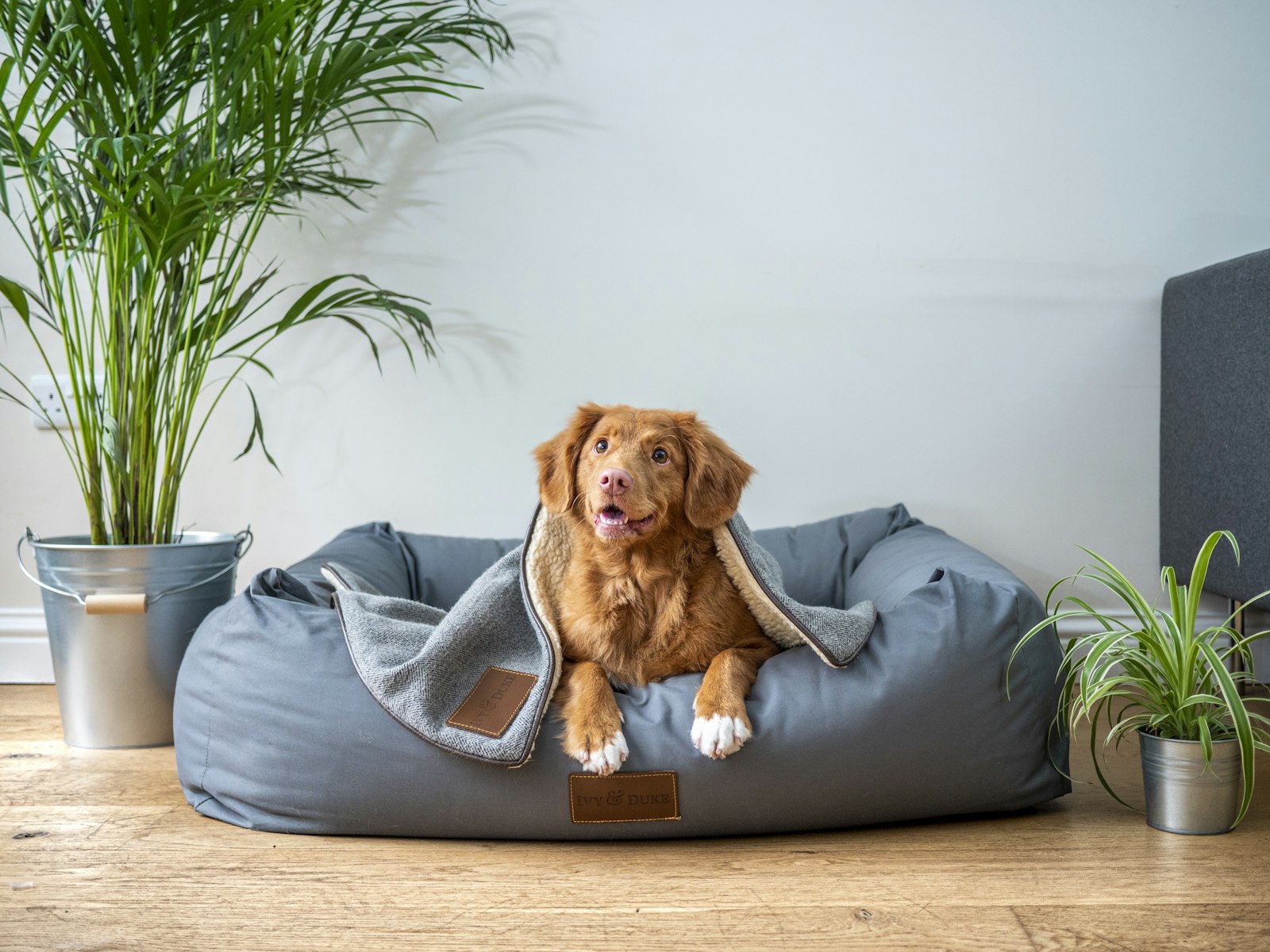
In the kitchen, a built-in feeding nook tucked into a lower cabinet run or under an island removes the freestanding bowl situation from the floor entirely. Add cabinet latches and a locking or weighted trash can to contain the two most common kitchen hazards: toxic foods and accessible garbage. In the living room, cable management channels or cord concealers routed behind media consoles eliminate both a chewing hazard and a visual problem at the same time. A media console with enclosed cable management is one of the most underrated pet-proofing tips available: it cleans up the room’s visual baseline while removing an accessible chewing target.
Bedroom and hallway: small changes with real impact
The bedroom hazards that matter most are swallowable small objects: earbuds, hair ties, jewelry, and medications left on open surfaces. A closed laundry hamper, drawers for small items, and a bedside table with doors rather than open shelves address most of these without any redesign. In hallways near the front door, a closed console or shallow cabinet eliminates the bag-dump zone where wrappers, gum, and treats become accidental hazards. One option worth a look is the OIAHOMY Woven Toy Basket.
Doing a quick room scan from dog-eye level
The most efficient hazard audit takes about five minutes per room. Crouch to your dog’s height and look for cords, loose objects, accessible trash, toxic plants, and gaps under furniture where small items collect. Do this as an initial walkthrough, build a short fix list, and work through it over a weekend. It’s worth revisiting seasonally or whenever your dog’s habits change, new furniture, a new puppy phase, or a move can all introduce fresh hazards. To make this step easy, we like the Retractable Pet Gate.
Shop the look: Gates and organization
 Retractable Pet GateKeeps dogs out of roomsCheck price on Amazon →
 OIAHOMY Woven Toy BasketCorrals toysCheck price on Amazon →
 Lwenki Wall Key HolderLeashes by the doorCheck price on Amazon →
 Elevated Dog BowlsTidy feeding areaCheck price on Amazon →
As an Amazon Associate we earn from qualifying purchases. Prices and ratings change, so check Amazon for today’s details.
Built-In Dog Features That Earn Their Place (and Cost)
Built-in pet features represent the highest-investment tier of dog-friendly home design, and they’re worth understanding even if a full renovation isn’t on the table right now. These are the features architects specify when clients want a home that accounts for dogs at the structural level, and they solve real design problems, not just convenience ones. Related: Cozy Home Gifts Under $50: 16 Ideas They Will Actually Use.
Feeding nooks and built-in crates: what they cost and why they work
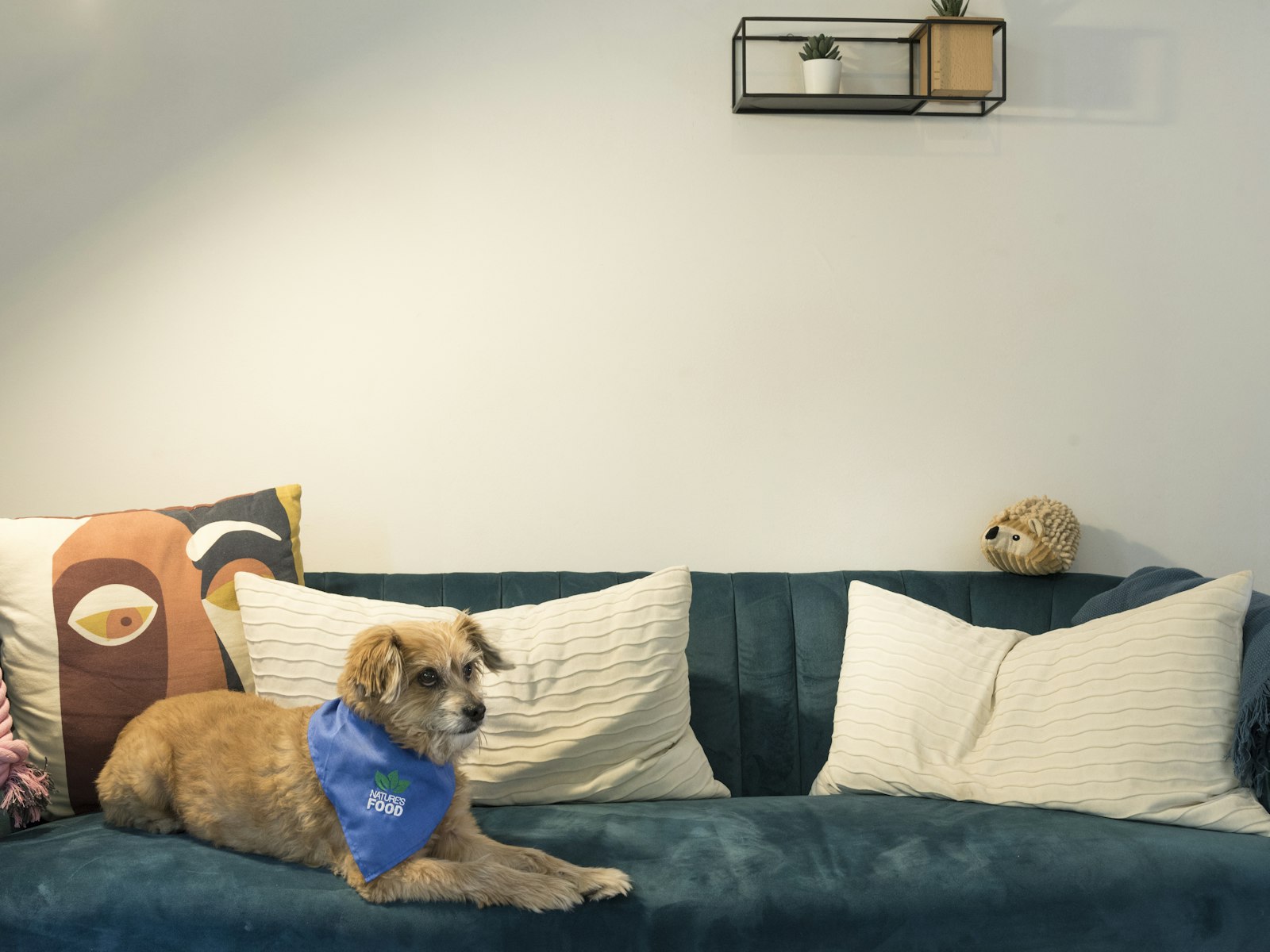
A custom built-in feeding station integrated into lower cabinetry starts around $500 for straightforward millwork and climbs from there. Furniture-style freestanding units in the $100 to $300 range offer a strong middle ground: they look considered without requiring a contractor. Built-in sleeping nooks tucked under stairs or inside a cabinet run typically cost $500 to $2,500 depending on finish level and complexity. Both features solve the same design problem: they remove freestanding pet furniture from the room’s visual plan and replace it with something that reads as intentional architecture.

Dog doors: conventional vs. smart, and which is worth it
A standard pet door installed in an exterior door or wall runs $150 to $800 installed. Smart or microchip-activated doors, which open only for your registered dog’s chip, run $400 to $1,500 or more depending on size. The smart version pays for itself in security for households in areas where wildlife access through a conventional pet door is a genuine concern. For urban or suburban homes without that risk, a standard door at the lower price point is often the more sensible choice. A reader favorite for this is the ChomChom Pet Hair Remover.
How to prioritize built-ins when budget is limited
If a full renovation isn’t in the picture, start with whichever feature removes the most daily friction. For most dog owners, that’s the entry paw station before anything else, because it affects every single walk. A built-in crate solves an aesthetic problem; a functional entry solves a logistical one that compounds daily. Rank your candidates by how often you feel the absence of each, and start there. If you are shopping for this, the Bissell Pet Hair Eraser Hand Vacuum is a well-reviewed option.
Shop the look: Easy cleanup
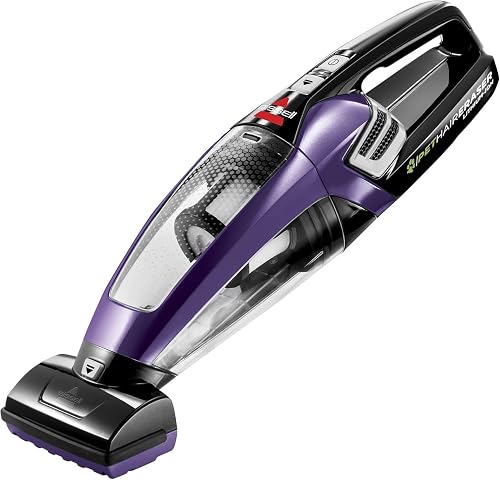 Bissell Pet Hair Eraser Hand VacuumQuick daily pickupsCheck price on Amazon →
 ChomChom Pet Hair RemoverFast fur removalCheck price on Amazon →
 Dexas MudBuster Paw CleanerClean paws at the doorCheck price on Amazon →
 OLANLY Absorbent Washable DoormatTraps mud before it spreadsCheck price on Amazon →
As an Amazon Associate we earn from qualifying purchases. Prices and ratings change, so check Amazon for today’s details.
Shopping list
- Washable 2×6 Runner Rug — survives muddy paws
- Easy-Going Reversible Couch Cover — protects the sofa
- Bedsure Orthopedic Dog Bed — a bed that looks good
- BISSELL Little Green Cleaner — handles accidents fast
- Retractable Pet Gate — keeps dogs out of rooms
- OIAHOMY Woven Toy Basket — corrals toys
- Lwenki Wall Key Holder — leashes by the door
- Elevated Dog Bowls — tidy feeding area
- Bissell Pet Hair Eraser Hand Vacuum — quick daily pickups
- ChomChom Pet Hair Remover — fast fur removal
- Dexas MudBuster Paw Cleaner — clean paws at the door
- OLANLY Absorbent Washable Doormat — traps mud before it spreads
Prices and availability change. Links open on Amazon.
Keep reading: Pet-Friendly Furniture: What to Look for Before You Buy · Pet-Friendly Home Decor Ideas That Still Look Stylish · Kid-Friendly Mudroom Locker Ideas for Busy Families · Gifts for Home Decor Lovers: 16 Picks for the Person Who Styles Everything · Cozy Home Gifts Under $50: 16 Ideas They Will Actually Use
Helpful resources: the ASPCA pet care guides, the ASPCA toxic plant list, upholstery materials.
Frequently Asked Questions
How do I make my home dog proof?
Use washable rugs and covers, protect the sofa, gate off rooms and keep cords and toxic plants out of reach.
What is the best sofa fabric for dogs?
Tightly woven fabrics like microfiber, canvas and performance blends resist claws and are easier to clean.
How do I keep dog hair under control?
Brush your dog regularly, use washable throws and keep a cordless vacuum and lint roller close by.
Build the Home Your Dog Actually Lives In
A dog-proof home isn’t a compromise. It’s a set of deliberate choices: a floor that handles what floors actually encounter, fabrics that don’t fall apart under real use, an entry zone that stops mess at the source, and a room-by-room layout that accounts for where gear goes and what hazards exist. None of it requires giving up on how your home looks.
The framework in this guide is modular by design. If you’re building or renovating, start with the durable flooring for dogs, that decision shapes everything above it. If daily mess at the door is your biggest pain point, the mudroom for dogs and entry sequence is your first move. If the couch is the current problem, fabric is where your budget goes first. One upgrade done well has more impact than a scattered approach across every room at once.
Aesthetic Nest Decor covers this territory room by room, from mudroom organization to living room styling to kids’ and pet-shared spaces. Good dog proof home design doesn’t ask you to choose between a functional house and a beautiful one, it just asks you to make the right choices in the right order. Pick your first room and go from there.
Save This for Later
Pin this image to your Pinterest board so it is ready when you need it.
Get one cozy decor idea every week
Seasonal styling ideas, budget finds and new guides. No spam, unsubscribe anytime.