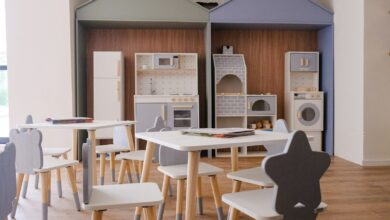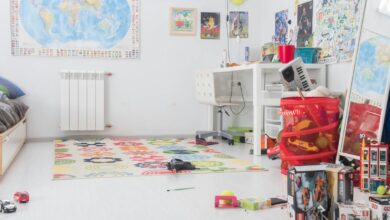

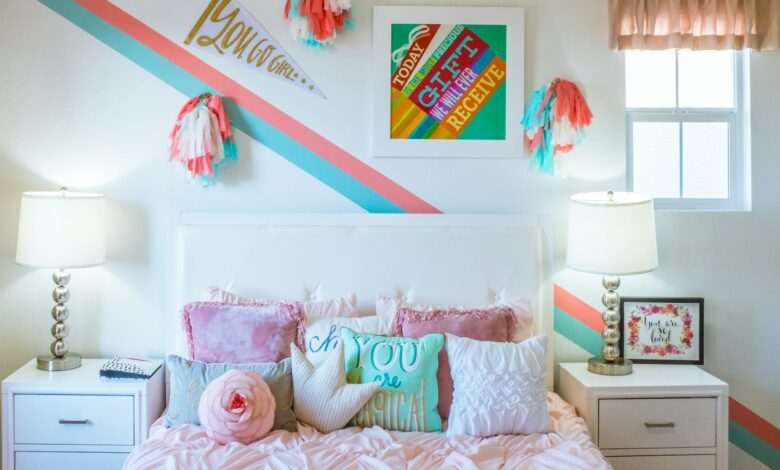
Knowing how to design a kids bedroom that grows with your child from toddler to teen starts with three decisions made at the very beginning: furniture that converts instead of gets replaced, a color strategy that reads fresh at any age, and zones that shift with your child’s life stage. Many parents spend somewhere in the range of $800 to $1,500 setting up a toddler room, then find themselves redoing the whole thing a few years later when the cartoon-themed furniture no longer fits the kid sleeping in it. That cycle is expensive and completely avoidable. A bedroom that transitions from toddler to teen isn’t a design myth, it’s a planning decision you make at the start, not a renovation you schedule repeatedly.
This guide covers every decision that actually matters: furniture that converts, a color strategy that ages well, zones that evolve, and a realistic cost and timing plan. Here at Aesthetic Nest Decor, this article kicks off our full kids bedroom series, so once you’ve built this foundation, there’s a clear path forward for every stage ahead.
Want the shortcut?
As an Amazon Associate I earn from qualifying purchases. Some links in this post are affiliate links, at no extra cost to you.
Top picks: Graco Convertible Crib, C&AHOME 16-Cube Organizer and tiptopcarbon Wallpaper Tool Kit.
Check price on Amazon →How to design a kids bedroom that grows with your child: furniture choices
This is where most parents either save money long-term or spend it twice. The key is choosing pieces with built-in flexibility so the room grows alongside your child rather than requiring a full teardown on a rolling basis.
Convertible beds: the smartest first investment
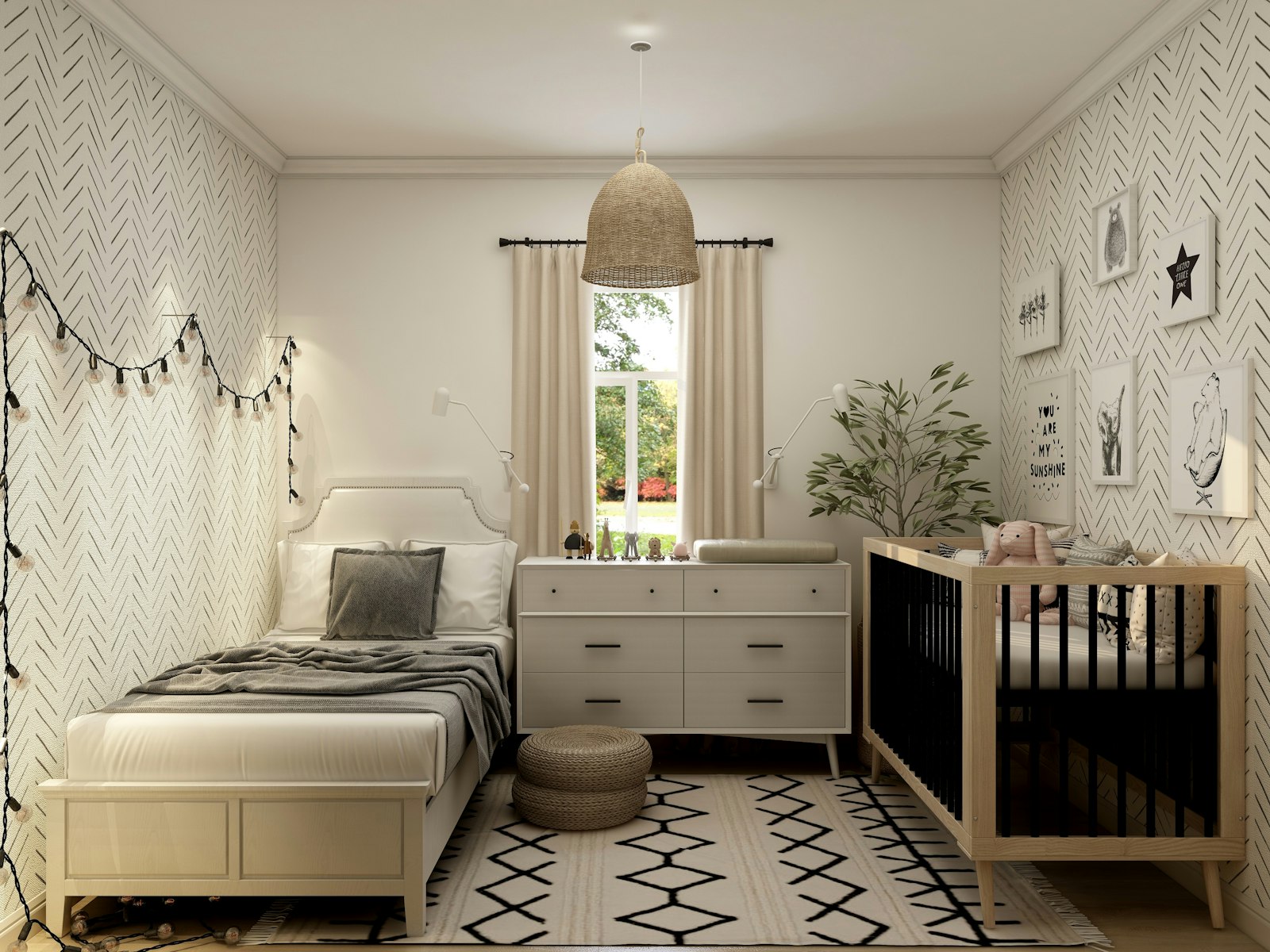
Convertible crib-to-full-size beds start as an infant crib, transition to a toddler bed and daybed, then convert to a full-size frame. Consumer Reports notes that full-size conversions can carry kids from infancy into adolescence, which means a single purchase can replace what would otherwise be two or three separate bed buys. A toddler-to-twin bed is another strong option: it starts small and expands to a standard twin, a size that works comfortably through the teen years. Brands like Graco, DaVinci, and Delta Children offer solid convertible options at U.S. retailers in the $150 to $500 range, with premium lines from Babyletto and Namesake running $500 to $900 for families who want a more design-forward look. For more ideas, see our guide to Kids Bedroom Decor Ideas That Balance Fun and Function.
Modular pieces that reconfigure instead of retire
Convertible bunk and loft systems are the most flexible long-term buy for families with multiple kids or limited square footage. Many can split into two separate beds or shift from a bunk configuration to a loft-with-desk layout as study needs increase around age seven or eight. Modular shelving units and cube organizers fall into the same category: the frames stay, but what goes inside them changes entirely as your child moves from stuffed animals to textbooks.
What to skip entirely
Themed furniture built around a specific character or trend has the shortest useful life of any kids room purchase. A bed shaped like a racecar or a dresser with princess graphics tends to look out of place well before elementary school, sooner than most parents expect. The same applies to built-in wallpaper murals and specialty paint colors that would require full repainting to neutralize. Stick to shapes and finishes you’d find attractive on unbranded, neutral furniture, and you won’t find yourself making regret purchases in three years.
A neutral base that doesn’t read “nursery” at age 12
The wall color and core finish choices you make in the toddler stage will either age gracefully or box you in. Getting this right once means small, inexpensive updates instead of full repaints on a rolling basis.
The right paint finish for a room that gets lived in hard
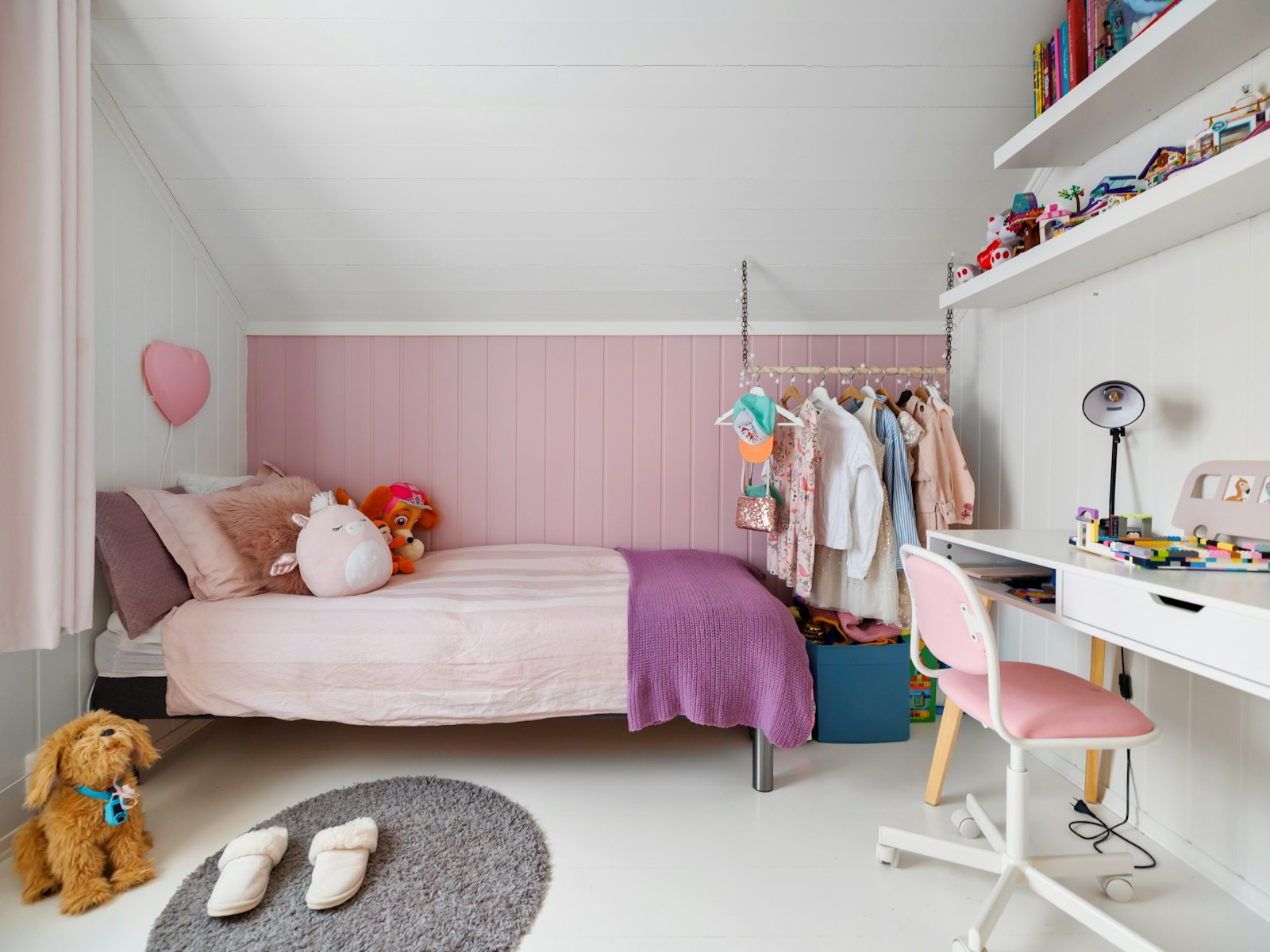
For a kids room that needs to handle crayon scuffs, sticky hands, and the general chaos of childhood, satin finish is the best all-around call. It’s washable, durable, and has a softer sheen than semi-gloss, which means it looks polished without the clinical feel of a bathroom wall. Reserve semi-gloss for trim, window sills, and doors where contact is highest. Flat and matte finishes are a practical headache in a kids room: they’re significantly harder to scrub clean without showing wear or damaging the surface, and touch-ups tend to be more visible than with satin. We cover this in more detail in Winter Bedroom Decor: 4 Layers for the Coziest Room in the House.
A color palette strategy that ages with your child
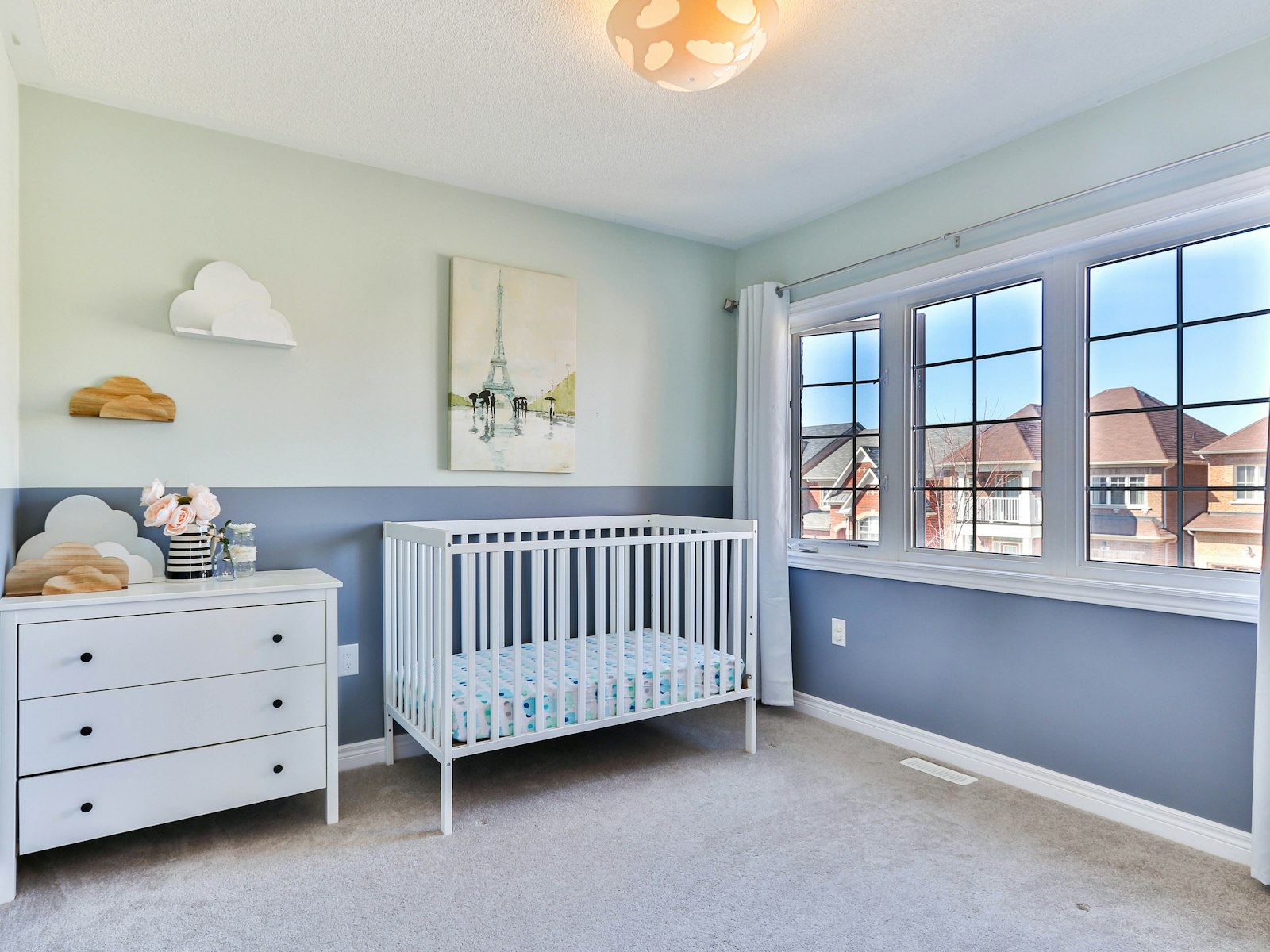
Warm whites, soft greiges, warm taupes, and muted sage greens all function as true neutral bases because they don’t read as babyish or aggressively adult. Specific picks that interior designers consistently recommend include Benjamin Moore Pashmina, Behr Swiss Coffee, and Sherwin-Williams Passive. The trick is to put personality into the textile and decor layer, not the walls. A warm white wall at age three looks perfectly at home under cartoon-print bedding, and the same wall at age fourteen works just as well layered with navy and charcoal. Repainting an accent wall is a DIY project that typically runs $80 to $150 in materials; repainting an entire room because the original color was “bubblegum pink” can run three to five times that, or significantly more if you hire it out.
Swappable accents as the real style driver
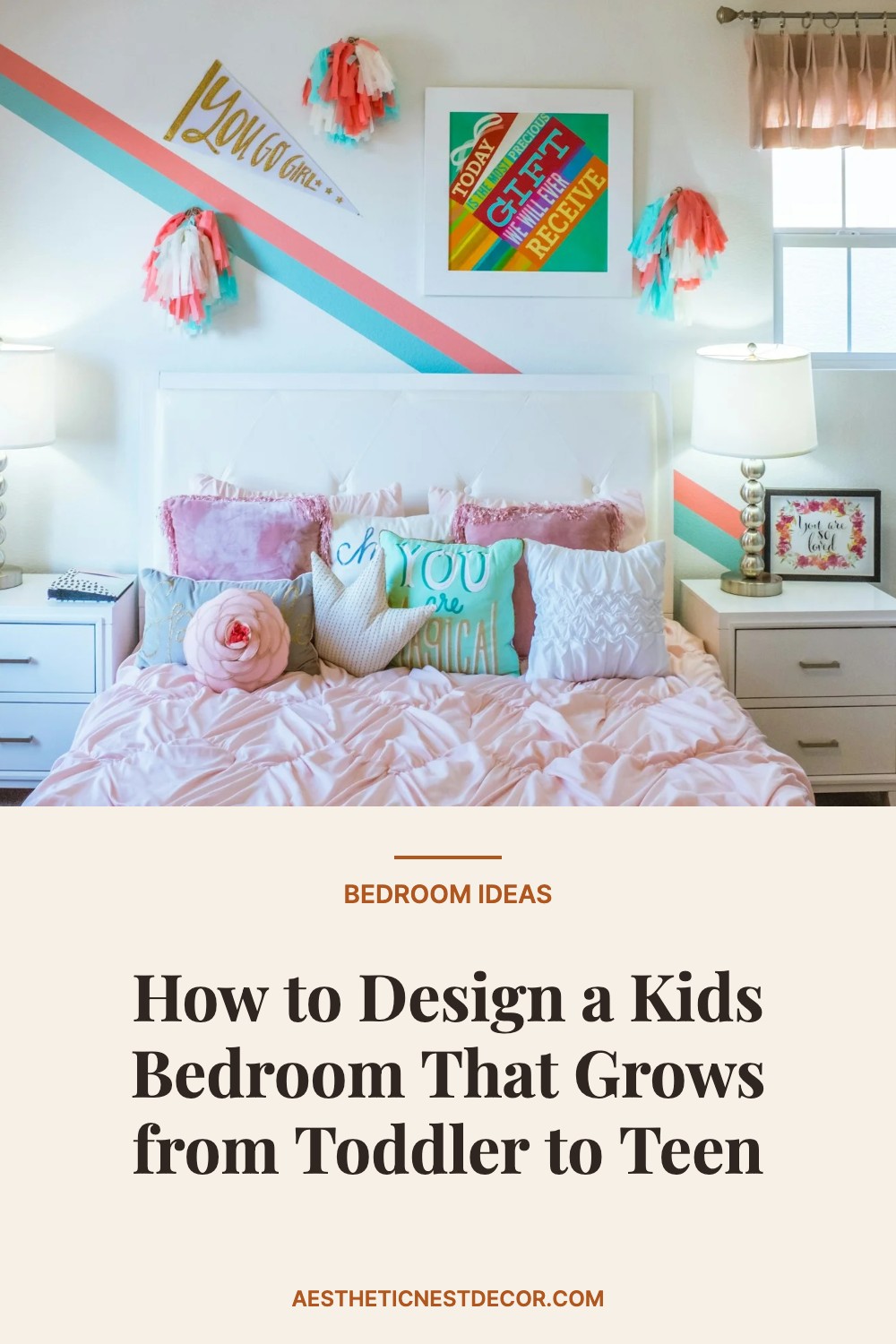
Curtains, rugs, bedding, throw pillows, and wall art do the heavy lifting for age-appropriateness, and every one of them can be swapped without tools or a professional. Keep the base permanent and neutral; make the personality layer cheap and replaceable. A practical example: the same sage-green wall that pairs with a woodland-animals rug at age four works just as naturally with a striped geometric rug at age eleven. Budget roughly $150 to $400 per stage refresh for textiles and art rather than $600 to $1,500 for new furniture, a gap that adds up significantly over three or four rounds of updates.
Bedroom transition tips for kids: toddler to teen
A toddler room and a teen room aren’t just decorated differently. They’re functionally organized around completely different daily routines. Planning for that shift at the outset means you’re rearranging and adding, not demolishing and rebuilding.
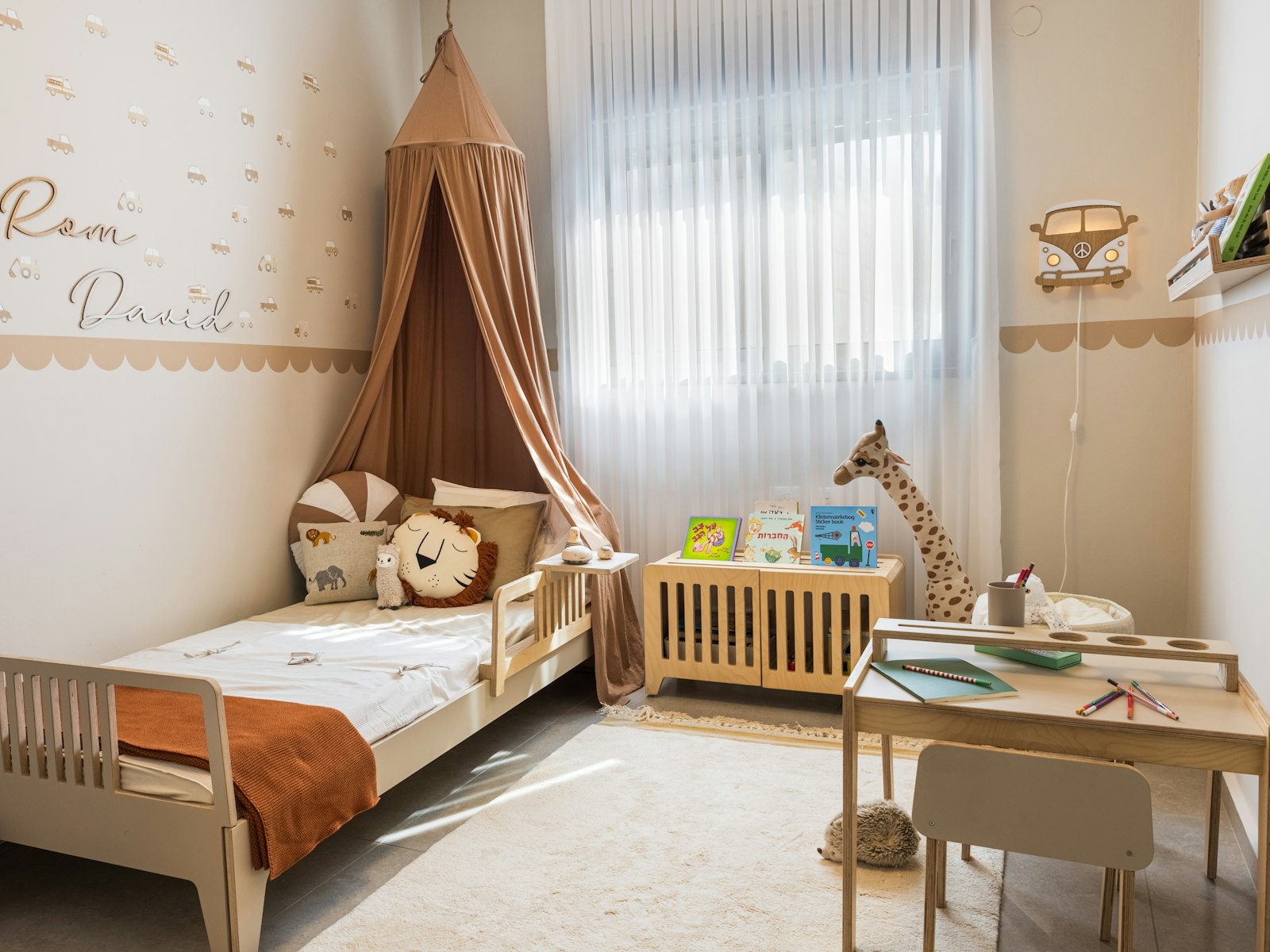
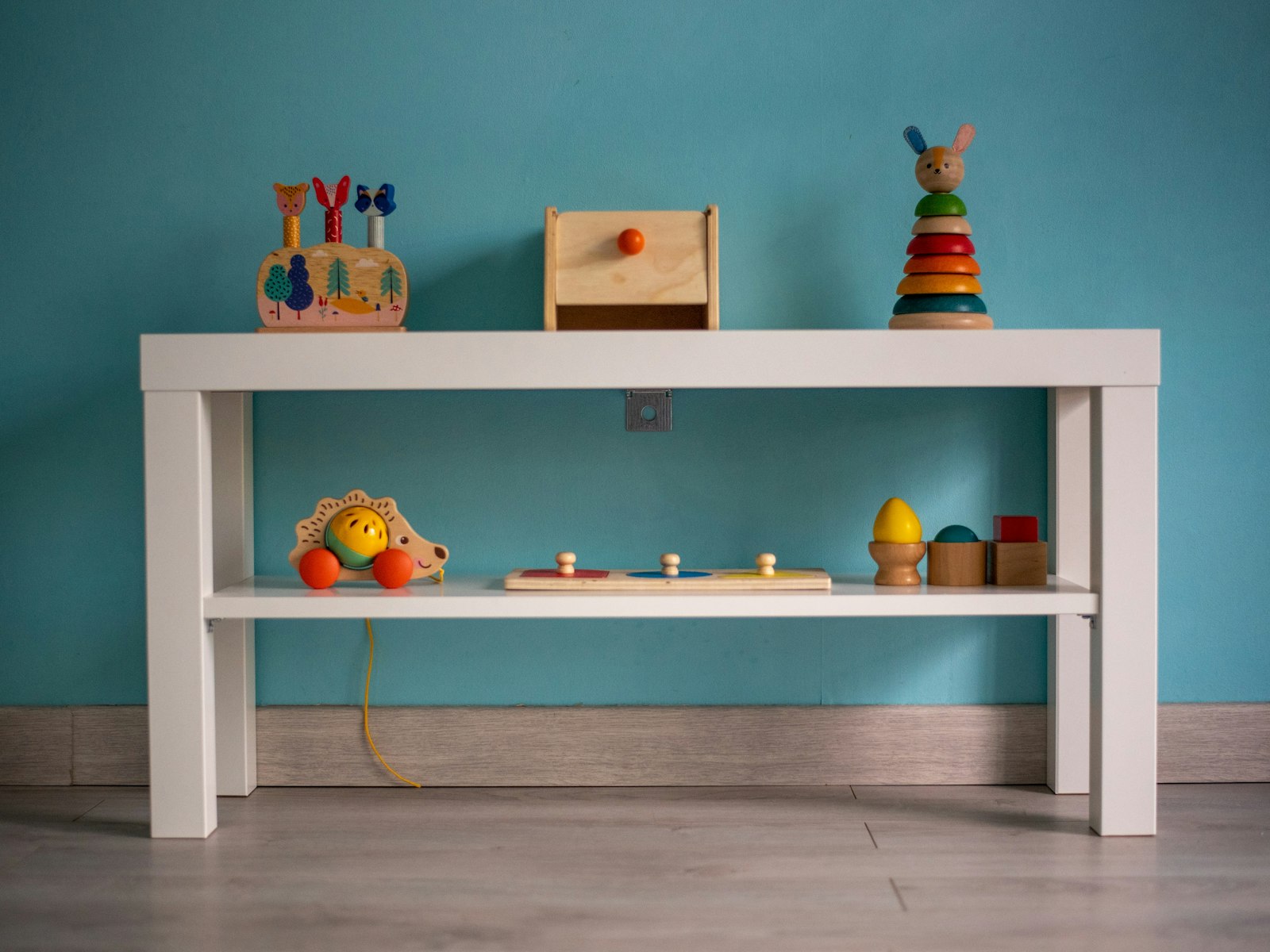
The toddler setup centers on sleep and play. The sleeping surface should sit five to twelve inches off the ground to reduce fall risk, and the rest of the room is play territory: open floor space, low-access bins for toys, and a small art station if space allows. A dedicated study zone isn’t part of the picture yet, that need comes later. You might also like Tween Bedroom Design Ideas That Feel Grown-Up.
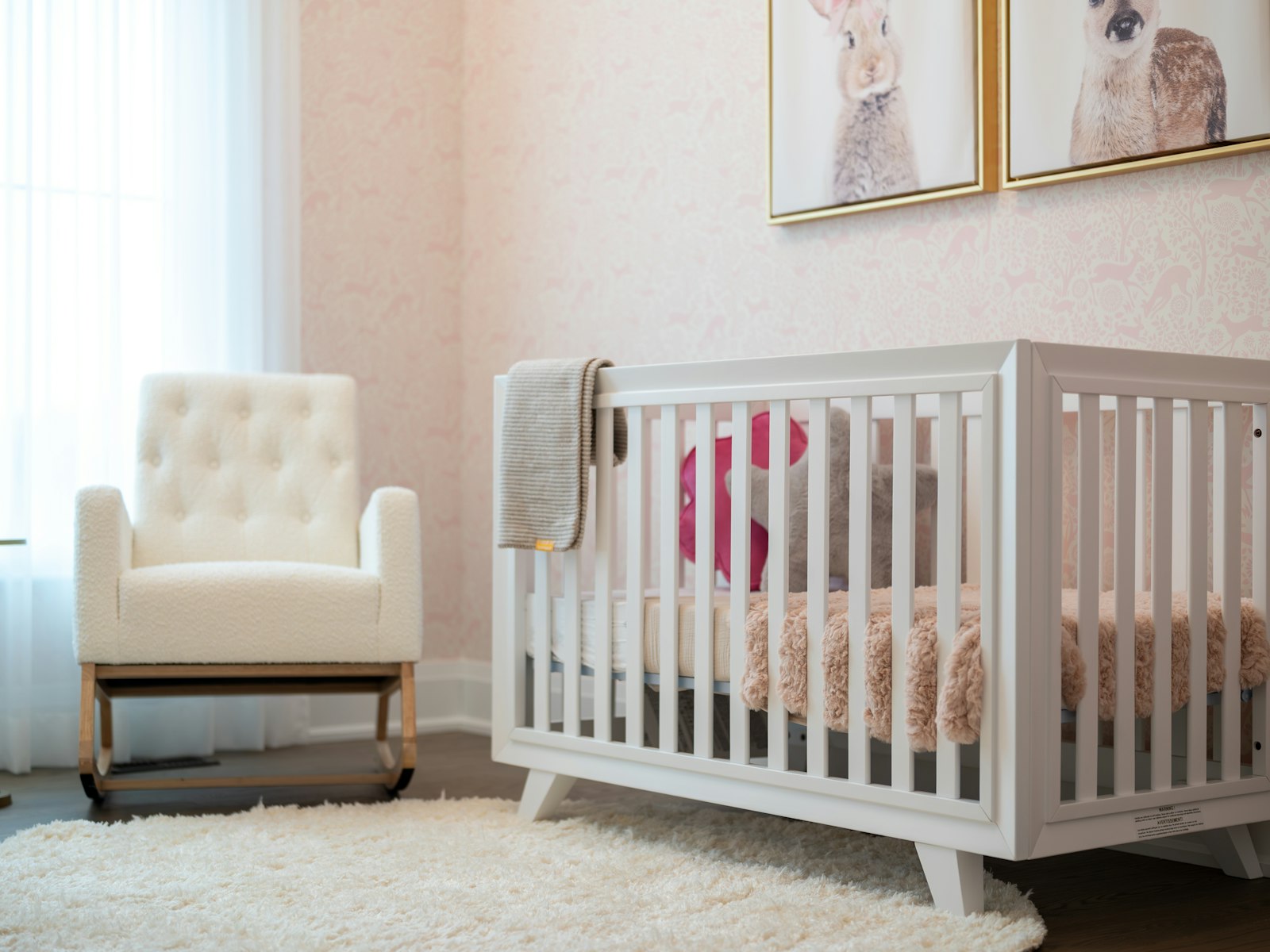
Around age five to seven, a dedicated study zone becomes necessary. This is when a loft bed with a desk below earns its cost, or when a simple corner desk and task chair get added. The play area shrinks but doesn’t disappear entirely, and labeled cube bins shift from holding stuffed animals to holding craft supplies and school materials. Adding a second light source, a desk lamp or wall-mounted reading light, makes the zone functional without rewiring anything.
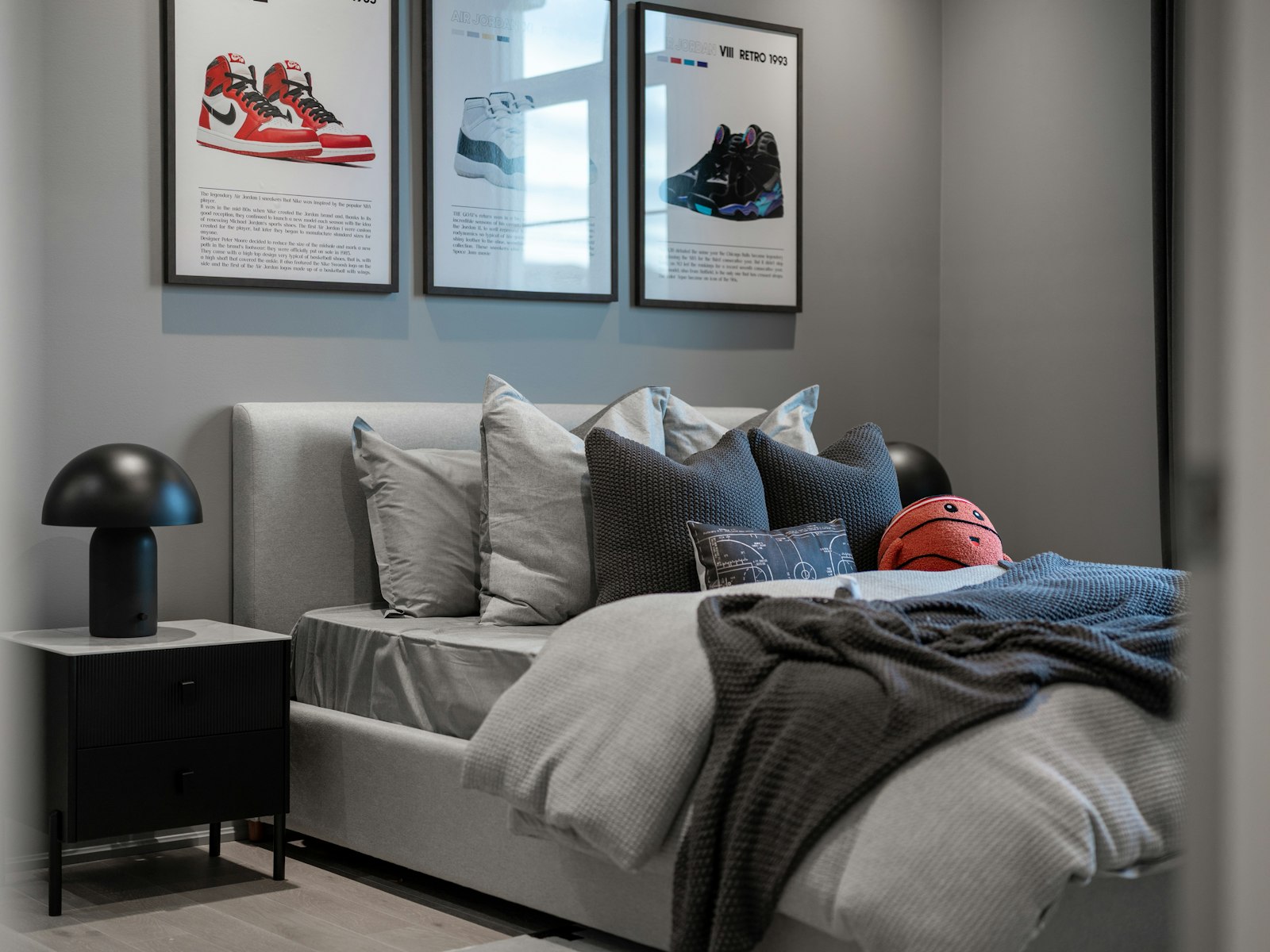
By the tween and teen years, the room needs to function more like a studio apartment than a playroom. Study space expands, storage shifts toward clothes and personal items, and the floor stays open for social use. A loft or bunk can convert into a single bed with full under-bed clearance, giving the room a more adult feel without replacing any core furniture. This is the toddler-to-teen bedroom design payoff: the bones of the room carry forward, and only the surface layer changes. A reader favorite for this is the Graco Convertible Crib.
Shop the look: Furniture that grows
 Graco Convertible CribCrib to toddler to fullCheck price on Amazon →
 NEW JETO Metal Bed FrameBed that grows with themCheck price on Amazon →
 Diroan Adjustable Kids Desk SetGrows with your childCheck price on Amazon →
 WLIVE 8-Drawer DresserStorage for every ageCheck price on Amazon →
As an Amazon Associate we earn from qualifying purchases. Prices and ratings change, so check Amazon for today’s details.
Storage that scales from toy bins to textbooks
The storage system is the easiest place to overspend on specialized solutions that only work at one life stage. The most adaptable approach is also the most straightforward one. If you want to go further, read Bedroom Ideas for 2026: Style, Color & Small-Space Tips.
The cube organizer as your long-term anchor
Cube organizers consistently outperform every other storage format in terms of adaptability. In the toddler years, fabric bins hold toys and dress-up clothes. By elementary school, the same cubes hold books, art supplies, and school kits. In the teen years, bins rotate out and open shelves display speakers, books, and décor. The frame never changes; only the contents do. Solid wood and engineered wood systems, like those from IKEA’s KALLAX line or ClosetMaid’s Cubeicals, outperform thin particleboard or fabric options under daily child use. Buy for the cube count you’ll need at peak capacity, which is typically the elementary stage.
Closet systems worth investing in early
An adjustable modular closet system combines hanging rods at different heights, open shelves, and small drawers. In the toddler years, the hanging rods sit low for tiny clothes; in the teen years, you raise them for full-length items. Pre-built wire systems from major home improvement retailers typically run $150 to $400 installed, which is far less than replacing a freestanding dresser and bookcase combination twice over. The shelf and drawer configuration handles toys early and clothes and school supplies later without any structural changes to the system itself. One option worth a look is the upsimples Acrylic Wall Shelves.
Shop the look: Flexible storage
 C&AHOME 16-Cube OrganizerBins now, books laterCheck price on Amazon →
 upsimples Acrylic Wall ShelvesAdapts as interests changeCheck price on Amazon →
 HOMIDEC Closet OrganizerAdjustable closet storageCheck price on Amazon →
 SONGMICS Folding Storage OttomanSeating and storageCheck price on Amazon →
As an Amazon Associate we earn from qualifying purchases. Prices and ratings change, so check Amazon for today’s details.
What the room transformation actually costs
Planning for multiple stages at once doesn’t mean spending more; it means front-loading smart purchases and keeping refresh budgets lean. A mid-range kids room setup that’s genuinely built to last runs approximately:
- Furniture (bed, dresser, desk, storage): $600 to $1,500
- Paint (walls, primer, supplies): $80 to $350 DIY; $350 to $850 with a professional painter
- Textiles (bedding, curtains, rug): $150 to $400
- Labor (painting, assembly, setup): $350 to $900 if hired out
That puts a full toddler-stage setup at roughly $1,200 to $3,000 for a mid-range room. The key is choosing convertible and modular pieces in that initial budget so stage-two and stage-three refreshes cost $100 to $500 rather than $1,200 to $2,000. Stage one (toddler to age five) is the full setup investment. Stage two (elementary, ages five to ten) is a targeted update: add a desk, swap textiles, reorganize storage. Stage three (tween to teen, ages ten to fifteen) is the largest refresh after the initial setup but still far cheaper than a full redo, new bedding, adjusted closet configuration, a possible accent wall repaint, and any final furniture swaps.
Safety details that hold up from crib to college
Safety considerations don’t disappear when kids leave the toddler stage. They change. Building these specs into the room from the start means you won’t need to retrofit anything later. Related: 10 Bedroom Colors That Feel Dated in 2026.
Bed placement, height, and guardrails
For toddlers, the sleep surface should sit five to twelve inches off the floor, and guardrails must fit flush against the mattress with no gaps. The CPSC mandatory standard (16 C.F.R. part 1217) requires the upper edge of a guardrail to sit at least five inches above the toddler bed’s sleeping surface, with no hazardous openings in the rail or support structure. As kids grow, a low-profile bed frame remains the safer choice over an elevated platform. Keep the headboard flush against the wall and position the bed away from windows, blind cords, and hanging strings at every stage.
Anchoring requirements that never change
Every tall piece of furniture, including dressers, bookshelves, wardrobes, and modular cube units, needs to be anchored to the wall with anti-tip straps or L-brackets. This requirement doesn’t relax as kids age; it becomes more critical, because older children climb and put more dynamic force on furniture than toddlers do. A soft rug beside the bed reduces fall injury risk and should always be secured with a non-slip pad so it doesn’t slide underfoot. A reader favorite for this is the OLANLY Washable Area Rug.
Material and finish specs for long-term safety
Solid wood and sturdy engineered wood construction hold up to the weight, climbing, and general stress a convertible bed takes across fifteen years of use. Non-toxic finishes, recessed hardware, and rounded edges matter at the toddler stage and remain relevant for any bunk or loft configuration used by older kids. When comparing convertible bed options, check the weight rating on each configuration, not just the toddler version, so you know the frame can handle the demands of an older, heavier child. If you are shopping for this, the tiptopcarbon Wallpaper Tool Kit is a well-reviewed option.
Shop the look: Easy-to-change decor
 tiptopcarbon Wallpaper Tool KitMakes wallpaper swaps easyCheck price on Amazon →
 OLANLY Washable Area RugEasy to replace laterCheck price on Amazon →
 Ombre Blackout CurtainsBetter sleep at any ageCheck price on Amazon →
 VIZ-PRO Cork BoardChanges with their interestsCheck price on Amazon →
As an Amazon Associate we earn from qualifying purchases. Prices and ratings change, so check Amazon for today’s details.
Shopping list
- Graco Convertible Crib — crib to toddler to full
- NEW JETO Metal Bed Frame — bed that grows with them
- Diroan Adjustable Kids Desk Set — grows with your child
- WLIVE 8-Drawer Dresser — storage for every age
- C&AHOME 16-Cube Organizer — bins now, books later
- upsimples Acrylic Wall Shelves — adapts as interests change
- HOMIDEC Closet Organizer — adjustable closet storage
- SONGMICS Folding Storage Ottoman — seating and storage
- tiptopcarbon Wallpaper Tool Kit — makes wallpaper swaps easy
- OLANLY Washable Area Rug — easy to replace later
- Ombre Blackout Curtains — better sleep at any age
- VIZ-PRO Cork Board — changes with their interests
Prices and availability change. Links open on Amazon.
Keep reading: Kids Bedroom Decor Ideas That Balance Fun and Function · Winter Bedroom Decor: 4 Layers for the Coziest Room in the House · Tween Bedroom Design Ideas That Feel Grown-Up · Bedroom Ideas for 2026: Style, Color & Small-Space Tips · 10 Bedroom Colors That Feel Dated in 2026
Helpful resources: the CPSC Anchor It! tip-over guidance, the AAP childproofing checklist, the EPA guide to VOCs and indoor air.
Frequently Asked Questions
How do you design a kids bedroom that grows with them?
Choose neutral walls, convertible furniture and flexible storage, then add personality with decor that is easy to swap.
When should a child move to a twin bed?
Most children move to a twin bed between ages 3 and 5, often when they outgrow a toddler bed.
What furniture should I buy for a kids room?
Invest in a quality bed, dresser and storage that will last, and save on decor that will change with their interests.
Start with the foundation, refresh the layers
Designing a kids bedroom that grows with your child from toddler to teen isn’t about spending more. It’s about spending smarter on the pieces and finishes that genuinely last, and keeping the personality layer cheap and replaceable. Start with a convertible bed, a neutral wall in satin finish, a cube organizer, and a modular closet system. Zone the room for the stage you’re in and plan for the next one. Refresh with textiles when the vibe needs updating.
The decisions you make in that first setup determine whether you’re shopping for furniture again in three years or simply swapping out a rug and a set of curtains. Front-load the quality where it counts: the frame, the finish, and the storage structure. Let everything else stay flexible.
For the full room-by-room breakdown, including kids bedroom shopping guides, age-by-age decor ideas, and budget-friendly styling articles, Aesthetic Nest Decor has every stage covered. Browse the kids bedroom section to find guides tailored to the exact age and space you’re working with right now.
Save This for Later
Pin this image to your Pinterest board so it is ready when you need it.
Get one cozy decor idea every week
Seasonal styling ideas, budget finds and new guides. No spam, unsubscribe anytime.