
The Pinterest boards are saved, the due date is on the calendar, and somehow the nursery still looks exactly like an empty room with a few boxes in the corner. Every new parent hits this wall: too many options, too little time, and a quiet but persistent pressure to have it done before the baby arrives. The good news is that smart nursery design doesn’t require a design degree or a five-figure budget. It requires making decisions in the right order.
Think of nursery design as a planning process, not a decorating spree. The sequence matters: choose your palette and theme first, map the layout second, select furniture with safety in mind third, then layer in storage and lighting last. Following that order helps every purchase serve a purpose and cuts down on returns. This guide walks you through each stage with specific, actionable guidance so you finish with a room that actually works at 2 a.m., not just in photos. For more on this, see our interior design tips guide.
At Aesthetic Nest Decor, our kids’ room content series covers the full arc from nursery through the tween years, so you can bookmark it as a long-term resource and come back at every bedroom transition without starting from scratch.
Nursery design: Choosing a theme and color palette that won’t feel dated in a year
The palette decision comes first because it drives every other purchase in the room. Furniture finishes, textiles, wall art, and lighting fixtures all need to coordinate with the base colors you choose. Getting this wrong is expensive; getting it right early eliminates decision fatigue for every item that follows.
In 2026, the dominant shift in baby room design is away from cool pastels and stark grays toward warm, earthy, muted palettes. Sage green, mushroom taupe, cocoa brown, warm white, clay blush, and terracotta are the colors showing up most consistently across 2026 nursery trend roundups from shelter publications and Pinterest’s annual trend report. Muted greens, especially sage and eucalyptus, are the single most cited nursery color family this year. Popular themes include botanical and woodland, coastal calm, celestial, classic gingham, and boho with earth tones. In our view, botanical and gingham age the most gracefully past infancy because they read as classic rather than cutesy.
For a gender-neutral nursery color scheme that won’t feel limiting, use a three-color formula: one anchor color (warm white or greige), one mid-tone (sage, taupe, or dusty blue), and one warm accent (clay, terracotta, or cocoa). That accent color ties textiles and small decor together without locking you into a theme the child will outgrow by age two. Start with the anchor on the walls, bring the mid-tone in through bedding or a rug, and let the accent show up in throw pillows, a mobile, or a small print.
Nursery design: Mapping a layout before buying a single piece of furniture
Skipping this step is one of the most common and most avoidable nursery mistakes. Buying furniture without a layout plan often results in a dresser that blocks a door or a glider crammed into a corner with no room to rock. Measure the room, note the door swing and window placement, and sketch a simple floor plan before you order anything.
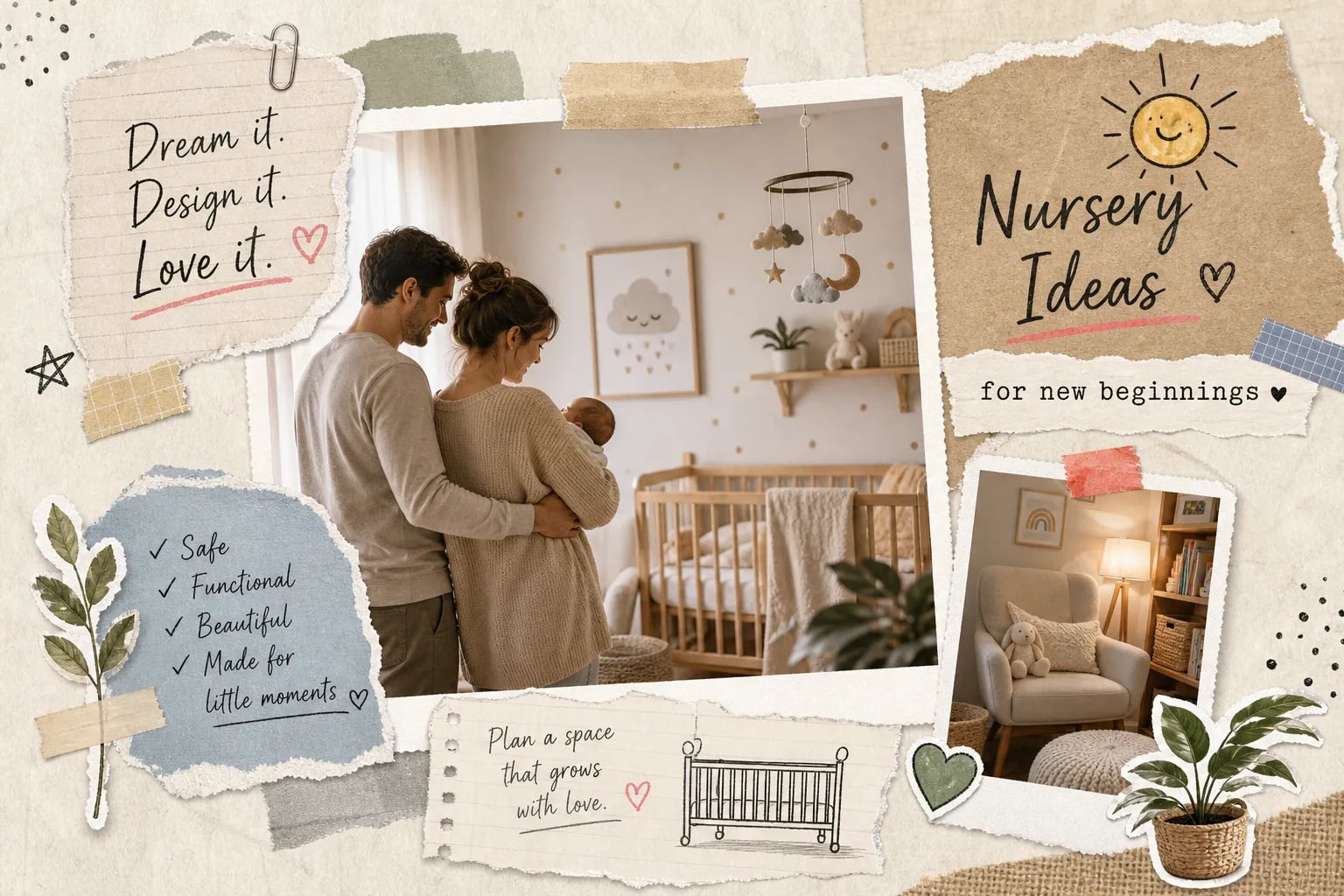
For small rooms under 10×10 feet, the most efficient template is the corner crib plus opposite storage approach. Placing the crib in a corner frees the center of the room for movement, while a dresser or changing unit on the opposite wall keeps circulation clear. An L-shaped arrangement works well in rooms that are closer to square. In either case, vertical storage is one of the most impactful moves you can make: floating shelves and tall dressers add capacity without eating floor space.
Layout tips for small nurseries
When floor space is tight, think height first. A tall five-drawer dresser holds more than two low ones while occupying the same footprint. Floating shelves above the changing area keep supplies within arm’s reach without crowding the floor. If the room is genuinely tiny, a mini-crib buys you several extra square feet of maneuvering room during those early months.
In medium rooms, think in three zones: a sleep zone with the crib on the longest wall, a changing and storage zone on an adjacent wall, and a feeding or reading zone near the window with your glider. This zoning separates a working nursery from a room that’s just furniture pushed against walls. Each zone serves a specific purpose, which makes night routines faster and less disorienting when you’re running on little sleep.
If the nursery shares space with a master bedroom, guest room, or a sibling, keep the baby zone contained with a mini-crib, a rolling diaper cart, and tall closed storage. Plan the layout with the next stage in mind: a floor plan that fits a crib today should logically accommodate a toddler bed later without requiring a complete furniture overhaul.
The nursery furniture pieces worth spending money on
A convertible crib is the smartest single purchase in the nursery for long-term value. A crib that converts to a toddler bed and eventually a full-size bed eliminates two or three future furniture purchases. Among top-rated models, the Babyletto Hudson 3-in-1 is a Forbes-vetted pick around the $399 mark. The Carter’s by DaVinci Colby 4-in-1 is a solid budget-tier alternative worth researching if you want similar long-term flexibility at a lower entry price. On whichever model you choose, GREENGUARD Gold certification is a widely recommended quality signal for low chemical emissions in a room where a baby will spend most of their early hours.
Convertible crib buying checklist
Before finalizing a crib purchase, confirm: GREENGUARD Gold certification, slat spacing no greater than 2 3/8 inches, compliance with 16 C.F.R. part 1219, included or compatible conversion hardware for the toddler and full-size stages, and a mattress sold separately that meets 16 C.F.R. part 1241 dimensions.
A dresser that doubles as a changing station delivers better long-term value than a standalone changing table, which is primarily useful during the first 12 to 24 months. A quality dresser stays useful in the room for years beyond that. The Storkcraft Modern Convertible Changing Table is a Forbes-recommended pick at the accessible end of the price range, while the Crate and Kids Bodie dresser is a higher-end option built to last well beyond the baby years. Whichever you choose, pair it with a changing pad that has raised guard rails and a firm fit on the surface.
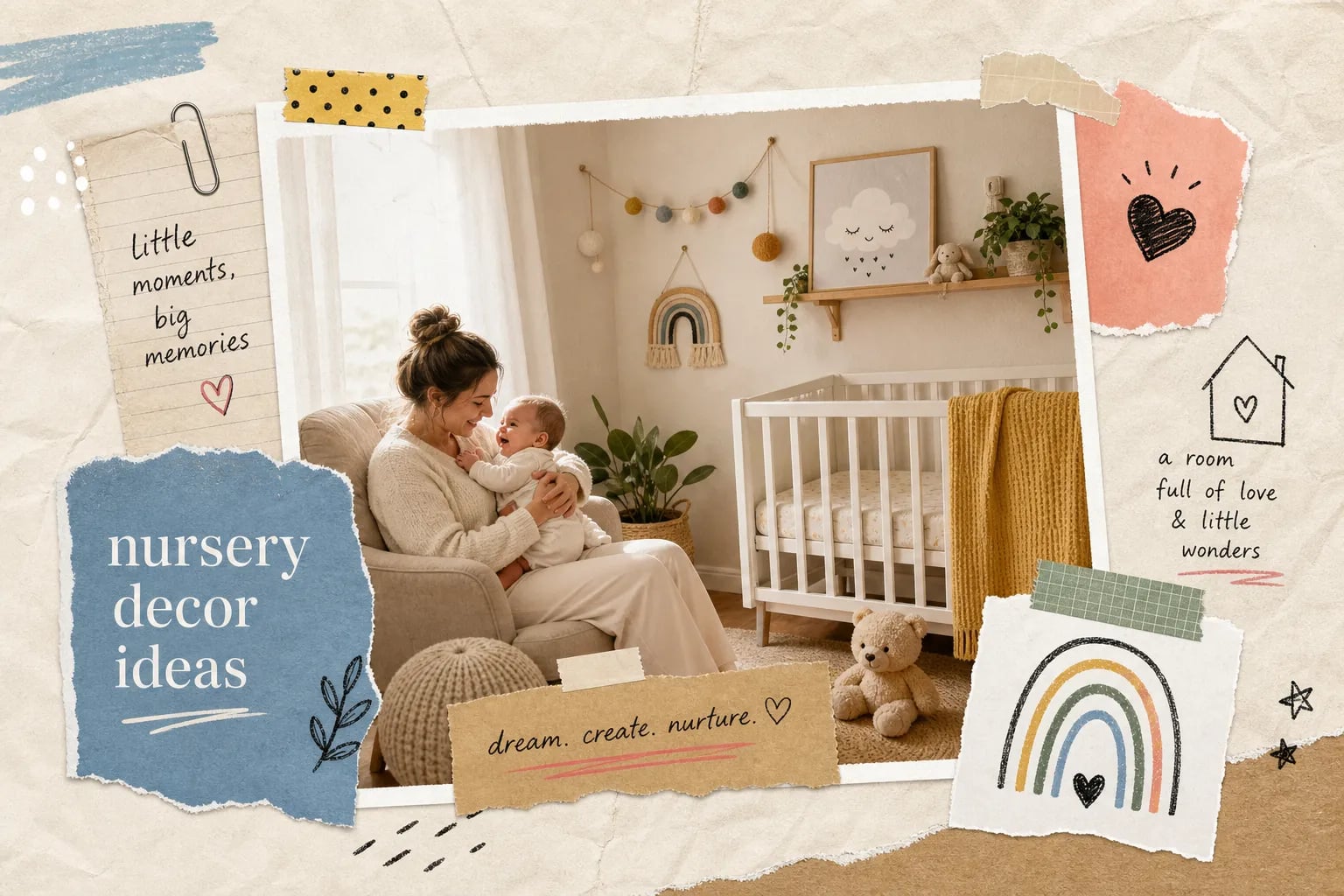
A glider is a comfort buy rather than a value buy, unless you plan to move it to another room after the nursing stage. That said, if you want one, choose a model with stain-resistant fabric, a smooth glide mechanism, and GREENGUARD Gold certification. The Delta Children Mercer Power Glider is a strong value pick. Across all three furniture pieces, the pattern is the same: prioritize items that earn their floor space past the first year.
Safety standards your nursery must meet before the baby comes home
Federal crib standards in the U.S. require full-size crib interior dimensions of 28 ± 5/8 inches wide by 52 3/8 ± 5/8 inches long, with slat spacing no more than 2 3/8 inches. The mattress must be at least 27 1/4 inches by 51 1/4 inches and no more than 6 inches thick. These standards fall under 16 C.F.R. part 1219 for cribs and 16 C.F.R. part 1241 for mattresses, with updated ASTM standards taking effect in 2026.
Use the two-finger mattress test to confirm a safe fit: if two fingers slide easily between the mattress edge and the crib rail, the gap is too large and poses an entrapment risk. Avoid drop-side cribs entirely, even in secondhand markets where they still circulate. They are federally banned and structurally unsafe. Also skip crib bumpers, sleep positioners, and any unapproved padding, none of these are safe regardless of product marketing claims.
Place the crib away from windows, blinds, curtains, and any wall-mounted decor that could fall. Window blind cords are a commonly cited nursery hazard, according to CPSC incident data, so use cordless window treatments as your default. The changing area needs guardrails and a firmly secured pad, and the rule is simple: never step away from the changing surface while the baby is on it, regardless of how secure the guardrails feel. For all tall dressers and shelving units, anchor them to wall studs using anti-tip straps, non-negotiable.
Storage that keeps the nursery functional without eating the room
The most budget-friendly storage combination that works in any nursery size is a three-part system. Start with one cube shelf or open shelving unit for visible, grab-easy storage (typically $35 to $150). Add a set of matching open bins or baskets for diapers, blankets, and toys ($8 to $25 each). Finish with drawer dividers inside the dresser for onesies and small items ($20 to $25). That’s a complete nursery storage setup for well under $200 in most cases.
Matching containers matter visually because they reduce visual noise and make the room feel intentionally designed rather than just organized. A mix of mismatched bins in different sizes and colors adds clutter even when the contents are tidy. Natural seagrass or white canvas bins accomplish this at nearly any price point. Stick to one material or color family for your baskets and the room will look more pulled-together with minimal effort.
In rooms where floor space is scarce, floating wall shelves are one of the highest-return additions you can make. They keep books, small baskets, and light decor off the floor and at a useful height for parents. For renters or anyone who wants to avoid permanent installation, over-the-door organizers and a rolling diaper caddy accomplish a lot without a single wall anchor.
Lighting and the final details that pull the room together
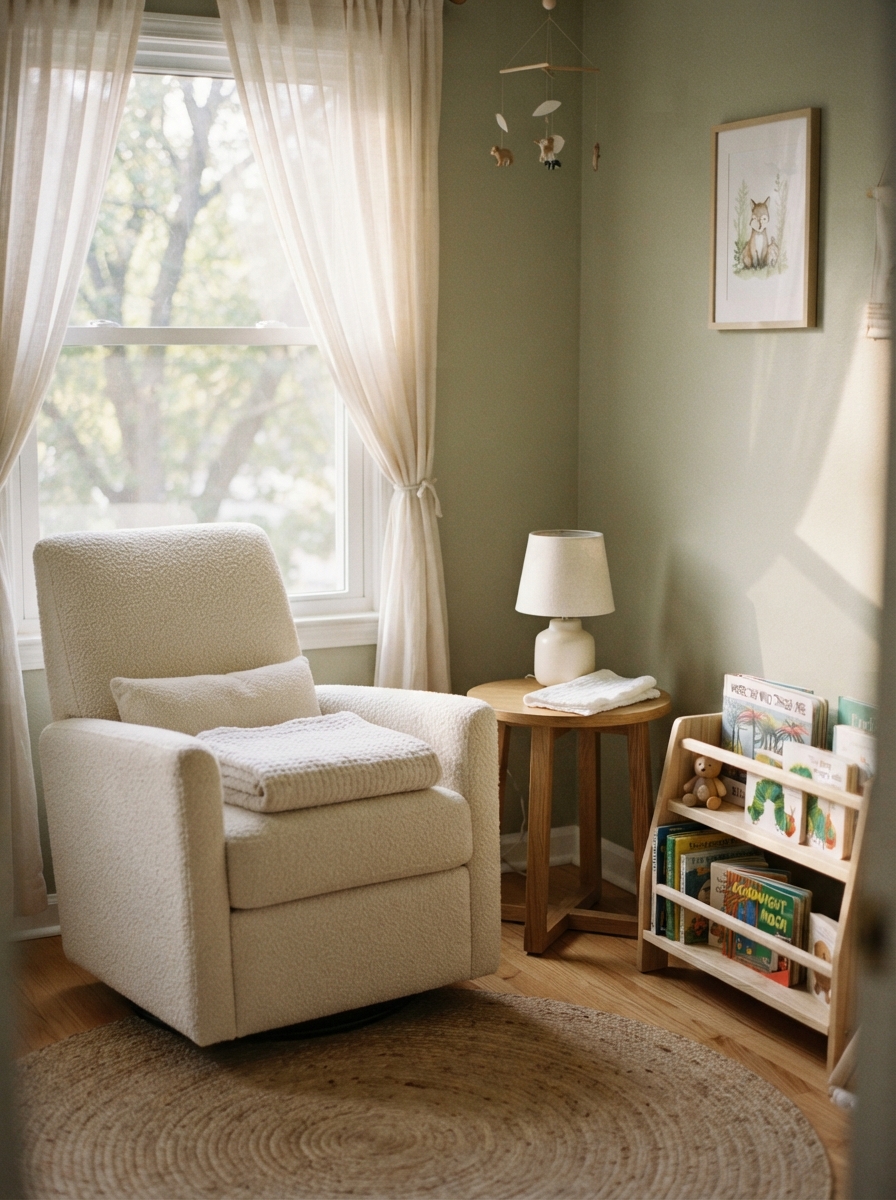
A nursery needs three layers of light to function well around the clock. Ambient overhead light handles daytime use and general feeding. A dimmable lamp or nightlight at very low output covers middle-of-the-night feeds without fully waking the baby. Blackout window treatments protect nap schedules by blocking outside light that cuts into sleep windows.
Night lighting and bulb choice
For overnight feeds, place a lamp with a warm bulb rated at 2700K or lower near the glider rather than using overhead lighting. Cooler, blue-rich light signals daytime to the brain and interferes with melatonin production. Warm amber or soft orange light, ideally in the 1800 to 2200K range, keeps stimulation low and cues the baby that it’s still sleep time. A dimmer switch is a relatively inexpensive upgrade for many homeowners and one of the most practical nursery improvements parents overlook during initial setup. If you can add one to any existing fixture, do it before the baby arrives.
For window treatments, 100% blackout curtains with a bonded liner or coating are the gold standard. Room-darkening options that block 80 to 99% of light work for most babies, but if your child is light-sensitive or you live somewhere with strong morning sun, true blackout panels are worth the investment. Mount them wide and high to minimize edge gaps. Beyond the functional pieces, anchor the room’s nursery decor ideas around two or three intentional choices: a statement wall print, a soft rug, and a mobile or textile above the crib. That’s enough. Filling every surface works against the calm, cocoon-like atmosphere that supports infant sleep.
Nursery Furniture Checklist
As an Amazon Associate we earn from qualifying purchases.
Putting it all together
The decision sequence is what separates a nursery that feels intentional from one that feels assembled in a panic. Palette and theme first, layout second, furniture and safety third, storage and lighting last. A thoughtful nursery design, built in that order, can help reduce unnecessary purchases and returns, and takes the edge off standing in an unfinished room two weeks before your due date.
A well-planned nursery design doesn’t require a large budget. The smart moves are simpler than most baby-gear marketing suggests: a convertible crib that lasts through the toddler years, a dresser that replaces a dedicated changing table entirely, and a cube shelf with matching baskets that costs a fraction of a single decorative lamp. These choices deliver real long-term value. The inspiration matters less than the order of operations.
If you found this guide useful, the Aesthetic Nest Decor kids’ room series covers every stage ahead: toddler room transitions, shared sibling spaces, and the tween years. Each article follows the same practical, room-by-room approach so you never have to start from scratch at a new milestone. Bookmark it now, and come back when the nursery stage starts giving way to something new.