
A small balcony that collects old shoes, a folded-up lawn chair, and good intentions is one of the most common frustrations in apartment living. The space is there, and so is the potential, but without a clear starting point, it stays an afterthought. The right balcony pots change that faster than any other single purchase because greenery signals intention. It tells anyone who steps outside that this space was thought about.
At Aesthetic Nest Decor, balcony greenery sits at the center of how we approach small outdoor styling. The planters you choose aren’t just containers; they anchor every other design decision you make, from the scale of your furniture to the color story you’re building. Choose the wrong ones and the whole space fights itself. Choose well, and the rest of the design falls into place surprisingly quickly.
This guide covers the full decision path: which materials actually hold up on apartment balconies, how to think about weight before you buy anything, what drainage features are worth the upgrade, specific product picks for different budgets, and how to arrange everything so the result looks designed rather than thrown together.
Which pot material actually holds up on an apartment balcony
Not all outdoor planters are built for the specific demands of balcony life: direct sun exposure, wind, freeze-thaw cycles in colder climates, and the non-negotiable reality of a weight limit. The material you choose determines how long your planters last and how much stress they put on your railing or floor.
Fiberglass and plastic resin: the safest all-around picks
Fiberglass is the top performer for apartment balconies. It’s very light, UV-resistant, and resists cracking in most freeze-thaw conditions, while maintaining a polished appearance year-round. If your building has a weight limit and you want planters that last multiple seasons without requiring any special care, fiberglass is where to start. It offers among the best balances of low weight, UV resistance, and freeze-thaw durability for a wide range of U.S. climates.
UV-stabilized plastic resin is the budget-friendly counterpart. The weather resistance is solid, the weight is minimal, and you’ll find it at every major U.S. retailer. Quality varies significantly, so look specifically for “UV-stabilized” labeling rather than just “outdoor.” Both fiberglass and quality resin are the go-to choices for railing-mounted planter boxes and hanging balcony pots where every ounce matters.
When terracotta and metal make sense and when they don’t
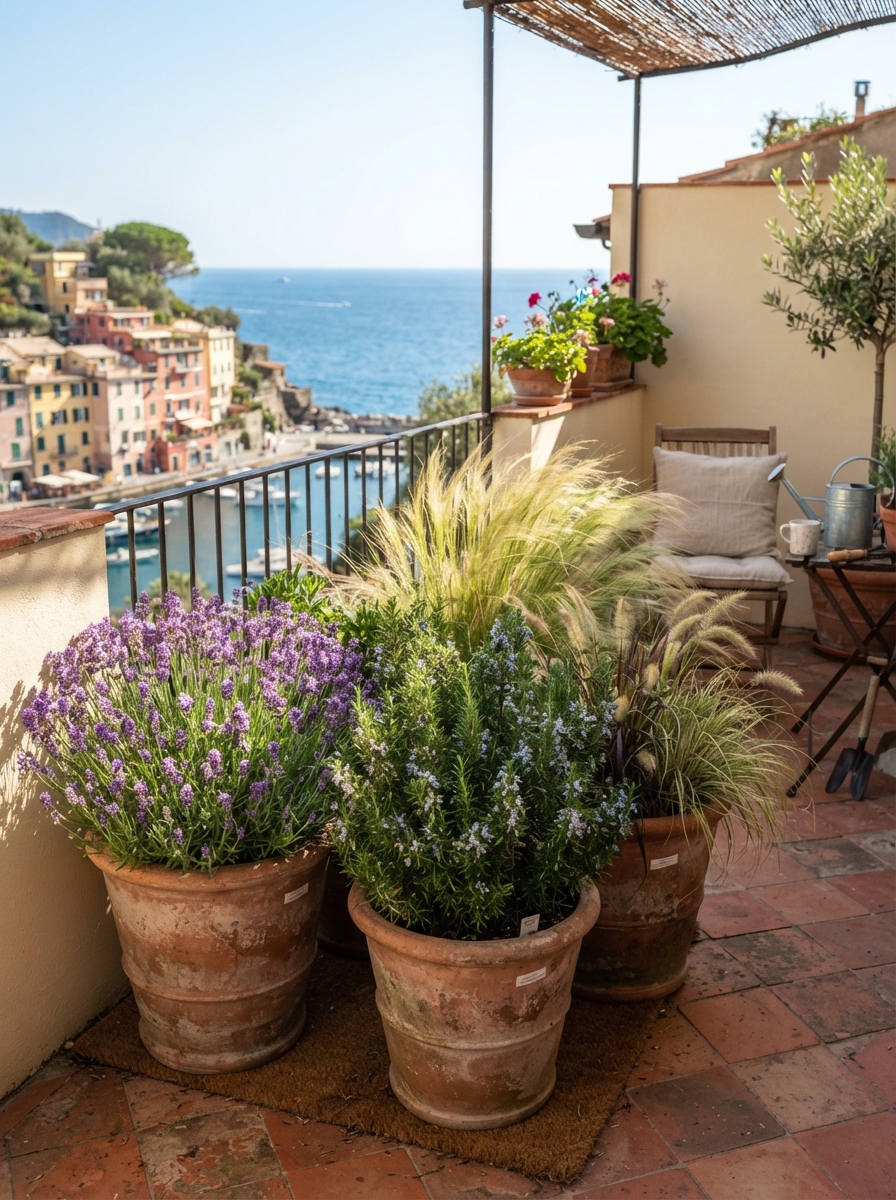
Terracotta is beautiful, breathable for plant roots, and has an aesthetic that resin hasn’t quite replicated. The drawbacks are real, though. It’s heavy, porous, and cracks in freezing temperatures. Terracotta works on sheltered balconies in mild climates where load limits aren’t a concern, but it’s a poor choice for anyone in a northern climate or on a railing-mounted setup.
Powder-coated or galvanized metal planters look sharp in modern and industrial setups, and the durability is excellent. The tradeoffs are weight (heavier than resin), heat absorption in direct sun that can stress roots, and the risk of rust if the coating chips over time. Metal works best as a floor planter rather than anything railing-mounted, and it’s better suited to balconies where you’ve confirmed the structural load allows for it.
Fabric pots: ultra-light but short-term
Fabric grow bags are the lightest option available and genuinely excellent for air-pruning plant roots. For a seasonal herb setup or a trial run before you commit to real planters, they serve a seasonal purpose, but degrade quickly outdoors, lose their shape, and offer no visual staying power. For a balcony you want to look designed and intentional, fabric bags are a starting point at best, not a long-term solution.
Size and weight limits every apartment renter should know before buying
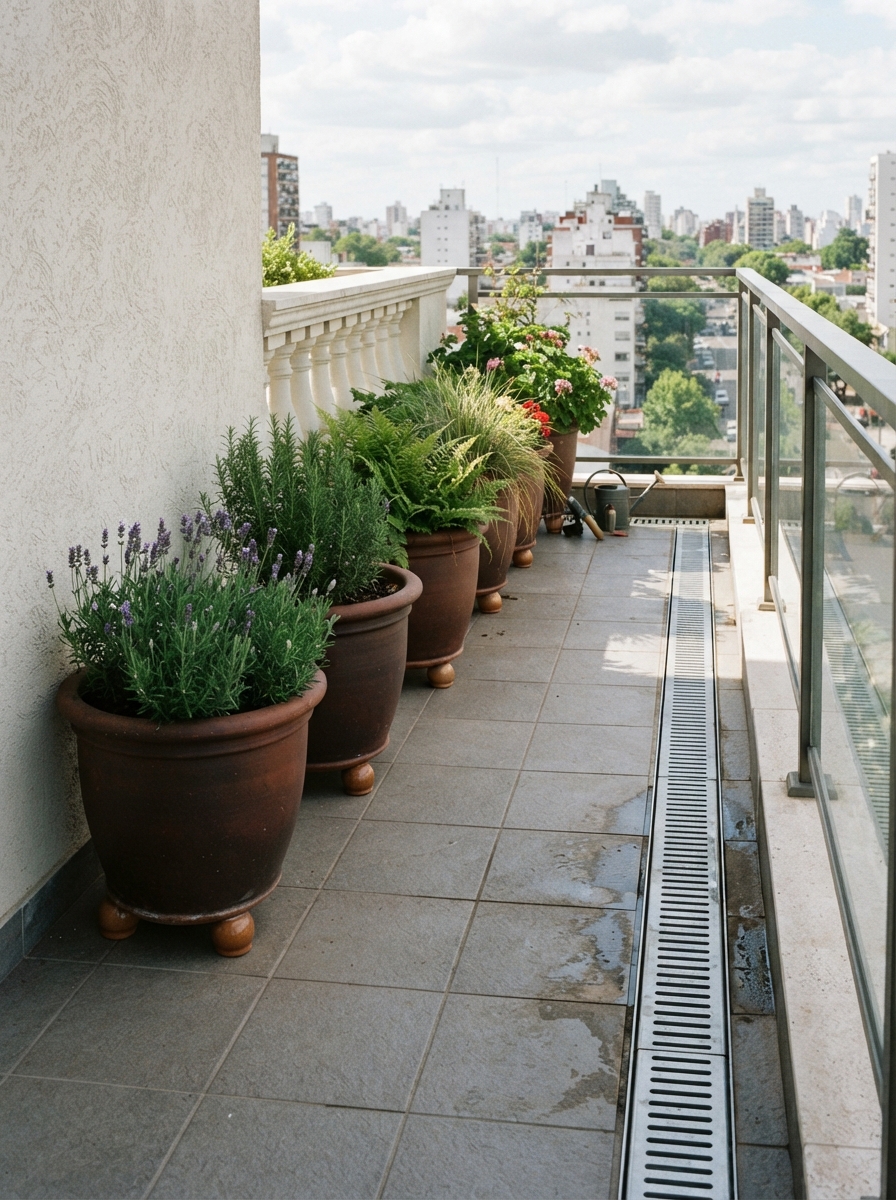
This is where renters most often get tripped up. You find a planter you love, order it, fill it with soil, and then realize it’s far heavier than expected sitting on a balcony with a load limit you’ve never actually looked up. Getting this step right protects both your plants and your building.
How much does a filled planter actually weigh?
Dry pot weight is almost meaningless for planning purposes. The number that matters is the saturated weight: a 10-inch planter with wet soil sits around 18 lb, a 12-inch reaches 20 to 30 lb, and a 16-inch can hit 40 to 60 lb. Always plan based on the fully watered figure, not the product listing weight. Using a lightweight potting mix with high perlite content can noticeably reduce saturated weight; exact savings depend on the mix composition, but the difference adds up quickly when you have multiple containers on a single balcony.
Safe sizing for railing planters and hanging balcony pots
For railing-mounted planter boxes, the practical sweet spot is 24 to 36 inches long and 6 to 8 inches deep. This range fits most standard railing widths while keeping the loaded weight manageable. Hanging balcony pots should generally stay at 15 to 20 lb when fully watered, or under 15 lb for more conservative setups, always confirm your specific hardware rating and building limits before installing. For bracket-mounted railing planters, under 20 to 25 lb is a reasonable target if the hardware is specifically rated for that load.
Checking your balcony’s actual load limit
Residential balconies in the U.S. are typically rated for 40 to 60 lb per square foot of live load, with 60 psf being the most widely cited minimum standard. The safest move before adding multiple containers is to contact your building manager and confirm the actual rating for your unit. Railings have a separate weight rating from the balcony slab itself, so a railing that looks sturdy can still have a lower threshold for mounted planters, particularly in older buildings.
Drainage and self-watering features worth paying attention to
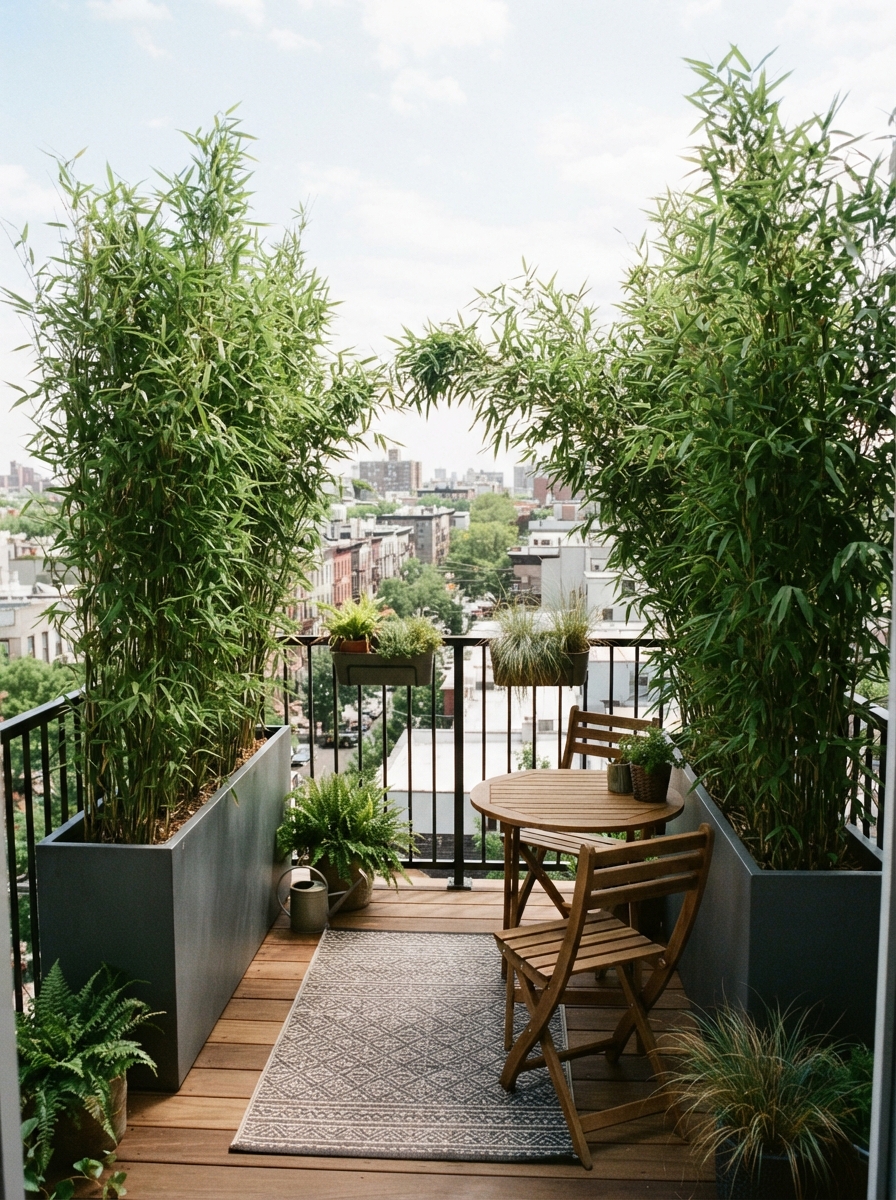
A drainage hole is the minimum any outdoor planter should have. Without it, roots drown and soil turns sour within a few waterings. But drainage design on balcony planters has gotten significantly more thoughtful, and knowing what to look for can save both your plants and your downstairs neighbor’s ceiling.
Basic drainage holes vs. overflow drainage systems
Some planters go beyond a basic drainage hole and include an overflow pipe or integrated saucer to catch runoff without creating a puddle on the balcony floor. For apartment living, this matters: water dripping onto the unit below is a genuine concern and may violate some building rules or lease terms, check your lease and building policies before you set up any planter over an occupied space. Brands like Elho and Ivyline build overflow drainage and integrated saucers specifically for balcony use. The Elho Barcelona trough planter, for example, includes a built-in drainage system with an overflow pipe and a refill side spout, which makes it a genuinely cleaner option than a plain-hole planter sitting over a loose saucer. Window box planters with integrated saucers work on the same principle and are worth seeking out specifically for railing setups.
Self-watering balcony pots: best picks and who they’re for
True self-watering planters include a bottom reservoir that wicks moisture up to the root zone through capillary action as the soil dries. The result is less frequent watering, more consistent moisture, and healthier plants through hot summer stretches. In warm outdoor conditions, most reservoir-based planters need refilling every three to seven days, compared to manual watering every one to two days without a reservoir.
The standout self-watering models for balconies include the Keter Urban Bloomer (which pairs a reservoir with a visible water-level gauge) and the Gardener’s Supply Oasis self-watering planter (with a 2.75-gallon reservoir built for extended intervals). For a budget-friendly multi-pot herb setup, the Vugosson 7-pack delivers solid self-watering function across several small planters at once. For apartment balconies where missing a weekend of watering in July significantly raises the risk of plant loss, a reservoir system meaningfully reduces that gap.
Best balcony pots to buy in 2026, sorted by type and budget
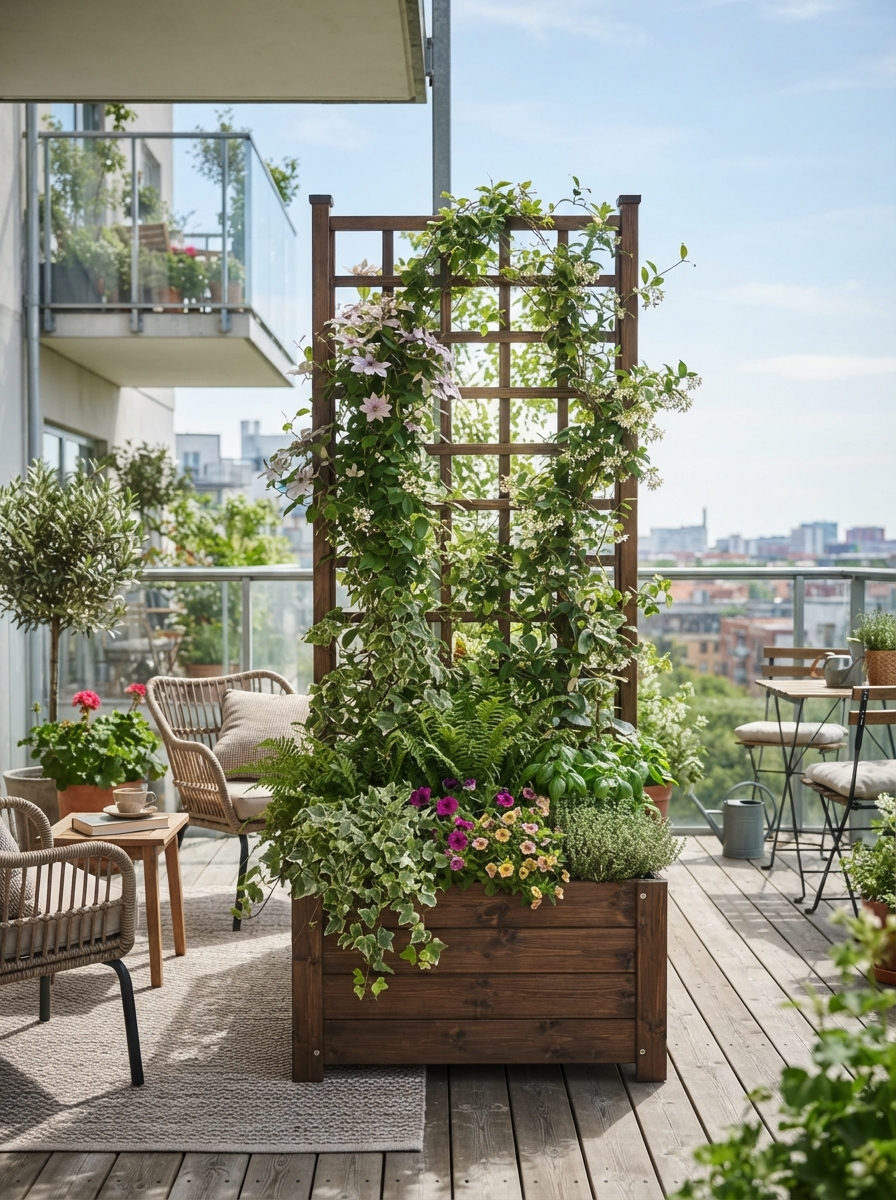
The right planter depends on how you plan to use your space. Below are specific recommendations organized by setup type, with honest notes on where each one fits best.
Best railing and hanging planters
The Lechuza Balconera Cottage is a strong pick for a clean, integrated look on apartment railings. It’s designed specifically for balcony gardening, with a tidy finish and practical dimensions that suit most railing widths. It sits at the mid-to-premium price point (around $48 to $62 USD; pricing varies by retailer) and holds up well across seasons. For a coordinated railing look across a longer balcony run, the Y&M 24-Inch 4-Pack offers solid value as a multi-pack option.
For vertical interest without sacrificing floor space, the Dahey 10.5-inch hanging metal pots in a 3-pack are effective space-saving planters in this category. They add dimension and greenery at eye level, which reads well even in a compact outdoor area. Outdoor balcony pots in a hanging or bracket-mounted configuration like these are particularly useful when floor space is at a premium. At the premium end, the Veradek Pure Series delivers UV-stable construction, adjustable brackets, and a large soil capacity for renters who want a serious planting setup that looks polished. For more on this, see our best space-saving furniture ideas for a tiny balcony guide. For more on this, see our best shoe storage ideas for your entryway guide.
Best floor planters for small spaces
For a compact modern look on a budget, the Varo Square Black Metal Planter comes in around $34 on sale and functions well as a statement floor piece. It’s not self-watering, so pair it with a saucer and a quality potting mix. For balconies with more room for floor containers, the Elho Barcelona trough planter brings a built-in reservoir and overflow pipe that make it one of the lowest-mess outdoor balcony pot options available for apartment use.
Where to shop by budget in the U.S.
- Under $15: IKEA’s MUSKOTBLOMMA at $9.99 and Target’s Room Essentials outdoor line at $10 to $15 are the strongest starting points for small, lightweight balcony pots.
- $25 to $75: Home Depot (Vigoro line), Walmart, and At Home carry practical mid-range outdoor planters with solid drainage and decent material quality.
- Premium ($79 and up): The Balcony Garden ($79 to $179) and Gardener’s Supply ($105 and up) are well-regarded U.S. sources for design-forward, long-lasting balcony planters built specifically for outdoor conditions.
How to arrange your balcony pots so the space feels designed, not random
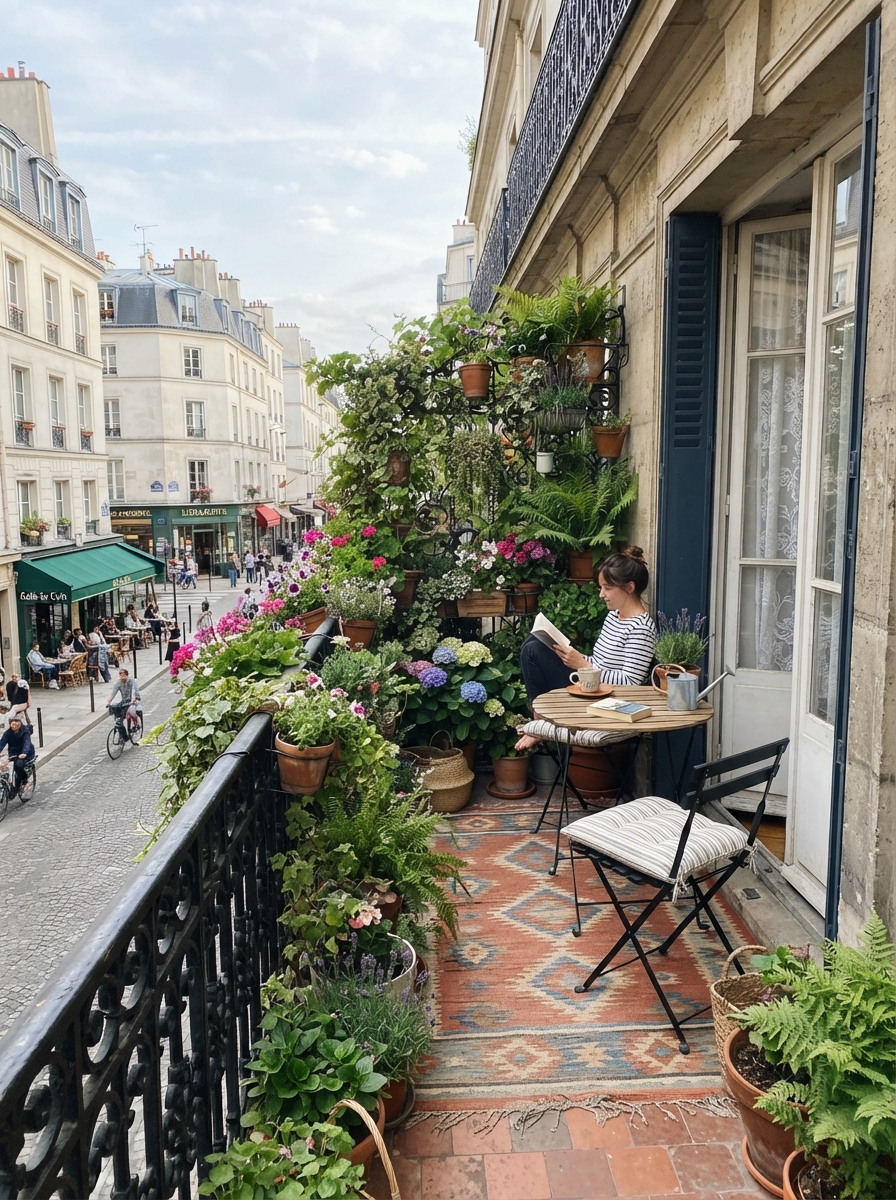
Selecting the right planters is only half the work. Placement and layering are what separate a balcony that looks intentional from one that looks like a plant storage area.
Work vertical space before you claim floor space
On a small balcony, floor space is the most precious asset you have. Prioritize hanging pots, railing-mounted planter boxes, and wall-mounted brackets first. Reserve floor planters for one or two anchoring pieces rather than a collection. A tiered plant stand is one of the most efficient tools in a small balcony setup: it can hold roughly three to four small planters in approximately the footprint of a single large pot, which is especially useful for herbs or trailing plants that don’t need deep containers.
Use greenery to anchor the whole balcony design
At Aesthetic Nest Decor, one consistent principle across our small balcony guides is that a plant grouping functions like a focal point the way an anchor piece does in an indoor room. Place your largest or most visually striking planter at the far end of the balcony, opposite the door, so the eye travels through the space rather than stopping at the threshold. This single move makes a small balcony feel longer and more considered than it actually is.
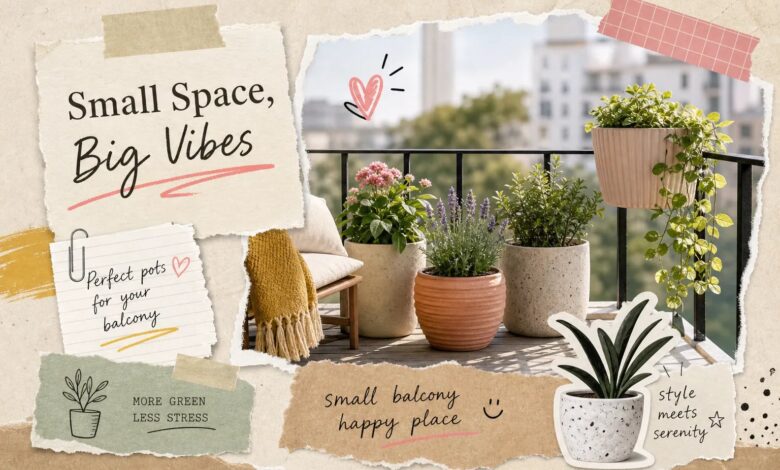
Cluster pots in odd numbers, three or five, rather than lining them up evenly along a single rail. Groupings read as natural and curated; straight, evenly spaced lines read as a plant nursery. The goal is a balcony that feels like an outdoor room, not a display shelf.
Mix pot shapes and heights without creating visual noise
The simplest arrangement formula is one tall planter, one medium-height planter box, and one low trailing piece. Varying the heights adds dimension without clutter, and it works with almost any plant combination. On the material side, stick to two or three finishes at most, this is a widely held principle in small-space design, where limiting finishes keeps the eye from fragmenting across too many surfaces. Mixing fiberglass, rustic terracotta, and galvanized metal in one small balcony can easily tip into visual noise. Consistent materials let the plants become the visual interest, not the containers competing with each other.
Our Favorite Balcony Pots & Planters
As an Amazon Associate we earn from qualifying purchases.
The right pots make the whole outdoor space work
Start with material and verify loaded weight before placing anything on a railing, then decide between basic overflow drainage and a full self-watering reservoir. After that, choose a style and price point that fits both your budget and the overall direction you’re building for the balcony.
The right balcony pots don’t just grow things. They set the tone for the entire outdoor space. Even on a 40-square-foot balcony, a few well-chosen, well-placed containers can shift the feeling from storage overflow to intentional outdoor retreat, a transformation that costs less than most people expect and lasts far longer than a single season. Pour aller plus loin : outdoor & balcony.
For more small balcony styling ideas, arrangement formulas, and room-by-room decor guides built around real-life spaces, explore the full library at Aesthetic Nest Decor. The full library covers every corner of a well-styled home, indoors and out.