

As an Amazon Associate I earn from qualifying purchases. Some links in this post are affiliate links, at no extra cost to you.
Bathroom counters in photographs hold three beautiful objects. Bathroom counters in real life hold a toothbrush, four half-used products, a hairbrush and something that belongs in the bin. This guide covers bathroom counter styling step by step, with practical tips and product picks.
The gap between the two is not that photographers own less stuff. It is that they have somewhere to put it. A counter stays clear when the things that were on it have a defined home eighteen inches away.
The three-item rule, and why it works
A bathroom counter reads as styled when it holds roughly three visible groupings and no more. Beyond that your eye stops seeing objects and starts seeing clutter.
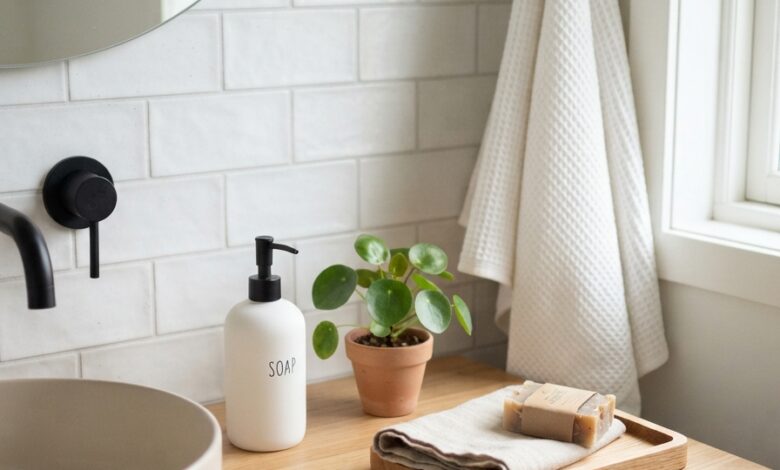
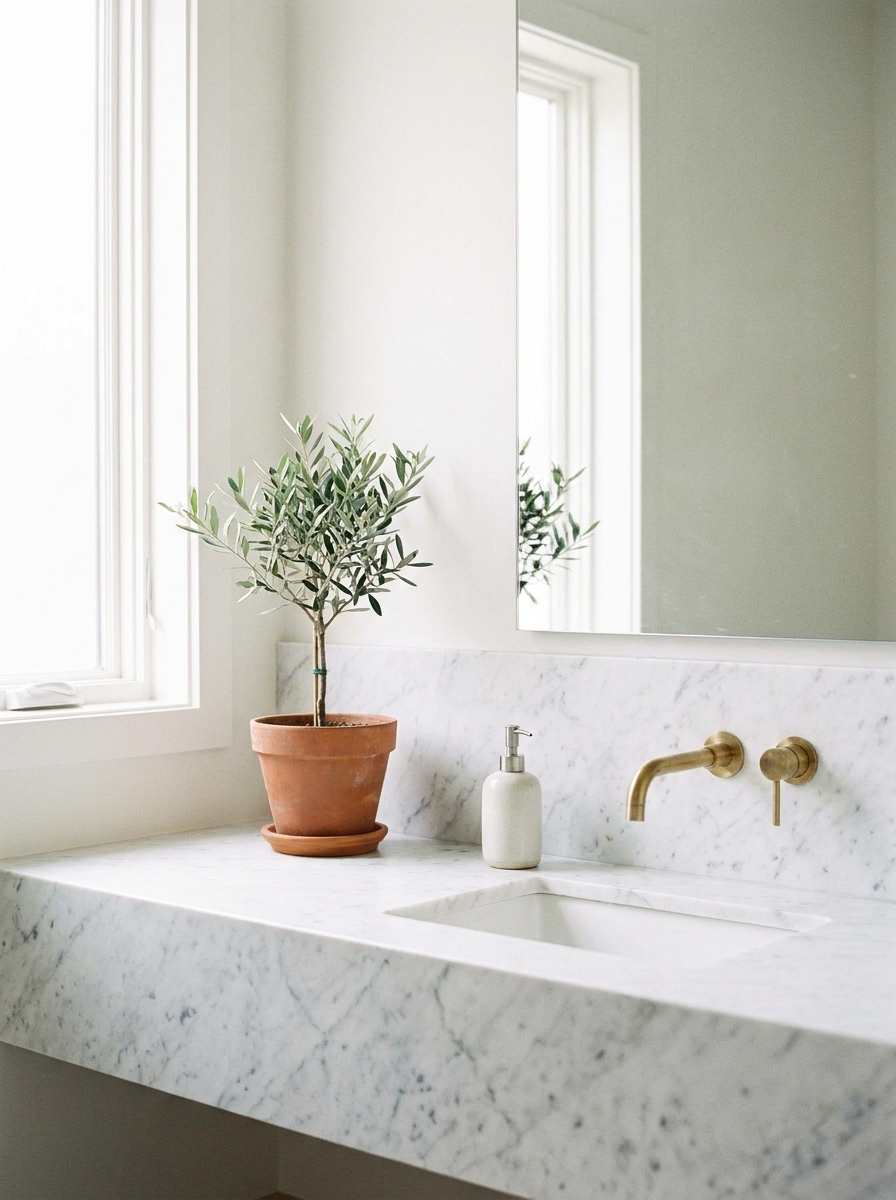
A workable set: a soap dispenser, something living — a small plant or a eucalyptus stem — and one container holding the daily items. That is it. Everything else goes behind a door.

The reason three works is that it is few enough to arrange deliberately. Once you are placing seven things, you are no longer composing, you are just fitting them in.
What genuinely belongs on the counter
Only what you use every single day, and only what looks acceptable while doing it.
Hand soap earns its place because you reach for it constantly. Decanting it into a plain ceramic or glass dispenser removes the branding, which is most of what makes a counter look busy.
Toothbrushes are the judgement call. If they live out, they need a proper holder and it should be opaque — a clear tumbler shows every bit of residue. If there is drawer space, they are better inside it.
Shop the look: Counter essentials
 JASAI Glass Soap Dispensers (2-Pack)Refillable bottles that look better than plasticCheck price on Amazon →
 Real Marble Vanity TrayGroups the daily items into one spotCheck price on Amazon →
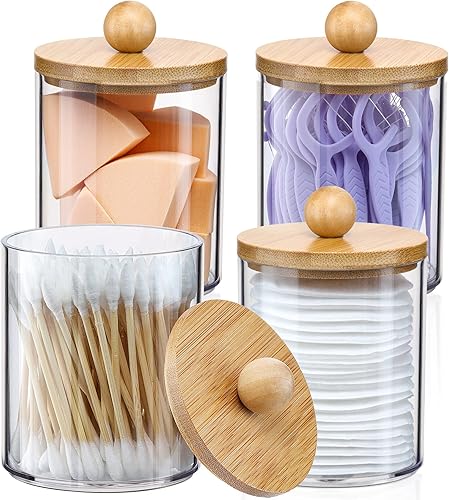 Qtip Holders with Bamboo Lids (4-Pack)Clear jars for cotton swabs and padsCheck price on Amazon →
 Mini Ceramic Toothbrush HolderA small, tidy home for toothbrushesCheck price on Amazon →
As an Amazon Associate we earn from qualifying purchases. Prices and ratings change, so check Amazon for today’s details.
What should go behind a door
Everything with a label. Shampoo, cleansers, sunscreen, the medicine you take in the morning, the products you use twice a week.
Commercial packaging is designed to shout on a shop shelf, and it does the same thing in your bathroom. Six bottles of different brands is six competing colour schemes in a room that is usually under four square metres.
You do not have to decant everything — that is a maintenance habit most people abandon within a month. Putting the bottles in a drawer or a cupboard achieves the same result with no ongoing effort. The same rule works for nail polish and tools: this list of the nail supplies you actually need at home keeps the drawer from overflowing.
Shop the look: Finishing touches
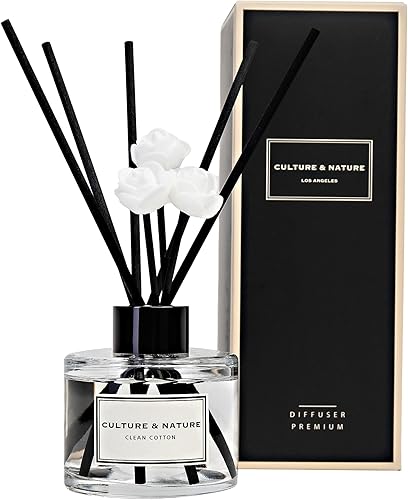 CULTURE & NATURE Reed DiffuserFresh scent with no flameCheck price on Amazon →
 GREENTIME Mini Faux Plants (4-Pack)A touch of green that survives a dark bathroomCheck price on Amazon →
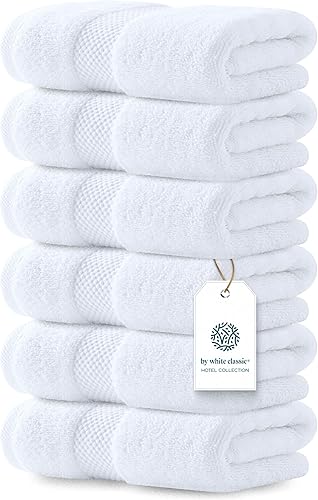 White Classic Turkish Cotton Hand TowelsCrisp white towels for a hotel lookCheck price on Amazon →
 Chesapeake Bay Scented CandleWarm glow for a relaxing evening bathCheck price on Amazon →
As an Amazon Associate we earn from qualifying purchases. Prices and ratings change, so check Amazon for today’s details.
Use a tray to make a group read as one object
This is the single cheapest trick in bathroom styling. Three objects scattered across a counter read as three pieces of clutter. The same three on a small tray read as one intentional arrangement.
A stone, wood or matte ceramic tray around 20–30cm works in almost any bathroom. It also makes cleaning the counter faster, because you lift one thing instead of moving six.
Vary the heights, keep the materials narrow
If everything on the counter is the same height, the arrangement looks flat. A taller stem or bottle, a mid-height dispenser and something low like a dish gives the group a shape.
At the same time, keep the material palette tight — ceramic, glass and one natural texture is plenty. Contrast in height, consistency in material. Reverse that and it looks accidental.
If your bathroom lacks the storage to make this possible, that is the thing to fix first. Our small bathroom storage ideas cover finding room in a bathroom that does not have any.

🎄 Getting ready for the holidays?
See our seasonal guides: Christmas tree ideas · Christmas mantel decor · Christmas tablescape ideas · Christmas entryway decor · winter bedroom decor · Thanksgiving table decor
A Quick Bathroom Counter Styling Checklist
Good bathroom counter styling comes down to a few repeatable habits. Before you add anything, clear the counter completely and wipe it down. Then put back only the items you use every single day, such as hand soap, a toothbrush holder and one daily product.
Group those daily items on a tray so they read as one object and are easy to lift when you clean. Choose a tray in a material that matches your fixtures, like marble with chrome or wood with brass, so the setup feels planned.
Add one living or decorative element, such as a small plant, a bud vase or a candle. One is enough. More than that starts to look cluttered and collects water marks.
Move backups, bottles and anything you use weekly into a drawer, a cabinet or a basket under the sink. Finally, check the counter from the doorway. If your eye lands on one tidy group and a clear surface, the styling is working. Repeat this reset once a week and the counter will stay that way.
Frequently asked questions
How many things should be on a bathroom counter?
Around three visible groupings. Typically a soap dispenser, something living like a small plant, and one container for daily items. Past three or four objects, the counter stops reading as styled and starts reading as cluttered.
Should toothbrushes be left out on the counter?
If there is drawer space, they are better inside it. If they must live out, use an opaque holder rather than a clear tumbler, which shows water marks and residue immediately.
Do I need to decant all my bathroom products?
No. Decanting is a habit most people abandon within a month. Putting labelled bottles in a drawer or cupboard gets you the same visual calm with no ongoing maintenance — decant only the one or two things that genuinely have to stay out.
Why does a tray make such a difference?
It groups separate objects into a single visual unit. Three items scattered across a counter read as clutter; the same three on a tray read as one deliberate arrangement. It also makes wiping the counter down much quicker.

3 Comments