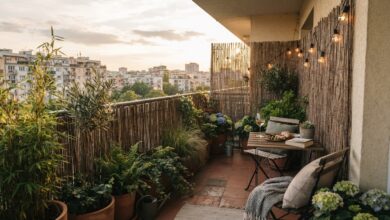

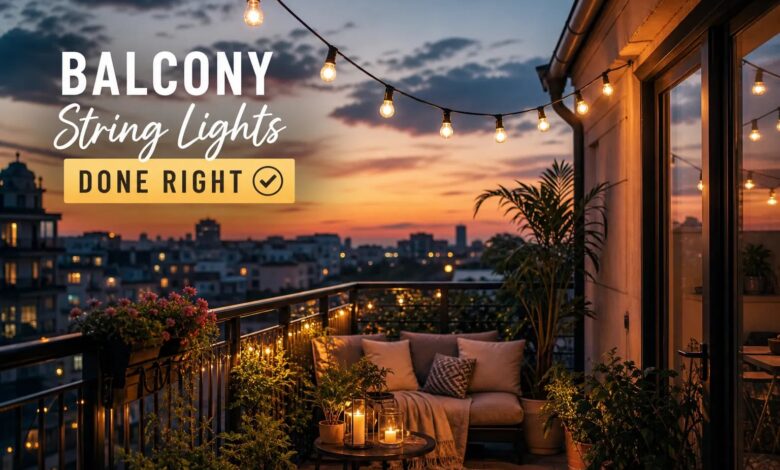
A bare balcony with nothing but a plastic chair and a view is one of the easiest outdoor spaces to transform. Add a strand of warm, glowing lights overhead, and the entire feel of the space shifts. String lights on a balcony are one of the lowest-cost, highest-impact changes you can make to any outdoor space, and they work equally well whether you own your home or rent an apartment where drilling is off the table.
At Aesthetic Nest Decor, lighting is the first thing covered in our full small balcony makeover guide, because the right lighting changes how the entire space feels before a single piece of furniture or a plant gets added. Everything else layers on top of the mood the lights create. This article walks you through exactly how to do this right the first time: measuring and planning your layout, choosing lights built to survive the elements, hanging them without damaging your rental, and keeping them powered safely through every season.
Measure Your Balcony and Map the Light Path Before You Shop
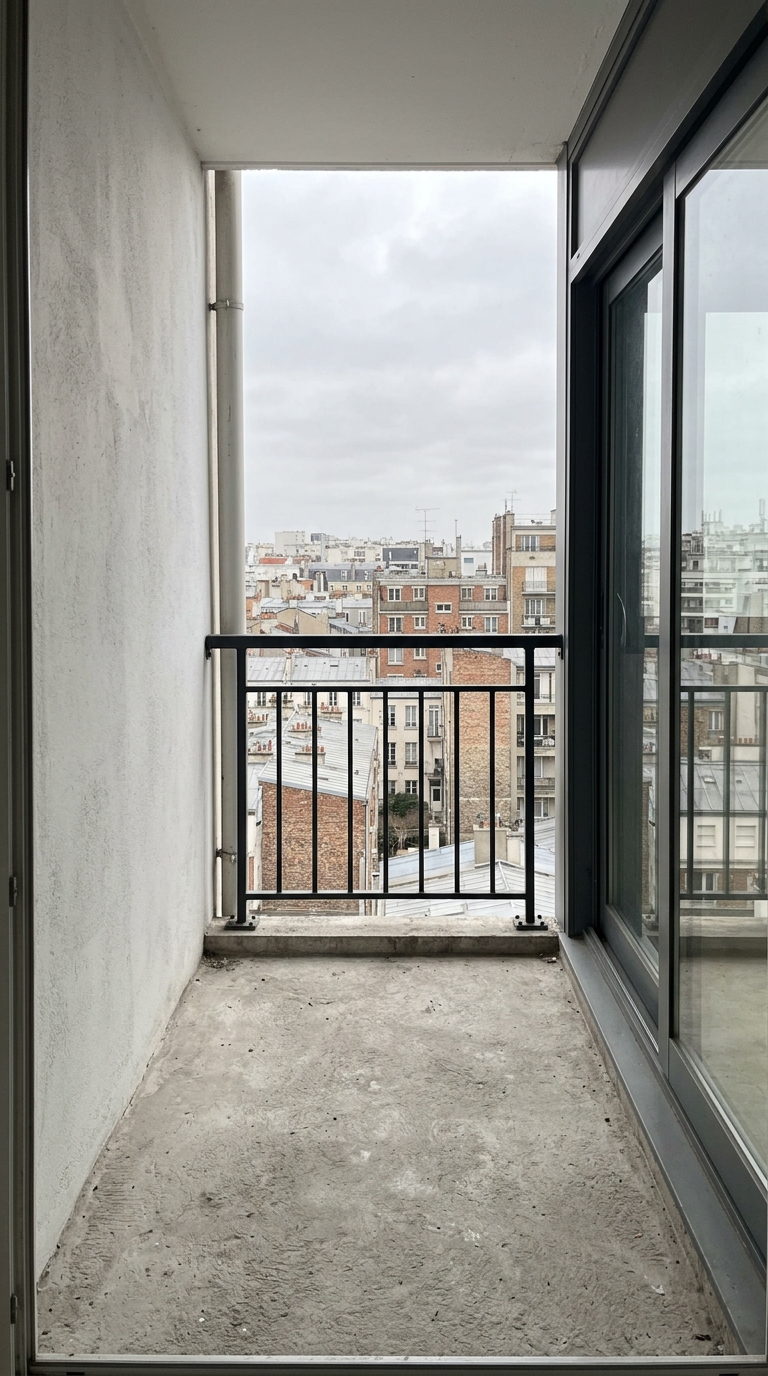
A common mistake is measuring the floor dimensions of a balcony and buying lights based on that number. The actual path your lights will travel is almost always longer than the footprint, especially once you account for corners, sag, and the run back to the outlet. Measuring the route the lights will follow, anchor point by anchor point, is the step that prevents you from coming up short after you’ve already started hanging.
Walk the planned path with a tape measure and record each segment separately: wall to railing post, railing post to corner, corner to the next post, and so on. Note how far the last hook sits from your outlet or battery pack, because that cord length counts too. Once you have the total, add 10 to 15 percent for natural sag and slack at connection points. A 10×8 foot balcony typically needs around 40 feet of lights for a drape or perimeter run. A 16×12 foot space usually lands around 65 feet. A 20×16 foot terrace can push toward 80 feet or more.
The three main layout patterns each suit different balcony sizes. A straight drape or perimeter run is the cleanest choice for compact spaces under 10 feet wide and the easiest for beginners to execute. A zigzag or canopy layout creates a ceiling effect that feels immersive and festive, but it requires more hooks, more length, and a higher tolerance for fussing with symmetry. A single overhead run from wall to railing is the simplest option of all and works particularly well on apartment balconies where you have a solid wall on one side and a railing on the other.
How to Choose String Lights Built to Last Outdoors
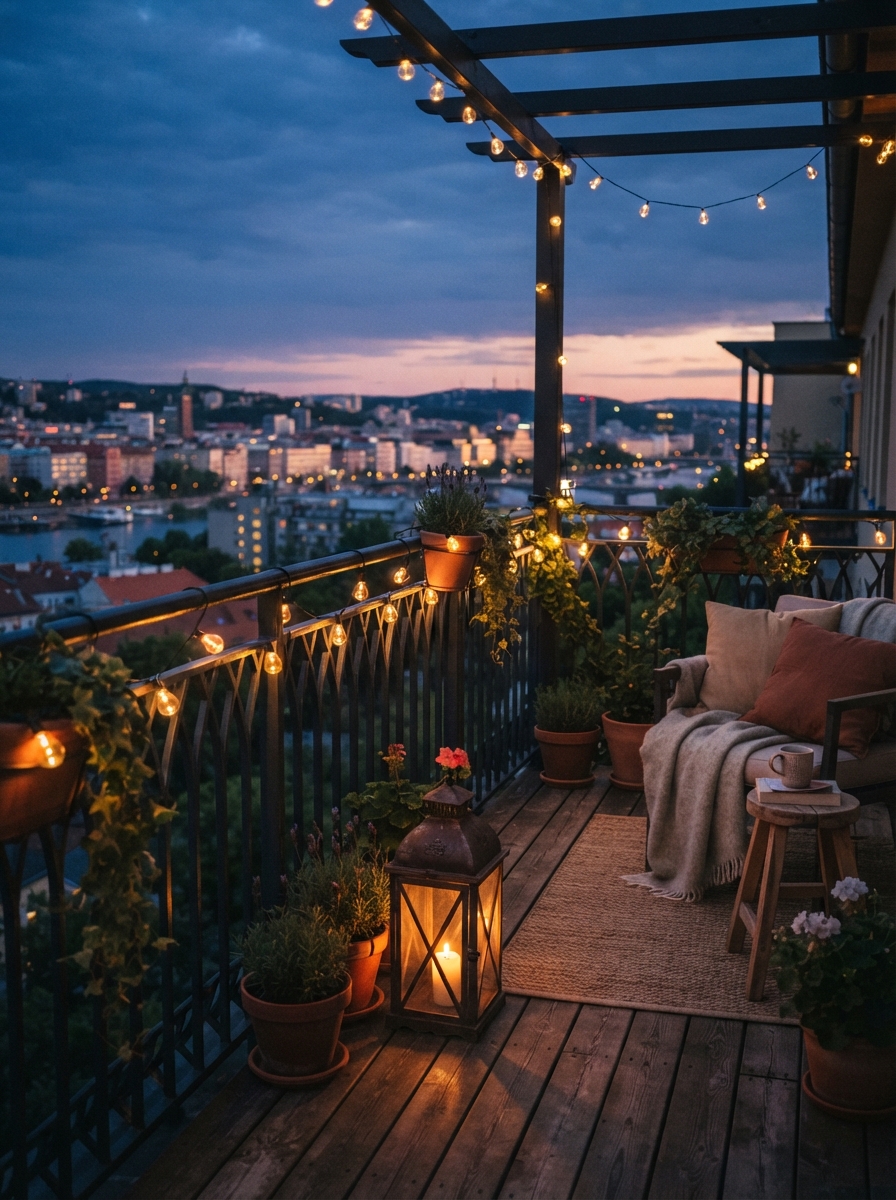
Two decisions matter most when choosing balcony string lights: the weather protection rating and the bulb type. Nail these, and the rest of the purchase falls into place. Get them wrong, and you’ll be replacing lights after the first rainy season.
For weather rating, IP65 is the standard to aim for on an open balcony. It means the fixture is fully dust-tight and protected against water jets from any direction, covering rain, wind-driven water, and hose splashing. IPX4 and IPX5 are acceptable if your balcony is covered or semi-sheltered and the lights mostly see drizzle rather than direct rain, though keep in mind that the weakest component, whether that’s the plug, transformer, or battery box, also needs to be weatherproof. Avoid any product labeled simply “indoor/outdoor” without a numeric IP rating if your balcony is exposed to open sky.
For bulb type, LED wins on every practical measure. LED bulbs last significantly longer than incandescent alternatives, run cooler, and consume a fraction of the energy. Shatterproof LED options also handle wind gusts and temperature swings far better than glass incandescent bulbs do. If you love the warm, amber glow of Edison-style bulbs, look for G40 or ST38 LED options, they deliver that vintage bistro lights-for-balcony aesthetic without the fragility or heat.
For specific picks by setup, here’s a useful starting framework:
- No outlet available: Brightech Ambience Pro Solar (27 ft, IPX4, LED) is a solid choice for balconies with reliable direct sun exposure.
- Small to medium balcony with an outlet: VIPAR 25FT ST38 (IPX5, LED Edison-style) or the Feit Electric 48ft LED are both well-built options with strong verified buyer ratings.
- Medium to large balcony: Hampton Bay 48-foot LED (shatterproof bulbs with a lifetime warranty) or addlon 50FT IP65 cover the space without needing multiple strands.
- Large terrace or wrap-around balcony: addlon 100FT with a remote and built-in timer is worth the investment for a space that gets real daily use.
Rental-Friendly Ways to Hang String Lights on a Balcony
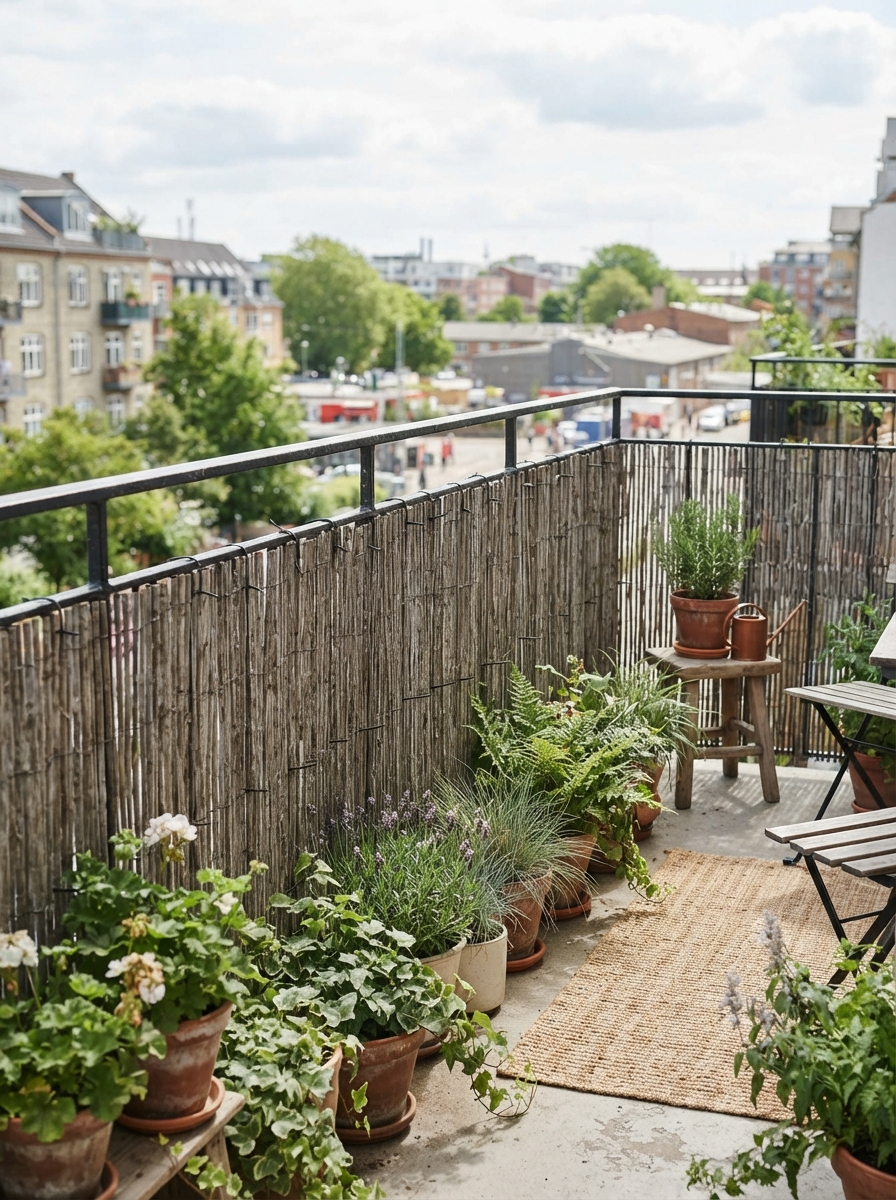
This is where most apartment dwellers hit a wall, but the options are better than most people realize. The key principle is matching your hanging method to the surface material. Concrete walls, metal railings, and wood beams each have a best-fit solution, and using the wrong one for the surface is usually what causes hooks to fail.
Adhesive Hooks for Stucco and Smooth Concrete
For smooth or semi-smooth concrete and stucco walls, outdoor-rated adhesive hooks are the most accessible no-drill option. Command Outdoor Light Clips are purpose-built for this use case: they’re rated for rain, snow, and temperature swings, and they remove without leaving residue on finished surfaces. For rougher stucco or raw concrete, look for heavy-duty waterproof adhesive hooks explicitly labeled for concrete, brick, or vinyl siding. Surface prep matters enormously here, the wall needs to be clean, dry, and as smooth as possible for the adhesive to bond properly. For exposed or windy balconies, choose hooks rated 20 to 25 pounds per attachment point; sheltered setups with minimal wind load can use lower-rated clips, but don’t underestimate how much a full strand can pull during a gust.
Hardwall Pins and Magnetic Hooks for Other Surfaces
For concrete and stucco where you want a stronger hold without drilling, hardwall pin hooks are a solid upgrade. These use small steel pins that press into hard walls without requiring a drill, and they’re rated up to 20 to 25 pounds on solid concrete or stucco, far more holding power than any string light run needs. For metal balcony surfaces like steel joists, beams, or ceilings, magnetic hooks attach in seconds and leave zero residue when removed. One important limitation: magnetic hooks do not work on aluminum or other non-ferrous metals, so test your surface with a small magnet before buying.
For longer spans or exposed runs, consider running a coated guide wire or cable between two solid anchor points and clipping your lights to the cable with UV-resistant zip ties or S-hooks. This method distributes the load across the cable rather than the light cord itself, prevents mid-span sag, and reduces the number of individual hooks you need on the wall.
Power Options for Balcony String Lights With or Without an Outlet
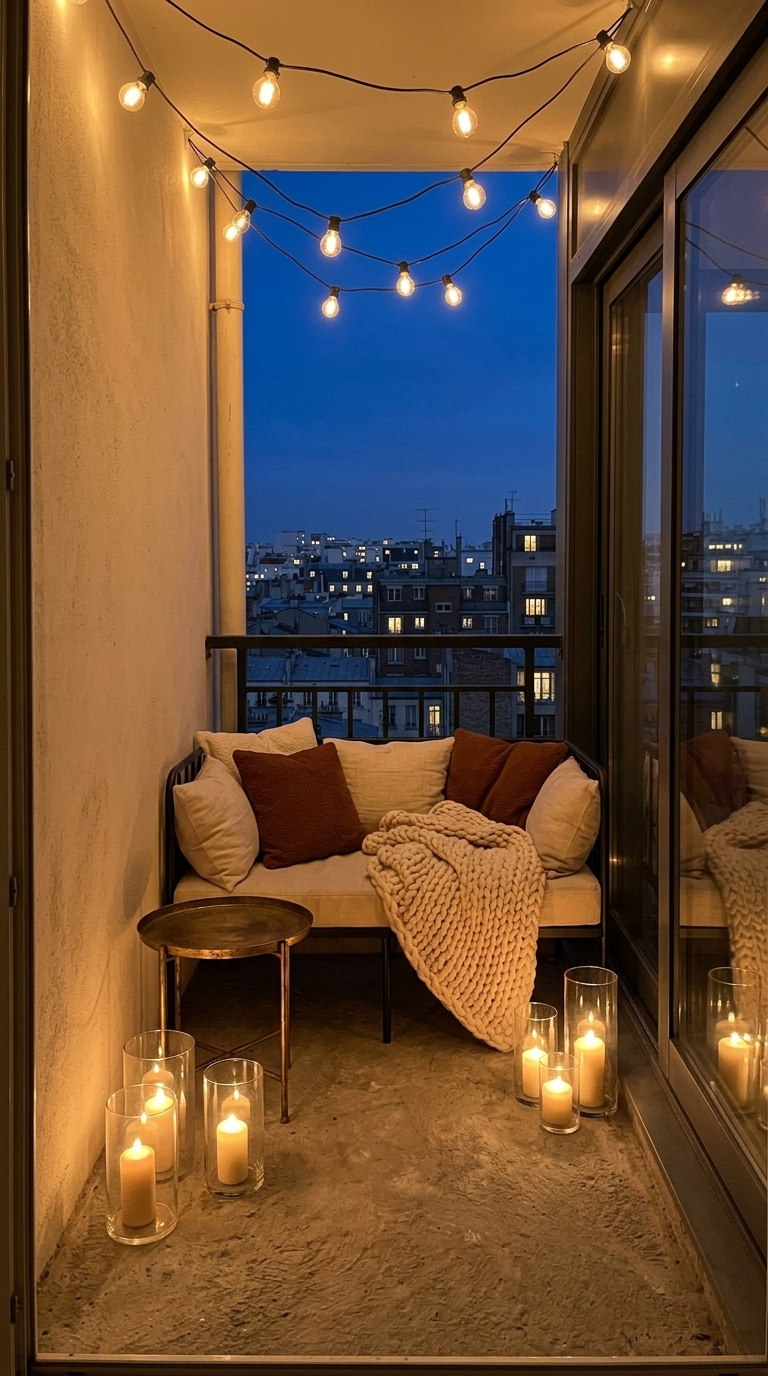
Your balcony’s power situation shapes the entire setup, and the approach differs meaningfully between wired and wireless. Both scenarios have clean, safe solutions, you just need to know which one fits your space.
If your balcony has an outdoor outlet, confirm it’s GFCI-protected before plugging anything in. Press the TEST button and verify the power cuts off, then press RESET to restore it. A GFCI outlet is the baseline safety requirement for any outdoor electrical setup, and if yours doesn’t have one, that’s a conversation to have with your landlord or a licensed electrician before stringing up lights. Use only outdoor-rated extension cords marked SJTW or SJTOW, with a minimum 16 AWG gauge for light-duty runs. Keep all cord connections elevated off the ground and use a weatherproof in-use cover on the outlet so it stays protected even with a cord plugged in. Never run a cord through a closed door gap or under a rug.
For balconies without an outlet, solar and battery-powered lights are the practical solution, and both work well as hanging lights for apartment balconies where running a cord isn’t an option. Solar works well when the panel receives at least 6 hours of direct sun daily. A north-facing balcony or one shaded by a building overhang is a poor fit for solar, regardless of how appealing the wire-free setup sounds. Battery-powered lights are the more flexible option: you can leave the strand in place permanently and simply bring the battery pack indoors to recharge. USB battery pack setups are a meaningful upgrade over AA-battery models because they recharge with a standard phone charger and deliver consistent brightness throughout the charge cycle.
Keeping String Lights on a Balcony Secure Through Wind and Wet Weather
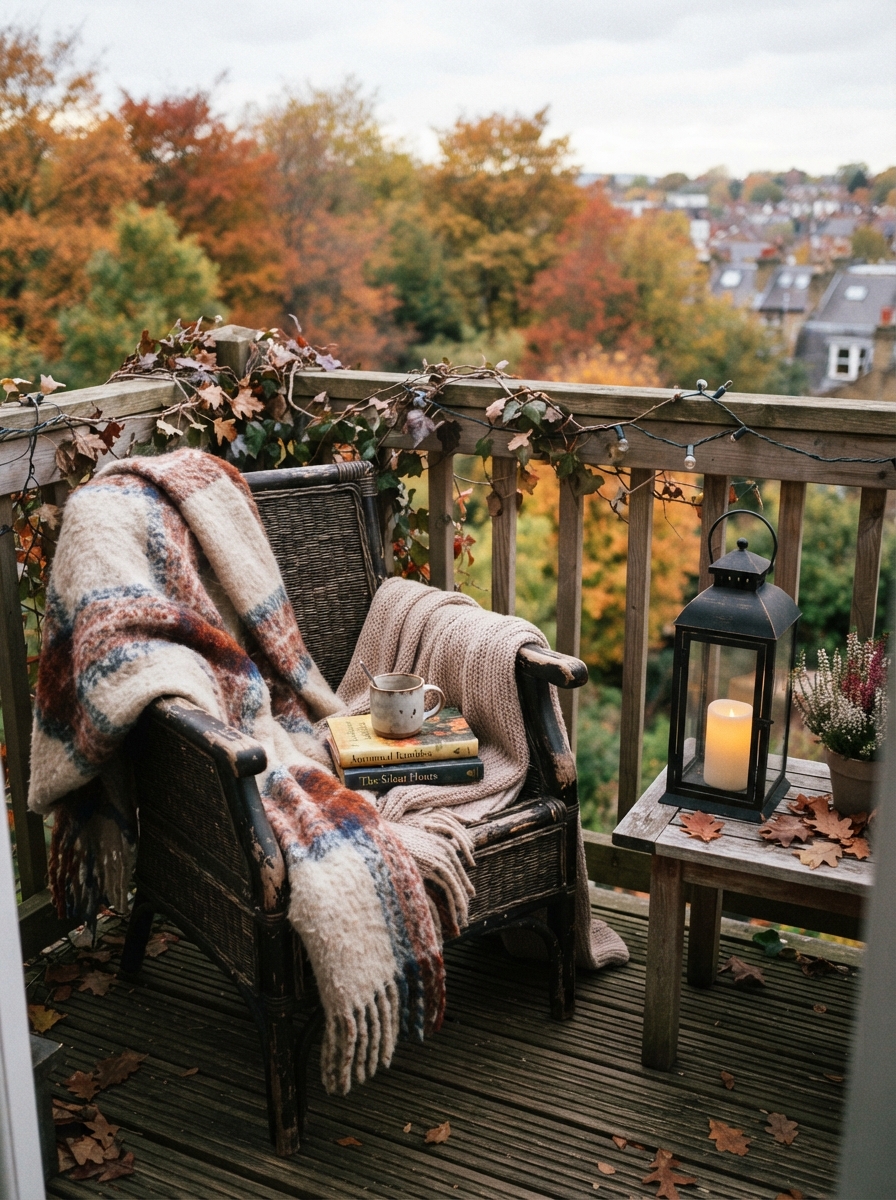
A well-installed set of balcony lights should stay up through an entire season without constant adjustment. The key is combining multiple anchor points with hardware that’s matched to the surface and rated for outdoor conditions. No single heavy-duty hook is as reliable as a properly distributed load across several solid attachment points.
Every horizontal run needs at least two anchor points to prevent twisting and reduce stress concentration at any single hook. Attach to structural elements: concrete columns, metal posts, solid railings, or building walls. Avoid clipping to vinyl sleeve caps, hollow decorative covers, or thin trim pieces that flex or crack under load. For exposed balconies on upper floors, stainless steel or corrosion-rated hardware outlasts standard hardware store hooks significantly over a full outdoor season.
Keep all cord connections at least 6 inches off the ground and away from standing water. Use a weatherproof connection cover wherever two cords join outdoors. At the start of each season, inspect the full length of the cord and all bulb sockets for cracks, fraying, or corrosion before turning anything on. A plug-in timer is worth adding to any balcony light setup: it limits unattended operation, extends the life of the lights by reducing total run hours, and means you never come home to lights that have been burning all day.
Your Balcony Is Ready for the Next Step
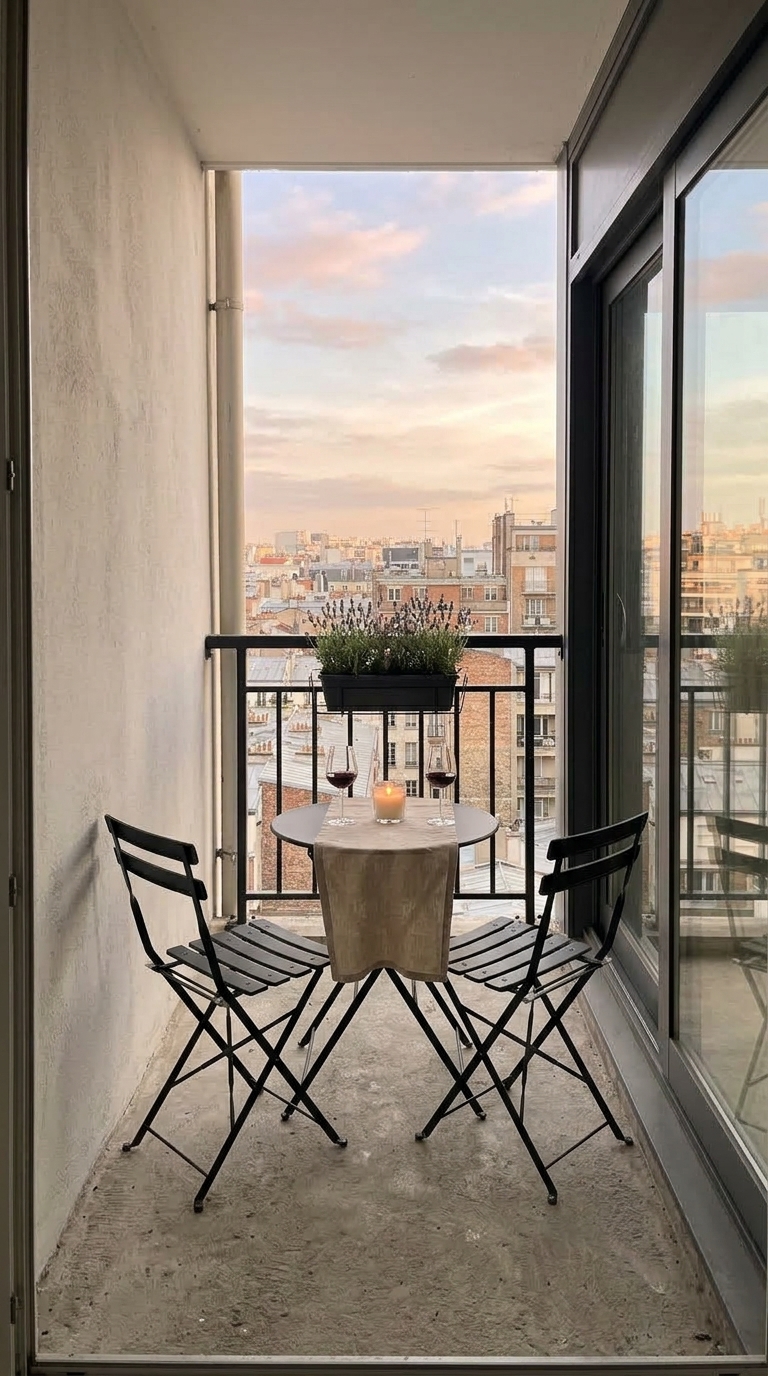
A set of warm string lights overhead turns a forgotten outdoor square into a space you actually want to spend time in after dark. Getting string lights on a balcony right comes down to two things: the measurement step and the anchor method selection. Most people shortcut both and end up with lights that come up short or fall down after the first storm. Take those two pieces seriously and the rest of the process comes together in a weekend afternoon with a clear plan in hand.
If you want to build on this foundation, Aesthetic Nest Decor’s full small balcony decorating guide covers everything that layers on top of the lighting: furniture arrangements for tight square footage, privacy screen options that work for renters, weather-resistant textiles, and container plant ideas for limited sun. The lighting is the starting point. From there, the space becomes yours. Explore the full balcony guide on the Aesthetic Nest Decor blog to see how each element comes together, or reach out directly if you have questions about a specific balcony layout or rental restriction you’re working around.