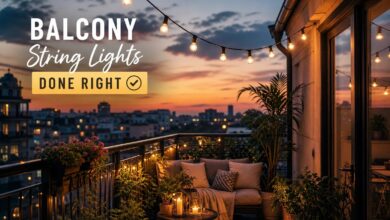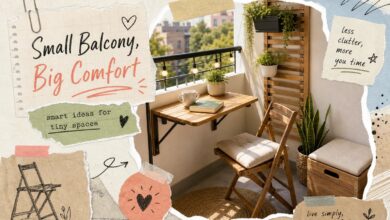


If you’re searching for the best outdoor furniture for tiny balconies, the first thing you need to do is measure your space before you browse a single product listing. Standard patio furniture is built for sprawling suburban decks, not the 4×6-foot slab outside your apartment door. You’ve probably already discovered this the hard way: you find a set that looks perfect online, it arrives, and suddenly your balcony is a furniture obstacle course with no room to actually sit and enjoy it. The frustration is real, and it’s fixable, but only if you shop in the right order.
As an Amazon Associate I earn from qualifying purchases. Some links in this post are affiliate links, at no extra cost to you.
At Aesthetic Nest Decor, we cover real small-space living for people who want their homes to look great without sacrificing function. That includes balconies, especially the tiny ones that most outdoor furniture brands seem to forget exist. This guide gives you a clear sequence: measure your space first, match the furniture category to your size, choose materials that hold up without demanding constant upkeep, and check any building rules before you click “add to cart.”
Measure your balcony before you browse anything
The two numbers every buyer needs first
Most people skip measuring and pay for it later with furniture that blocks the door, crowds the railing, or leaves no room to stand comfortably. The two measurements that matter are your usable floor depth (railing to wall or door) and your usable width. These two numbers determine which furniture category is even viable before you look at a single product listing.
If square footage is the real constraint, our space-saving furniture ideas for a tiny balcony go further.
The minimum clearance for a walkway and door swing is 24 inches. In practice, 30 to 36 inches is what makes the space feel functional rather than squeezed. If your furniture leaves less than 24 inches of clear path, you’re not creating an outdoor retreat, you’re creating a tripping hazard.
What realistically fits common tiny balcony sizes
A 3×5-foot balcony is the most limiting size. Your best option is a single folding chair paired with a wall-mounted fold-down table, or a one-person lounge setup only. Two chairs and a table will not fit without blocking movement entirely. A 4×6-foot balcony opens up considerably: a compact bistro set with a table under 28 inches in diameter works well here, as does a slim balcony storage bench placed along the long wall.
A 5×5-foot balcony gives you the most flexibility in this size range. A small bistro set plus a side table fits comfortably, and a shallow loveseat or bench works if you keep the seat depth at or under 32 inches. Regardless of which size you’re working with, keep one rule in mind: furniture should cover no more than 50 to 60 percent of your total floor area. Going beyond that point makes even a well-chosen set feel suffocating.
Best outdoor furniture for tiny balconies: bistro sets and storage solutions
What makes a bistro set “small-balcony ready”
The standard 3-piece bistro set, one table and two chairs, is the most practical small balcony furniture solution for tight spaces because it was designed for compact footprints from the start. A table diameter of 23 to 28 inches is the sweet spot for two people without dominating your floor plan. Anything larger starts eating into the clearance you need to move around comfortably.
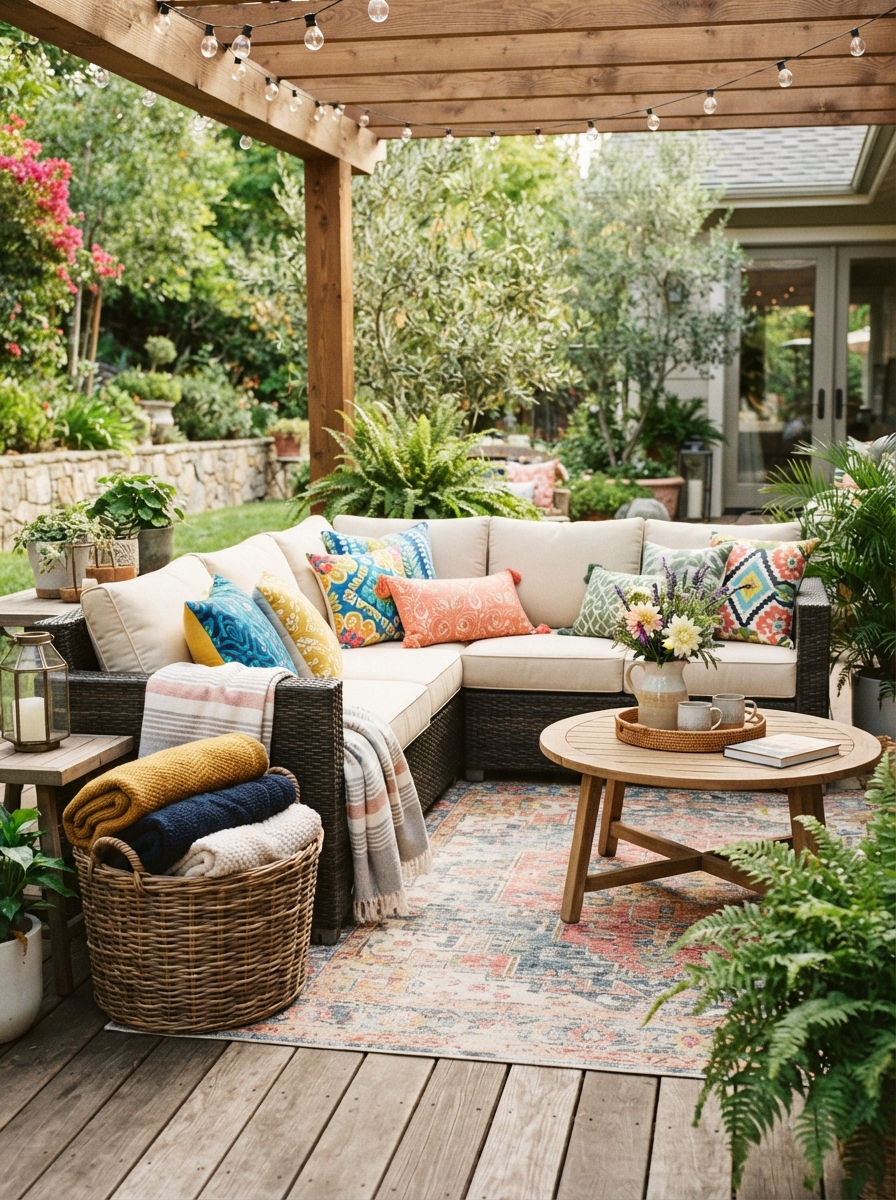
The chairs matter just as much as the table. Folding chairs that lay flat against a wall when not in use let you reclaim significant floor space on the evenings you’re not sitting outside. A bistro set with non-folding chairs requires you to commit to that footprint permanently, which is a real trade-off on a 4×6-foot balcony.
Top features to look for when shopping
The Grand Patio 3-Piece Folding Bistro Set is a strong benchmark for what compact outdoor furniture for tiny balconies should deliver. The table measures 23.5 inches in diameter, each chair folds flat, and the set carries a 4.7 out of 5 rating across nearly 1,900 reviews. Those numbers reflect real-world satisfaction, not just good photography. The reason it performs well is straightforward: the dimensions actually work on a standard 4×6-foot balcony without requiring creative furniture math.
If you prefer a warmer visual over clean metal, the Devoko and Best Choice Products wicker bistro options are worth a look. Both land in the 28-inch footprint range and suit balconies where you want a softer, cozier feel. One buying rule applies no matter which set you choose: confirm it folds flat or stacks before purchasing. Not every bistro set marketed as “small-space friendly” actually saves any space once you need to store or move it.
Foldable balcony furniture that clears the floor
Why foldability is a non-negotiable feature for compact balconies
On a balcony under 5 feet deep, the difference between folding and non-folding furniture is the difference between a usable outdoor space and a crowded storage area you happen to own a chair for. This is not an aesthetic preference, it’s a practical requirement for the smallest balcony sizes. Stackable chairs like the Hay X-Line Chair Outdoor are worth their higher price point on the narrowest balconies because they eliminate floor clutter vertically rather than demanding more lateral space.
Wall-mounted and fold-down table options
A wall-mounted fold-down table provides a full dining or coffee surface when you want it and folds flush against the wall when you don’t. For a 3×5-foot balcony where freestanding small balcony furniture simply won’t work, this is often the only viable dining option. When shopping for one, prioritize a sturdy wall bracket rated for outdoor use, a weatherproof tabletop material, and a fold mechanism you can operate with one hand.
The IKEA ASKHOLMEN is a budget-friendly entry point at around $29, and midrange options from brands like Tangkula sit in the $60 to $130 range with more robust hardware. One important note: wall-mounted tables require drilling into the wall, which many leases and condo agreements prohibit without prior approval. Check that before you shop, not after the table arrives. Paired with two stackable or folding chairs, a fold-down wall table is the most space-efficient two-person setup available for the tightest balconies.
Multi-functional pieces that earn their floor space
Balcony storage bench: seating, storage, and nothing wasted
A balcony storage bench solves two problems at once: it provides seating without requiring separate chairs, and it stores outdoor cushions, gardening tools, or throw blankets inside. On balconies where every square foot counts, that double function is genuinely valuable. The Keter Solana 70-gallon storage bench is a useful scale reference, offering roughly a 4-foot footprint that works well on a 4×6-foot or larger balcony when placed along the long wall.
When comparing storage benches, look specifically for a lift-up seat mechanism and a waterproof interior liner. Not all outdoor storage benches seal well enough to protect cushions from moisture, and discovering that detail after a rainy week is an expensive lesson. A bench that stores damp cushions is worse than no bench at all.
Convertible furniture worth considering
The COSCO Outdoor Living 3-Piece Bistro Set is the clearest example of a folding-flat design built for post-use storage. If your priority is clearing the floor entirely after each use rather than keeping a permanent setup, this type of set delivers on that promise in a way that permanently assembled bistro sets cannot. Nesting side tables are another low-cost addition worth considering: they stack together to take up almost no room, then separate to provide extra surface area whenever you need it.
For renters who cannot modify walls or railings, multi-functional freestanding furniture is the single best category to focus on. It requires no installation, travels with you when you move, and works within the smallest footprints without any permanent modifications to the unit.
Choosing the best outdoor furniture for tiny balconies: materials and maintenance
The short version: aluminum wins, teak earns its price, resin wicker is a solid middle ground
Powder-coated aluminum is the top recommendation for most balcony setups. It’s lightweight, rust-resistant, handles humidity and rain well, and requires almost no maintenance beyond an occasional wipe-down. On a fully exposed balcony, it consistently outperforms other options over time. In practice, powder-coated aluminum routinely lasts 10 to 25 years depending on coating quality and climate, making it the most cost-effective long-term choice for space-saving outdoor seating arrangements.
Resin wicker is a reliable middle-ground choice. It’s weather-resistant, easy to clean, and visually warmer than bare metal frames. The trade-off is longevity: resin wicker typically shows its age in 3 to 7 years under full sun and rain exposure, compared to aluminum’s longer track record. On a covered balcony, the gap narrows considerably. Teak is worth the higher price point if you’re buying furniture you plan to keep for 10 or more years. Its natural oils make it highly durable outdoors and resistant to water, decay, and insects. It benefits from occasional oiling to maintain its color, but it remains far lower-maintenance than most other wood options.
What to skip on a balcony
Steel is heavier than aluminum and more prone to rust unless the protective coating stays immaculate. On an exposed balcony where chairs get moved around regularly, that coating takes damage over time, and repair is more work than most people budget for. Untreated or generically treated wood requires the most ongoing maintenance of any balcony material and degrades the fastest under consistent sun and moisture exposure.
A simple shopping rule: if the product listing doesn’t specify “powder-coated,” “weatherproof,” or “outdoor-rated,” don’t buy it for an exposed balcony. That language isn’t decoration, it tells you the manufacturer actually designed the piece for outdoor conditions.
What renters and high-rise residents must check before ordering
Even perfectly chosen materials and sizes become liabilities if you haven’t confirmed your building’s rules. Before you fall in love with any setup, there are two categories of constraints worth checking: structural load limits and lease or HOA restrictions.
Live-load limits and what they mean in practical terms
Many residential balconies in the United States are designed for 40 to 60 pounds per square foot, though this varies by building age, construction type, and local code. Some older buildings fall below that range, and some modern structures exceed it. The specific number for your building should come from property management, not a generic estimate you found online.
The practical calculation works like this: take the rated live load, multiply it by your balcony’s square footage, and keep your total furniture-plus-people weight comfortably below that number. Never fill a balcony to its rated capacity, because load ratings assume an even distribution across the floor. Concentrated weight in one corner, like a heavy ceramic planter or a storage bench packed with tools, can be more problematic than the same total weight spread evenly across the surface.
Building rules that catch buyers off guard
Drilling into railings, walls, or slab edges is prohibited in many leases and condo agreements, which eliminates wall-mounted tables and railing-hung planters for most renters without explicit written approval. This is worth clarifying before you fall in love with a fold-down table setup that requires three anchor bolts in the exterior wall. A quick email to property management is faster than returning furniture.
Before you finalize any purchase, request three things from your building management: the balcony’s live-load rating, the rules on railing and wall attachments, and any restrictions on furniture size, storage boxes, grills, umbrellas, or oversize items. Buildings vary widely, and knowing your specific rules up front protects both your security deposit and your furniture investment.
Balcony Furniture shopping list
- Balcony bistro set — measure depth before you buy
- Folding balcony chairs — clears in thirty seconds
- Balcony railing table — uses the one surface you have
- Outdoor storage bench — seat and cushion box in one
- Weatherproof cushions — outdoor fabric only, no exceptions
- Outdoor side table — somewhere for the cup
Prices and availability change. Links open on Amazon.
Pull it all together before you shop
Choosing the best outdoor furniture for tiny balconies comes down to measuring your space, matching a furniture category to those numbers, and confirming building rules before anything ships. Measure your usable depth and width first. Match that to a furniture category: foldable balcony furniture or a bistro set for 4×6-foot spaces, wall-mounted solutions for 3×5-foot spaces, or a balcony storage bench setup for renters who need maximum flexibility. Choose a material that fits your climate and how much maintenance you’re actually willing to do. Then confirm your building’s rules before anything ships.
The best outdoor furniture for tiny balconies isn’t necessarily the most compact option on the market. It’s the right combination of pieces for how you actually use the space, sized to leave room to breathe and chosen to last more than one season. That combination looks different for a third-floor apartment renter in Chicago than it does for a condo owner in Phoenix, and finding yours starts with knowing your numbers.
Once you’ve chosen your furniture, the next step is styling it well. Aesthetic Nest Decor’s balcony content section covers exactly that: layout ideas, plant placement, lighting, and room-by-room outdoor decor guides for small spaces of every shape. Browse the balcony guides when you’re ready to take the space from furnished to finished.