
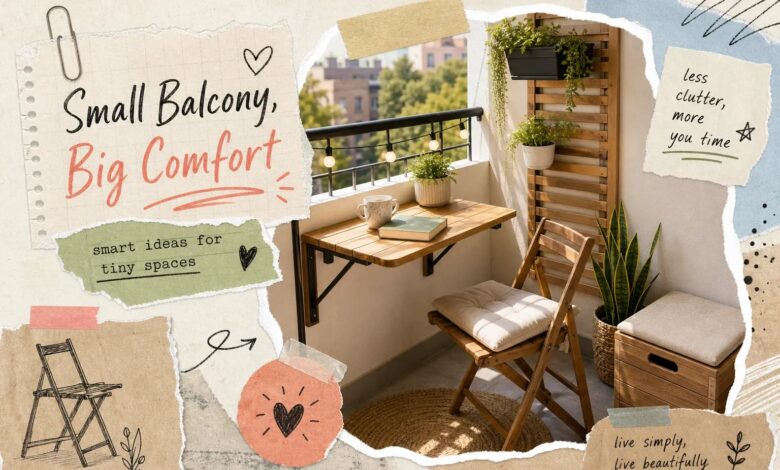
If you’ve ever wondered what are the best space-saving furniture ideas for a tiny balcony, you’re not alone. A balcony that technically exists but functions as a storage zone for disappointment is one of the most common frustrations in apartment and condo living. Standard patio furniture is designed for decks and yards, not a 4-by-8-foot slab of concrete outside a sliding door. The good news is that compact outdoor furniture has become a genuinely mature category, and the solutions are specific, proven, and available at every price point.
As an Amazon Associate I earn from qualifying purchases. Some links in this post are affiliate links, at no extra cost to you.
At Aesthetic Nest Decor, our small balcony guides cover the full transformation: privacy screens, lighting setups, and how to layer every element into a cohesive outdoor room. This article focuses on the furniture layer specifically, because that is where most people get stuck first. Get this part right, and everything else builds on a solid foundation.
By the time you finish reading, you will know how to measure your space before spending a dollar, which space-saving balcony furniture works for which balcony depth, what materials hold up in your climate, and what to budget for each piece. That is enough to go from frustrated to fully functional.
Measure Your Balcony Before You Add a Single Piece of Furniture
Why Most Balcony Furniture Mistakes Start Before Purchase
Most people buy furniture first and measure second. The result is a bistro set that blocks the sliding door or chairs that physically cannot pull out without scraping the railing. Standard tiny balconies in the U.S. run between 4 and 6 feet deep and anywhere from 5 to 10 feet wide. Knowing your exact dimensions is not a preliminary step; it is the step that determines every furniture decision that follows.
Once the layout works, our best outdoor furniture for tiny balconies covers what to actually buy.
The Clearance Numbers That Actually Matter for Comfort
A 36-inch-deep balcony fits two chairs, but just barely. At 48 inches deep, you have enough room to add a small side table and move around without constantly bumping into things. If you want a proper bistro table between two chairs, budget for at least 4 to 5 feet of depth. For circulation alongside furniture, keep a clear path of at least 30 to 36 inches. These are not suggestions; they are the minimums that separate a usable outdoor space from one that just looks good in a photo.
A Simple Tape-Measure Method to Plan Before You Shop
Before ordering anything, use painter’s tape on the balcony floor to mark out the footprint of each piece you are considering. This one step eliminates almost all buyer’s remorse. Also measure your door swing: a door that needs 18 inches to open fully will immediately disqualify any furniture placed in that arc, and it is one of the most frequently overlooked dimensions in the entire process.
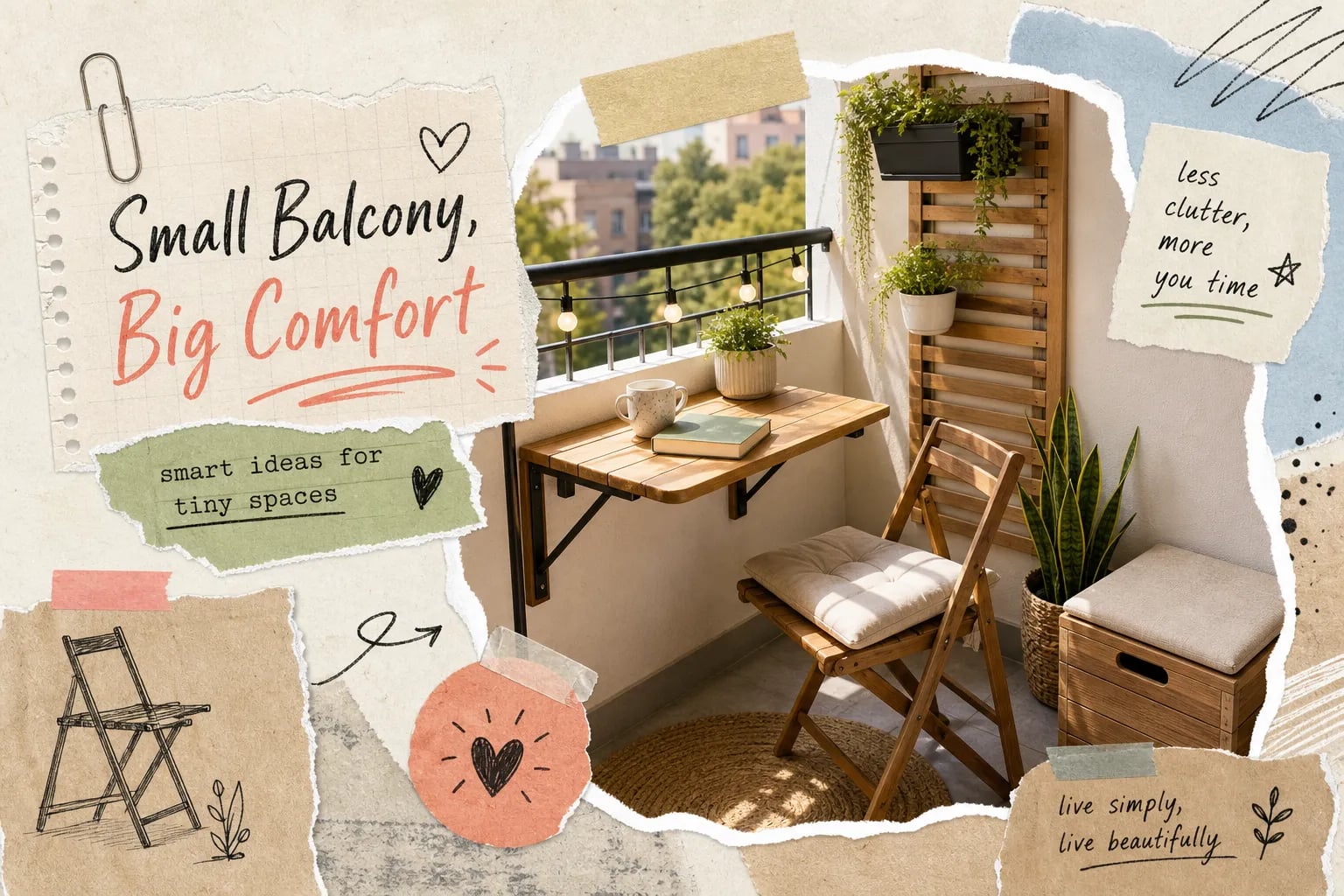
What Are the Best Space-Saving Furniture Ideas for a Tiny Balcony? Start with Fold-Down Tables
Wall-Mounted Fold-Down Tables: The Permanent Space Creator
If you own your space or have landlord permission to drill, a wall-mounted fold-down table is the single most effective way to add a dining surface without permanently consuming floor area. Typical models unfold to around 28 inches wide, support up to 100 pounds, and collapse to a profile just a few inches off the wall when not in use. You get a full meal or laptop surface when you need it and a clear, open balcony when you do not.
Railing-Mounted Hanging Tables: The Renter-Friendly Alternative
Railing-mounted tables solve the same problem without a single drill hole. These hook directly over the railing, typically measuring around 27 inches wide by 15 to 16 inches deep, and hold up to 50 pounds. When you are done with them, they remove completely and leave the floor entirely open. They work best with railings in the standard 2.4-to-6-inch diameter range, so check your railing dimensions before ordering.
How to Choose Between the Two Based on Your Setup
The decision rule is straightforward. If you own the space and want a permanent surface that is ready in seconds, go wall-mounted. If you rent, move frequently, or want the option to reconfigure your layout seasonally, a railing-hung table gives you full flexibility with no commitment. Both solve the same problem; the right one depends on your living situation.
Stackable Chairs and Compact Bistro Sets Built for Tight Footprints
What Actually Makes an Outdoor Chair Stackable and Balcony-Worthy
Not every chair labeled “stackable” is genuinely useful on a small balcony. Look for a slim stacked profile so four chairs do not consume an entire corner, UV-stable materials that do not fade or crack after one summer, and a seat depth that lets you pull the chair back without the legs catching on the railing. Powder-coated steel and HDPE options consistently outperform basic plastic for year-round balcony exposure, offering a better balance of durability and weather resistance without demanding constant upkeep.
Bistro Sets That Work in Under 4 Feet of Depth
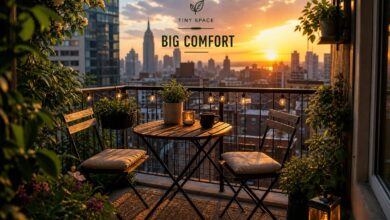
A two-chair bistro set paired with a round 24-to-28-inch table is the standard configuration for balconies under 5 feet deep, and round tables are the right call in tight quarters. A round table eliminates the corner-cutting problem that rectangular tables create when you try to pull out a chair at each end. Budget $60 to $200 for solid entry-level sets, and $200 to $400 for better materials, sturdier joints, and weather finishes that actually last more than one season.
When a Single Chair Plus a Side Table Beats a Bistro Set
For the smallest balconies, typically under 4 feet deep, one quality folding or stackable chair paired with a compact side table gives you more usable floor area than forcing two chairs into a space that was never designed to hold them comfortably. A single well-chosen chair also creates a clearer sense of purpose: a reading spot, a morning coffee perch, a place to actually sit down rather than a furniture display you step around.
Storage Benches and Dual-Purpose Furniture That Justify Their Footprint
Why a Storage Bench Earns Balcony Real Estate Better Than a Standard Bench
A standard bench takes up floor space without contributing anything beyond seating. A storage bench solves two problems at once: it provides seating and holds outdoor cushions, gardening tools, or off-season decor that would otherwise pile up inside. Resin construction is the strongest weatherproofing choice for fully exposed balconies. UV-stabilized resin consistently performs well across sun, rain, and humidity without warping, rusting, or requiring seasonal treatments.
Sizing and Capacity: What to Look for on a Small Balcony
For a standard apartment balcony, a 70-to-100-gallon storage bench hits the sweet spot between useful storage capacity and a manageable floor footprint. The strongest models in this category carry between 500 and 880 pounds on the seat, which means they function as primary seating rather than a box you happen to perch on. For very tight balconies under 4 feet deep, a 50-gallon model keeps the footprint smaller while still solving the storage problem.
Budget Expectations for Outdoor Storage Benches
Entry-level resin benches run $50 to $150 and cover the basics well for most balcony use. Stepping up to $150 to $350 adds a higher seat weight rating, cleaner aesthetics, and more reliable hydraulic lid hinges that do not slam on fingers. If your balcony is covered or semi-covered, that opens the door to wood and wicker-look options at similar price points without the same weatherproofing concerns.
Going Vertical: Plant Stands, Rail Planters, and Wall Shelves That Reclaim Your Floor
Tiered Plant Stands and Corner Vertical Formats
Vertical plant stands let you bring meaningful greenery onto a tiny balcony without sacrificing multiple floor tiles to individual pots. A tiered metal or powder-coated steel stand with three to five shelves can hold six to ten plants in roughly the same footprint as a single large container. Corner-format vertical stands are especially efficient on square balconies, where right angles would otherwise sit empty and unused.
Rail-Mounted Planters and Shelves: The Zero-Footprint Option
Rail planters hook directly over the railing and position plants outside the floor area entirely. Basic resin options start around $10 to $30; self-watering or decorative metal designs run $30 to $100. Rail-mounted shelves follow the same principle and work equally well for an herb garden, small lanterns, or a drinks station that sits alongside a railing-hung table without touching the floor at all.
How Vertical Layering Changes the Feel of a Small Outdoor Space
Stacking visual interest vertically tricks the eye into reading the space as larger and more complete than it actually is. Picture low furniture at the base, a table surface at mid-height, railing planters at eye level, and a wall shelf above: every level of the balcony gets a purpose, and the result looks intentionally designed rather than minimally furnished by necessity.
Materials and Budget: How to Choose Space-Saving Furniture for Small Balconies That Lasts
The Outdoor Material Ranking for U.S. Balconies
Teak and HDPE are the most durable, low-maintenance choices for most U.S. climates, followed closely by powder-coated aluminum. Teak resists rot, moisture, insects, and temperature swings naturally, making it the strongest all-climate pick. HDPE requires virtually no maintenance beyond soap and water and handles UV and moisture exceptionally well. Powder-coated steel is workable but demands more vigilance: once the coating chips, exposed metal rusts, particularly in coastal or humid regions.
Match your material choice to your climate. Coastal and humid areas favor teak and HDPE. Hot inland regions favor HDPE and aluminum. Freeze-thaw climates favor aluminum and teak over any treated wood option.
What Each Balcony Furniture Category Actually Costs
Having concrete numbers before you shop prevents both overspending on decorative pieces and underspending on the structural furniture that actually gets used. The numbers by category:
- Bistro sets: $60 to $200 for solid budget options; $200 to $700 for premium materials and better weatherproofing
- Folding or stackable chairs: $20 to $60 for entry-level; $60 to $250 for durable, design-forward options
- Storage benches: $50 to $150 for basic weatherproof resin; $150 to $500 for higher seat ratings and cleaner aesthetics
- Rail planters: $10 to $30 for basic resin styles; $30 to $100 for self-watering or decorative metal designs
How to Build Your Balcony Furniture List in the Right Order
Prioritize seating first, then a fold-down or railing-hung table, then a storage bench, then vertical planters. Buying in this sequence ensures the functional core gets funded before budget goes toward decorative pieces. A balcony with one great chair and a fold-down table is already a usable outdoor room. A balcony covered in planters but missing anywhere to sit is just a garden with a view.
Space Saving Balcony shopping list
- Wall mounted fold down table — the permanent space creator
- Folding balcony chairs — stack or hang when not in use
- Balcony railing planter — greenery with zero floor cost
- Stackable outdoor stools — extra seats that disappear
- Outdoor storage ottoman — seat, storage and footrest
- Hanging balcony shelf — vertical is the only space left
Prices and availability change. Links open on Amazon.
Your Tiny Balcony Is Closer to Finished Than You Think
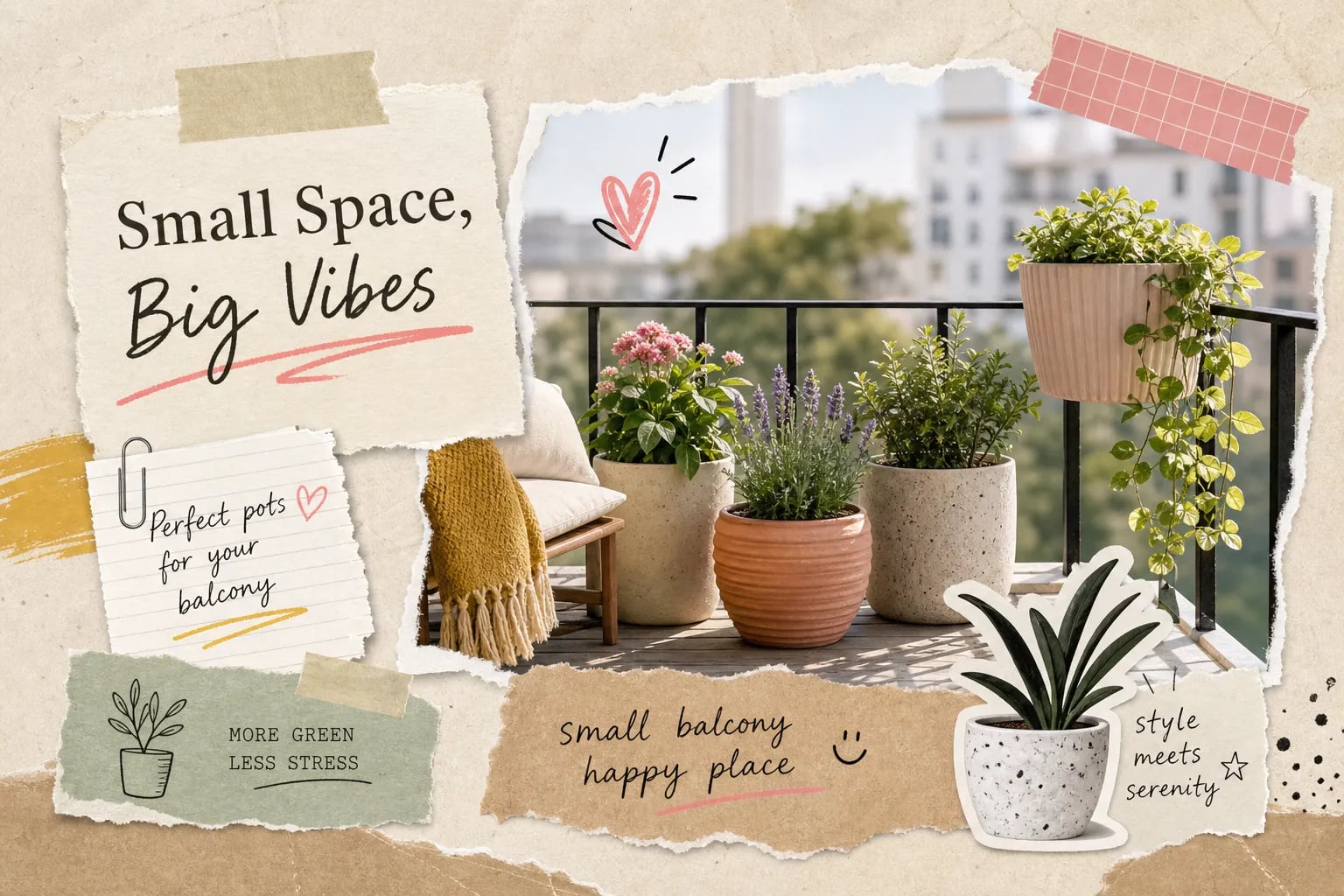
Now that you know what are the best space-saving furniture ideas for a tiny balcony, the path forward is clear. With your measurements on paper, a solid sense of which compact outdoor seating and surface options match your balcony depth, and a realistic budget for each category, a tiny balcony stops being wasted square footage and becomes a room you actually use. The sequence matters: measure first, buy seating, add a surface, solve storage, then go vertical. See also: best balcony pots for small outdoor spaces.
Furniture is the foundation layer, but it is not the whole picture. At Aesthetic Nest Decor, the small balcony decorating guides go further: how to add a privacy screen that blocks sightlines without closing off light, which string lighting setups work for covered and uncovered balconies, and how to pull furniture, plants, outdoor rugs, and lighting together into a cohesive outdoor room rather than a collection of individual pieces. Those guides are worth reading next once the furniture foundation is in place.
You now have everything you need to make a real decision. Measure your balcony this week, tape out your chosen footprints, and start with seating. The rest follows naturally.