

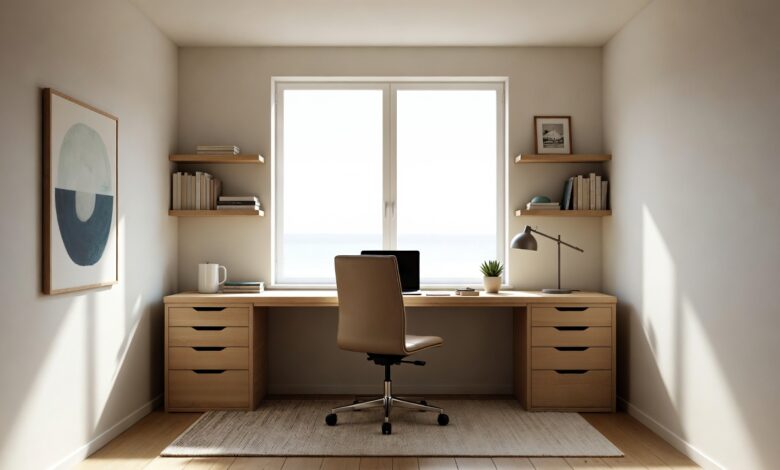
Your home office should do more than hold a desk and a monitor — it should be a space that makes you want to work. The right home office decor reduces distractions, boosts energy, and signals to your brain that it’s time to focus.
The good news? You don’t need a major renovation or a designer budget. These 10 home office decor ideas combine function and aesthetics to help you build a workspace that works as hard as you do.
✨ In This Guide
As an Amazon Associate I earn from qualifying purchases. Some links in this post are affiliate links, at no extra cost to you.
- 10 proven home office decor ideas that genuinely improve focus
- Budget-friendly tips for each idea
- The hidden mistakes that kill productivity (and how to fix them)
- FAQ section with answers to the most-searched home office questions
1. Get the Desk Placement Right Before Anything Else
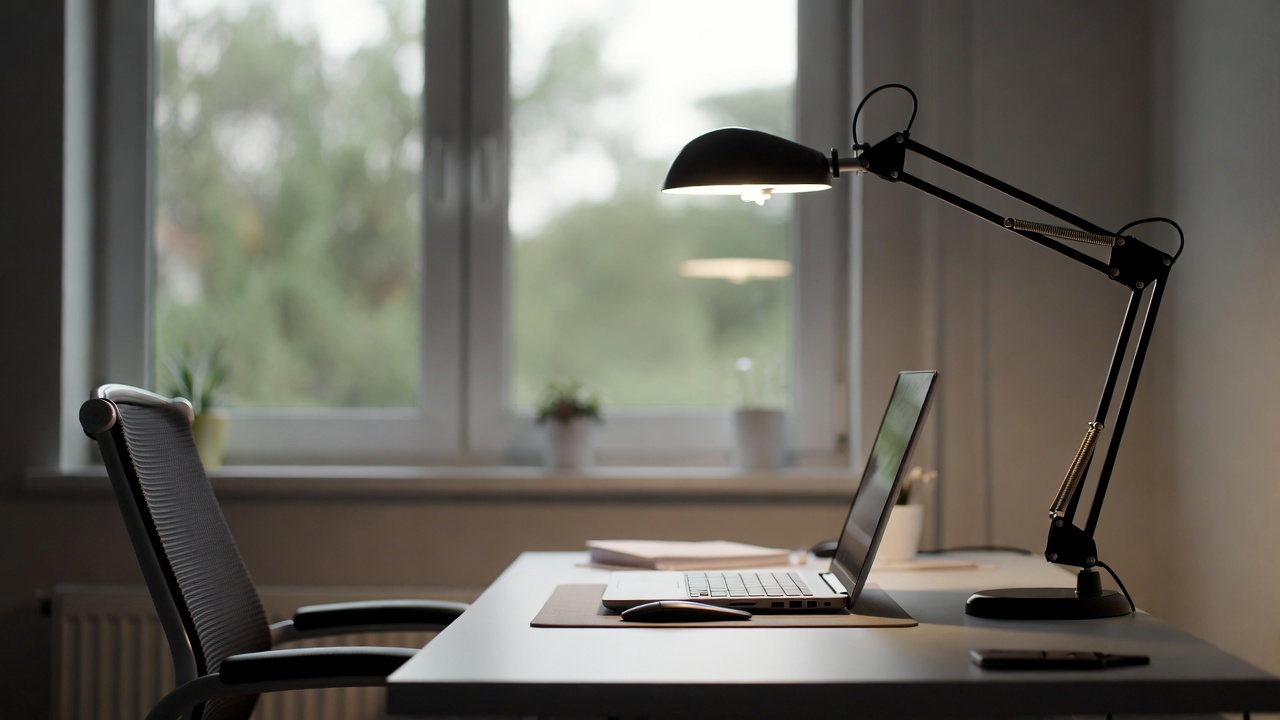
Desk placement is the single most impactful decision in your home office, and it has nothing to do with decor. Get it wrong and no amount of aesthetic upgrades will save your focus.
The best positions:
- Facing a window (perpendicular, not direct): Natural light floods the room without creating screen glare. This is the gold standard for energy and mood.
- Facing a wall if you’re easily distracted: A blank wall in front of you removes visual noise. Put your inspiration board or art on the wall you see when you look up.
- Never with your back to the room’s entrance: This creates an unconscious low-level anxiety — your brain stays alert for what’s behind you. It sounds subtle, but it’s real.
Before buying a single item of decor, stand in your workspace and try different desk orientations. The right placement alone can transform your focus without spending a dollar.
2. Layer Your Lighting — One Source Is Never Enough
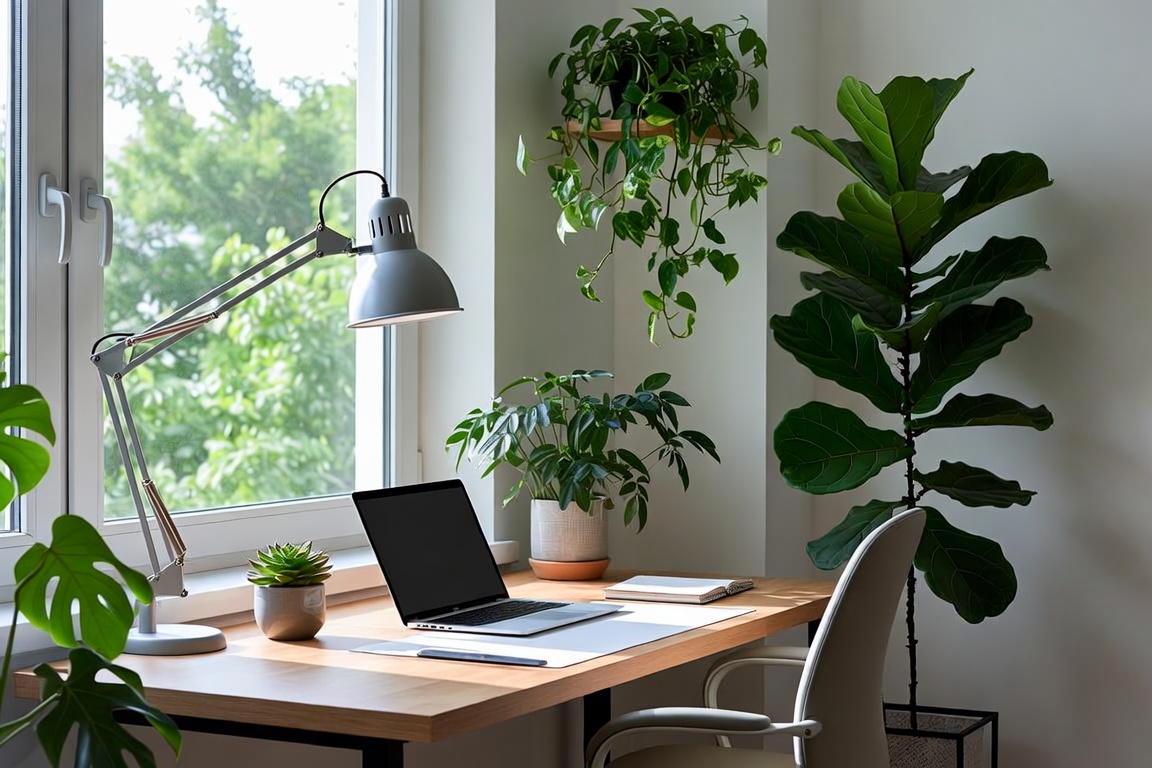
Poor lighting causes eye strain, headaches, and fatigue — three of the biggest killers of work-from-home productivity. The solution is layered lighting: at least two or three sources working together.
- Ambient light: Your main overhead source. Swap any cool fluorescent bulbs for warm LED bulbs (2700K–3000K). The warmer tone reduces eye strain dramatically.
- Task light: A good adjustable desk lamp aimed at your work surface (not your screen). This is non-negotiable. Look for one with adjustable color temperature so you can go cooler during focus sprints and warmer in the evening.
- Accent light: A floor lamp behind the monitor, LED strip behind your desk, or even a small table lamp on a shelf. This reduces the contrast between your bright screen and dark surroundings — the main cause of screen fatigue.
Budget pick: The BenQ ScreenBar is under $110 and clips to your monitor — it’s a game-changer for people who work long hours.
3. Bring in Plants to Recharge Your Focus
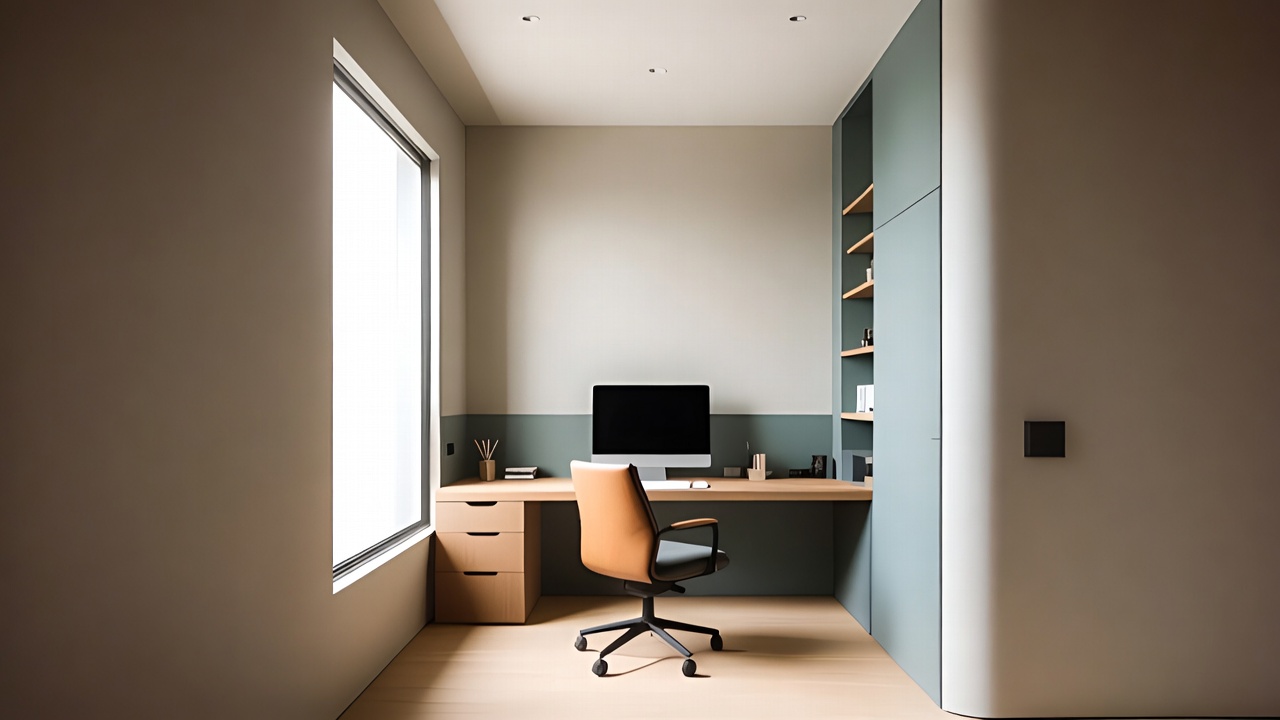
Multiple studies — including research by NASA and the University of Exeter — confirm that plants in a workspace improve concentration, reduce stress, and boost productivity by up to 15%. Beyond the science, they look incredible and bring life to what can otherwise be a sterile environment.
Best plants for home offices:
- Pothos: Virtually indestructible, trails beautifully off a shelf or monitor stand. Tolerates low light.
- Snake plant (Sansevieria): Improves air quality, thrives on neglect, and looks architectural and modern.
- ZZ plant: Perfect for offices with little natural light. Glossy, sculptural, and nearly impossible to kill.
- Small succulent cluster: Low-maintenance, minimal space, and adds color.
Position one plant in your direct line of sight — not off to the side. The periodic micro-break of glancing at a natural element genuinely gives your eyes and brain a reset.
Want the shortcut?
For keeping the desk clear day to day, our home office storage ideas go further.
Lighting deserves its own attention — see our guide to home office lighting that stops glare and eye strain.
Short on space? Our small home office ideas cover fitting a real desk into a corner, a hallway or a spare bedroom.
Browse current options and prices.
4. Set Up an Ergonomic Foundation — Comfort IS Productivity
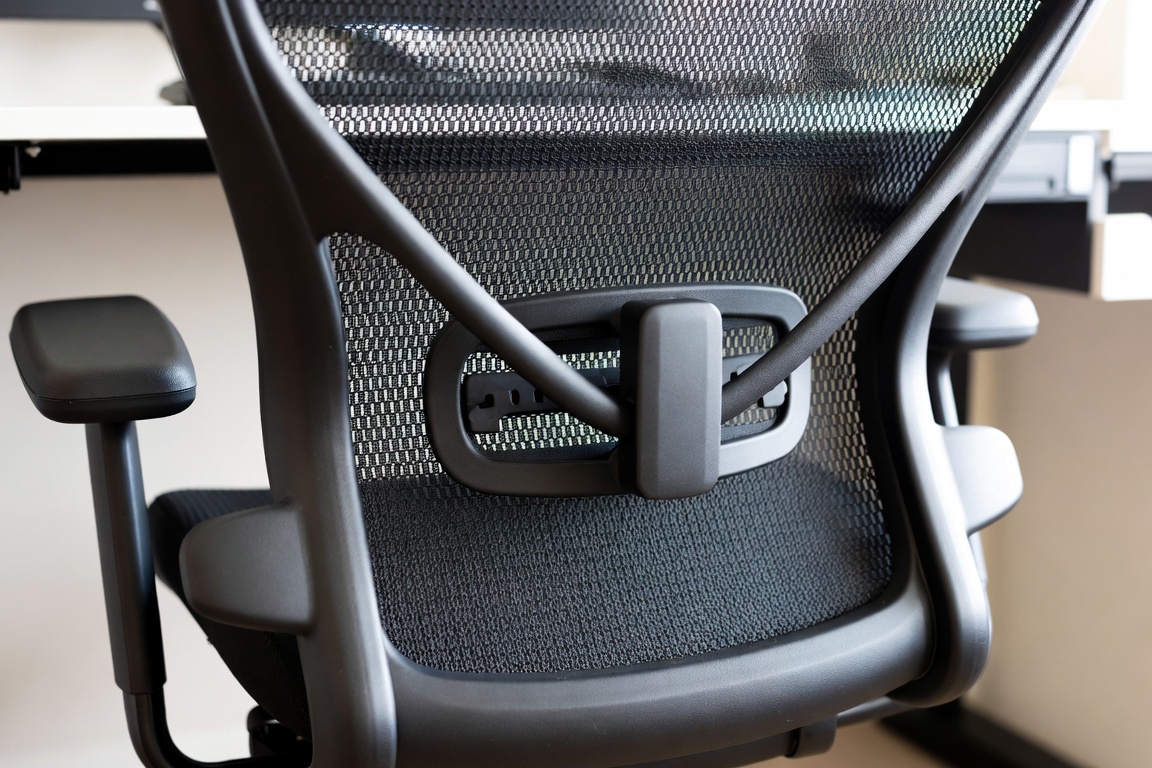
You can’t do great work when you’re physically uncomfortable. An ergonomic setup isn’t a luxury for home office workers — it’s infrastructure. The ROI on a proper chair is measured in hours of pain-free focused work.
- Chair: Your hips should be at 90°, feet flat on the floor, lumbar support touching your lower back. You don’t need a $1,500 Herman Miller to get this right — the Flexispot OC3 or Autonomous ErgoChair are solid at under $300.
- Monitor height: The top of your screen should be at or slightly below eye level. If you’re on a laptop, a $20 riser plus an external keyboard changes everything.
- Standing desk or converter: Alternating between sitting and standing every 45–90 minutes increases energy and focus. Electric sit-stand converters start at around $150.
Fix the ergonomics first. Aesthetic upgrades on top of physical discomfort are just decorating a problem.
5. Design a Gallery Wall That Inspires You Daily
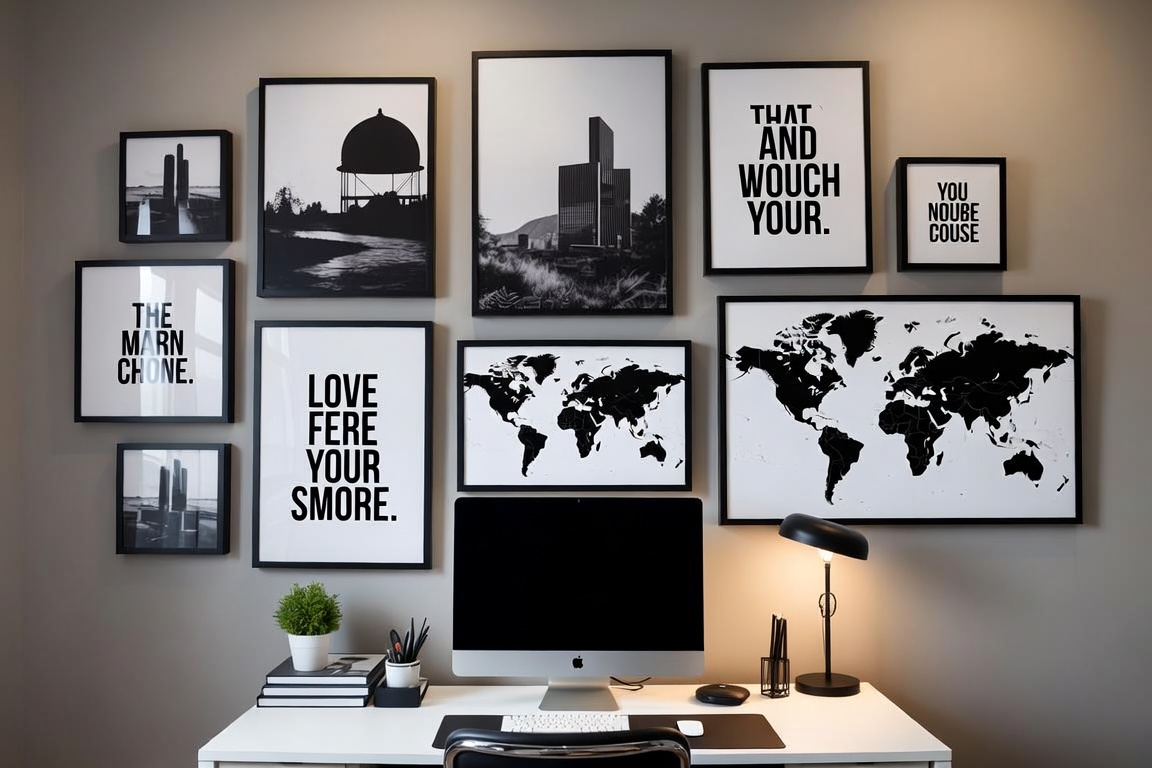
The wall in front of or beside your desk is prime real estate for inspiration. A thoughtfully curated gallery wall serves two purposes: it makes the space feel beautiful and finished, and it puts meaningful visual content in your line of sight throughout the day.
What to include:
- 1–2 framed prints with quotes or words that mean something to you (not generic “Hustle” posters)
- A small corkboard or magnetic board for current goals, sticky notes, and mood images
- One piece of original art or a print from an artist you love
- A small shelf with a plant, a meaningful object, and a candle
Tip: Search Etsy for “printable minimalist art” — you can download, print at home or at a local print shop, and frame for under $20 total. Black frames in two sizes (5×7 and 8×10) keep the gallery looking cohesive.
6. Eliminate Cable Chaos Once and For All
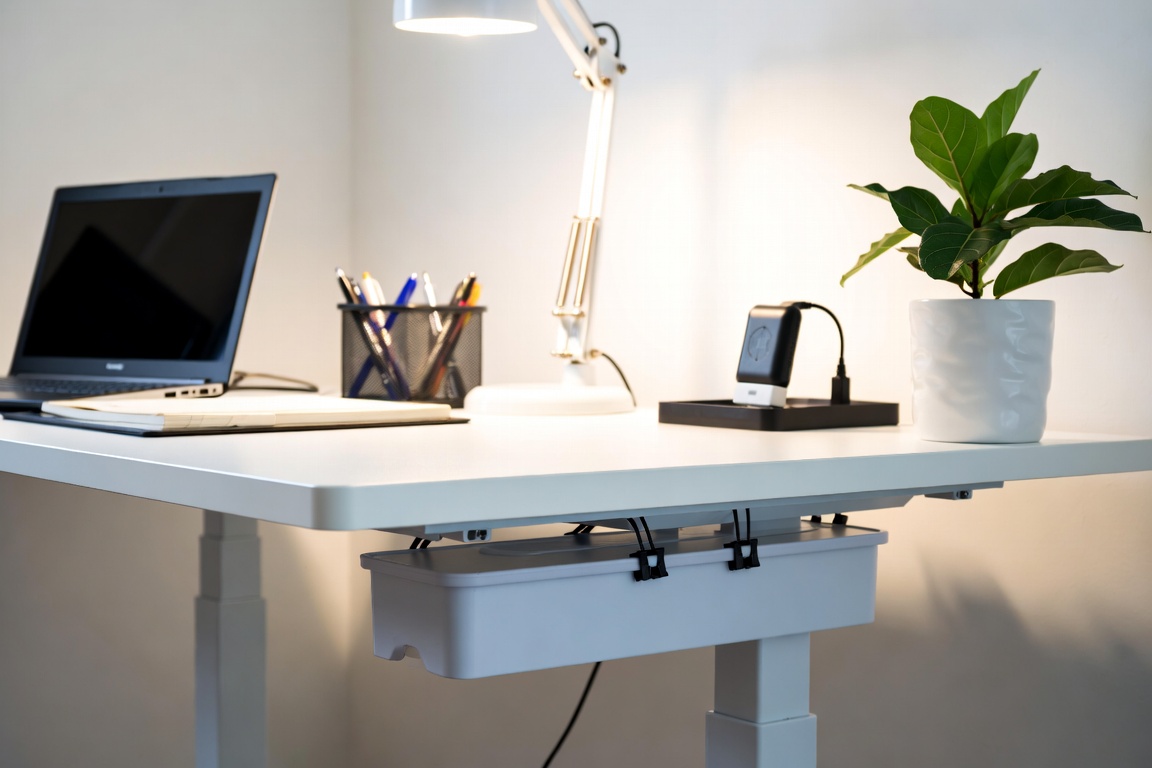
Visual clutter is cognitive clutter. Every tangled cable on your desk is a tiny drain on your mental bandwidth — you notice it, register it as disorder, and carry that low-level friction all day without realizing it.
The clean desk system:
- Cable raceway or desk mount clips: Runs cables along the back edge of your desk or down the leg. Under $15 on Amazon.
- Cable management box: A neat box that hides your power strip and cable mess. They look like decor, not infrastructure. Under $25.
- Velcro cable ties: Group cables together — USB hub, charging cables, monitor cable — into clean bundles. $6 for 50.
- Under-desk cable tray: Mounts underneath the desk surface and routes all your power cables out of sight completely.
Spend one hour setting this up. The payoff is a calmer, cleaner workspace every single day after that.
7. Choose Colors That Work With Your Brain
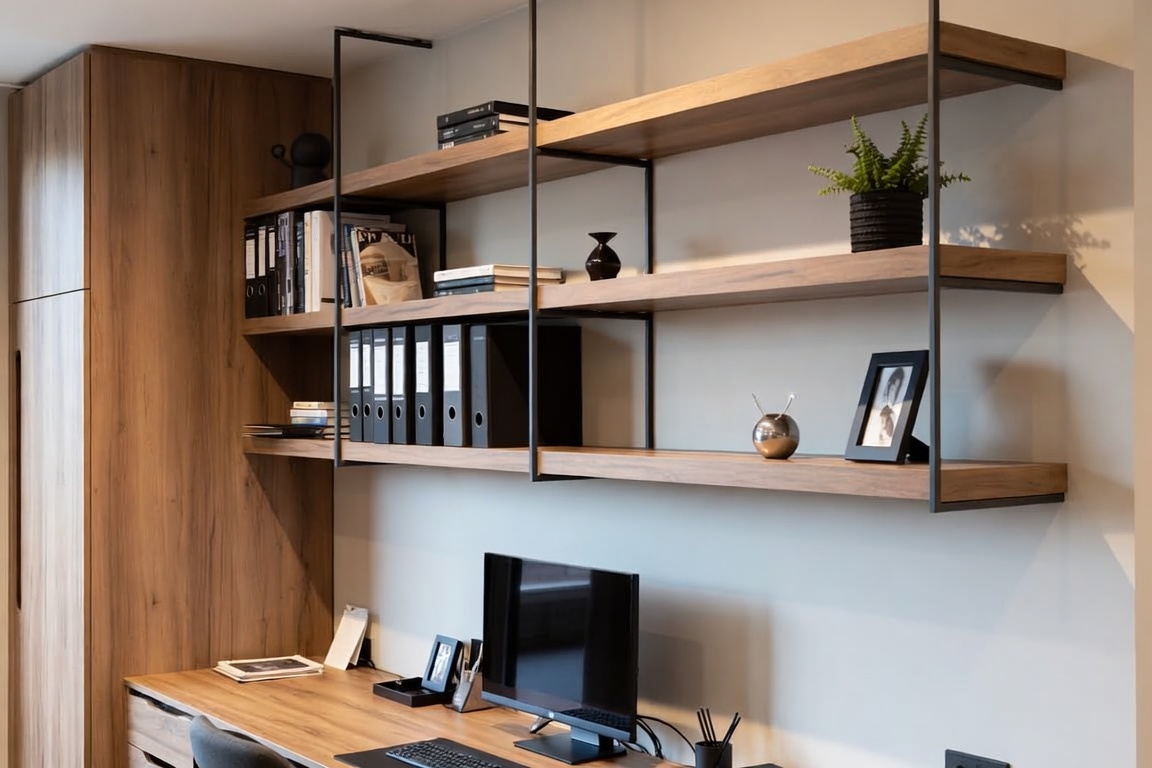
Color psychology is real, and it matters more in a home office than almost anywhere else. The colors surrounding you affect your mood, energy levels, and how long you can sustain focus.
- Blue tones (soft, muted): Increase calm and focus. Ideal for analytical, writing, or creative work. Think dusty blue or slate — not bright navy.
- Green (sage or olive): Associated with calm and nature. Reduces eye fatigue. Excellent as an accent wall or in plants and objects.
- Warm neutrals (cream, oatmeal, warm white): Keep the space open and light while remaining easy on the eyes. The safest choice for a shared or small space.
- Avoid: Bright red (raises anxiety and heart rate), stark white (too clinical, increases eye strain), orange in excess (overstimulating for long work sessions).
You don’t need to repaint the whole room. Even adding a sage green plant pot, a dusty blue desk mat, or warm wood accessories can shift the energy of a space.
8. Create a Japandi-Inspired Minimal Desk Setup
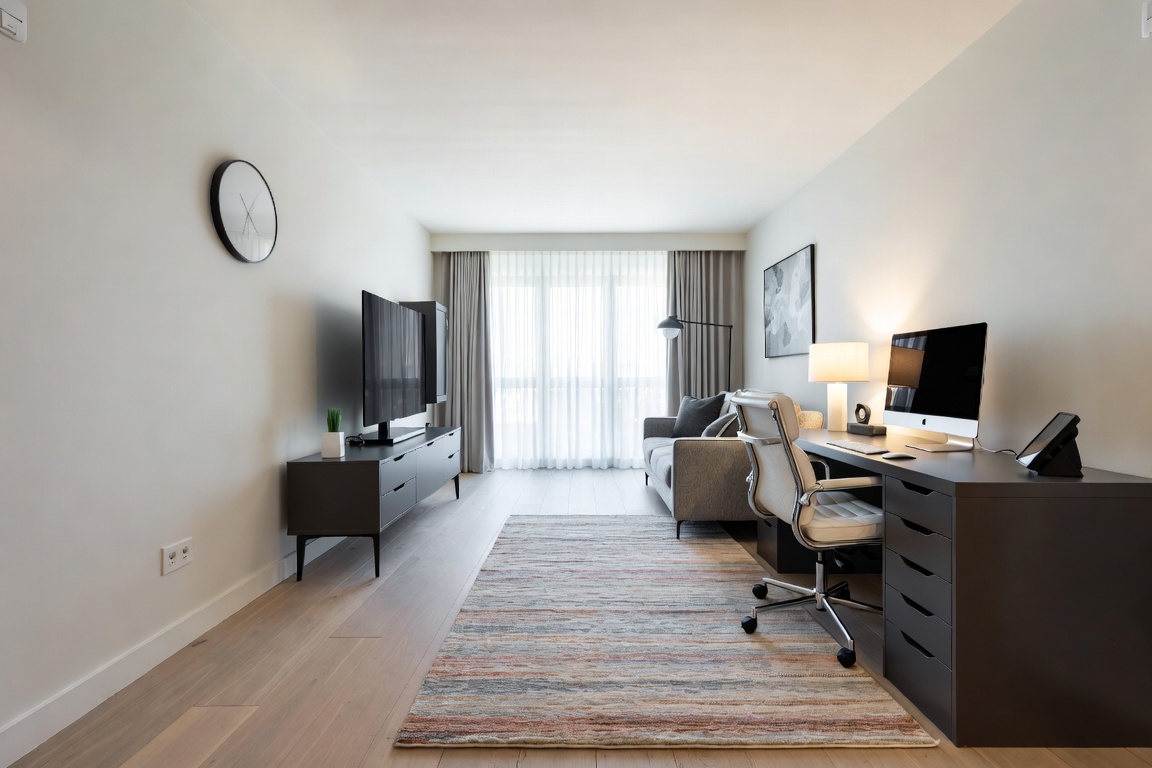
Japandi — the fusion of Japanese minimalism and Scandinavian warmth — is the dominant aesthetic for productive, beautiful home offices right now. It’s clean without being cold, minimal without feeling empty.
The Japandi desk essentials:
- A natural wood or bamboo desk mat as your work surface anchor
- One small ceramic or stone desk organizer (not plastic)
- A single potted plant — no more than one on the desk itself
- Warm-toned accessories: a wooden pen holder, a stone coaster, a matte ceramic mug
- Neutral monitor stand or riser in wood tone
The rule: if something doesn’t need to be on the desk, it shouldn’t be. Keep a drawer or shelf organizer for everything else. An empty desk surface isn’t empty — it’s intentional. And intention is the foundation of focus.
9. Add Scent as an Invisible Productivity Tool
This one surprises people, but the research is consistent: scent has a direct line to focus and memory through the olfactory system.
- Rosemary: Clinically shown to improve memory and alertness. A rosemary plant on the windowsill, or rosemary essential oil in a diffuser, is the easiest focus hack you’re not using.
- Peppermint: Increases energy and mental clarity. Great for afternoon slumps.
- Lemon: Improves concentration and reduces errors. A lemon-scented candle or diffuser blend during deep work sessions works remarkably well.
- Avoid heavy, sweet scents like vanilla or florals during work hours — they promote relaxation, not focus.
A simple reed diffuser or ultrasonic diffuser costs under $30 and lasts months. This is one of the highest-ROI purchases in home office setup that nobody talks about.
10. Personalize Your Space — But Deliberately
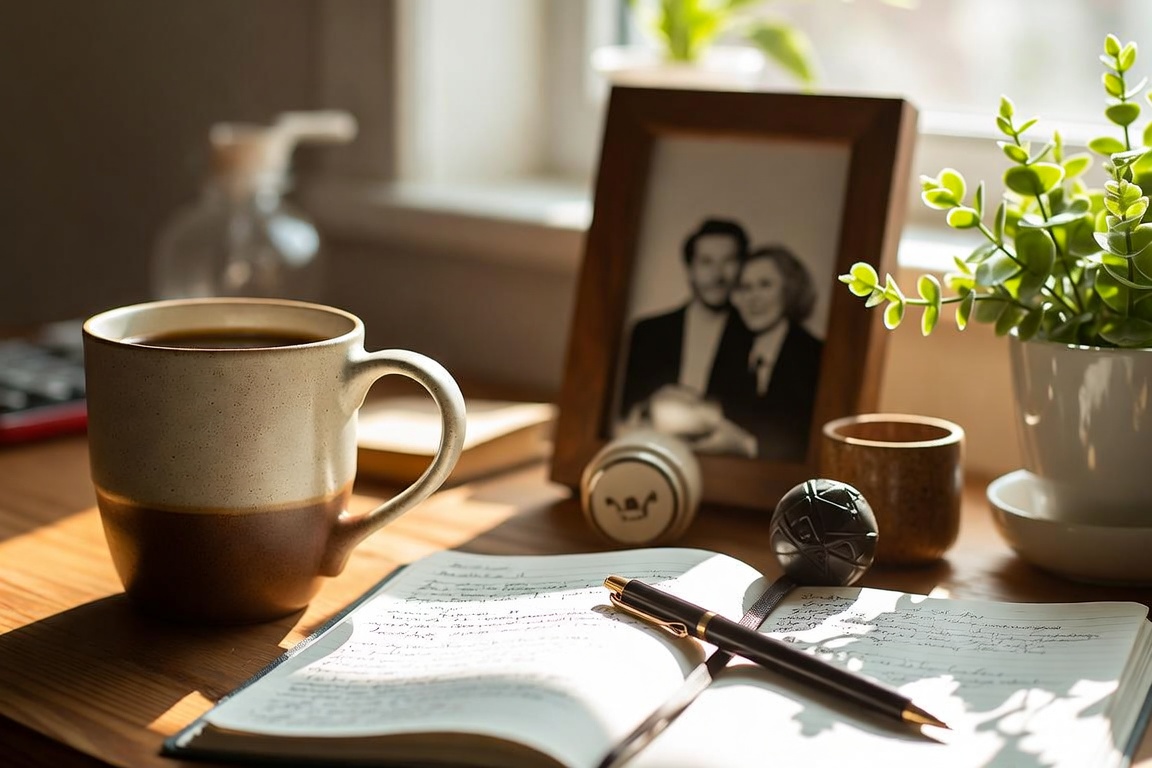
A workspace that feels like yours is a workspace you’ll actually want to return to. Personalization isn’t vanity — it’s ownership. But there’s a difference between personalizing and cluttering.
The rule of deliberate personalization: Every personal item on your desk or walls should either make you smile, inspire you, or remind you of your purpose. The family photo that motivates you: yes. The random souvenir you kept because you felt bad throwing it away: no.
Ideas that add personality without clutter:
- One framed photo of a person, place, or moment that means everything to you
- A small collection (3 items max) of objects that represent who you are — books, a figurine, a trophy, a memento
- A physical calendar or planner on the desk — analog tools in a digital workspace feel grounding
- A mug you love — because you’re going to use it every day anyway
Your workspace should tell the story of who you are and who you’re becoming. Make it count.
Home Office shopping list
- Adjustable desk lamp — the single biggest comfort upgrade
- Desk organizer — stops the surface creep
- Ergonomic office chair — you sit in it all day
- Monitor stand — raises the screen, adds storage
- Cable management box — hides the worst of it
- Pinboard — for the things you must see
Prices and availability change. Links open on Amazon.
Frequently Asked Questions About Home Office Decor
What is the most important element of a home office setup?
Lighting, without question. Poor lighting causes more fatigue and lost productivity than any other factor. Layer at least two sources: warm ambient overhead light and an adjustable task lamp aimed at your work surface. Everything else is secondary.
How do I make my home office look professional on video calls?
Position your camera so you face a window (natural light on your face, not behind you). Keep the visible background clean — a bookshelf with organized books, simple wall art, or a plain wall with one plant all read as professional. Avoid busy or cluttered backgrounds.
What color should I paint my home office?
Soft blues and muted greens are the most proven colors for focus and calm. Warm neutrals like greige or soft white are the safest choice for small spaces. Avoid stark white (increases eye strain) and bright reds or oranges (too stimulating for sustained work).
How do I set up a home office in a small space?
Use a wall-mounted fold-down desk to reclaim the space when not working. Choose furniture with legs (not solid bases) to keep the floor visible and the room feeling larger. Use vertical storage — shelves, pegboards, and wall organizers — instead of horizontal surface clutter. And keep your palette light and neutral.
How many plants should I have in my home office?
One to three is the sweet spot. One large statement plant (like a fiddle-leaf fig or snake plant) in a corner, plus one small plant on or near your desk in your line of sight. More than three starts to feel like you’re working in a greenhouse, which for most people is more distracting than calming.
Start Small, Start Today
You don’t need to implement all 10 of these ideas at once. Pick the one that will make the biggest difference for your specific pain point — if you’re constantly distracted, start with desk placement. If you’re exhausted by 2pm, start with lighting. If your desk looks like a cable explosion, spend an hour on cable management.
Small, intentional upgrades compound. A better workspace creates better work, which creates better results. Start today.
Want more inspiration for your home workspace? Check out our guide to interior design tips that work in any room, or browse our DIY decor ideas for budget-friendly ways to transform your space.
📌 Save This for Later
Pin this to your Home Office or Workspace board on Pinterest so you have it when you’re ready to upgrade your setup. You will find more ideas in Home gym.


5 Comments